On a journey to discover Europe’s signature heritage landmarks, Prague—the heart of the Czech Republic—always emerges like an endless historical epic, where every stone and every spire holds stories spanning a millennium. In my role as Leading International Travel Chronicle Writer and Cultural History Specialist, I am delighted to guide readers through the first installment of an in-depth chronicle on two of this city’s greatest icons: Charles Bridge and the Prague Castle Complex, as we pull back the curtain on the “Historical Context & Origins” of these legendary architectural works.
Before Charles Bridge stood spanning the poetic Vltava River, Prague had Judith Bridge, an ancient Romanesque structure that had served the city for centuries. However, harsh fate struck in 1342, when a historic flood submerged and destroyed the bridge, leaving a major gap in Bohemia’s artery of trade and culture. It was in this context that a great king stepped forward with a vision to create a wonder enduring across time: King Charles IV—Holy Roman Emperor and King of Bohemia. With profound intellect and deep faith in the power of the cosmos, Charles IV did not merely order a bridge built; he also sought protection from the stars.
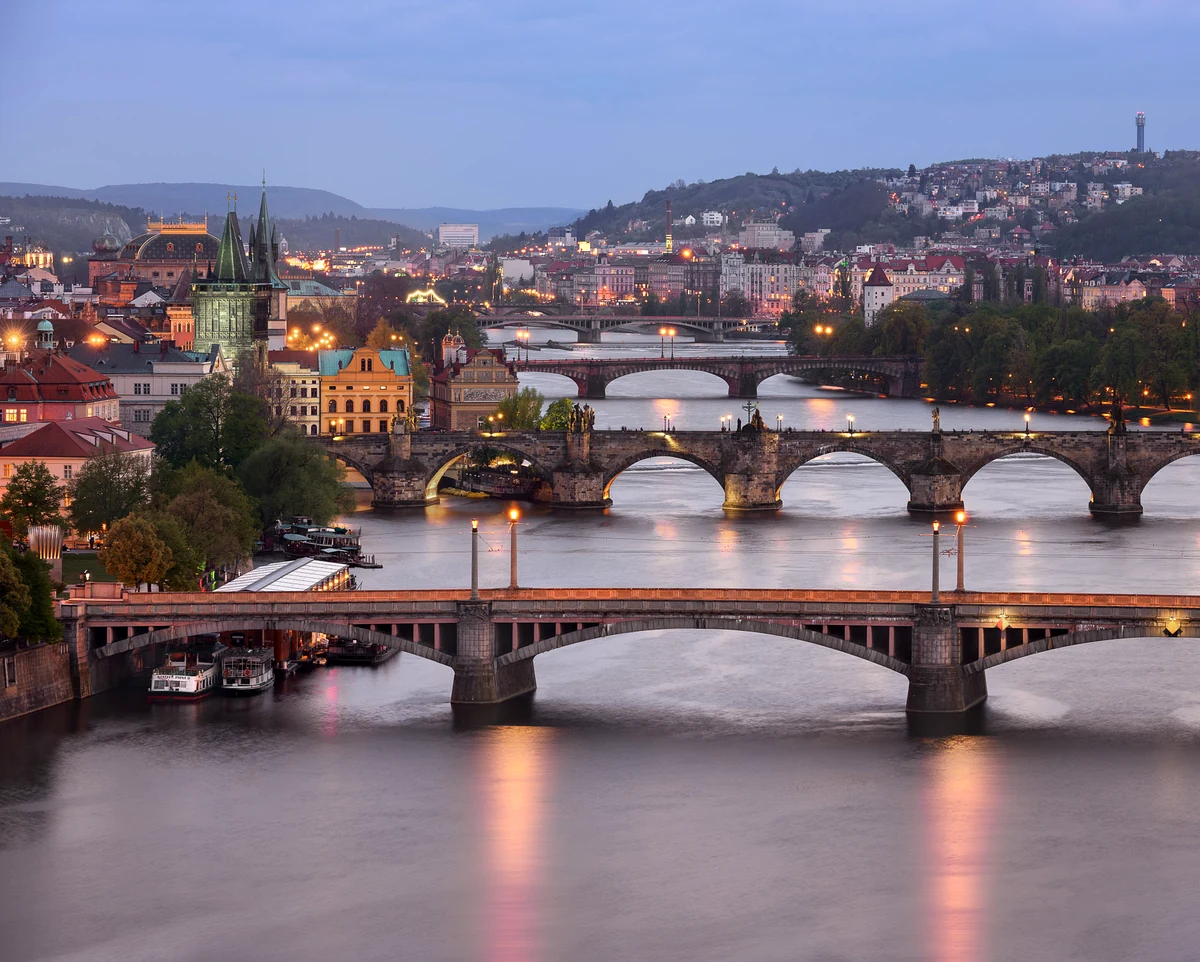
The foundation date for building Charles Bridge was no coincidence. Royal astrologers under Charles IV calculated meticulously, selecting a golden moment: July 9, 1357, at 5:31 AM. This timestamp forms a remarkable palindrome of numbers: 1-3-5-7-9-7-5-3-1 (Year 1357, day 9, month 7, at 5:31). Scholarly lore recounts that this Pythagorean sequence was believed to bring everlasting endurance—a prophecy history has proven true. Under the skillful direction of master architect Peter Parler, who left a deep mark on many Gothic works across Central Europe, the bridge gradually took shape, stretching across the Vltava River and finishing in the early 15th century, around 1402, becoming a powerful testament to medieval human ambition and talent.
Yet Charles Bridge’s journey of endurance was far from smooth. It had to confront countless harsh tests of time and history. Major floods in 1432 and 1784 battered the bridge piers, demanding relentless restoration efforts. In particular, during the fierce stage of the Thirty Years’ War (1648), Swedish forces attacked Prague across this very bridge, causing heavy damage to the watchtowers and the earliest sculptures. The greatest catastrophe was perhaps the historic flood of 1890, when three bridge spans and two piers collapsed completely, yet once again Charles Bridge was restored to its original form, standing resilient as an immortal symbol of Prague.
Alongside Charles Bridge—and even older in age—is the Prague Castle Complex (Pražský hrad), the heart of power and spirit in Bohemia. The castle’s origins can be traced back to around 870, when Prince Bořivoj of the Přemyslid dynasty laid its first stones, turning the site into a fortified stronghold. Over more than a millennium, the complex was continually expanded and transformed, reflecting the rise and fall of dynasties and historical upheavals. Under King Charles IV in the 14th century, the castle was redeveloped into an imperial center, a testament to the king’s grand vision of turning Prague into one of Europe’s most splendid capitals.
Prague Castle’s history is also marked by major shocks. In 1541, a great fire destroyed large sections of the castle and national archives, wiping out part of its historical record. The 15th century saw sharp conflicts between the papacy and the Hussite Reformation, with the castle at the center of many events. However, the most pivotal turning point—igniting one of the bloodiest wars in European history—was the Second Defenestration of Prague in 1618. At this very castle, Protestant nobles threw two Catholic representatives of the Holy Roman Emperor out a window, an act of direct defiance that led to the Thirty Years’ War. Even in the 20th century, the castle continued to be renovated and refreshed under architect Josip Plečnik during the First Czechoslovak Republic, showing its ongoing role in the flow of history.
From Prince Bořivoj’s first stones to King Charles IV’s grand vision, from the devastation of floods to fierce wars, both Charles Bridge and the Prague Castle Complex have stood firm, becoming living witnesses to the turbulent yet glorious history of the Czech lands. They are more than architectural works—they are the soul of Prague, telling the story of a resilient, creative people who always know how to rise from the ashes.
Continuing the turbulent historical current that shaped Prague’s soul, let us admire the architectural masterpieces and supreme artistic values where every stone block and carved line tells a story of human aspiration toward beauty and permanence. As a cultural history specialist, I am proud to guide you into the artistic depth hidden within every angle of Charles Bridge and the Prague Castle Complex.
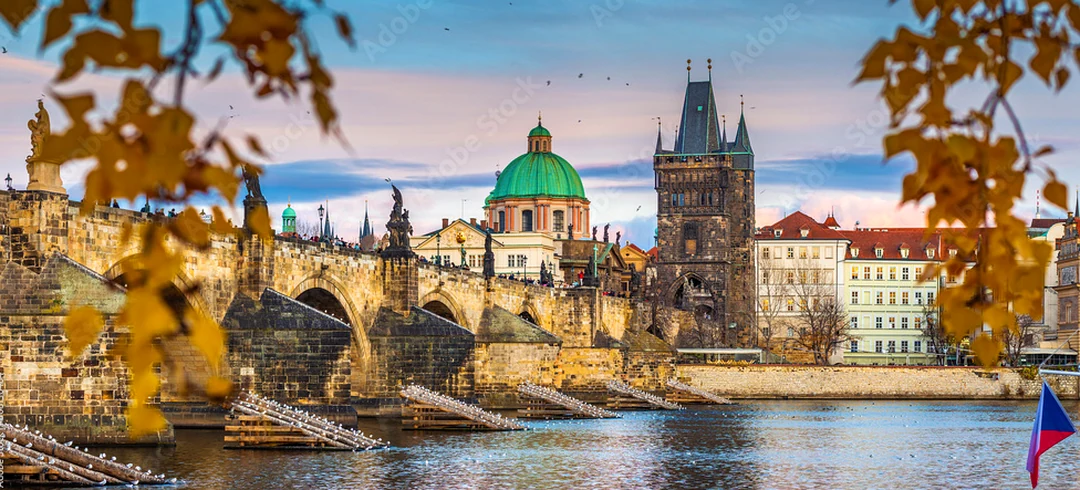
Charles Bridge, an eternal symbol spanning the gentle Vltava River, is a powerful testament to the medieval Gothic style full of authority. More than just a walkway, this bridge—516 meters long and nearly 10 meters wide—is an extraordinary 14th-century engineering work. It is built from sturdy sandstone blocks, yet what truly amazes archaeologists and visitors alike is the secret hidden inside the mortar. According to modern scientific analyses in 2010, part of folk legend was confirmed: the bridge mortar was mixed with chicken eggs, yogurt, and wine. This unique combination not only strengthened adhesion but also helped the bridge resist erosion from time and water, creating a durable structure that overcomes every challenge.
Walking across Charles Bridge, visitors do more than tread on stone—they walk through an open-air sculpture gallery. Lining both parapets is a collection of 30 splendid statues, mostly in the Baroque style, added between 1683 and 1714. Each statue is a finely crafted work of art depicting saints and historical figures, bringing romantic beauty and drama to the ancient Gothic bridge. Most prominent among them is the statue of Saint John of Nepomuk (Jan Nepomucký), the martyr thrown into the Vltava River from this very bridge. Touching the base of his statue is believed to bring good luck and ensure you will return to Prague one day.
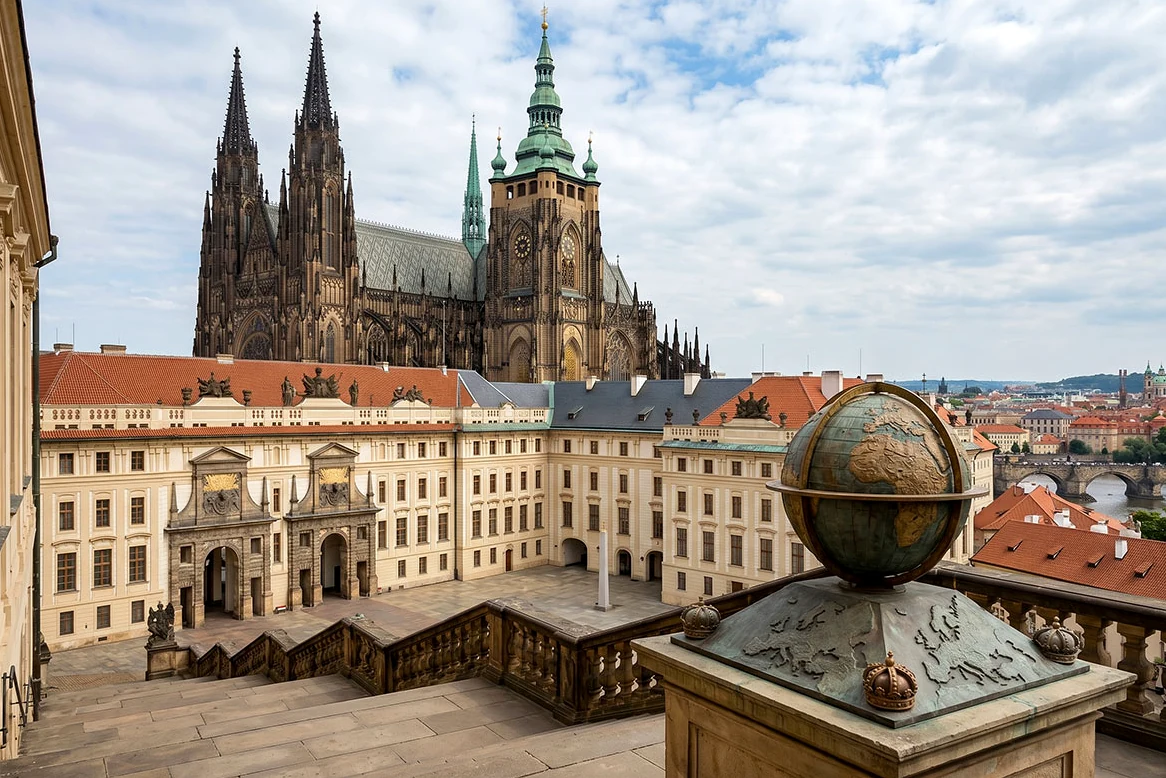
Leaving Charles Bridge, our gaze turns toward the Prague Castle Complex, an architectural realm crowning the hilltop, recognized by Guinness World Records as the largest ancient castle complex in the world with a massive area of nearly 70,000 m². Here is a blend of architectural styles, from 10th-century Romanesque foundations and 14th-century Gothic grandeur to Renaissance grace, Baroque splendor, and Neoclassical elegance. Every dynasty and historical era left its own mark, creating a diverse yet astonishingly harmonious architectural whole that reflects the continuous evolution of a European center of power and culture.
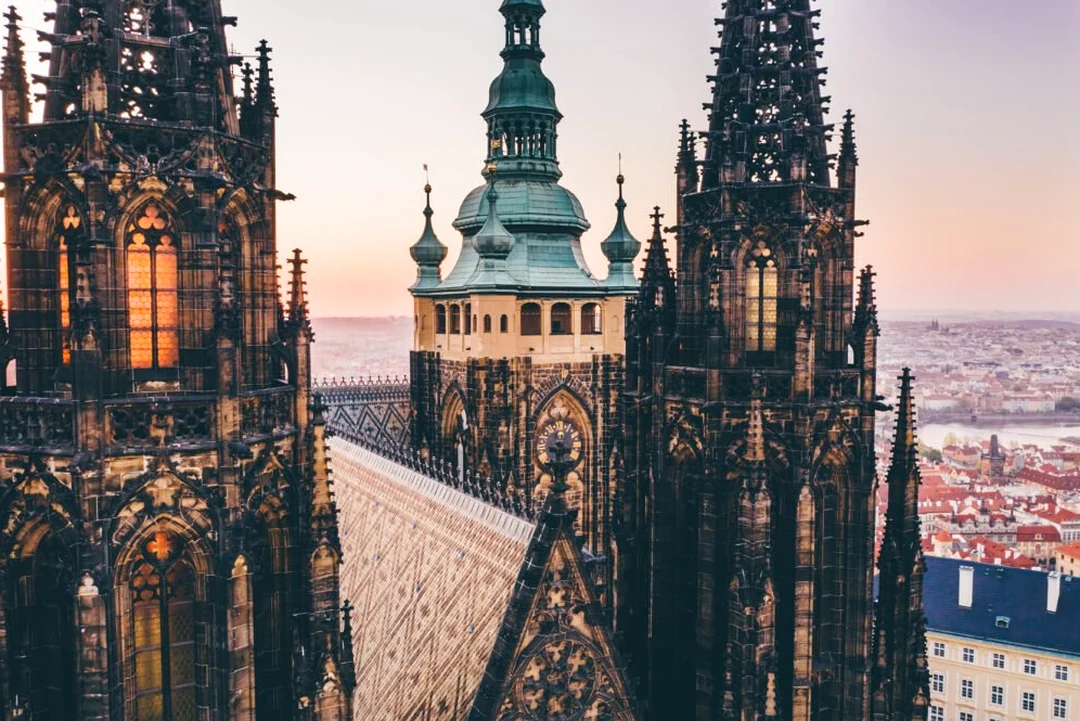
At the heart of the Prague Castle Complex is St. Vitus Cathedral (Katedrála svatého Víta), a supreme Gothic masterpiece rising proudly with its main tower reaching 96.5 meters. This landmark is more than a church—it is also the resting place of Bohemian kings and a treasury of religious art. The signature flying buttresses of Gothic architecture are used skillfully, not only supporting the structure but also creating an airy beauty pointing straight toward the sky. Stepping inside, visitors are captivated by the vast space and mystical light. Vibrant stained-glass windows, especially designs by Art Nouveau artist Alphonse Mucha, create dramatic optical effects as sunlight streams through, turning the sacred interior into a living canvas full of color.
From the sturdiness of Charles Bridge to the splendor of Prague Castle, every monument is a page of history written in stone, brick, and art. They are not merely physical structures, but symbols of intellect, faith, and eternal human aspiration. I believe that exploring these architectural masterpieces is not simply a trip, but a profound journey into the soul of Europe, where beauty and history blend seamlessly to leave lasting impressions on every traveler.
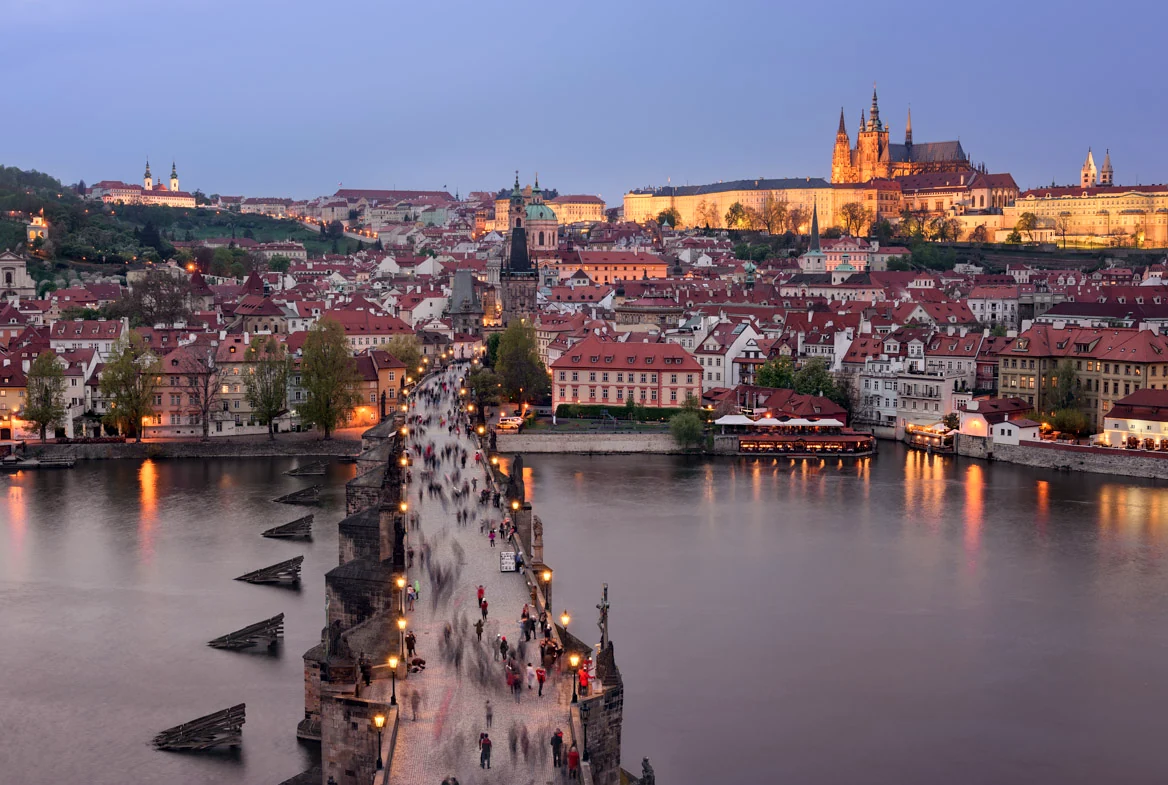
When the first rays of dawn still linger shyly over the Vltava, that is when Prague reveals its most “priceless” beauty, reserved for souls craving tranquility and unspoiled grace. In my role as cultural history specialist, I affirm that to truly touch the soul of Charles Bridge and the Prague Castle Complex, you must wake up early. Begin your walk from the base of the Old Town Bridge Tower around 5:30 to 6:30 AM. At this hour, the legendary 516-meter Gothic stone bridge still lies wrapped in soft mist, free of bustling crowds, with only birdsong and the quiet footsteps of a few locals. Golden-orange dawn light washes over the 30 ancient Baroque statues, creating a surreal scene where time seems to stand still. This is a “golden photo spot” not to be missed, where you can capture Charles Bridge and Prague Castle emerging like an exquisite natural tableau, completely detached from the noise of the modern world.
Continuing our one-of-a-kind journey, exploring the Prague Castle Complex (Pražský hrad)—the largest ancient castle complex in the world at nearly 70,000 square meters—is best experienced in full through the Circuit A ticket. More than just a pass, it is the key that opens the door to the historical and architectural heart of Bohemia. You will take in the majestic St. Vitus Cathedral (Katedrála svatého Víta), a pinnacle of Gothic architecture with a main tower rising 96.5 meters high and grand flying buttresses. Stepping inside, you will be dazzled by the radiant stained-glass windows designed by Art Nouveau artist Alphonse Mucha himself, casting a magical dance of light. Just remember to follow modest dress guidelines—covering shoulders and knees—when entering this sacred space.
Circuit A also leads you to the Old Royal Palace, once the seat of power for the kings of Bohemia and witness to major historical events, including the Second Defenestration of Prague in 1618 that sparked the Thirty Years’ War. Here, you can feel the breath of time across every stone wall and grand hall. Don’t miss the “Story of Prague Castle” exhibition for a comprehensive look at how this monumental complex came to be and evolved, from its founding around 870 by Prince Bořivoj to renovations under King Charles IV and architect Josip Plečnik. St. George’s Basilica, with its historic Romanesque architecture, offers an engaging contrast that highlights the castle’s unique blend of architectural styles across the centuries.
A highlight not to miss on Circuit A is Golden Lane (specifically Golden Lane No. 22). This narrow lane lined with brightly colored houses once housed goldsmiths, guards, and the great writer Franz Kafka. Strolling along Golden Lane feels like stepping into a fairy tale—as if entering another world where every door and window holds a story. The reference ticket price for this comprehensive experience is around 450 CZK (roughly 19 EUR) per adult, a worthwhile investment for such priceless historical and cultural value.
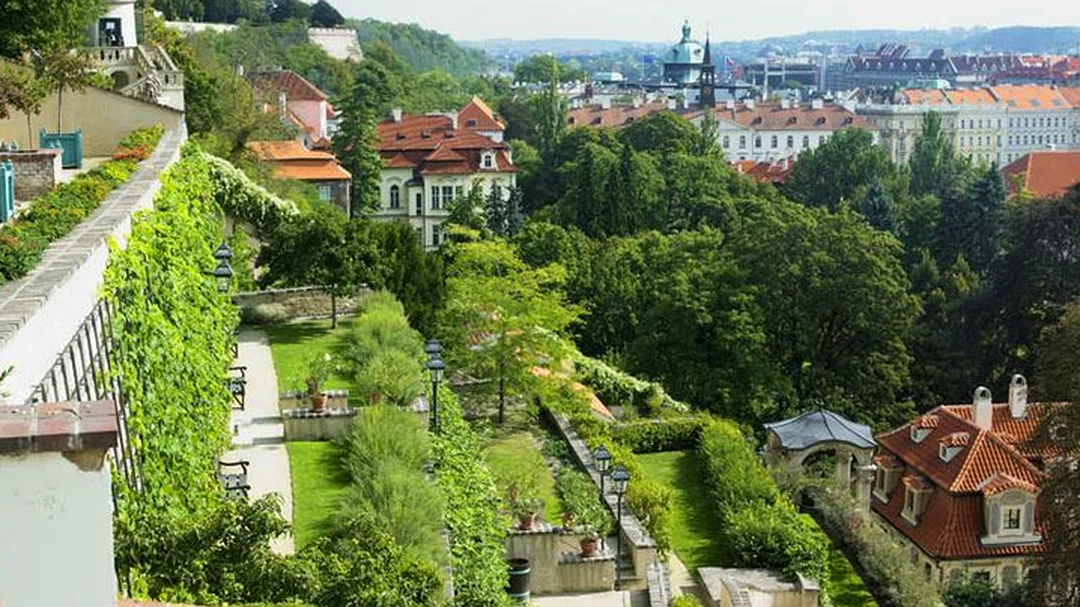
After immersing yourself in history and architecture, seek out a second “golden photo spot” at Ledeburg Garden (Ledeburská zahrada). From here, you get a breathtaking panoramic view over the “City of a Hundred Spires” with thousands of bright red roofs stretching out in a vivid, romantic scene. It is a moment to breathe in the fresh air, admire Prague’s enduring beauty, and feel the harmony between nature and architecture.
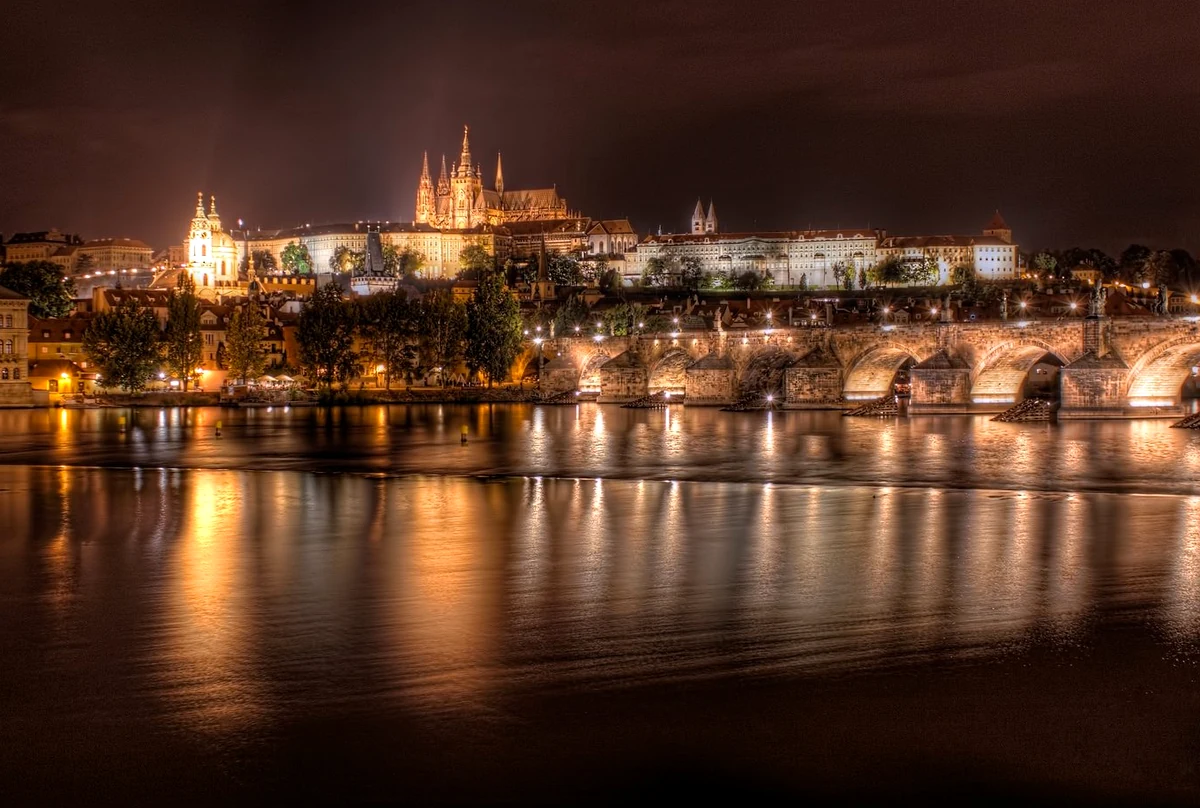
When night falls, Prague puts on another dazzling look, and the most rewarding experience at that hour is a ride on a traditional wooden boat along the Vltava River. Gliding gently over calm water aboard a classic boat, you can watch Charles Bridge light up as Baroque statues gleam in golden light. Live classical music on board blends with the enchanting scenery to stir the emotions, carrying you into an unmistakably romantic setting. It is an ideal way to wrap up a day in Prague, letting sights, sounds, and feelings settle into lasting memories of a historic yet endlessly charming city.
After wandering through the deep history and striking architecture of Charles Bridge and the Prague Castle Complex, a traveler’s spirit is already rich with fairy tales and legends. Yet to truly reach the heart of a culture, nothing compares to setting out on a local culinary journey—where every dish is a page of history and every glass of beer is a song of Czech spirit. Prague isn’t only the city of golden spires; it is also a haven of rich, rustic, enticing flavors that invite us into this distinctive “Local Food Map & Tasting Culture.”
Strolling along the historic cobblestone streets leading from Old Town Square up to Charles Bridge, a warm, sweet aroma will guide you to the famous Trdelník pastry. More than a casual snack, it is a symbol of coziness and Czech street-food craft. Strips of dough are neatly wrapped around wooden spits and slowly roasted over hot embers until golden brown, releasing the rich fragrance of sugar, cinnamon, and walnuts. While still piping hot, Trdelník is rolled in crunchy cinnamon sugar—and best of all when filled with cool whipped cream, rich Nutella, or fresh fruit slices. Holding a steaming cinnamon-sugar chimney pastry while sipping and watching people cross Charles Bridge lets you take in Prague’s unhurried, poetic pace of life.
To truly join a traditional Czech meal, don’t pass up Vepřo Knedlo Zelo. It is a harmony of flavors and textures—a quintessential comfort dish we especially recommend. Slow-roasted pork comes with crisp skin and tender, flavorful meat inside. Alongside it are soft, airy steamed bread dumplings, knedlíky, which soak up the rich, velvety meat gravy. Balancing out the meal is carefully prepared sweet-and-sour sauerkraut, bringing a bright tang and gentle crunch that tempers the richness of the pork. Every bite pairs together seamlessly for a warm, hearty meal true to Central European cooking.
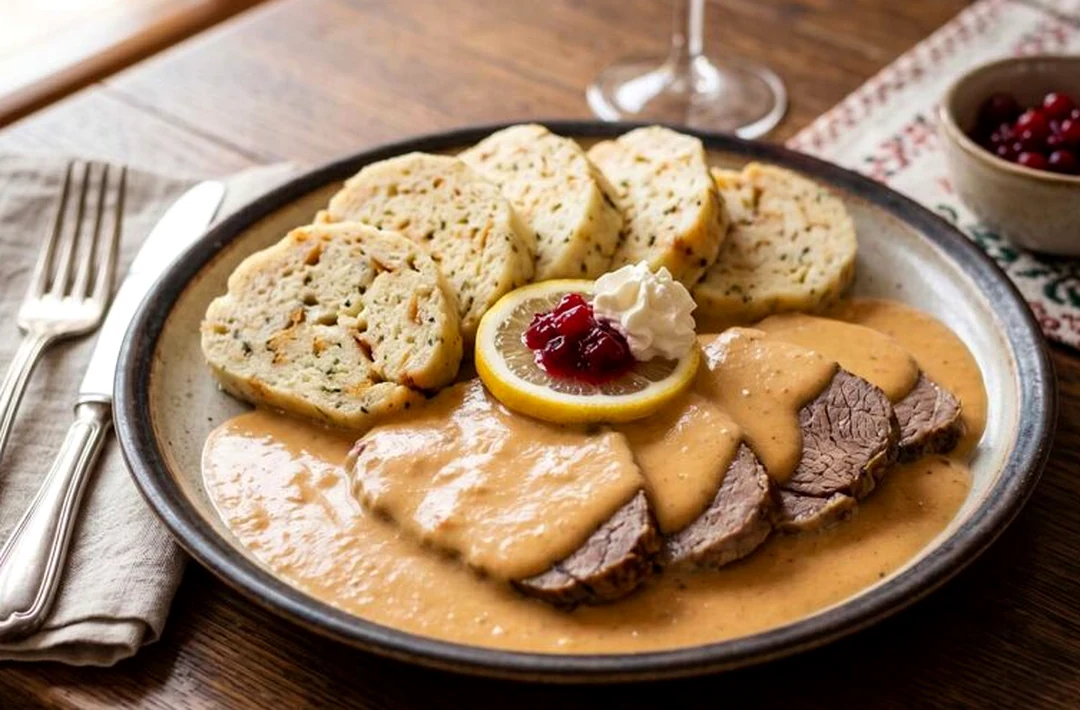
If Vepřo Knedlo Zelo represents rustic comfort, Svíčková na smetaně stands for refinement and elegance in Czech cuisine, often served at holidays and special gatherings. The dish brings together tender beef sirloin cooked in a signature creamy vegetable sauce made from carrots, root parsley, and onions, yielding a gently sweet, creamy flavor that never feels heavy. Its signature touch is a spoonful of blueberry or cranberry preserves and a dollop of whipped cream on top, creating an appealing contrast between tangy fruit, creamy richness, and savory beef. Enjoying Svíčková na smetaně with steamed knedlíky dumplings is an unforgettable dining experience that showcases the skill and polish of Czech cuisine.
And it would be a major omission not to mention Beer—a source of pride and an inseparable part of Czech culture. Holding the title of the country with the highest per capita beer consumption in the world, Czechia has elevated beer appreciation into an art form. Two legendary names, Pilsner Urquell and Budweiser Budvar, are more than beer brands; they are heritage. Pilsner Urquell, first brewed in 1842 in Plzeň, was the world’s first golden pilsner, shaping the lager style we know today. Budweiser Budvar, with centuries of history, offers a fuller, well-balanced flavor. The ultimate experience is enjoying a glass of fresh “draft beer” at a cozy, historic pub right by the foot of Charles Bridge or in the Old Town. Poured with care, the glass arrives with a thick, creamy foam head, subtle malty aroma, and a gentle, refreshing bitterness. It isn’t just drinking beer—it’s joining the lively, welcoming atmosphere of locals, listening to easy conversation, and feeling Prague’s evening pulse.
Food in Prague goes beyond filling your stomach; it is an adventure into the culture, history, and spirit of a people. From a sweet Trdelník on the street to a hearty Vepřo Knedlo Zelo or Svíčková na smetaně in a traditional restaurant, and finally a cold draft beer in a classic pub, each experience is a treasured piece that completes the picture of a colorful, captivating Prague for every travel guest.
After immersing ourselves in the ebb and flow of history and admiring the timeless architecture of Charles Bridge and the Prague Castle Complex, our journey wouldn’t be complete without essential practical tips. Speaking as a seasoned international travel writer and cultural historian, I know that careful planning around when to visit, how to buy tickets, and smart safety habits is the key to a smooth trip—turning a visit into a truly rewarding memory.
So when is the ideal time to set foot in the heart of Bohemia? From our experience, spring, from April to June, is a wonderful choice. As the last chill of winter fades, Prague wakes up in bright cherry blossoms and tulips, putting on a fresh coat of color. Temperatures are mild—not as hot as summer—and crowds haven’t peaked yet, giving you a calmer atmosphere to stroll across Charles Bridge, watch the Vltava drift by, or explore quiet corners around Prague Castle without feeling packed in.
If you prefer romance and quiet reflection, autumn (September to October) is hard to beat. The city turns golden with maple and oak leaves, creating a living fairy-tale scene. The slopes climbing up to Prague Castle and the palace gardens take on a special poetic charm under soft autumn sunlight. And if you dream of a snowy Christmas, December turns Prague into a winter wonderland with vibrant Christmas markets in Old Town Square right beside Charles Bridge. Scents of mulled wine, roasted Trdelník, and festive cheer warm your spirits against the crisp chill.
To explore the Prague Castle Complex thoroughly, knowing your ticket options is essential. We recommend choosing the Circuit A ticket, the most complete choice, which covers must-see highlights including majestic St. Vitus Cathedral, the historic Old Royal Palace, the engaging “Story of Prague Castle” exhibition, historic St. George’s Basilica, and especially Golden Lane (No. 22)—where writer Franz Kafka once lived and worked. Reference adult admission is currently around 450 CZK (approximately 19 EUR). With our service, guests enjoy Fast-track entry to the Main Gate of Prague Castle, saving substantial wait time and avoiding 1- to 2-hour lines during peak season so every precious moment goes toward exploring.
However, Prague’s enchanting beauty also comes with a few important safety notes. Charles Bridge and the security checkpoint area entering Prague Castle, especially during peak hours, have been recorded as hotspots for sophisticated pickpocketing. Thieves often pose as tourists, approaching you under the pretext of asking to take a photo or do charity, then taking advantage of a moment’s distraction to steal. VDS Travel always puts travelers’ safety first. Our professional Local Guides will always be on hand to give timely warnings and advise guests to always wear backpacks in front of their chest and never keep wallets or phones in back pockets. This small precaution will help you avoid unnecessary risks, protect your belongings, and enjoy the trip to the fullest.
In addition, when visiting sacred sites such as St. Vitus Cathedral inside the Prague Castle Complex, visitors should keep modest dress code rules in mind. This is an important cathedral, so covering shoulders and knees is required to show respect. As for opening hours, Charles Bridge is always open freely 24/7, inviting visitors to admire its beauty at any time of day or night. For the Prague Castle Complex, outdoor areas and gardens are generally open from 06:00 to 22:00 in summer and from 06:00 to 20:00 in winter. However, the historic buildings inside, including the main sights covered by Circuit A tickets, have more specific operating hours, typically from 09:00 to 17:00. Knowing these time windows will help you plan your visit efficiently and avoid missing any stops.
With these details on ideal timing, sightseeing tickets, and practical safety tips, we hope you now hold a solid foundation to confidently explore Charles Bridge and the Prague Castle Complex. Every trip is not only an experience but also preparation, and accompanied by , your journey in the heart of Europe will be a wonderful blend of history, culture, and lasting memories.
After a meandering journey back through time, admiring grand Gothic and Baroque architectural wonders—from the legendary Charles Bridge witnessing countless historical ups and downs to the majestic Prague Castle complex reigning over Hradčany Hill—we have together painted a vivid, multidimensional picture of Prague. Now, as the final chronicle pages close, is pleased to open the door so you are not only a reader, but also the main character in your own Central European fairy tale—a journey woven from refinement, insight, and exclusive value.
Prague, with Charles Bridge and its magnificent castle, is not merely a standalone destination, but the perfect piece, a shining heart within Travel’s collection of gems. has carefully crafted the Central European golden route, where Prague’s antique charm blends with Vienna’s grandeur, Budapest’s romance, and Berlin’s historical imprints. In particular, on the “Germany – Austria – Hungary – Czechia – Germany 10D9N” itinerary or the exclusive route “Central European Fairy Tale: Czechia – Austria”, Prague emerges as an emotional peak where every sense is awakened by the interplay of art, history, and culture, bringing unforgettable experiences to each traveler.
With , a travel experience does not stop at sightseeing alone, but is also about optimizing every precious moment of yours. Imagine, amid the bustling crowds streaming toward Prague Castle in peak season, when hundreds of visitors must patiently stand in line waiting one to two hours under the sun or cold wind, you step smoothly past the main gate thanks to our exclusive Fast-track system. This is not just saving time, but absolute respect for your vacation, ensuring every minute is devoted to discovering and enjoying the endless beauty of the world’s largest ancient castle complex covering nearly 70,000 m².
What sets apart also lies in the depth of knowledge and emotion that brings. Instead of superficial, generic commentary, you will be accompanied by a specialized Local Guide (Local Expert), true natives of Prague holding prestigious guiding credentials. They are not only guides, but gifted storytellers who understand every historical nook and cranny, every anecdote hidden behind each Baroque statue on Charles Bridge and each stained-glass window of St. Vitus Cathedral. From the year 1357 of Charles Bridge to the story of King Charles IV, from the Second Defenestration of Prague in 1618 that sparked the Thirty Years’ War to the meaning of each architectural detail on the soaring 96.5-meter main tower of St. Vitus Cathedral, everything is unveiled vividly and authentically, turning every step into an inspiring history lesson.
And to wrap up a full day of exploration, delivers an unforgettable culinary experience. has thoughtfully reserved tables at exclusive restaurants with direct views of Charles Bridge, especially at dusk (Golden Hour). As twinkling lights begin to illuminate the historic bridge and reflect across the enchanting Vltava River, you will enjoy a menu tuned to Vietnamese palates while keeping authentic Czech culinary character intact. From hearty Vepřo Knedlo Zelo served with steamed dumplings and sweet-and-sour braised sauerkraut to a crisp glass of Pilsner Urquell beer with a dense, creamy head, each dish is not only flavor but also cultural exchange—an invitation to immerse yourself completely in Prague’s romantic, historic atmosphere.
Do not let dreams of Prague stay only on the pages of a book. Let turn your expectations into reality with an itinerary designed carefully and attentively down to the smallest detail. From avoiding sophisticated pickpocketing at hotspots like Charles Bridge and following modest dress rules at St. Vitus Cathedral, to choosing the most ideal travel seasons such as spring (April – June) or autumn (September – October) to enjoy Prague’s beauty to the fullest, every worry has been accounted for and prepared. Together, let us create priceless memories and stories to tell for years to come. Your Central European adventure awaits.
To explore itinerary details and book your spot for this memorable trip, please visit: All-Inclusive Tour Package . – Where every trip is a chronicle masterpiece, a journey connecting heart and soul with the timeless values of the world.