Tracing the river of time back to the desolate realms of mystical Xiangxi’s mountains, the land along the banks of the Yuan River cradles a cultural heritage that has blossomed over more than two millennia of historical vicissitudes. The historical origin of Qianyang Ancient Town is not merely the accumulation of geographical space, but an epic chapter inscribed with the sweat, blood, and ink of generations dating back to the primordial era of creation. From an institutional standpoint, the history of its establishment and administration can be traced back to the fifth year of Empress Gao in the Han dynasty (202 BCE), when the Han court laid the first bricks to establish Cuipu County, marking a milestone in opening up the southern frontier region. However, it was not until sixty-nine years later, precisely in the sixth year of Yuanding under Emperor Wu of Han (111 BCE), that the court officially issued an edict partitioning and separating territory to establish Gaole County. This event is recognized by cultural history researchers as the official genesis of Qianyang’s urban structure, laying the foundation for a future center of power, economy, and culture across an entire major river basin.
Through the turbulent vortexes of China’s feudal dynasties, Qianyang Ancient Town continued to witness milestone transformations in its nomenclature and administrative scale. In the eighth year of Zhenguan under the Tang dynasty (634 CE), the location was re-designated and renamed Longla County. From that fateful moment onward, the historical current of the ancient town swerved into one of the most refined and majestic artistic realms upon welcoming the portrait of one of the greatest master poets in Chinese cultural history. That was the poet and renowned official Wang Changling—revered by posterity as Wang Changling—who, due to political upheavals, was exiled to this pristine frontier wilderness to serve as the Longla County Defender. The presence of a great intellectual with a liberal spirit and grand aspirations breathed fresh life, awakening a mountainous region previously shrouded in solitude. At the majestic Furong Pavilion by the Yuan River, standing before the misty, hazy scenery, he chanted lofty verses, casting the freezing dew-drops of his soul into the history of human literature through his immortal masterpiece: “If friends in Luoyang happen to ask about me, a heart of ice resides within a jade pot.” Those verses not only became a symbol of the poet’s noble character but also the cultural soul, forging an eternally prosperous literary style that transformed Qianyang from a remote frontier garrison into a sacred convergence of mountains and waters where the millennial literary vein never ceases.
By the Northern Song dynasty, specifically in the third year of Yuanfeng (1080), this location officially bore the name Qianyang County—a designation tightly linked to its unique and proud topographic features. The name Qianyang was established based on the strategic location of the town, situated on the sunny (yang) side of Qian Prefecture, specifically south of Qian Mountain and north of the Yuan River, where yin and yang converge and vital breath harmonizes. Entering the Ming and Qing dynasties and extending through the Republic of China era, Qianyang maintained its strategic standing when chosen as the headquarters for the county-level imperial court, serving as the supreme administrative center governing a vast region. In 1997, during the restructuring and planning of modern administrative maps, the ancient town officially merged with Hongjiang City, bringing its illustrious past as a county seat to a close and transforming into Qiancheng Town—a living museum preserving the intact memories of forebears.
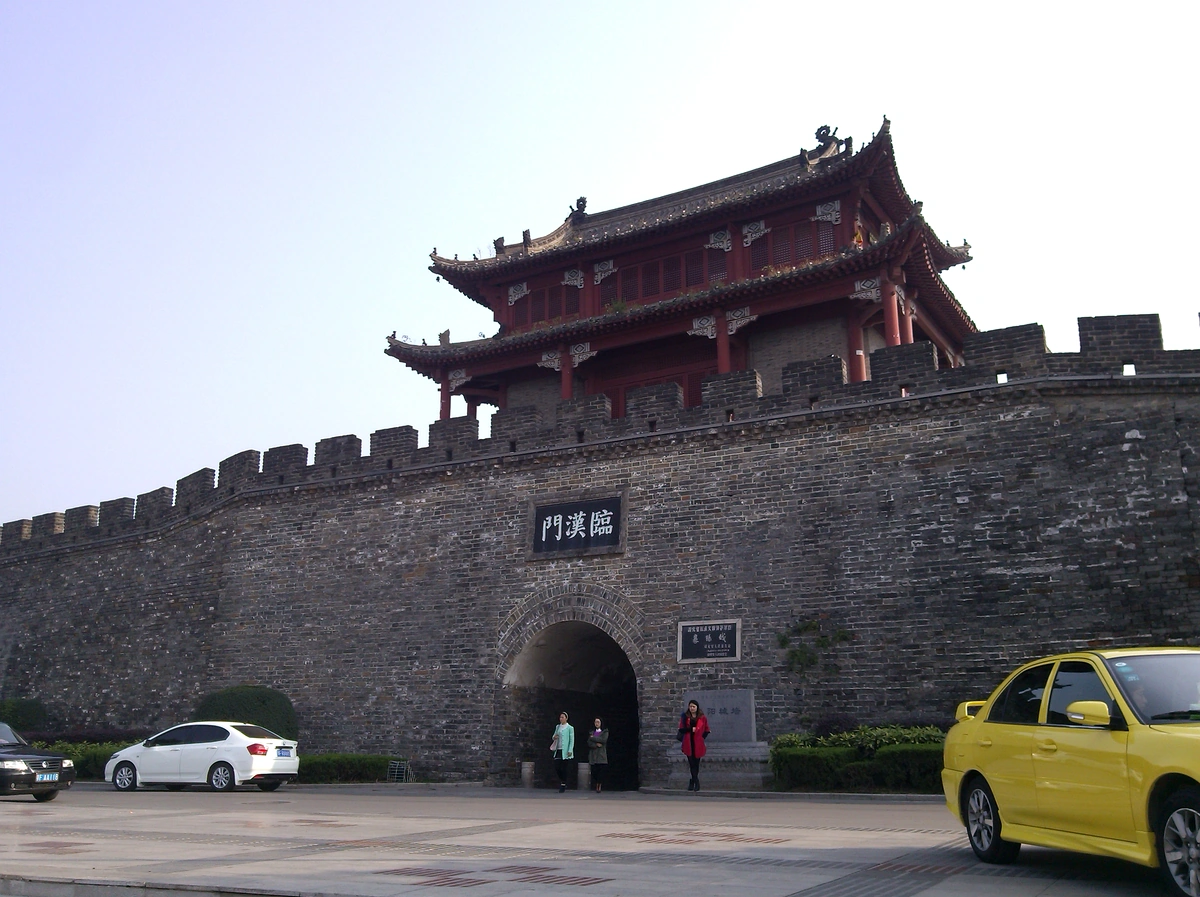
The imprints of historical vicissitudes, of rising and falling dynasties, still breathe quietly through every wooden grain and stone slab within today’s ancient town space. Strolling along polished flagstone paths covered in moss, travelers seem to touch living witnesses of time. There is the Furong Pavilion, grandly restored during the Qing dynasty, evoking the lingering presence of the Tang dynasty poet; there is the stone tablet engraved with four proud characters “Throat of Chu and Shu” (Suo-Shu throat), affirming the irreplaceable military and commercial stature of the garrison on the vital trade route along the Yuan River banks. Beyond that, the stele system at the Confucian School alongside heritage sites and ancestral halls of major clans serve as historical chronicles in stone detailing socioeconomic affairs during the golden era. On those steles, one reads stories of the renowned timber trade along the Yuan River, where colossal timber rafts floated downstream carrying Xiangxi forest products in all directions; or vivid, tragicomic chapters of the historical mass migration known as “Huguang fills Sichuan” (Huguang people moving to reclaim wasteland and settle in Sichuan), as well as precious materials on local autonomous history through turbulent times. All have woven together a multi-dimensional, profound historical mural, turning Qianyang Ancient Town into an open, unending encyclopedia on the origins of Chinese culture.
Stepping into the Xiangxi frontier realm, where time seems frozen upon every mossy layer of brick and yin-yang tile walls, one fully appreciates the magnificence of nature in sculpting a geographical masterpiece named Qianyang Ancient Town. Spanning across a solemn spatial expanse, the ancient town emerges not only as a living museum of Ming and Qing architecture but also as a supreme testament to traditional urban planning artistry, where Eastern feng shui philosophy blends exquisitely into every line of actual topography. Standing high above and gazing down, Qianyang sits right at the vital convergence point of three major watercourses comprising the Yuan River, Pingxi River, and Wu River, creating a fertile alluvial strip situated at the boundary between floodplains and low hill systems. Surrounded by vast waters on three sides and flanked by the undulating Longxiao Mountains on the remaining side, it sketches a classic topographic layout in ancient feng shui arts featuring the rare and elusive structure of “backing mountains, facing water, and flanked by rivers.”
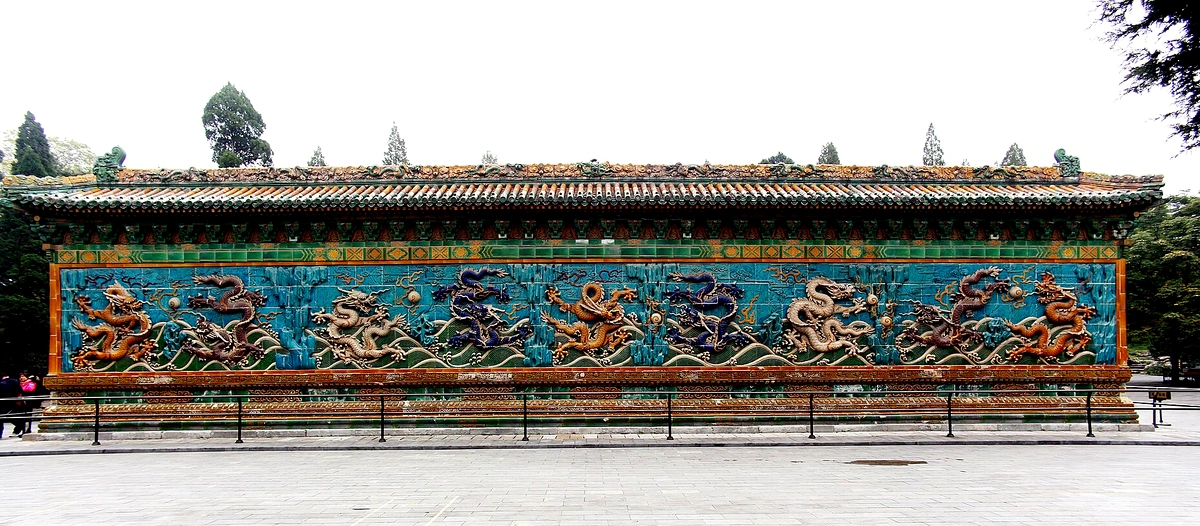
The subtlety in ancient architectural artistry at Qianyang lies in how they thoroughly utilized and respected natural laws, turning rugged terrain into a sturdy defensive system and sustainable living space. Through the lens of feng shui (kan-yu), the Longxiao mountain range stretching to shelter the rear acts as the majestic Black Tortoise main mountain, serving both to block chilly northwest winds blowing during winter and as a convergence point gathering vitality, bringing enduring prosperity to the entire land. Meanwhile, the churning Yuan River embraces the ancient town in a soft circular arc, creating the “jade belt embracing the waist” formation—a jade sash encircling wealth and fortune, preventing them from drifting away. Furthermore, forebears of antiquity skillfully surveyed local geology, fully utilizing natural pebble foundations combined with elevated alluvial terraces to erect sturdy city wall systems. Thanks to this specialized foundation structure, through historical vicissitudes and devastating historical floods during summer and autumn, the ancient town has stood resiliently, fully safeguarding peace for tens of thousands of souls dwelling within.
Looking broadly at the overall space, the strategic stature of Qianyang Ancient Town possesses not only military or hydrological value but also the stature of a vital commercial crossroads, shouldering the mission of a critical water transportation node on the main route connecting the Yangtze River basin with the rugged, wind-swept Yungui Plateau. From Qianyang’s river wharf, bustling boats sailed upstream and downstream laden with mineral salt, fragrant tea, brocade, and countless products from lowland to highland, turning it into one of the busiest inland commercial ports from the Qin and Han dynasties through the flourishing Ming and Qing periods. Construction techniques and spatial planning here strictly adhered to principles of human-nature harmony, from stone alley networks interlaced like stone matrices for natural drainage to the layout of public structures, temples, and time-honored commercial houses following the gentle slopes of low hills. All these elements constituted a Qianyang Ancient Town that is both solemn and steadfast before nature’s tempests, yet supple and lyrical reflecting itself in the waters of three rivers, deserving to be the pinnacle of human ecological architectural artistry.
Entering Qianyang Ancient Town, one of the most vibrant and intact architectural museums in the Xiangxi region, visitors wander into another dimension where time seems frozen from ancient dynasties. With an astonishing practical scale, the core area of the ancient town now covers an expanse of about 0.8 square kilometers, enclosing within it an intricate network of roads and alleys imbued with traditional feng shui imprints. Notably, the ancient street system totals up to 5 kilometers in length, preserving almost intact the ancient urban layout shaped during the Tang and Song dynasties, harmoniously combined with exceptionally distinctive folk architectural layers from the Ming and Qing eras. The space here is not soulless concrete blocks, but a living organism crafted from fine timber, bluestone, and yin-yang tiles, reflecting the profound life philosophy of harmony with nature held by Xiangxi locals over centuries.
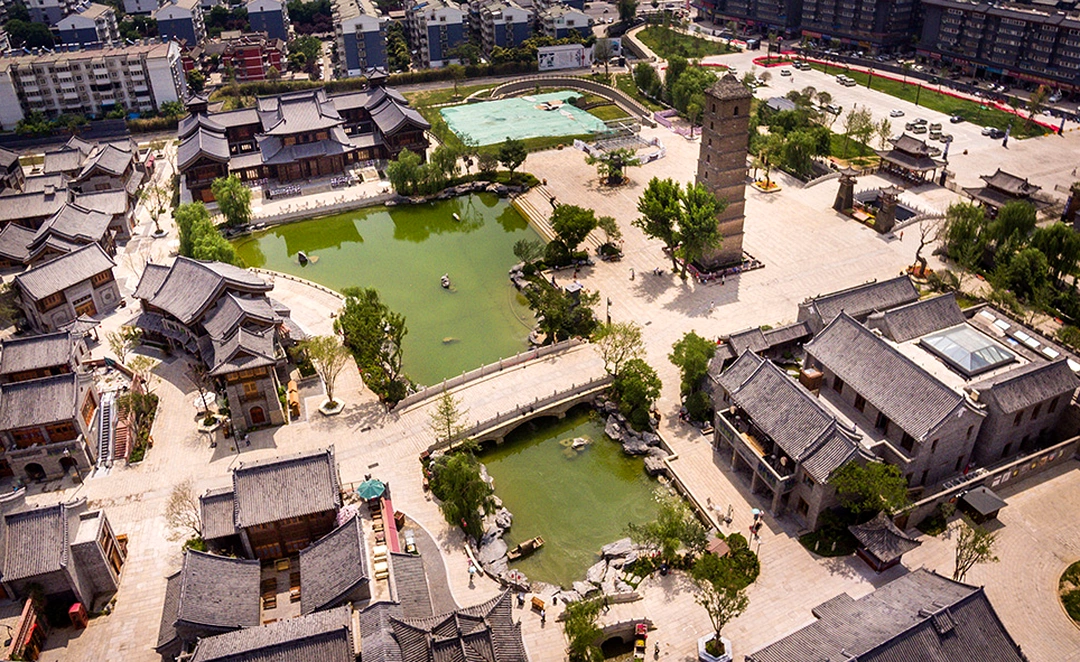
Delving into construction techniques, residential buildings and mansions in Qianyang stand as pinnacle testaments to traditional Chinese carpentry, epitomized by timber frame systems delicately combining post-and-beam (抬樑式) and pillar-and-tie (穿斗式) styles. Due to Xiangxi’s mountainous terrain abounding in fir timber resources, combined with abundant bluestone reserves, ancients wisely maximized these two primary materials as foundations for all infrastructure. The foundation of each house was typically elevated and compacted with massive monolithic bluestone blocks, supporting column bases carved with inverted dome shapes (覆盆式柱礎) to prevent ground dampness and termites. To withstand bandits and prevent fires from spreading between adjacent houses, soaring mortar brick walls styled as “fire-wall” or horse-head walls (馬頭牆) were erected majestically, undulating like waves reaching toward the sky, creating an architectural skyline both unique and exclusive to Qianyang Ancient Town.
The artistic allure of the ancient town does not stop at overall spatial scale or sturdy frameworks, but crystallizes brilliantly in exquisite handicraft carving, praised by ancients through the “three masterpieces” (san jue): wood carving, stone carving, and brick carving. Walking along ancient verandas, gazing up at door frames, beams, or column bases, visitors easily encounter countless decorative motifs bearing auspicious meanings such as “blu-lu-shou-xi” (fortune, prosperity, longevity, happiness), or classic cultural allusions like “fisherman, woodcutter, farmer, and scholar.” Every chisel stroke achieves the maturity of folk art, expressing aspirations for peace, prosperity, and tight bonds with ancestral cultural roots held by generations of Qianyang artisans.
Beneath the traveler’s feet, all roads and alleys within the ancient town are paved entirely with sprawling bluestone slabs, polished over time by millions of footsteps through generations. Even more astonishing regarding urban infrastructure engineering is the ingenious underground drainage system hidden beneath stone pathways, affectionately and respectfully called “Dragon Ditches” (Longgou) by locals. Thanks to this subterranean canal network, rainwater from torrential downpours in Xiangxi’s mountains is swiftly collected and drained, keeping the ancient town’s stone paths dry despite centuries of storms, preventing flooding entirely. The flawless combination of macro-spatial planning, sustainable materials, and sophisticated craftsmanship turned Qianyang into an immortal monument of ancient architecture defying time’s erosion.
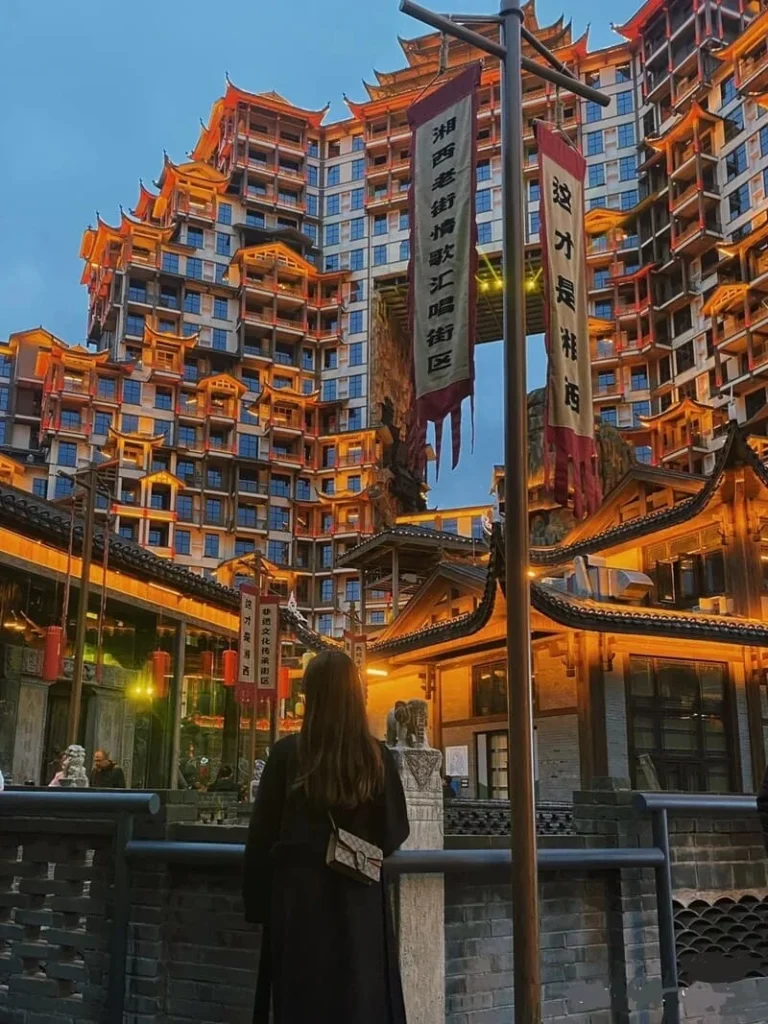
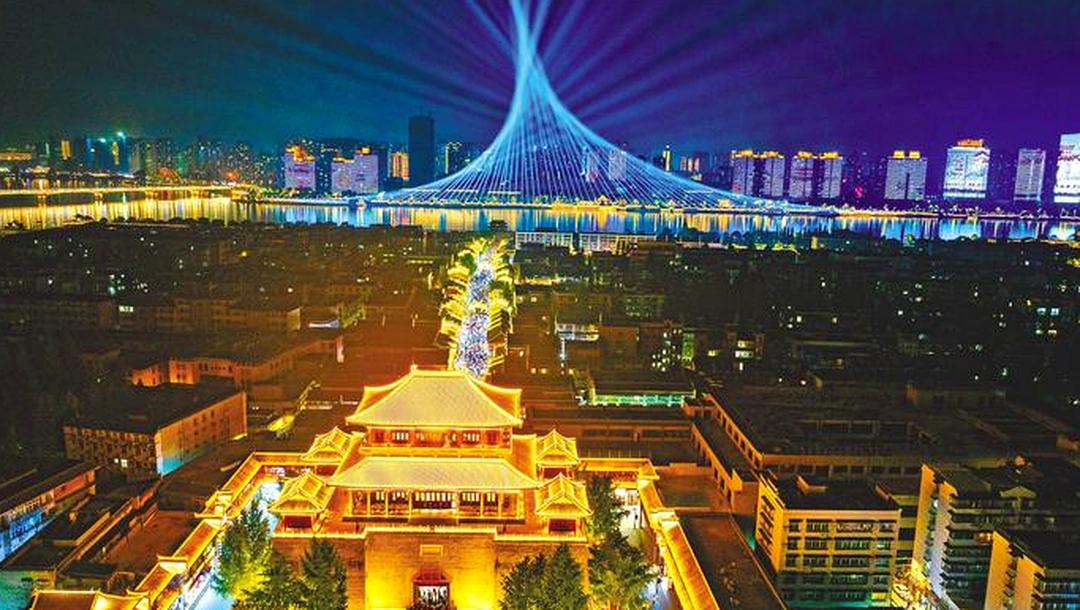
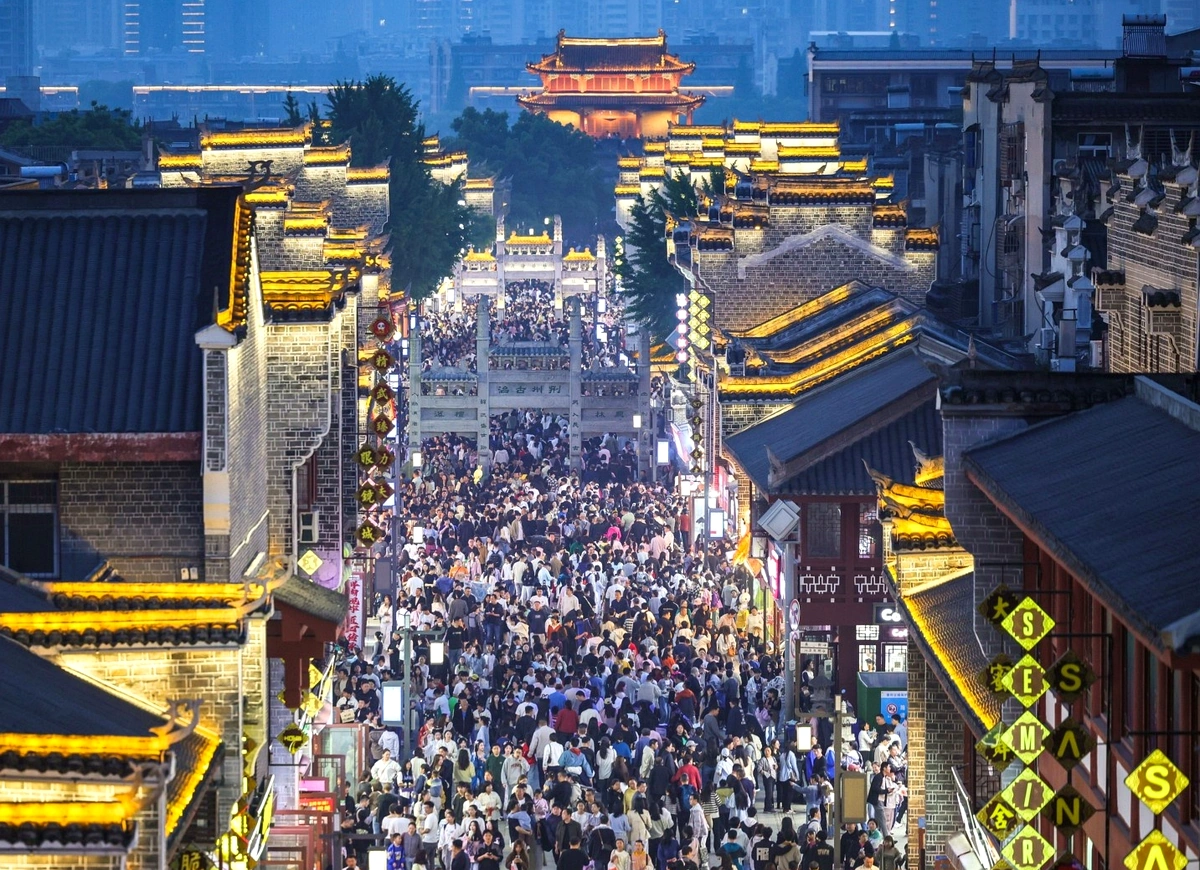
When night falls, shedding the somber mossy cloak of a living historical museum, Qianyang Ancient Town in Xiangxi enters an entirely different chapter where light, sound, and local life weave into an enchanting contemporary harmony. Unlike noisy tourist cities abusing glaring lights, the night illumination project here strictly adheres to principles of “minimal intervention, prioritizing artistic conception.” Under the meticulous calculations of spatial designers, warm-toned spot LED lighting systems combine delicately with traditional red silk lanterns, skillfully outlining the robust (xiong-hun) contours of Ming-Qing city walls alongside layered horse-head wall structures. Strolling along the banks of the gently flowing Yuan River, visitors encounter subtle uplighting effects from recessed wall lights, blending with sparkling water reflections to create a poetic, tranquil atmosphere evoking a bustling commercial wharf from centuries past.
That artistic space elevates into an ultimate cultural experience thanks to an elaborate interactive live-action show titled “Wang Changling and Longbiao” (王昌齡與龍標). The show transports visitors across space and time back to the Tang dynasty, stepping into the Furong Pavilion scenic complex and ancient alleys to embody characters within the tale. Instead of sitting passively in stands, every visitor stepping into the performance space receives a replica bamboo slip ticket, holding it directly to interact with artists in an open space. Here, amidst glutinous rice wine aromas and misty Xiangxi night mists, viewers fully experience the elegant demeanor of ancient literati through rituals of wine-drinking, poem-composition, and nostalgia over parting sorrows, thereby deeply grasping the tragedy and fortitude of the master poet exiled to this frontier land.
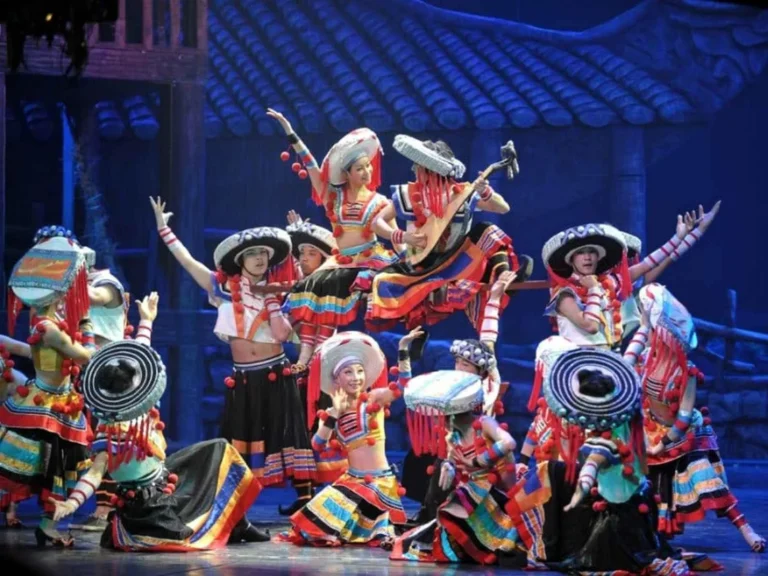
Leaving behind the academic live-action space, nighttime life in Qianyang Ancient Town bursts with warm, authentic, and bustling breath around Nan Zheng Street and the Bell and Drum Tower. Along polished flagstone streets, the night market opens a vibrant folk cultural tapestry where local artisans directly demonstrate ancient intangible crafts like weaving, wood carving, and traditional pottery. Sounds of flutes, urgent drums, and traditional dances of Miao and Dong ethnic minorities continuously resonate. Visitors not only stand in awe but get swept into welcoming rituals like blocking-the-door wine (lamenjiu) and merge into graceful movements of the Bai Shou dance.
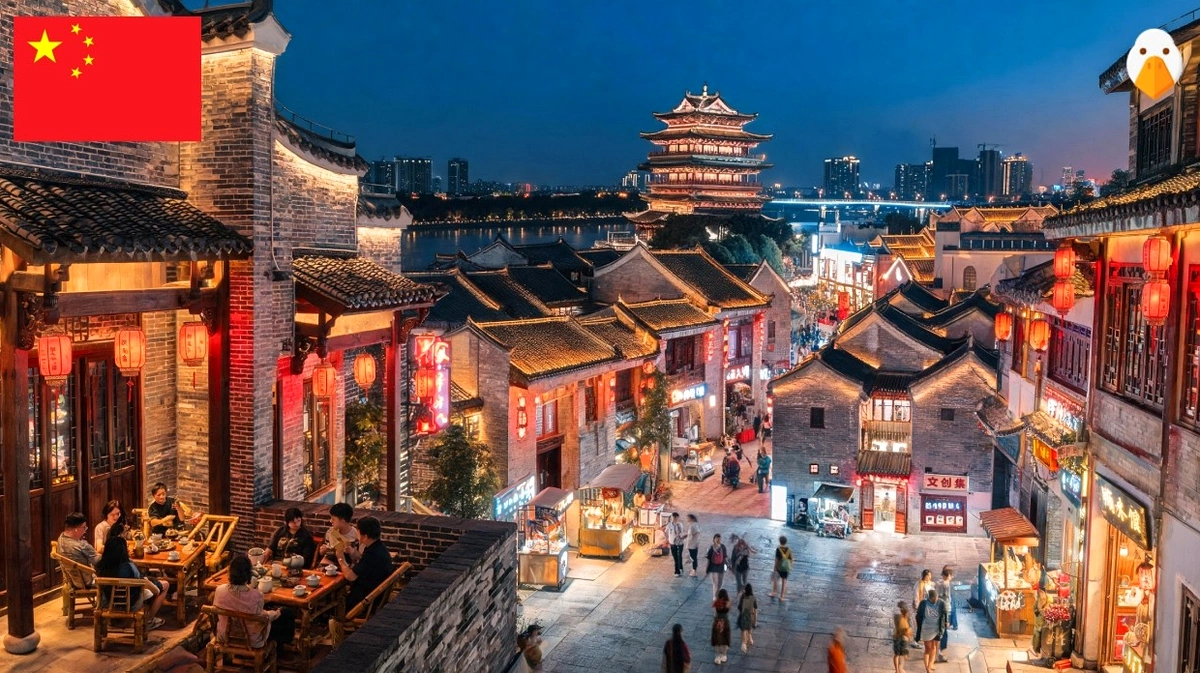
Blending into that music and dance space are savory aromas wafting from traditional food stalls, creating a dense mortal smoke atmosphere captivating any culinary travel enthusiast. From spicy street snacks characteristic of western Hunan mountains to time-honored midnight snacks, all contribute to completing a multi-sensory experience canvas in the millennial town. The flawless integration of artistic lighting, immersive live-action staging, and local night markets keeps Qianyang holding visitors from historical depths straight into pulsing present breaths, turning each overnight stay into an unforgettable memory.
Stepping past mossy layers imprinted with millennial history in Qianyang Ancient Town, local culinary culture in legendary Xiangxi is exceptionally distinct, crystallizing cultural intersections between Tujia communities, indigenous Miao, and migrant streams from historical Jiangxi and Anhui. This convergence sculpted an exclusive culinary genre named Longbiao flavors, combining the wild ruggedness of western Hunan mountains with refined, supple grace of southern Chinese food culture. Opening this flavor map is regional agricultural pride—a nationally protected geographical indication product named Qianyang sugar-orange, boasting paper-thin skin embracing crisp, juicy flesh with deep lingering sweetness, a natural gift bestowed by specialized soils and climates along the Miao River basin.
Delving deeper into traditional culinary outposts, diners are completely conquered by supreme delicacies crafted via family recipes passed down generations. Leading the list is Qianyang Baoli Pork Belly, a miracle of pork belly preparation spanning meticulous stages, from selecting grade-one pork strips to precise seasoning and stewing techniques, yielding finished amber-glazed meat that is entirely non-greasy, melting instantly upon touching the palate. Flanking Baoli pork is Xiangxi’s most unique glutinous rice blood duck, where fresh duck blood blends with pre-soaked hillside glutinous rice, steamed before pan-searing in hot lard to form a crispy crust encasing fragrant chewy filling imbued with highland spicy warmth. Furthermore, local culinary vistas are adorned by wild carp caught directly from the Yuan River, transformed by local chefs into subtle hot-and-sour fish, stimulating senses via flawless combinations of leaf-fermented rice vinegar tang and fiery wild chili heat.
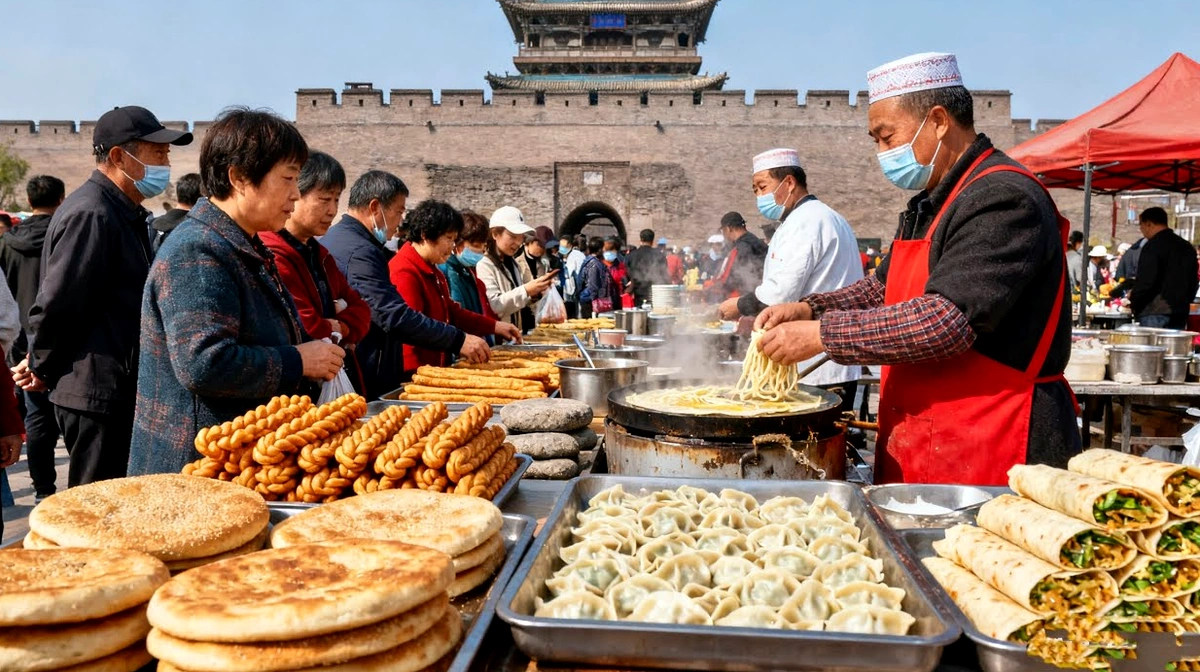
When night falls or during chilly dawns veiled in ancient town mist, Qianyang’s streetscapes illuminate with fragrant aromas emitted from traditional food carts and bustling early morning markets. There, travelers easily spot golden lantern cakes shaped like ancient oil lamps, made from thin rice batter wrapping shredded white radish before dropping into boiling oil until crispy, cracking pleasantly between vegetable sweetness and fried batter richness. Concluding that sensory journey is Yuan River periwinkles stir-fried with perilla and spicy chilies, a rustic yet artistic snack from fishermen casting nets on riverwaters, where crispy periwinkles absorb fiery sauce fragrant with aged perilla leaves, turning every meal in Qianyang Ancient Town into a living cultural voyage where history is not merely read on steles but felt through every flavor rich in local spirit.
Exploring Qianyang Ancient Town in Xiangxi becomes complete and smooth by grasping practical guides on timing, transport, and tactical tips distilled from veteran travelers. Regarding ancient urban space, commercial street areas and public spaces open freely year-round with no admission fees. However, to enter national-level historical heritage sites like Furong Pavilion or the Ancient County Office, visitors purchase comprehensive sightseeing tickets priced flexibly around sixty to eighty RMB, a worthy investment for original architectural and cultural values preserved across centuries under China’s feudal dynasties.
Regarding transport to legendary Xiangxi, modern transit systems forge breakthroughs significantly shortening geographical distances for distant travelers. The optimal and recommended approach by tourism experts is booking high-speed rail tickets directly to Hongjiang East Station. Upon arrival, travelers catch public buses, ride-hailing services, or local taxis, taking only fifteen to twenty minutes to officially pass through Qianyang’s mossy ancient city gates. For self-driving enthusiasts desiring absolute freedom over timing, inputting Qianyang Ancient Town’s official parking lot coordinates into GPS navigation guides drivers safely and conveniently straight to the destination.
To fully enjoy every moment in the ancient town without missing historical corners, a classic one-day itinerary is meticulously designed by experts to optimize energy and time. Early morning, when thin mist lingers on yin-yang tiled roofs, is golden hour for strolling down Nan Zheng Street’s bluestone paths, visiting the solemn Ancient County Office, and admiring the Bell and Drum Tower’s architecture. As golden afternoon sunlight stretches, continue toward Zhongzheng Gate, walking along wobbly wooden boardwalks by the Yuan River before stopping at Furong Pavilion to breathe in poetic poetry-filled nostalgia. At nightfall, when red lanterns illuminate ancient spaces, visitors seek roadside eateries to taste famous hot-and-sour fish embodying local culinary flavors while gazing at magical night views reflecting on calm waters.
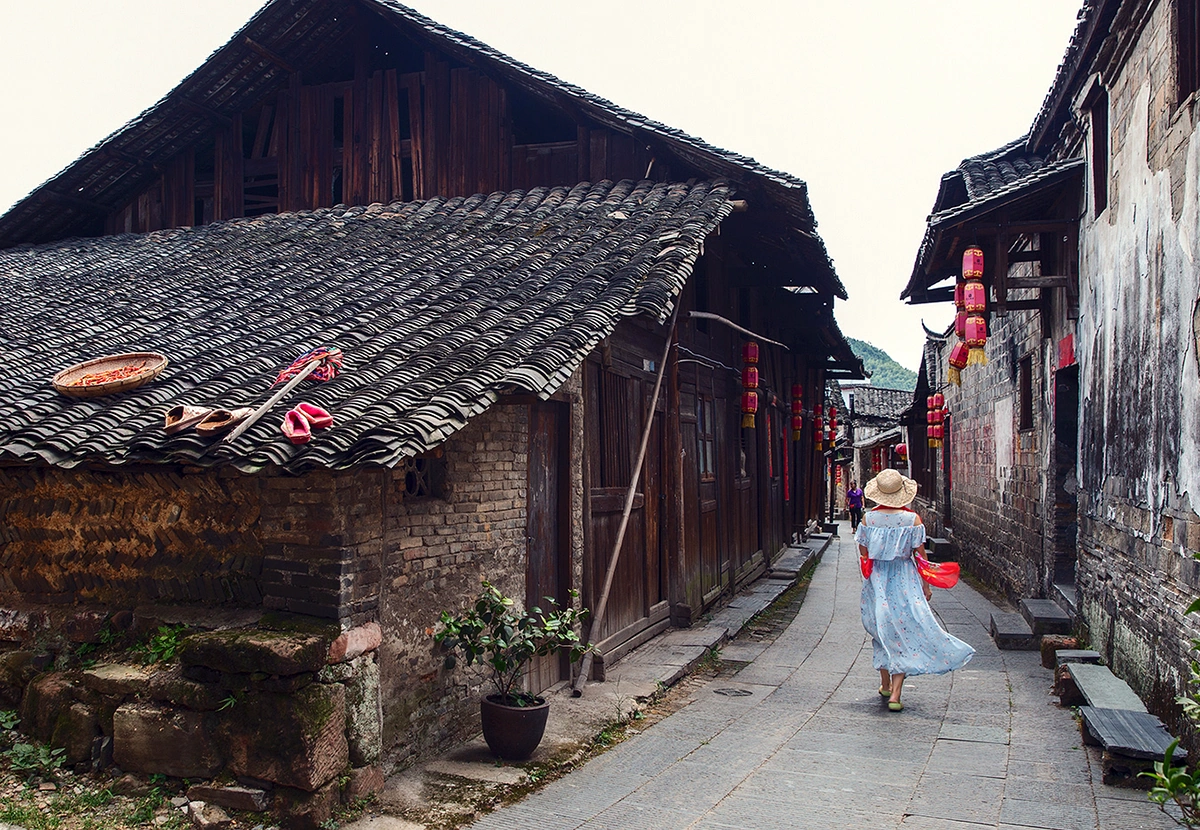
Beyond itineraries and transport, preparing personal gear dictates trip success given local terrain and climate. Ancient town streets mostly feature ancient bluestone slabs, bumpy and slippery after sudden rains; hence, wearing flat shoes with strong traction is mandatory for foot safety. Furthermore, if exploration coincides with the rainy season spanning April through June, rain gear like umbrellas, ponchos, and electronic waterproof pouches must be readied in luggage. Since Qianyang is home to diverse ethnic communities including Han, Dong, Miao, and Dao, understanding and respecting local customs and traditions ensures wonderful cross-cultural exchange experiences. For comprehensive planning across this heritage land and nearby spots, explore details in all-inclusive tour packages for flawless preparations.