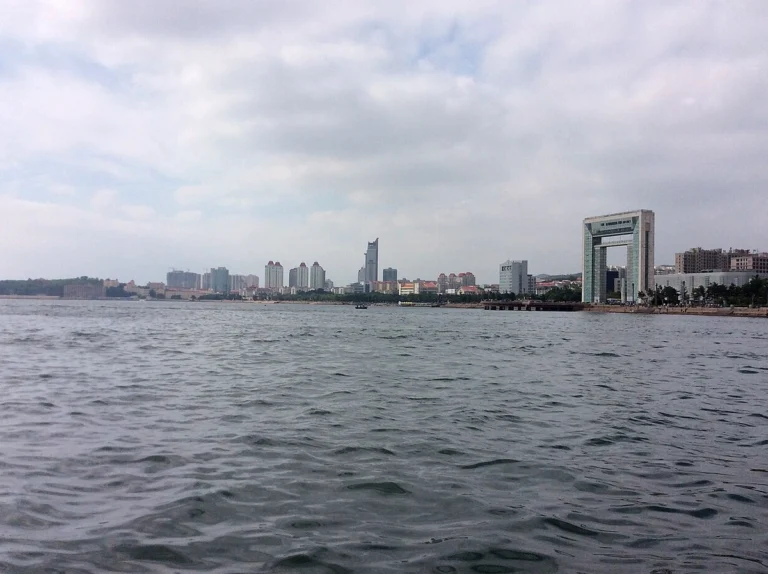
Going back in time to the late 19th century, when the Qing Dynasty was buckling under the rapid turmoil of the times, Qingdao was still a pristine bay with peaceful coastal fishing villages. Few could have imagined that this very land was about to witness a turning point that would shape its modern urban space and become an enduring visual symbol of the city. The historical origin of Qingdao’s Zhanqiao Pier, also internationally known as Zhanqiao Pier, dates back to September of the 18th year of Guangxu, namely 1892. At that time, facing pressure from Western powers eyeing the eastern coastline, Zhili Governor and Northern Minister Li Hongzhang petitioned the Qing court to approve the establishment of a defense system at Jiaozhao. Responding to that strategic policy, the military commander in charge of Jiaozhao defense, Zhang Gaoyuan, led troops to Qingdao, laying the first bricks for a work of historic stature.
By the spring of the 19th year of Guangxu, namely 1893, construction officially commenced as a vital military port. In its early formative days, locals affectionately called it “Zhanggong Bridge” or “Qianhai Zhanqiao Bridge,” tied to the imprint of the general who directly commanded the project. However, the fate of this first bridge was intertwined with the historical vicissitudes of the era. Surviving four major upheavals that shaped an entire century, the modest initial wooden bridge changed its appearance many times. The first major upheaval occurred during the German Empire’s occupation from 1897 to 1914. Recognizing the port’s special military strategic position, the German colonial administration expanded its scale, completely replacing the fragile wooden structure with a sturdy reinforced concrete and granite foundation. The work at that time was extended to a total length of 350 meters, while also expanding a railway system to serve the transportation of military materials and equipment.
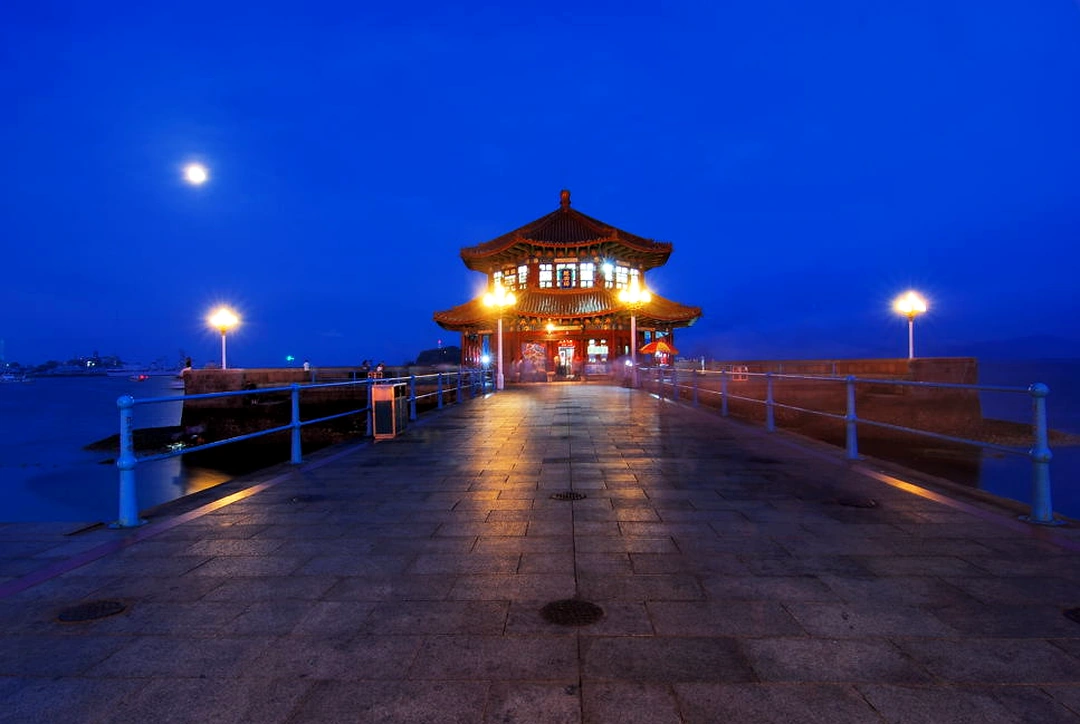
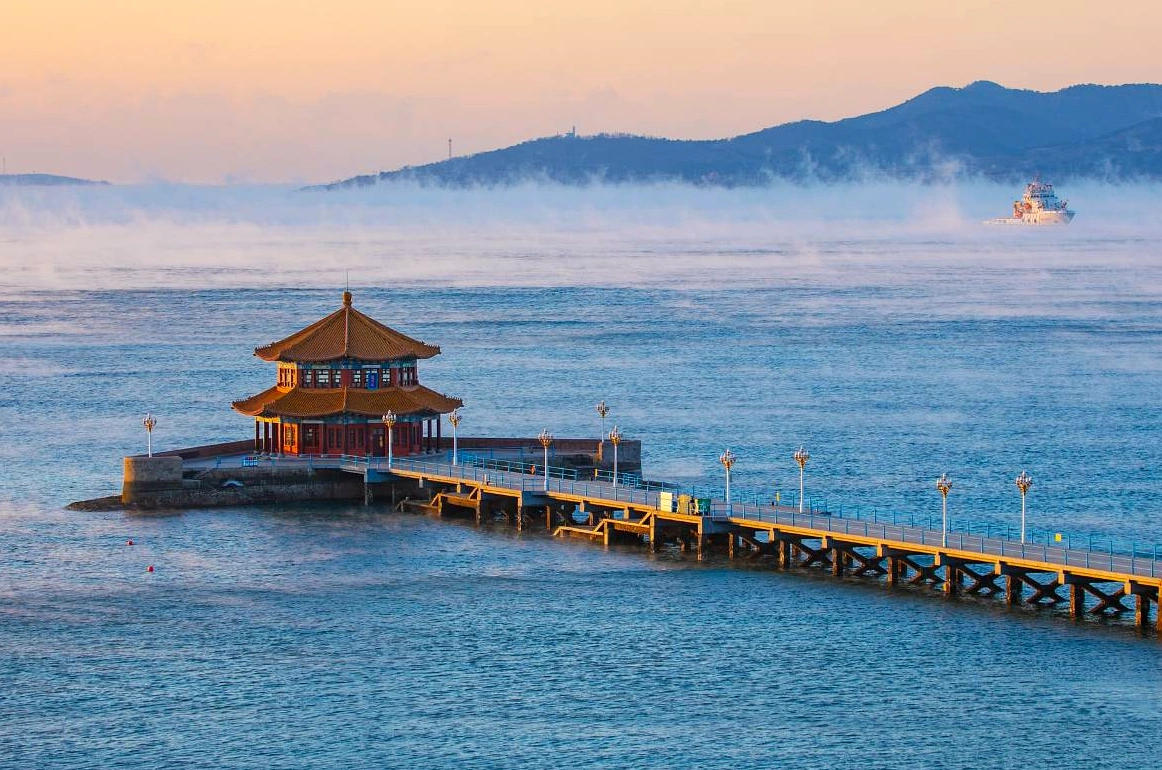
Through the period of Japanese occupation and the Republic of China government’s restoration of sovereignty from 1914 to 1945, Zhanqiao Pier continued to serve as a silent witness to dramatic power shifts on the Shandong coast. Entering the 1930s, specifically between 1931 and 1933, under the auspices of Mayor Shen Honglie and the talented design of engineer Sun Jingtao, one of the most beautiful and iconic chapters of the bridge was written. That was the major restoration project by the Nationalist government, marking the birth of the two-story octagonal pavilion named “Huilan Pavilion” standing majestically at the pier’s head. Huilan Pavilion is not merely an accent architectural piece imbued with traditional East Asian identity but has also become the visual soul of Qingdao’s entire marine space, welcoming waves crashing for millennia and watching the brilliant sunset descend over Jiaozhou Bay.
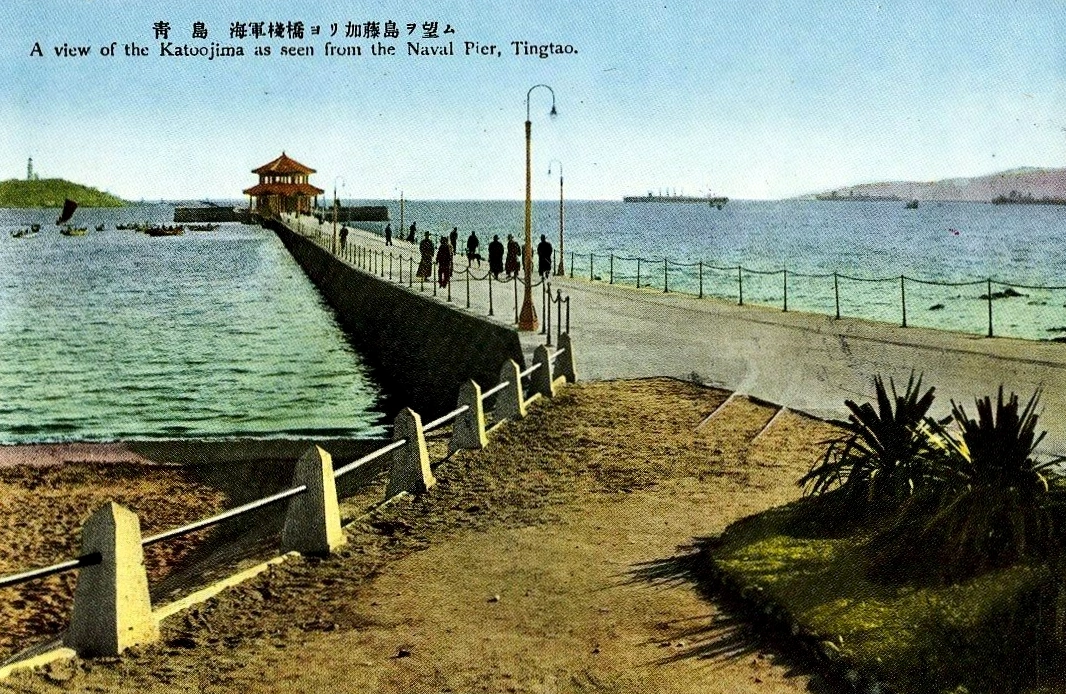
Zhanqiao Pier’s historical journey turned a new page after the founding of the People’s Republic of China, with large-scale restoration and conservation projects taking place from 1984 to 1985. The entire architecture was comprehensively repaired, with the bridge deck paved entirely in high-quality granite to increase durability against sea wind and violent waves, while embellishing the surrounding space into a coastal park friendly to millions of visitors from near and far. From a purely military wharf serving Qing court defense, through German renovation, the imprints of the Japanese-Nationalist era, to its modern spacious appearance, Qingdao’s Zhanqiao Pier has transcended the limits of an ordinary traffic engineering work to become an epic in stone and water, fully preserving the urban memory and cultural soul of an intertwined sea and sky region.
Stepping into Qingdao’s misty fairyland realm, any cultural researcher or sentimental traveler must pause before a unique natural creation and human handiwork: Zhanqiao Pier. The Feng Shui terrain of this scenic spot is seen as a living testament to the ancient East Asian philosophy of “the unity of heaven and humanity,” where topography, climate, and historical currents blend together to create a magnificent spatial harmony. Viewed overall from above, Qingdao’s old town emerges with a classic “relying on mountains and facing water” terrain, backing against sturdy mountain ranges including Xinhao Mountain, Guanyuantong Mountain, and the old Governor’s Office area, extending from there to embrace the deep blue ocean of the Yellow Sea. Zhanqiao Pier was not randomly placed at the golden point of Qingdao Bay, a meticulously calculated position serving as the golden dividing point of breathtaking coastal scenery, converging the full essence of heaven and earth.
According to topographical Feng Shui structures, the space here opens a spacious “Mingtang” (bright hall), facing directly South to welcome abundant vital energy from the sea, symmetrically facing Jiaozhou Bay’s mouth, Tuandao Island, and Xuejiadao Island in the distance. Gazing seaward from the bridge head, travelers encounter the diminutive Xiao Qingdao Island floating amidst waves, resembling a flashing jade-green vase resting on the water, perfectly completing the traditional Feng Shui model featuring the “left Qinglong” as the Huiquan Reef cluster, the “right Baihu” as Tuandao Island, and the waters in front acting as the vital accumulation bright hall of Qingdao Bay. This natural arrangement carries not only spiritual meaning regarding shelter and prosperity enhancement but also creates a sturdy posture, shielding the city from violent oceanic storms.
Beyond pure Feng Shui elements, Zhanqiao Pier’s topographical planning and tectonic engineering represent a marvel of climatic adaptability and indigenous ecology. Naturally, this land features monsoon maritime temperate climate characteristics, with pronounced tidal changes hourly. To cope with the hidden power of violent oceanic waves, engineers and architects cleverly designed the bridge’s main axis completely perpendicular to the prevailing summer wind direction, helping disperse direct impact forces from aggressive waves. Notably, Huilan Pavilion present impressively at the bridge’s terminal point acts not only as a majestic architectural accent steeped in traditional Chinese art, but physically, its mass functions as a sturdy screen, helping neutralize and break wave energy crashing against the bridge body.
Not stopping at technical and geographical values, Zhanqiao Pier also converges a uniquely distinct natural ecosystem along northern China’s coastline. Every winter-spring seasonal transition, specifically between November and April next year, when the biting Siberian cold sweeps down, tens of thousands of red-billed gulls fly here to overwinter. Tens of thousands of birds wheel across deep blue skies, blanketing an entire bay corner to form a poetic scenery known far and wide as “Qingdao holding islands and gulls.” Travelers stepping onto the straight pier stretching across waves, inhaling salty sea air, watching gulls circle ancient glazed tile roofs of Huilan Pavilion, will fully experience the exquisite harmonization between solid, majestic artificial architecture and wild, free, intensely vibrant nature.
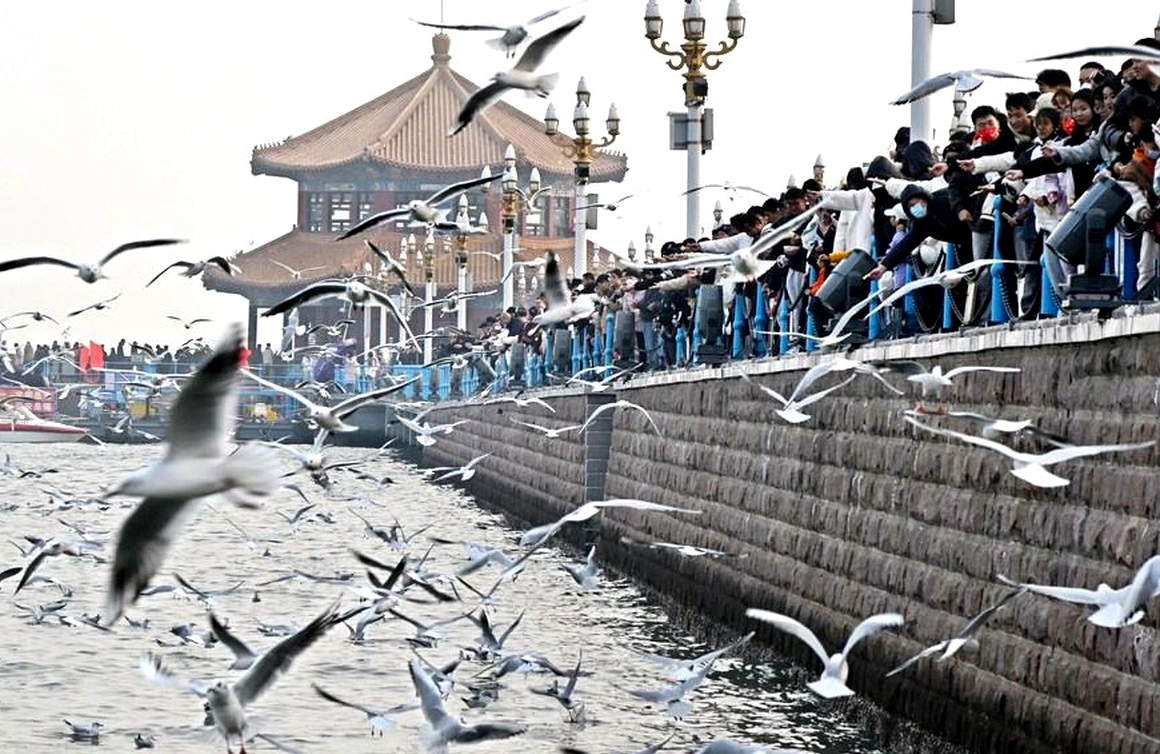
Stepping onto the historic pier stretching across the Yellow Sea, travelers cannot fail to marvel at a unique engineering and architectural masterpiece, where the flawless intersection between modern Western construction thinking and traditional East Asian aesthetic essence is expressed through every grain of stone and beam span. Qingdao’s Zhanqiao Pier (Zhanqiao Pier), with its Chinese name 青岛栈桥, embodies a structural system reflecting the harmonious combination of East and West, classical and modern. Viewed from above, the entire work emerges as a sturdy silk ribbon thrusting straight into the open sea, possessing an impressive total length of up to 440 meters, with the main bridge occupying 350 meters and the approach bridge acting as a vital lifeline spanning 90 meters, featuring a flexible width fluctuating from 8 to 10 meters, creating a spacious, grand strolling space amidst windy maritime skies.
Delving into substructure and superstructure engineering, the work testifies to unshakeable resilience against raging sea tides. Below deep water marks, engineers and craftsmen applied cast-in-place reinforced concrete pile foundation systems combined with sturdy caisson foundations, creating an invisible, unwavering “launchpad” supporting the heavy structural weight against wave erosion and time. Ascending to the superstructure, cast-in-place reinforced concrete truss and slab systems are installed synchronously and accurately down to the millimeter. On exposed surfaces, the entire roadway is paved with high-durability granite slabs, ensuring optimal load-bearing capacity while radiating a solemn, pristine beauty. Flanking both bridge sides are railing systems intricately carved from white marble (Han white jade) and granite, forming fences that are both graceful and imposing, guiding visitors toward the bridge’s terminal end—nestling peacefully amidst the renowned architectural symbol.
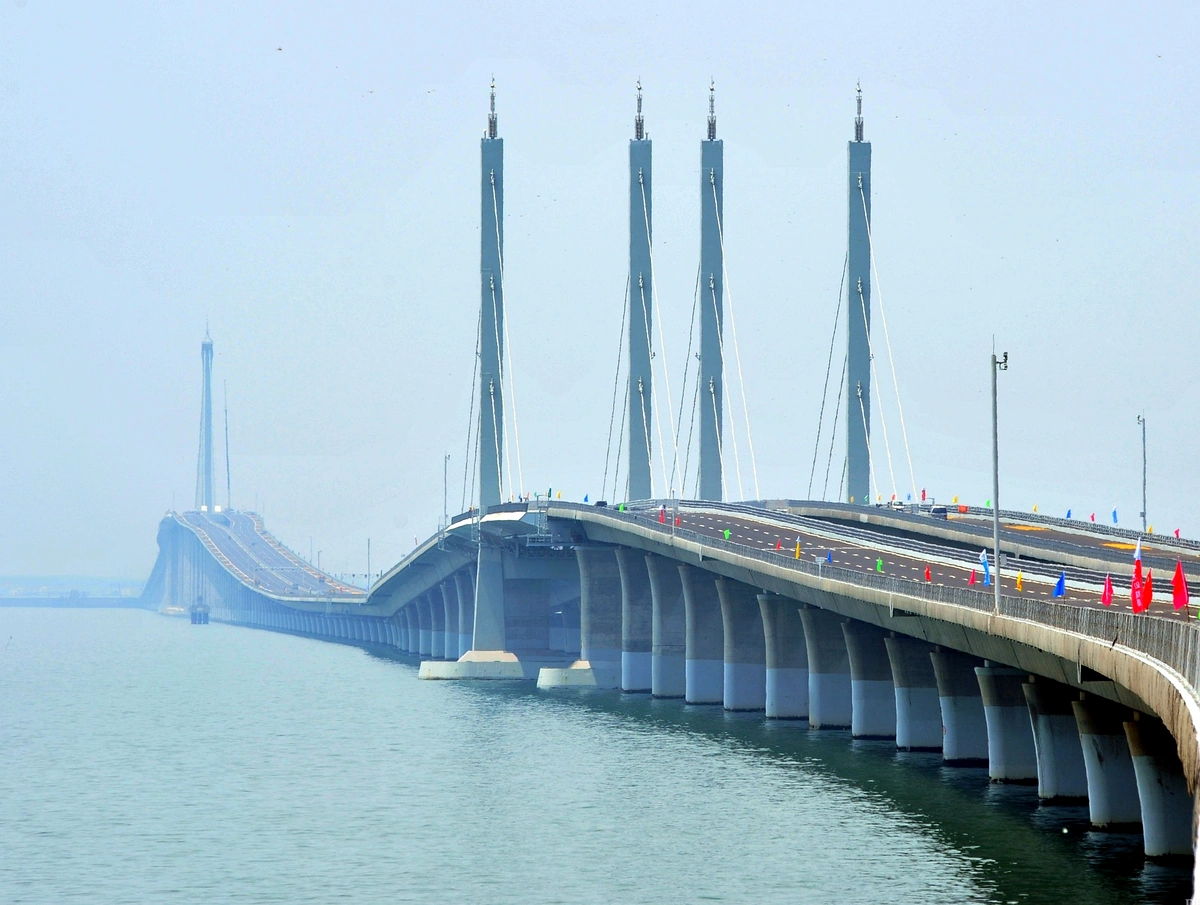
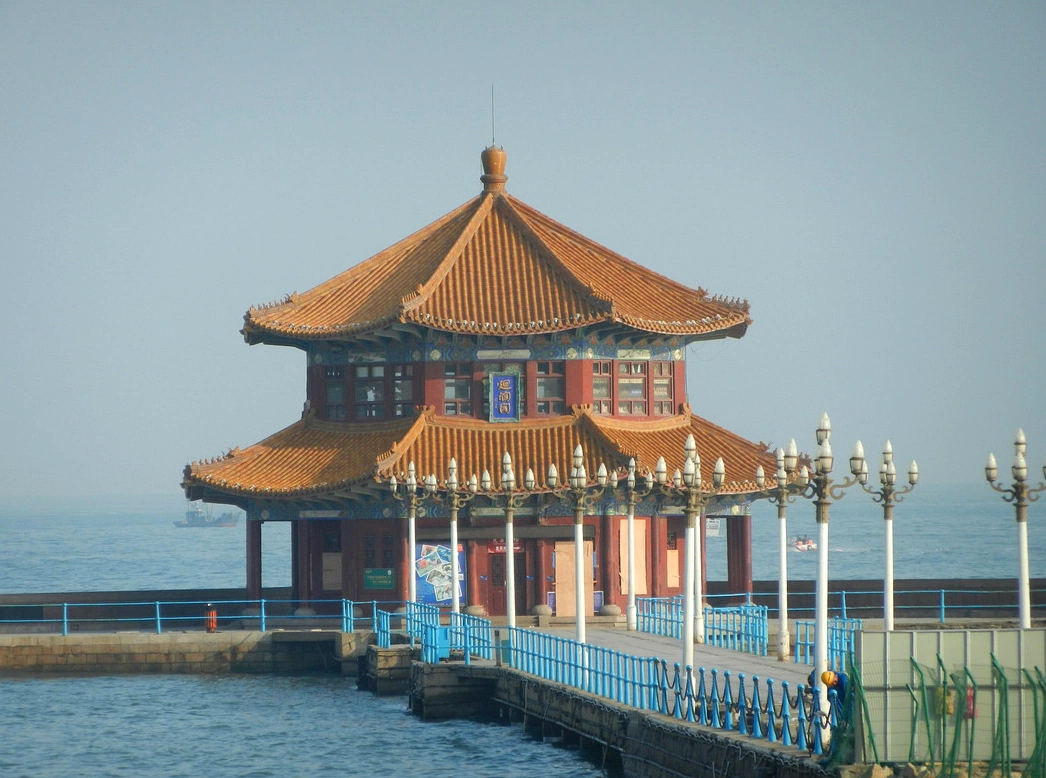
The brilliant highlight and soul of Zhanqiao’s entire space is 回瀾閣 (Huilan Pavilion), a work bearing classic traditional Chinese imperial architectural style. Reaching the bridge’s end, visitors encounter a terrace base constructed from massive granite blocks, forming a high, sturdy double-layer Sumeru (Xumi) terrace system. Presiding over that pedestal is an octagonal pavilion, carrying deep symbolic meaning regarding steadfastness, eternity, and harmony under Bagua philosophy. Huilan Pavilion is designed with a pyramidal roof with a pointed apex (chongyan cuanjian ding), featuring massive timber structures (da mu zuo) subjected to rigorous anti-corrosion treatments against sea salt spray. Beneath eaves, dougong bracket sets in single-chiao single-ang three-cai style (danqiao dan’ang sancai dougong) are arranged meticulously, serving traditional load-bearing values while creating multi-layered, overlapping sculptural beauty.
Huilan Pavilion’s roof is tiled with golden glazed cylindrical tiles glowing under sunlight—the exclusive color of ancient feudal dynasties, while main ridge sections and upturned eaves are dynamically decorated with ceramic auspicious beasts and exquisite relief patterns, crowned at the apex by a solemn precious jade vase (baoping). Overall, the pavilion exudes a majestic yet poetic beauty, fulfilling the “huilan” mission (breaking waves, circulating white-capped surges). Dotting its body are red-lacquered gold-inscribed wooden boards bearing three large characters “回瀾閣” (Huilan Pavilion) in upright, powerful yet grandiose brushstrokes, becoming an irreplaceable spiritual and cultural stopover. The fusion of modern bridges carrying Western engineering breath and Huilan Pavilion rich in oriental imperial soul transforms Qingdao’s Zhanqiao Pier into a living outdoor architectural museum, where stone carving, carpentry, and spatial planning achieve mature refinement.
When night falls, shedding daylight’s brilliant attire, Qingdao’s Zhanqiao Pier (Zhanqiao Pier) transforms spectacularly to step into an entirely different aesthetic space, where architectural lighting art and indigenous cultural pulses intertwine to forge unprecedented visual depths. Nighttime spaces here are not mere landscape illumination but peak lighting engineering, deploying advanced LED systems contrasting subtly between cool and warm tones. Viewed from afar, Huilan Pavilion—the soul of the pier structure—emerges as a wooden observatory floating amidst magical spaces thanks to warm gold metal halide lamps and string LED systems running along cornices and traditional dougong architecture. Soft golden light preserves antiquity while celebrating polished jade-green glazed tile finishes alongside intricate ancient load-bearing woodwork. Meanwhile, the pavilion’s sturdy concrete base utilizes micro-wall washing lighting, generating optical illusions making the entire work float, completely detached from surrounding dark sea waters.
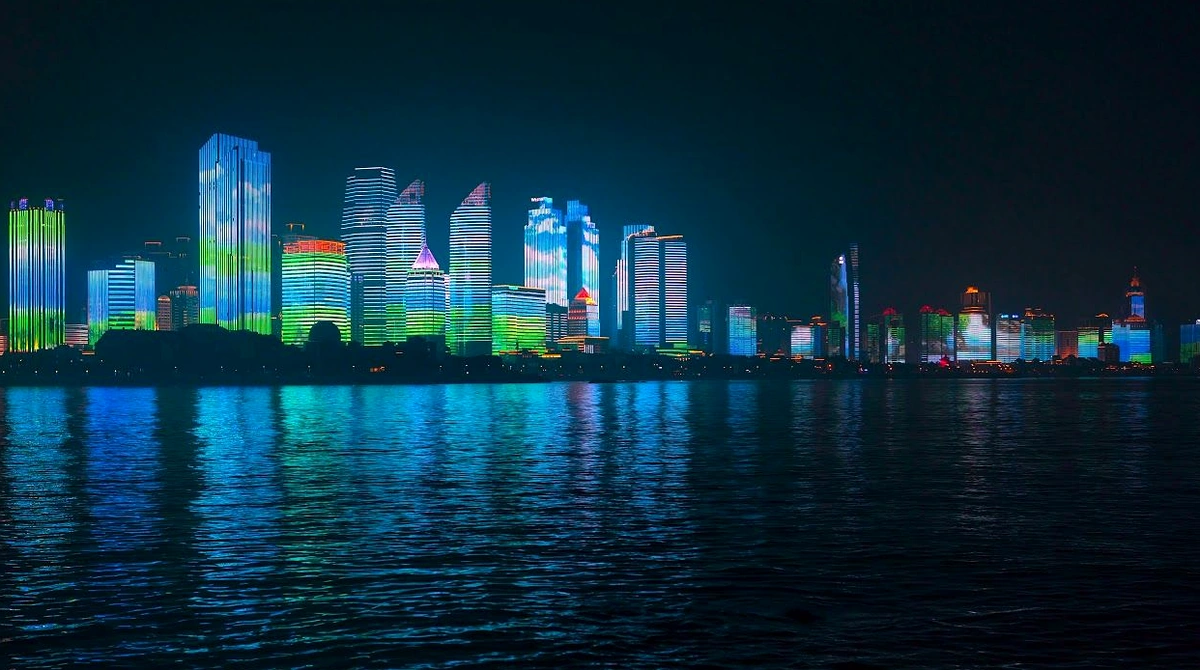
Strolling along the bridge stretching seaward, visitors perceive night life moving across railings equipped with hidden wash lighting and sophisticated point sources. That straight, lingering light band extends from coastal promenades to pier ends, reaching into boundless ocean spaces, engaging in a spectacular luminous dialogue with Xiao Qingdao Island lighthouse opposite. This fusion establishes a contemporary poetic landscape, perfectly recreating the couplet “Flying pavilions guard deep seas, island shadows intertwine” praised by past literati. This space is never entirely silent, resonating with nocturnal waves crashing against granite piers, mingling with whispers of couples and locals strolling, enjoying salty maritime breezes carrying Yellow Sea breaths.
During major annual festivals, Jiaozhou Bay’s tranquil space is stirred by national-scale visual art performances. The plaza leading to the bridge head transforms into a grand outdoor amphitheater, showcasing spectacular live-action art programs featuring drone light shows where hundreds of UAVs paint cultural symbols across nocturnal skies, combined with advanced laser water-screen projection effects. Laser beams slice through misty air, reflecting upon ripples to forge sparkling artificial galaxies, captivating every traveler. Beyond modern technology, Zhanqiao’s nightlife preserves enduring traditional values via impromptu flash-mob folk art performances right within open pier plaza spaces. Dynamic performances of Jiaozhou Yangge oceanic folk dances or melodic ditties of Maoqiang opera—two national intangible cultural heritage performing arts of Shandong Province—resound amidst windy spaces, connecting glorious pasts with dynamic presents in eastern China’s bustling port metropolis.
Reaching out into Qingdao Bay’s eternal surf, Zhanqiao Pier attracts visitors not merely through ancient architecture or epic histories, but opens a refined sensory cultural journey via renowned local gastronomy. When maritime breezes bearing Yellow Sea saltiness sweep across streets, centuries-old hearth aromas surrounding Zhanqiao awaken, inviting travelers into the deep gustatory realms of Jiaodong people. Here, the synthesis of traditional imperial cuisine and coastal fishing village lifestyles forged a unique culinary ecosystem where each dish conceals long histories, sophisticated preparation arts, and nature-honoring spirits.
Retracing historic culinary landmarks surrounding Zhanqiao Pier, Chunhelou stands proudly since 1891, honored as the premier dining hall of Lu cuisine (Lu cuisine premier hall). Surviving over a century of city vicissitudes, this restaurant preserves supreme heirloom secrets, converging sophisticated preparation arts and standards. Visiting Chunhelou without tasting crispy smoked chicken (xiangtou ji) alongside stir-fried sea snails in oil (youbao hailuo) means missing the culinary soul. Smoked chicken is elaborately prepared by master artisans, featuring golden, crispy skin with tender, succulent, sweet meat inside, paired with toasted spiced salt to detonate palatal dimensions. Meanwhile, stir-fried sea snails orchestrate speed and heat, utilizing fresh red snails from Hongdao, flash-fried over high flames to retain crispness, with natural sweetness blending in sophisticated rich sauces.
Leaving centuries-old tavern nostalgia, culinary spaces surrounding Zhanqiao shift to rustic, unconstrained coastal spirits at Chuanquanzhi seafood dumpling restaurant chains. Inheriting Jiaodong fishermen’s traditional seafood dumpling arts, Chuanquanzhi elevates this rustic dish into contemporary culinary heritage. Dumplings are famed for tender, chewy dough enveloping fresh seafood fillings distilled from pristine marine produce. Outstanding variants include black squid ink dumplings wrapped in natural squid ink dough bearing mystical black hues and rich sweetness, alongside yellow croaker dumplings featuring fragrant, melting fillings. Each dumpling is meticulously shaped like artworks, encapsulating maritime saltiness and generational family warmth.
Yet, local culinary canvases remain incomplete without unconstrained street food traditions, symbols of Qingdao residents. Familiar imagery features unpasteurized draft beer vats (original draft beer), carrying rich barley aromas and bubbling live yeast spores. Purchasing beer via plastic bags—a unique culinary wonder exclusive to this city—delivers ineffable delight for first-time visitors. Carrying plastic bags filled with bubbling white “liquid gold,” diners stroll along Zhanqiao’s coast, sipping alongside charcoal-grilled squid skewers fragrant with garlic and chili, or sweet iron-plate crabs. Additionally, intangible cultural heritage snacks like pork fat cracklings (zhiezha)—pork fat fried dry through heirloom steps achieving crispness and melt-in-the-mouth texture—or sea jelly (haitai liangfen) cooked from seaweed and served with garlic vinegar, forge palate harmonies clearing heat and asserting local identity.
Equipping practical experiences spanning timing, transport, and touring strategies is vital when exploring centuries-old historical and architectural symbols along the Yellow Sea. Per surveys, Qingdao Zhanqiao Pier opens entirely free of charge along its pedestrian bridge, facilitating strolls anytime. However, to explore Huilan Pavilion’s interior, opening hours follow seasonal regulations: summer and autumn hours run from 08:00 AM to 17:30 PM, while winter and spring close half an hour earlier from 08:00 AM to 17:00 PM. Huilan Pavilion currently displays valuable modern historical exhibitions with reference tickets costing roughly 10 RMB, and advance booking via official mini-programs is recommended to bypass queues during peak periods.
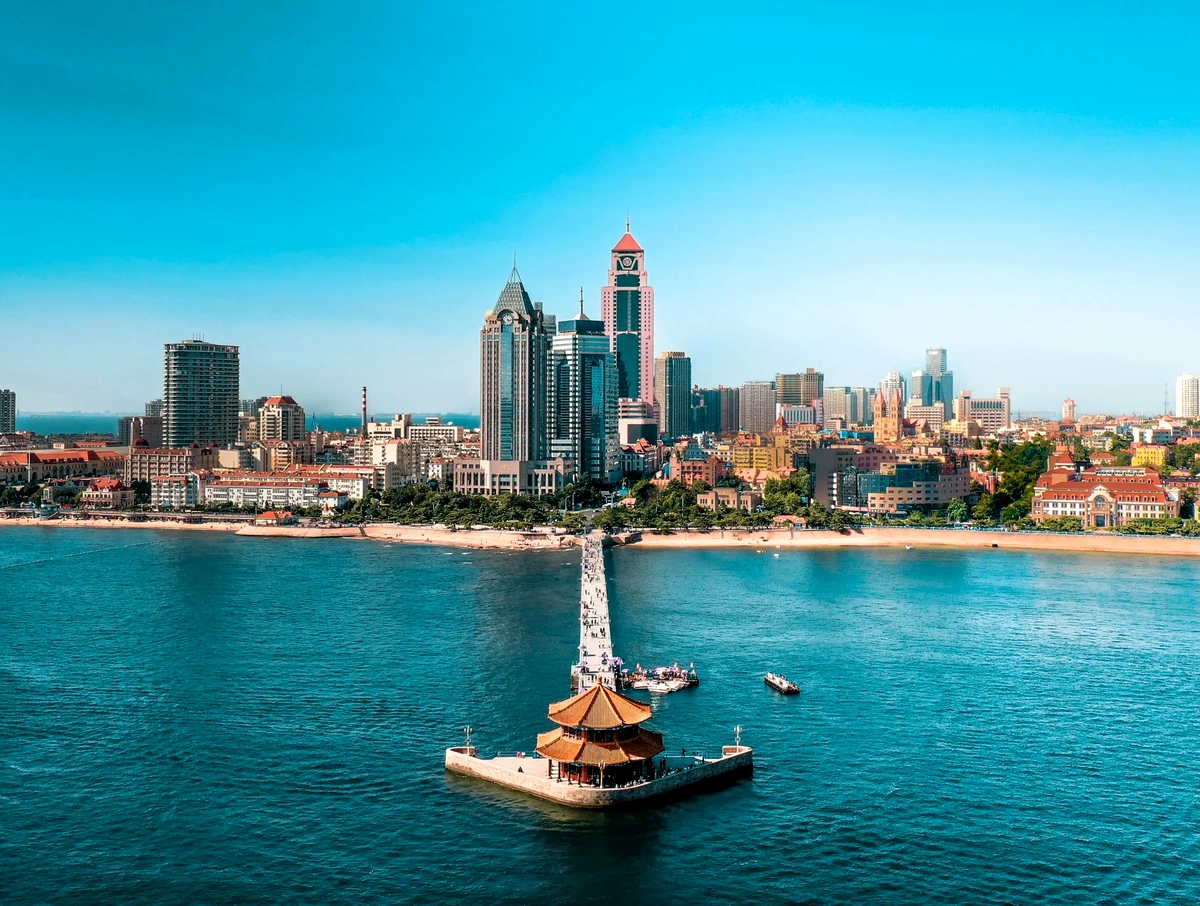
Regarding transport options, intelligent public transit saves time and avoids traffic gridlock in old town districts. Travel experts recommend urban metro lines, specifically Line M3 or M1 straight to “Qingdao” Station (青岛站), walking roughly 300 meters south to reach the northern bridge head. This route eliminates coastal bottleneck inconveniences. Upon arrival, optimizing visual experiences involves linear strategies: starting from the northern plaza, strolling along the bridge stretching across waves, entering Huilan Pavilion, then returning to connect directly with Zhongshan historic district behind.
Depending on time and season, Zhanqiao offers distinct vistas requiring proper timing. Early mornings bathe bridges in golden light, creating tranquil scenes; winter or spring afternoons between 3:00 PM and 4:00 PM during receding tides offer golden hours for interacting with gulls. Nighttime illuminations are best viewed from Taiping Road and Hunan Road intersections or western coastal walkways. Gear-wise, windy coastal microclimates and chilly nights require windbreakers or heavy puffers, paired with high-traction walking shoes preventing slips on frosty granite pavements.
Finally, respecting heritage values and natural ecosystems requires civil codes of conduct, prohibiting arbitrary animal feeding with substandard foods and preserving ancient architecture. To plan thoroughly, travelers can reference our all-inclusive tour packages for fulfilling, professional cultural experiences.