Tracing the stream of time back to the early 1920s, when the port city of Tianjin still bore deep Western architectural imprints from its foreign concession era, in the core area of the former French concession—now Chifeng Road, formerly known as Rue Consulate Vong—a typical French-style structure quietly arose. It was an ancient villa built in French Renaissance architecture featuring a mansard dome, tall wide windows, and embossed relief details bearing the breath of early 20th-century European ambiance. Through numerous modern Chinese historical vicissitudes, from the turbulent years of world wars and unpredictable political shifts to decades of reform, that villa seemed destined to sink into the historical marks of a colonial past, had it not been for the appearance of a visionary figure with an extreme nostalgic passion in the early 21st century.
In 2002, the central figure in the rebirth story of this wonder was the renowned Tianjin antique collector Zhang Lianzhi. With the sharp eye of a master collector and a free-spirited artistic soul, he spent tens of millions of yuan to acquire this entire grand mansion, which formerly served as a consulate or diplomatic residence. Initially, Zhang Lianzhi’s sole intention was to find a worthy space to display and preserve the colossal volume of antiques he had painstakingly collected over the years. However, stepping into the desolate interior of the old building, a bold, eccentric, and revolutionary idea sparked in his mind: transforming it into a private museum dedicated to Chinese ceramic specimens, while turning the building itself into a living artwork, a flesh-and-blood embodiment of millennia of ceramic cultural history.
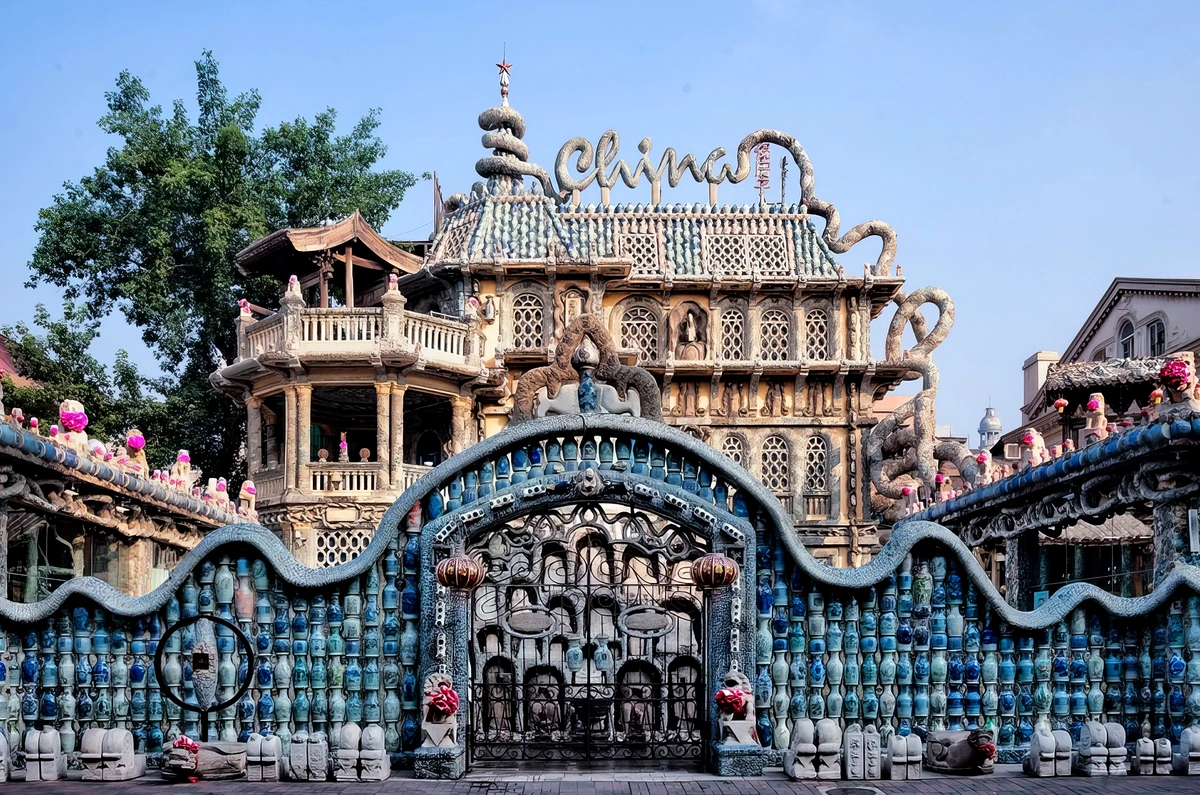
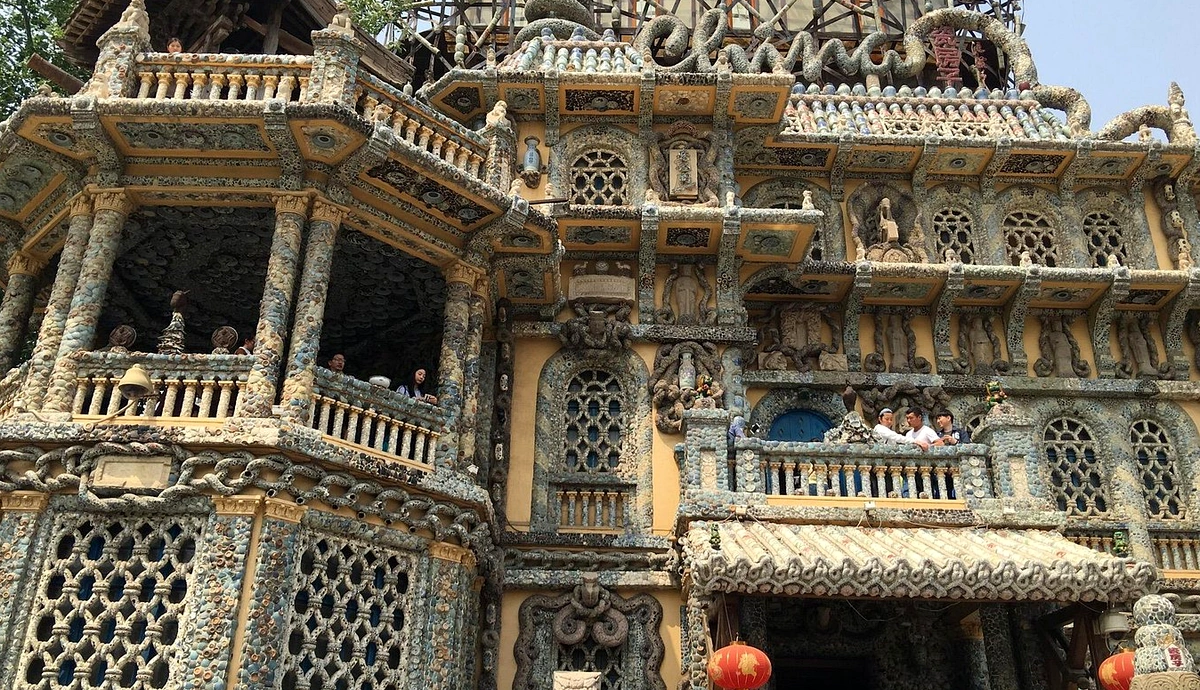
The journey of transforming the old French villa into the so-called “China Porcelain House” (Tianjin Porcelain House or 瓷房子) was not an ordinary restoration, but a massive artistic surgery spanning nearly five straight years, beginning in 2002 and finishing in 2007. Zhang Lianzhi and his team of artisans mobilized immense financial resources, expending over one hundred million yuan to execute comprehensive “restructuring” and “porcelain-ization” of the architectural space. Millions of broken shards from glorious imperial dynasties such as Tang, Song, Yuan, Ming, and Qing, alongside renowned ceramic wares from across the globe like Longquan celadon, Jingdezhen blue-and-white porcelain, Ding white porcelain, Tang Three-Color glazed pottery, together with tens of tons of exquisite porcelain ware, thousands of intact ancient ceramic vases, hundreds of millions of ancient marble pieces, and thousands of rare crystal and agate fragments were mobilized to encrust every inch of walls, roof tiles, pillars, and balconies of the building.
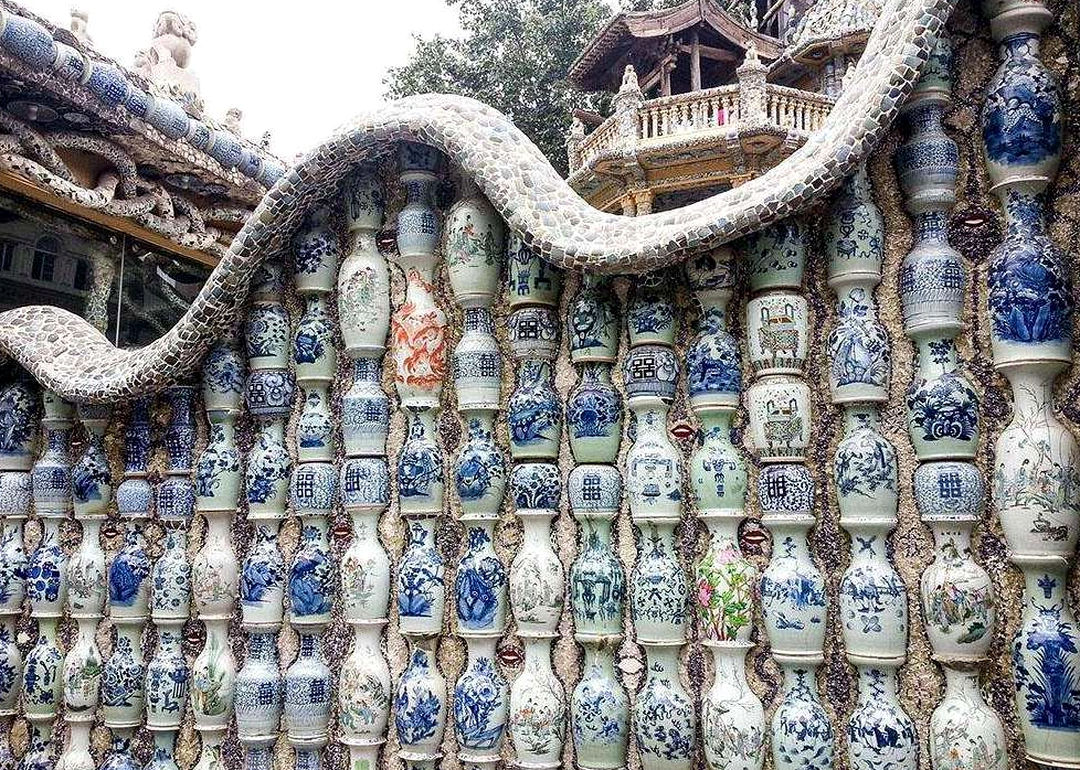
The combination of romantic Western architectural structures and traditional Eastern ceramic inlay art created an overwhelmingly stunning visual landscape challenging all traditional aesthetic frameworks. Through the shaping hands of time and human persistence, this completed 2007 structure officially opened to visitors, instantly becoming a cultural focal point shaking both domestic and international spheres. The vicissitudes of times could not bury the unique value of a structure where Tianjin’s colonial past strangely fused with the quintessence of ancient Chinese ceramic art. Its fame quickly crossed national borders to reach global stature, evidenced in 2010 when the prestigious US newspaper *Huffington Post* honored the Tianjin China Porcelain House Museum among the “Fifteen Most Unique and Miraculous Architectural Designs Worldwide,” affirming the enduring position of a contemporary cultural heritage of human scale.
Tianjin, the convergent land of waters in the lower reaches of the Hai River and east of the North China Plain bordering Bohai Bay, has been blessed by nature since antiquity with a uniquely striking terrain. Here, the Hai River meanders softly, forming a natural, fluid “S” curve, bringing abundant vitality and bustling trade arteries to a major northern Chinese port metropolis. Situated right amidst this fluctuating historical space is the Tianjin China Porcelain House Museum, also known as “瓷房子” (Porcelain House), a majestic structure situated on tree-shaded Chifeng Dao (Chifeng Road). From a geological perspective, this entire area lies on the delta alluvial plain of the Hai River system, possessing a flat, stable terrain deeply marked by centuries of natural alluvial accumulation.
Viewed through the lens of traditional feng shui and ancient oriental physiognomy, the planning location of the Porcelain House contains profound philosophies regarding space and fortune. The meander of the Hai River embracing the old urban district creates a classic land formation termed by ancient geographers as “Jade belt tied around the waist” or “Returning dragon to its ancestral home.” This terrain accumulates vital energy and wealth while harmonizing with the dynamic geographical structure of a modern commercial metropolis, where philosophies like “taking water as wealth, taking roads as energy” are supremely honored. When Western powers established concessions in Tianjin in the late 19th century, they planned this area in standard Western grid patterns with square streets, delicately intersecting Renaissance colonial architecture with traditional Eastern space. Within this culturally intense urban space, the old French villa was chosen as a foundation to expand and transform into an unparalleled ceramic architectural masterpiece.
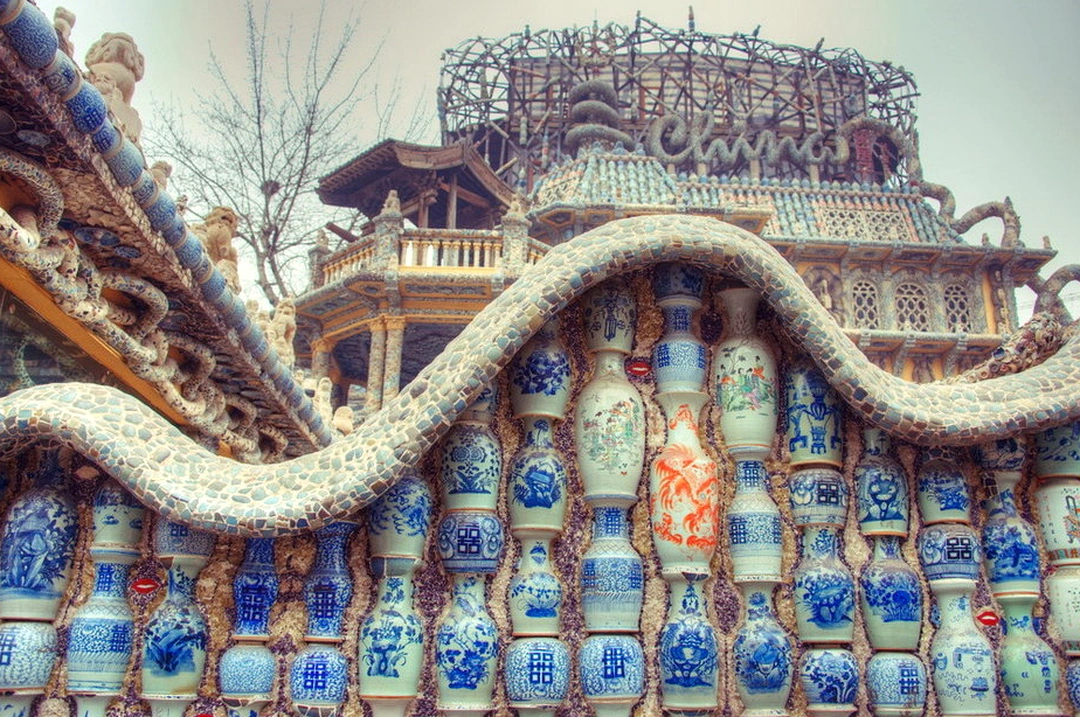
What endows the Porcelain House with fierce vitality and breathtaking beauty is how architectural surfaces interact with the surrounding urban space through elaborate mosaic techniques. While neighboring colonial streets favored subdued, monochromatic tones carrying European nostalgic nuances, the facade of the Antique Porcelain Museum is a brilliant color symphony completely breaking traditional molds. Hundreds of millions of broken ancient ceramic shards—from Ming blue-and-white plates and Qing celadon vases to multicolored porcelain—were meticulously selected and hand-applied across the building’s exterior. This process demands deep understanding of construction materials and traditional inlay arts, where each ceramic piece is intentionally arranged to create dragon-phoenix motifs, lotus flowers, water clouds, or solemn historical anecdotes, turning cold plaster walls into giant living relief paintings under sunlight.
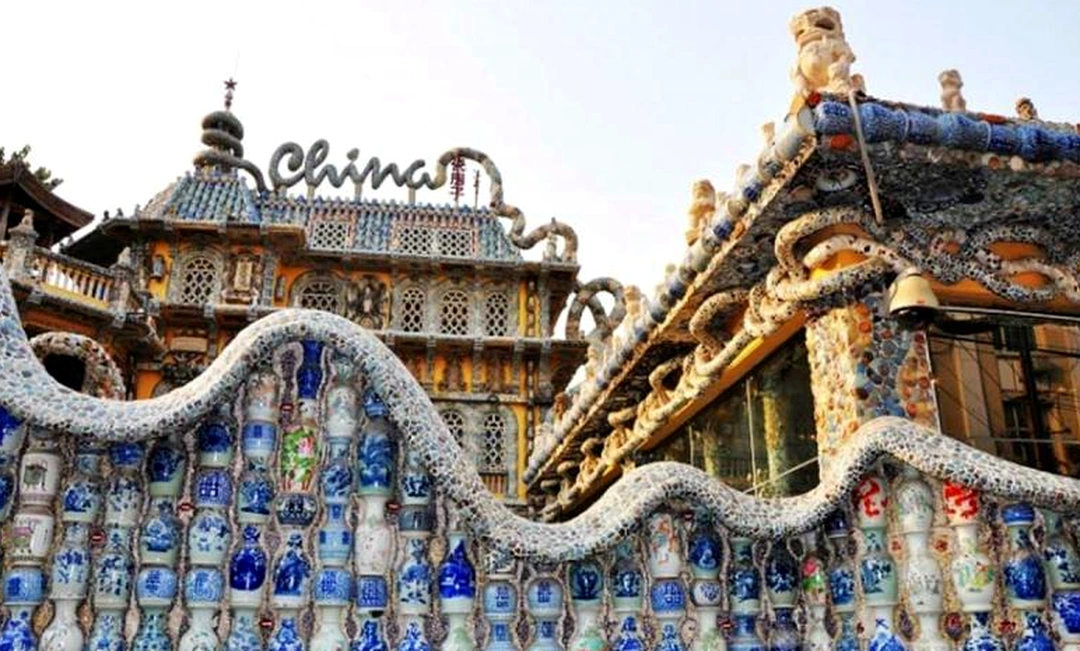
Alongside the ceramic armor blanketing roofs, balconies, and perimeter walls, the Porcelain House’s signature landscape is shaped by giant dragon-vein pillars entwined by broken vase shards, sculpted like ceramic dragons soaring into Tianjin’s sky. Combining the modern grid planning of the old concession with the explosion of shapes, colors, and materials of ceramic architecture turns this spot into an unmistakable visual landmark. Any visitor stepping into this space experiences wondrous transformations between past and present, traditional folk art and contemporary urban aesthetic thinking, affirming the stature of a structure preserving national treasures while acting as an irreplaceable cultural heritage itself.
Stepping through the doorway of the Tianjin China Porcelain House Museum, globally known as the China Porcelain House, travelers cannot help marveling at an architectural space transcending all traditional frameworks. Originally, this building’s foundation stemmed from a grand four-story French-style structure combining classic brick and wood, featuring a deep basement and nostalgic attic spaces. Spanning hundreds of square meters of land, the actual construction area of the grand mansion reaches nearly 3,000 square meters, forming a majestic structure in the heart of the port city. Yet under the talented hands, boundless imagination, and utmost dedication of collector Zhang Lianzhi, the original Western-breathing shell underwent a spectacular metamorphosis, becoming an unprecedented artistic masterpiece.
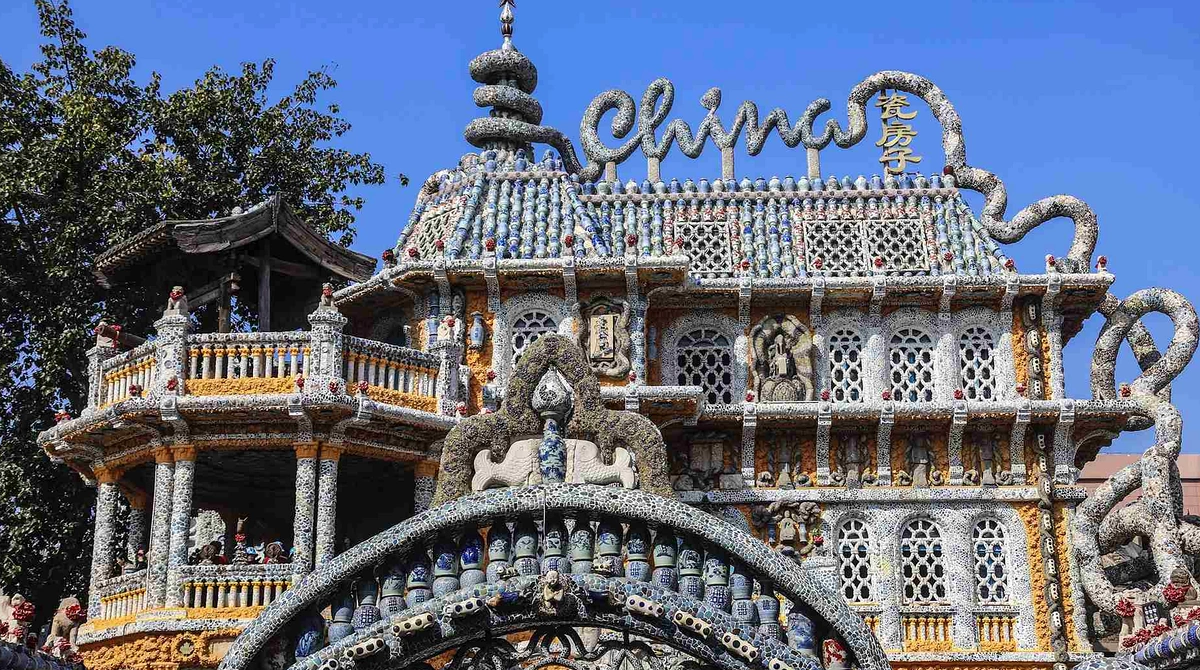
To construct this majestic appearance, artisan Zhang Lianzhi applied a unique building technique termed “external thermo-additive engineering and decorative coating.” Instead of demolishing old structures, he blanketed the villa’s entire exterior and interior with a giant armor crystalized from millions of precious ceramic fragments. Across facades, rough walls, pillars, balconies, and window frames, countless exquisite ceramic shards, priceless intact antiques, and Ming-Qing white marble sculptures abound. These fragments are no random arrangement, but an encyclopedic collection of Chinese fine art history, gathering ceramic essences from imperial and folk kilns across glorious dynasties like Han, Tang, Song, Yuan, Ming, Qing, right down to the Republican era.
Directing gazes upward to the pinnacle of architectural art here, viewers hold their breath before a giant ceramic dragon winding with authority. Running along the main roof ridge, this mythical creature stretching dozens of meters is exquisitely sculpted down to the smallest detail, assembled from millions of broken porcelain shards through meticulous hands and grinding polishing showcasing supreme craftsmanship of skilled artisans. The ceramic dragon delivers powerful visual impacts under sunlight while symbolizing peak cultural intersection, where classical Western architecture harmoniously blends with sacred symbols and age-old Eastern traditions.
The mansion’s interior opens further wondrous wandering layers as every footstep treads on history, since even stairs, pathways, and handrails are densely inlaid with ceramic shards bearing vibrant blue-and-white, celadon, and polychrome glazes. Combining grand French architecture with deep Chinese ceramic culture turns the Tianjin China Porcelain House Museum into a living entity, a grand outdoor museum witnessing an extreme yet romantic heritage preservation passion of an individual, leaving future generations an unrivaled spatial architectural masterpiece on humanity’s cultural map.
When night falls over historic Chifeng Road, Tianjin seems to shed its daytime nostalgic coat to don an entirely different appearance where contemporary architecture dialogues directly with heritage culture. To honor this majestic architectural structure’s unique value, Tianjin’s municipal government cooperating closely with site management deployed a precise, sophisticated urban lighting and landscape upgrading project. This project utilizes advanced LED technology harmoniously combining cold and warm hues, creating flexible light strips from floodlights to wall washers, encompassing every winding curve of the porcelain castle. When these artistic lighting streams simultaneously illuminate hundreds of millions of broken antique shards and ceramics across dynasties, a wondrous visual phenomenon emerges. The deep, mysterious blue of blue-and-white glazes under night lamps becomes magical, interweaving with the deep, warm tones of famille rose glazes alongside countless multicolored crackle glazes. All ceramic surfaces reflect and refract light mutually, turning the hundred-million-shard mansion into a magnificent “Glass Palace,” glittering like a mirage amidst the modern metropolis.
Stepping through that magically illuminated gateway, nightlife at the Tianjin China Porcelain House Museum transcends pure visual experiences, expanding into an art appreciation space carrying deep Eastern philosophical depth. Within indoor display rooms and exhibition spaces, organizers maintain frequent specialized displays of rare antiques running parallel with in-depth symposiums on intangible cultural heritage. Traditional art lovers visiting at this time gain rare opportunities to immerse in intimate yet deeply immersive performance spaces. The melancholic guqin strings resonate ethereal melodies within an environment surrounded by centuries of ceramic history, creating cross-temporal harmonic resonance. This sophisticated combination is not merely an artistic performance, but a deep multi-dimensional dialogue between architect Zhang Lianzhi’s whimsical postmodern aesthetic thinking and the solemn historical space of feudal treasures past. Here, every night corner transforms into a miniature live-action stage where visitors come not only to observe with eyes, but also to listen to the breath of time echoing from celadon and pottery shards of a bygone era.
When bustling sounds of Tianjin’s old quarter merge into appetizing aromas wafting from alleys around the Tianjin China Porcelain House Museum, the heritage exploration experience shifts to a completely novel dimension of taste and indigenous culinary culture. Leaving behind the overwhelming space of centennial porcelain-inlaid walls, immersing in the culinary world surrounding the porcelain house is the deepest way to fully grasp Tianjin’s spirit. This place preserves heirloom recipes from feudal times while acting as a living museum of urban market culture, where every dish carries a historical story and culinary philosophy passed down through generations.
Mentioning Tianjin’s culinary map invokes the renowned triad dubbed the “Tianjin Wei Three Wonders,” culinary symbols transcending local boundaries to national stature. Pioneering this list is “Goubuli Baozi” (Goubuli steamed stuffed buns), a dish bearing amusing Qing Dynasty anecdotes tied to its founder’s quirky nickname. The core of this dish’s fame lies in semi-leavened dough-kneading arts combined with traditional soup fillings, requiring artisans to skillfully create exactly eighteen folds on the wrapper rim, uniform like blooming chrysanthemums. Steamed, the sponge-like wrapper cradles rich meat and sweet broth fillings, delivering an unforgettable delicate taste experience. Standing alongside Goubuli is “Erduoyan Zhagao” (Earhole Fried Cake), a traditional dessert with over a century of history. Cakes made from premium glutinous rice flour wrapping smooth red bean paste are deep-fried in aged oil to perfection, yielding golden crispy exteriors while retaining chewy interiors sweet and fragrant. Completing this triad is “Guifaxiang Shibahui Mahua” (Shibahui Fried Dough Twists), a marvel in local dry food processing. Through clever blending of herbal spices and heirloom frying techniques, large twisted doughs achieve absolute crunchiness, resisting sogginess over time while releasing sesame, cinnamon, and maltose aromas through every golden layer.
Besides imperial dishes or long-standing specialties, Tianjin’s culinary soul rests within street food carts and casual roadside eateries, reflecting daily local life most authentically. Early mornings around the ceramic museum lack completeness without the aroma of classic “Tianjin Jianbing Guozhi” (Tianjin Crepes). Unlike modern variations elsewhere, traditional crepes here firmly utilize mung bean and millet flour creped thin on large iron griddles, strictly omitting industrial hot dogs or lettuce to focus on native flavors of eggs, scallions, custom sweet bean sauce, and crispy fried dough sticks inside. Alongside is “Wo Baicai” (or Jiabaicai), a unique variation of mung bean crepes cut into willow-leaf strips, stir-fried or soaked in savory, rich sauce scented with soy sauce, shrimp paste, and sesame oil. This dish offers tender yet savory textures, awakening senses from the first spoonful.
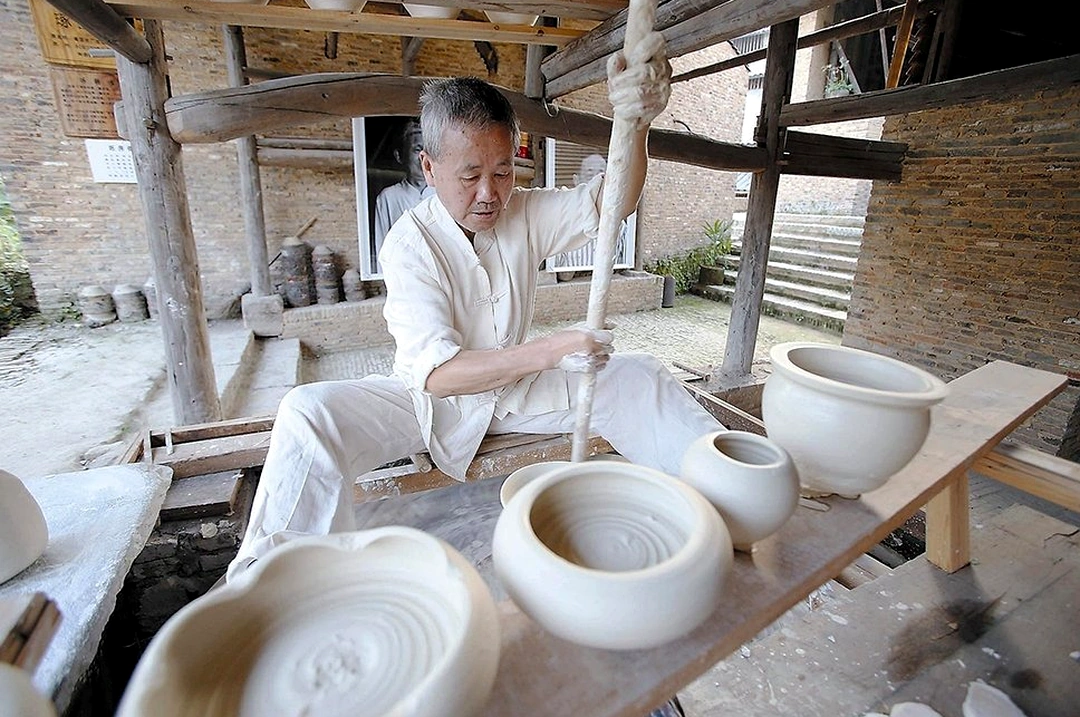
Dining experiences around the Tianjin China Porcelain House Museum thus extend beyond filling stomachs into a cross-temporal cultural journey. Sitting on sidewalks watching bustling crowds, enjoying eighteen-fold steamed buns or crispy fried cakes, travelers perceive the hearty, refined, and humane spirit of the port city. Traditional flavors, harmonizing with the majestic artistic space of millions of ancient porcelain shards, weave a multicolored tourism picture where history, art, and cuisine resonate with the enduring song of a brilliant civilization.
Mastering practical information regarding operating hours and transport routes is pivotal when approaching this unique porcelain-inlaid architectural masterpiece in Tianjin. The Tianjin China Porcelain House Museum welcomes visitors daily within standard hours from 9:00 AM to 6:00 PM; however, during major holidays or peak seasons, site management extends service hours until 7:30 PM or 8:00 PM to accommodate art lovers.
Due to limited museum capacity ensuring absolute safety for centennial artifacts, this attraction strictly implements real-name ticketing mechanisms. Planned visitors are advised to book tickets 1 to 2 days ahead via the site’s official mini-program or reputable online booking platforms to avoid prolonged queues or sudden ticket sold-outs during peak weekends. Proactive booking optimizes trip schedules while securing preferred lighting time slots for admiring and capturing magnificent moments beside giant ceramic walls.
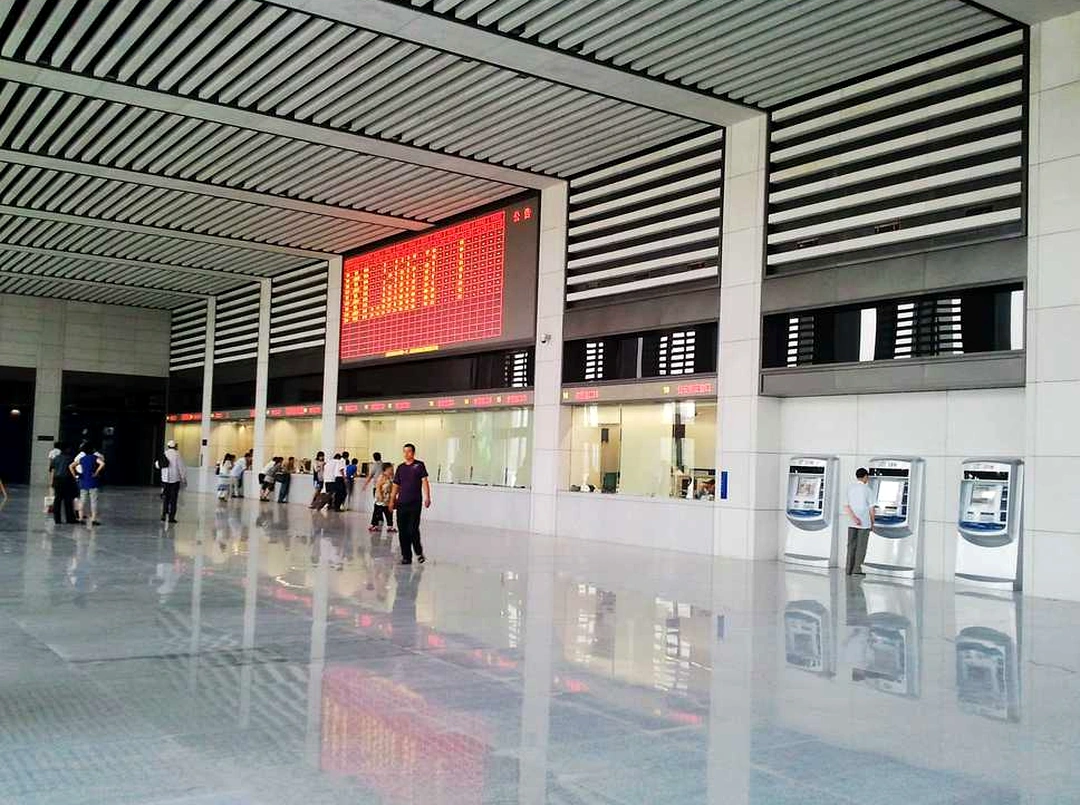
Regarding urban transit infrastructure, approaching the porcelain house on historic Chifeng Road is exceptionally convenient via Tianjin’s modern public transit network. Travelers can board arterial subway lines like Line 3 or Line 4, alight at Hepinglu Station, and enjoy a pleasant 5 to 8-minute walk from Exit B to the museum gates. Conversely, driving personal cars is strongly discouraged by local travel experts, as Chifeng Dao is a strictly preserved heritage architectural complex featuring intricate one-way street networks and scarce parking, easily stranding drivers.
Beyond timing and transport, appropriate clothing choices dictate comfort and safety inside this specialized exhibition space. Because the building’s artistic structure is blanketed by millions of broken antique porcelain shards and countless solid angular stone sculptures, visitors must avoid slippery footwear like high heels or platforms to prevent slips and falls. Instead, sneakers or dedicated walking shoes with anti-slip traction are ideal, while maintaining safe distances and avoiding forceful leaning against fragile art walls.
Every exploration step through this majestic architectural work is not merely an afternoon stroll across Chinese ceramic history layers, but an opportunity to contemplate philosophies of regenerating traditional values within modern urban life. To turn intentions of exploring this unique cultural heritage into emotional, effortless practical experiences regarding logistics, consult all-inclusive tour packages custom-designed to offer deep perspectives and dedicated companionship from experienced cultural experts.