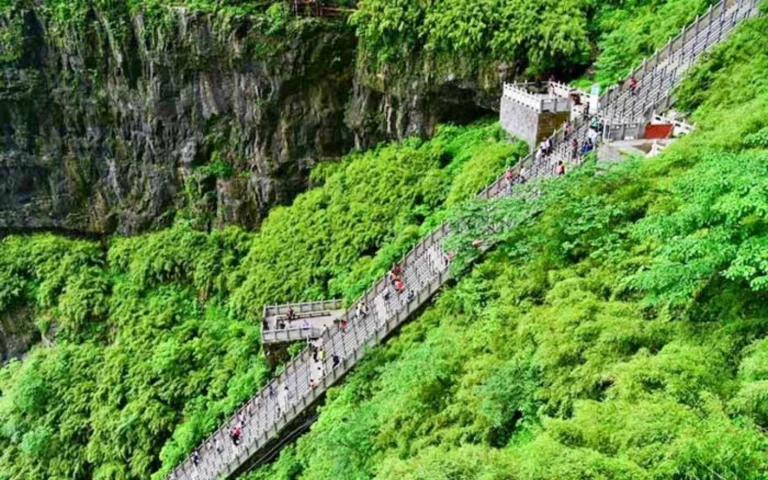
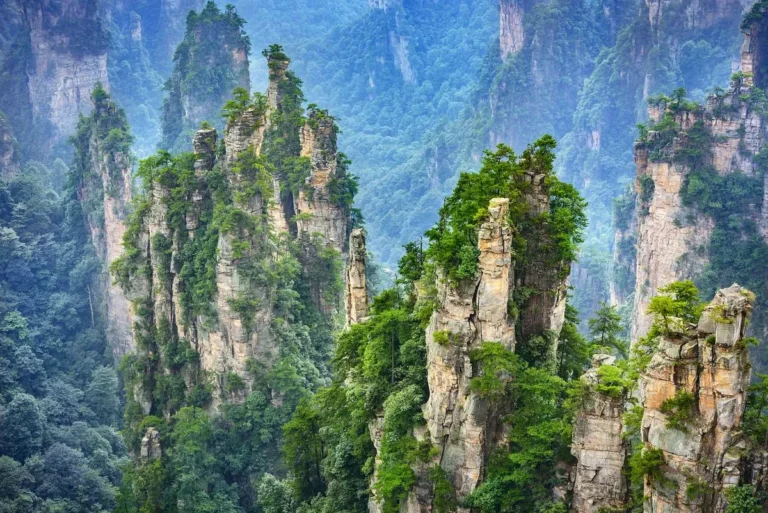
Welcome to the most comprehensive and in-depth encyclopedia travel guide on the 72 Qilou Building in Zhangjiajie (72 Qilou)—one of the most brilliant contemporary tourism icons of China’s smokeless industry. Likened to the “Potala Palace of western Hunan” or a “real-life maze of light,” this structure is far more than a visually stunning stopover; it is also a repository preserving and faithfully recreating the cultural, historical, and mythological essence of the Tujia ethnic group. Authored by leading experts from VDS Travel, this article will guide you deep into every corner of this towering architectural marvel, delivering comprehensive knowledge ranging from geographical coordinates, unique architecture, and gastronomy down to the most detailed practical field handbooks ensuring your trip reaches perfection.
Situated at a strategic location right at the gateway of the Zhangjiajie World Geological Park in Hunan Province, China, the 72 Qilou Building commands an exceptionally prime position. This destination sits right beside arterial commercial hubs, mere minutes away from Zhangjiajie Hehua International Airport, and serves as an indispensable starting point along the legendary travel route of Zhangjiajie – Fenghuang Ancient Town. This location transforms 72 Qilou into a “cultural transit station” where travelers set foot first before stepping into the magical world of millennia-old sandstone pillars.
Regarding its historical and cultural context, 72 Qilou is not an original ancient heritage site unearthed from excavations, but a large-scale restored and creative architectural work oriented toward becoming the “largest nocturnal cultural tourism project in western Hunan.” This structure was born to honor the legends, customs, and traditional stilt-house architecture (Diaojiaolou) of the Tujia ethnic minority—indigenous residents who have lived and endured across generations within this misty wilderness. The moniker “72 Qilou” stems from combining a symbolic number in Eastern culture (the number 72 symbolizes abundance, diversity, and the infinite layers of space and mythology) with traditional multi-tiered stilt-house structures.
Within the overall canvas of the Zhangjiajie tourism and Fenghuang Ancient Town route, 72 Qilou plays the role of a flawless piece, creating absolute equilibrium between magnificent nature and distinctive artificial culture. While Zhangjiajie National Forest Park delivers the wild, majestic beauty of mountains and cloud-shrouded forests, and Fenghuang Ancient Town carries the subdued, nostalgic breath of river waters through time, 72 Qilou bursts forth with modern energy, brilliant colors, and nocturnal magical qualities. This represents a symbol of revival and intersection between long-standing indigenous traditions and the world’s most cutting-edge lighting performance technology, attracting millions of global travel enthusiasts.
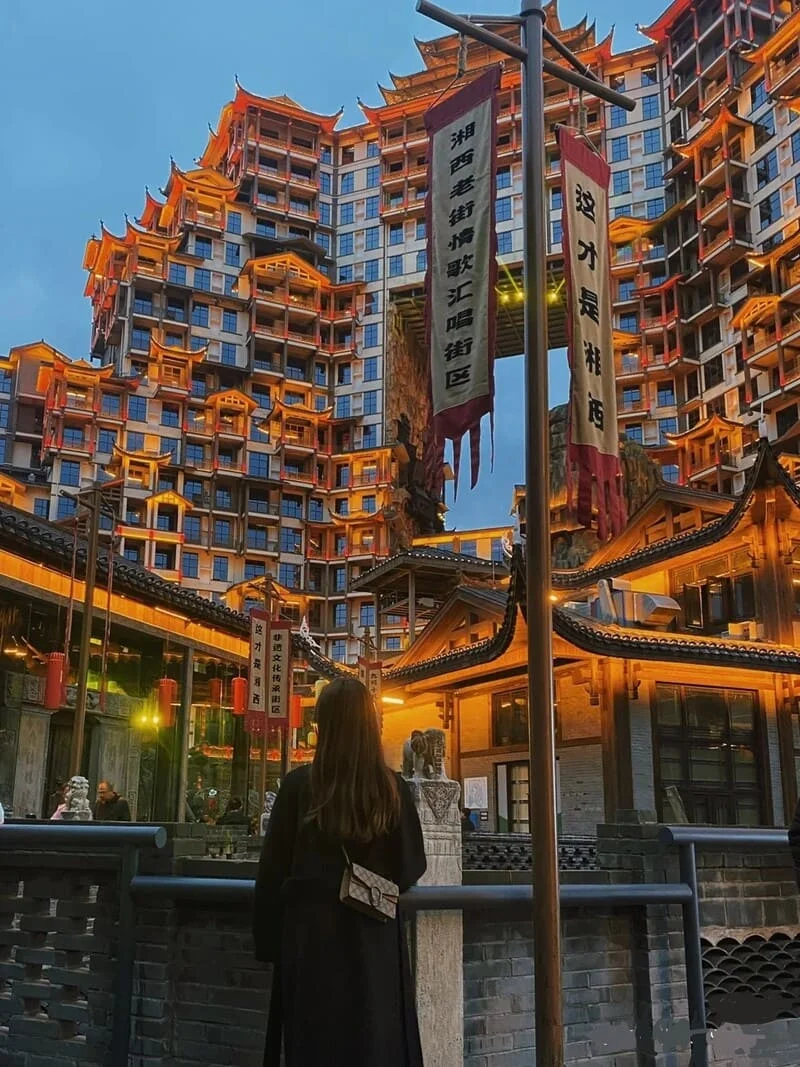
Tourists standing from the rear admiring the architecture of the 72 Qilou Building glowing brilliantly with lights at night.
When speaking of the 72 Qilou Building in Zhangjiajie, global architectural experts shower continuous praise upon its grandiose scale and daring creativity. This structure boasts a total construction area spanning tens of thousands of square meters, soaring impressively with a record-setting height for a modernized stilt-house architectural complex. The strongest visual highlight at first glance is the “stilt-house within a stilt-house” structure, where dozens of layers of curved tile roofs and exquisitely carved wooden corridors stack upon one another to form a colossal yet fluid architectural mass, resembling a mythological tower sprouting from the earth.
The unique feature establishing 72 Qilou’s renown is the fusion of traditional Tujia Diaojiaolou architectural styles with transcendent modern construction engineering. The entire facade of the building is designed in the shape of rolling mountain ranges combined with natural caves—a Karst topographical feature of the Zhangjiajie region. Crucially, the central section of the building is hollowed out into a giant crescent-shaped archway, housing a miniaturized replica of the mountain region’s natural wonders, creating a startling visual effect of “reality within illusion, illusion within reality.”
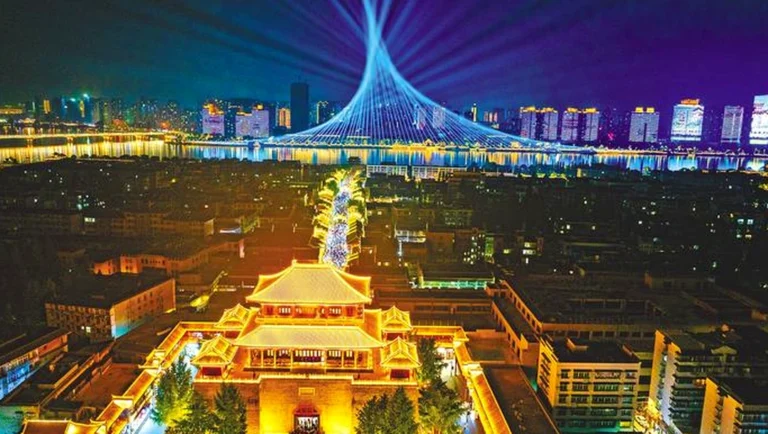
The greatest magnet of 72 Qilou erupts after nightfall. An intelligent lighting system featuring millions of continuously color-changing LED bulbs is installed along every roof eave, pillar, and window frame. Once activated, the entire building transforms into a giant, brilliantly colored lighthouse, shining brightly across the Zhangjiajie sky. Fluid lighting movements combined with artistic laser performances generate sensations as though the building is moving and floating amidst magical spaces, vividly recreating scenes from Hollywood fantasy myth films.
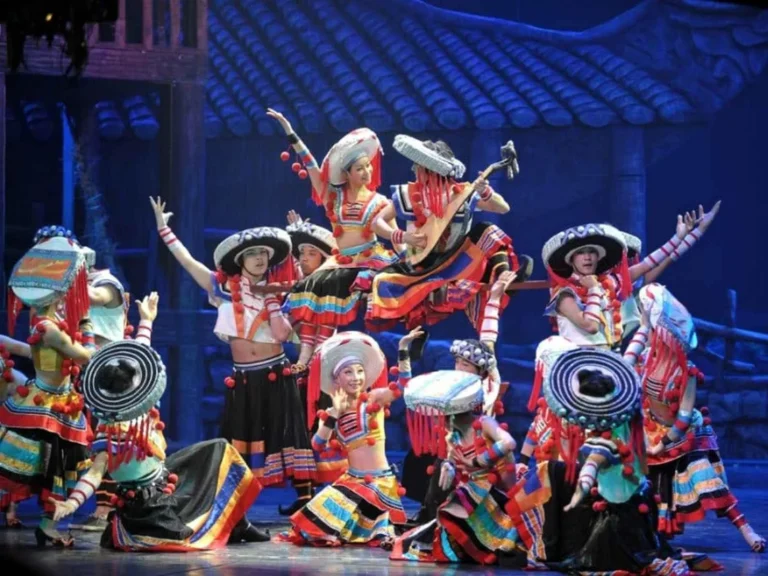
Stepping inside the 72 Qilou Building, visitors wander into a labyrinthine cultural maze featuring boundless rich experiential activities. The interior space is partitioned into distinct functional zones, ranging from bustling commercial pedestrian streets and miniature folk art museums down to grandiose live-action performing art stages operating across hourly schedules throughout the day.
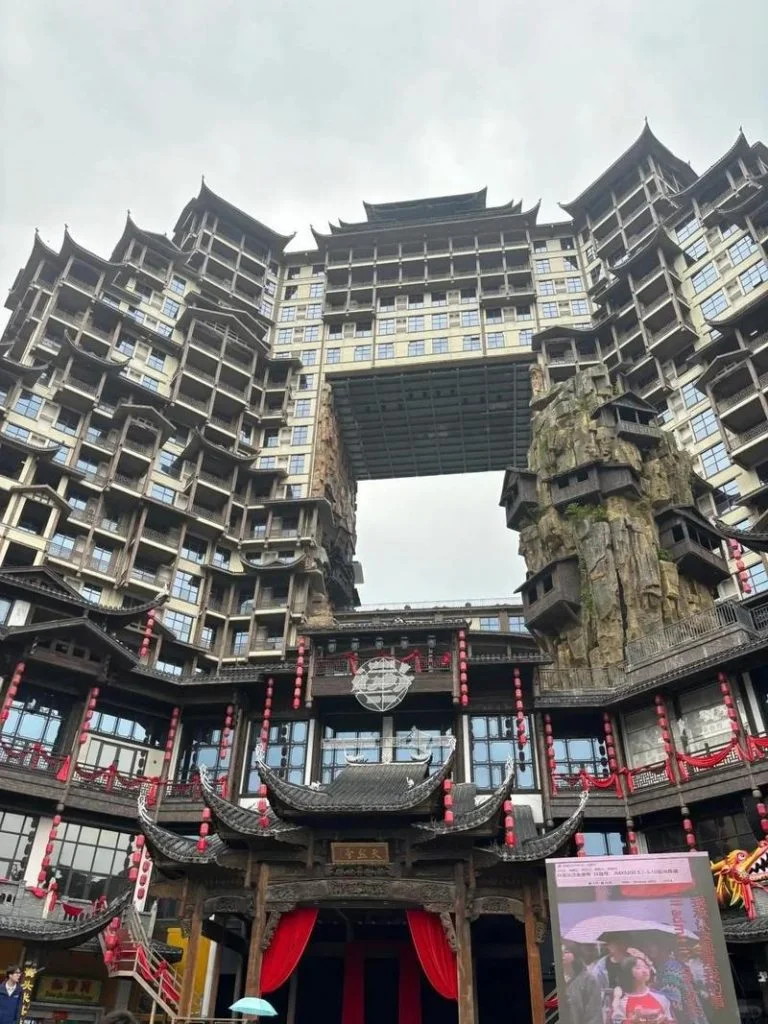
Unique architecture of the 72 Qilou Building in Zhangjiajie, China.
To capture social-media-breaking photographs upon arriving here, VDS Travel experts have compiled a list of classic check-in angles you must not miss:
Central plaza angle facing upward toward the archway: This represents the divine photo angle helping you capture the grandiose scale of the crescent archway alongside layered stilt houses. The ideal timing is dusk, when day transitions to night and lights begin illuminating. Stone staircases and antique wooden corridors: Railings carved with Tujia floral patterns featuring winding viewing angles yield wonderful depth for portrait photos, especially when wearing traditional Chinese apparel or Tujia ethnic attire. Glass bridges and high-altitude observation decks: Where you can sweep your gaze across the panoramic skyline of Zhangjiajie glowing by night, while securing check-in photos with an artificial sea of light clouds as your background. Red lantern street: Recreating ancient market spaces overflowing with red lantern hues, imparting nostalgic, cozy, and brilliant atmospheres recalling Fenghuang Ancient Town’s ambiance.
A complete exploration of the 72 Qilou Building in Zhangjiajie remains incomplete without its distinctive culinary piece. The ground floor and food streets inside the building concentrate hundreds of stalls vending traditional dishes carrying the fiery, robust flavors of Hunan and Tujia folk gastronomy.
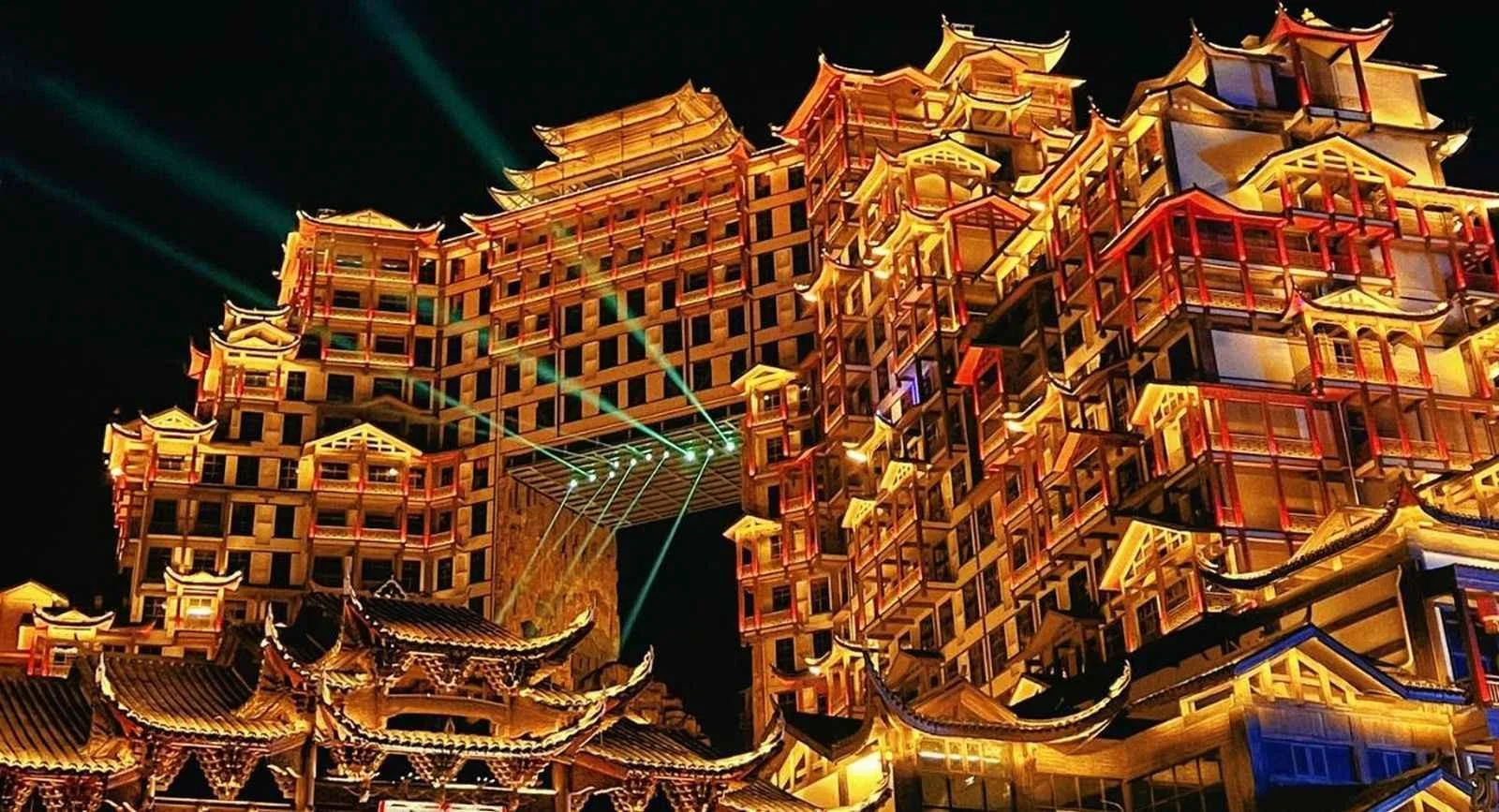
The 72 Qilou Building glowing brilliantly with lights at night in Zhangjiajie, China.
When arriving here, you must sample these classic dishes:
Tujia Sour Fish Hotpot: An iconic dish featuring tangy notes from fermented vegetables combined with tongue-numbing spiciness from local fresh chilies and sweet fresh fish meat from the Xiang River. Changsha Stinky Tofu: An addictive delicacy with crispy golden exteriors and creamy interiors, topped with rich savory sauces (challenging palates yet unforgettably memorable). Tujia Smoked Pork: Native pork seasoned with traditional spices then hung in kitchens to be smoke-cured over pine wood, offering a characteristic smoky aroma and robust, unforgettable flavor when stir-fried. Bamboo-tube roasted sticky rice cakes and folk pastries: Sweet, chewy, fragrant desserts carrying forest aromas.
Beyond gastronomy, souvenir shopping cultures here remain extremely rich. You can discover exquisite handicraft products such as Tujia brocade fabrics featuring unique geometric patterns, premium green teas cultivated atop misty Zhangjiajie peaks, rare medicinal herbs, or meticulously crafted handmade silver decorative items fashioned by indigenous artisans.
To ensure your journey exploring the 72 Qilou Building in Zhangjiajie unfolds smoothly, completely, and optimally, remember these practical field experiences compiled by international tourism experts at VDS Travel below:
You can visit 72 Qilou year-round, but ideal timing spans spring (April – June) and autumn (September – November). Weather during these periods is cool, pleasant, and dry, highly favorable for outdoor sightseeing. Regarding daily timing, visit around 5:00 PM to fully capture sunset descents, nocturnal building illuminations, and vibrant artistic performances.
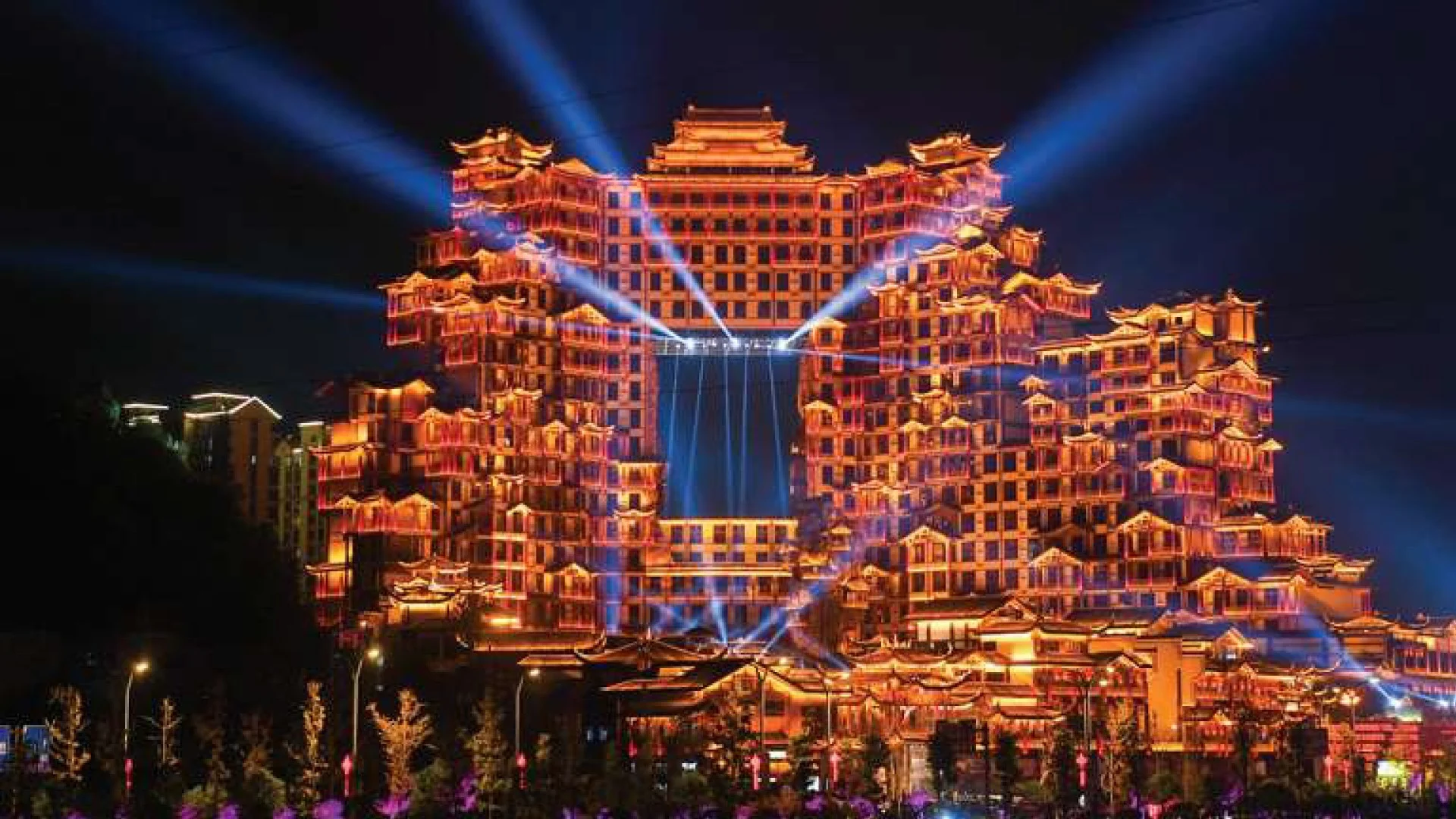
The 72 Qilou Building glowing brilliantly with lights at night in Zhangjiajie, China.
Traveling to Zhangjiajie: You can fly direct from major cities or take high-speed trains from Changsha to Zhangjiajie West Station. Traveling to 72 Qilou: Situated near the city center and airport, you easily commute here via taxi, ride-hailing apps, or fixed-route tourist buses at highly economical fares. Traveling via VDS Travel tours arranges convenient private door-to-door transfers.
Basic sightseeing admission tickets to 72 Qilou typically range between 100 and 150 Chinese Yuan (RMB) depending on peak or off-peak seasons. Gastronomy and shopping costs inside are quite flexible, spanning budget street snacks costing tens of yuan to upscale restaurant meals. Prepare electronic payment apps like WeChat Pay or Alipay since cash is rarely used at interior stalls.
When communicating and interacting with indigenous Tujia locals here, respect their customs. Avoid stepping on door thresholds when entering traditional homes (folk beliefs hold that thresholds are inhabited by household deities). Always ask permission before capturing close-up photographs of indigenous residents in traditional attire.
1. Does the 72 Qilou Building in Zhangjiajie actually stand 72 stories tall?
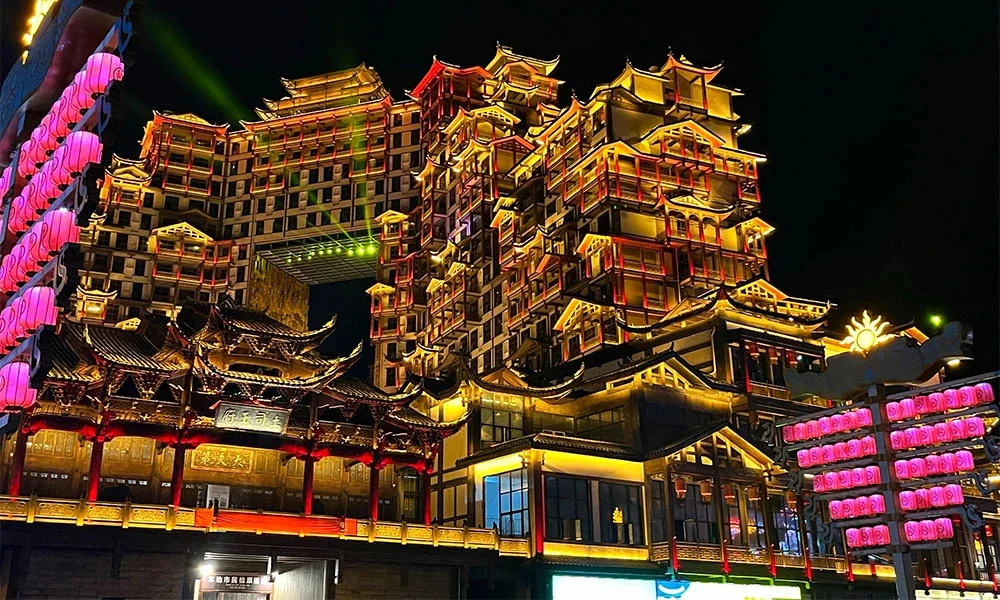
Brilliant night scenery of 72 Qilou in Zhangjiajie, China.
Answer: Not literally in the sense of constructing 72 distinct separate structural stories. The number “72” in the name carries profound Tujia cultural symbolism, combining stacked-tier architectural arts to forge massive visual effects, rather than standard modern 72-story office skyscrapers.
2. How much time should be allocated to thoroughly explore 72 Qilou?
Answer: Ideal timing spans 3 to 4 hours during afternoon and evening. This duration suffices to stroll commercial streets, enjoy street food, snap check-in photos beneath brilliant lighting systems, and enjoy distinctive artistic performance shows.
3. Is this destination suitable for children and seniors?
Answer: Perfectly suitable. Interior spaces feature wide layouts, flat pathways, elevators, and assistive walkways. Nevertheless, during peak evening hours, tourist inflows run heavy, so monitor children and seniors closely to avoid separation.
4. Do I need to pre-book tickets before arriving at 72 Qilou?
Answer: During peak tourist seasons (summer or major Chinese holidays), visitor inflows surge heavily. Pre-booking tickets via reputable travel agencies like VDS Travel helps you manage time proactively, avoiding long waiting queues or sold-out admission tickets.