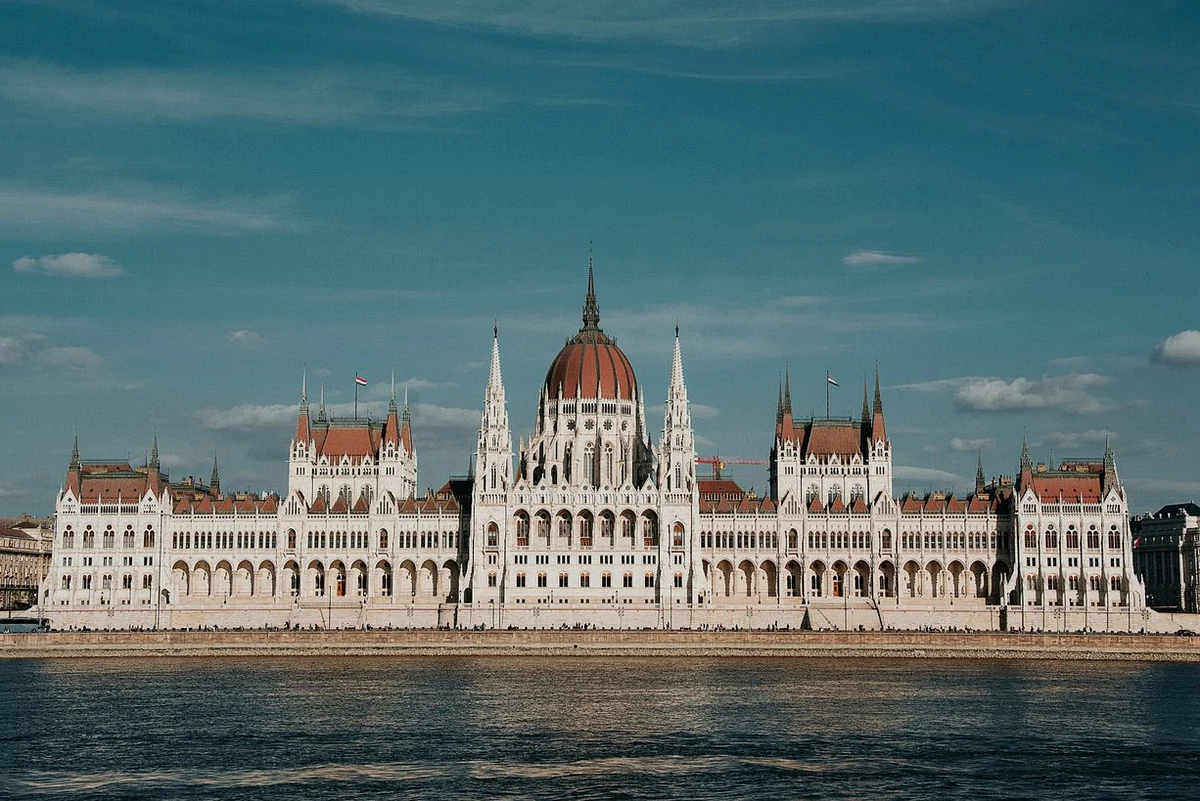
The legendary Danube, like a silver thread woven across the heart of Europe, has witnessed countless twists and turns of history and remains an endless source of inspiration for grand stories. In Budapest, Hungary’s signature heritage, that river embraces an architectural masterpiece and an eternal symbol of national will and aspiration: the Hungarian Parliament Building. To truly feel the soul of this monumental landmark, we must travel back in time to its deep historical roots and proud origins.
In the late 19th century, as the Austro-Hungarian Empire stood at the height of its power, Hungarians cherished a grand dream of self-governance and an independent national identity. In 1880, a historic law was passed that was not merely an administrative decision, but a powerful declaration of national will. That legislation laid the foundation for building a new Parliament house—an architectural work grand enough to commemorate a momentous occasion: 1,000 years since the Magyar settlement in the Carpathian Basin, a shining milestone dating to 896. This was not just a building, but a living monument and a symbol of a proud people’s endurance.
In 1885, the first bricks were laid, beginning a construction journey spanning nearly two decades. Behind that grand vision stood the extraordinary talent of chief architect Imre Steindl. He conceived a magnificent Neo-Gothic structure inspired by London’s famed Palace of Westminster yet infused with a distinctive Central European identity. Steindl devoted his full heart and skill to this masterpiece, tending to every line and detail with meticulous care. Yet fate did not smile completely on the gifted artist. Sadly, Imre Steindl went completely blind before the building was finished and passed away in 1902, two years before his life’s masterpiece was officially inaugurated—a poignant tragedy that the spiritual father of the building could not see his beloved creation rising proudly along the Danube with his own eyes.
The project was approved by Franz Joseph I, Emperor of Austria and King of Hungary, who saw in it not just a seat of administration, but a symbol reinforcing Hungary’s standing within the dual monarchy. Although the Parliament Building was not officially completed until 1904, a major portion of it was put into use in 1896 in time for the Millennium celebrations—a major national event marking a thousand years of history. That occasion gave Hungarians a chance to celebrate their glorious past and affirm their place on the map of Europe, with the new Parliament as its most eloquent proof.
Across its history, the Hungarian Parliament Building has weathered many upheavals and shifts, mirroring the turbulent history of the country itself. During the Austro-Hungarian era (1867–1918), it stood as a radiant emblem of Hungarian autonomy and prosperity. Then came the storms of war. During World War II, this grand structure suffered severe damage from artillery and bombs. Fortunately, it was not destroyed outright, standing resilient amid the ruins.
After the war, during the communist era (1949–1989), the domed spire of the building—traditionally a symbol of monarchy and nationhood—was topped with a large red star made of metal and pink glass, a unmistakable mark of Sovietization. That star, a symbol of a new ideology, crowned the dome for decades. However, when the Iron Curtain fell and Hungary transitioned to a democratic republic in 1989, the red star was taken down, restoring the Parliament to its original beauty and historical meaning. The modern era has seen major restorations, especially between 2011 and 2014, to return the limestone facade and interiors to their 19th-century state. Every scar and every restoration tells a story of resilience, renewal, and a nation’s drive to preserve its heritage. From its first bricks to its later restorations, the Hungarian Parliament Building has remained an inseparable part of Hungary’s historical current and a living testament to the unyielding spirit of the Magyar people.
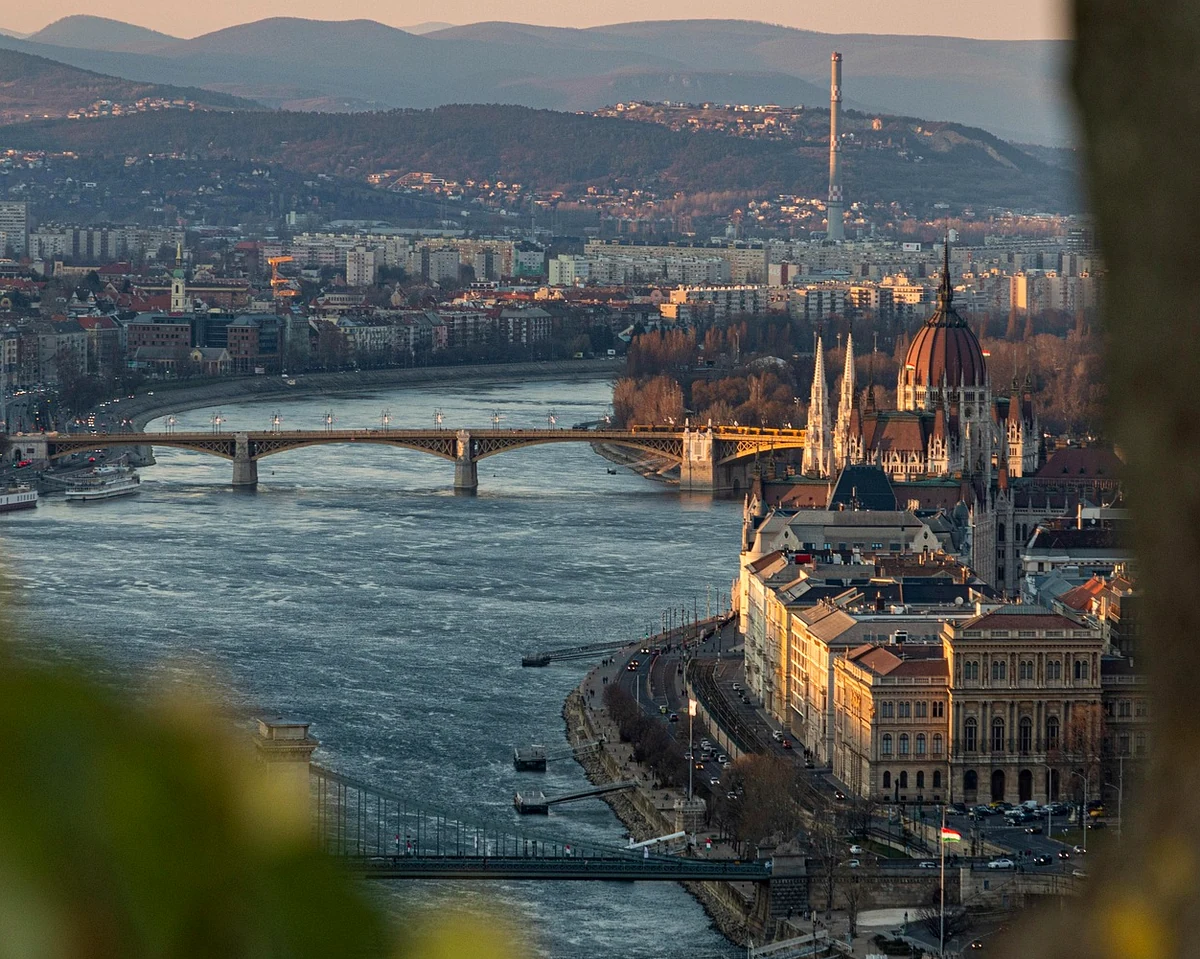
Standing tall beside the gentle Danube, the Hungarian Parliament Building is more than a seat of power; it is a majestic declaration of national identity carved in stone and spirit. When dawn kisses its intricate facade or evening lights turn it into a gleaming jewel, visitors sense a timeless architectural work where every line and detail tells a story of Magyar aspiration and strength. It is not merely a structure, but a harmony of stone and light—an enduring symbol of Budapest that draws every eye to admire its perfection.
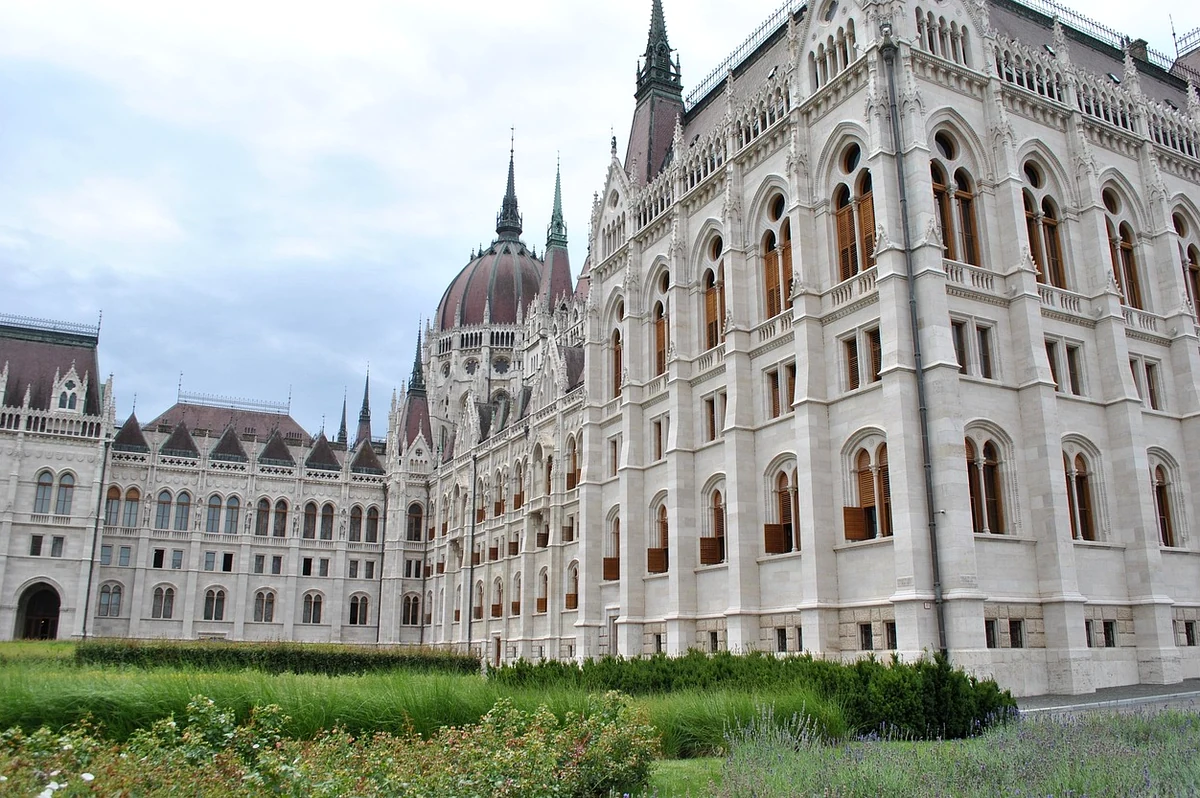
The defining architectural style of the Országház is Neo-Gothic—a proud choice reflecting Hungary’s revival and assertion of status in the late 19th century. Although it echoes London’s renowned Palace of Westminster, under architect Imre Steindl’s skilled hand the Országház was given an unmistakable, uniquely Central European character. Soaring spires, Gothic pointed arches, and intricately carved reliefs blend harmoniously into a whole that feels at once imposing and graceful. Inside, a deft mix of Renaissance and Baroque elements opens up another world where splendor and refinement reach a peak, inviting visitors to explore every splendid corner.
The grandeur of the Parliament Building lies not only in its artistic beauty but also in its massive scale, proof of the ambition to create a lasting symbol. Spanning an impressive 268 meters in length and 123 meters in width, the building stretches like an architectural ribbon along the Danube bank. Its unmistakable focal point is the central dome, rising proudly to exactly 96 meters. The number 96 is no accident; it carries deep sacred meaning, symbolizing the year 896—the historic milestone when Hungarians settled and founded their state in the Carpathian Basin. Reverence for this figure is also reflected in a special Budapest rule: no residential or commercial building is permitted to exceed 96 meters, protecting the singular prominence and sanctity of the Parliament and St. Stephen’s Basilica. Inside, the Országház is a magnificent labyrinth with nearly 691 rooms, 10 internal courtyards, 29 stairways large and small, and kilometers of corridors, with every space carefully designed to reflect a nation’s opulence and authority.
Millions of tons of materials went into building this masterpiece, chiefly white limestone quarried from local sources. Nearly 40 million bricks and millions of tons of soft limestone turned the Országház into a fortress that is also deeply artistic. Yet the very softness of the limestone requires ongoing restoration work to replace blocks worn down by harsh weather—a testament to persistence in keeping its original beauty intact. What truly makes the Parliament’s interior dazzlingly opulent, however, is its gold. More than 40 kg of 24-karat gold leaf was applied by hand across ornamental details, ceiling vaults, and fine reliefs, turning every angle into a radiant scene sparkling under the lights and reflecting the wealth and prosperity of a golden age.
At the heart of the Parliament Building, where historical and spiritual values converge, is the central Dome Hall—where the Holy Crown of Hungary is solemnly kept alongside other precious royal regalia such as the orb, scepter, and sword. These are more than historical artifacts; they are supreme symbols of Hungarian sovereignty and national identity, guarded closely by the royal guard during formal changing-of-the-guard ceremonies held every hour, captivating every visitor’s gaze. What is especially intriguing and mysterious about the Holy Crown of Hungary is the tilted cross on top. That small detail has inspired countless fascinating historical anecdotes, from stories of mishaps during transport to theories about deeper spiritual meaning, so each time visitors view the crown they are drawn into an enchanting journey through the past.
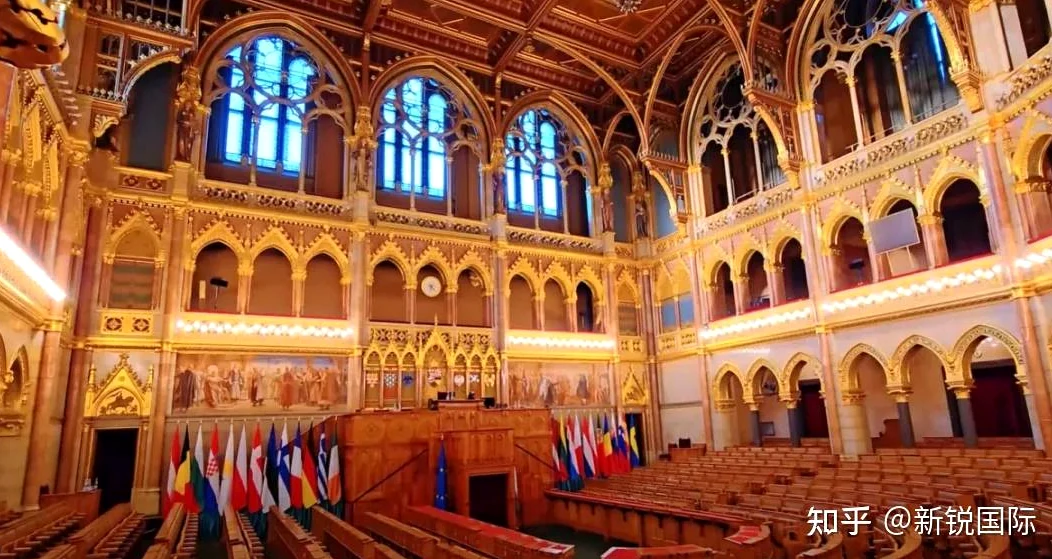
The Országház is more than an architectural landmark; it is a living museum and a chronicle in stone telling of the Hungarian people’s ups and downs, glories, and fortitude. From its majestic Neo-Gothic style and striking technical figures to the extravagance of gold leaf and the sacred significance of the Holy Crown of Hungary, every element helps shape a pinnacle of art and an unmissable stop when exploring Central Europe with VDS Travel. Here history, art, and architecture come together, leaving a lasting impression on every traveler and affirming Budapest’s place among the world’s most beautiful capitals.
As the sun sinks slowly over the legendary Danube, gilding the domes and spires of the Hungarian Parliament Building, Budapest puts on its most dazzling attire—inviting travelers to discover truly “high-value” experiences: unmissable moments curated to reach the deepest emotions of discerning travelers. These are not just places to visit, but layers of emotion and cultural and historical imprints delicately held within, waiting to be unveiled.
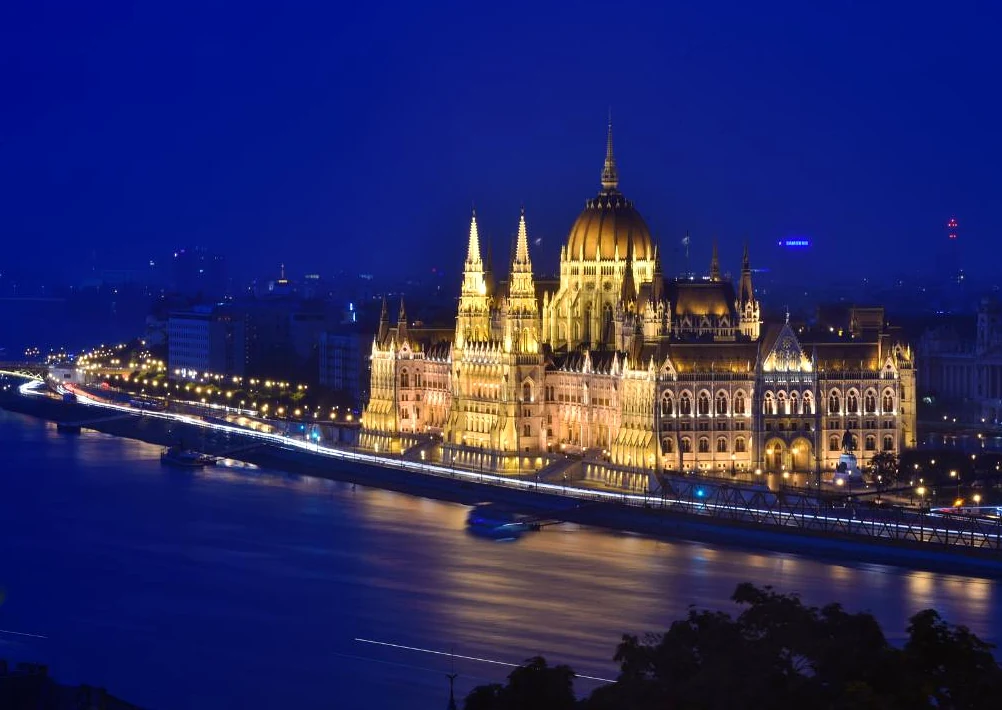
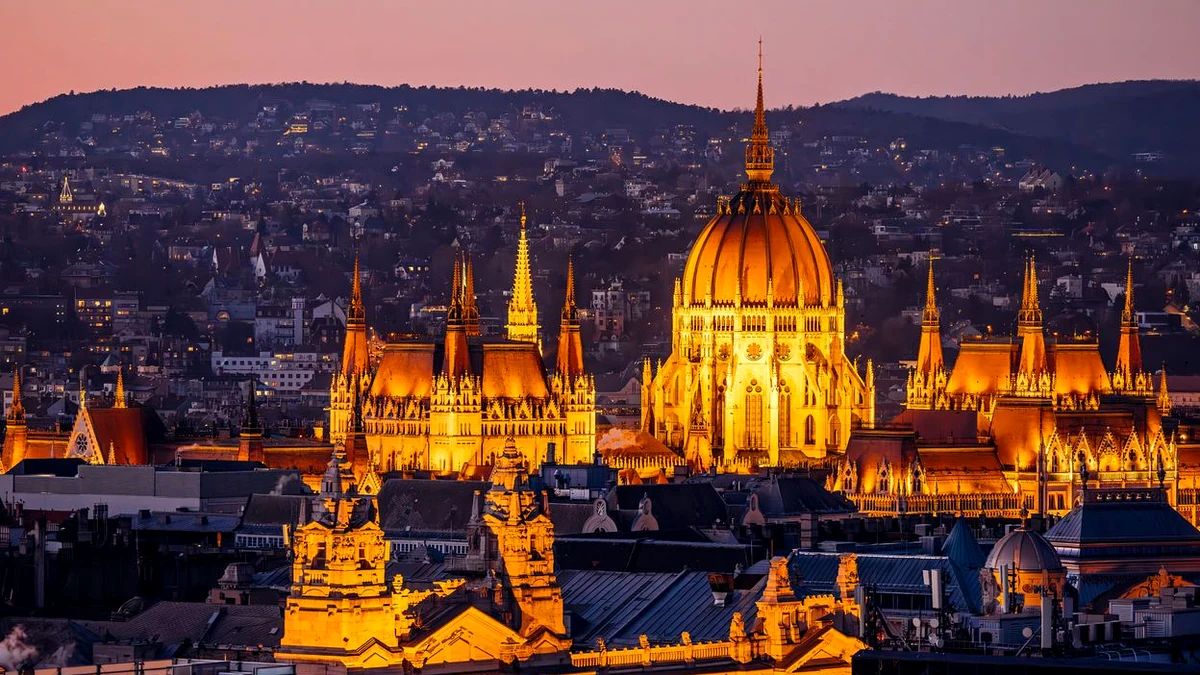
One of the first “million-dollar” moments any traveler should capture is a sweeping view of Országház from the opposite bank, especially around Batthyány tér. From here, the Parliament Building rises tall and majestic like a giant, intricately carved Neo-Gothic jewel shimmering across the waters of the Danube. During the “golden hour” as sunset settles in, or after nightfall when thousands of LED lights—1,000 light points to be exact—illuminate together, this structure measuring 268 meters long by 123 meters wide transforms into a magical palace of light. Views from the Széchenyi Chain Bridge or Gellért Hill offer equally breathtaking panoramas, where architectural symmetry and the river’s grandeur merge into an enduring symbol of Budapest.
To take in that dazzling beauty to the fullest, nothing compares to a royal river cruise on the Danube at dusk. As the boat glides gently over calm water, travelers can watch the Parliament Building and Budapest’s other historic landmarks gleam under evening lights. It is the ideal moment to savor a glass of Hungary’s famed Tokaji Aszú wine—a sweet wine once hailed by King Louis XIV as “the wine of kings and the king of wines”—set to soothing classical melodies played on local violins. The sweet depth of Tokaji Aszú blends with the enchanting scenery into a sensory harmony, creating a refined, romantic experience that VDS Travel proudly brings to every journey.
Yet the true beauty of Országház does not end at its exterior. A guided interior tour of the Parliament Building is essential for a deeper understanding of Magyar history and culture. With VDS Travel, booking tickets—which typically require reserving 2 to 4 weeks ahead due to visitor limits—is smoother than ever thanks to skip-the-line access, sparing you long queues. Stepping up the gilded Grand Staircase, adorned with more than 40 kg of 24-karat gold leaf, travelers are awestruck by the opulence and craftsmanship of Neo-Gothic architecture blended with Renaissance and Baroque touches inside. Every detail, from reliefs to vaulted ceilings, tells the story of a golden era.
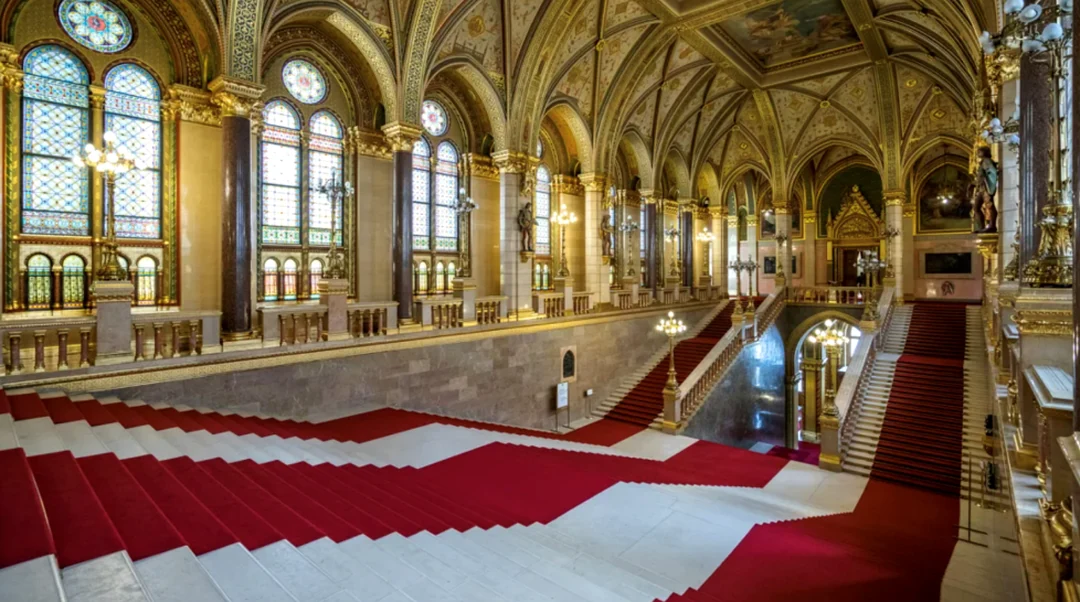
The most sacred focal point of the interior visit is the Dome Hall, home to the Holy Crown of Hungary alongside other royal regalia such as the orb, scepter, and sword. Closely guarded by the royal guard with a solemn changing of the guard every hour, the crown is more than a national treasure—it is a living symbol of Hungarian history, famously topped with a tilted cross surrounded by rich historical lore. Seeing this treasure in person, while learning the meaning of the dome’s 96-meter peak height—representing the year 896, the founding milestone of the Hungarian nation—offers deep insight into the country’s national pride and cultural heritage.
Experiences like these, from wide-angle exterior views to intricate interior details, are elevated by deep knowledge and attentive service. VDS Travel does not merely bring travelers to destinations; it opens the door to Budapest’s soul, where history, architecture, and culture weave together into a timeless epic. These are the core values and high-impact moments VDS Travel is committed to delivering, turning every trip from a simple sightseeing route into a meaningful dialogue with time and space.
After feasting your eyes on the majestic architecture of the Parliament Building and taking in the fabled Danube, our exploration of Budapest shifts to another enchanting realm: the world of local flavors and culinary culture. These are far more than ordinary dishes—they are stories told through every ingredient and generation-old recipe, reflecting the spirit and history of the Magyar people. VDS Travel believes that to truly reach the heart of a destination, you must taste its flavors, and Budapest will not disappoint with a captivating culinary map.
Opening this sensory feast is Goulash Soup (Gulyásleves), the iconic traditional soup that serves as a cornerstone of Hungarian cuisine. Far more than a meal, Goulash is a philosophy—a refined balance of rustic countryside simplicity and rich spice. Diced beef simmered until tender mingles with potatoes, carrots, onions, and especially Hungary’s celebrated ground paprika, the spice that defines local culinary identity. Paprika brings not only a vibrant crimson hue but also a warm, deep aroma and flavor that make every spoonful of Goulash feel like a welcoming embrace, easing winter chills and warming travelers in any season. It is an ideal starter to awaken the palate for what comes next.
Continuing the flavor journey brings us to Chicken Paprikash (Csirke Paprikás), another irresistible main course. Picture tender chicken slow-braised in a rich, glossy sour-cream sauce made complete with paprika. Sour cream (tejföl) adds a creamy smoothness that balances the gentle warmth and signature fragrance of paprika, creating an unforgettable harmony of taste. It is traditionally served with Nokedli—small, tender egg-noodle dumplings that soak up the sauce so every bite feels full and satisfying. Chicken Paprikash is more than a dish; it is the warmth of a family table and care poured into every step of preparation.

Stepping away from formal dining, let us explore Budapest’s street food standout, Lángos. It is a beloved everyday staple—simple yet deeply appealing. Lángos consists of yeast dough flatbreads fried crisp and golden until fragrant. While piping hot, it is piled with melted grated cheese, a cool spoonful of sour cream (tejföl), and a touch of aromatic minced garlic. The contrast of savory cheese, rich sour cream, mild garlic bite, and crisp dough makes for an irresistible street-food treat. Few pleasures match enjoying a hot Lángos while strolling along the breezy Danube embankment and watching the Parliament Building glow with lights.
To close the culinary spread on a sweet note, Chimney Cake (Kürtőskalács) is a fitting finale. It is a pastry craft classic with a distinctive spiral shape baked over hot embers until its outer crust turns crisp and glazed with gleaming caramelized sugar. Depending on your taste, it can be dusted with fragrant cinnamon or nutty ground walnuts. The sweet, comforting flavor of Kürtőskalács—paired with its crisp exterior and soft, airy interior—awakens the senses and brings a sense of pure delight. The scent of freshly baked cake drifts through Christmas markets and old lanes alike, inviting passersby to pause and indulge.
Finally, to round out the cultural tasting experience, Tokaji Aszú wine is not to be missed. It is more than wine; it is a legend and a royal heritage of Hungary. Hailed as “the wine of kings and the king of wines” by King Louis XIV himself, Tokaji Aszú is a rare sweet wine crafted from grapes affected by noble rot (Botrytis cinerea), yielding complex, layered notes of honey, dried fruit, and spice. Every drop distills the sun and breeze of the Tokaj region along with centuries of patience and winemaking craft. Savoring a glass of Tokaji Aszú in an elegant setting overlooking the scenic Danube is a memorable way to end a day in Budapest and experience the refinement of Hungarian culture.
After grand historical chapters, soaring architectural lines, and captivating flavors, exploring the Hungarian Parliament Building and the fabled Danube is best paired with an essential pocket guide. Writing as a cultural history specialist and travel writer for VDS Travel, I have distilled practical tips to help make your trip not only enriching, but also safe and seamless.
Choosing the right time to soak in Budapest—especially admiring Országház and the Danube—makes a big difference. Spring, from April to June, brings mild weather, gentle breezes awakening the city, and thousands of blossoms along the Danube riverbank bursting with fresh life. It is a wonderful season to stroll across historic bridges and feel the city’s lively rhythm. When autumn arrives, from September to November, Budapest dons golden maple foliage amid crisp air and soft sunlight, inviting romantic walks and clear-sky views of the stately Parliament Building. And if you seek a storybook atmosphere, the Christmas season in December turns Budapest into a true winter wonderland. Glowing Christmas markets in front of St. Stephen’s Basilica, paired with thousands of lights across the city and especially the Parliament Building, create a warm, unforgettable holiday mood.
For a smooth visit inside the Parliament Building, thoughtful preparation is key. Because this landmark is both an architectural icon and Hungary’s political heart, visitor rules are fairly strict. Tickets must be booked in advance—at least 2 to 4 weeks ahead—through official channels. Daily admission is strictly capped to preserve heritage and maintain security for an active legislative institution. VDS Travel always recommends locking in your schedule as early as possible so you do not miss this rare opportunity. Inside the Parliament, visitors must follow a modest, respectful dress code. Avoid shorts, tank tops, or overly short skirts out of respect for a national symbol and working legislative chamber. Parliament opening hours typically range from 08:00 to 16:00, or extend to 18:00 in summer. However, schedules can change unexpectedly due to parliamentary sessions or major political events, so checking live updates before your visit is essential.
Safety is always a top priority on any trip, and Budapest is no exception. Although it is a safe city, travelers need to stay especially alert to professional pickpockets, particularly in areas crowded with tourists. Spots around central metro stations, on major bridges such as the Széchenyi Chain Bridge, and especially on public trams—most notably Tram Line 2, famous for its stunning views along the Danube—are places where thieves frequently operate. They take advantage of visitors letting their guard down while admiring the scenery or taking photos. To help keep personal belongings safe, our team of professional tour guides is always on hand, continuously alerting and reminding guests to watch their bags, wallets, and phones, and especially not to wear backpacks behind their backs. Always keep personal items in plain sight, and avoid flaunting valuables. Your awareness and caution, combined with dedicated support from our team, will help make your Budapest trip seamless and worry-free.
After wandering through golden pages of history, magnificent Neo-Gothic lines, and Budapest’s endless cultural currents, we have admired the Hungarian Parliament Building standing tall along the Danube—a symbol not only of a nation but also of an entire civilization. From the start of construction in 1885, through the talented hands of architect Imre Steindl, to its official inauguration in 1904, this landmark has witnessed countless ups and downs and historical events, standing resilient at 268 meters long, 123 meters wide, and reaching a dome height of 96 meters—a sacred number evoking the year 896, the founding milestone of the Magyar people.
Now, when stories of 40 million bricks, millions of tons of soft limestone, and more than 40 kg of 24-karat gold leaf applied to interior details have filled the soul, when the image of the Crown of Saint Stephen with its tilted cross is etched in memory, and when the warmth of Goulash or the crispness of Lángos still lingers on the palate, a natural question arises: How can we turn these scholarly discoveries into a real, vivid, and unforgettable experience? That is precisely when our team steps in, crafting a unique connecting journey that takes you from admiration to immersion, from gazing to deep understanding.
We are not merely a tour operator; we are storytellers, guides, and the key that unlocks doors to exclusive experiences few get to enjoy. Imagine, instead of waiting in long lines under Budapest’s sun or chill, enjoying skip-the-line priority admission straight into the Parliament Building. Step up the gilded Grand Staircase, admire the Old Lower House chamber where historic policy decisions were shaped, and stand before the Crown of Saint Stephen and royal regalia guarded closely by the changing of the guard every hour. With specialized architectural-history audio commentary from our team, every detail, every relief, and every story about architect Imre Steindl or Emperor Franz Joseph I comes alive, helping you not only see but also feel the heartbeat of Magyar history.
And as night falls and the enchanting Danube puts on its sparkling coat, that is when we bring you a one-of-a-kind royal Danube River Cruise experience. You will have a private dinner table arranged at a riverside restaurant with a direct view across to the Parliament Building illuminated by its system of 1,000 LED light points. In that romantic setting, sipping a glass of Tokaji Aszú—the “King of Wines, Wine of Kings”—and listening to live classical music (local violin), you will feel the seamless harmony of architectural beauty, culinary excellence, and cultural depth. It is more than just dinner; it is a symphony of the senses, a “million-dollar” moment no photo spot can match, whether viewed from across the river at Batthyány tér or from Gellért Hill.
Traveling with us also means refinement in every culinary choice. Beyond introducing Goulash Soup or Chicken Paprikash, we guide you to authentic local eateries to savor crispy Lángos by the river or fragrant charcoal-baked Chimney Cake (Kürtőskalács). Every detail—from choosing the best season to visit (spring with vibrant blossoms, autumn with romantic golden leaves, or Christmas with sparkling magic) to staying safe with your belongings on public trams (Tram Line 2) or following respectful dress guidelines inside the Parliament Building—is carefully and thoughtfully prepared by our expert team.
Budapest, with the Parliament Building and the poetic Danube, is a flagship highlight in our luxury Eastern Europe tour collection, especially the “Vienna – Budapest – Prague Golden Triangle” itinerary or our “Premier Danube River Cruise” experiences. We are committed to delivering a journey that is not just sightseeing, but a deep connection with Hungary’s history, culture, and people. Let us turn your dream of exploring Europe into reality, with exclusive experiences, inspiring stories, and priceless memories.
Don’t hesitate—the gateway to magnificent Budapest and other wonders of Europe awaits you. Contact our team today to book your spot and begin an unlimited journey of discovery. Full details on our luxury tour routes, including the Germany – Austria – Hungary – Czechia itinerary, can be found at All-Inclusive Tour Packages. We are honored to accompany you on every leg of the way, creating upscale and unforgettable travel memories.