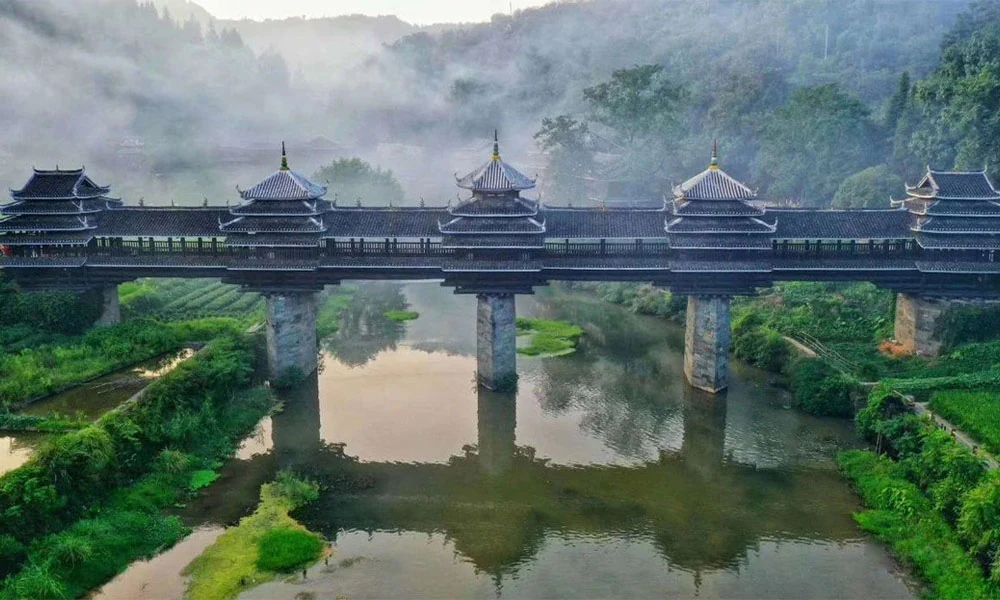
Spanning gracefully beside gentle waterways along the southern frontier, the Wind-and-Rain Bridge in Dongxing brings a quiet, traditional note to the bustling border town in the Guangxi Zhuang Autonomous Region. Set directly across from Vietnam’s border city of Mong Cai, the bridge serves not only as a crossing link, but also as a cultural emblem reflecting Lingnan aesthetics and a way of life attuned to nature. In soft morning mist rising off the Beilun River, its sweeping, multi-tiered eaves—resembling soaring wings—draw visitors into a contemplative mood rooted in borderland history.
Geographically and historically, Dongxing sits near 21°32′47″ N and 107°58′12″ E at the southwestern end of mainland China’s coastline. Once an active maritime trade stop along historic sea routes, it witnessed shifts across centuries. Following late-nineteenth-century treaties between Qing China and French authorities in Tonkin that defined border lines along the Ka Long and Beilun rivers, cross-border exchange shaped local life—giving rise to covered wind-and-rain bridge architecture celebrating peace and prosperity for communities along both banks.
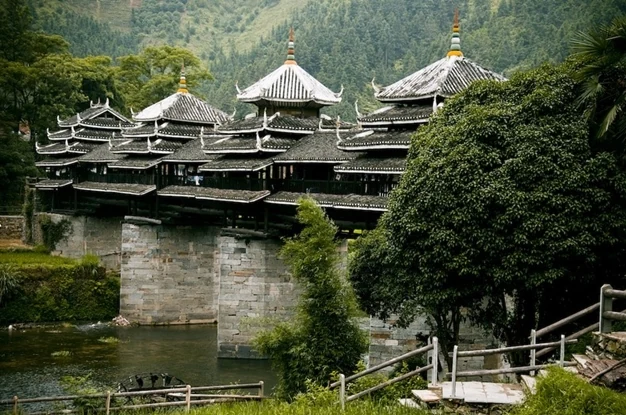
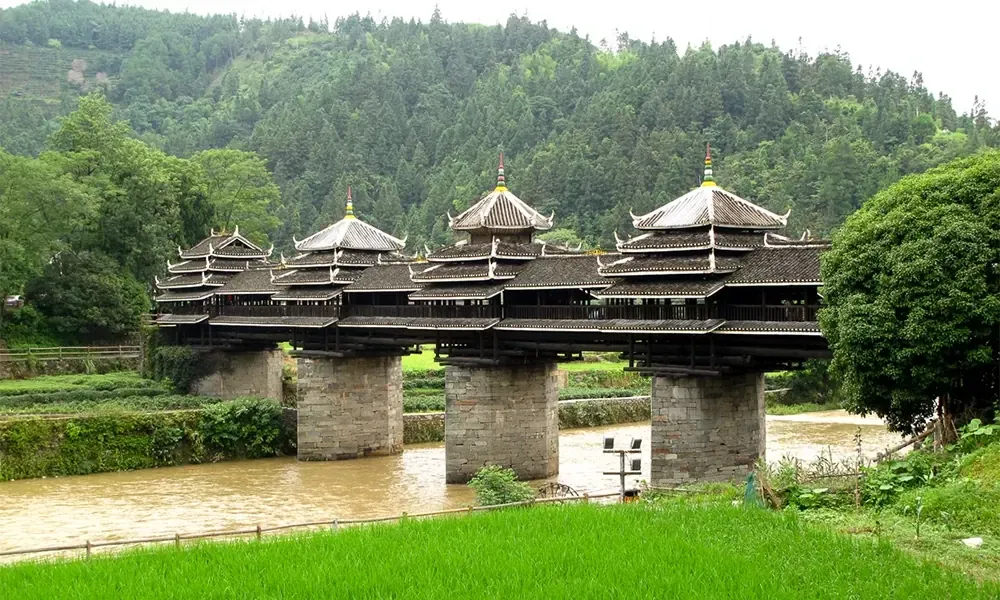
Culturally and technically, covered wind-and-rain bridges (*Fengyuqiao*) belong to the building heritage of the Dong ethnic group in southern China’s mountain valleys—most famously exemplified by Chengyang Bridge along the Linxi River in Sanjiang. Named for sheltering travelers from wind and rain while symbolizing good weather, bountiful harvests, and peace, its presence in Dongxing blends traditional timber craft with modern urban greenery and neighborly connection across the border.
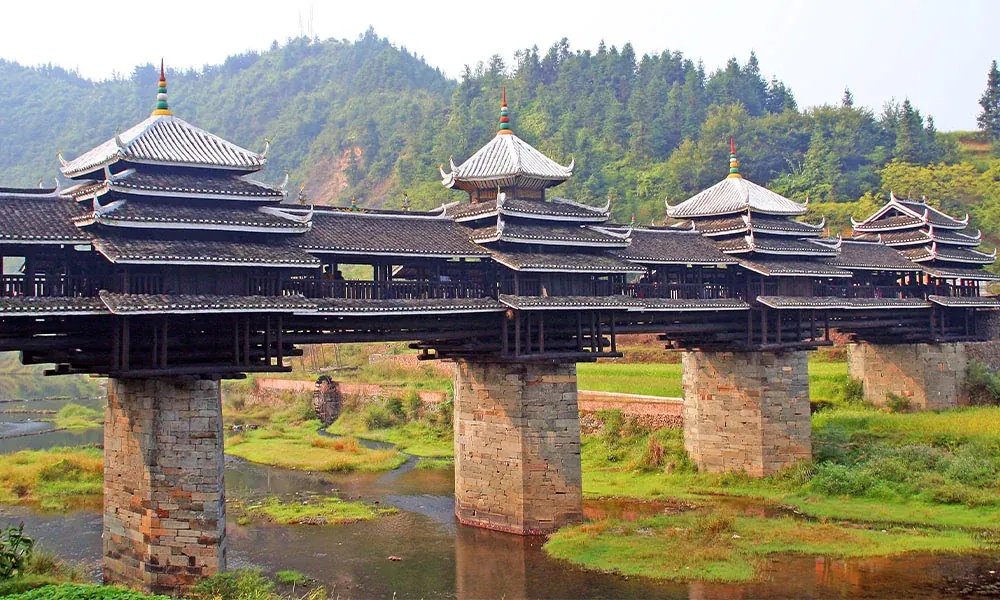
What makes the bridge remarkable is its traditional mortise-and-tenon timber joinery assembled without iron nails or metal fasteners. Durable hardwood timbers shaped by skilled carpenters interlock precisely into flexible structural frames capable of absorbing natural movement. Below, heavy stone piers with boat-prow cutwaters are laid to disperse rushing high water during rainy seasons, while overhead crossbeams, rafters, and tiered *dougong* brackets support multi-bay covered pavilions.
Stepping inside the covered span feels worlds apart from busy streets outside: a cool timber corridor carries the faint scent of wood and herbs, lined with built-in benches along carved railings where elders sit, chat, and watch water drift below. Above, carved beams and plaques feature folk scenes, legends, birds, blossoms, and aquatic motifs—turning the walkway into an open-air gallery of traditional craft.
The bridge is even more rewarding as part of a connected heritage walk around Dongxing. After crossing the covered span, visitors can easily visit solemn Guandi Temple honoring loyalty and integrity in trade, climb or admire historic Wanxiang Pagoda reflecting cultural learning in Fangchenggang, or walk through China–Vietnam Friendship Park with its memorial monument—creating a cohesive cultural route across town.
Reaching the bridge starts from the Mong Cai international border gate, clearing immigration and crossing the historic Beilun River bridge into Dongxing. While day-trip border passes are straightforward to arrange with valid ID and photos, joining a one-day all-inclusive Dongxing tour streamlines paperwork, customs rules, currency, and guided cultural context so you can relax and enjoy the walk.
The best light for photos falls around early sunrise or late sunset across the valley. In the morning, slanting sunbeams filter through wooden lattice windows across polished dark timber; after dark, lanterns and warm architectural lights turn curved eaves into golden reflections across clear water against the modern town.
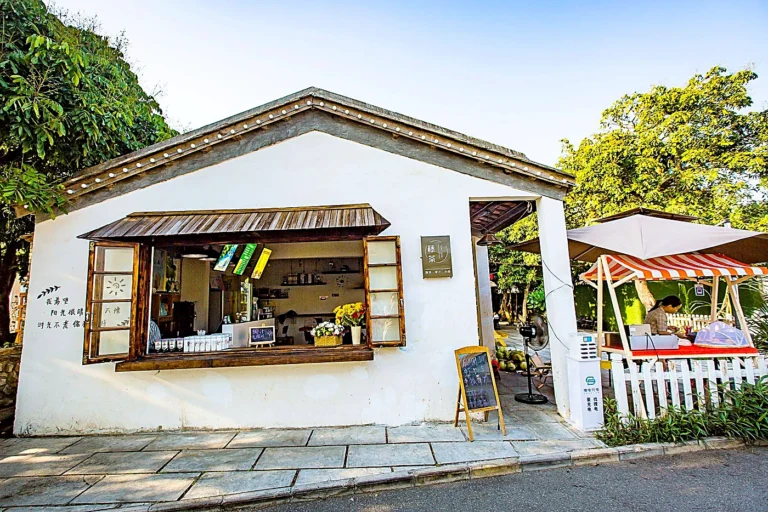
Around the bridge, nearby local eateries and teahouses round out a relaxed stop: pause beside the water for fragrant Guangxi Liubao tea paired with warm custard *liusha* buns or a steaming bowl of wonton noodles amidst mild border breezes and friendly local hospitality.
Within the wider tradition of covered bridges across East Asia—from Hoi An’s Japanese Covered Bridge in central Vietnam to timber bridges across Guizhou, Hunan, and Guangxi—the Wind-and-Rain Bridge in Dongxing stands out as both practical shelter from weather and a welcoming symbol of shared border life.
A multi-tiered timber bridge enduring beside flowing waters leaves a lasting impression at the end of a border outing. Using a guided cross-border tour service helps take care of border procedures and local logistics so your trip remains smooth, informative, and memorable.