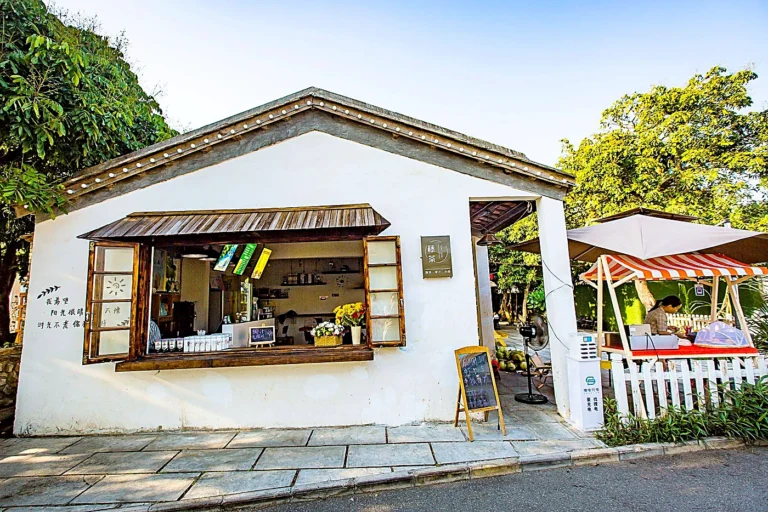
Nestled right on the northern bank of the tranquil Beilun River, which forms a natural boundary between two nations, the city of Dongxing within the prefecture-level city of Fangchenggang, Guangxi Province, always carries the vibrant rhythm of cultural blending characteristic of a bustling frontier metropolis. Amidst the hurried sounds of crowds passing through the international border gate and the modern, surging urban life, the Dongxing Guandi Temple stands like an ancient, contemplative note, perfectly preserving layers of spiritual culture passed down among frontier residents across centuries. This is far more than a purely folk religious site; it serves as a living historical testament reflecting the intricate tapestry of diplomacy, commercial trade, and deep-rooted spiritual life shared between Chinese and Vietnamese communities at the confluence of river and sea throughout the turbulent historical transformations of the South.
Tracing the origins of this ancient structure, local records indicate that Dongxing began taking shape during the Ming Dynasty, accumulating over four hundred years of development before flourishing into a bustling port by the early last century. In the process of expanding water and land trade routes linking Liangguang with Đại Việt’s Đàng Ngoài region, the Dongxing Guandi Temple was initially established during the Ming Dynasty and later underwent major restoration and large-scale expansion under the Qing Dynasty, preserving its physical appearance for nearly two centuries. The temple was built to meet the urgent spiritual needs of merchants, fishermen, and border garrison soldiers of the time—individuals constantly facing countless perils along dangerous riverways who sought a steadfast anchor of faith to pray for peace, smooth business operations, and national protection.
The central figure worshiped here is Guandi, also known as Guan Yu or Guan Yunchang, the legendary military general of the Shu Kingdom during the Three Kingdoms period who entered East Asian literary lore and folk consciousness as the immortal embodiment of loyalty, righteousness, benevolence, and bravery (Trung, Nghĩa, Nhân, Dũng). In the traditional pantheon of Chinese culture, Guan Gong is revered not only as a God of War representing unyielding dignity and the eradication of evil, but is also honored by ancients as the Martial God of Wealth, the patron deity protecting integrity, fairness, and good fortune in commerce. The solemn presence of the temple right at such a vital border trade gateway as Dongxing encapsulates the ingenious synthesis of Confucian moral philosophy with the pragmatic spirit of merchants, where every business pledge or river-crossing trade voyage was sworn under the impartial gaze of a sage.
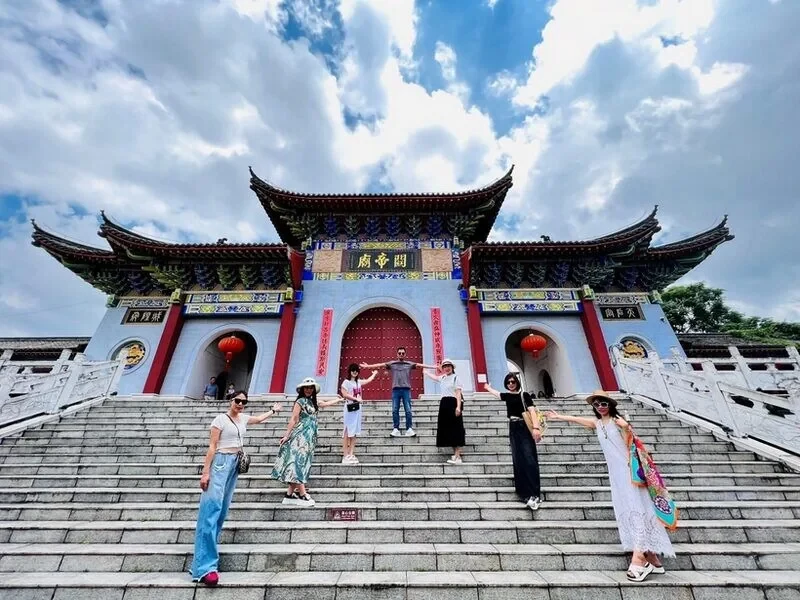
Architecturally, the Dongxing Guandi Temple is heavily imbued with the strict canons and traditional construction styles of the Lingnan region during the Ming and Qing dynasties, featuring a tightly structured layout along a symmetrical sacred axis. The entire structure exudes solidity and contemplative dignity through the harmonious combination of sturdy local load-bearing wooden frames and dark fired-brick walls capable of resisting moisture and withstanding harsh coastal monsoons. The yin-yang tile roof features multiple tiers curving gently at the eaves, topped with a layer of blue-green jade glaze dotted with bands of gleaming golden glaze. The main roof ridge is elaborately crafted with a double dragon worshiping the moon motif sculpted using intricate ceramic mosaic techniques, expressing ancient artisans’ aspirations for favorable weather, national peace, and yin-yang harmony.
Passing through the solemn triple-gate (tam quan) entrance deeper into the main hall, visitors are immediately enveloped by an atmosphere of surprising tranquility and solemnity. Seated in the central worship alcove is the statue of Guandi in a majestic meditative posture upon a dragon throne, featuring a fiery red face of unyielding integrity, piercingly bright eyes, and his renowned five-strand flowing beard swaying gently in the breeze. The statue is lavishly covered in gold leaf over battle attire embroidered with intricate dragon patterns, holding a Spring and Autumn Annals scroll or resting a hand upon his knee, vividly recreating the dual literary and martial brilliance of the sage. Attending on either side are statues of Prince Guan Ping holding the imperial seal and the fierce general Zhou Cang, clad in armor and firmly gripping the formidable Green Dragon Crescent Blade, forming a majestic and complete shrine honoring righteousness.
Beyond the sacred presence of its bronze and precious wood statues, the Dongxing Guandi Temple is a treasure trove of traditional art featuring intricate wood carvings running along the tie-beams, cross-beams, and roof brackets. Every limwood and taumwood beam is carved with classic tales tied to Guan Yu’s life, such as the Peach Garden Oath of brotherhood, the swift slaying of Hua Xiong before feudal lords, or the daring Solo Crossing to Attend the Feast deep within enemy territory. Interspersed among these relief panels are ancient gilded lacquered horizontal boards (hoành phi) and mother-of-pearl inlaid parallel couplets bearing Chinese characters praising virtues bright as the sun and moon and loyalty reaching the skies, transforming this spiritual space into a profound moral teaching ground for generations of descendants.
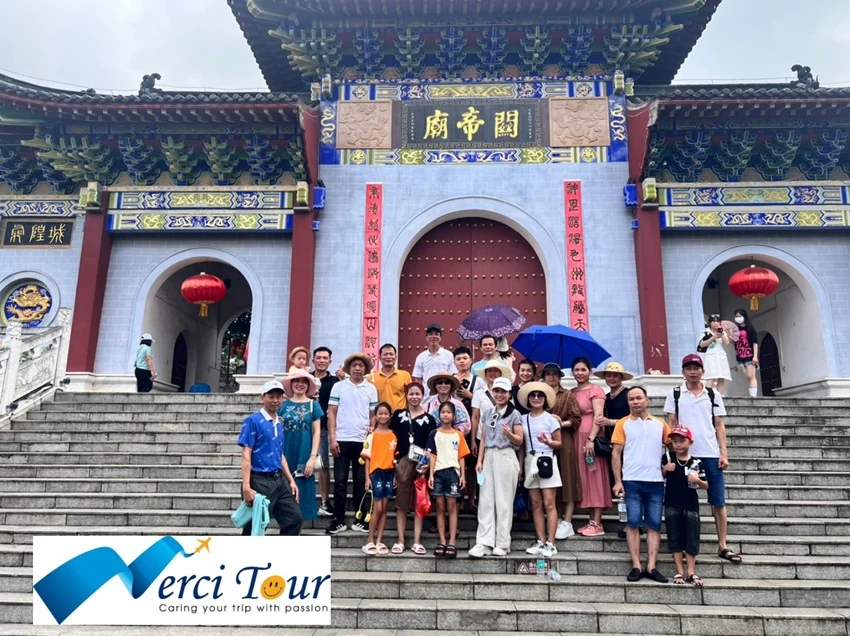
Throughout hundreds of years of border trading history, this temple has served as a sacred spiritual guarantor for merchant vessels navigating both banks of the Beilun River. Before embarking on offshore fishing voyages or transporting silk, tea, ceramics, and agricultural products across to the southern bank, merchants from both Dongxing and Mong Cai would come here to devoutly offer incense. They believed that His righteous character would protect trading negotiations to ensure fairness, uphold trust, and prevent disputes or risks on their wandering journeys. That sacred tradition has silently flowed from ancient times right up to the present day, with many business owners continuing the habit of visiting the Guandi altar before venturing abroad to pray for abundant wealth and smooth endeavors.
Exploring this historical relic is remarkably convenient due to its prime location right next to the Dongxing International Border Gate. After completing exit procedures from Mong Cai and crossing the Beilun Friendship Bridge, visitors need only take a short electric cart ride or stroll through tree-lined streets to reach the temple gates. Document preparation is currently very swift via border laissez-passer procedures requiring only a citizen ID card and standard white-background photo, or an ordinary passport depending on the intended stay. To enjoy a coherent historical exploration tour without worrying about queuing through crowded customs lines, many travelers choose the meticulously organized all-inclusive 1-day Dongxing tour program, saving maximum time to fully relish every moment of heritage discovery.
Stepping into the ancient tree-shaded temple courtyard, visitors enter a world entirely detached from bustling city noises. The lingering aroma of incense blending with red candle smoke creates a wonderfully serene and otherworldly sense of peace. Listening to bronze bells chime softly across the mossy brick courtyard and watching red silk prayer ribbons flutter gently around ancient tree trunks, travelers’ souls inevitably settle after long journeys. Here, one finds no excessive commercial tourism hustle; instead, every courtyard corner, stone step, and weathered bronze incense burner evokes solemn reverence toward a cultural icon transcending time and geography.
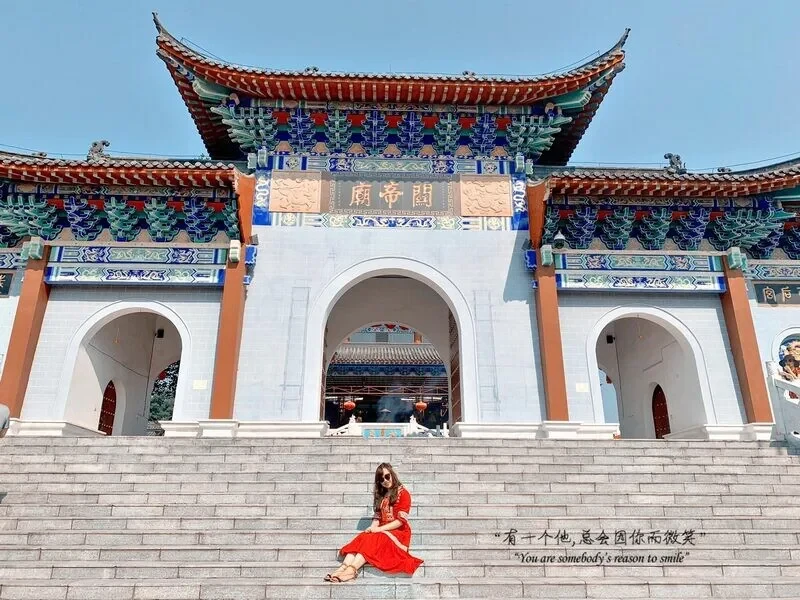
When visiting a highly solemn spiritual monument such as the Guandi Temple, travelers are advised to wear modest, polite clothing, walk softly, and maintain collective quietness during worship. According to traditional customs in Chinese temples, worshipers step across door thresholds rather than treading upon wooden door sills out of respect for deities. The outer temple courtyard, ancient stone dragon reliefs, and glazed tile eaves serve as superb photography spots exuding historical cinematic charm; however, inside the main hall housing sacred statues, visitors must strictly refrain from close-up filming, photography, and flash usage as a rule of civilized behavior.
To enrich and complete your journey, combining a visit to the Guandi Temple with other cultural landmarks and scenic spots in Dongxing is ideal. From the ancient temple, visitors can easily stroll to the bustling Wanzhou International Market right by the river to experience lively border trading atmospheres, visit the Sino-Vietnamese Friendship Park housing the People’s Friendship Monument and ancient Wanxiang Tower reflecting over tranquil waters, or explore the European-style West Street. Those with deep passion for indigenous culture can extend their journey to Zhushan Ancient Village—home to Border Marker No. 0 showcasing the meeting point of mainland and ocean—or visit the Gin Ethnic Museum in the Wanwei Golden Beach area to listen to traditional monochord (đàn bầu) melodies across neighboring waters via professional entry-exit tour services offering flexible transit assistance.
Through countless historical shifts—from turbulent border eras to today’s peaceful, prosperous integration—the Dongxing Guandi Temple stands impressively as a silent witness of time. The ancient temple not only preserves the exquisite architectural artistry of the brilliant Ming and Qing dynasties, but also acts as an invisible yet extraordinarily resilient cultural bond connecting communities on both banks of the border. Standing before the smoking incense burner amidst the breezy borderland afternoon, watching the Beilun River flow silently toward the sea, every traveler discovers a profound moment of quiet reflection regarding loyalty and righteousness (Trung and Nghĩa) within life’s diverse tapestry.