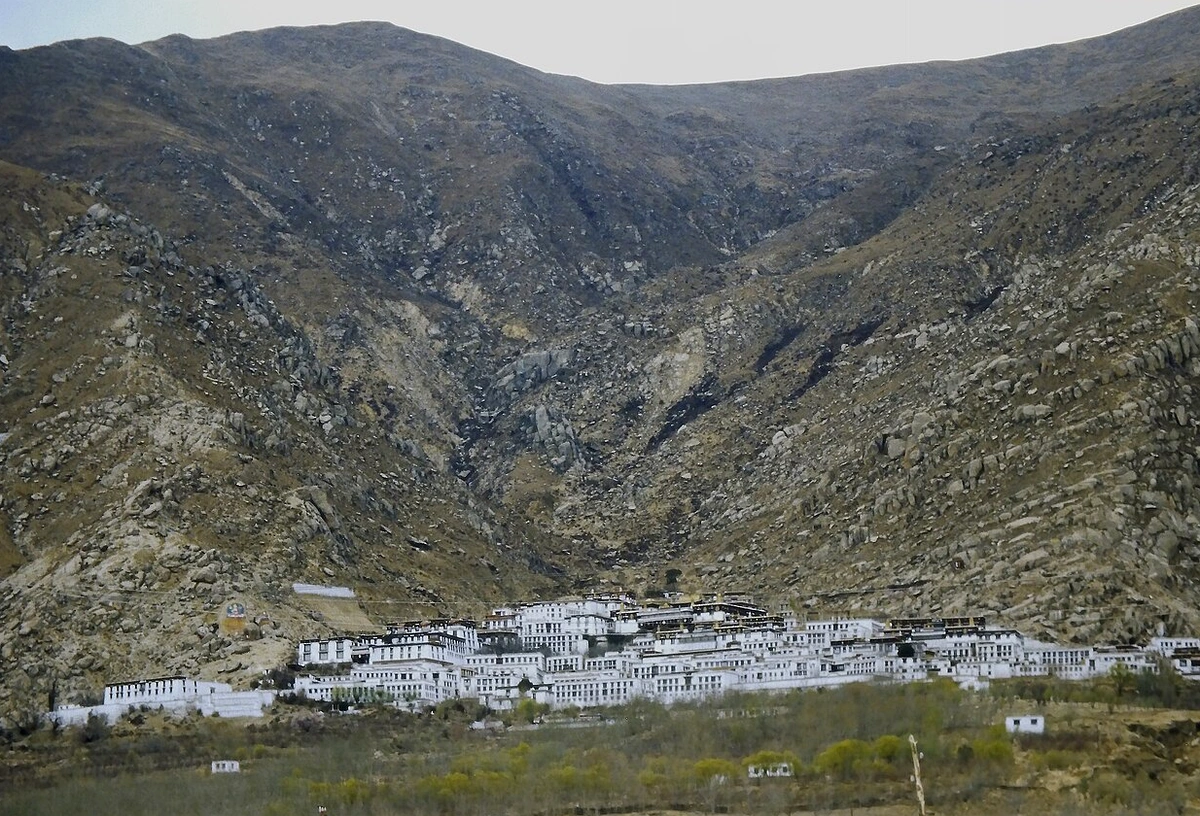
Drepung Monastery, located on the slopes of Mount Gambo Utse in the western outskirts of Lhasa, the capital of the Tibet Autonomous Region, represents one of the greatest centers of Mahayana and Tantric Buddhist study in the history of the Tibetan Buddhist world. Commenced in 1416 under the patronage of Jamyang Chje Tashi Palden, one of the most brilliant disciples of Je Tsongkhapa—the founder of the Gelugpa sect—Drepung carries an immensely massive historical and political legacy. The Tibetan name Drepung translates to “Rice Heap” or “Rice Mound,” originating from the visual appearance of the monastery’s architectural complex when viewed from afar, reminiscent of giant heaps of rice. It is also the Tibetan transcription of the Dhanyakataka monastery in southern India, where the Buddha expounded the Kalachakra Tantra. The formation of Drepung took place amidst the religious reform movement initiated by Tsongkhapa, which was spreading vigorously across the plateau to restore the strict monastic discipline of the Vinaya code and the Madhyamaka philosophical system, thereby reshaping the entire spiritual and secular power structure of Tibet for centuries to come.
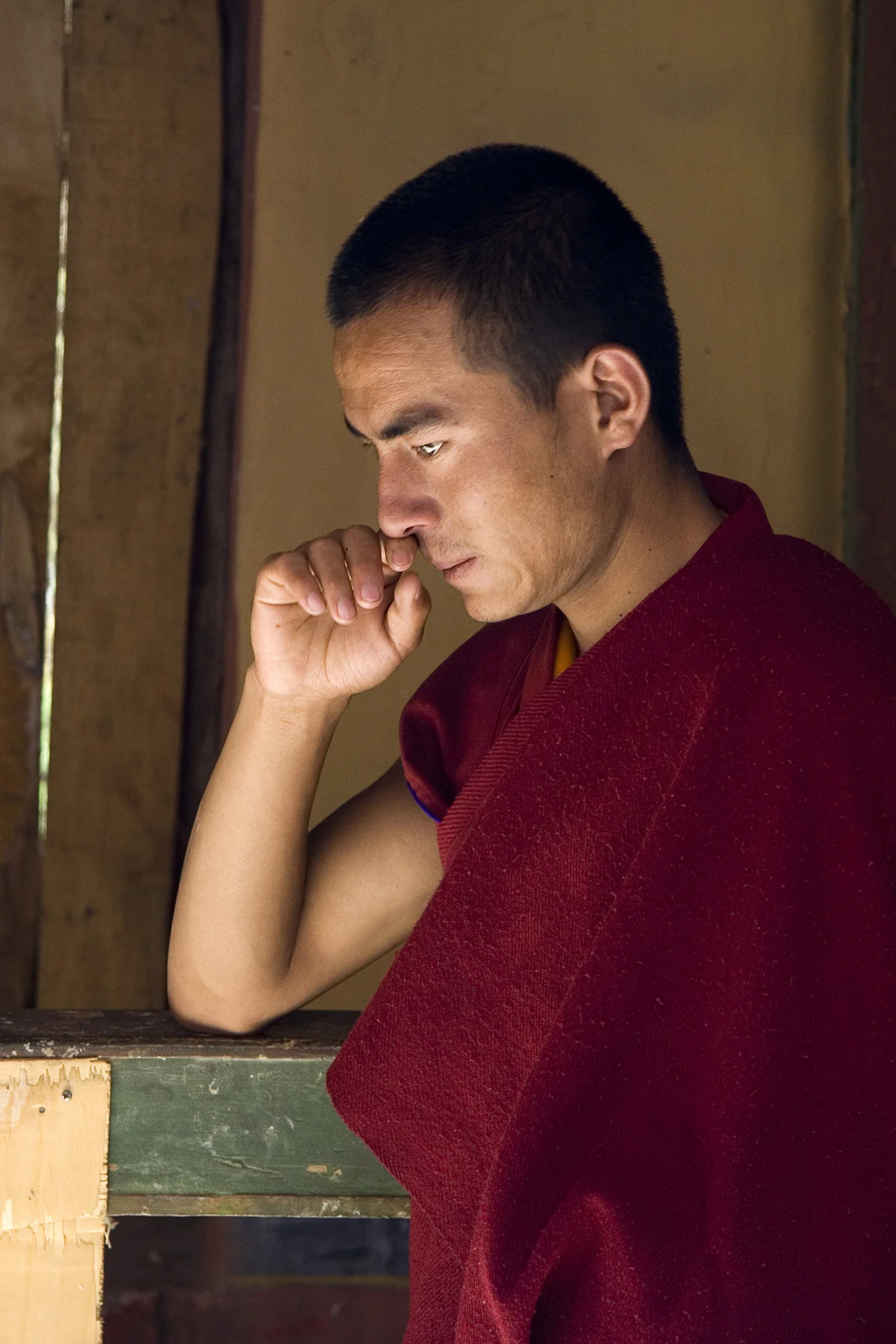
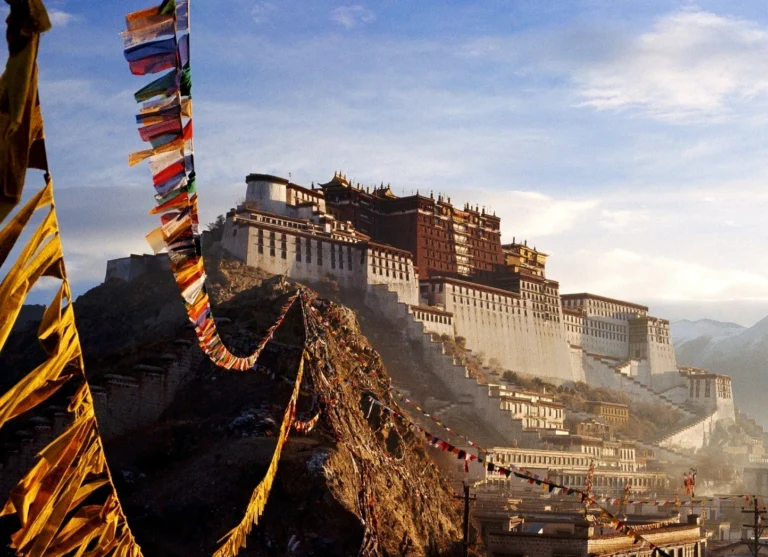
The historical progression of Drepung Monastery is closely linked to the prosperity and expansion of the Gelugpa sect, commonly known as the Yellow Hat sect. Throughout the 15th and 16th centuries, Drepung grew at a dizzying pace, becoming the largest among the three great university monasteries of the Gelugpa tradition in Lhasa, alongside Sera and Ganden. At its peak prior to the mid-20th century, this complex served as the shared home for over ten thousand monks, transforming it into a self-contained religious city complete with academic facilities, regional dormitories, scriptural printing houses, and magnificent shrines. Drepung’s political stature was firmly consolidated when the Third Dalai Lama, Sonam Gyatso, had the Ganden Phodrang palace constructed within the monastery grounds in 1562. Ganden Phodrang became the official residence of the Dalai Lamas until the Fifth Dalai Lama, Ngawang Lobsang Gyatso, relocated the center of power to the Potala Palace in the 17th century after unifying Tibet. This event permanently intertwined Drepung’s name with the history of the Ganden Phodrang state, exhibiting its dual role as both a rigorous monastic educational center and a launching pad for national-level political decisions.
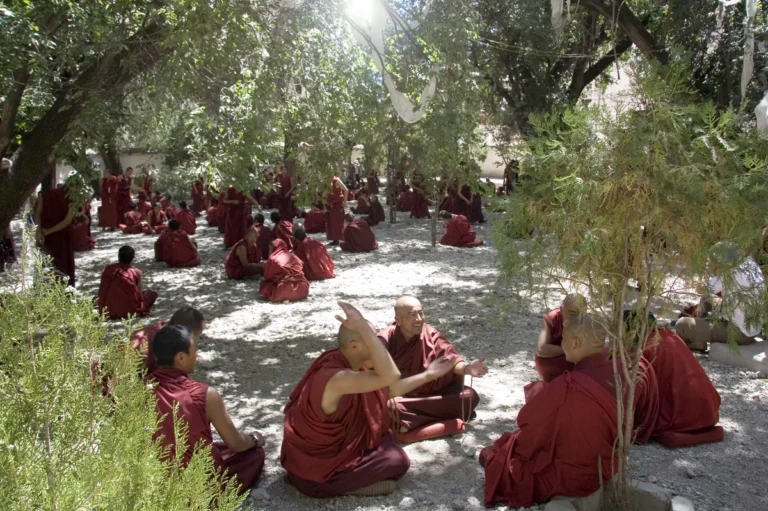
The educational system at Drepung is renowned for its rigor and high systematic structure in imparting Buddhist canonical texts, particularly Madhyamaka philosophy, epistemology (Pramana), and esoteric Tantric rituals. The monastery is divided into several major colleges, most notably Loseling, Gomang, Deyang, and Ngagpa. Each college operates as an autonomous entity with a distinct curriculum, attracting thousands of student monks not only from across all regions of Tibet but also from Mongolia, the Himalayan region, and Russia’s Buryatia region. The practice of philosophical debate, a hallmark of the Gelugpa tradition, takes place daily in Drepung’s debate courtyards, where monks utilize sharp logic, symbolic body gestures, and rigorous reasoning to defend their canonical theses. This course of study can last from fifteen to twenty years, culminating in the Geshe degree, the highest academic title in the monastic educational system, equivalent to a doctorate in Buddhist philosophy. Through this educational system, Drepung has trained a multitude of great masters, sages, and regents who exerted profound influence on the internal politics and diplomatic landscape of Tibet.
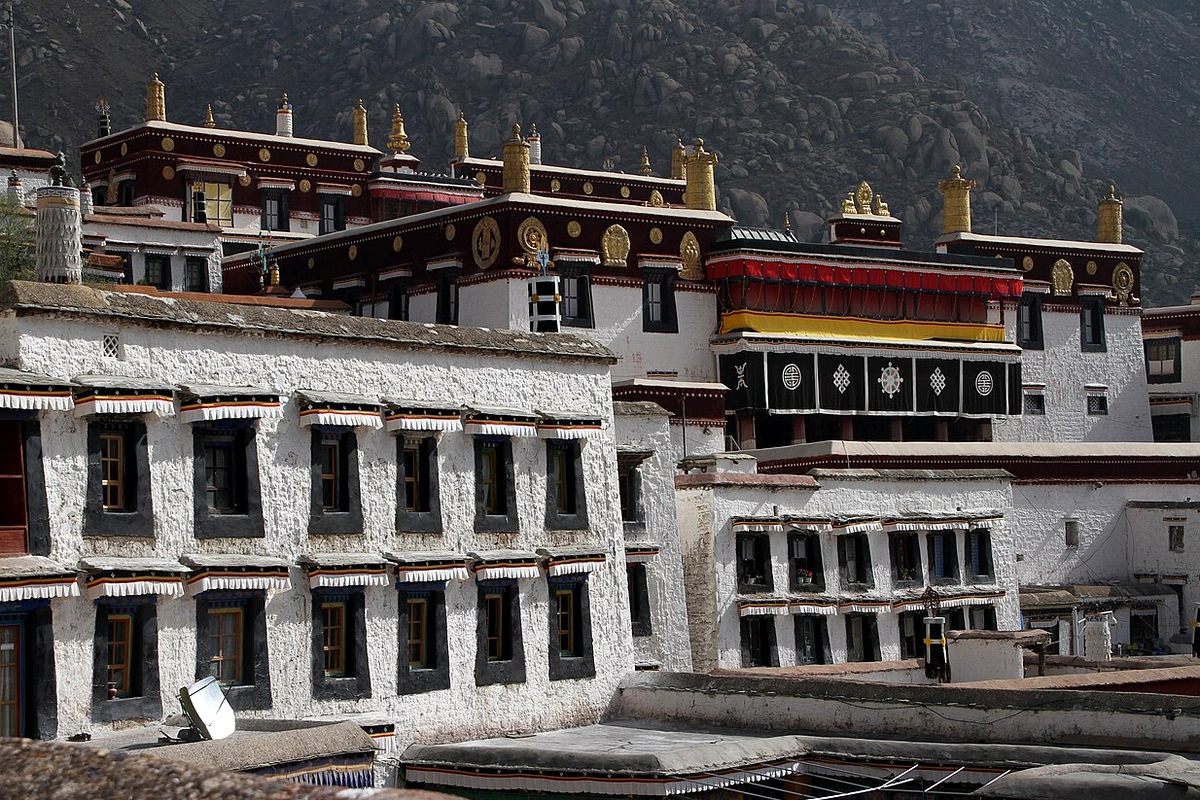
The symbolic value and cultural heritage of Drepung Monastery are further expressed through its monumental architecture and priceless religious art treasures preserved across generations. The architectural complex clings to the mountainside, forming tiered layers of whitewashed structures standing out vividly against the plateau sky and surrounding arid mountain ranges. The grand assembly hall, or Tsuglagkhang, accommodates thousands of monks chanting together, featuring colossal intricately carved wooden pillars, vibrant hand-embroidered silk tapestries, and hundreds of centuries-old Buddha statues crafted from gilded bronze, precious stones, and clay. Murals covering the monastery’s walls depict the previous lives of the Buddha, the life of Tsongkhapa, and accomplished high masters, representing the pinnacle of traditional Tibetan thangka painting art. Additionally, Drepung serves as a hub for major religious festivals, most famously the Shoton Festival, or Yogurt Festival, held annually in summer. The highlight of this festival is the ceremony of unfurling a colossal thangka painting bearing the image of the Future Buddha Maitreya or Shakyamuni Buddha on the hillside behind the monastery, attracting tens of thousands of devotees and travelers from all directions for veneration, creating a vivid symbol of the enduring vitality of Tibetan spiritual culture through the fluctuations of time.
Having weathered the turbulent historical ups and downs of the 20th century, including periods of interruption and physical damage, Drepung Monastery maintains its standing as one of the irreplaceable spiritual pillars of the Tibetan people. The primary architectural structures have been carefully restored by the state and the monastic community, preserving their original archaeological and artistic values intact. Today, Drepung not only functions as an active monastery with a large population of monks continuing daily study and rituals, but also stands as a living museum of Buddhist monastic history, philosophy, and architecture. Drepung’s symbolic stature lies in the seamless combination of traditional political power, erudite scholasticism, and supreme artistic heritage, testifying to a glorious era when Buddhism served as the driving force shaping the entire social and cultural life of a vast plateau region.
Drepung Monastery is positioned at coordinates in the western outskirts of Lhasa, Tibet, on the slopes of Mount Gephel, marking one of the greatest milestones of spatial planning and Vajrayana Buddhist architecture on a plateau with an average altitude exceeding 3,000 meters above sea level. The spatial creation process here is not merely adaptation to the harsh terrain conditions of the Himalayas, but also a firm proclamation of religious power, politics, and the cosmological philosophy of Tibetan Tantric Buddhism dating back to the 15th century. Commenced in 1416 by Jamyang Chje Tashi Palden, one of Je Tsongkhapa’s most brilliant disciples, this monastery once evolved into the world’s largest religious institution during its golden age, with a monastic population sometimes exceeding 100,000 people. Studying the terrain and overall master planning structure of Drepung requires a multidimensional perspective combining geology, architectural anthropology, and art history to decode how ancient Tibetan architects transformed a barren, steep rocky slope into a self-contained, self-sufficient religious city perfectly harmonized with its surrounding landscape ecosystem.
Geomorphologically, Mount Gephel provides a distinctly vertical spatial context that dictates the entire master layout organization of the monastery. Unlike monasteries planned in flat valleys or level plateaus, Drepung thoroughly exploits the steep gradients of mountain terrain through a massive system of architectural terraces. The local terrain undergoes intense weathering from cold plateau winds and seasonal runoff from high mountain gullies, generating weathered soil and rock layers requiring extremely sturdy foundation solutions. Terraced platforms are densely paved with local granite and combined with high-load-bearing earth-retaining walls, forming artificial planes stacked vertically along the mountainside. The elevation difference between areas within the monastery can reach hundreds of meters, transforming the entire complex into a giant sculptural architecture rising from the earth. This layout optimizes sunlight capture—crucial in Tibet’s freezing climate—while establishing a robust natural defensive system, reflecting the turbulent historical context of central Tibet during that era.
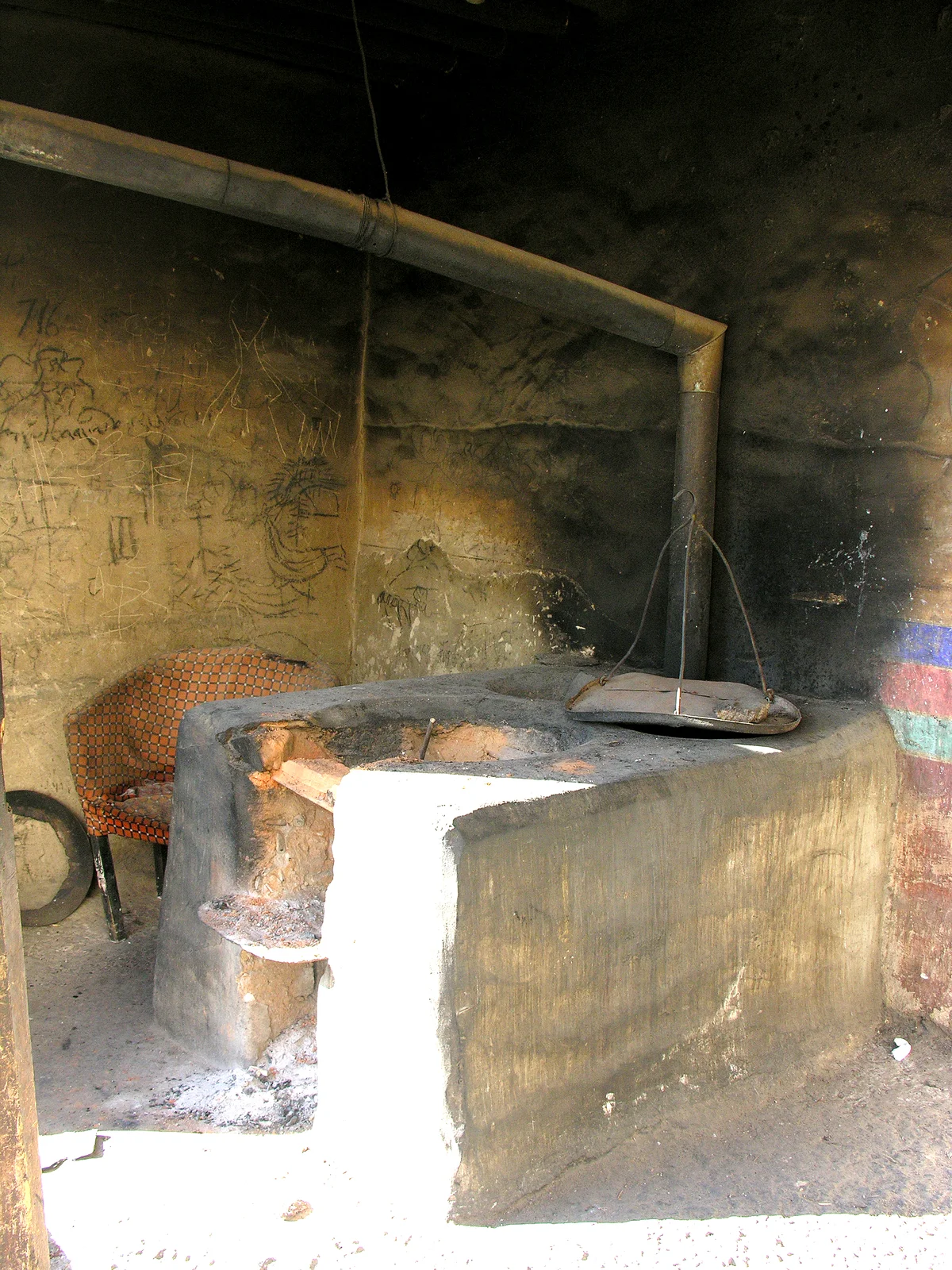
The master planning of Drepung Monastery strictly adheres to Buddhist cosmological principles, where the center of the universe is symbolized by principal shrines, surrounded by residential, educational, and administrative zones distributed according to a strict social and religious hierarchy. The main axis of the monastery runs north-south along the mountain slope’s gradient, creating…
Drepung Monastery, founded in 1416 by Jamyang Chje Tashi Palden, one of Tsongkhapa’s most brilliant disciples, stands on the slopes of Mount Gephel in the western outskirts of Tibet’s capital Lhasa as a magnificent testament to the pinnacle fusion of traditional local construction techniques and Gelugpa Tantric Buddhist thought. This architectural complex spreads across a vast area, with an overall structure simulating a giant three-dimensional mandala clinging to a sheer cliff face, where every structure strictly obeys Himalayan feng shui principles and Tibetan Buddhist canons. Drepung’s establishment was not merely a religious expansion of the Gelug sect but a revolution in monastic architecture, setting new standards for scale, spatial layout, and building material systems across the central plateau region for over six centuries.
Regarding basic materials and construction techniques, Drepung Monastery utilizes local natural resources exhaustively yet creatively to adapt to the harsh climate and steep terrain of Mount Gephel’s slopes. Local granite is quarried directly on-site, dressed into large blocks to build foundations and sturdy retaining enclosure walls, in places several meters thick to support structural loads and withstand frequent earthquakes in the Himalayan tectonic fault zone. Above stone foundation bases, builders employed traditional rammed-earth wall construction techniques combined with pine and spruce timber transported from southern valleys. Sloping walls tapering upward not only create a symbolic sense of grandeur and stability but also optimize storm resistance and thermal insulation for vast interior spaces within main shrines.
Roof and ceiling structural engineering at Drepung reflects the exquisite carpentry proficiency of 15th- and 16th-century artisans. Load-bearing wooden pillars inside main grand halls, typified by the Tsokchen assembly hall, were hewn from monolithic ancient tree trunks, then smoothed, lacquered and gilded, or wrapped in coarse cloth coated with size to prevent insect damage and warping from humidity shifts. Purlins, transverse beams, and brackets are interconnected via complex wooden mortise-and-tenon joints without iron nails, endowing structures with elasticity against seismic tremors. Ceilings are woven from layers of willow twigs, reeds, and leveled pounded clay above, forming a thick insulation layer blocking plateau winter’s piercing cold while waterproofing effectively during summer monsoon rains.
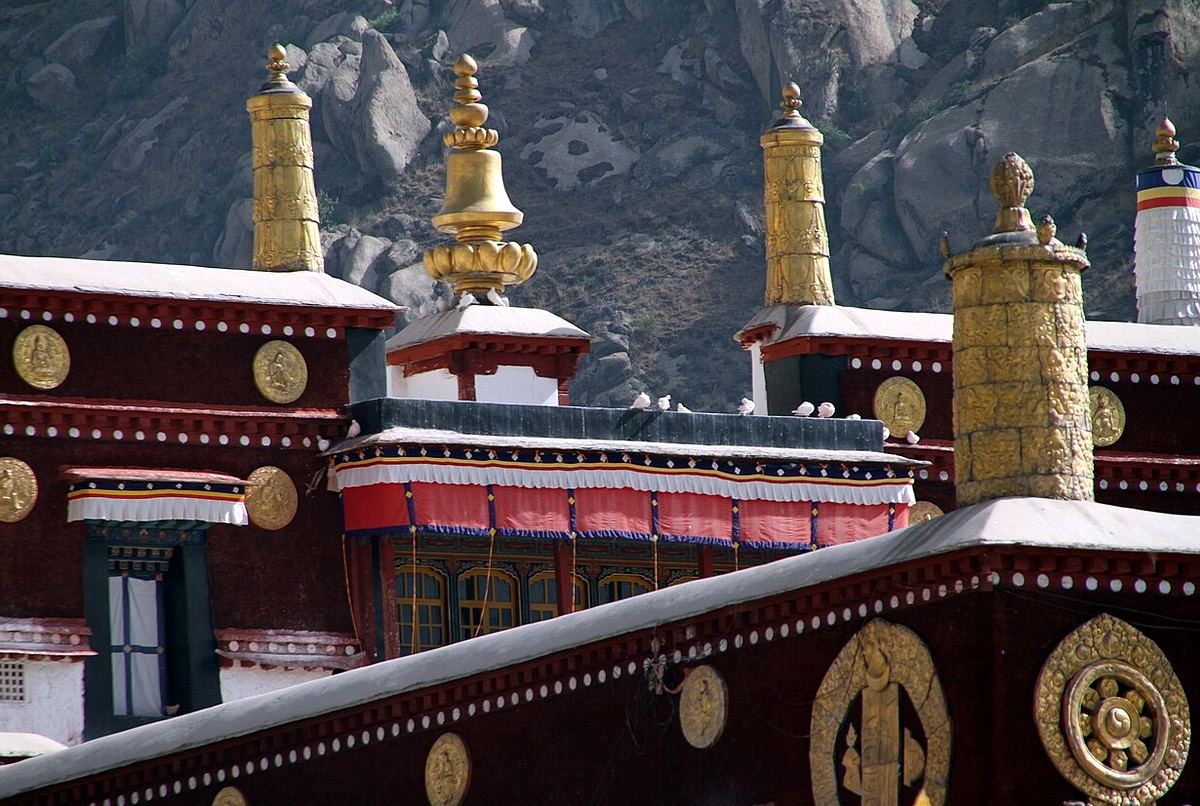
Surface decoration and carving art at Drepung are clearly demonstrated through window systems, thangka frame structures, and wood-carved motifs. Trapezoidal windows characteristic of Tibetan architecture are framed by intricately pierced wooden borders simulating lotus flowers, rolling clouds, and auspicious Buddhist symbols. Rammed-earth wall surfaces are typically whitewashed or coated with natural earth pigments, combined with dark red and black horizontal bands running along roof cornices, accentuating boundaries between the mundane world below and the sacred realm above. Metal details such as gilded copper nail heads, wind chimes, and rooftop ritual symbols fashioned via traditional Newar copper-beating techniques reveal rich cultural and technical exchanges between Kathmandu Valley artisans and Tibet.
The deepest focus in Drepung’s formative art lies in its mural systems and religious sculptures housed within specialized colleges such as Loseling, Gomang, and Deyang. Murals covering inner assembly hall walls were executed via mineral color painting techniques on wet lime plaster, employing natural pigments sourced from lapis lazuli, cinnabar, ochre, and malachite, ensuring color longevity across centuries. These murals detail Buddhist cosmological systems, Buddhas, Bodhisattvas, past masters, and protective deities with fluent linework and strict anthropometric proportions following canonical texts. Metal and clay statue sculpting achieved high refinement, featuring thousands of statues expressing expressions from compassion to wrath among enlightened beings, each embodying complex spiritual symbolisms requiring strict adherence to canonical measurement rules.
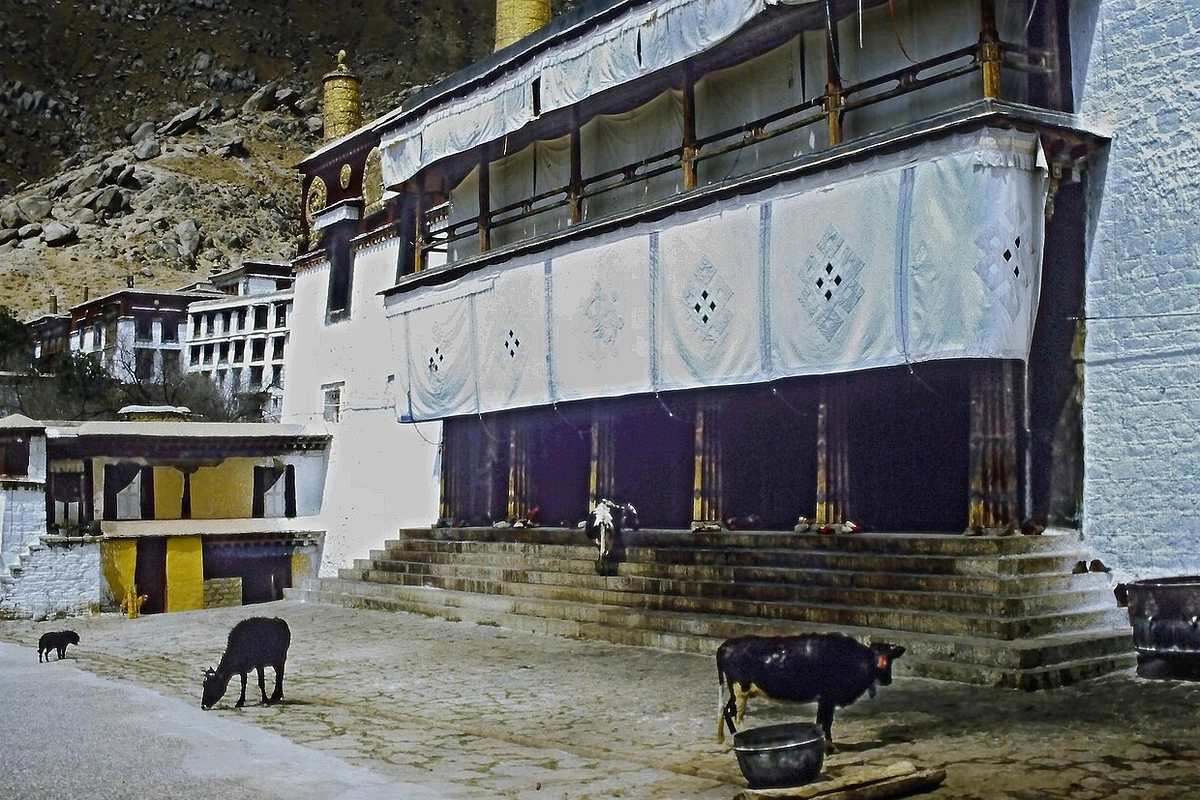
The aesthetic philosophy governing Drepung’s architectural space ties closely to concepts of impermanence and paths toward inner liberation. Unlike Western architecture emphasizing Euclidean geometric symmetry, Drepung’s architecture evolves organically, hugging natural mountain slopes to generate dynamic experiential spaces as pilgrims ascend steep stone steps and narrow dark passageways before entering sun-drenched, incense-filled halls. This light transition is purposefully calculated to symbolize cognitive transformation from ignorance to enlightened wisdom. Every building, corridor, and courtyard is planned to optimize human interaction with surrounding grand landscapes, turning the monastery into an earthly pure land.
Symbolic layers of the monastery are further expressed through vertical stratification of the entire complex. Sturdy stone bases symbolize firm moral and disciplinary foundations in practice, white-plastered wall sections represent purity and wisdom, while gilded roofs and rooftop ritual symbols denote supreme Buddha-crown fruition. Subsidiary colleges (dratsang) arranged around central shrines resemble deities revolving around Mount Meru’s cosmic axis in ancient cosmology. Through architectural language and shaping art, Drepung Monastery acts not only as the Gelugpa tradition’s largest educational center but also preserves a priceless material heritage reflecting Tibetan cosmological visions, master building techniques, and philosophical depth across historical eras.
Drepung Monastery, founded in 1416 by Jamyang Chje Wangpo Tragpa, an eminent disciple of Tsongkhapa, stands on the slopes of Mount Gephel in the western outskirts of Lhasa, Tibet, at roughly 3,800 meters above sea level. This architectural complex once served as the world’s largest monastery of the Gelug (Yellow Hat) school of Tibetan Buddhism, housing over 100,000 monks at its height. Through centuries of historical shifts, Drepung’s overall structure retains its distinctive monastic urban planning values, blending traditional Tibetan construction techniques with the steep topography of the Himalayas. Exploring the real site here requires understanding spatial structures alongside thorough physical preparation due to low atmospheric pressure and complex stepped terrain.
The approach route to the monastery typically begins at the main gate area at the foot of the slope, where visitors enter a cobbled stone trail network winding up the mountainside. The recommended optimal transit route is advancing straight along the main axis upward to the central area, then branching out to specialized sub-zones on both hill flanks to avoid missing historically and artistically significant structures. The first sub-zone drawing special attention is the Great Assembly Hall (Tsokchen), the beating heart of Drepung Monastery. Spanning thousands of square meters of floor space supported by hundreds of intricately carved giant wooden pillars, this hall once hosted general assemblies of the entire monastic community for chanting rituals and major sectarian decisions.
Inside the Great Assembly Hall, space is shaped by dim light from traditional yak butter lamps and dense incense smoke. Surrounding walls are covered with ancient murals dating from the 15th to 17th centuries, detailing Buddhist legends, biographies of great masters, and stern, majestic protective deities. Immediately behind the main hall lie smaller shrines enshrining a large gilded bronze statue of the youthful Maitreya Buddha alongside other priceless treasures preserved across dynasties. Navigating hall levels requires caution on slippery, time-worn steep wooden steps.
Departing the central zone, the journey proceeds upward to residential quarters of the college universities (Dratsang). Historical Drepung comprised four major colleges initially, with Ganden Dratsang, Loseling Dratsang, Gomang Dratsang, and Deyang Dratsang serving as independent centers for Tibetan Buddhist philosophy, logic, and traditional medicine. Among these, Loseling Dratsang was the largest college, once attracting tens of thousands of student monks from Tibet, Mongolia, and neighboring regions. College buildings feature thick stone walls painted in signature white with dark red and black trim along roof edges, exemplifying sturdy architectural idioms weathering harsh plateau climates.
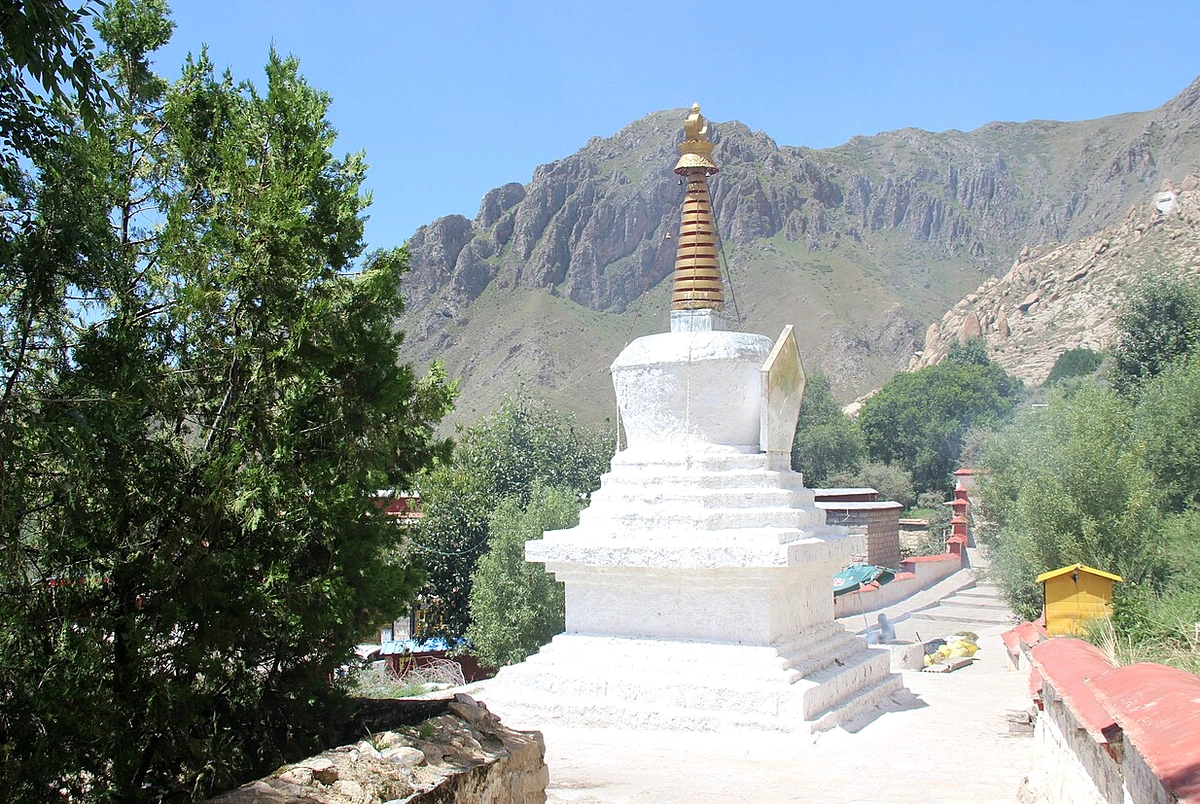
The most important cultural activity highlight within college zones is the daily philosophical debate courtyard session, typically held in the afternoon. This space delivers a vivid real-world experience as monks gather in a stone-paved courtyard to conduct philosophical debates. One monk questions with powerful handclaps, foot-stomping, and sharp gestures, while his seated counterpart instantly answers based on Buddhist canonical texts. This practice hones dialectical thinking and sharp logic while mirroring the rigorous, vibrant study life of Gelug monks.
Continuing the upward climb to the topmost section of the monastery complex is the Ganden Phodrang area, bearing profound political symbolism. Built in 1530 by the Second Dalai Lama, Gedun Gyatso, Ganden Phodrang served as the official residence of the Dalai Lamas before the Potala Palace was constructed in the 17th century and political power relocated there. Ganden Phodrang’s architecture resembles a hybrid of monastery and administrative fortress, featuring audience halls, private quarters for senior religious leaders, and wide balconies overlooking panoramic views of the Lhasa River valley below.
From Ganden Phodrang’s balconies, observers capture the entire Kyi Chu valley, admiring intersections between the pristine natural scenery of arid rocky mountains and developing urban life in the distance. Artifacts displayed within include historical thrones, imperial decrees from Ming and Qing dynasties, and premium brocade ritual garments. These relics provide comprehensive insight into Drepung’s dual role in Tibetan history as both a spiritual scholarly hub and a cradle of secular power.
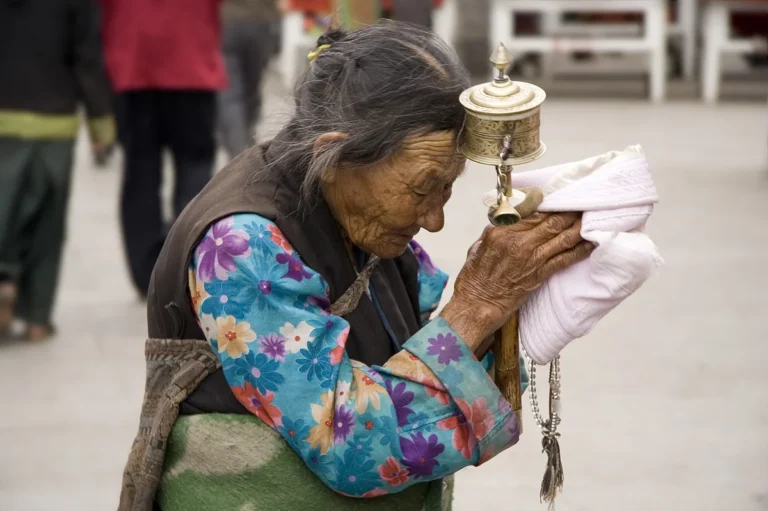
The experiential journey at Drepung Monastery concludes with a clockwise trail looping around the monastery following local Buddhist pilgrims’ Kora practice. Along this trail, visitors encounter countless cliff-carved Om Mani Padme Hum mantras in various sizes alongside hundreds of bronze prayer wheels spun continuously by pilgrims. Ending the tour with a slow walk past mantra-carved cliffs aids breathing recovery after high-altitude exertion while imparting deep empathy for locals’ persistent spiritual life across centuries.
Drepung Monastery’s architectural complex on Mount Gambo Utse slopes, about eight kilometers west of Lhasa center, functions not merely as a closed religious center but as the nucleus of a unique local service, economic, and cultural ecosystem. Surrounding land from the 15th century onward evolved into a complex intersection where monastic life blends seamlessly with daily routines of Tibetan residents. Service areas around the monastery originated from needs supplying goods, medicinal herbs, and religious items for tens of thousands of monks residing there across historical epochs. According to local archives and Western travelogues from early 20th-century Lhasa, Drepung’s foothills once bustled as a marketplace where Han, Hui, Kashmiri, and northern Tibetan nomads traded. Today, local services cater to monastic spiritual needs while welcoming travelers for research and veneration, forging a sub-regional economic structure steeped in indigenous character.
Exploring the indigenous cultural space around Drepung requires deep understanding of traditional Tibetan social structures. Narrow alleys leading up to the monastery are flanked by traditional rammed-earth houses where multi-generational families practice crafts directly serving monastic life. Visitors can observe bronze ritual item crafting, repoussé Tantric Buddhist symbols, or Tibetan wool rug weaving with traditional motifs. These small workshops operate via hereditary apprenticeship, utilizing natural materials like plateau sheep wool, plant-derived root dyes, and local minerals. This space preserves slow rhythms where uniform hammer strikes blend with chanting echoing from upper shrines, generating a distinct spiritual labor atmosphere distinct from modern commercialized urban zones.
Indigenous cuisine around Drepung Monastery reflects Tibet’s harsh plateau ecology and long-standing nutritional habits of monks and locals. Small teahouses and eateries scattered along the main monastery path serve as vital community gathering spaces where locals and travelers sip traditional yak butter tea. Butter tea, brewed from compressed black tea bricks, yak butter, and rock salt, provides high energy helping bodies adapt to rarefied, freezing air above 3,700 meters. Additionally, yak meat dishes like air-dried hanging meat and highland barley tsampa kneaded by hand with butter tea or broth supply vital nutrients. Food vendors utilize crops cultivated on terraced fields across the Lhasa valley, ensuring seasonal freshness and authenticity.
Accommodation and pilgrimage support services around Drepung carry distinct traits absent in conventional tourist destinations. Traditional guesthouses run by locals preserve Tibetan house architecture with thick earth walls, flat timber-slab roofs, and signature red-black-framed trapezoidal windows. Staying in these facilities offers direct glimpses into local family life, from using traditional yak dung stoves to participating in morning prayers in family shrines. Tourist support services focus on historical briefings, monastic etiquette guidance, and eco-friendly transit like local bicycles or guided walking tours on ancient pilgrimage paths along mountain slopes.
Community gathering spaces around the monastery peak in cultural expression during major festivals, epitomized by the Shoton Festival in summer. During this event, the hillside behind Drepung becomes regional center stage as a giant embroidered thangka depicting Shakyamuni Buddha is brought up the slope to be unfurled before tens of thousands of devotees. This event mobilizes all local service and community resources, from order-keeping volunteers and food tent operators for pilgrims to folk dance troupes performing lha mo traditional plays. Preparations span months, sparking vibrant handicraft and support economies sustaining traditional guilds and passing cultural knowledge to young Tibetans.
The reciprocal relationship between Drepung Monastery and local residents shines through scholastic economies and traditional charity. Small-scale commercial services around the monastery lean heavily on religious calendars, especially requiem masses and monetary offerings from incoming pilgrims. Conversely, local communities provide secure logistical backing in labor, food, and offerings, enabling this large Buddhist institution to sustain philosophical research and monastic education for centuries. The sustainable survival of local service ecosystems and indigenous cultural spaces proves the resilient vitality of plateau civilizations preserving traditional values despite severe turbulence from time and modernization.
Planning a field excursion to Drepung Monastery demands thorough command of geographic traits, extreme climate conditions, and strict religious-cultural regulatory frameworks of the Tibet Autonomous Region. Situated at roughly 3,700 meters above sea level on Mount Gambo Utse slopes, eight kilometers west of Lhasa center, Drepung is not merely a grand Buddhist architectural historic site but an unforgiving ecological environment testing human physiological limits. Optimal preparation for surveys and research must initiate with selecting appropriate timeframes, accurately assessing meteorological shifts, and mastering local transport logistics to guarantee absolute safety and high academic efficiency for travelers.
The golden timeframe in the year to approach Drepung Monastery spans May through October annually, when the Tibetan plateau receives relatively mild warmth and abundant sunshine. During this phase, roads leading up Mount Gambo Utse are clear, unblocked by ice or sudden snowstorms common in winter. Notably, the sixth lunar month, falling around July or August Gregorian, marks the Shoton Festival (yogurt festival) held here with the ritual unfurling of a giant thangka painting on the hillside. Experiencing the monastery during this time yields invaluable anthropological perspectives on popular religious life, though tourist crowds peak, demanding patience and adaptability to dense spaces.
Regarding daily timing, optimal hours to commence field surveys are morning, between 9:00 AM and 11:00 AM, after morning mist clears and ambient temperatures rise comfortably. Afternoons typically witness strong winds blowing from valleys to plateaus alongside sudden temperature drops as the sun sets behind mountains. Visitors must avoid rapid climbing or exertion during initial hours upon arrival, as low atmospheric pressure and thin oxygen at 3,700 meters can trigger acute mountain sickness, requiring at least two to three days of acclimatization in Lhasa before any mountain climbing.
Transport systems connecting Lhasa center to Drepung are developed but require strict adherence to Tibet’s tourism management rules. International and domestic tourists cannot independently drive or travel solo via personal vehicles; instead, they must use licensed tour vehicles accompanied by certified local guides and native drivers familiar with winding mountain passes. Local public buses connect near monastery gates, though this option is discouraged for first-time researchers due to schedule complexities and language barriers. Renting private cars with drivers via licensed tour operators is optimal, allowing flexible stops en route for physiological adaptation to dropping air pressure.
Wardrobe preparation requires strategic planning based on multi-layered dress principles to adjust easily to plateau weather fluctuations. Even in summer, temperatures inside Drepung’s ancient assembly halls remain freezing due to thick stone walls and lack of heating, while outdoor solar heat can cause severe skin burns. Apparel should include windbreakers, thermal sweaters, thick trousers, and sturdy hiking boots or grip-enhanced sneakers for worn stone steps and steep slopes. UV400 sunglasses, high-SPF sunscreens, and wide-brimmed hats are mandatory items because high-altitude solar radiation poses severe risks to human eyes and skin.
Mandatory cultural and religious regulations entering Drepung’s sacred spaces must be strictly obeyed to respect the monastic community and Tibetan Buddhist heritage. Visitors must wear modest attire covering shoulders and knees, strictly avoiding shorts, tank tops, or short skirts in main shrines. Removing hats and sunglasses before religious figures, Buddha statues, and altars is minimal etiquette showing respect. Photography inside shrines is frequently banned outright or subject to specific photo fees per monastery rules; travelers must never snap photos or videos without explicit permission from managers or resident monks.
Internal movement and spatial observation within the monastery also demand comprehension of Vajrayana Buddhist rituals. Walking through corridors, courtyards, or prayer wheel areas requires clockwise movement, following local pilgrim flows. Touching religious symbols, ancient thangkas, or altar offerings violates strict heritage preservation norms. Additionally, preparing small-denomination Chinese Yuan cash is essential for donation boxes or purchasing khata ceremonial scarves instead of digital payments, which remain unviable in isolated monastic environments.
Physical and psychological preparation dictates field survey success at Drepung. Besides carrying respiratory support medications and altitude sickness remedies prescribed by physicians, travelers should maintain carbohydrate-rich diets and drink warm water to sustain energy during steep climbs. Avoid alcohol and smoking during early days in Lhasa and the monastery because they exacerbate blood oxygen deprivation. Thoughtful preparation—from climate timing and legal transport to scientific clothing and absolute respect for religious etiquette—transforms research at Drepung Monastery into a profound, safe intellectual experience.
To fully experience this journey alongside local guides, you can explore Tibet Lhasa – Shigatse 6D5N Tour Package with pre-arranged itineraries.