
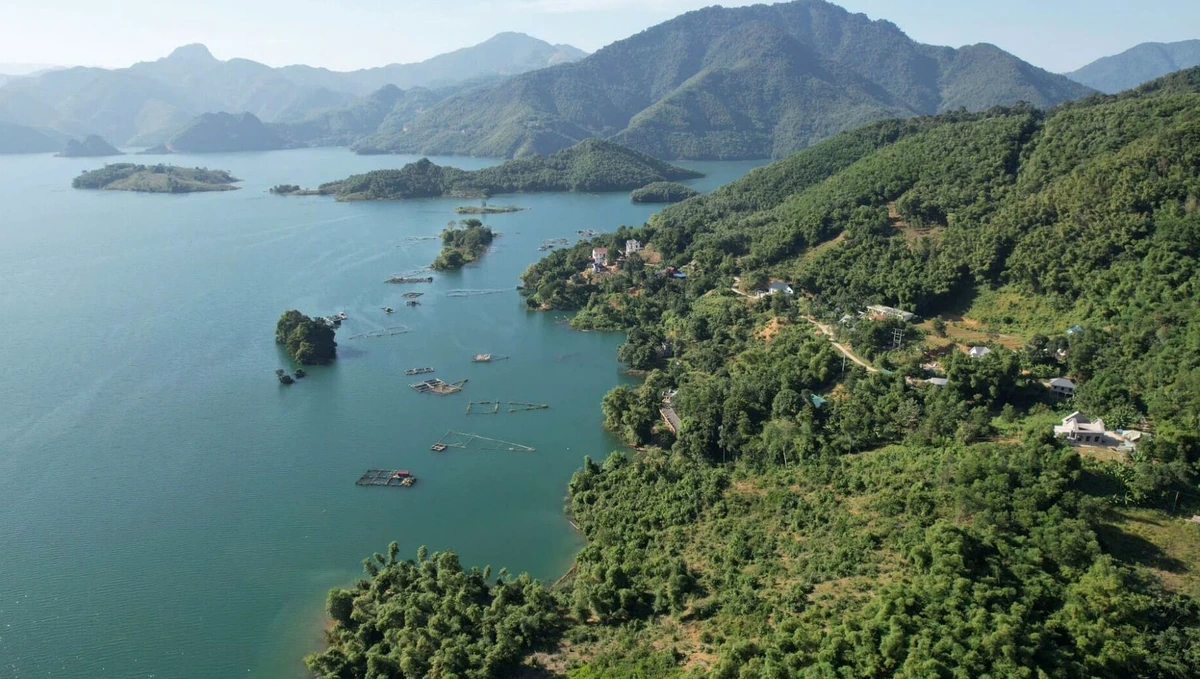
Within the ancient historical chronicles of Dai Viet, the naming and administrative shaping of this region were closely tied to the central court’s frontier governance policies. During the Ly – Tran dynasties, Mai Chau served as a rugged borderland outpost, situated within Quy Hoa Circuit—later renamed Quy Hoa Camp and Da Giang Prefecture—where hereditary Muong chieftains ruled in allegiance to the royal court. By the Early Le dynasty, through the erudite writings of the famed scholar Nguyen Trai in Toan Viet Dia Lu Chi and Du Dia Chi, the upper Da River basin and its tributary valleys were depicted as both wild and strategic, yet abundant in rare treasures such as agarwood, ivory, and forest delicacies. A pivotal administrative milestone establishing its modern name occurred under the Nguyen dynasty, specifically in the 12th year of Emperor Minh Mang’s reign (1831), when imperial historians officially recorded the area as Chau Mai (Mai District), under Tuong Lai Prefecture, Hung Hoa Province, marking its seamless integration into the streamlined administrative apparatus of a unified nation.
Today, having weathered the shifts of feudal history and modern eras, Mai Chau is celebrated by cultural authorities, local historians, and reputable travel publications as a living emblem of green heritage and sustainable tourism. Beyond preserving the unique geological values of a tropical karst ecosystem, the valley safeguards traditional stilt-house architecture, graceful xoe circle dances, resonant gong melodies, and the intricate brocade weaving artistry of the White Thai people. This harmonious blend of dramatic natural scenery, storied historical depth, and authentic cultural identity has positioned Mai Chau as an invaluable heritage destination where past and present intertwine, beckoning travelers to reconnect with the sacred soul of Northwest Vietnam.
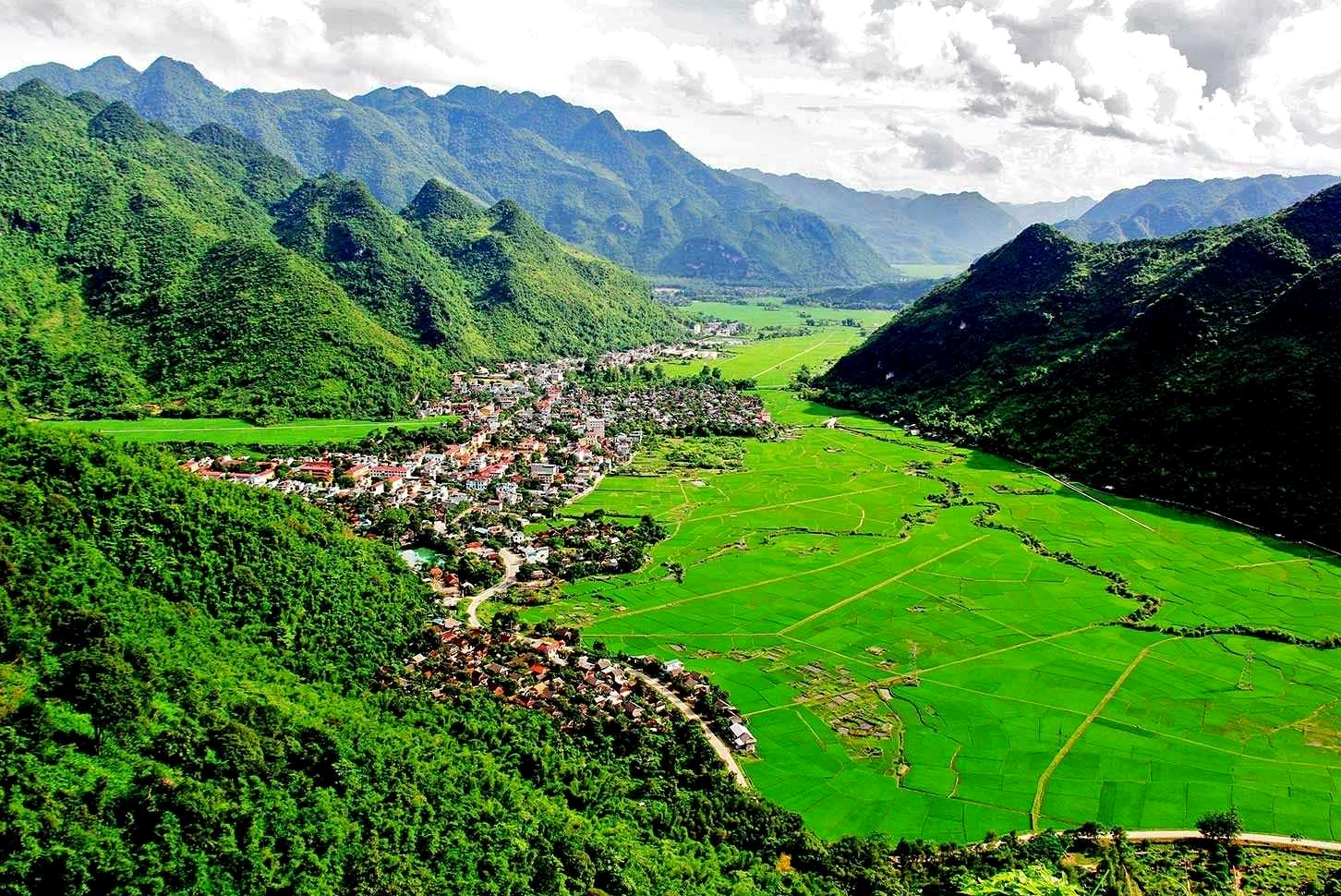
Nestled snugly inside a lush valley ringed by undulating limestone mountains, Mai Chau unfolds like a vast ink-wash painting masterfully composed by nature. The landscape reflects traditional geomancy, with gentle, silt-laden streams winding across the front and towering, millennia-old cliffs standing guard behind. While the scenery transforms magically with the seasons, it retains an enduring sense of untouched tranquility—featuring flat emerald rice paddies stretching along the foothills, traditional wooden stilt houses peeking beneath ancient trees, and wisps of evening hearth smoke drifting softly at dusk.
The stilt-house architecture of Mai Chau’s Thai ethnic community is a masterpiece of environmental adaptation and indigenous aesthetic sensibility. Traditional wooden stilt houses are typically built with a distinctive double-curved tortoiseshell roof or flat-ridged structure, crafted entirely from natural materials such as forest timber, bamboo, rattan, and thatched palm leaves. The elevated, airy space beneath the floorboards not only stores farming tools and brocade weaving looms but also ensures optimal airflow throughout the year. Subtle artistic highlights appear in the carved wooden balustrades adorned with stylized motifs of the sun, ban flowers, or drifting clouds, paired with two-flight wooden staircases rooted in Thai spiritual beliefs surrounding yin-yang balance and animism.
To capture the full grandeur of the valley through a lens, seasoned photographers and travel journalists frequently share two prized vantage points. The first sits atop Thung Khe Pass (also known as White Stone Pass), offering a sweeping bird’s-eye panorama over the entire Mai Chau Valley. The finest lighting here occurs at dawn, when gossamer morning mist still lingers over the villages, or in mid-afternoon, when golden sunbeams pierce thin cloud layers to illuminate the verdant carpet of rice fields in an ethereal, heart-stirring glow.
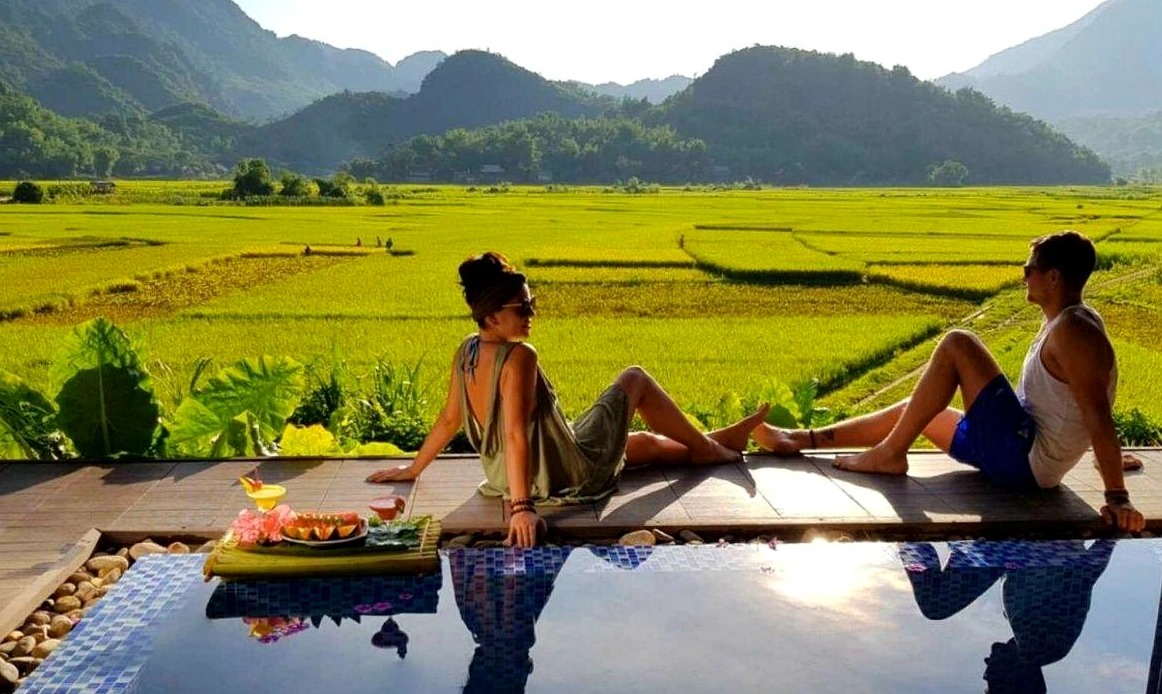
The second photography spot lies deep within traditional hamlets such as Lac Village or Pom Coong Village, right beside the curving bunds of terraced rice paddies. Shooting at eye level toward dark-brown wooden stilt houses basking in early morning sunlight captures unvarnished, intimate glimpses of everyday rural life. At sunset, as the sun dips behind the western ridges, amber light bathes the entire landscape and reflects off water-filled paddies, rewarding travelers with serene, contemplative, and deeply poetic frames of an authentic heritage land.
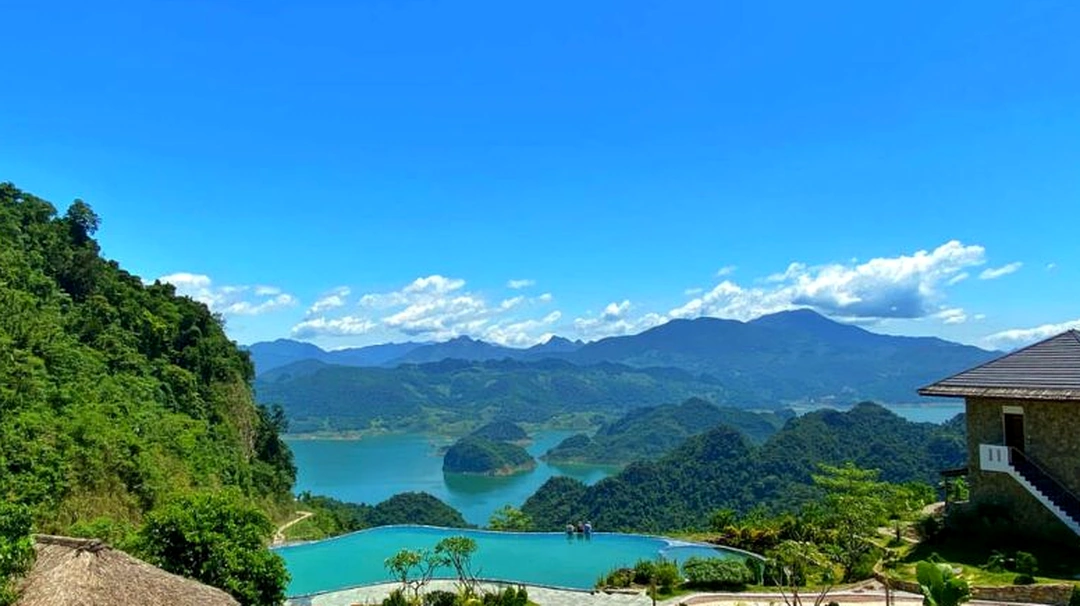
Stepping into Mai Chau Valley on a misty early morning, visitors are immediately captivated by a natural tableau that is both majestic and profoundly peaceful, where earth, sky, and human spirit seem to merge as one. Leaving behind the bustle and noise of city life, exploring this region begins with immersive outdoor adventures, starting with trekking along winding trails that hug the flanks of towering limestone mountains. Every uphill step carries you back into primeval nature, breathing in crisp air scented with fallen leaves and wild forest blossoms, before culminating in a rush of awe as you gaze out from high above across the entire emerald valley. Stilt houses veiled in twilight cooking smoke and softly curving rice terraces shimmering like golden silk ribbons during harvest season paint an idyllic scene that instantly melts away the fatigue of a long journey.
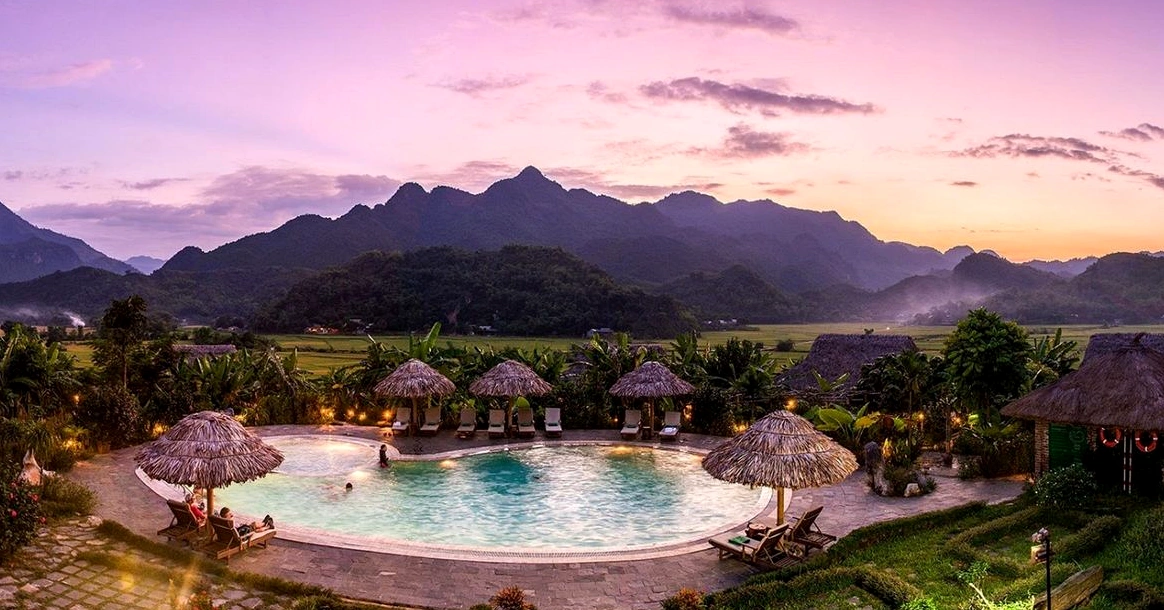
Descending from the high mountain slopes, the journey continues along cool waterways aboard rustic bamboo rafts, gliding unhurriedly through tranquil surroundings to fully absorb the unhurried rhythm of life in the karst highlands. Sitting on the boat while admiring sheer limestone cliffs carved against an azure sky, accompanied by echoing birdsong and a gentle breeze brushing through your hair, evokes a remarkable sense of calm. Beyond its breathtaking scenery, Mai Chau also touches the spiritual depths of travelers through sacred worship sites tucked away in secluded mountain recesses. Here, time-honored temples and cultural spaces steeped in indigenous beliefs open a quiet sanctuary where visitors pay heartfelt homage to ancestral roots and pray for peace, favorable weather, and the blessing of Muong mountain deities.
The vibrant spirit and local cultural charm of Mai Chau are also faithfully preserved through its renowned highland culinary traditions. Gathering around a crackling hearth inside a stilt house at night, guests will savor a rustic yet heartwarming feast featuring fragrant com lam (sticky rice roasted in fresh bamboo tubes), chewy upland glutinous rice redolent of newly harvested grain, succulent grilled free-range pork marinated with aromatic mac khen (forest pepper) and doi seeds, and crispy grilled stream fish infused with the rich flavor of the Da River. Sipping warming, spiced ruou can (fermented rice wine drunk through bamboo straws), listening to gongs echoing across the wilderness, and watching young Thai women perform graceful bamboo pole dances, travelers feel transported into another realm where time stands still and leaves behind a deeply moving, unforgettable impression.
Mai Chau is a tranquil valley nestled in the heart of Hoa Binh Province, drawing visitors with its unspoiled natural beauty and the rich cultural identity of the Thai ethnic community. To ensure a smooth journey through this historically and archaeologically significant region, knowing practical tips regarding timing, transportation, and local etiquette is essential.
The best time of year to visit Mai Chau is from October to April of the following year. During these months, the weather is remarkably pleasant and dry, with warm, sunny days and crisp, cool nights. In particular, visiting around October and November rewards travelers with golden, ripe terraced rice fields, while the spring months of January and February welcome guests with pure white plum and pink peach blossoms blanketing the hillsides and villages.
For the most convenient route from downtown Hanoi, travelers can opt for private vehicles (car or motorbike) or intercity coaches departing from My Dinh or Yen Nghia bus stations bound for Mai Chau. The safest and most popular route follows Thang Long Boulevard (or Old National Highway 6), passing through Xuan Mai Town and Cun Slope before crossing the legendary, mist-shrouded Thung Khe Pass (White Stone Pass) and descending straight into Mai Chau Valley. For motorbike enthusiasts, the Thung Khe Pass stretch requires confident handling, careful speed control, and a thoroughly serviced vehicle prior to departure.
Most well-known community-based cultural tourism villages in Mai Chau—such as Lac Village, Pom Coong Village, and Chieng Cave—welcome visitors freely every day of the week with no strict closing hours. However, to explore certain archaeological heritage sites or specialized conservation zones, it is best to visit during regular daytime hours from early morning until late afternoon to receive optimal assistance from local guides. Regarding admission, community tourism villages charge no general entrance fee; visitors only pay for optional personal services such as renting bicycles to ride around the hamlets, enjoying traditional meals, watching folk art performances, or renting ethnic costumes.
When visiting spiritual landmarks, temples, pagodas, or traditional Thai stilt houses, travelers should carefully observe local dress codes and cultural etiquette. Choose modest, neat, and respectful attire, prioritizing breathable, moisture-wicking fabrics suited for hiking or walking through caves. Removing your shoes at the bottom step before climbing into a stilt house is mandatory as a gesture of respect toward the host family. Additionally, please help keep the environment clean by refraining from littering, and always ask permission before photographing local residents, especially elders and children.
To enjoy a seamless getaway and take in the finest sights of Mai Chau without worrying about arranging transportation, admission tickets, or daily itineraries, travelers can choose VDS Travel’s premium all-inclusive Hoa Binh tour packages. Every itinerary is thoughtfully timed to capture photo spots at their most radiant hours, accompanied by knowledgeable local guides and top-tier hotel and dining standards.
