
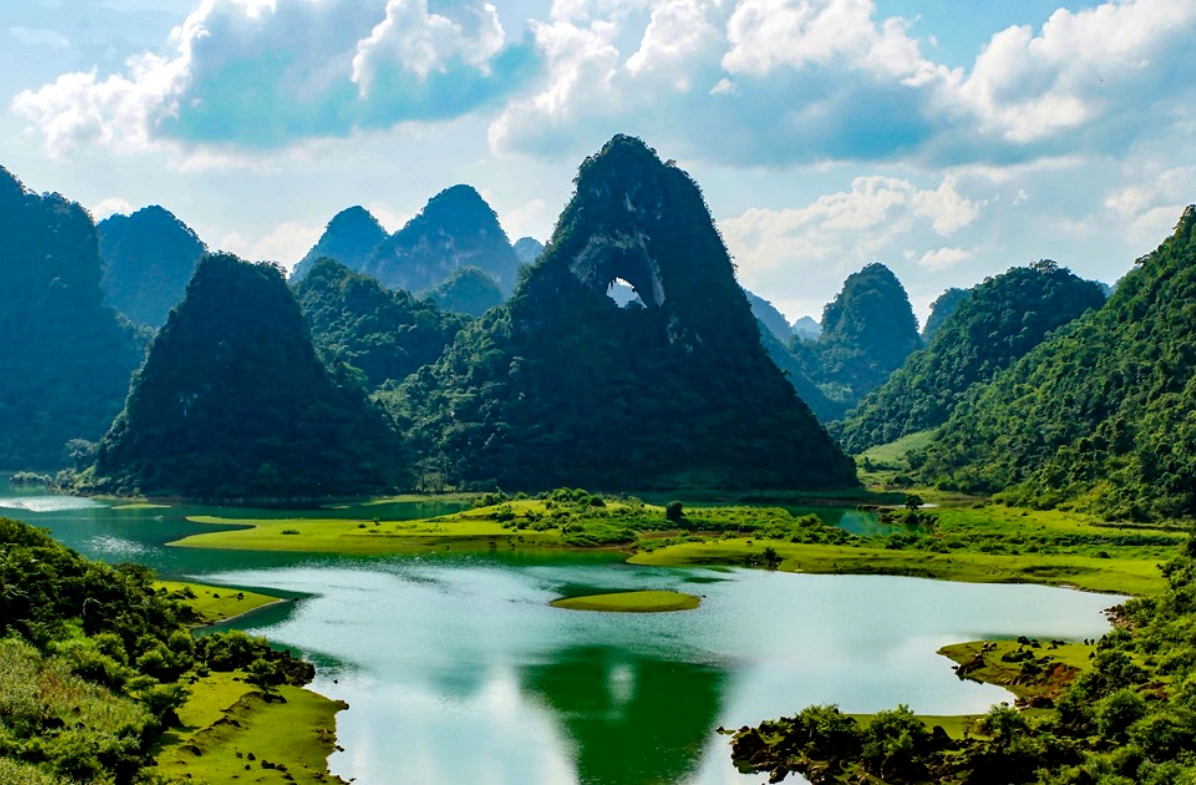
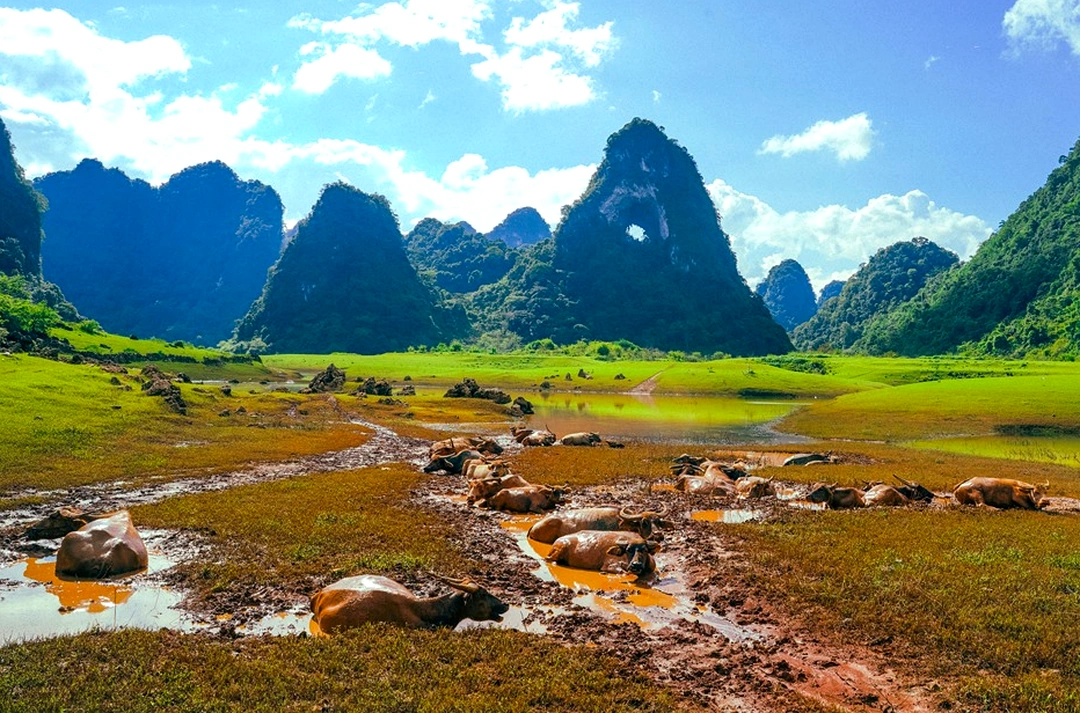
The grandeur of Phia Pot also lies in the striking contrast between its rugged, slate-gray limestone cliffs and the lush green vegetation carpeting the surrounding valley. During the high-water season, the entire valley floor at the foot of the peak transforms into a giant mirror reflecting the mountain above, creating a symmetrical composition between reality and reflection. Its sheer cliff faces, lined with stratified sedimentary layers like pages in a history book, bear witness to hundreds of millions of years of tectonic activity. More than just a scenic landmark, this is an open-air geological museum where every fissure and rock cavity tells a story of the shifting Earth’s crust.
For photography enthusiasts and documentary filmmakers, choosing the right camera angle at God’s Eye Mountain calls for patience and an understanding of changing light. The premier vantage point favored by professional photographers is set in the open valley directly in front of the mountain, framing the entire peak dead center. The golden window to capture this scene is at sunrise, when the very first rays of morning light pierce through the circular opening near the summit, casting a radiant beam like a halo onto the lake surface or emerald meadow below. The interplay between the shadowed cliff face and the shaft of light cutting through creates extraordinary spatial depth, making every frame vivid and evocative.
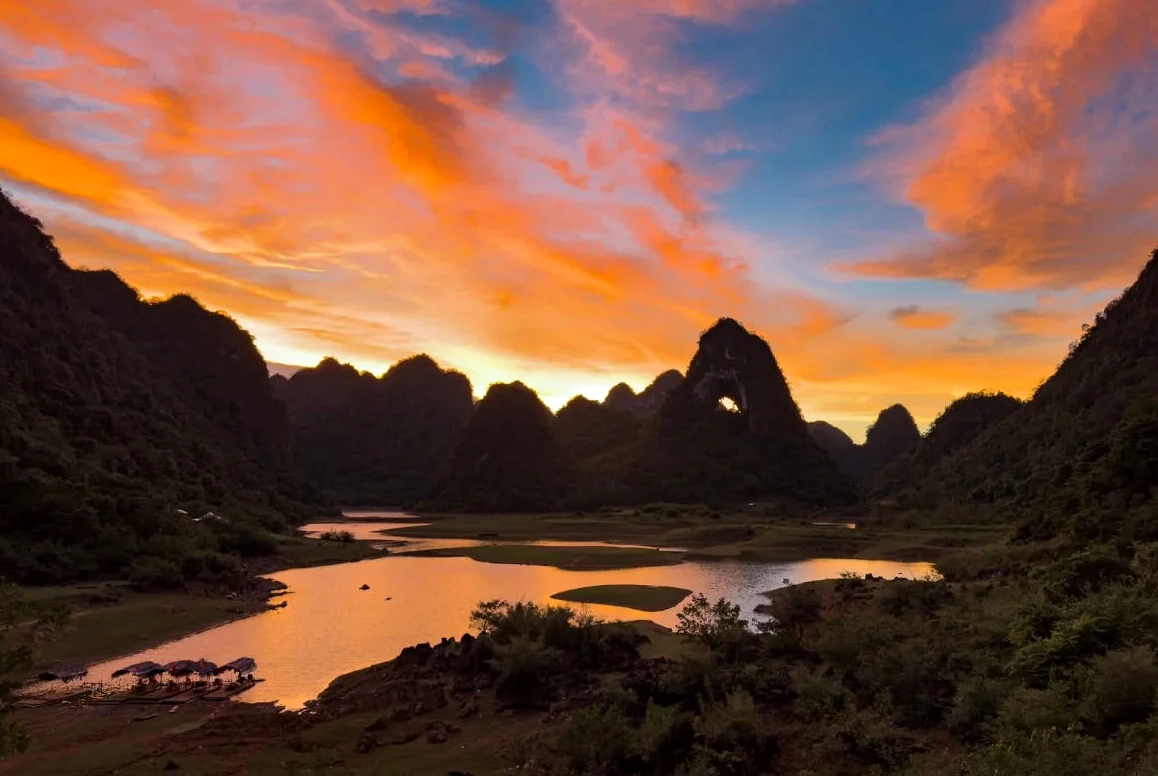
A second, more exploratory vantage point is from behind the peak or atop neighboring hillsides, where photographers can capture the sweeping majesty of the entire limestone massif encircling Phia Pot. At sunset, as the sun shifts to warm golden-orange tones, the entire limestone monolith takes on a deep, brooding crimson hue, creating a scene that is both grand and deeply serene. At this hour, photographers can harness the high contrast to accentuate the silhouette of the “eye” atop the mountain, turning it into a solitary yet proud emblem amidst the wilderness.
Accessing these viewpoints requires absolute respect for the natural landscape. Photographers are urged not to disturb the terrain, avoid trampling native vegetation, and protect the fragile ecosystem around the base of the mountain. Combining nature’s monumental architecture with thoughtful photography not only preserves the beauty of God’s Eye Mountain on film, but also helps spread awareness for conserving Cao Bang’s priceless geological heritage. Every photograph taken here is more than a visual work—it is a valuable record of one of Vietnam’s most extraordinary geological wonders.
Stepping into the untamed, majestic highlands of Cao Bang, a journey to conquer God’s Eye Mountain—locally known as Phia Pot—rewards travelers with unforgettable, deeply enriching experiences. From the very moment you enter Ban Danh Valley, a sense of awe washes over you as this towering natural marvel appears amidst the rugged mountains. Rising proudly with the giant stone arch near its peak like the watchful “eye” of heaven and earth, the mountain seems to guard the lush green valley stretching out below. To soak in its full beauty, visitors can enjoy a leisurely trek along winding trails at the mountain’s base, crossing vibrant green meadows where horses graze peacefully in a scene of rare tranquility and freedom.
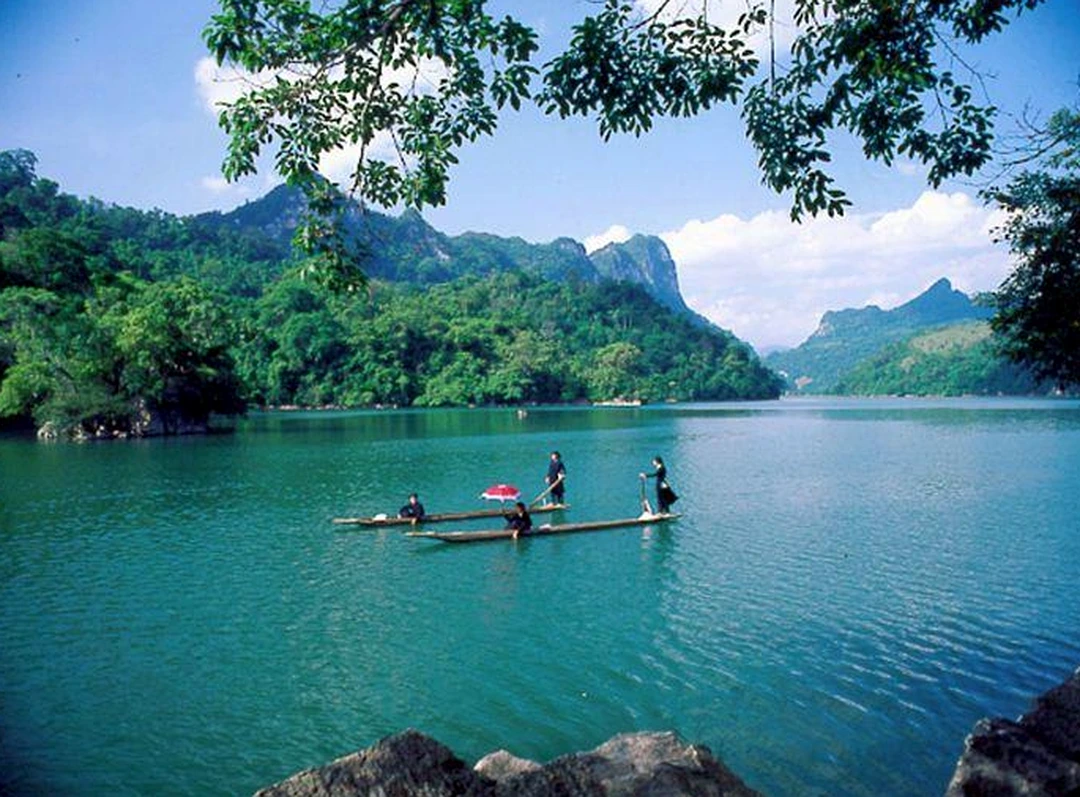
During the dry season, exploring the area becomes especially poetic as visitors can stroll freely across sweeping grasslands, breathing in crisp mountain air scented with the frontier forest. Conversely, during the high-water season, the valley surrounding Thuy Dau Son transforms into a glassy lake that mirrors the clouds and mountain silhouette in full clarity. Gliding across the crystal-clear water in a wooden boat and admiring the towering karst ecosystem from water level brings a remarkably serene, meditative calm. Looking out from higher ground, the vast expanse of the karst plateau unfolds before your eyes with layer upon layer of mountains and drifting clouds, making every trace of urban stress melt away.
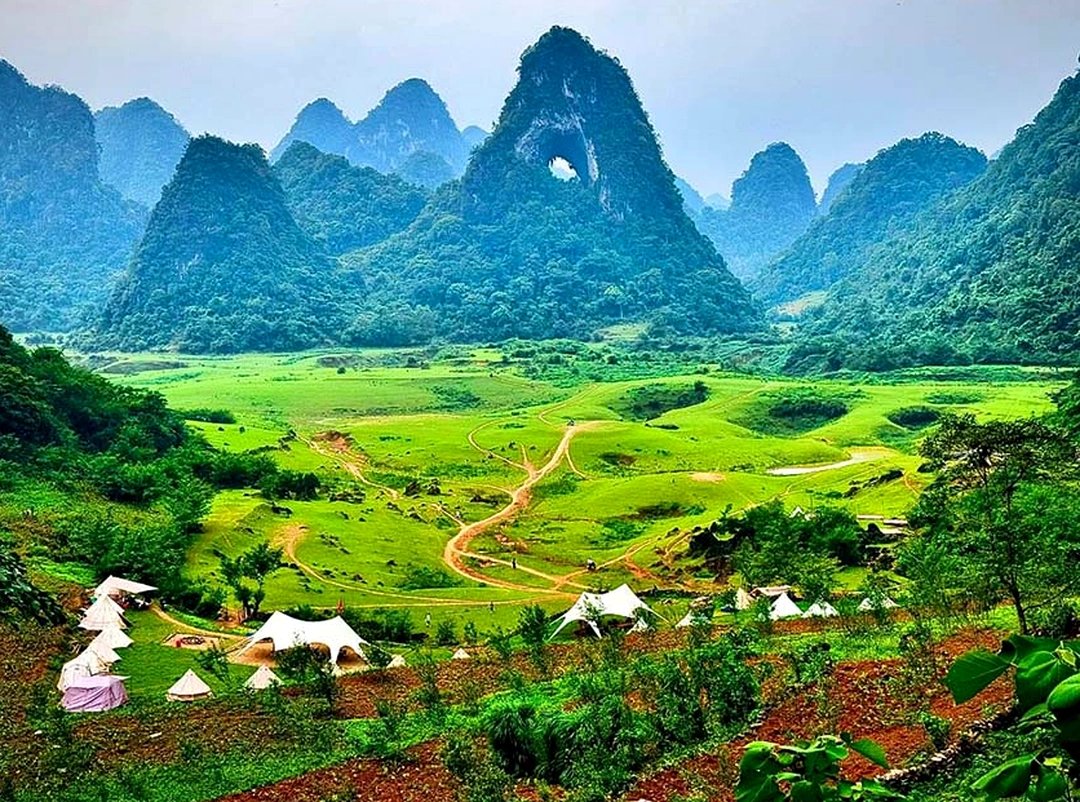
Beyond its natural scenery, the trip is also a chance to immerse yourself in the vibrant local culture of the Tay and Nung communities. Visitors can drop by traditional stilt houses with wisps of hearth smoke rising from their roofs, listen to soulful sli and luon folk songs echoing through the hills, and learn about time-honored customs tied to the sacred peak. At the end of a fulfilling day of exploration, gathering around a cozy dinner table to savor renowned highland specialties is an unmissable highlight. The rich, savory flavor of duck roasted with fragrant mac mat leaves, the chewy nuttiness of five-color sticky rice, and a refreshing bowl of wild bamboo shoot soup paired with warm corn wine will awaken every sense and leave lasting memories of a land blessed with both spirit and heritage.
God’s Eye Mountain—known locally as Phia Pot—is an unspoiled natural heritage site that calls for thoughtful preparation to ensure both a rewarding visit and deep respect for local cultural spaces. Regarding visiting hours, the area is open freely year-round without fixed gates or rigid opening and closing times. However, for the best visibility and safest conditions, travelers should plan their visit between 7:00 AM and 5:00 PM. Currently, there is no entrance fee to visit the landmark; any minor expenses typically come only from parking services or local guiding offered by residents at stops near Ban Danh Hamlet.
To reach God’s Eye Mountain from central Cao Bang City, the best route follows National Highway 3 and Provincial Road 205 toward Tra Linh District. Spanning roughly 40 to 50 kilometers, this scenic drive winds through dramatic limestone valleys. The most convenient ways to travel are by motorbike or private car (under 16 seats) to easily navigate the narrow lanes leading into Ban Danh Hamlet. Keep in mind that the final stretch from the main road to the base of the mountain is a dirt and gravel track, so check your vehicle’s condition carefully before setting off. If traveling by intercity bus, you can take a route bound for Tra Linh and hire a local motorbike taxi for the final leg to the mountain.
As for the ideal time to visit, the dry season (from September to March of the following year) showcases the landscape at its visual peak. During these months, the valley floor turns into lush green pasture while the clear lake reflects the mountain’s “eye” in stunning detail. Conversely, during the rainy season, rising water levels can submerge walking trails, so visitors should exercise extra caution regarding slippery terrain and geological safety.
Because the mountain lies within the core zone of a UNESCO Global Geopark, visitors must strictly observe guidelines on attire and etiquette. Opt for athletic clothing and sturdy hiking shoes with good grip, avoiding high heels or loose flip-flops. Since the site holds spiritual significance for the local Tay and Nung communities, please dress modestly and respectfully, avoiding overly short or revealing outfits. Never climb the sheer limestone cliffs or tamper with geological formations, refrain from littering, and help preserve the tranquil atmosphere of the local cultural landscape. Carrying your own drinking water, light snacks, and a personal trash bag is essential to protecting this pristine ecosystem. Always remember the golden rule: “Take nothing but photographs, leave nothing but footprints.”
To enjoy a worry-free getaway and admire the full splendor of God’s Eye Mountain without the hassle of arranging transportation, booking tickets, or planning itineraries, travelers can choose VDS Travel’s premium all-inclusive Cao Bang tour packages. Every itinerary is thoughtfully timed so you arrive at top photo spots when the scenery is at its most radiant, accompanied by knowledgeable local guides and top-tier hotel and dining standards.
