

The historical flow of Tuyen Quang reads like a heroic epic inscribed across reign titles and shifting administrative names. From Minh Chau Prefecture under the Ly Dynasty, through Tuyen Quang Circuit and Tuyen Hoa Prefecture under the Tran Dynasty—where the indomitable Dong A spirit shone through Prince Chieu Van Tran Nhat Duat’s decisive defensive battles during the second Mongol invasion (1285)—to the formal establishment of Tuyen Quang Province in 1466 under Emperor Le Thanh Tong. Notably, during the Revival Le Dynasty, it served as the fortified headquarters of the Bau Lords (Vu Van Uyen and Vu Van Mat), illustrious generals who guarded the borderlands, maintained a counterweight against the Mac Dynasty, and protected Vietnam’s northern territorial integrity. In the 12th year of Emperor Minh Mang’s reign (1831), during a nationwide administrative reform, Tuyen Quang Province was officially established, marking the enduring stability and growth of a region of national historical stature.
Renowned not only for its strategic position and deep history, Tuyen Quang is also a living museum of authentic cultural heritage, safeguarding priceless archaeological treasures and national relics. Most emblematic of this cultural sediment is the stone stele of Bao Ninh Sung Phuc Pagoda in Chiem Hoa, erected in the Dinh Hoi year (1107) under Emperor Ly Nhan Tong, with its inscription composed by Grand Preceptor Ha Thu Luu. The stele is not merely a masterpiece of Ly Dynasty sculptural art, but also a priceless stone chronicle attesting to the vibrant vitality of Buddhism and the rich spiritual life of ancient forebears. Through the vicissitudes of time, Tuyen Quang stands today—tranquil, steadfast, and proud—preserving its sacred heritage intact for future generations to cherish.
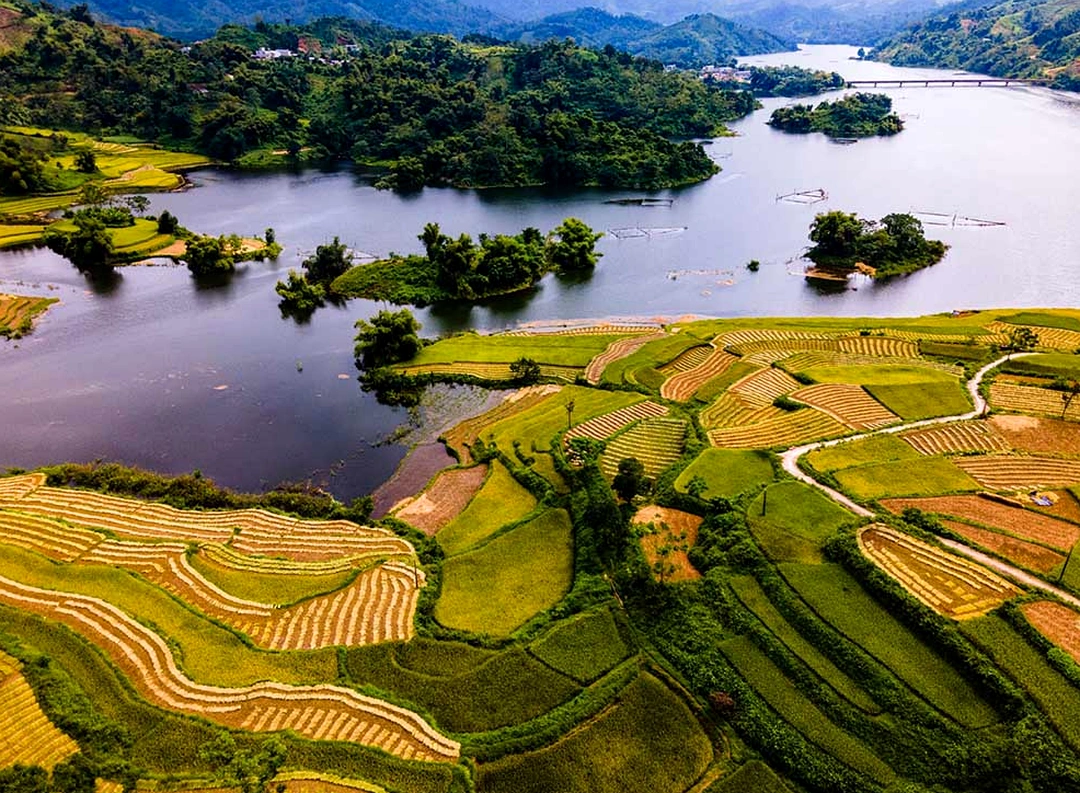
Tuyen Quang unfolds like a colossal landscape painting sculpted by nature’s masterful hand, where rolling limestone ranges embrace the Lo River as it winds like a soft silk ribbon through the vast forest. The scenery carries an untamed, ethereal beauty matched by the dignified aura of a land steeped in history. The highlight of this idyllic panorama is the seamless interplay between dramatic “extraordinary mountains and scenic waters” and ancient, contemplative spiritual architecture. Every traditional house, temple roof, and riverside pier holds layers of time, inspiring awe before the sacred majesty of the northern frontier.
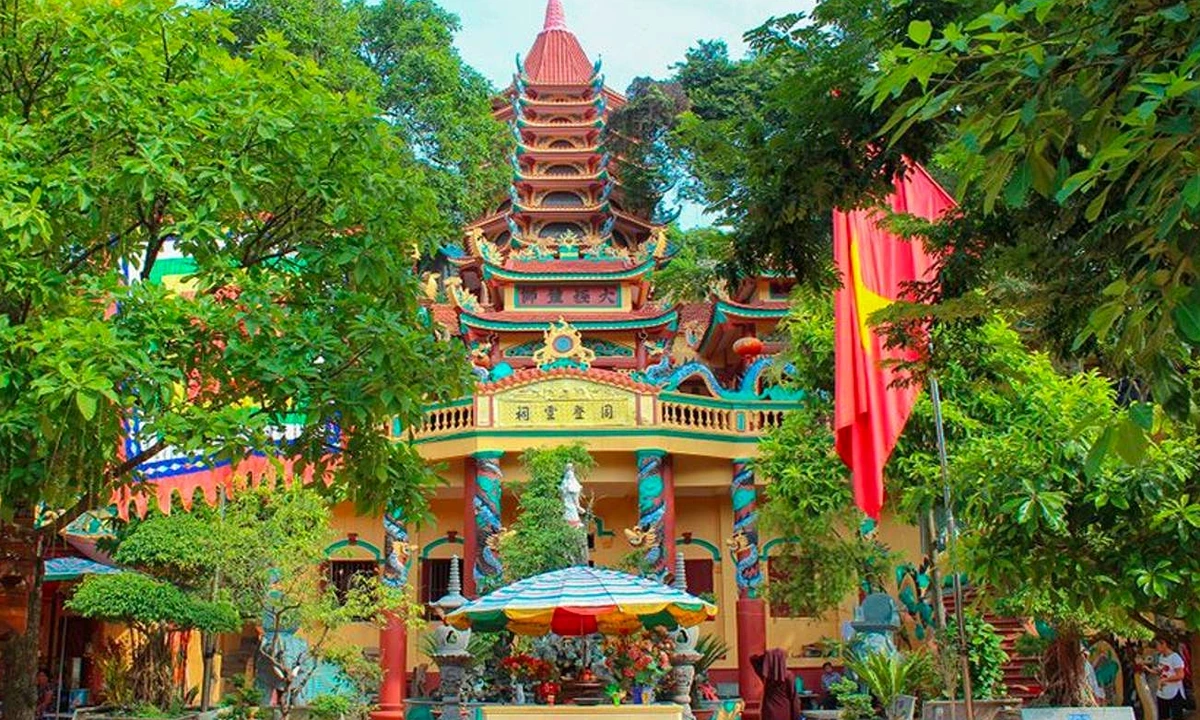
Standing out within this ancient architectural landscape is Bao Ninh Sung Phuc Pagoda in Chiem Hoa, home to the national treasure stone stele erected in 1107 during the reign of Emperor Ly Nhan Tong. Every carved line on the stele and throughout the temple architecture bears the hallmark of Ly Dynasty aesthetics—refined and graceful yet commanding in presence. Undulating dragon motifs, drifting clouds, and blooming lotus petals are intricately chiseled into monolithic bluestone, reflecting the supreme craftsmanship of ancient artisans. Shrouded in early valley mist beneath the canopy of centuries-old trees, the sanctuary exudes a serene, refined stillness far removed from the bustle of the modern world, leaving every traveler who steps inside in quiet reverence before ancestral heritage.
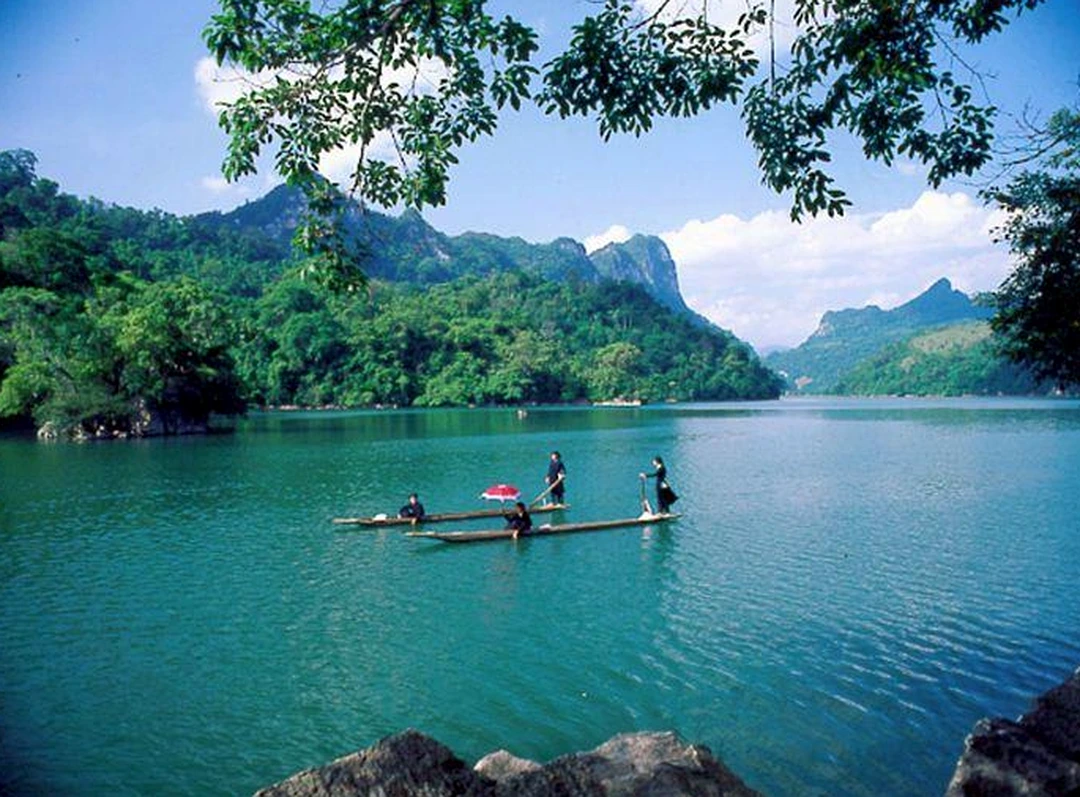
To capture the most memorable moments in this heritage land, photographers and travel enthusiasts should not miss the “million-view” photo spot over Na Hang Lake at dawn. Just as the sun rises behind the limestone peaks, its first rays pierce the gossamer mist hovering over the mirror-still water, reflecting the dramatic karst islands of this “Ha Long Bay on land.” The golden hour to press the shutter is between 5:30 AM and 6:30 AM, when vibrant pinkish-orange light bathes the entire lake in gold, creating a breathtakingly ethereal scene.
A second magnificent vantage point lies atop mountain passes or high overlooks offering panoramic views of the Lo River embracing Tuyen Quang City at sunset. Between 5:00 PM and 5:45 PM, the fiery dusk washes the landscape in deep violet and warm amber, accentuating the graceful curves of the river and the unhurried rhythm of riverside hamlets. Finally, the tranquil courtyard beside the ancient stone stele at Bao Ninh Sung Phuc Pagoda at midday—when slanted sunbeams filter through the foliage to cast natural shafts of light—provides an ideal frame for those seeking photographs rich in historical depth, artistry, and inner stillness.
Arriving in Tuyen Quang, visitors not only immerse themselves in heroic chapters of national history and admire thousand-year-old antiquities, but also experience a vibrant, rewarding ecotourism landscape. This land of “extraordinary mountains and scenic waters” opens up soulful routes of discovery where unspoiled wilderness blends seamlessly with the colorful traditions of highland ethnic minority communities.
Exploration often begins with a boat journey upstream along the legendary Lo or Gam rivers. Gliding gently across emerald waters, travelers are captivated by a monumental landscape of towering limestone ranges, moss-draped sheer cliffs, and mysterious caves peeking through drifting mist. The brisk mountain breeze, the gentle lapping of waves against the hull, and the solemn quietude of the surrounding forests bring profound peace to the mind.

Stepping ashore, travelers can challenge themselves with treks through primeval forests, conquering lofty peaks to take in sweeping panoramas of lush green valleys below. Standing on a windswept summit gazing out over a sea of clouds rolling across tiny hidden villages, anyone can feel humanity’s humility before nature’s grandeur. It is a rare moment of stillness where the spirit is cleansed of urban noise and rush.
Beyond its natural wonders, Tuyen Quang’s spiritual and indigenous cultural experiences leave an indelible mark on every traveler. Visiting ancient temples, pagodas, and sacred revolutionary sites, guests pay tribute, reconnect with historical roots, and listen to heroic stories echoing through ancient stones and trees. In the villages of the Tay, Dao, and Hmong peoples, visitors are welcomed with lively *xoe* dances, the warm resonance of *tinh tau* lutes, and heartfelt community hospitality. Above all, savoring celebrated local specialties—such as pan-steamed cassava cakes, sweet Lo River *lang* catfish, highland fermented sour pork, and warm corn wine steeped in camaraderie—awakens every sense, leaving a lingering fondness that no visitor ever forgets.
To ensure your journey through the scenic wonderland of Tuyen Quang runs smoothly and fulfilling, equipping yourself with practical tips on timing, transportation, and local etiquette is essential. Travelers should plan to visit between September and April of the following year. During this dry-season window, lower water levels make travel convenient and create ideal conditions for admiring the majesty of Na Hang Lake or joining vibrant early-spring traditional festivals.
Regarding transportation, from Hanoi, travelers can board high-quality sleeper buses departing from major terminals or drive a private car or motorbike along the Noi Bai–Lao Cai Expressway, turning onto National Highway 2 at the Pho Lu interchange to head straight to Tuyen Quang City. The journey takes roughly three to four hours. When venturing to more remote attractions such as the Tan Trao Historical Site or the Na Hang hydroelectric reservoir area, a motorbike or high-clearance vehicle is the best choice for navigating winding mountain passes with ease.
Most revolutionary historical sites, spiritual temples and pagodas, and natural landmarks in Tuyen Quang welcome visitors from 7:00 AM to 5:00 PM daily. In terms of admission, the majority of special national historical sites—such as the Tan Trao Historical Site—as well as religious temples and shrines offer free entry so locals and visitors alike can pay their respects. For specialized services such as boat rentals on Na Hang Ecological Lake, rates are publicly posted per boat trip or per person depending on group size.
When visiting sacred spaces, shrines dedicated to national heroes, or scenic areas tied to ethnic minority communities, travelers should dress modestly and respectfully, opting for neat attire and sturdy, high-grip sneakers suited to hilly terrain, stone steps, and rocky slopes. Additionally, keeping public spaces clean, refraining from littering, and respecting indigenous customs are core practices that help preserve these cultural and natural treasures sustainably for generations to come.
To enjoy a seamless getaway and take in the full beauty of Tuyen Quang without worrying about arranging transportation, booking tickets, or planning itineraries, travelers can opt for VDS Travel’s premium all-inclusive Tuyen Quang tour packages. Each itinerary is thoughtfully designed to optimize photo opportunities when the scenery is at its most radiant, accompanied by knowledgeable local guides and top-tier hotel and dining standards.
