
Dau Pagoda’s beauty has been further enriched across centuries of historical vicissitudes. Through the Ly, Tran, and Restored Le dynasties, the pagoda underwent numerous restorations and expansions to become a majestic national temple. Notably, in 1737, under the direction of First-Rank Scholar Mac Dinh Chi, the pagoda took on its grand “Inner Cong, Outer Quoc” (noi cong ngoai quoc) architectural layout, harmonizing monastic serenity with refined traditional sculpture. Rising three stories high in deep-red fired brick, Hoa Phong Tower stands tall as a silent historical witness defying the erosion of time, affirming the rare architectural value of ancient brick stupas surviving in Vietnam.
Beyond its status as a Special National Relic, Dau Pagoda serves as a living museum of spiritual culture. The legend of Lady Man Nuong—a virtuous woman who conceived from the shadow of Zen Master Ksudra—has become an immortal myth binding the pagoda to the faith of generations across the Dau region. The convergence of auspicious feng shui terrain, ancient founding origins, and priceless artifacts and steles—such as the “Co Chau Phap Van Phat Ban Hanh Ngu Luc” stele inscribed in 1754—bestows upon Dau Pagoda an unrivaled stature. It is not merely a pilgrimage destination for those tracing Buddhism back to its roots, but also a treasury of invaluable archaeological and historical heritage, affirming its prominence as the greatest cultural center of the Northern Delta—where history and spirituality intertwine to sustain the enduring vitality of Vietnam’s heritage.
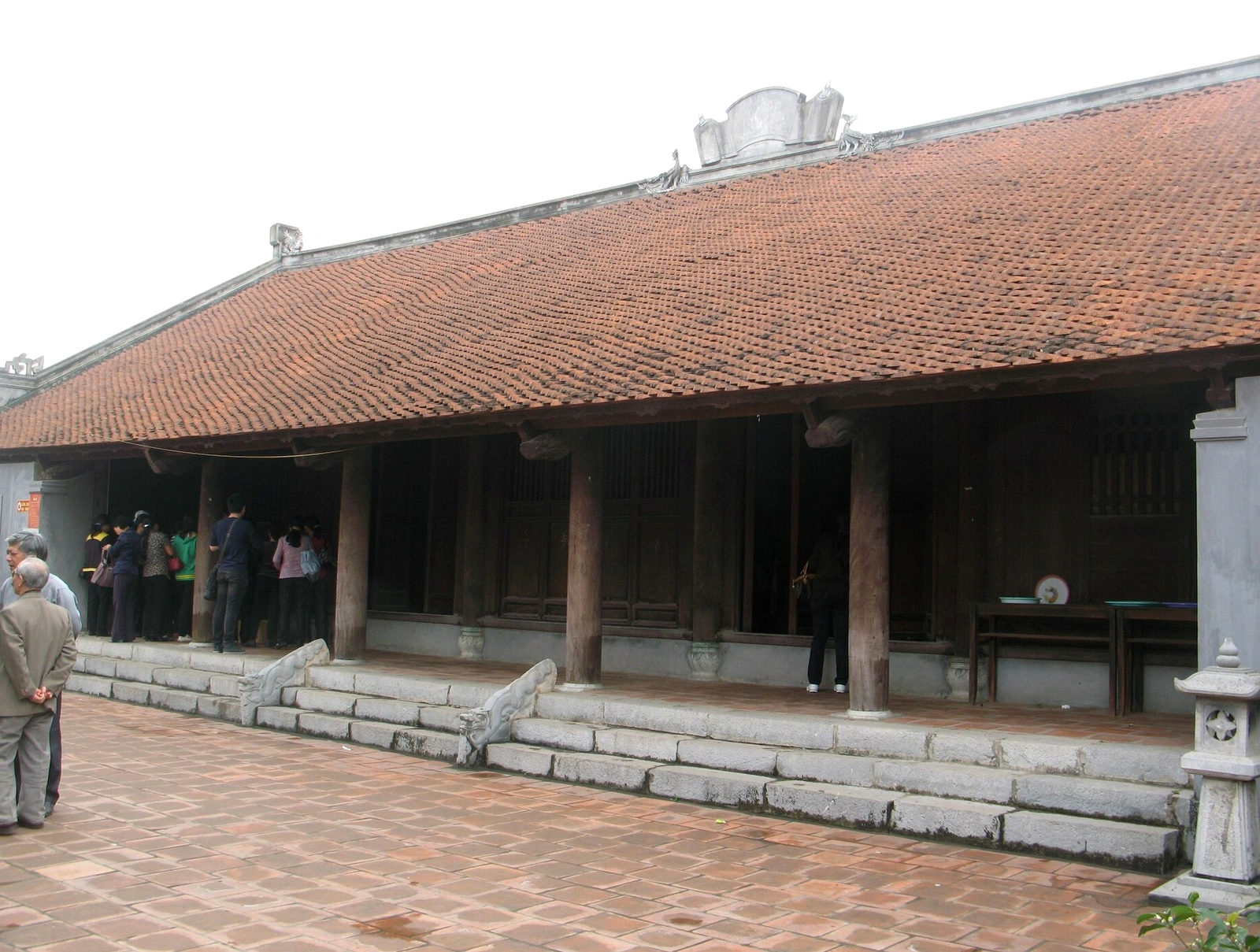
Stepping through the ancient triple-arched gate, visitors feel transported into a realm where time stands still and centuries-old “Inner Cong, Outer Quoc” architectural heritage remains intact. Dau Pagoda is more than a place of worship; it is a masterpiece of traditional Vietnamese timber architecture. Its most striking focal point is Hoa Phong Tower rising boldly at the center of the courtyard. Built of three tiers of deep-red fired brick weathered by the centuries, Hoa Phong Tower stands as an enduring emblem of Buddhism in the Dau region. Its handmade bricks have retained their rich, muted crimson tone over hundreds of years, creating a captivating contrast against the deep blue skies of the Northern Delta.
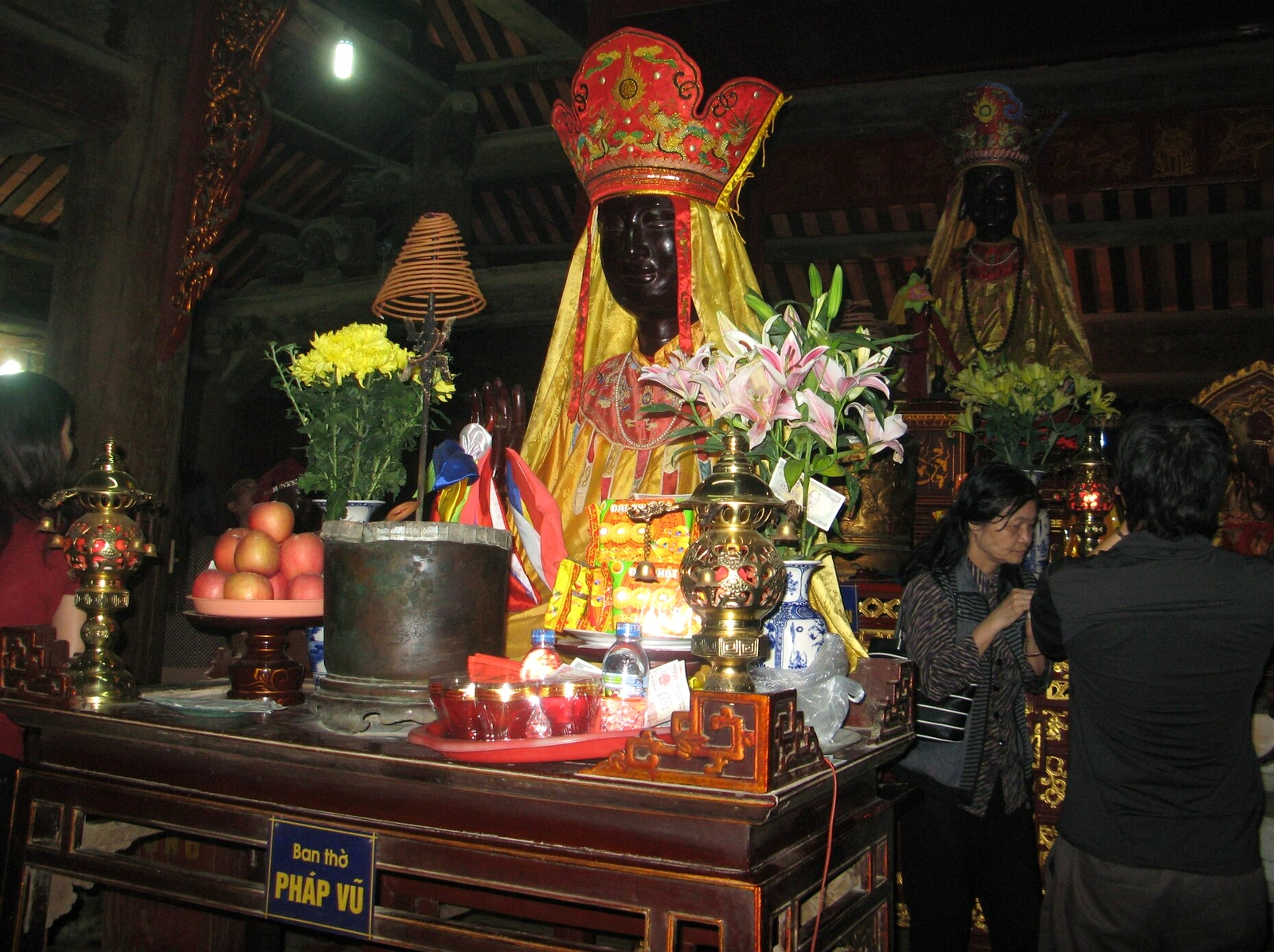
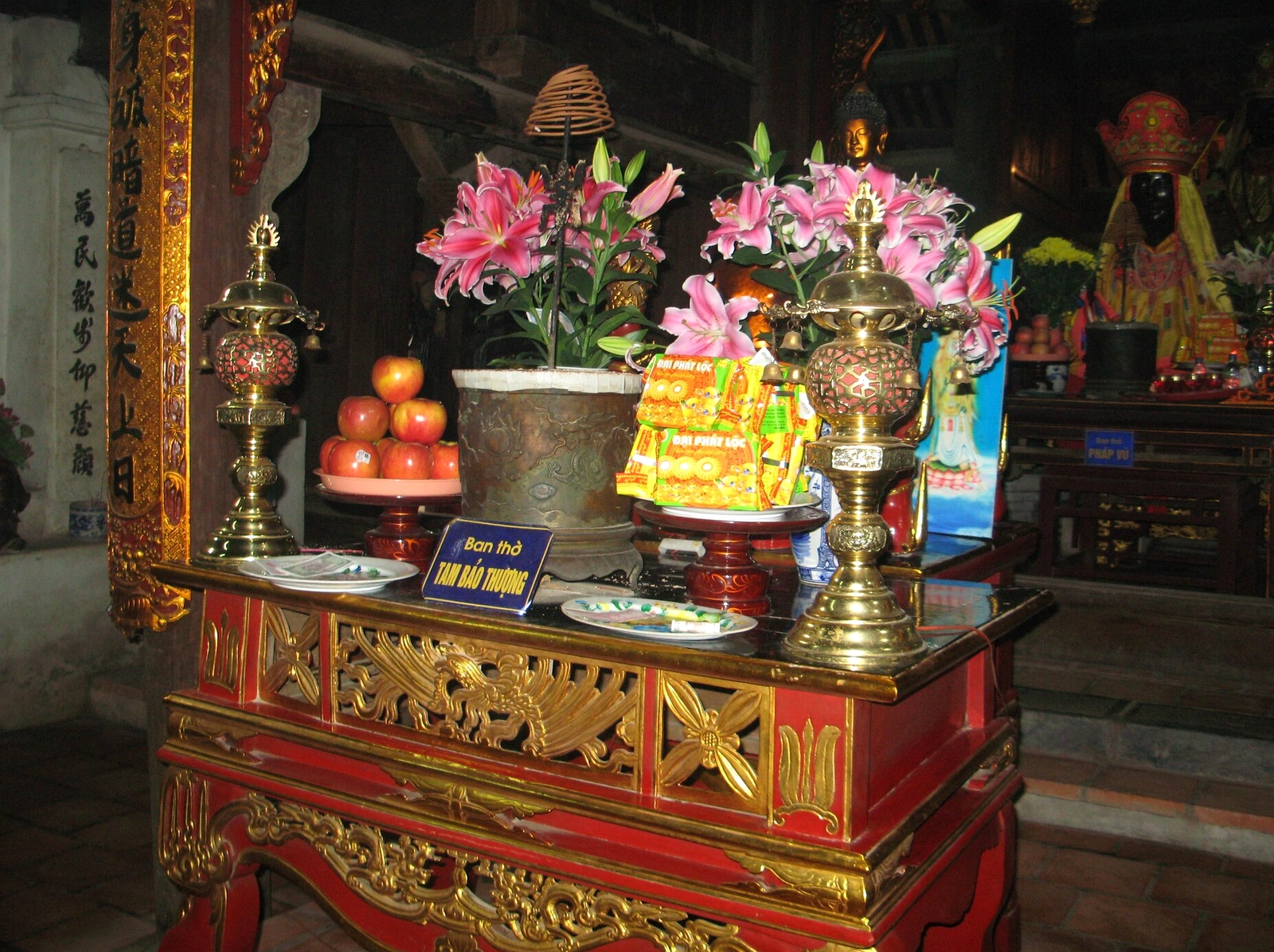
The pagoda’s layout follows strict symmetry, featuring long, receding corridors lined with glossy black ironwood pillars standing as sturdy as ancient tree trunks beneath curved dragon-scale tiled roofs. Inside the Three Jewels Sanctuary (Tam Bao), the atmosphere turns remarkably hushed and sacred. Natural daylight filters through wooden lattice shutters, casting ethereal beams that illuminate the majestic Four Dharmas statues. These statues of Phap Van, Phap Vu, Phap Loi, and Phap Dien are not only exquisite sculptures with fluid, delicate carvings, but also the physical embodiment of wet-rice farmers’ prayers for favorable rain and wind. Every fold in their robes and every serene expression radiates an otherworldly grace that calms and purifies the spirit of all who behold them.
To capture Dau Pagoda’s grandeur at its finest, professional photographers favor two prime vantage points. The first looks straight up at Hoa Phong Tower from the main courtyard at dawn. Gentle early sunlight, warm as golden honey, illuminates the ancient brickwork to create a luminous yet nostalgic scene. It is the exact moment when the quiet stillness of the ancient temple merges with the vitality of a new day, yielding photographs rich in depth and emotion. The second vantage point looks out from the rear corridor across the spacious courtyard shaded by ancient trees. At dusk, when late-afternoon sunbeams stretch across curved tiled roofs and weave patterns of light and shadow over the aged brick paving, you can capture cinematic frames that feel both mysterious and deeply peaceful.
Alongside its architecture, Dau Pagoda’s natural setting adds immense appeal. Its southward-facing “water-gathering bright hall” orientation toward the old Dau River keeps the grounds airy and cool year-round. Lush rows of trees encircling the complex act as a natural shield, insulating the interior from urban noise. Every corner—from serene potted lotuses arranged in the courtyard to moss-blanketed bluestone slabs—offers a “million-view” photo spot for admirers of traditional beauty. Visiting Dau Pagoda is not only an act of devotion, but also an opportunity to experience a living architectural museum where every brick and statue recounts epic chapters of national history, leaving the heart light and peaceful amidst today’s fast-paced world.
Passing through Dau Pagoda’s timeworn triple-arched gate, visitors do more than step into a historical monument—they enter a quiet stream of time where past and present converge. The very first impression that stops travelers in their tracks is the sheer scale of its imposing “Inner Cong, Outer Quoc” architecture. Beneath ancient spreading trees, the deep-red, time-weathered brick walls of Hoa Phong Tower stand like a silent sentinel in the stillness. When late-afternoon sunlight slants through the foliage and casts long shadows across the mossy brick courtyard, a profound sense of calm settles over the soul, leaving city clamor far behind the temple gates.
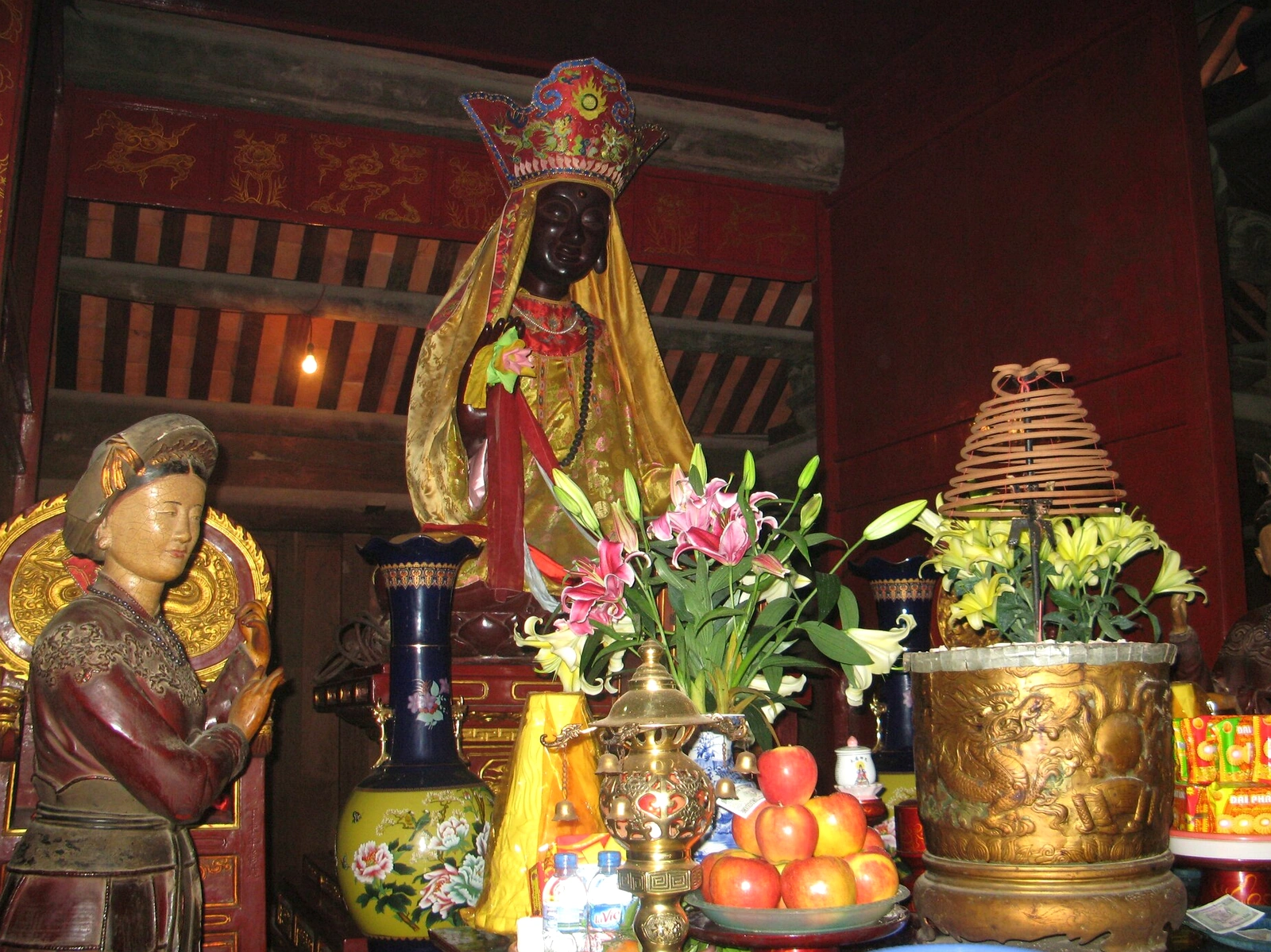
A spiritual pilgrimage here stirs deeply moving emotions. Standing before the Four Dharmas statues—icons that unite mystical reverence with the rain-worship traditions of wet-rice farmers—visitors feel humbled by the depth of ancient Vietnamese culture. Lighting a stick of incense, listening to the resonant chime of temple bells echoing through quiet air, or admiring intricate carvings on bas-relief panels cleanses the mind and restores genuine inner peace. Those fortunate enough to visit during festival days can immerse themselves in lively ceremonial processions of the statues and hear the touching legend of Lady Man Nuong, gaining deeper appreciation for the unbreakable bond between Buddhism and spiritual life in the Kinh Bac region.
Stepping outside the serene pagoda grounds, exploring surrounding Thuan Thanh District reveals charmingly poetic perspectives. Though the region lacks towering mountain peaks for hiking, strolling along the river dikes while watching the Dau River—an ancient branch of the Duong River—drift lazily past brings a wonderfully soothing sense of relaxation. With a bit of luck, visitors can hire a small wooden boat from local residents and glide along the water to view the surrounding “energy-gathering” plains from a fresh vantage point. Looking up from the river toward the raised mound where Dau Pagoda sits, its auspicious feng shui layout becomes unmistakably clear—a living testament to the remarkable geomantic wisdom of Vietnam’s ancestors.
After immersing yourself in history and culture, no journey here is complete without savoring the region’s celebrated local specialties. Right around the pagoda area, visitors can enjoy rustic yet deeply flavorful dishes such as steaming banh te from Cho Village—fragrant with newly harvested rice and filled with savory pork and crunchy wood-ear mushrooms—alongside specialties prepared from local river catch. The delicate sweetness of the cuisine, paired with the genuine warmth and welcoming smiles of locals sharing village stories, completes the experience. This interplay between spiritual stillness and vibrant local culture transforms Dau Pagoda into a destination not merely to see, but to truly feel—deepening one’s love for the living heritage preserved in the heart of Vietnam.
To make your pilgrimage and exploration of the Special National Relic of Dau Pagoda seamless and rewarding, keep the following practical details in mind. Dau Pagoda welcomes visitors every day of the week from early morning until late afternoon, making it convenient for Buddhist devotees and travelers from near and far to pay respects and enjoy the scenery. Currently, there is no admission fee; visitors may enter freely to admire the ancient architecture and unique Buddhist statuary. However, if you wish to offer incense or contribute toward monument preservation, voluntary donations are always warmly appreciated by the temple.
Getting there from central Hanoi is easy via several convenient routes. If traveling by private motorbike or car, the best route crosses Thanh Tri Bridge or Vinh Tuy Bridge before joining National Highway 5 or the Hanoi–Bac Giang Expressway toward Thuan Thanh District, Bac Ninh Province. The road is flat, straightforward, and takes just over an hour by car. For those using public transit, interprovincial buses connecting Hanoi and Bac Ninh offer an economical, reliable option—simply disembark near central Thuan Thanh District and take a short motorbike taxi or regular taxi right to the pagoda gate.
When visiting Dau Pagoda, choosing appropriate attire is essential to show respect for the sacred sanctuary. Please wear modest, polite clothing and avoid overly short or revealing outfits. Although the pagoda sits on level lowland plains rather than steep mountain terrain, exploring its expansive grounds and antique stone steps is far more comfortable and secure in flat shoes, sneakers, or sturdy strapped sandals.
The ideal time to visit Dau Pagoda is during its annual traditional festival on the 8th day of the 4th lunar month. At this time, the temple grounds come alive with sacred energy and distinctive Four Dharmas processions that vividly reenact the rain-praying traditions of wet-rice farmers. If you prefer quiet contemplation to absorb the site’s history and architecture, weekdays or the 1st and 15th days of each lunar month offer a calmer atmosphere. During your visit, please help maintain cleanliness, refrain from touching antique artifacts, steles, or altar statues, adhere to fire-safety rules, and preserve the peaceful ambiance of the monastery. Hopefully, these practical tips will help ensure a meaningful pilgrimage deeply connected to the enduring cultural and historical heritage of ancient Kinh Bac.
To enjoy a seamless getaway and experience the full beauty of Dau Pagoda without worrying about transportation, attraction tickets, or itinerary planning, travelers can choose VDS Travel’s premium all-inclusive Bac Ninh tour packages. Every itinerary is thoughtfully timed to capture the scenery at its most radiant, accompanied by knowledgeable local guides well-versed in local culture alongside top-tier hotel and dining standards.
