Located in Midtown South within the vibrant borough of Manhattan in New York City, USA, the Empire State Building stands tall as an enduring testament to humanity’s aspiration to touch the sky, while serving as a landmark that completely reshaped the modern urban architectural landscape. Through the lens of a cultural scholar and international geographic expert, this structure is far more than a colossal mass of concrete, limestone, and steel—it is a global cultural icon, the embodiment of the resilient American spirit during the most turbulent chapters of modern history. The name of this supertall skyscraper originates from New York State’s historic nickname, “The Empire State,” thereby affirming the preeminent global economic, political, and cultural standing that this land has diligently built over the centuries.
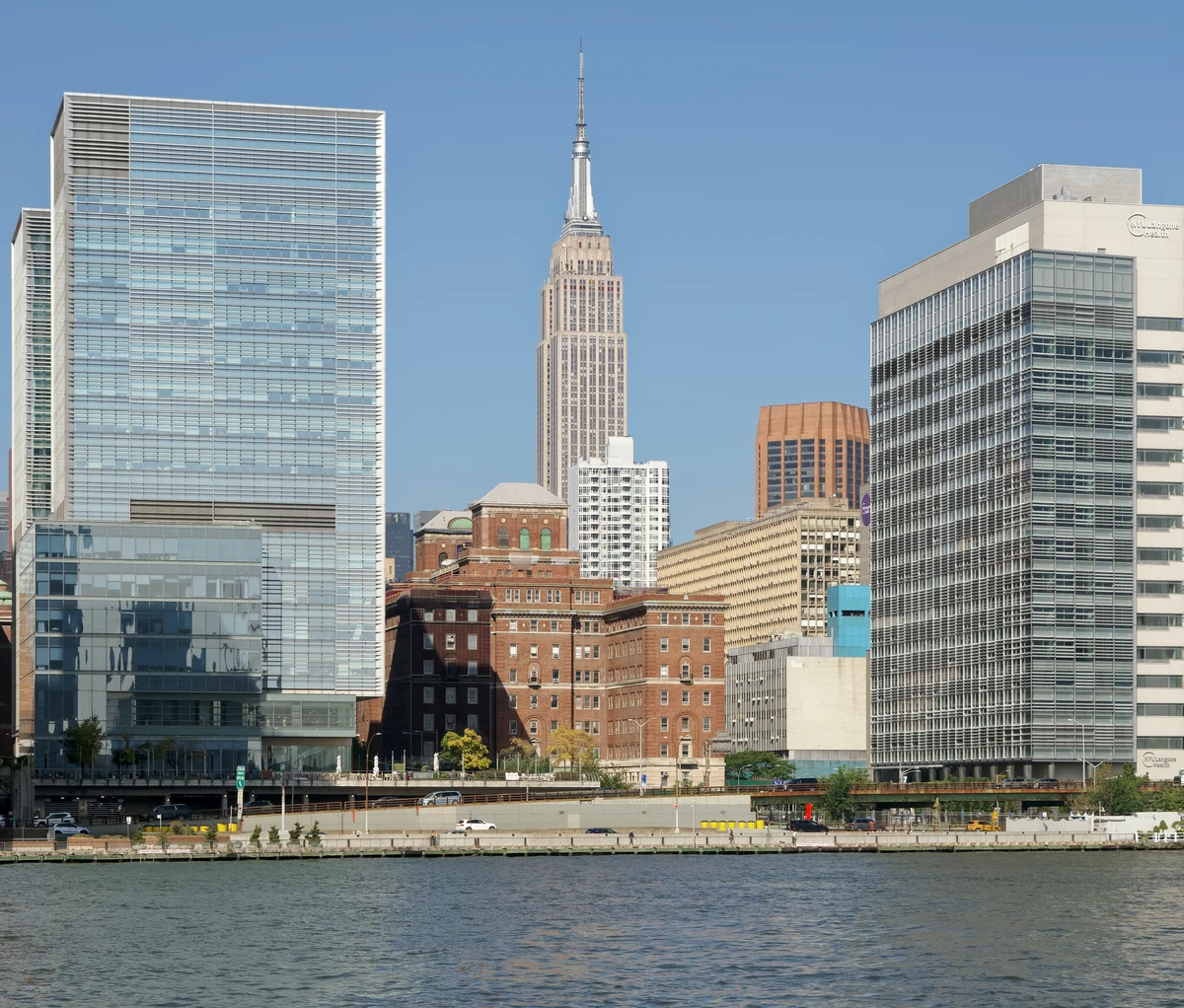
The genesis of the structure is intertwined with a powerful transformation of 20th-century urbanization, when ground-level space in central Manhattan became breathlessly congested, leaving the only path for urban expansion straight up toward the clouds. The building’s prime location, situated precisely on the west side of Fifth Avenue between 33rd and 34th Streets, carries a magnificent past heritage as the former site of the renowned Waldorf-Astoria Hotel built in the late 19th century. By 1929, in a turning point that altered urban planning dynamics, the Empire State Inc. corporation acquired this entire strategic parcel and drafted the most ambitious blueprints to establish an architectural milestone unprecedented in world urban history. The fierce height race of that era forced the design team to revise their blueprints up to fifteen times to ensure their brainchild would surpass all competitors to claim the title of the planet’s tallest structure.
Designed in the signature Art Deco style by talented architects from the firm Shreve, Lamb & Harmon, construction on the building began on March 17, 1930, amidst an atmosphere charged with determination yet fraught with the anxieties of the era. The creation of the structure not only solved a strategic spatial planning challenge, but also bore the sacred mission of lifting the spirits of a nation buckling under the devastating global Great Depression. Despite mounting financial difficulties and the dark shadow of World War II looming over the years that followed, the structure was completed at lightning speed in just thirteen and a half months, officially opening its doors to the public on May 1, 1931. However, due to the severe macroeconomic fluctuations of the time, the investor-owners of the building had to wait until the early 1950s before they could officially turn a profit from this unprecedented project.
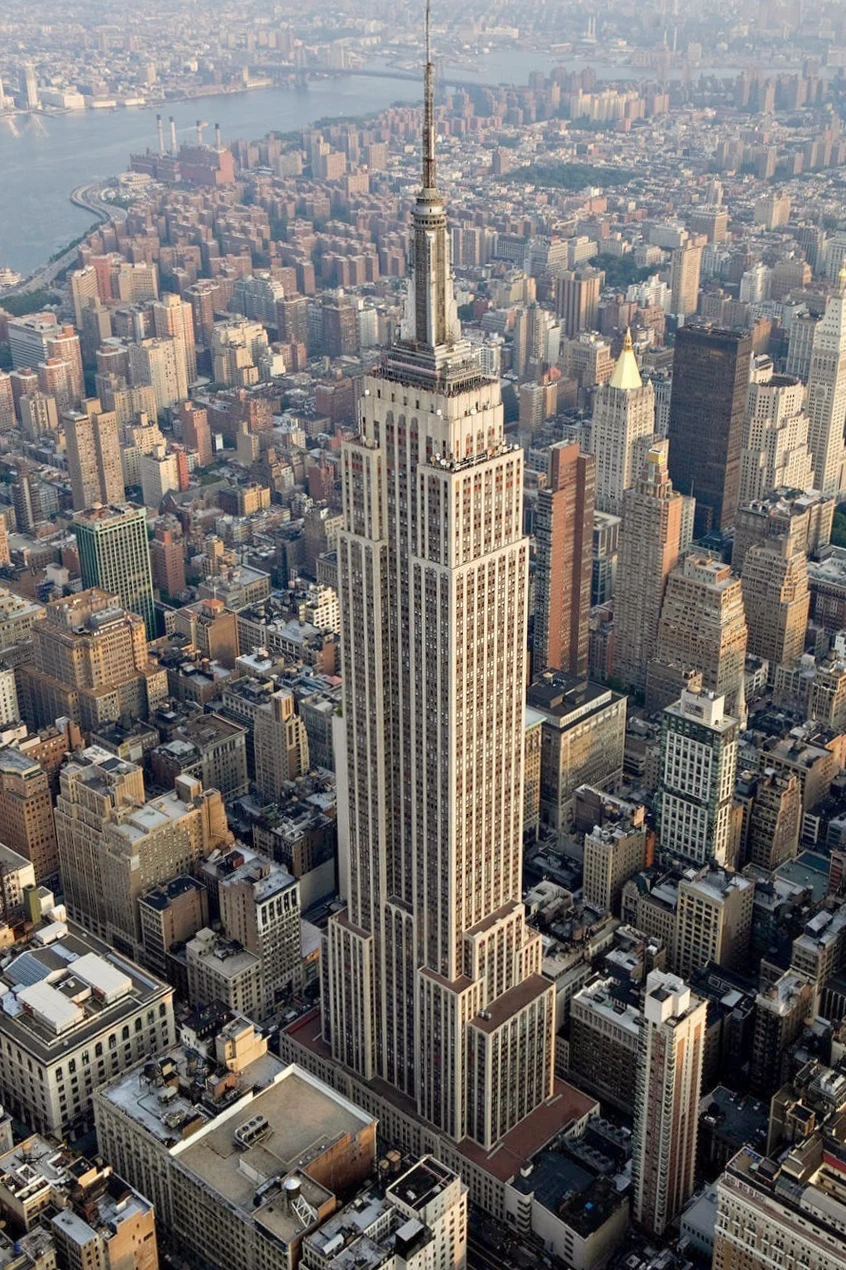
In terms of structural scale and technical specifications, the Empire State Building boasts a total overall height of 1,454 feet (443.2 meters) to the tip of its antenna spire, with a roof height of 1,250 feet (380 meters), spanning a grand total of 102 architectural stories. Over a long journey of claiming the pinnacle of supremacy, this building held the title of the world’s tallest skyscraper for four consecutive decades, until it was surpassed by the North Tower of the World Trade Center in 1970. Following the tragic events of September 11, 2001, the Empire State once again became New York City’s tallest building until it was surpassed in 2012 by One World Trade Center. As of 2025, this heritage landmark proudly maintains its rank as the eighth-tallest building in New York City, the tenth-tallest completed skyscraper in the United States, and fifty-ninth globally.
Beyond impressive technical specs, the compelling allure of the Empire State Building stems from its pinnacle Art Deco architecture combined with its legendary observation decks located on the upper floors. Every year, it welcomes approximately four million visitors from across the globe to explore the open-air and enclosed observation decks on the 86th and 102nd floors, alongside an additional indoor observation deck inaugurated on the 80th floor in 2019. The experience of standing at the dizzying height of the observatory to take in the panoramic sweep of the New York urban landscape stretching out to the hazy horizon, listening to the wind whistling through antique steel structures, or admiring the radiant lights reflecting off the Hudson River has become an unforgettable memory in the journey of any international traveler.
Through the passage of time, the Empire State Building has transcended all geopolitical shifts and changing eras to become a true global cultural icon, appearing in over 250 blockbuster films and hit television series since the classic film King Kong first premiered in 1933. Indeed, the building’s massive scale and signature massing have become a standard benchmark language for humanity when describing the height and scale of other architectural structures worldwide. The structure’s outstanding contributions to human architectural history were fittingly honored when the American Society of Civil Engineers officially named it one of the Seven Wonders of the Modern World, while the American Institute of Architects ranked it at the top of their list of America’s favorite architectural works.
To preserve these invaluable cultural and historical values, in 1980 the New York City Landmarks Preservation Commission officially designated the Empire State Building and its ground-floor interior spaces as landmark architectural monuments of the city. Continuing this national recognition, the structure was proudly inscribed on the U.S. National Register of Historic Places as a National Historic Landmark in 1986. Today, stepping into the building’s main lobby is like walking through layers of time to touch a glorious past, where every exquisite carving, every luxurious marble panel, and every nostalgic golden light blends with the bustling pulse of the present to create a vibrant urban fusion, affirming the eternal vitality of an unchanging icon in the heart of America.
The journey of creating the Empire State Building in New York City is a brilliant epic of civil engineering, pinnacle urban planning, and iconic 20th-century Art Deco architecture. Situated on a prime parcel on the west side of Fifth Avenue between 33rd and 34th Streets in Midtown South, Manhattan, this site was once the historic location of the magnificent Waldorf-Astoria Hotel built in 1893. By 1929, the Empire State Inc. joint venture acquired this land with a bold strategic vision to create a monumental structure that would reshape the Manhattan skyline. The project was entrusted to the prestigious architectural firm Shreve, Lamb & Harmon, who breathed soul into every design detail to turn this place into a timeless masterpiece. Sketching the blueprints was far from smooth, requiring meticulous refinement as the architects modified the initial design up to fifteen times to secure a supreme strategic objective: surpassing all competing rivals to become the world’s tallest building amidst a fierce height race among American financial conglomerates.
From its very first days of construction on March 17, 1930, the Empire State Building site became a revolutionary mega-project in terms of industrial construction speed and organization. Utilizing cutting-edge project management methods, engineers and thousands of construction workers—including numerous Mohawk ironworkers renowned for their courage and remarkable balance high in the air—pushed construction progress to breakneck speeds. Just thirteen and a half months later, on May 1, 1931, the building was officially inaugurated and opened its doors to its first visitors amidst the astonishment and admiration of international professionals and the global public. Average construction speeds exceeding four floors per week not only demonstrated the era’s pinnacle engineering capabilities, but also reflected America’s indomitable spirit during the early years of the devastating global Great Depression. This achievement was honored by the American Society of Civil Engineers as one of the Seven Wonders of the Modern World, cementing the structure’s eternal stature in human civilization.
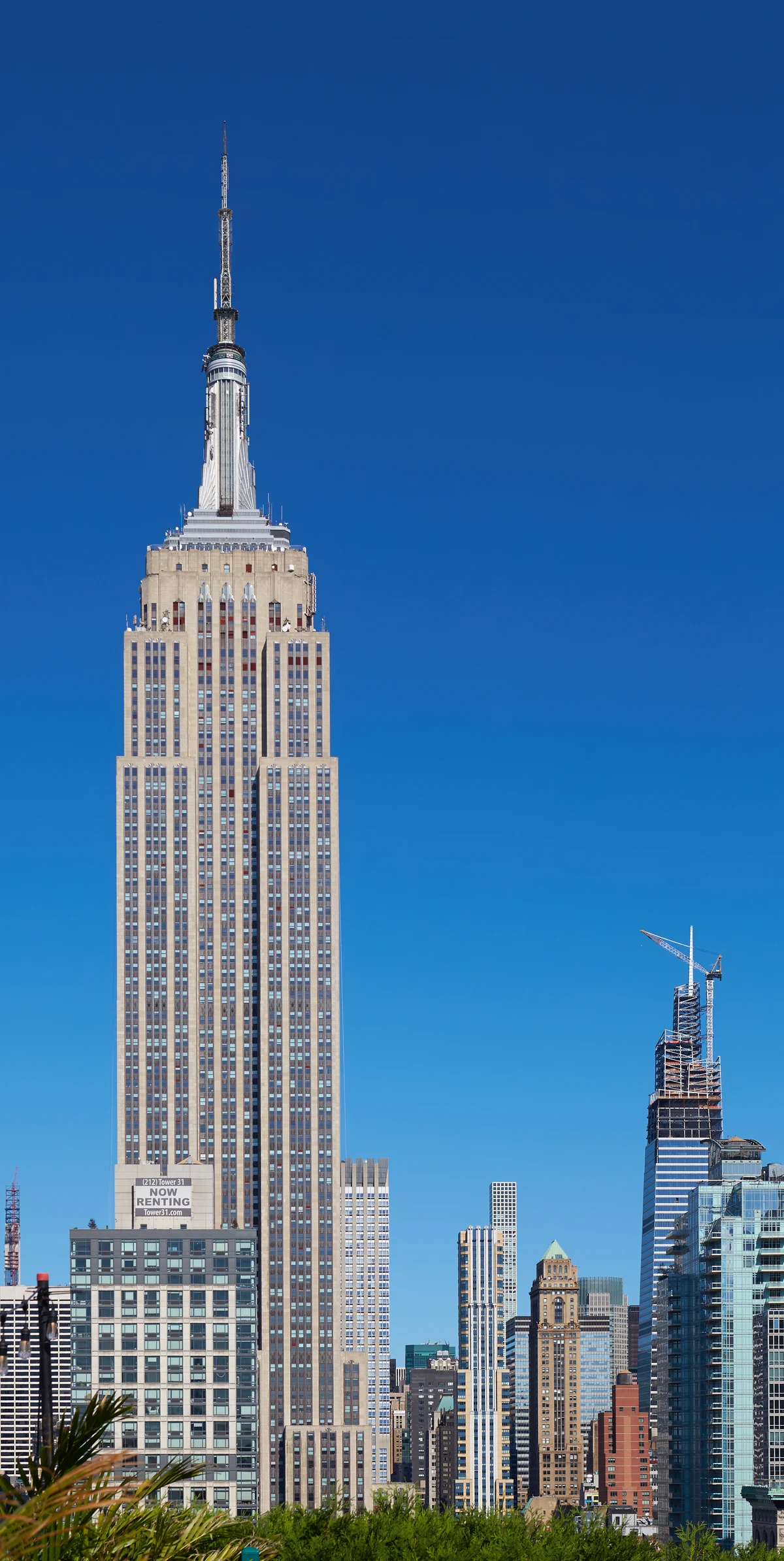
In terms of scale and spatial structure, the Empire State Building boasts impressive figures reflecting early 20th-century investors’ and architects’ ambitions to reach the sky. The structure soars with 102 supertall architectural stories, with a roof height reaching 1,250 feet (380 meters). When including the broadcast antenna spire atop the tower, the building’s total height reaches 1,454 feet (443.2 meters). For the next four decades, the Empire State Building proudly held the crown as the world’s tallest building until the North Tower of the World Trade Center topped out in 1970. Following the heartbreaking historical shifts and changes of the early 21st century, the structure once again became New York City’s tallest building following the events of September 11, 2001, before yielding that position to One World Trade Center in 2012. To date, the Empire State Building remains the eighth-tallest building in New York City, the tenth-tallest completed skyscraper in the United States, and fifty-ninth globally—a resilient standing spanning nearly a century of ups and downs.
Real-world architectural and landscape perspective at the Empire State Building New York (Illustration 6)
The artistic identity of the Empire State Building is clearly defined through classic Art Deco architecture, expressed via sharp geometric lines and powerful vertical masses designed to make the tower feel as though it is drawing in the clouds. Building materials were selected with extreme rigor and premium quality, combining millions of bricks, thousands of tons of structural steel, luxurious Indiana limestone exterior cladding, durable granite, and gleaming stainless steel. The building’s main lobby along Fifth Avenue is a spatial masterpiece featuring aluminum and glass reliefs depicting the seven wonders of the ancient world alongside an eighth wonder—the Empire State Building itself—all wrapped in a solemn atmosphere redolent of the industrial golden age. Natural light filters through large windows, reflecting off polished granite surfaces to create breathtaking visual experiences for any visitor stepping into this historically rich interior space.
Despite achieving dazzling technical and architectural triumphs, the financial journey of the Empire State Building in its early decades was fraught with challenges. Because its opening coincided with the harshest phase of the Great Depression followed by the heavy fallout of World War II, office rental occupancy rates in the building were initially very low, prompting the media to sarcastically dub it the “Empty State Building.” Investors struggled with debt and operating costs for over two decades before the project began turning a profit in the early 1950s. Yet, rising far above commercial calculations, the building’s cultural and symbolic value expanded powerfully. The observation deck spaces on the 86th and 102nd floors, alongside the additional indoor observation deck on the 80th floor added in 2019, welcome approximately four million tourists from around the world each year to admire the panoramic New York City landscape stretching to the horizon.
The sensory experience of standing on the Empire State Building’s observation decks uniquely combines awe before infinite space with profound historical emotion. The sound of wind whistling through the high floors, the brilliant lights of thousands of Manhattan windows lighting up at dusk, and the pulse of urban life rising from hundreds of meters below create an unmistakable urban fusion. The building is not merely a structure of reinforced concrete and steel, but has risen to become a global pop culture icon, featured in over 250 classic films and television series since King Kong first scaled its peak in 1933. The artistic LED color-changing lighting system crowning the tower during holidays and major events turns the skyscraper into a giant canvas of light, stirring deep emotions in the hearts of New Yorkers and international visitors alike. Recognized as a National Historic Landmark in 1986 and a shining milestone in human architectural history, the Empire State Building stands forever as an immortal monument to human intellect, will, and aspiration to reach new heights.
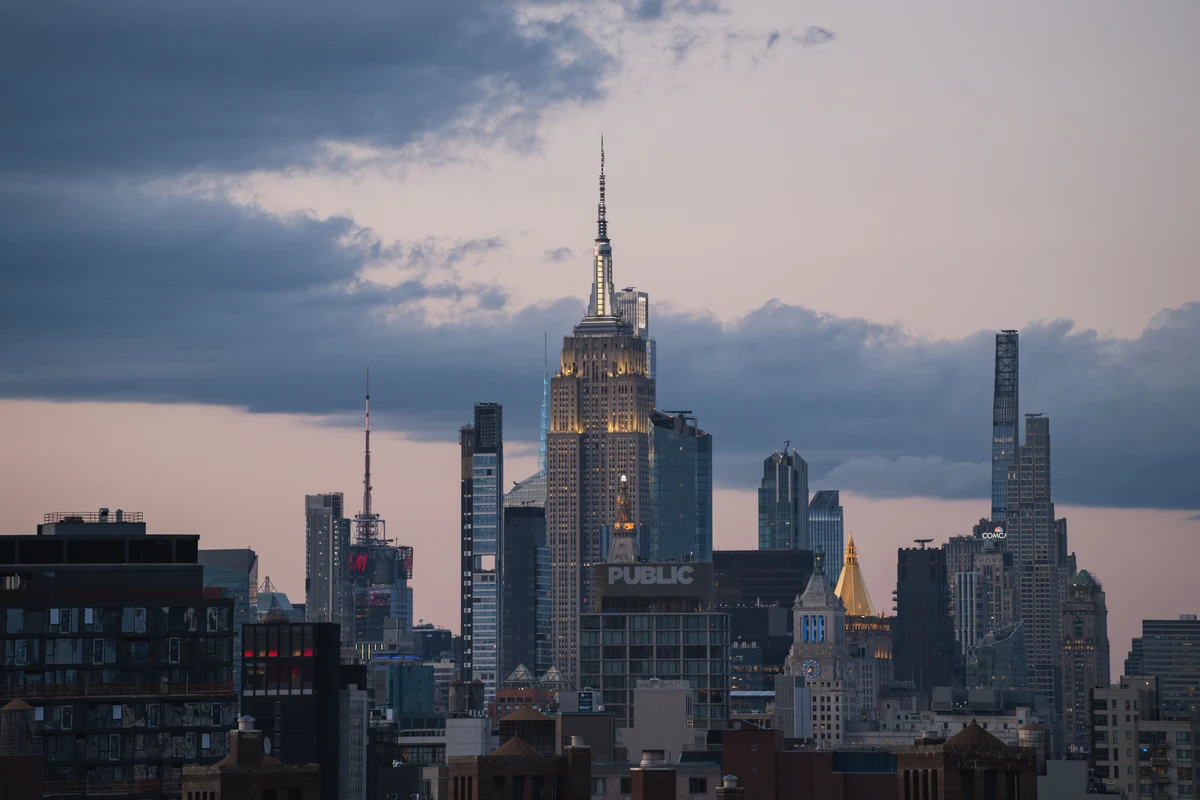
Classic Art Deco architecture soaring proudly at the Empire State Building amidst the New York sky
Stepping across the threshold of the Empire State Building, visitors wander into an artistic space redolent of the 1930s golden age, where sculpture and interior design reach perfection. The ground-floor main lobby in bustling Midtown South, Manhattan, is a visual wonder featuring gigantic ceiling murals finely leafed in gold, depicting constellations and cosmic mechanical energy while celebrating human creative labor in the industrial age. All interior spaces—from imported monolithic marble to hand-chiseled aluminum and brass details—reflect pure Art Deco aesthetic philosophy, officially designated as historic landmarks by the New York City Landmarks Preservation Commission in 1980 for their irreplaceable original cultural and artistic value, before being honored as a National Historic Landmark on the National Register of Historic Places in 1986.
The history of this legendary space is tied to a bold and urgent creation process starting in 1929, when Empire State Inc. acquired the land once housing the illustrious Waldorf-Astoria Hotel built in 1893 on Fifth Avenue between 33rd and 34th Streets. Under the talented hands of the architectural firm Shreve, Lamb & Harmon, the skyscraper’s design underwent fifteen consecutive revisions to ensure the structure would secure the title of the world’s tallest building. On March 17, 1930, the first drill and hammer echoed across the site, kicking off one of the fastest construction feats in human history as the tower was completed and officially opened to visitors just thirteen and a half months later on May 1, 1931. Despite severe hardships from the Great Depression and World War II that left investors waiting until the early 1950s to turn a profit, the structure stands tall with a roof height of 1,250 feet (380 meters) and a total height reaching 1,454 feet (443.2 meters) including the rooftop antenna spire.
Examining its structure closely, the Empire State Building held the crown as the world’s tallest building for decades until surpassed by the World Trade Center North Tower in 1970. Following the tragic events of September 11, 2001, the tower once again returned to the position of New York City’s tallest building before yielding to One World Trade Center in 2012. By 2025, the building maintains its standing as the eighth-tallest building in New York City, the tenth-tallest completed skyscraper in the United States, and fifty-ninth globally. Throughout its history, this 102-story structure has been more than a grand engineering feat—it is a living architectural museum where premium building materials were handpicked with extreme rigor to endure the test of time and the harsh northeastern American climate.
The sensory experience of visiting the Empire State Building begins in the Art Deco ground-floor lobby, where warm golden light reflects off Italian marble grains paired with sharp geometric lines, creating a space at once solemn and nostalgic of the machine age. Traveling via high-speed elevators to the legendary observation decks, visitors feel a distinct shift in pressure and space, before stepping out onto the 86th-floor outdoor observation deck—which welcomes approximately four million tourists annually—where the entire panoramic picture of New York City unfolds breathtakingly before their eyes. Furthermore, the 102nd-floor observation deck and the brand-new indoor exhibition space on the 80th floor inaugurated in 2019 offer multi-dimensional perspectives, allowing admirers to inspect sturdy steel structures up close and view precious documentary films detailing the creation of this icon.
The spiritual and cultural depth of the building is equally tied to its role as a living symbol in the emotional life of New Yorkers and all humanity. It is not merely a physical structure, but the backdrop for thousands of classic artworks, films, and television programs, appearing in over 250 pop culture works since giant King Kong climbed the tower in 1933, launching a global cultural legend. The building’s stature is such that its dimensions and height have become an international benchmark language for describing the scale of architecture worldwide. Because of these timeless values, the American Society of Civil Engineers named the Empire State Building one of the Seven Wonders of the Modern World, while the American Institute of Architects ranked it number one on their list of America’s favorite architectures in 2007.
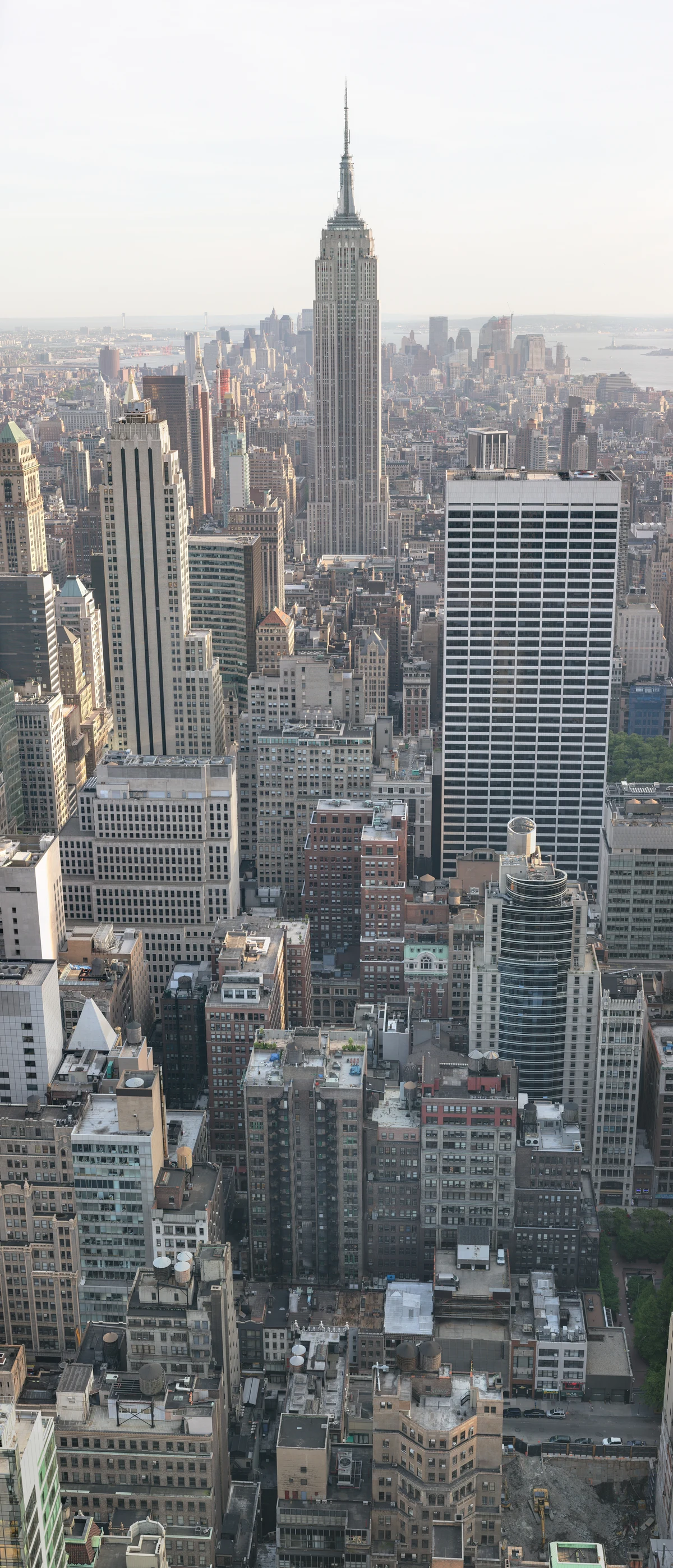
Real-world architectural and landscape perspective at the Empire State Building New York (Illustration 7)
The artistic LED color-changing lighting system crowning the tower, with its flexible and continuous color shifts marking major festivals, meaningful charity campaigns, and national cultural milestones, has turned the Empire State Building into a true spiritual lighthouse in the heart of the metropolis. Light emitted from the tower peak sends messages of solidarity, hope, and deep human pride to the global community, connecting a glorious past with a dynamic present. Amidst the relentless flow of time, the tower not only anchors the soul of a golden architectural era, but continues to inspire millions of international visitors whenever they look up at the New York sky, seeking harmony between boundless human creative talent and the eternal beauty of pinnacle architectural art.
Tourism around the Empire State Building is always high-energy, attracting approximately four million visitors from across the globe each year to experience breathtaking elevated views and immerse themselves in the historical and contemporary cultural currents of New York City. Towering proudly at 20 West Fifth Avenue between 33rd and 34th Streets in Midtown South, Manhattan, this Art Deco architectural icon is not simply a 102-story skyscraper reaching a total height of 1,454 feet (443.2 meters) including the antenna spire, but a living space where the golden past of the Great Depression intertwines with the bustling pulse of the 21st century. The history of this land is tied to late-19th-century prosperity, originating from the famed Waldorf-Astoria Hotel built in 1893 before being acquired by Empire State Inc. in 1929 to conceive a monumental structure. Under the talented hands of architects from Shreve, Lamb & Harmon, the skyscraper’s blueprints underwent fifteen refinements to secure the title of the world’s tallest building, inaugurating a golden era of modern construction with thousands of workers during a breakneck thirteen-and-a-half-month span from March 1930 to its grand opening on May 1, 1931.
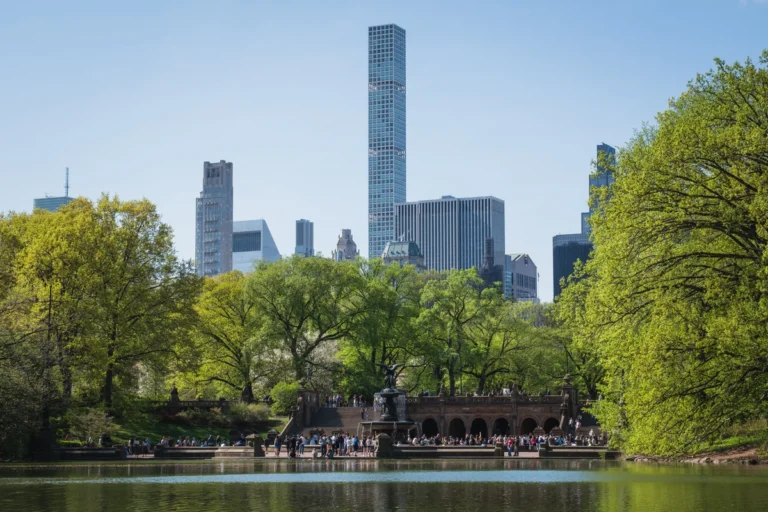
The ultimate sensory experience here is the journey through the Art Deco ground-floor interior spaces—a masterpiece recognized as a city landmark by the New York City Landmarks Preservation Commission in 1980 and inscribed on the U.S. National Register of Historic Places in 1986—before stepping out onto the legendary observation decks. The open-air experience at the 86th-floor outdoor observation deck delivers a distinct, breathtaking feeling as visitors breathe in the crisp breeze sweeping straight off the Manhattan sky and listen to the murmur of America’s largest metropolis echoing from hundreds of feet below. Gazing outward, the unobstructed 360-degree open view captures the rich geography of a vibrant urban landscape: the meandering East River, Central Park appearing as a green ribbon contrasting with concrete and steel blocks, and surrounding architectural wonders stretching to the distant horizon where New York State blurs into the hazy morning mist or fiery sunset.
Complementing the open-air 86th-floor deck, the brand-new indoor observation deck inaugurated on the 80th floor in 2019 offers a quiet, warm, and tech-forward sensory experience. It features floor-to-ceiling glass windows meticulously engineered to eliminate glare, allowing visitors to admire outdoor views in a climate- and sound-controlled environment—ideal for contemplative viewing. This space also integrates dynamic digital interactive exhibitions recounting the grueling yet heroic history of building the tower amidst the harsh economic conditions of the Great Depression and World War II—an era when, little known to many, owners struggled and did not turn a profit until the early 1950s. Precious documentary films, original engineering blueprints, and historical photographs of ironworkers high in the air without safety harnesses authentically recreate persevering labor, adding cultural and historical depth to every visitor’s journey of discovery.
The indigenous rhythm of life around the building is bustling, fast-paced, and carries New York’s signature vibe. Crowds bustling along Fifth Avenue comprise everyone from office workers in sharp business attire, talented street artists playing saxophones on street corners, to international tourists eagerly exploring world-leading fashion boutiques lining the streets. The atmosphere carries the warm aroma of hot pretzels from sidewalk carts blending with rich coffee notes from classic cafes nestled beside neighboring skyscrapers, creating a fusion of modern urban life. Strolling through Midtown South during peak hours, one easily feels the fast-paced yet vibrant rhythm of life, where every individual is a note in the great symphony of the city that never sleeps.
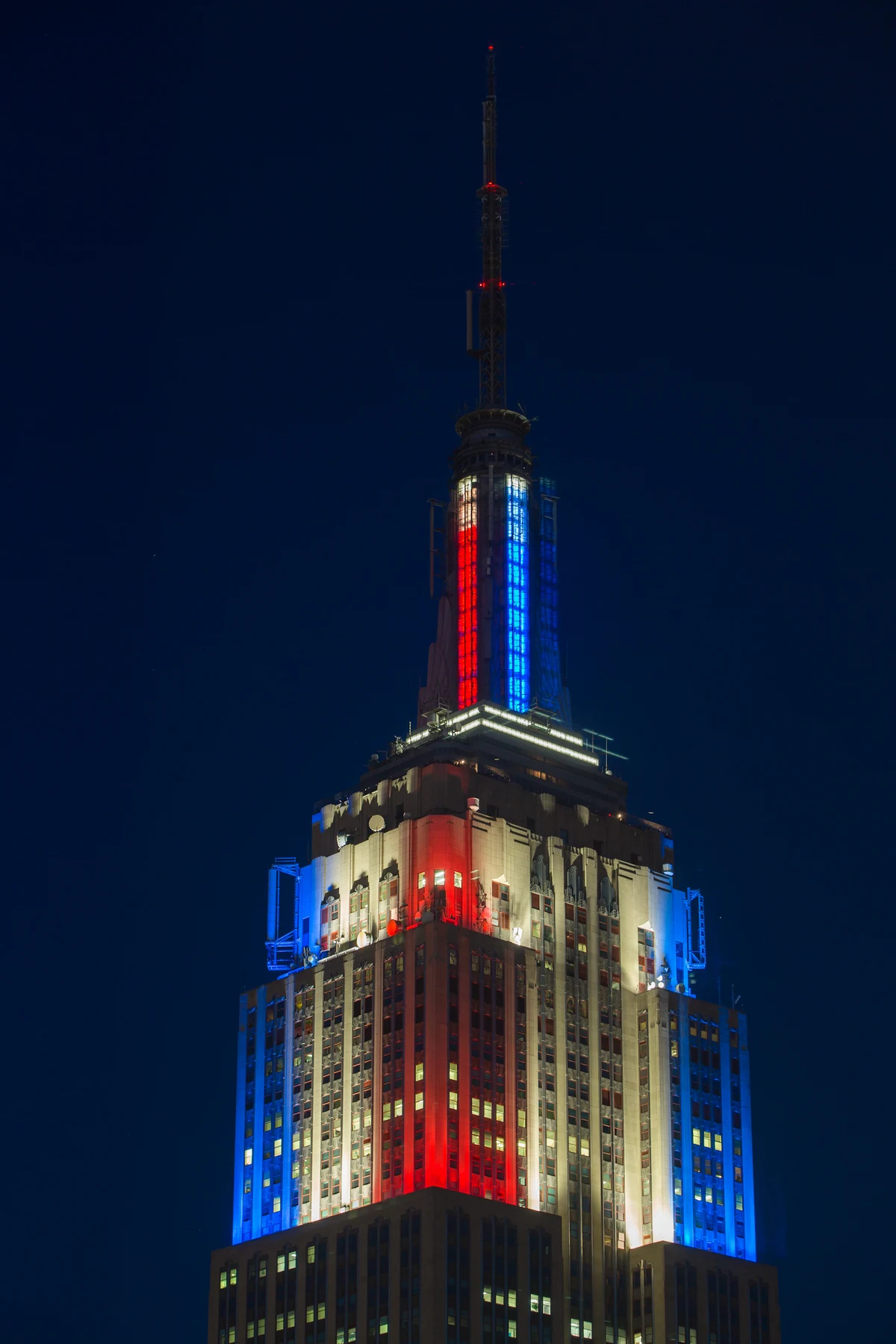
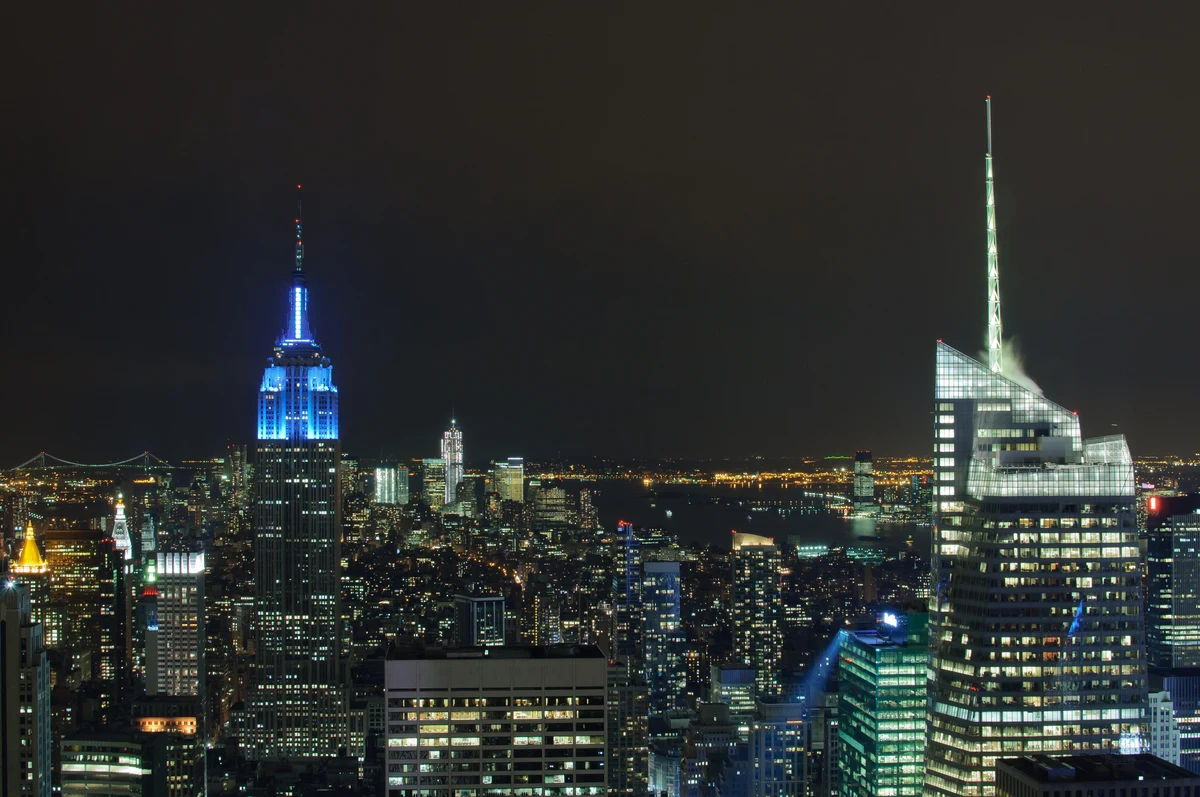
When night falls, the visual experience at the Empire State Building reaches a crescendo as the color-changing LED lighting system on the tower peak officially ignites. This is no ordinary architectural lighting, but a contemporary cultural symbol where the spire shifts colors continuously to honor major world events, national holidays, renowned sports teams, or meaningful charity campaigns. Radiance from the tower peak blends with the twinkling lights of thousands of neighboring skyscrapers and bustling street traffic below, creating a magical nocturnal urban vista attesting to the enduring vitality of a structure that held the world’s tallest title for forty years until the World Trade Center North Tower was completed in 1970, and following the historic events of September 11, 2001, once again became the city’s tallest building until surpassed by One World Trade Center in 2012.
The stature of the Empire State Building extends far beyond ordinary tourism; it is woven deep into global culture through its role as an artistic icon honored in over 250 films and television series since the classic King Kong premiered in 1933. The tower’s scale and proportions have even become a classic reference standard in popular language for describing the height and scale of architecture worldwide. Named one of the Seven Wonders of the Modern World by the American Society of Civil Engineers and ranked number one on the American Institute of Architects’ list of America’s Favorite Architecture in 2007, the tower continues to affirm its timeless value. Every second spent here—from gazing at nature and human architecture merging hundreds of feet high, feeling the Manhattan sky breeze, to soaking in historical exhibitions and admiring the magical night lighting show—transforms into an unforgettable travel memory in the heart of New York City.
Exploring the Empire State Building becomes complete and profound when travelers combine the classic Art Deco architecture journey with rich culinary experiences in Midtown South and surrounding Manhattan. Located on Fifth Avenue at 33rd and 34th Streets, the area surrounding this architectural icon carries not only rich history from when the parcel was the magnificent Waldorf-Astoria Hotel in the late 19th century, but also a vibrant multicultural culinary mosaic. Local flavors here are a seamless fusion of traditional immigrant culinary cultures and the refined contemporary dining trends of the city that never sleeps, where every dish tells a story of identity, adaptation, and New Yorkers’ relentless creativity across generations.
Right inside the building and along surrounding streets, visitors easily find a diverse culinary ecosystem, from upscale restaurants serving superb American steaks to hot New York-style bagels fragrant with sesame and hand-baked flour following family recipes preserved for decades. These bagels, featuring a light crisp crust from boiling before baking and a dense, chewy interior, testify to the heritage of Jewish communities settling in the city a century ago. Enjoyed with fresh cream cheese and traditional smoked salmon, they let diners savor a crisp autumn morning in Manhattan, soaking in the bustling yet poetic rhythm of millions rushing toward the building that held the world’s tallest record for over four decades.
Real-world architectural and landscape perspective at the Empire State Building New York (Illustration 8)
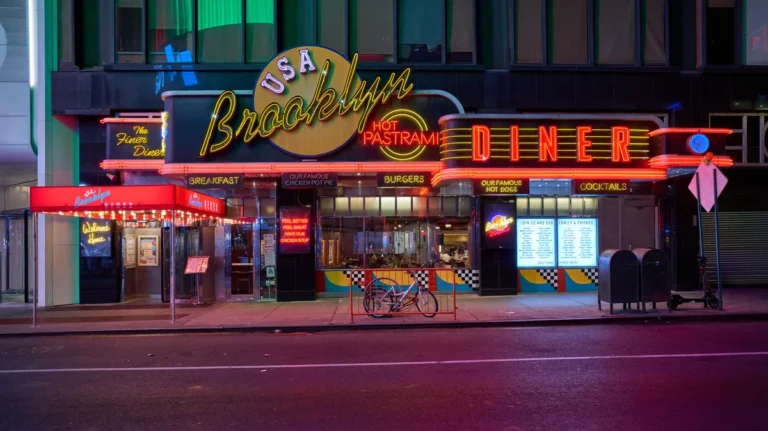
No culinary portrait around the Empire State Building is complete without classic diners featuring glowing neon signs or traditional street-style pizzerias. These pizzerias are renowned for thin, crispy crusts retaining soft chewiness, topped with rich tomato sauce and bubbling mozzarella cheese. Savoring a folded slice of authentic New York pizza with a cold classic soda while strolling down neon-lit Manhattan streets is a quintessential culinary custom every cultural explorer should experience at least once. Folding the pizza slice isn’t just a practical trick to keep toppings in place on the move; it symbolizes the pragmatic, dynamic, and constantly moving lifestyle of locals.
Alongside iconic fast bites, the area near the Empire State Building is a haven for cozy artisanal cafes and nostalgic bakeries. Artisanal baristas meticulously serve fragrant roast coffees sourced from top global growing regions, providing energy after tireless sightseeing on the 86th and 102nd observation decks or the new 80th-floor interactive exhibition. The rich aroma of coffee mingling with baking butter from neighboring ovens creates an olfactory delight, chasing away the chill of Hudson River winds sweeping through urban canyons.
The culinary diversity around the Empire State Building is further enriched by nearby Koreatown on 32nd Street, offering a vibrant Asian food scene with sizzling charcoal grills, richly spiced traditional stews, and late-night eateries serving artists, intellectuals, and international travelers. This fusion reflects the true spirit of New York—a global metropolis where cultural boundaries dissolve over dining tables into an open, welcoming shared space. When night falls, the color-changing decorative lights on the Empire State spire illuminate the Manhattan night sky, casting a glow over bustling restaurant awnings below, turning the entire district into a grand stage where Art Deco and culinary arts merge into unforgettable sensory memories of modern civilization.
Tower peak brilliantly illuminated by art lighting changing colors for international festivals
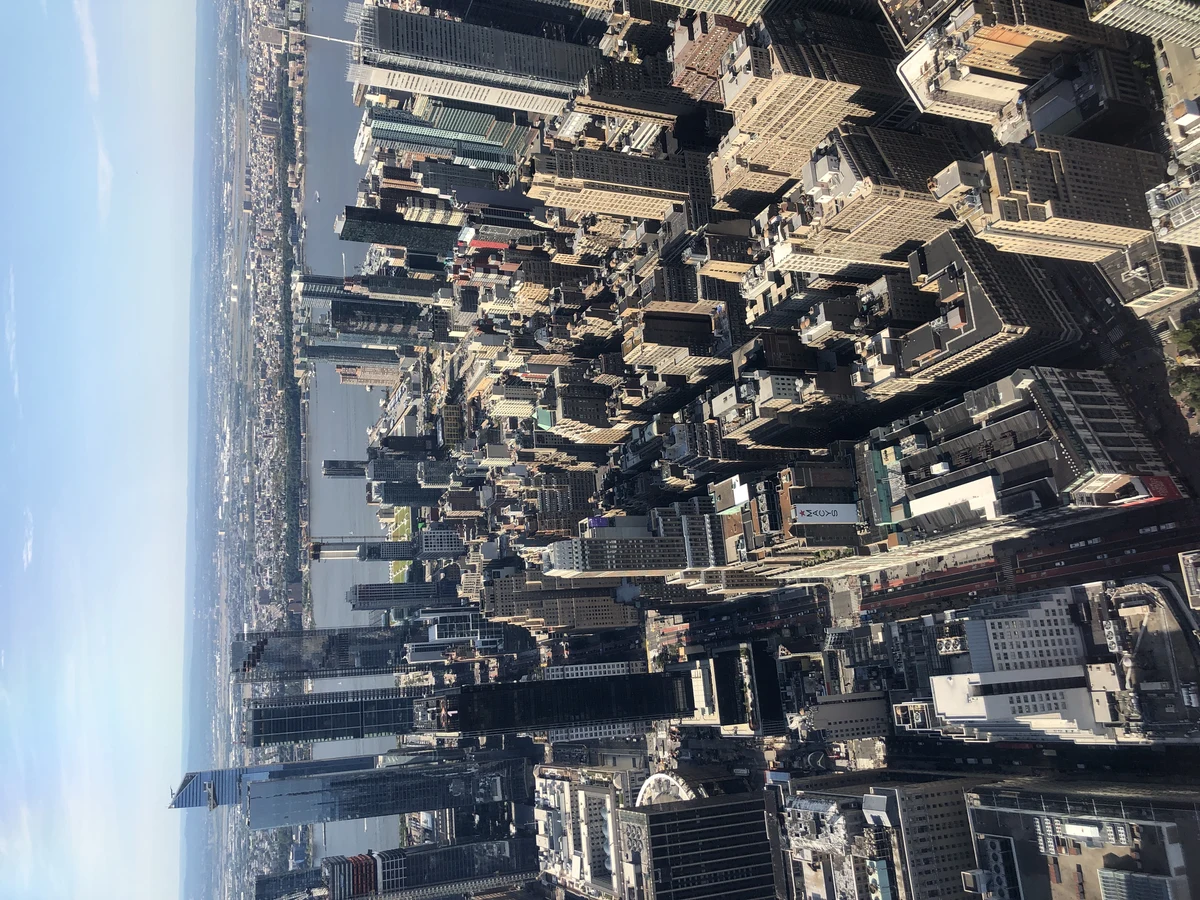
Unobstructed 360-degree panoramic view from the 86th-floor observation deck encompassing the entire Manhattan skyline
Splendid main lobby carved with gilded reliefs and exquisite 20th-century granite cladding
Close-up view of the iconic pop-culture antenna spire featured in hundreds of blockbuster films
To experience this journey seamlessly with a knowledgeable local guide, explore our 11D10N East-West USA Multi-Destination Tour with a thoughtfully curated itinerary.