In the heart of the city that never sleeps—Midtown Manhattan, New York City, where arterial transportation pathways weave together like endless threads of space—Times Square stands majestically as the supreme symbol of contemporary urban culture and the busiest pedestrian intersection on the planet. This iconic urban space is formed by the strategic intersection of Broadway, Seventh Avenue, and 42nd Street, creating a distinct traffic planning and architectural system. When combined with Duffy Square located immediately to the north, these spaces form a unique bowtie-shaped plaza spanning five blocks from 42nd Street all the way to 47th Street. Geographically and logistically, this location is not merely an ordinary traffic junction but the preeminent hub coordinating massive pedestrian flows in the United States. Statistics indicate that approximately 330,000 people travel through Times Square daily, a figure that can surge past 460,000 pedestrians on peak tourism days or major annual festivals. Furthermore, the Times Square–42nd Street and 42nd Street–Port Authority Bus Terminal subway station complex consistently maintains its position as the busiest transit system across the entire New York City underground rail network, bearing the responsibility of transporting over 200,000 passengers daily while connecting the bustling pulse of satellite urban areas with the heart of Manhattan.
In terms of spatial planning and economic standing, Times Square serves as the epicenter of the global entertainment industry while forming the core physical axis of the Theater District, which concentrates the vast majority of the world’s most renowned Broadway theaters. This urban strip is the only space on Earth maintained at an extraordinary level of illumination around the clock, where thousands of square meters of skyscraper facades are completely covered by massive digital advertising signage systems, ultra-high-resolution LED screens, and commercial enterprises operating 24/7. It was precisely this brilliant, dazzling, and magical light that earned the district its moniker, the “Great White Way,” beginning in the early 20th century when electric arc lamps and incandescent light bulbs first turned Manhattan‘s nights into day. This visual awe, combined with an urban symphony of honking horns, street performer audio, hurried footsteps, and the multilingual laughter of dense crowds, creates a multi-dimensional sensory experience steeped in the unmistakable identity of New York—one that no other place on earth can replicate.
The historical genesis and spatial evolution of this land are closely tied to the historical vicissitudes of New York’s urbanization, reflecting a transformation from agricultural fields into a global commercial and financial center. Originally, in the 19th century, this area was named Longacre Square, a moniker evoking sprawling estates once owned by landed gentry families or early commercial activities associated with horse-drawn carriage manufacturing and transportation services. However, a fateful turning point occurred in 1904 when this intersection was officially renamed Times Square. This renaming drew direct inspiration from the prestigious newspaper The New York Times, after this powerful media organ decided to relocate its headquarters to the newly built, highly fortified, and modern Times Building located here—known today by architectural historians and global travelers as One Times Square.
The presence of the One Times Square skyscraper not only reshaped the district’s architectural face but also birthed a cultural tradition with enduring vitality across space and time. Designed by talented architect Cyrus L. W. Eidlitz in the neo-Gothic architectural style, the 25-story tower with an initial height of 363 feet (roughly 111 meters) commanded an entire city block bounded by Seventh Avenue, 42nd Street, Broadway, and 43rd Street. Although The New York Times quickly realized the building’s floor space was becoming cramped and relocated its printing plant and offices elsewhere just a few years later, One Times Square retained its status as the fateful focal point of the entire district. On December 31, 1907, to celebrate the New Year and mark a new technological era, the New Year’s Eve ball drop event was held for the very first time atop this tower. Having endured for over a century without interruption, the ball drop event has evolved into a global cultural ritual gathering over a million people directly at the square each New Year’s Eve while broadcasting live to over a billion viewers across digital media platforms worldwide.
Through the ebb and flow of urban history, the architectural structure of One Times Square underwent profound overhauls to adapt to the modern commercial economy. By the 1990s, as mechanical advertising signs gradually yielded to electronic lighting technology and large-scale digital displays, the revenue-generating potential of the building’s facade was fully exploited. Thanks to colossal revenues generated from leasing advertising space across its exterior, One Times Square evolved into one of the most expensive and lucrative advertising locations in the world. Continuing this legacy, large-scale investment and redevelopment projects in recent decades—most notably a $500 million major renovation initiated in 2022 and completed in early 2026—completely transformed the tower with a modern tempered glass skin, integrating a thematic museum dedicated to the square’s history, a panoramic rooftop observation deck, and a fully modernized direct entrance connecting straight to the subway station below.
Beyond its role as a journalistic and commercial advertising hub, Times Square holds profound historical significance for the arterial transportation system of the United States. Geographically and anthropologically, the exact intersection between Broadway and 42nd Street located right at this square was once designated as the eastern terminus of the Lincoln Highway—the first transcontinental highway for motor vehicles connecting the American East and West coasts, laying the groundwork for the subsequent development of the federal interstate highway system. The convergence of road traffic networks, underground subway systems, and pedestrian corridors has transformed this location into a vibrant urban entity where diverse cultures, ideologies, and performing arts converge.
One cannot discuss the symbolic stature of Times Square without separating it from the surrounding Broadway theatrical art space. Modern Broadway theatrical arts represent the commercial pinnacle of English-language live stage performance globally, rivaling London’s West End. The district encompasses 41 professional theaters, each with a seating capacity of 500 or more, scattered across the Theater District and the Lincoln Center area along Broadway in Midtown Manhattan. Although Broadway lends its name collectively to an entire theatrical culture and art form, in reality, only three theaters are situated directly on Broadway itself: the Broadway Theatre, the Palace Theatre, and the Winter Garden Theatre, while the vast majority of the remaining theaters are located on numbered cross streets stretching from the Nederlander Theatre in the south all the way to the northern reaches.
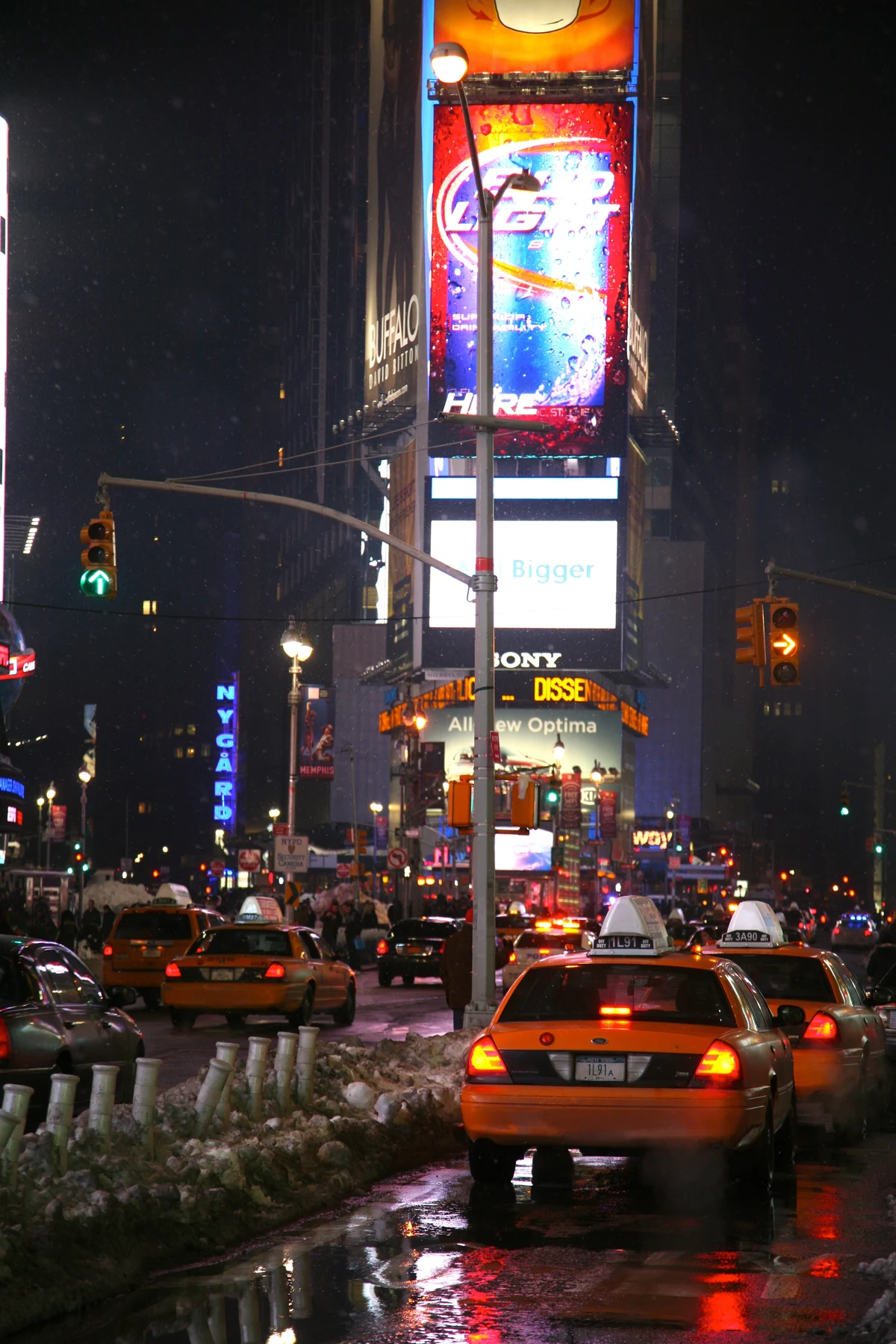
It is this powerful resonance between the academic art of Broadway theaters, the exploding energy of the mass entertainment industry, the fast-paced rhythm of commercial finance, and historical depth forged over more than a century of creation that has endowed this land with resounding epithets. Globally positioned as the “Crossroads of the World” or the “Center of the Universe,” Times Square continues to serve as a prism reflecting the liberal spirit, upward aspirations, and ceaseless pulse of American contemporary culture, attracting over 50 million international visitors annually to admire, experience, and immerse themselves in a moving historical flow.
In terms of urban planning, artificial geology, and spatial geometry, Times Square and its central skyscraper One Times Square represent a miracle of design thinking, modern urban construction engineering, and the ceaseless metamorphosis of the North American cityscape. Unlike the vast majority of Manhattan’s street grid strictly planned in a checkerboard pattern under the Commissioners’ Plan of 1811, Times Square’s distinct space is formed by the unique diagonal intersection of historic Broadway, Seventh Avenue, and 42nd Street in Midtown Manhattan. The convergence of these arterial transit routes creates an open bowtie-shaped plaza stretching across five blocks from 42nd Street to 47th Street, blending seamlessly with adjacent Duffy Square to become one of the most heavily trafficked and pedestrian-dense intersections on the planet. Investigating the spatial genesis requires profound comprehension of how a commercial junction originally named Longacre Square—famed in the 19th century for horse-drawn carriage manufacturing and markets rising over old marshlands—metamorphosed completely to become the epicenter of the global entertainment industry and the glowing heart of the Theater District.
The architectural landmark dominating and governing this entire space is the One Times Square tower, formerly bearing names such as the New York Times Building, the New York Times Tower, or the Allied Chemical Tower. Situated directly on the city block bounded by Seventh Avenue, 42nd Street, Broadway, and 43rd Street, this 25-story structure soars to a height of approximately 363 feet (111 meters), asserting its majestic stature in the heart of Manhattan. In the early 20th century, when prestigious newspaper The New York Times decided to relocate its headquarters to this newly constructed building, talented architect Cyrus L. W. Eidlitz was entrusted with designing the structure in the characteristic neo-Gothic architectural style of that era. Eidlitz’s preliminary drawings and original structure exhibited exquisite hand-carved stone details, classical European decorative motifs, and advanced steel-framing techniques of the time, transforming the location not merely into the city’s second skyscraper but into an icon of journalistic power and industrial prosperity.
Nevertheless, the destiny of One Times Square is intertwined with a rare architectural renovation and functional transformation process in modern urban history. Under the pressure of commercialization and the explosion of visual media technology, the tower’s original neo-Gothic structure underwent aggressive interventions that gradually obscured or entirely replaced its original stone carvings and masonry facade. This shift in focus began shortly after The New York Times realized the building’s space was too confined for its explosive growth rate, forcing them to relocate their offices and printing presses to 229 West 43rd Street after operating here for barely a decade. Despite losing its role as a newsroom headquarters, One Times Square retained its status as the universe’s focal point thanks to the New Year’s Eve ball drop tradition starting at the end of 1907 and the installation of the famous electric lighted news ticker in 1928, inaugurating an era that turned the building’s facade into a giant canvas for light art and mass commerce.
Passing through ownership hands of various major financial and chemical conglomerates such as Douglas Leigh, Allied Chemical, and Lehman Brothers, One Times Square entered the 1990s with an entirely new technical mission: becoming a purely vertical advertising landmark. Rather than maintaining traditional office functions, subsequent owners recognized that the tower’s greatest value lay not in its interior space, but in its peerless position directed by the gazes of millions of pedestrians and motorists. The colossal advertising signage system—evolving from initial static neon signs to high-resolution digital LED screens completely blanketing all four facades—transformed the location into one of the most expensive and profitable advertising sites worldwide. Colossal revenues generated from these display panels reshaped the economic model of the entire district while turning the skyscraper into a sleepless, glowing engine where boundaries between architecture and mass media dissolved entirely.
The technical and planning evolution of this district was further elevated via a $500 million major renovation project initiated by Jamestown L.P. in 2022 and completed in early 2026. This comprehensive redevelopment phase was not simply an upgrade of digital screen systems, but an architectural overhaul to redefine public space experiences at Times Square. One Times Square was clothed in an entirely new exterior glass skin integrating state-of-the-art building material technologies to optimize energy performance and produce sharper, seamless visual display surfaces. Notably, the redevelopment integrated a modern observation deck, a thematic interactive museum dedicated to the history of Times Square, and a brand-new entrance directly connecting to the city’s underground transit network via the Times Square–42nd Street and 42nd Street–Port Authority Bus Terminal stations, offering visitors a completely new 360-degree panoramic perspective from above over the planet’s busiest intersection.
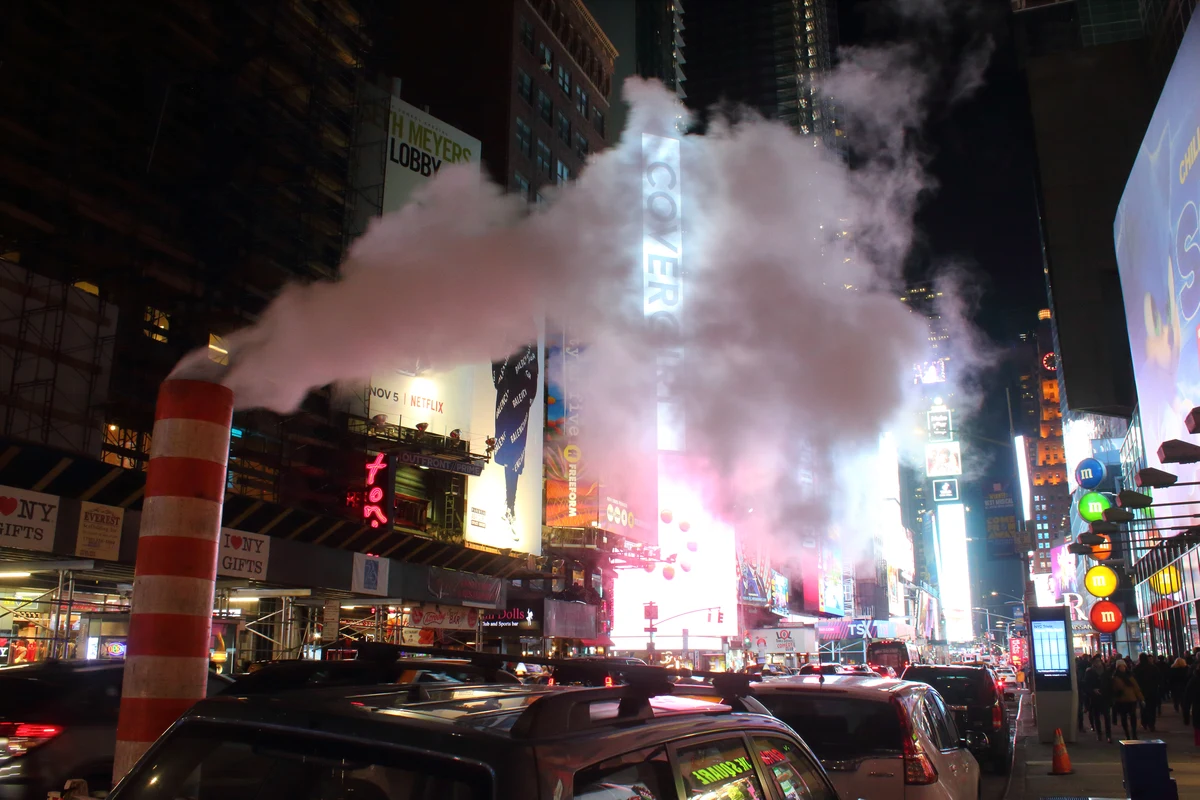
Practical perspective of architecture and distinctive landscapes at Times Square New York (Illustration 6)
Real-world scale parameters and operational metrics of Times Square demonstrate the transcendental capacity of modern urban infrastructure in absorbing colossal human traffic flows. From demographic and tourism statistical standpoints, the district welcomes an estimated 50 million global visitors annually. An average of approximately 330,000 people travel through daily, a figure that can explode past 460,000 pedestrians on peak days or major festival periods. Underground transit systems serving the area—exemplified by the Times Square–42nd Street and 42nd Street–Port Authority Bus Terminal stations—consistently maintain status as the busiest subway hubs across New York City’s entire public transit network, safely and continuously transporting over 200,000 passengers daily across a multi-tiered interlocking tunnel network.
Beyond spatial and modern transport metrics, Times Square holds profound geographical-historical values concerning the development of the United States national highway network. The strategic intersection situated between Broadway and 42nd Street served as the eastern terminus of the Lincoln Highway—the first transcontinental motor vehicle highway in the United States inaugurated early last century. Selecting this intersection as a starting point carried immense symbolic significance, marking the transition from horse-drawn carriage transport to mechanization, connecting the bustling East Coast with the distant West Coast via a thousand-mile arterial journey. The synthesis of historical roadways, ultra-large subterranean subway networks, and surface pedestrian spaces enclosed by professional Broadway theaters—gathering up to 41 renowned theaters with capacities of 500 seats or more—forges a unique urban ecosystem found nowhere else worldwide.
Sensory experiences at Times Square comprise complex integrations of light, sound, and ceaseless human movement. Entering spaces dubbed the “Crossroads of the World” or the “Heart of the Great White Way,” visitors are immediately overwhelmed by luminous intensities emitted from thousands of square meters of digital screens glowing 24/7, turning night into day and erasing conventional biological time concepts. The atmosphere overflows with vibrant chaotic sounds of traffic horns, hurried footsteps across stone-paved blocks, murmuring music drifting from historic theaters, multilingual laughter from global visitors, and wafting street food aromas ranging from classic pretzels and New York hot dogs to upscale restaurants occupying surrounding historic buildings. All these elements—from geological foundations, bowtie-shaped geometry, One Times Square architecture, to colossal operational metrics—together forge a living monument of contemporary human urban culture.
Splendid colorful scenery from thousands of giant LED screens illuminating the Times Square intersection
Artistic and cultural spaces at Times Square form one of humanity’s most majestic urban complexes, featuring powerful intersections between late-modern architectural heritage and cutting-edge digital visualization technology. Situated at the strategic intersection of Broadway, Seventh Avenue, and 42nd Street in Midtown Manhattan, New York City, this space along with adjacent Duffy Square defines a bowtie-shaped plaza stretching from 42nd Street to 47th Street. The location has long been perceived not merely as a street intersection with peak global foot traffic (estimated at 330,000 pedestrians daily and peaking above 460,000 during peak days), but as the absolute epicenter of the global entertainment industry, gathering renowned Broadway theaters and critical underground transit infrastructure operating round-the-clock.
To comprehend this space’s architectural depth, one must travel back to the turn of the 20th century when the district was named Longacre Square and surrounded by sparser commercial activities. The pivotal turning point occurred in 1904 when The New York Times decided to relocate its headquarters to a newly constructed building named The Times Building, known globally today as One Times Square. Designed by talented architect Cyrus L. W. Eidlitz in the neo-Gothic style characteristic of that period, the 25-story tower soared 363 feet (111 meters), commanding an entire block bounded by Seventh Avenue, 42nd Street, Broadway, and 43rd Street. Under Eidlitz’s craftsmanship, the original tower featured exquisite hand-carved stone details, majestic decorative cornices, and advanced load-bearing masonry framing reflecting early-20th-century aesthetic ambitions.
Nevertheless, historical currents and urban commercial pressures subjected One Times Square’s original appearance to radical transformations. Shortly after completion and relocation in January 1905, The New York Times recognized space constraints and relocated its offices and printing presses to 229 West 43rd Street after operating here for barely eight years. Even so, One Times Square retained its spatial focal point status. Across subsequent decades, the tower witnessed multiple ownership transfers among various financial institutions and corporations—such as Douglas Leigh in 1961, Allied Chemical in 1963 with gallery renovations, Alex M. Parker, and Lehman Brothers in 1995 before coming under Jamestown L.P.’s ownership from 1997 onward. To adapt to market economics and exploit prime location values, tower facades were progressively wrapped and transformed, covering and stripping away original neo-Gothic stone carvings to accommodate massive advertising signage systems during the 1990s, turning the site into one of the planet’s most lucrative commercial advertising spaces.
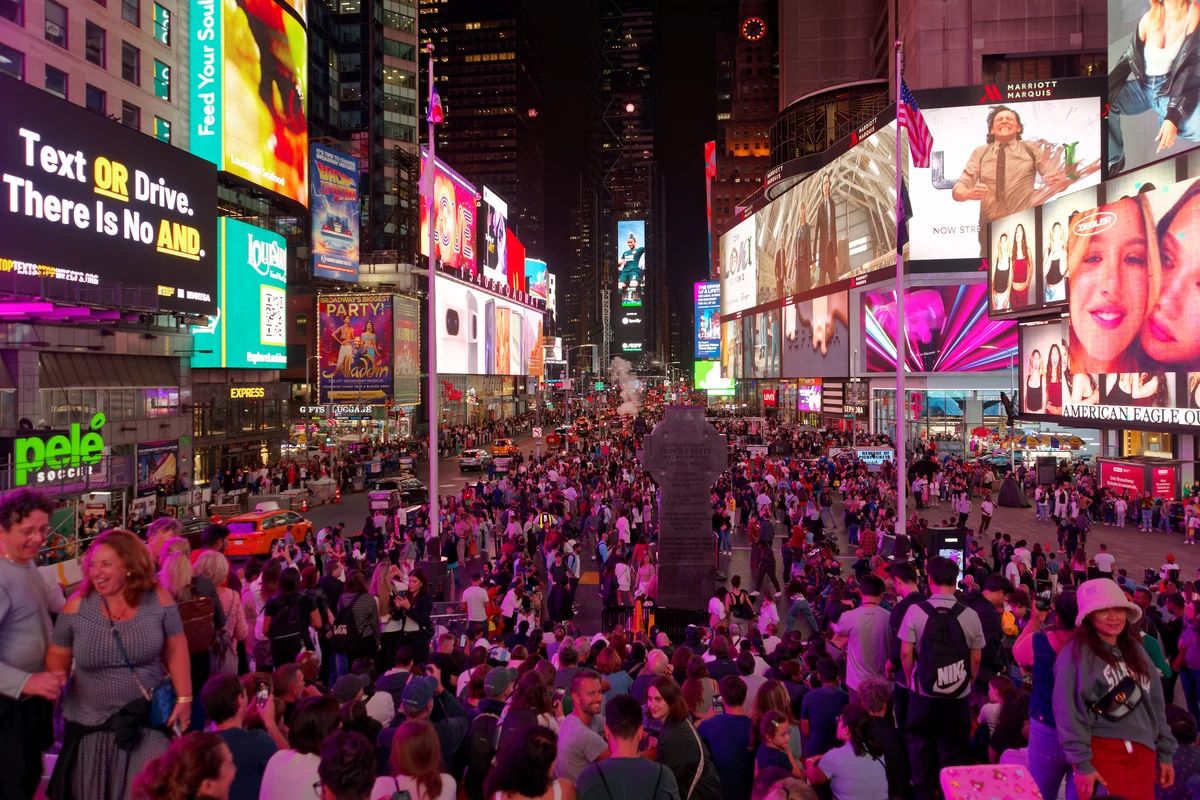
The zenith of architectural transformation and technological integration here is represented by a $500 million major renovation project initiated by Jamestown in 2022 and completed in January 2026. This comprehensive redevelopment phase metamorphosed One Times Square into an iconic contemporary cultural-tourist complex, where modern glass armor jackets enclose old tower framing while integrating brand-new public spaces. The skyscraper no longer functions merely as a armature for electronic lighting but opens up a unique rooftop observation deck, a thematic museum preserving and exhibiting Times Square’s evolutionary history, alongside a newly built entrance connecting directly to the Times Square–42nd Street and 42nd Street–Port Authority Bus Terminal subway stations—among New York’s busiest transit hubs serving over 200,000 daily commuting passengers.
Beyond material architectural values, Times Square’s spiritual and cultural depth is enriched by global-scale communal rituals. The clearest icon is the annual New Year’s Eve ball drop tradition, initiated on December 31, 1907. Spanning over a century of existence, this event transcends ordinary street festivals to become a modern urban creed gathering over a million people directly beneath giant screens while connecting with global audiences reaching billions via diverse digital media platforms. Concurrently, the introduction of the large-scale lighted news ticker near street level since 1928 laid foundations for transforming the location into a living museum reflecting continuous advancements in mass information technology and display journalism.
Surrounding Times Square also holds profound historical significance as the intersection of Broadway and 42nd Street served as the eastern terminus of the Lincoln Highway—the first transcontinental motor vehicle highway in the United States. The explosion of electronic billboards and brilliant neon lights from global brands earned the location glowing epithets such as “Crossroads of the World,” “Center of the Universe,” or “Heart of the Great White Way.” The district also links with the Theater District, gathering 41 professional Broadway-standard theaters with capacities of 500 seats or more, combining with London’s West End to represent commercial and live stage performance pinnacles across the English-speaking world.
Sensory experiences at Times Square compose complex polyphonic symphonies of light, sound, and relentless urban rhythms. Beneath the brilliant halo of thousands of high-resolution LED screens operating 24/7, the space generates infinite visual fields blurring day and night boundaries. Hurried footsteps of global tourists merge with street performer audio, characteristic New York taxi horns, and echoes from world-class performing arts stages. All these elements fuse to affirm that Times Square is not merely a structure of brick, stone, concrete, or steel-glass, but humanity’s most vibrant living cultural entity, testifying to creative power and boundless aspirations of urban civilization across historical eras.
Daily life rhythms at Times Square emerge as frantic urban fusions, complex spaces awakening all senses of far-flung travelers setting foot upon this legendary coordinate. Formed from the strategic convergence of Broadway, Seventh Avenue, and 42nd Street in Midtown Manhattan, New York City, this space together with adjacent Duffy Square establishes a characteristic bowtie-shaped plaza stretching from 42nd Street to 47th Street. From the moment of entering, visitors are instantly overwhelmed by worlds flooded with continuously shifting colors from giant digital screens enveloping skyscrapers, producing dazzling, brilliant visual effects 24/7. In scale and operational pacing, the location represents one of the planet’s busiest pedestrian intersections, serving as a global entertainment hub and tourist destination welcoming an estimated 50 million annual visitors, cementing the peerless status of a city that never sleeps.
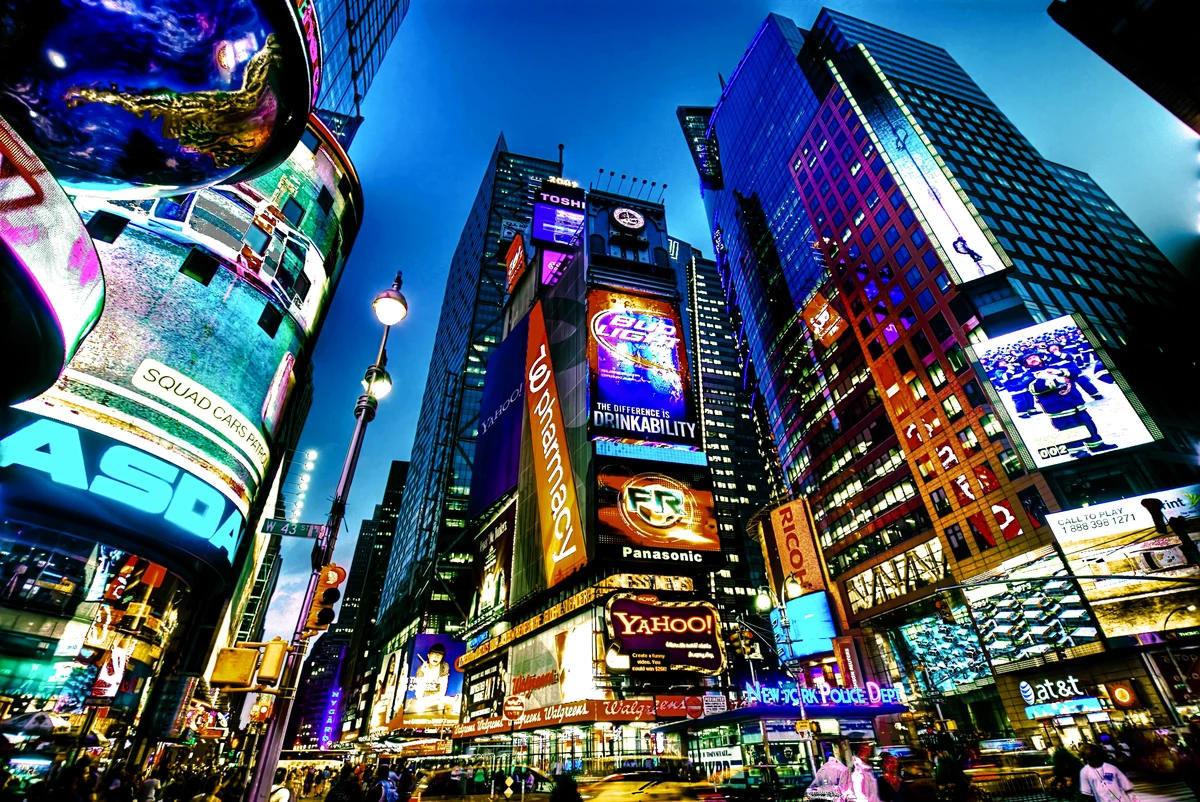
Practical perspective of architecture and distinctive landscapes at Times Square New York (Illustration 7)
Viewed through historical research and urban demography, daily life rhythms at Times Square operate unceasingly 24/7, reflected via dense crowds pouring in from worldwide pathways. On peak days, pedestrian flows crossing the space can surpass 460,000 counts, while daily averages hover stably around 330,000 individuals. This fierce vitality is sustained by arterial underground transit networks, exemplified by the Times Square–42nd Street and 42nd Street–Port Authority Bus Terminal station complexes, consistently topping New York City subway networks in passenger volume by safely and continuously carrying over 200,000 commuters daily through multi-tiered interlocking tunnel networks.
Beyond fast-paced commercial and transport rhythms, Times Square functions as the physical heart of the Broadway Theater District, concentrating historical world-class theaters of the English-speaking world. Together with London’s West End, this district represents live stage performance commercial pinnacles, uniting 41 professional theaters with capacities exceeding 500 seats distributed along Broadway and cross streets from Midtown Manhattan to Lincoln Center. These theaters grant visitors premier theatrical art experiences, ranging from long-running classical musicals to experimental contemporary works, captivating global art enthusiasts. Strolling through adjacent Duffy Square, visitors readily perceive eager anticipatory atmospheres outside ticket booths, where long queues seek chances to enjoy major shows, testifying to the enduring vitality of performing arts cultures within modern cities.
Sensory experiences at Times Square transcend static observation from fixed viewpoints, involving total immersion into colorful American pop culture spaces. Spontaneous street performer acts, talented hip-hop dancers displaying virtuoso techniques on high-energy backing tracks, or appearances by colorful costumed characters generate vibrant interactive spaces between locals and international tourists. Traveler olfactory and gustatory senses are strongly stimulated by characteristic multi-cultural food aromas drifting from classic New York hot dog pushcarts, warm salted pretzels dusted with coarse salt, alongside rich flavors from upscale restaurants and all-night cafes lining surrounding districts.
Looking back at historical developmental spans, the location was named Longacre Square prior to its 1904 renaming following The New York Times relocating its headquarters to a newly built building named Times Building, presently One Times Square. This 25-story, 111-meter skyscraper designed in neo-Gothic style by Cyrus L. W. Eidlitz became the district’s core architectural symbol. Although initial architectural details underwent major multi-decadal renovations and were concealed by giant digital advertising systems installed since the 1990s, One Times Square retains status as one of the world’s highest commercial-value advertising locations thanks to colossal revenues from dynamic media campaigns.
Notably, One Times Square birthed the annual New Year’s Eve ball drop tradition starting December 31, 1907. Spanning over a century, this event continues drawing over a million people directly to the square annually while connecting with global audiences reaching billions via diverse digital media platforms. Completing a $500 million major renovation project in early 2026, adding thematic museum spaces, modern observation decks, and direct subway connectivity, further elevated visitor experiential tiers upon arrival.
Furthermore, historical transport and urban planning records register Times Square—specifically the intersection of Broadway and 42nd Street—as the eastern terminus of the Lincoln Highway, America’s first transcontinental motor vehicle road. From such rich historical strata, the district has long been lauded with symbolic monikers including “Crossroads of the World,” “Center of the Universe,” or “Heart of the Great White Way.” Every street corner, every brilliant beam from advanced LED lighting, and every pedestrian footstep portrays a living canvas where industrial journalistic pasts blend perfectly with contemporary digital eras, granting travelers aesthetic emotions and urban anthropological experiences impossible to forget.
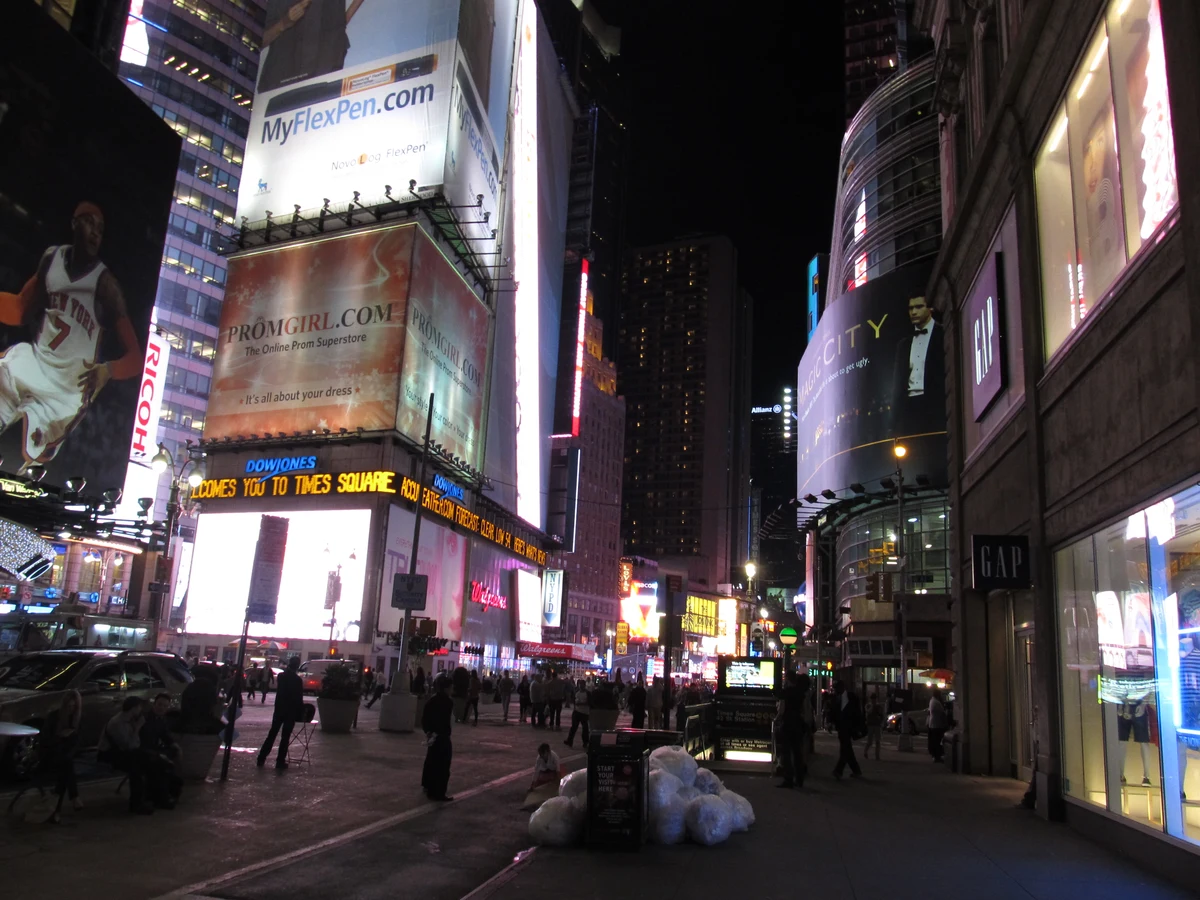
Encircling this busiest global intersection at Times Square—where Broadway, Seventh Avenue, and 42nd Street converge in Midtown Manhattan—lies an immensely rich culinary cultural space reflecting multicultural identities and the hurried pace of New York City. Investigating the district’s historical evolution from Longacre Square until its 1904 renaming following The New York Times’ arrival, dining cultures have perpetually marched alongside urbanization, entertainment industrialization, and global immigrant waves. Stepping into adjacent streets within the Theater District and along arterial routes, visitors do not merely immerse in brilliant digital billboard lighting or pedestrian flows exceeding hundreds of thousands daily; their senses are awakened by rising smoke, enticing aromas, and characteristic flavors defining traditional and modern New York gastronomy.
Renowned local flavors in this urban core are defined by historically iconic dishes bound to indigenous daily lives across generations. Mention must be made of the classic New York-style pizza, a culinary heritage dating to the late 19th century introduced by Italian bakers settling in Manhattan. These pizzas feature hand-tossed dough bases expertly spun in the air prior to baking in high-temperature brick ovens, yielding crispy charred crusts while interiors remain soft and chewy. Topped with fresh herb-infused tomato sauces and melting mozzarella, they are traditionally folded in half following authentic New York sidewalk customs. Walking alongside pizza in local culinary memories are hot salted beef sandwiches—pastrami or corned beef expertly seasoned, simmered for hours, sliced thick, and sandwiched between rye bread with spicy yellow mustard and dill pickles, forging rustic yet profound flavor harmonies.
Beyond veteran eateries tucked beneath skyscrapers, street food spaces around Times Square possess unique charms via mobile carts and food stalls stationed day and night across crowded sidewalks. Amidst freezing winter nights or sultry Manhattan summers, aromas of roasting chestnuts over hot coals, rich hot dogs boiled or grilled street-side with relish and sautéed onions, or soft pretzels dusted with coarse white salt fresh from ovens evoke nostalgic feelings. These convenient fast foods serve massive tourist volumes reaching 50 million annual visitors while fueling hundreds of thousands of workers, Broadway artists, and office employees rushing through underground subway stations.
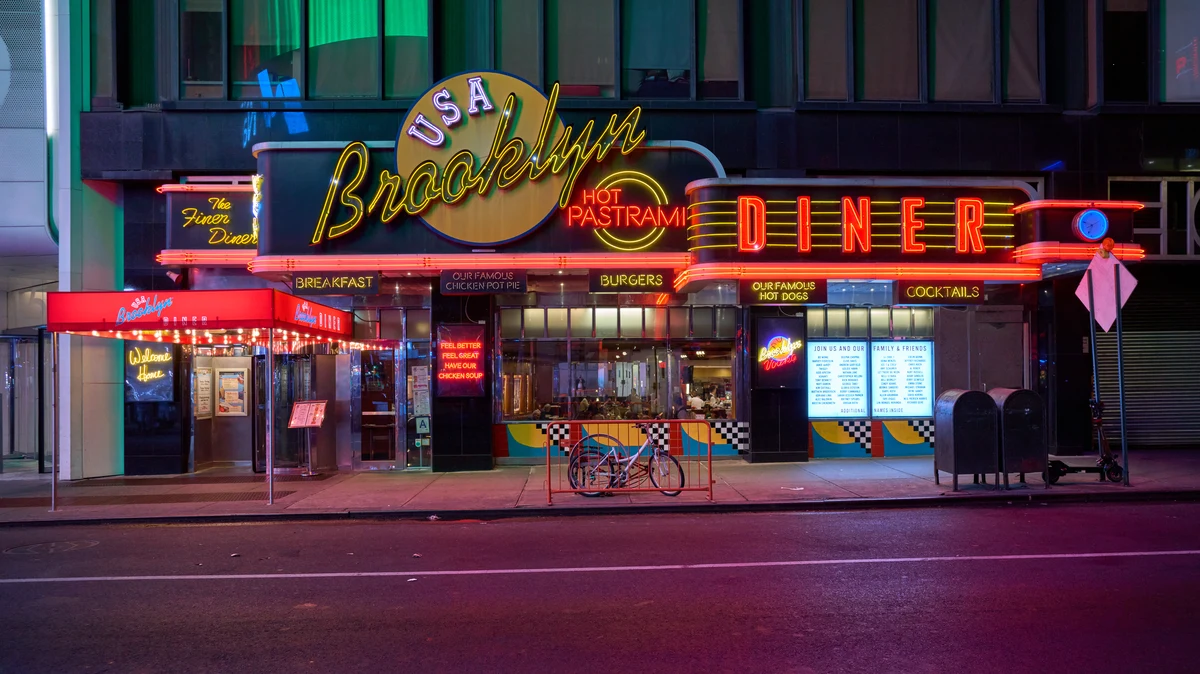
New Yorkers’ dining customs in this district mirror fast-paced, dynamic, and pragmatic urban lifestyles. Driven by time pressures and financial-entertainment hub fast tracks, local culinary cultures prioritize convenience without compromising quality. Visitors encounter suited businessmen or young artists folding hot pizza slices while reading digital boards on sidewalks, alongside global tourists mingling in crowds holding paper cups of rich roasted coffee. During late hours when Broadway theatrical performances conclude, 24-hour traditional diners become irreplaceable cultural rendezvous points. Classic powdered donuts, maple-syrup-drenched pancakes, or traditional milkshakes served in retro decors allow cultural divides to melt away over lively conversations extending until dawn.
Transcending street food or traditional bakeries, global cultural exchanges have transformed districts surrounding Times Square into miniature maps of world cuisine. Capitalizing on strategic transport and entertainment nexus positions, upscale restaurants and contemporary dining rooms cluster densely, serving complete culinary schools from East to West, spanning spicy Asian profiles to refined French and Italian fine dining arts. Numerous restaurants occupy upper skyscraper floors or feature expansive glass windows facing brilliant lighted intersections, granting diners multi-dimensional sensory experiences. Savoring dishes crafted by world-renowned chefs while gazing down upon bustling crowds and glowing giant LED screens lets diners absorb New York City’s beating pulse.
Culinary experiences near Times Square thus transcend biological refueling, functioning as cultural exploration journeys spanning space and time. From traditional hot dog carts carrying early-20th-century New York breath to peak fine-dining experiences inside modern Midtown Manhattan, every flavor, custom, and style enriches the epithet “Crossroads of the World.” The location preserves past core values, absorbs present diversity, and continues writing new chapters for global urban culinary cultures, leaving indelible impressions on international travelers.
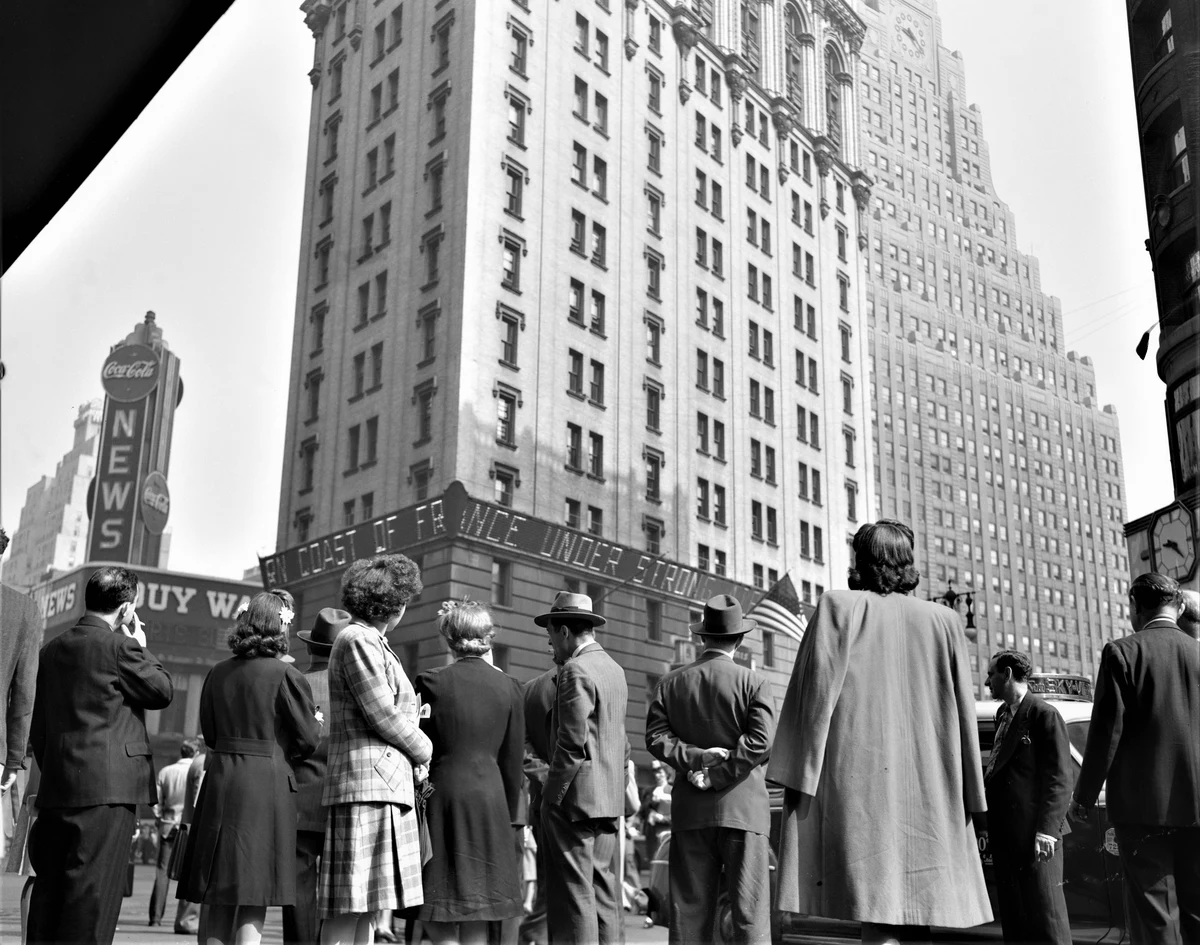
Practical perspective of architecture and distinctive landscapes at Times Square New York (Illustration 8)
Lauded as the “Crossroads of the World” or the “Heart of the Great White Way,” Times Square is not merely New York City’s towering icon, but one of the planet’s premier travel destinations, entertainment hubs, and busiest pedestrian junctions. To execute flawless explorations of this iconic space, equipping detailed practical guides from cultural researchers and international travel experts is essential. Geographically and historically, the square was formed at the junction of Broadway, Seventh Avenue, and 42nd Street in Midtown Manhattan, constituting a bowtie-shaped plaza spanning five blocks from 42nd Street to 47th Street, adjoining Duffy Square. The location welcomes a traffic flow of approximately 330,000 daily visitors, surging past 460,000 on peak days, turning every street corner, glass window, and sidewalk into a living stage of contemporary urban culture.
Determining ideal daily visitation times requires profound understanding of circadian rhythms in a city that never sleeps. During daytime, when natural sunlight bathes Manhattan skyscraper canyons, travelers stroll leisurely to approach attractions, visit bustling shopping centers, study architectural histories, or access box offices directly for world-class theatrical tickets. However, when night falls and twilight yields to electronic advertising boards and glowing giant LED screens, the location erupts with its most original and legendary energy. Dazzling light from hundreds of digital screens blanketing skyscrapers produces artificial daylight at night, reflecting across surging crowds, offering visceral visual and auditory experiences where day and night boundaries dissolve completely amidst music, cheers, and unceasing urban pulses.
Regarding optimal and convenient transport methods accessing Manhattan’s core, New York City public transit systems remain premier choices for locals and international tourists alike. The New York City Subway network provides arterial routes delivering passengers directly to central stations situated beneath the square. Specifically, the Times Square–42nd Street and 42nd Street–Port Authority Bus Terminal stations have maintained status for decades as the network’s busiest hubs, carrying over 200,000 daily commuters across complex multi-tiered tunnel networks. Utilizing the subway bypasses severe surface traffic jams while emerging right at the epicenter of excitement, stepping out of station exits directly into the brilliant color spectra of Broadway and Seventh Avenue.
Concerning cost structures and reference ticket pricing for activities, Times Square’s outdoor spaces remain entirely open to the public for strolling, photography, and atmospheric immersion without fees. Nevertheless, to elevate experiential depths, visitors can invest in specialized paid services. Exemplified by the One Times Square tower redevelopment project backed by a staggering $500 million investment completed in early 2026, the site officially opened new observation decks, integrated tower museums, and modernized subway entrances offering panoramic views from above over the legendary intersection. Furthermore, attending performances at 41 professional theaters across the Broadway Theatre system features flexible pricing reflecting seating tiers, show names, actor fame, and booking seasons, with discounted same-day tickets available at dedicated booths.
Crowded spaces with peak pedestrian densities at Times Square demand strict adherence to cultural codes of conduct to ensure personal safety and respect for surrounding communities. Securing personal belongings, wallets, and mobile phones against pickpocketing amidst dense crowds is paramount. Approaching street performers or costumed character entertainers requires polite, friendly attitudes and prior agreement regarding reasonable tips for photo sessions, avoiding disputes. An unwritten pedestrian rule is avoiding sudden stops amidst fast-moving sidewalk flows; instead, gently step into alcoves, near walls, or public seating benches in Duffy Square when adjusting cameras, checking maps, or sightseeing, maintaining general traffic flows and avoiding obstruction for rushing crowds.
Practical tips from seasoned adventurers serve as golden keys ensuring smooth, memorable journeys. For theatrical experiences, pre-booking tickets online via official channels secures preferred seats at reasonable rates over last-minute box office lines. For quiet contemplations, capturing nostalgic frames and architectural sightseeing without obstruction, early mornings (6:00 AM to 8:00 AM) offer rare peaceful windows before busy daily rhythms begin. Finally, maintain open mindsets and refreshed spirits to immerse in diverse cultures, boundless energies, and unceasing rhythms of American urban civilization.
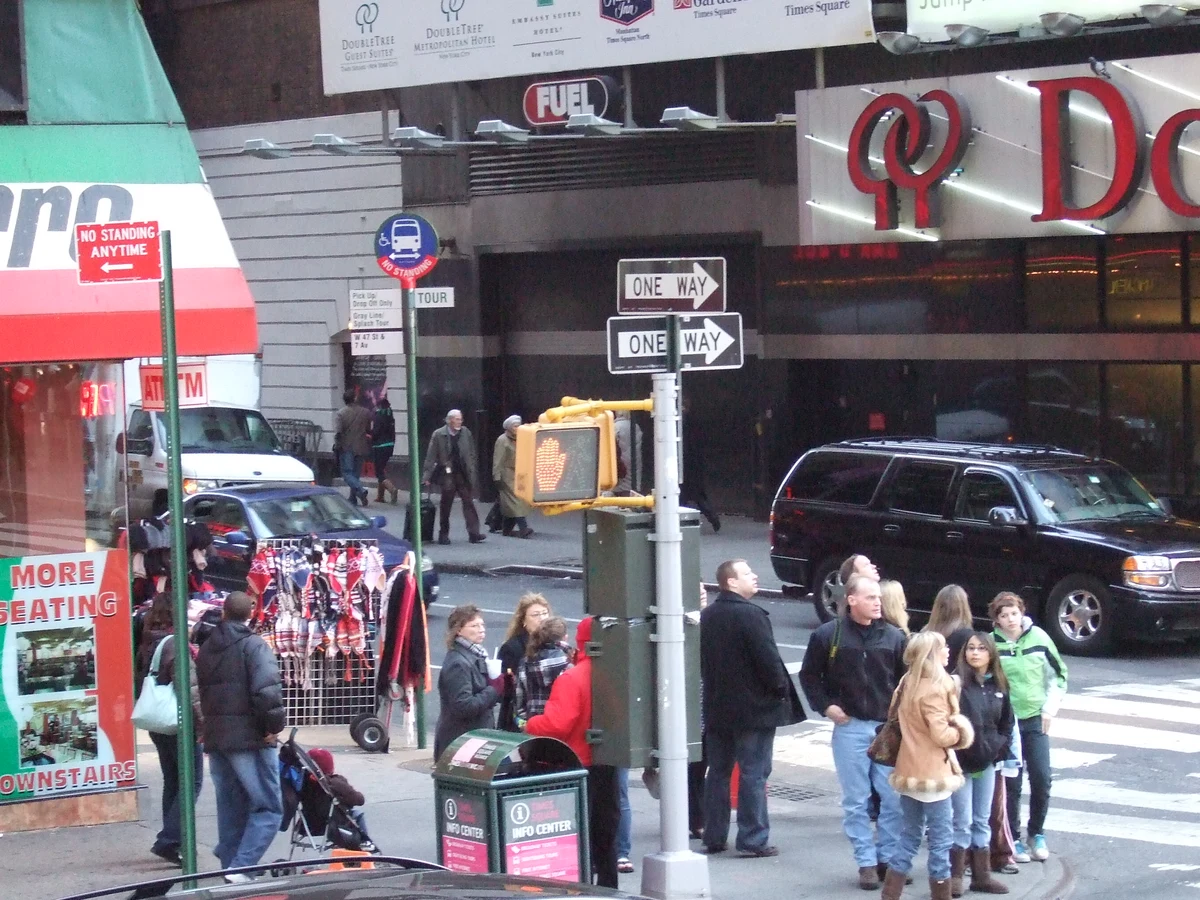
Surging crowds strolling between iconic Broadway and Seventh Avenue in Manhattan
The One Times Square building where the legendary New Year’s Eve Countdown crystal ball drop ritual takes place
Outdoor theatrical performance spaces and world-renowned Broadway dramatic theater clusters
Panoramic views of sleepless modern urban life at the planet’s most vibrant central intersection
To experience this journey seamlessly with a local guide, you can refer to the East-West US Interconnected Tour 11D10N with its pre-arranged itinerary.