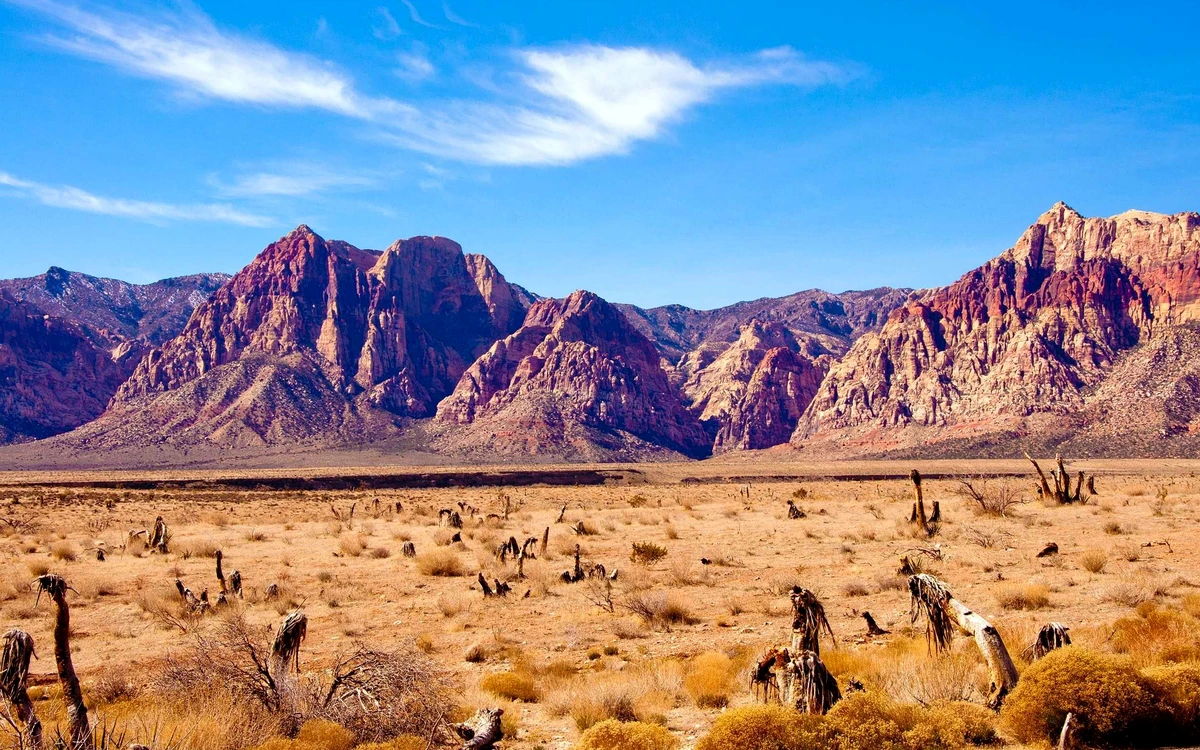
Nestled at the heart of the arid, sun-scorched Mojave Desert in the American West, the story of the entertainment capital Las Vegas begins with a captivating geographical paradox. In 1829, a Mexican scout named Rafael Rivera—traveling with Antonio Armijo’s trading expedition—chanced upon a lush valley nourished by precious artesian springs. Amid endless expanses of parched stone and gravel, this verdant oasis appeared like a miraculous mirage, inspiring the travelers to name the land Las Vegas—a serene Spanish phrase meaning “The Meadows.” In those untamed days, the oasis served as a life-saving waystation along the Old Spanish Trail, where gold prospectors and fur traders sought fresh water before embarking on grueling overland treks.
The city’s urban footprint began to take concrete shape on May 15, 1905, when the vital railroad linking San Pedro, Los Angeles, and Salt Lake held an auction of 110 acres surrounding its depot, laying the foundation for a fledgling railroad town. A watershed transformation erupted in 1931—a pivotal year in which the state of Nevada legalized commercial gambling to revive an economy battered by the Great Depression, coinciding with the start of construction on the monumental Hoover Dam (then called Boulder Dam). Tens of thousands of engineers, miners, and construction workers poured into Black Canyon, igniting an insatiable demand for leisure and diversion that turned dusty Fremont Street into an all-night hotspot and sowed the earliest seeds of a future casino empire.
Following World War II, illicit capital from organized crime syndicates triggered the most dramatic turning point in the city’s chronicles, ushering in an era of underworld dominance spanning more than three decades. The central figure who shaped the profile of the Las Vegas Strip was notorious mobster Benjamin “Bugsy” Siegel, backed by the covert financing of crime boss Meyer Lansky. On December 26, 1946, the lavish Flamingo Hotel & Casino officially opened its doors, shedding the dusty Wild West aesthetic entirely in favor of the glamorous, velvet-draped allure of a tropical Miami resort. Although Bugsy Siegel paid with his life in a bloody internal syndicate purge just six months after opening night, his blueprint—blending upscale resort hospitality, dazzling neon, and top-tier showroom entertainment—became the golden template for legendary complexes springing up along Highway 91.
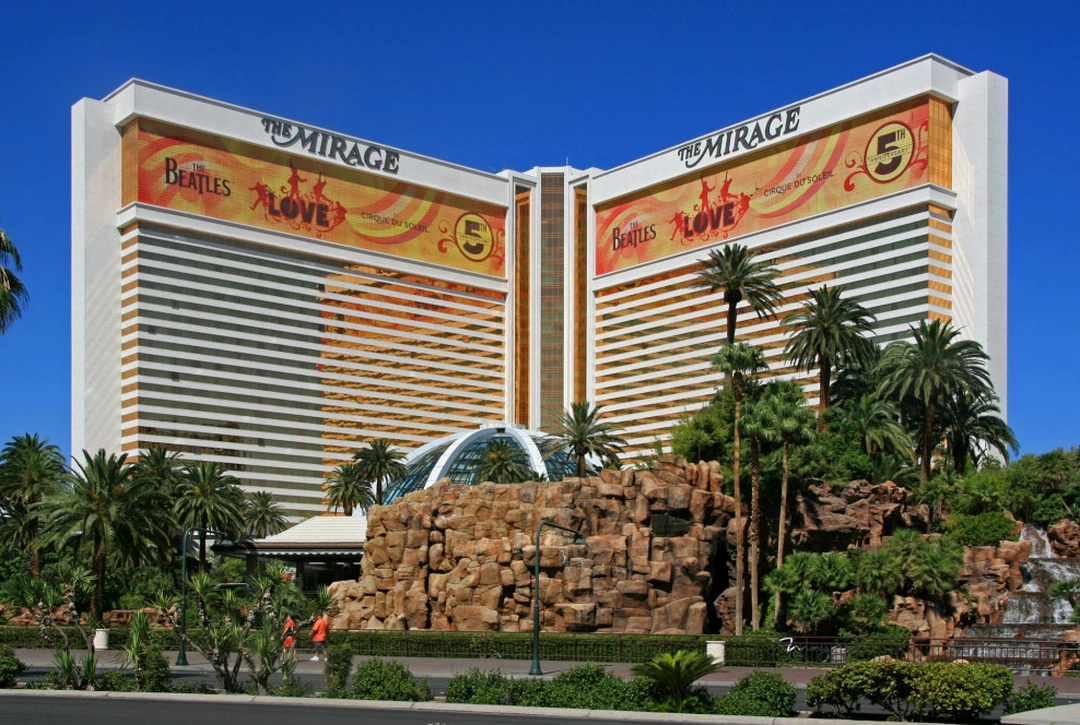
As underworld control gradually waned under the enforcement of the RICO Act and the influx of mainstream institutional capital, Las Vegas entered a revolutionary Corporate Renaissance in 1989. Driven by the strategic vision of real estate mogul Steve Wynn, the debut of The Mirage—built at a record cost exceeding $600 million—completely redefined the concept of a casino. No longer confined to dimly lit, smoke-filled gaming halls, Las Vegas transformed into a paradise of integrated mega-resorts, where an artificial volcano erupted beside the boulevard, Michelin-starred restaurants showcased celebrated chefs, and billion-dollar theatrical productions gradually displaced pure gambling as the central draw.
The relentless current of history has carried the Capital of Lights into an extraordinary era of experiential architecture, crowned by the iconic arrival of the colossal MSG Sphere LED orb in 2023. From a desolate 19th-century stopover in a grassy desert valley, sculpted by eccentric visionaries, powerhouse corporations, and the pinnacle of contemporary visual technology, the Strip has risen to become a living open-air museum—a testament to humanity’s drive to conquer nature and push the boundless frontiers of entertainment.
Seen from high-altitude aerial imagery, the Las Vegas Strip glows like a fiery streak of phosphorescence slicing through the nocturnal stillness of the Mojave Desert, seated squarely in the center of the Las Vegas Valley basin at an elevation of 610 meters above sea level. Through the lens of geographic Feng Shui, this natural depression possesses a remarkable “energy-gathering, wind-sheltering” configuration, ringed by towering walls of stone: the rugged Spring Mountains stand guard to the west with Mount Charleston soaring above 3,600 meters as a shield against desert sandstorms, while the deep Sheep Range stretches across the north like a majestic Azure Dragon flank. This sunken basin—once fed by the ancient artesian springs that gave rise to the Spanish name “Las Vegas,” or “The Meadows”—has today become a grand nexus drawing streams of capital and travelers from every corner of the globe.
The rise and evolution of the 4.2-mile (approximately 6.8-kilometer) Strip is a masterstroke of pragmatic geoeconomic and geopolitical planning unmatched anywhere in the United States. Strictly in terms of municipal boundaries, this glittering stretch does not actually lie within the jurisdiction of the City of Las Vegas as most assume, but sits entirely within the unincorporated towns of Paradise and Winchester under the direct governance of Clark County. A historic mid-20th-century boundary maneuver cleverly carved these mega-casino complexes out from under the strict taxation and regulatory apparatus of the municipal government, creating a privileged fiscal haven with ultra-favorable tax rates that ignited an unprecedented concentration of capital and construction.
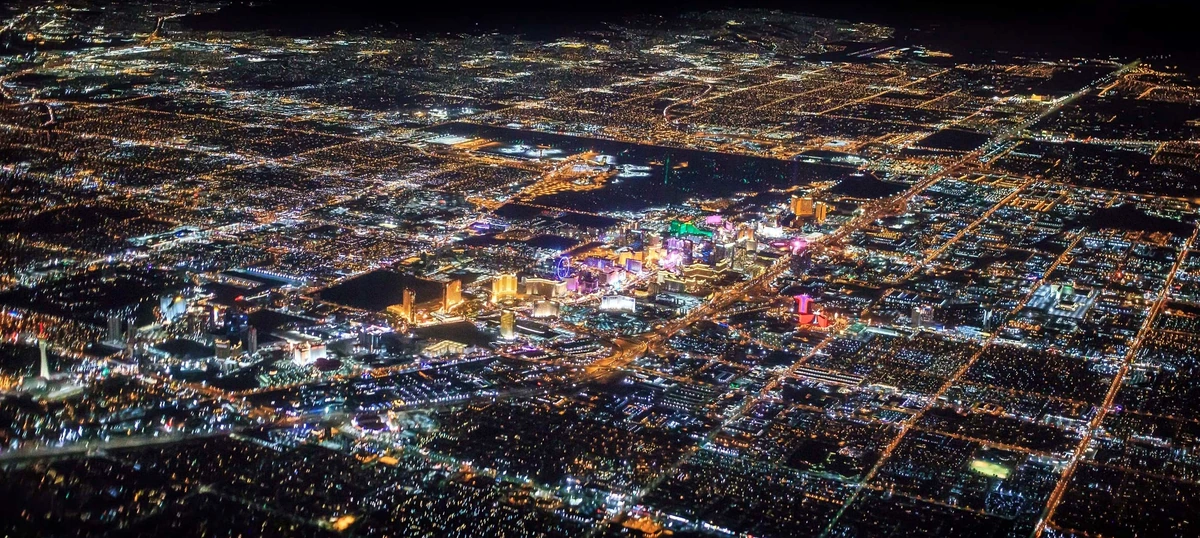
Beneath the opulent glamour displayed above ground, the Las Vegas Strip operates like an astonishingly precise eco-engineering machine designed to overcome the extremes of a hyper-arid semi-desert climate. The linchpin sustaining this entire valley of light is a world-class closed-loop hydrological network capable of capturing, treating, and recycling up to 90% of indoor wastewater through sophisticated subterranean conduits. Every drop of water used across tens of thousands of hotel bathtubs, faucets, and central cooling towers along the boulevard is channeled to state-of-the-art treatment plants and purified to rigorous standards before returning to Lake Mead via the Las Vegas Wash, preserving a sustainable water cycle for the Colorado River basin.
The signature landscape of this 4.2-mile corridor is an enchanting interplay between parched desert terrain and the audacious spectacle of monumental water architecture. Vast artificial lakes holding hundreds of thousands of cubic meters of water, high-pressure fountains choreographing mechanical ballets beneath a blazing sky, and lush oases of ornamental palms interwoven with steel, glass, and concrete create a surreal mirage in stark contrast to the raw rust-red cliffs of Red Rock Canyon in the distance. Urban planning here deliberately dissolves the traveler’s sense of space and time; every square meter of sidewalk, pedestrian overpass, and open-air plaza is microclimatically engineered to guide footsteps effortlessly into an uninterrupted current of commercial energy that never rests.
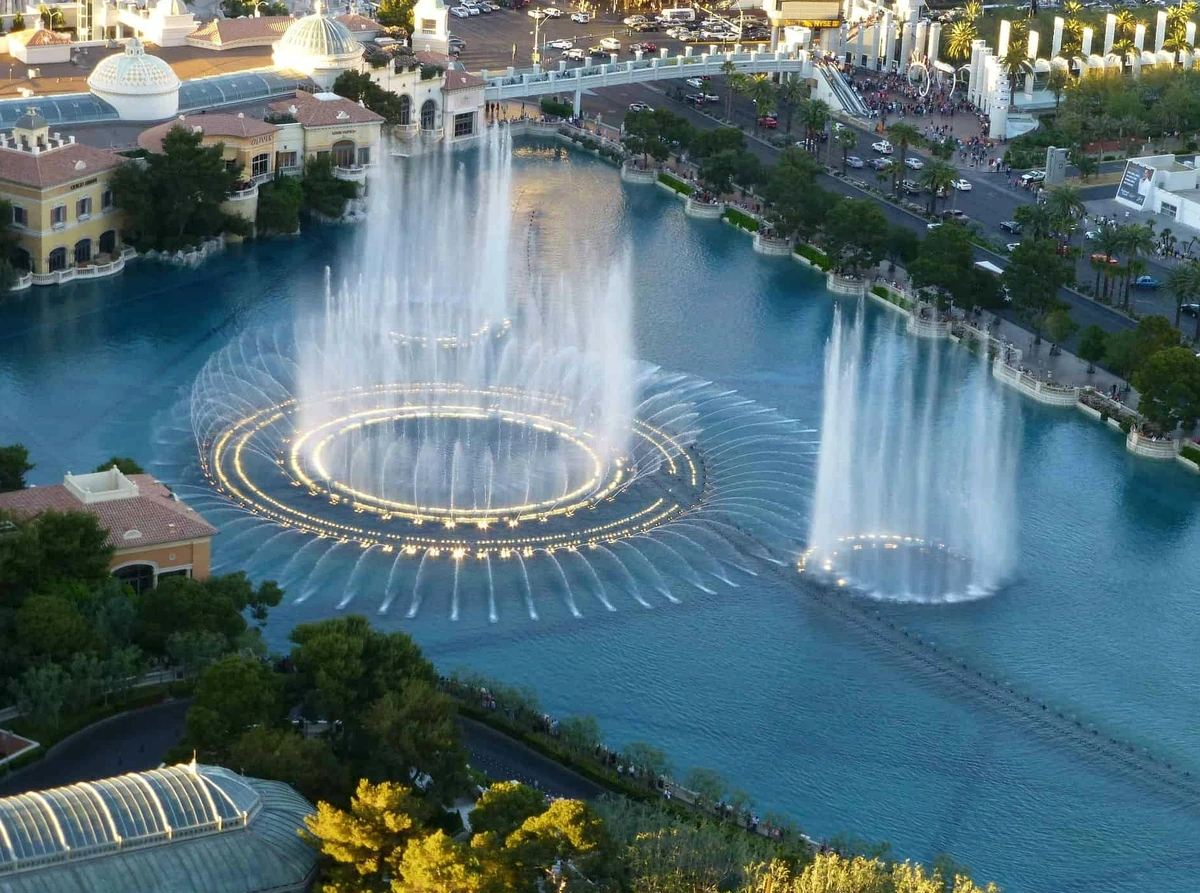
Set amid the barren expanse of the Mojave Desert valley, the architectural ensemble of Las Vegas rises as an unparalleled feat of mechanics and optics, where the line between reality and illusion blurs behind monumental structures. Far beyond a flashy display of concrete and steel, the spatial genius here lies in a breathtaking dialogue between precision hydraulic craftsmanship and cutting-edge semiconductor technology. Every stroll through each entertainment district reveals structures engineered to defy physical conventions, forging the identity of the world’s most famous sleepless resort city.
The enduring icon of interactive harmony among water, light, and music is the Fountains of Bellagio, gracing the forecourt of the resort inspired by the elegance of Lake Como. Brought to life by the master engineers of WET Design, this sprawling artificial lake spanning tens of thousands of square meters transforms into the planet’s most celebrated aquatic stage. Beneath the surface, a sophisticated mechanical network orchestrates 1,214 high-pressure nozzles—including gracefully pivoting Oarsman jets and compressed-air Super Shooters capable of launching columns of water skyward to the height of a 24-story building. The pulse of these aquatic choreographies is synchronized seamlessly with 4,792 specialized lighting fixtures, casting shimmering spectra across the night waters and turning every performance into a grand union of hydraulic engineering and visual artistry.
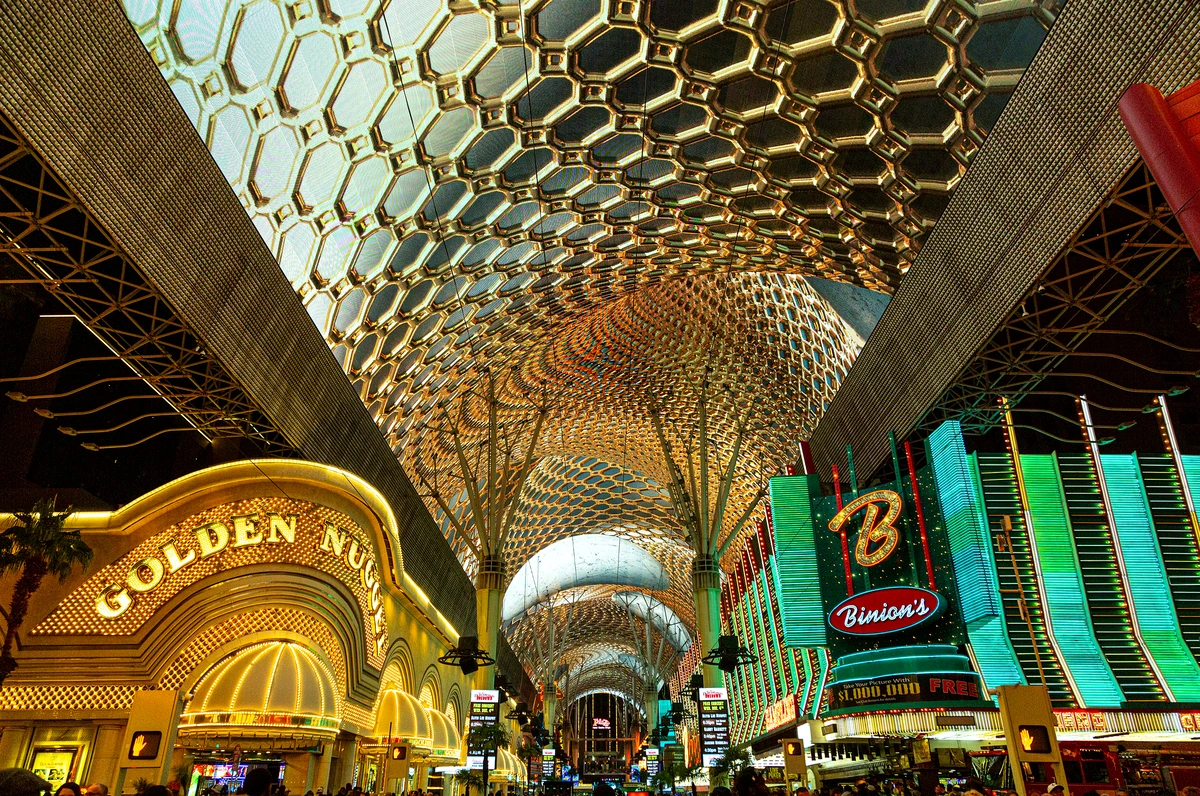
Tracing history back to the historic downtown district, the imprint of the lighting revolution is etched vividly at the Fremont Street Experience, the landmark that revitalized the historic heart of the Nevada valley. The showstopping centerpiece of this pedestrian promenade is the Viva Vision canopy—stretching 1,500 feet (more than 450 meters) long and suspended ninety feet above the ground. This massive barrel-vaulted structure integrates a dense matrix of 49.3 million advanced LEDs, creating an immense digital ceiling with amplified brightness and the ability to render millions of vivid hues. Beneath this seemingly endless optical canopy, millions of lights work in concert with a 550,000-watt surround-sound system, enveloping spectators in a tunnel of light that immerses them in nostalgia infused with futuristic energy.
Surpassing every architectural scale humanity had previously achieved, the masterpiece MSG Sphere rises dramatically against the Strip skyline like a monolithic orb from the future. Standing as the largest spherical structure ever built on Earth—reaching 366 feet high and 516 feet wide—it forms a pure geometric volume that challenges conventional space-frame engineering. Inside this colossal dome lies an infinite experiential realm dominated by the world’s highest-resolution 16K interior LED screen, curving seamlessly across 160,000 square feet of surface area. This wrap-around display erases all perception of physical boundaries, opening a three-dimensional visual universe that encompasses the entire field of vision of every guest.
Completing the revolutionary sensory environment inside MSG Sphere is today’s most advanced spatial beamforming audio system, engineered to serve an auditorium of up to 17,600 seats. Unlike conventional concert speaker arrays, beamforming wave-steering technology allows thousands of micro-drivers to transmit targeted layers of sound directly to individual seating zones with crystal clarity and pinpoint accuracy, free of attenuation or echo. The synergy of this immense hemisphere, its 16K digital velvet canvas, and a finely sculpted acoustic field elevates Sphere far beyond the definition of a traditional theater—making it an architectural icon for an unprecedented era of multisensory entertainment.
When night descends upon Clark Valley, the Las Vegas Strip does not merely transition according to the natural rhythm of sun and moon; it undergoes an ontological metamorphosis governed by precision visual engineering. Here, urban darkness is banished entirely by a curated sensory environment where the boundaries between day and night, physical space and dreamscape, dissolve beneath millions of lumens. Along more than six kilometers of boulevard in the heart of the Mojave Desert, architecture ceases to be static concrete and transforms into living performance art. The nocturnal symphony of Las Vegas is woven from classic mechanical motion and cutting-edge optical technology, turning the entire corridor into an open-air visual stage on a scale never before seen in human history.
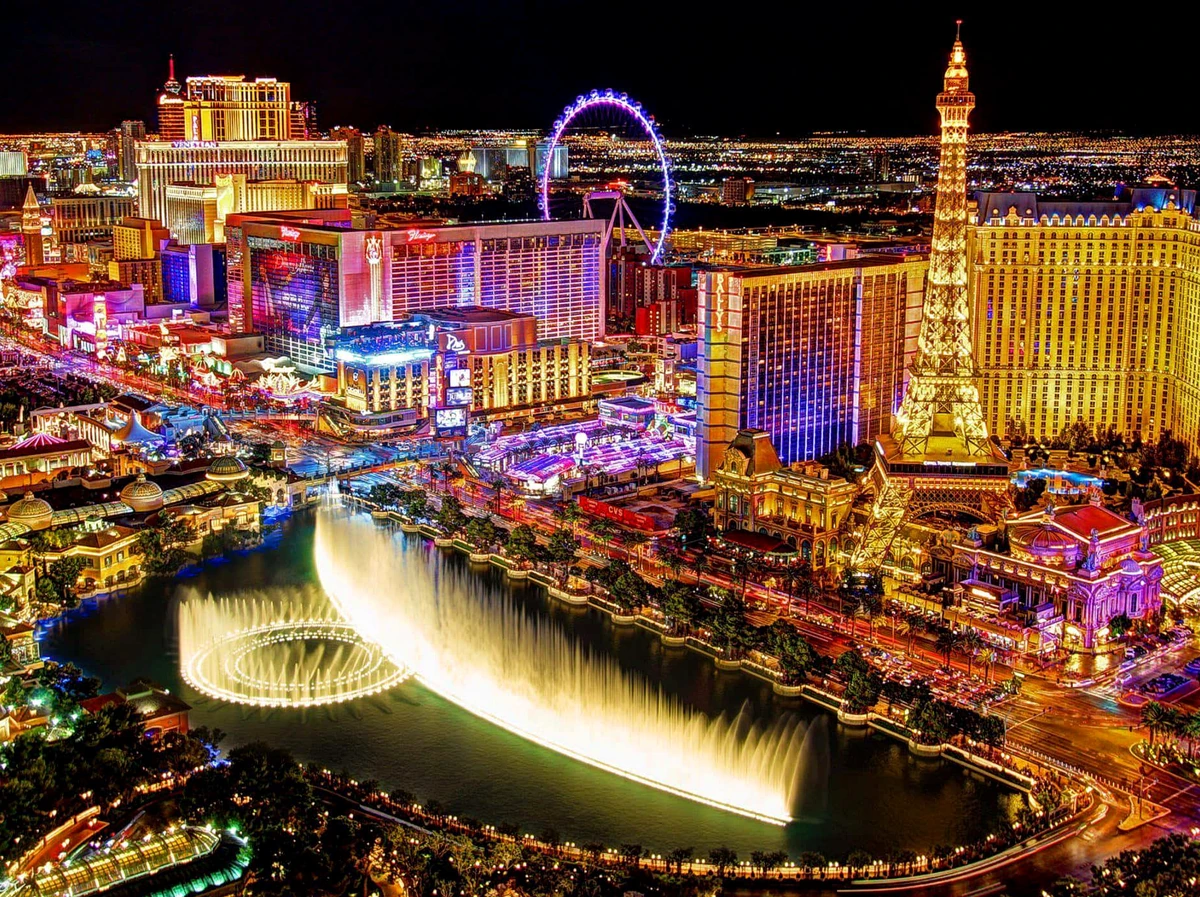
Reigning at the focal point of this realm is the Fountains of Bellagio, a hydraulic masterpiece serving as a Mediterranean-style public square along the bustling boulevard. Spanning a 3.2-hectare man-made lake holding over eighty-three million liters of water, the landmark recreates the spirit of an Italian “piazza,” where crowds of travelers naturally gather to share moments of pure aesthetic wonder. An intricate network of 1,214 pneumatic nozzles—ranging from multi-directional Oarsman jets to massive Extreme Shooters—propels columns of water up to 140 meters into the desert sky. As darkness falls, more than 4,500 lights blaze in harmony with classic recordings from Frank Sinatra to Andrea Bocelli. Desert water transforms into graceful ballet dancers, swirling and erupting through ethereal mist to create a grand communal ritual amid the surrounding desert stillness.
If Lake Bellagio represents the zenith of 20th-century mechanical water choreography, MSG Sphere ushers in a bold new epoch for light art and contemporary media architecture. Standing 112 meters tall and 157 meters wide, the colossal sphere completely redefines the eastern skyline of the Strip. Its entire exterior surface—known as the Exosphere—is a 54,000-square-meter digital canvas composed of 1.2 million LED pucks, each housing forty-eight individual diodes capable of displaying billions of colors at ultra-fast refresh rates. Rather than merely screening visuals, the structure continuously transforms itself: one moment hovering like a solitary moon over the desert, the next morphing into a giant, mesmerizing eyeball gazing out over humanity, or dissolving into a colossal digital dewdrop reflecting the void. The surrounding urban space is drawn into a perpetual kinetic visual field, leaving onlookers awestruck by the seamless fusion of architecture and illusion.
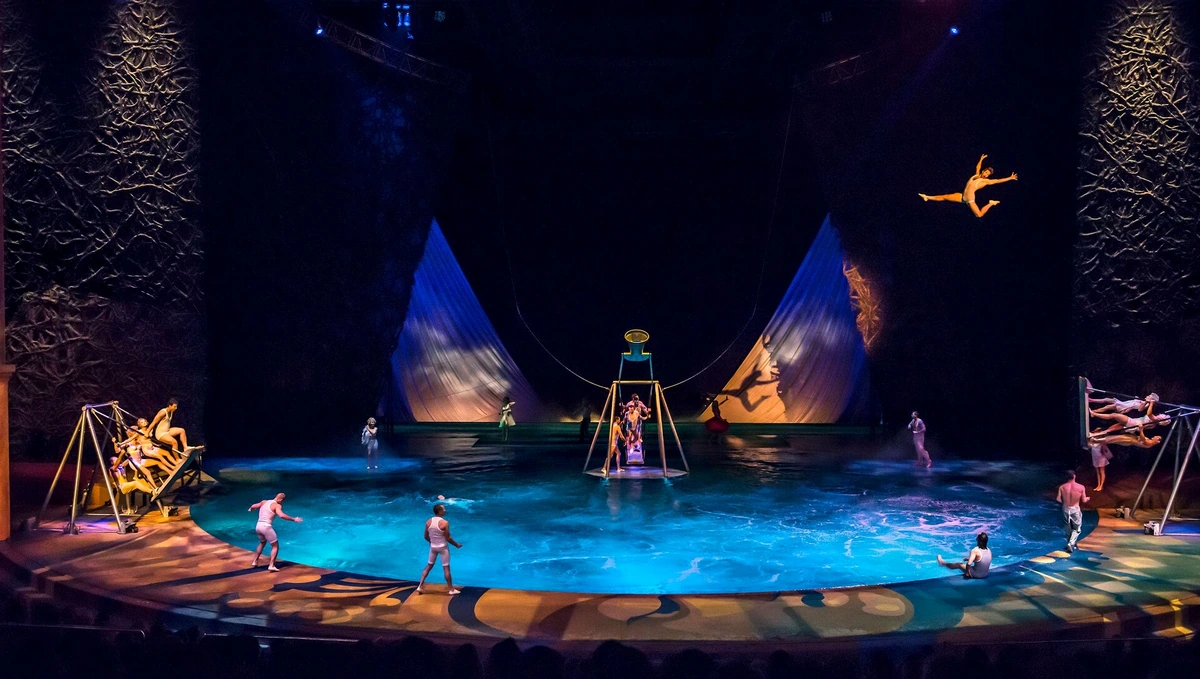
The Strip’s nightlife extends far beyond outdoor spectacles into immersive sanctuaries tucked inside its entertainment temples. There, iconic resident productions reign supreme—such as Cirque du Soleil’s aquatic masterpiece “O,” staged in a 5.7-million-liter pool with a shapeshifting hydraulic stage floor—alongside lavish late-night tasting menus where celebrated chefs serve charcoal-seared Wagyu beef paired with decades-old vintages. Violet neon glows, crystal glasses clink in sky-high rooftop lounges overlooking seas of visitors, and driving electronic beats pulse from mega-clubs to form a complete sensory ecosystem. In Las Vegas, night is never a time for slumber, but an elaborately crafted reality designed to awaken every human sense.
Las Vegas’s culinary history traces a remarkable evolutionary arc, rising from humble late-night fare meant to fuel all-night gamblers to its stature today as a global gastronomic capital. The roots of flavor memory in this desert valley date back to 1959 at the Golden Gate Hotel & Casino, when proprietor Italo Ghelfi first introduced the shrimp cocktail at a legendary price of just 50 cents. Served in a tulip glass brimming with chilled ocean shrimp smothered in a zesty cocktail sauce of ketchup, horseradish, lemon juice, and a dash of Tabasco, this humble appetizer became an enduring icon for decades. More than a clever lure to keep players near the gaming tables, it established the core philosophy of Las Vegas dining: unbridled generosity in the middle of an arid desert.
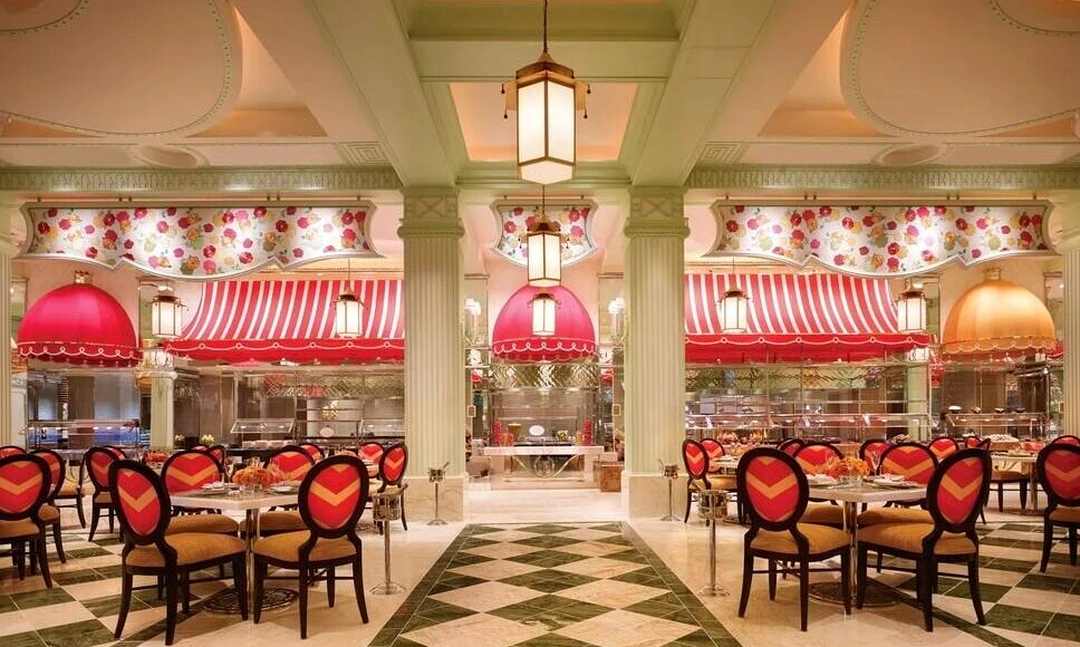
Alongside the shrimp cocktail, all-you-can-eat buffet culture formed the second pillar of the Strip’s culinary identity. Originating from Herb McDonald’s midnight cold-cut spread at the El Rancho Vegas in the 1940s to keep gamblers on property, the Strip buffet evolved into the most extravagant feasts on Earth. Inside dazzling resort complexes, dining rooms are designed like living temples of art spanning thousands of square meters. Diners embark on a grand gastronomic voyage featuring hundreds of curated delicacies: succulent Alaskan king crab legs drizzled with clarified butter, prime rib slow-roasted over fragrant oak smoke, crispy roast duck straight from traditional charcoal ovens, steaming baskets of handmade dim sum, and dozens of intricate pastries evoking French royal patisserie.
As integrated resorts matured into global icons, the Las Vegas Strip achieved a historic transformation by attracting one of the highest concentrations of Michelin-starred chefs in the world. Fine dining here is led by culinary titans such as Joël Robuchon’s atelier and Guy Savoy’s namesake restaurant. Classical French haute cuisine—exemplified by rare black truffle and artichoke soup—merges seamlessly with contemporary global fusion, pairing disciplined Western technique with prime ingredients from across the Asia-Pacific. Marbled Japanese A5 Wagyu beef, ocean-fresh bluefin tuna, and bright notes of yuzu citrus or artisanal soy sauce are reimagined with culinary artistry, turning every dish into a one-of-a-kind sensory composition.
Dining on the Strip therefore transcends mere sustenance to become a complete multisensory performance art. Guests can gaze out at the stirring aquatic ballet of the Fountains of Bellagio while savoring rare vintages from cellars housing tens of thousands of bottles under the guidance of master sommeliers. From the nostalgic shrimp cocktail in a heritage downtown corner to coveted tasting tables tucked behind discreet resort doors, the culinary tapestry of the Las Vegas Strip remains an exuberant ode to lavish hospitality and humanity’s pursuit of gastronomic perfection.
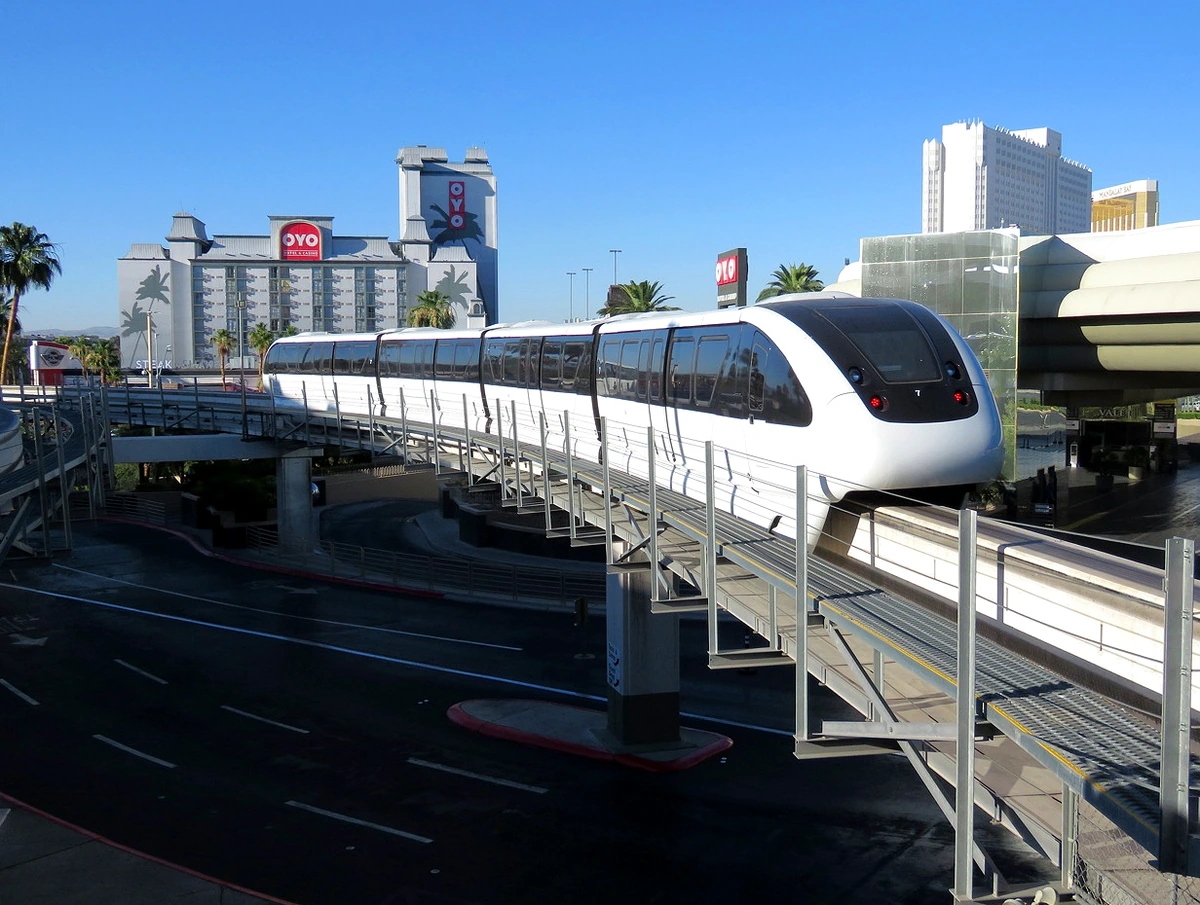
To conquer the dazzling, nearly seven-kilometer entertainment corridor in the heart of Clark Valley, mastering local transit navigation is the key to a relaxed and rewarding visit. Along the main spine of the Strip—where vehicular traffic routinely bogs down on weekend evenings—the approximately 6.3-kilometer elevated Las Vegas Monorail running along the east side from SAHARA Las Vegas to MGM Grand offers the smartest solution. Connecting colossal resort complexes in just a few minutes, it spares travelers hours of tiring walks under the dry Mojave sun. However, if you wish to journey north back in time to explore historic Fremont Street in Downtown Las Vegas—birthplace of the city’s very first neon casinos—hailing a rideshare vehicle is far more flexible, thanks to well-organized, dedicated pickup and drop-off zones at every hotel entrance.
When it comes to the modern architectural marvel MSG Sphere, experiencing the 16K interior visual realm alongside acclaimed director Darren Aronofsky’s multisensory film Postcard from Earth remains in exceptionally high demand. With haptic-equipped seating and complex beamforming acoustics, securing tickets online weeks—or even months—in advance is essential if you want prime mid-tier seats with an unobstructed panoramic view. Walking up to the box office right before showtime is virtually impossible on peak days, especially during prime evening slots when the Exosphere exterior illuminates the night sky.
One of the most rewarding visual secrets when strolling past the Strip’s classic landmarks is timing your visit to catch nature’s golden hour. Just before the sun dips behind the rugged peaks of the Spring Mountains, fiery orange and violet twilight washes across Bellagio’s 3.2-hectare artificial lake. Watching the Fountains of Bellagio choreograph water and light during this window delivers a far more dramatic visual effect than pitch-black night, as the fine mist simultaneously catches the glowing sunset and thousands of high-powered spotlights flickering to life.
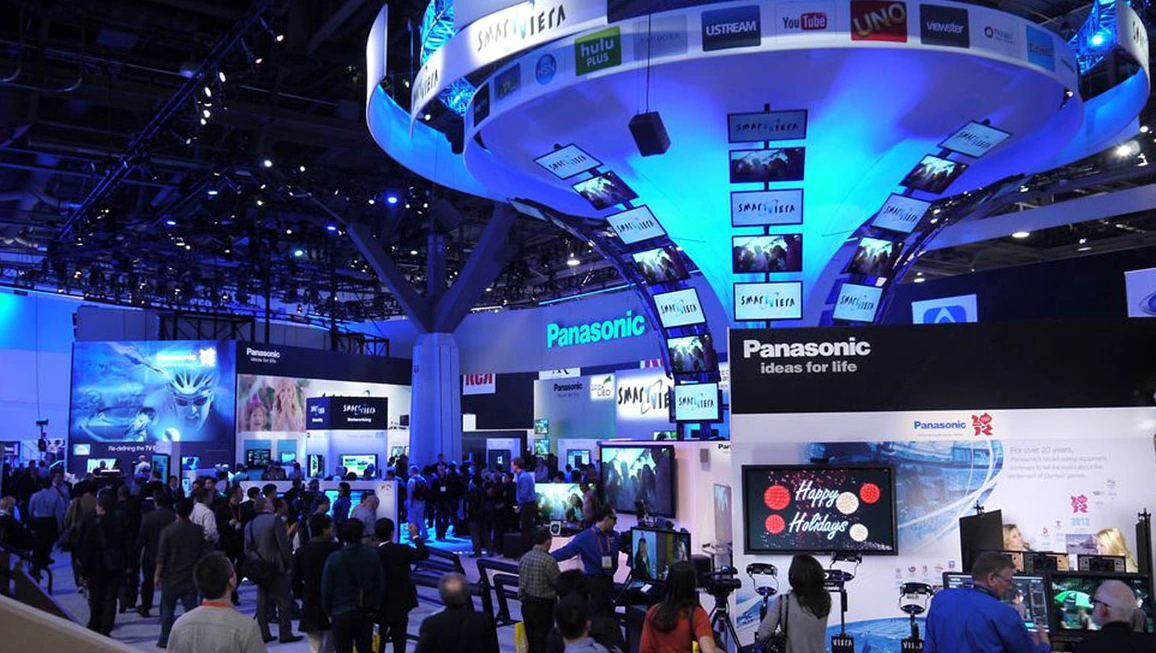
Alongside timing your sightseeing, planning your travel dates to Nevada requires careful attention to the city’s annual calendar to protect your budget. Be sure to check major convention schedules and avoid weeks dominated by massive global trade shows like the Consumer Electronics Show (CES). During these periods, tens of thousands of tech executives and exhibitors pack convention halls, causing hotel rates along the Strip to surge by up to 500% over standard nights while fine-dining reservations become nearly impossible to secure. At the same time, local etiquette expects travelers to observe a minimum 20% tipping standard for sit-down dining, bellhop luggage assistance, and private rides—a foundational custom reflecting respect for hospitality workers across the United States.
Blending smart budget planning with insider knowledge of iconic landmarks and respect for local customs will turn any trip to the Capital of Lights into an unforgettable, elevated experience. To savor these wonders effortlessly without worrying about complex logistics, joining a professionally curated all-inclusive USA East – West Coast tour offers the ideal way to experience the finest highlights of the New World.