Welcome, dear travelers and spirits eager to discover timeless beauty, to the radiant heart of Brussels – the Grand-Place, an architectural masterpiece and historical witness honored by UNESCO as a World Heritage Site. As a leading international travel chronicler and cultural historian, I am delighted to guide you on a journey back through time, peeling back the historical layers and origins that shaped this one-of-a-kind splendor.
The story of the Grand-Place does not begin with magnificent buildings or gleaming gold-leaf details as we see today, but with a muddy open-air market along the banks of the Senne River (in Dutch, *Zenne*) around the 11th–12th centuries. This spot, originally called Nedermerckt, or “Lower Market,” was a bustling commercial hub where merchants and farmers gathered to trade goods. Gradually, cobblestone lanes took shape and timber houses rose, turning the simple market into a square of foremost economic and social significance in young Brussels.
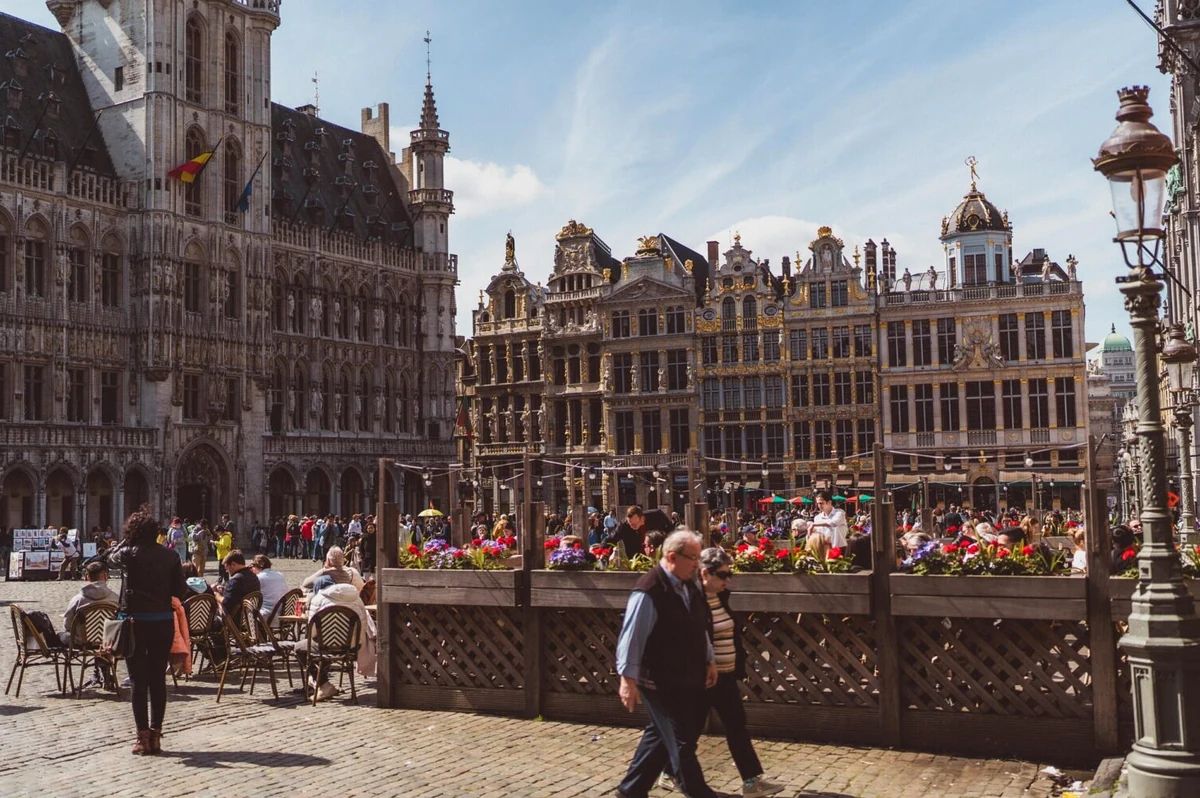
Entering the 15th century, as the Duke of Burgundy, Philip the Good, firmly established his rule in Brussels, the Grand-Place began taking on a new appearance reflecting the city’s authority and prosperity. This era witnessed the birth of one of its greatest iconic landmarks: Brussels Town Hall (Hôtel de Ville). Begun in 1402 and completed in 1455, the Town Hall was not merely an administrative seat but an architectural statement, symbolizing the civic autonomy of the people of Brussels as a counterweight to feudal power. With its intricate Brabantine Gothic style—especially its belfry spire soaring 96 meters into the sky, crowned by a 5-meter gilded bronze statue of Saint Michael, the patron saint of Brussels—the Town Hall became an unmistakable focal point. Interestingly, if you look closely, you will notice its unique asymmetrical design, a testament to its prolonged construction history and shifting visions among architects across different phases.
Alongside the Town Hall, the King’s House (Maison du Roi), also known as Broodhuis (“Bread House”) in Dutch, also began to be built, though its current form is the result of later reconstruction. The square gradually became an enclosed space framed by wooden guildhalls of trade and craft associations, creating a vivid picture of economic and social life at the time.
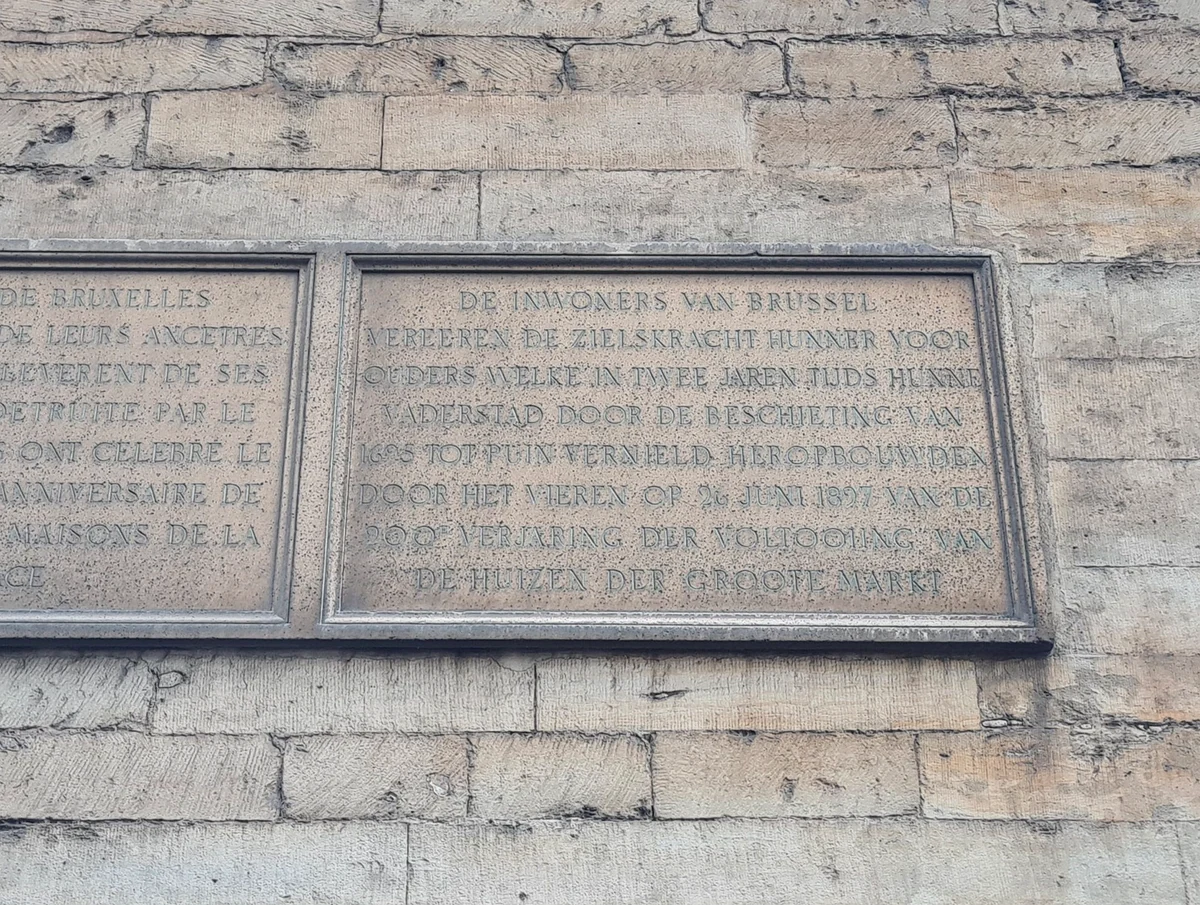
However, that beauty and prosperity soon faced one of history’s most devastating events. From August 13 to 15, 1695, French forces under the command of Marshal Villeroy subjected Brussels to a horrific bombardment. This fierce attack turned the Grand-Place into a sea of flames, burning almost all the wooden buildings around the square completely to the ground. Only the resilient Town Hall and the King’s House miraculously escaped destruction, standing tall like silent witnesses amid the ruins.
Yet from the ashes, a miracle was forged. Immediately after the disaster, Brussels’s wealthy guilds (gildes/corporations) displayed extraordinary solidarity and resilience. They promptly launched the reconstruction effort, not only restoring the square but elevating it. In record time, just a few years after 1696, the Grand-Place revived with a brand-new look. The guildhalls were rebuilt in stone, harmoniously blending opulent Baroque and late Gothic styles to create a unified, lavish, and exquisite architectural ensemble that we admire today. Every facade is a work of art, adorned with mythological statues, gleaming gilded reliefs, and intricately carved pillars that tell the story of each guild’s craft and prosperity.
Precisely because of this turbulent historical journey—from a muddy market to a seat of power, from ashes to an architectural masterpiece—the Grand-Place was recognized by UNESCO as a World Heritage Site in 1998. This is not only recognition of its unique architectural value but also a tribute to the indomitable spirit of the people of Brussels, who turned a disaster into an opportunity to create one of Europe’s finest squares, a priceless cultural heritage of humanity.
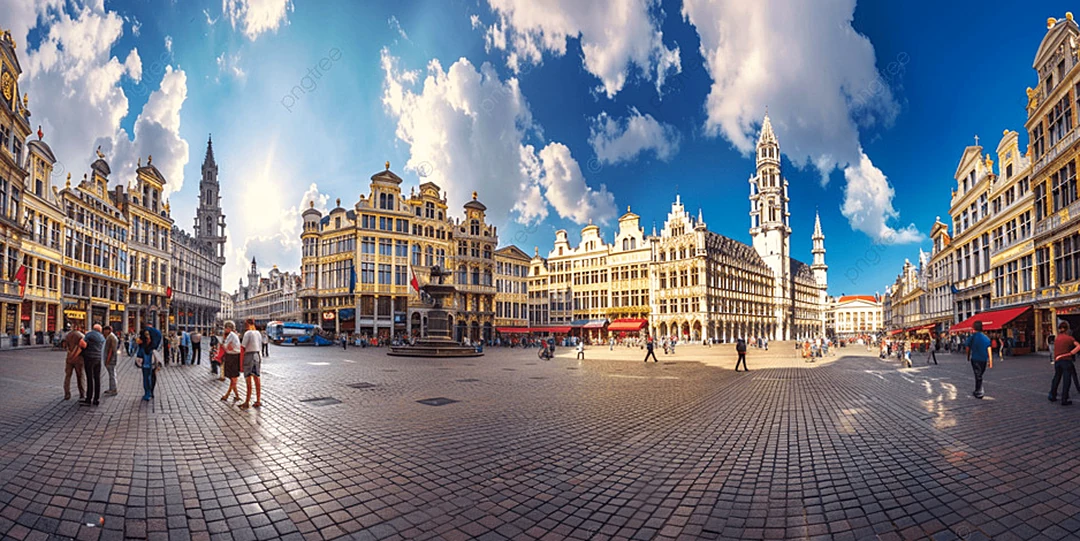
Stepping onto the Grand-Place, visitors do more than admire a historic monument; they enter a giant architectural museum where every flagstone and every relief line tells a story of resilience and the Brussels people’s aspiration toward supreme beauty. It is not simply a square, but an **architectural masterpiece** honored by UNESCO as a World Heritage Site since 1998, proof of a unique fusion of artistic styles creating an astonishingly harmonious whole.
Measuring a modest roughly 110 meters long by 68 meters wide, the Grand-Place forms a relatively enclosed space, embracing visitors in the arms of 34 historic guildhalls and imposing public buildings. Following the devastating 1695 bombardment, when almost all the wooden buildings burned down, Brussels’s wealthy guilds immediately set to work rebuilding. In record time, the square rose from the ashes, taking on a new stone appearance in a Baroque style blended with late Gothic, creating an exquisite unity rarely seen elsewhere.
The centerpiece drawing every eye is **Brussels Town Hall (Hôtel de Ville)**, a symbol of municipal authority standing in contrast to feudal power, built from 1402 to 1455. It is a prime example of Brabantine Gothic architecture, with its soaring 96-meter belfry spire rising straight into the blue sky. Topping the spire is a 5-meter gilded bronze statue of Saint Michael, patron saint of Brussels, sparkling in the sunlight. One interesting and distinctive detail of the Town Hall is its asymmetrical design, with the left and right wings not completely identical—a historical mark of its long and complex construction process that adds to the building’s mysterious charm.
Opposite the Town Hall stands the **King’s House (Maison du Roi / Broodhuis)**, another structure steeped in history. Built from the 16th century and reconstructed after 1695 in the Neo-Gothic style, the King’s House once served as the administrative headquarters of the Dukes of Brabant, and today houses the Brussels City Museum, preserving precious artifacts including the wardrobe of the legendary Manneken Pis. The contrast between the Town Hall’s historic Gothic style and the King’s House’s Neo-Gothic style creates a subtle architectural dialogue telling of different eras in the city’s history.
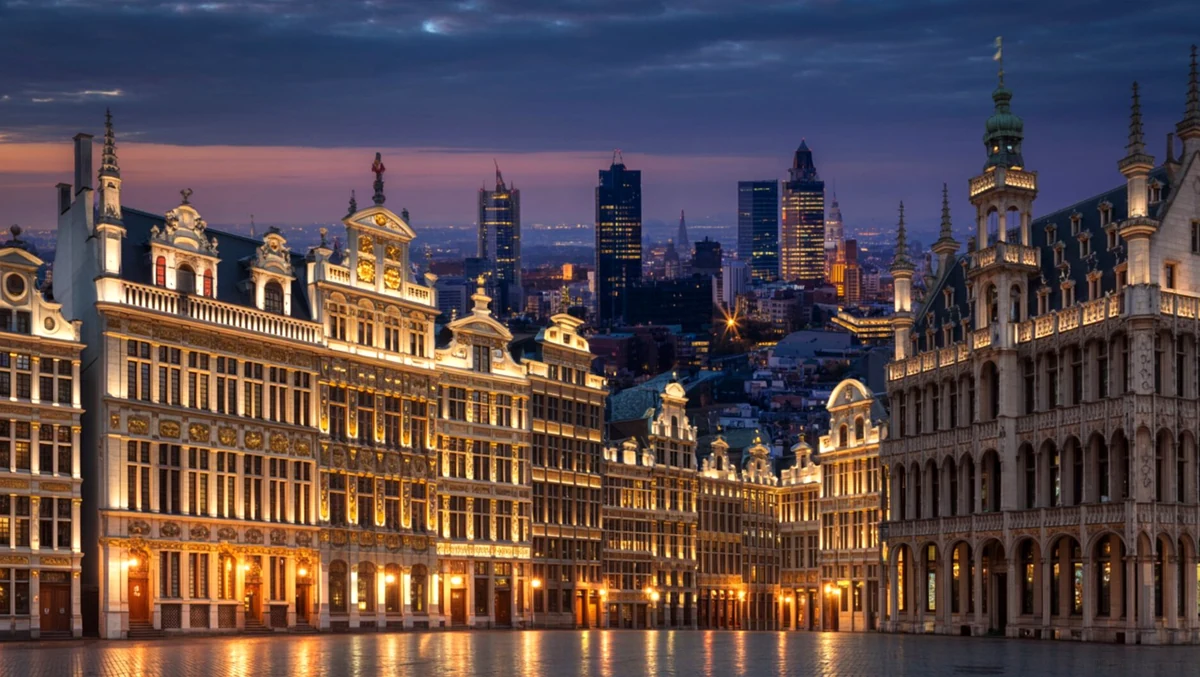
However, it is the **Guildhalls (Maisons des Corporations)** that truly showcase the pinnacle of Flemish Baroque luxury and refinement. Each house is a living sculpture, with a facade lavishly decorated with mythological statues, sparkling gilded reliefs, elaborately carved columns, and distinctive gables. For instance, *Le Cornet* (“The Boatman’s House”), with a facade modeled after the shape of a ship, or *Le Renard* (“The Fox” / carpenter’s guildhouse), with fine woodwork details, are vivid testimonies to the wealth and superior aesthetic sense of the guilds of that era. These gilded details glow especially brightly in the sunset light, creating a magical scene that turns the square into a miniature “city of gold.”
The Grand-Place’s artistic value lies not only in its permanent stone architecture. Every two years in August, the square transforms into a giant floral carpet called the **Tapestry de Fleurs**. Over 1 million begonia blossoms are meticulously arranged to form massive artistic patterns, turning the entire surface of the square into a vibrant, colorful living painting. It is a unique artistic event that showcases the boundless creativity and love of beauty of the people of Brussels, elevating the Grand-Place’s artistic value to new heights beyond the boundaries of architecture alone.
Exploring the Grand-Place is not merely a sightseeing trip, but a contemplative journey through the intersection of history, architecture, and art. From the majesty of the Town Hall and the refinement of the King’s House to the splendor of the Guildhalls, every angle opens up a story and a distinct emotion. It is truly a must-visit destination where travelers can fully feel the cultural essence and talent of the Belgian people—an enduring **architectural masterpiece** and **pinnacle of artistic value** across time.
Whether the first rays of dawn are still shy or the sunset gilds every roof tile, the Grand-Place is not only an architectural heritage site but also a grand stage for the most “priceless” experiences—moments curated so travelers won’t miss a thing. It is a blend of visual beauty, cultural depth, and local flavors that creates an unforgettable tapestry of memories.
Begin your exploration from “prime” vantage points researched in depth. During **Golden Hour**, as the sun begins to dip, stand right in the center of the square and point your lens toward Brussels Town Hall to capture the moment bright golden sunlight illuminates every gilded detail of the **96-meter** Brabantine Gothic belfry spire. The 5-meter gilded bronze statue of Saint Michael atop the spire seems to shine forth, majestic and splendid, telling the story of the city’s patron saint. When night falls, the Grand-Place puts on a different, dazzling cloak. Artistic lighting turns every architectural detail into a sculpture of light, creating a dreamy, deeply romantic atmosphere. For a unique and poetic panoramic view, consider heading to the second-floor balcony of a cafe on the southwestern corner, near the **Le Pigeon** guildhouse—where literary giant Victor Hugo once stayed. From here, the entire square opens up before your eyes, shimmering and alive like a fairy-tale painting in the heart of Europe.
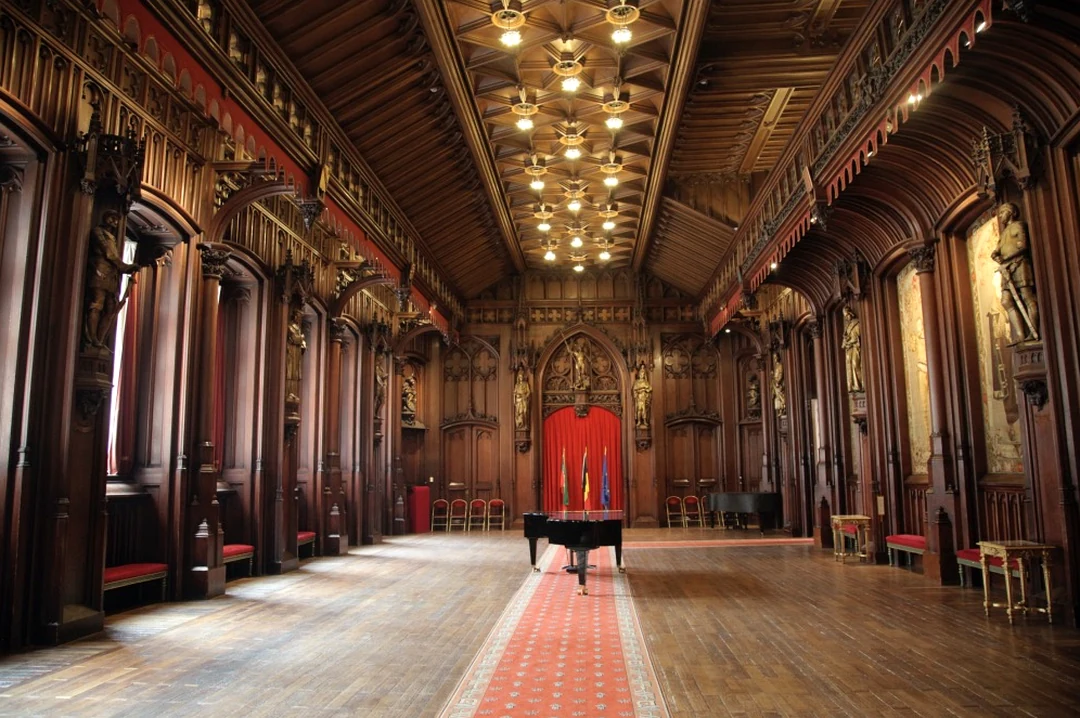
Going beyond exterior beauty, insider experiences at Grand-Place also open a door into Belgian history and culture. Visitors can join a guided tour to explore the magnificent interior of Brussels Town Hall (Hôtel de Ville), a 15th-century Brabantine Gothic masterpiece. This is an exclusive experience because the Town Hall opens to the public only on select holidays or via special tours, with admission around €8 – €10 per person. Every step along its historic corridors and halls is a conversation with the past. Directly across the square, the King’s House (Maison du Roi / Broodhuis), despite its noble name, preserves everyday stories and symbols of Brussels. Today it houses the Museum of the City of Brussels (Musée de la Ville de Bruxelles), where you can find the extensive wardrobe of Manneken Pis—the city’s mischievous icon—with admission around €10 per person.
In particular, we take pride in offering bespoke, exclusive experiences designed to elevate your journey. Immerse yourself in the sweet world of “The Hidden Art of Handcrafted Chocolate” at traditional family workshops less than a three-minute walk from Grand-Place. There, you will not only sample celebrated Belgian chocolates but also get the chance to craft a creation of your own. Or, to feel the depth of Belgian culinary culture, savor rare Trappist abbey beers—a heritage brewed by monks—inside a 17th-century cellar tucked right beneath the square. These are moments where history, artistry, and palate meet, found only when traveling with us.
If you are lucky enough to visit in August of an even-numbered year, you will witness a spectacular event: the Tapestry de Fleurs (Flower Carpet). Every two years, the entire surface of Grand-Place is covered with more than 1 million begonia blossoms arranged into massive, vibrant artistic patterns. It is a masterpiece of natural installation art that turns the square into a living tapestry filled with sweet fragrance—a rare and deeply impressive sight.
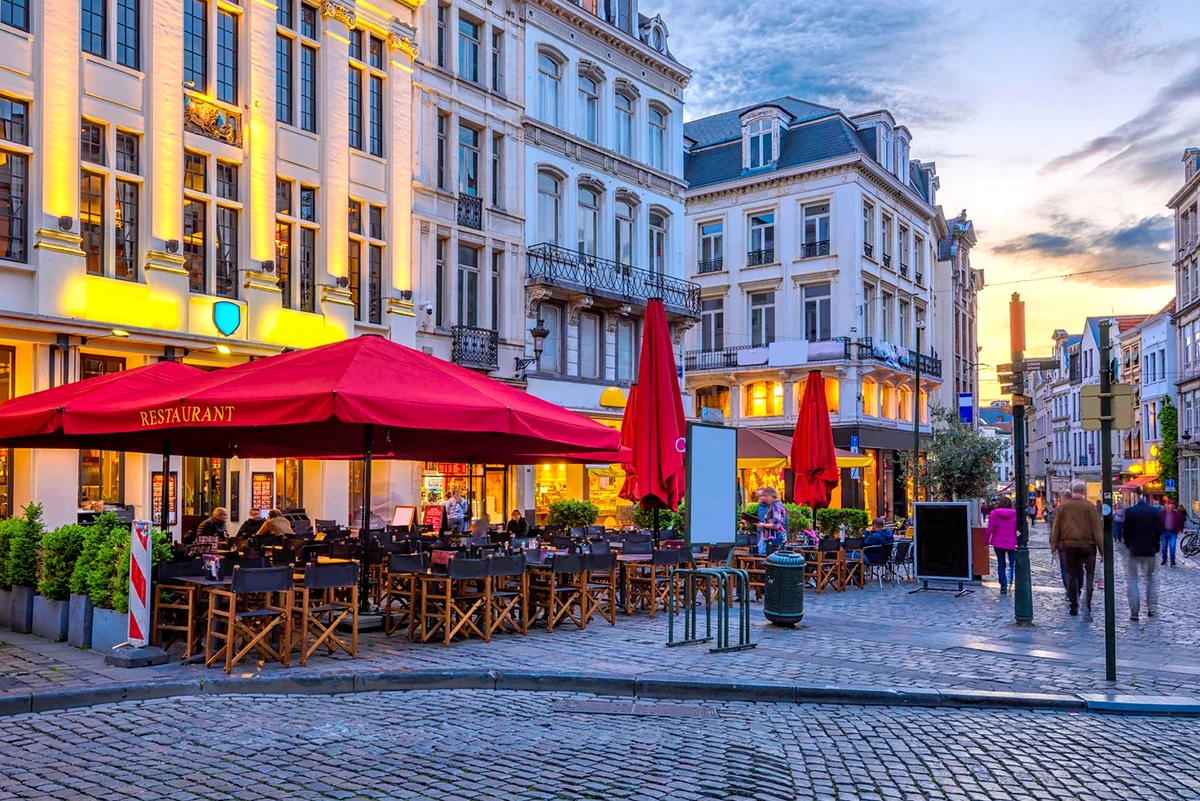
A truly rewarding experience would not be complete without local culinary flavors. Around Grand-Place lies a paradise of dishes that made Belgium famous. Do not miss a Brussels waffle (Gaufre de Bruxelles) at Maison Dandoy (31 Rue au Beurre)—rectangular, crisp on the outside, light and airy within, served with fresh strawberries and whipped Chantilly cream. Or try renowned Belgian fries (Frites), double-fried to reach crisp perfection and served with signature mayonnaise at Friterie Tabora. And of course, Moules-Frites—mussels cooked in white wine served with fries—is a quintessential national dish at its best in autumn and winter at traditional restaurants around Rue des Bouchers. Finally, wrap up a day of exploration with complex Belgian craft beers such as Chimay, Westmalle, or Duvel at historic beer taverns like À la Bécasse or Delirium Café, where you can find more than 2,000 different beers.
To make your experience even smoother, keep in mind the most ideal times to visit: from April to June for cool, clear weather; August (even years) to admire the Flower Carpet; or December to soak in a sparkling Christmas atmosphere with dazzling 3D light projections during Winter Wonders. One small yet invaluable tip: wear soft-soled sneakers because the square’s historic cobblestones are tricky in high heels, and always pack a windproof jacket since Brussels weather can shift without warning. Guides also regularly warn about sophisticated pickpocketing in crowded tourist spots so you can relax and enjoy every memorable moment at the heart of Brussels.
After taking in the grand, dazzling architecture of Grand-Place, visitors are guided into another equally captivating and rich journey: a journey of taste. The area around Grand-Place is not only a historic heart but also a focal point where Belgium’s culinary finest converge, with every dish and drink telling a story of local culture, tradition, and refinement. This is the “Local Culinary & Tasting Culture Map” that, as a specialist, I will uncover with you.
Opening this flavor map, we must highlight the Brussels waffle—a sweet icon of Belgium. Quite distinct from its denser, sweeter Liège cousin, the Brussels waffle wins diners over with its signature rectangular shape, a crisp exterior baked to perfection, and a light, cloud-soft interior. It is often enjoyed in an understated, simple yet enchanting way with juicy fresh strawberries and a cloud of snow-white Chantilly cream. For the most authentic taste, I especially recommend visiting Maison Dandoy at 31 Rue au Beurre, a famed bakery with deep history where each waffle is baked by hand with unmistakable tradition and care.
Continuing the journey is the street food that has become a Belgian national staple: Belgian fries, also known as Frites. Do not confuse them with ordinary fries; Belgian Frites are an art form. The secret lies in the signature “double-fry” technique that gives every golden fry a crisp crunch outside while keeping a tender, nutty interior. The flavor rises even higher when paired with classic Belgian mayonnaise—rich and silky—or mildly spicy, aromatic Andalouse sauce. Although countless friterie shops have sprung up everywhere, to find a classic taste you can head to Friterie Tabora, a familiar local favorite where the aroma of fresh fries always drifts out and beckons.
As night falls, or on crisp days in autumn and winter, nothing beats enjoying Moules-Frites (mussels cooked in white wine served with fries). It is a hearty seafood feast in which fresh mussels are steamed with white wine, celery, onion, and herbs for a rich, nuanced flavor. The fragrant, lightly sweet mussel broth pairs irresistibly with a plate of crisp frites. The Rue des Bouchers alley near Grand-Place is a hub of traditional restaurants serving this dish, where you can settle into a cozy, lively setting and enjoy a meal the true Belgian way.
And of course, it would be a major oversight not to mention Belgian craft beer—a UNESCO-recognized intangible cultural heritage. Belgium takes pride in thousands of beers, from high-gravity, complex Belgian ales and Trappist abbey beers brewed by monks under secret recipes like Chimay and Westmalle to refreshing fruit beers and uniquely tart lambics. Every glass is more than a drink; it is a work of art reflecting the creativity and deep history of Belgian brewing. To truly immerse yourself in beer-tasting culture, I recommend visiting historic taverns such as À la Bécasse with its rustic, traditional atmosphere, or Delirium Café, a world-famous bar boasting a collection of over 2,000 beers where you can explore endless flavors and stories behind every pour.
The culinary trail around Grand-Place does not end with the dishes above. It also means discovering artisanal chocolate shops tucked into narrow lanes, where inviting cacao aromas linger, or pastry shops lined with delicate pralines. Every street corner and restaurant brings a distinct experience that shapes the colorful food culture of Brussels. With us, we do not just take you to famous landmarks—we lead you deep into local culture so every trip is not only about seeing, but also about feeling and savoring every moment to the fullest.
After immersing yourself in the grand architecture and turbulent history of Grand-Place, Brussels, our exploration would not be complete without an essential pocket guide. As a specialist on our team, I will share tips to help you get the most out of your visit—from picking the right season and knowing admission details to key safety reminders—so your trip is not only memorable but genuinely worry-free.
When to visit Grand-Place is a decisive factor shaping the character of your experience. Based on our experience, spring (April to June) is the most ideal choice. At this time, Brussels enjoys cool, pleasant weather and clear skies, well suited to unhurried strolls and capturing great photos in gentle sunlight. However, if you want to see Grand-Place transformed into an astonishing floral spectacle, plan your trip for August of even-numbered years. That is when the square becomes a giant flower carpet—the splendid Tapestry de Fleurs (Flower Carpet)—as more than 1 million begonias are arranged by hand into grand artistic motifs that turn the entire space into a living masterpiece. And when winter arrives, especially in December, Grand-Place puts on a magical holiday coat with dazzling 3D light projections during Winter Wonders, creating a warm, sparkling festival mood that is hard to forget.
As for tickets, Grand-Place itself is a public square open 24/7 and completely free for visitors to admire at will. However, to explore further inside its iconic buildings, you will need a ticket. Brussels Town Hall (Hôtel de Ville), with its 96-meter Brabantine Gothic belfry, opens its interior to visitors only on guided tours or select special holidays. Admission typically ranges from around €8 – €10 per person—a worthwhile investment to admire the fine Gothic architecture and rich history inside. Across from the Town Hall stands the King’s House (Maison du Roi / Broodhuis), now the Museum of the City of Brussels (Musée de la Ville de Bruxelles), which houses unique costumes worn by Manneken Pis. Tickets for this museum are around €10 per person, with opening hours from 10:00 to 17:00 (Tuesday – Sunday). In particular, we also offer exclusive experiences beyond standard sightseeing, such as joining “The Hidden Art of Handcrafted Chocolate” tour at family workshops just steps from Grand-Place, or tasting rare Trappist abbey beers in a 17th-century cellar right beneath the square—experiences you will not find anywhere else.
Safety and practical tips always come first to ensure your trip goes smoothly. The Grand-Place, with its global appeal, is also a hotspot for pickpocketing. Thieves often operate subtly, taking advantage of crowds and visitors’ fascination with the scenery. We recommend wearing your backpack in front of your chest, keeping wallets and valuables in secure places, and never putting them in your back trouser pocket. Stay alert to common scams such as pretending to ask for charity signatures or pressuring you to accept a bracelet. Our tour guides are always on hand to warn and assist guests in every situation. Regarding attire, sincere advice is to wear soft-soled sneakers or comfortable flat shoes. The square is paved with historic cobblestones, which look charming but are difficult to walk on in high heels and can easily cause sore feet or slips. Brussels weather is also quite changeable, so bringing a windbreaker jacket is essential, even in summer. Although the square is open 24/7, surrounding buildings and museums generally have specific operating hours, typically from 10:00 to 17:00, Tuesday through Sunday. Knowing this information will help you plan your itinerary sensibly and fully enjoy the beauty and convenience the Grand-Place offers.
After diligently exploring every paving stone, every gilded relief, and every poignant and heroic historical story of the Grand-Place—the proud heart of Brussels—we have together touched upon its deepest cultural, architectural, and spiritual values. From its early beginnings as a muddy market along the banks of the Senne River, through the devastating bombardment of 1695, to its rapid reconstruction and UNESCO recognition in 1998, the Grand-Place has proven it is not merely architectural heritage but a living symbol of vitality, resilience, and Belgian artistic excellence. Now that the full picture has come into view, we warmly invite you to turn this rich knowledge into a real, vibrant, and unforgettable experience.
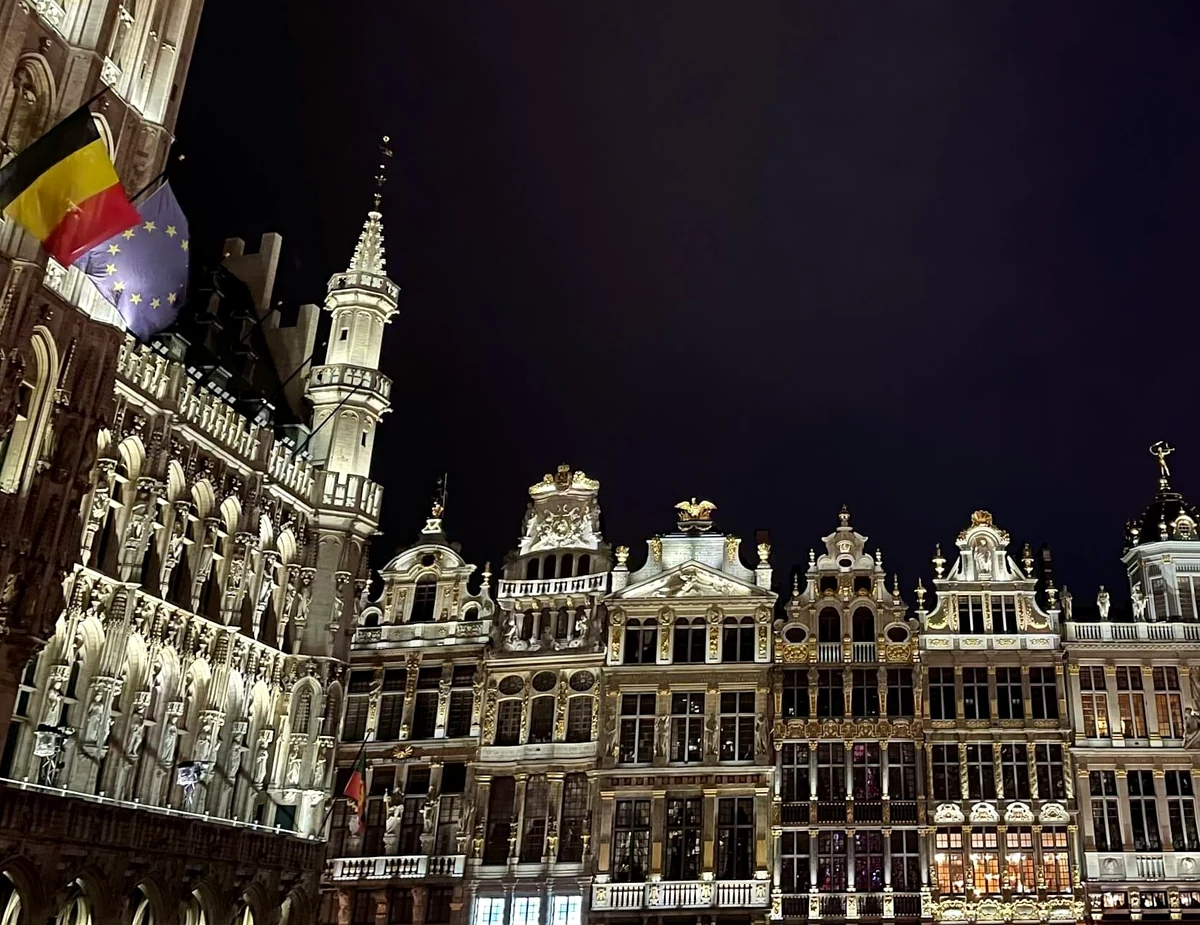
At our company, we do not merely provide trips, but craft deeply connected journeys where every destination is not only seen but felt with all the senses. The Grand-Place is one of the signature high-end touchpoints we dedicate to travelers. We understand that to truly feel the square’s original beauty and majestic stillness, a thoughtfully arranged schedule is essential. That is why we regularly bring travelers to the Grand-Place in the early morning, around 07:30 to 08:30, when the first rays of sunlight just touch the top of Brussels Town Hall’s 96-meter Brabantine Gothic belfry spire and the square is still quiet without bustling crowds. In that moment, travelers have private space to admire every dazzling gilded detail on the Guildhalls, listen to church bells echoing across the square, and take once-in-a-lifetime photos unobstructed by crowds.
The Grand-Place journey with us does not stop at admiring architecture. We expand the experience with distinctive walking routes, leading travelers along historic streets to discover Manneken Pis—Brussels’s playful icon—or wander into the sweet world of renowned royal chocolate shops such as Godiva, Neuhaus, and Mary. In particular, travelers can immerse themselves in the splendor of the Galeries Royales Saint-Hubert, one of Europe’s oldest covered shopping arcades, where elegance and history blend together. To add even more exclusivity, we also design experiences you cannot find anywhere else: joining a “Hidden Artisanal Chocolate-Making Art” tour at traditional family workshops less than a 3-minute walk from the Grand-Place, or tasting unique Trappist abbey beer in a 17th-century cellar right beneath the square where time seems to stand still.
We proudly integrate the Grand-Place as an indispensable “heart” in our luxury Western Europe itineraries. Whether on the France – Belgium – Netherlands route or Germany – Belgium – Netherlands, this square is always a shining highlight that brings cultural and historical depth to the trip. We don’t just take travelers to famous landmarks, but offer insider perspectives, lesser-known stories, and the most authentic experiences. From enjoying crispy Brussels Waffles at Maison Dandoy and sampling twice-fried Belgian fries with signature mayonnaise, to discovering Moules-Frites at traditional restaurants around Rue des Bouchers, or sipping complex Belgian craft beers at Delirium Café—famous for more than 2,000 beers—every moment is carefully curated for complete satisfaction.
We also always place travelers’ safety and comfort first. Our guides are always on hand to warn about subtle pickpocketing at tourist hotspots, recommending that travelers wear backpacks in front of their chest and never keep wallets in back trouser pockets. We also advise on suitable footwear—soft-soled sneakers for easy walking on the cobblestone square—and windbreakers for Brussels’s changeable weather. With us, every small detail is cared for so travelers can enjoy their trip with complete peace of mind. Whether you visit in mild spring (April – June), admire the vibrant Floral Carpet (Tapestry de Fleurs) in August of even-numbered years, or soak in the magical Christmas atmosphere with 3D light shows in December, we ensure you have a complete and memorable journey.
Let us be your trusted companion, guiding you to the most remarkable architectural wonders, historical stories, and cultural experiences of the Grand-Place and all of Europe. We are committed to delivering a trip that is not just travel, but an intellectual adventure and a journey connecting the soul with the enduring beauty of the world. Don’t miss the chance to explore the endless beauty of Belgium, France, the Netherlands, Switzerland, and Germany with leading travel experts. To start your dream journey, visit and book today at All-Inclusive Tour Package . We believe the Grand-Place will not merely be a dot on the map, but become a golden memory in your heart, crafted with dedication.