The impressive modern architecture of the National Museum of Egyptian Civilization along the banks of Lake Ain El-Sira
Visiting the National Museum of Egyptian Civilization (NMEC) in Cairo goes far beyond the scope of a dry history lesson, thanks to vibrant artistic and cultural events alongside surrounding urban planning that transforms the site into a multi-sensory touchpoint where past and present wonderfully intertwine. The historic procession known as the Pharaohs’ Golden Parade, which took place on April 3, 2021, set an entirely new standard for combining archaeological heritage with contemporary performance art in this North African nation. This grand event not only marked the dignified transfer of 22 royal mummies—including 18 kings and 4 queens—from the central Egyptian Museum in downtown Cairo to their new home at NMEC, but also served as a visual epic broadcast live across major national networks and covered by hundreds of leading international news agencies.
That evening performance was shaped by a magnificent musical score performed by the United Philharmonic Orchestra under the brilliant baton of Egyptian conductor Nader Abbassi, drawing upon legendary compositions by composer Hesham Nazih. Triumphant melodies echoed through the Cairo night, blending seamlessly with magical laser lighting cast across ancient architectural monuments, creating a deeply sacred and emotional atmosphere for millions of global viewers. This event was far more than a campaign to transport artifacts; it became a cultural milestone, affirming the Egyptian government’s vision of honoring ancestral heritage through the most fitting contemporary artistic expressions, and opening a new chapter for heritage tourism along the Nile.
When visitors step into the museum’s grounds and interior halls, their visual experience is instantly complemented by a modern, airy architectural space designed to optimize natural sunlight—creating a striking yet harmonious contrast with the millennial mysteries concealed within the exhibition galleries. The sensory experience at NMEC does not stop at lighting and architectural space, but extends to the entire surrounding landscape ecosystem. The museum is situated on the shores of Lake Ain El-Sira, a historic groundwater body that has undergone numerous ecological transformations and has now been revitalized into a picturesque waterfront landscape reflecting the brilliant Cairo sky at sunset and glittering with lights by night.
The combination of calm waters, lush green trees lining outdoor walkways, and the robust geometric massing of the museum building creates a peaceful sanctuary far removed from the bustle of modern Cairo. Visitors can leisurely stroll around the lake, breathe in the fresh breeze carrying moisture from the legendary Nile River, listen to birds gathering in this wetland sanctuary, and experience a completely different rhythm of the City of a Thousand Minarets—a slower, deeper, and more contemplative pace.
Moreover, the geographical location of the National Museum of Egyptian Civilization places it at a uniquely historical coordinate, situated right in the heart of Old Cairo and directly adjacent to the ruins of Fustat, Egypt’s first Islamic capital. Fustat was founded immediately following the Muslim conquest led by the brilliant general Amr ibn al-As in 641 AD. For centuries, it served as the nation’s administrative, commercial, and supreme seat of power, reaching the height of prosperity in the 12th century with an estimated population of around 200,000, before witnessing tragic upheaval when vizier Shawar ordered it burned in 1168 to prevent its treasures from falling into the hands of invading Crusaders.
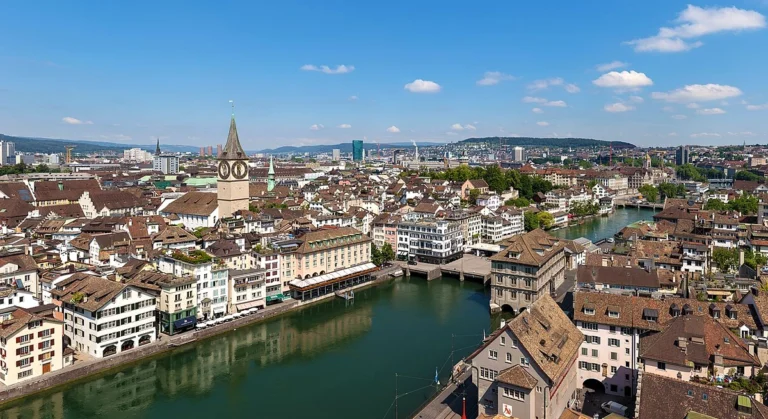
Real-world architectural and landscape perspective at the National Museum of Egyptian Civilization Cairo (Illustration 6)
Although much of this ancient capital has been destroyed and gradually buried beneath historical strata, decades of diligent archaeological excavations have revealed a colossal heritage trove deep underground—from exquisite ceramics and colored glassware to coins and everyday items used by medieval Fustat residents. Many priceless artifacts unearthed from this area are currently displayed at the Museum of Islamic Art in Cairo, while the remaining ruins of Fustat still linger within the urban fabric of today’s Old Cairo district, creating an invisible yet palpable historical layer enveloping the entire area around NMEC.
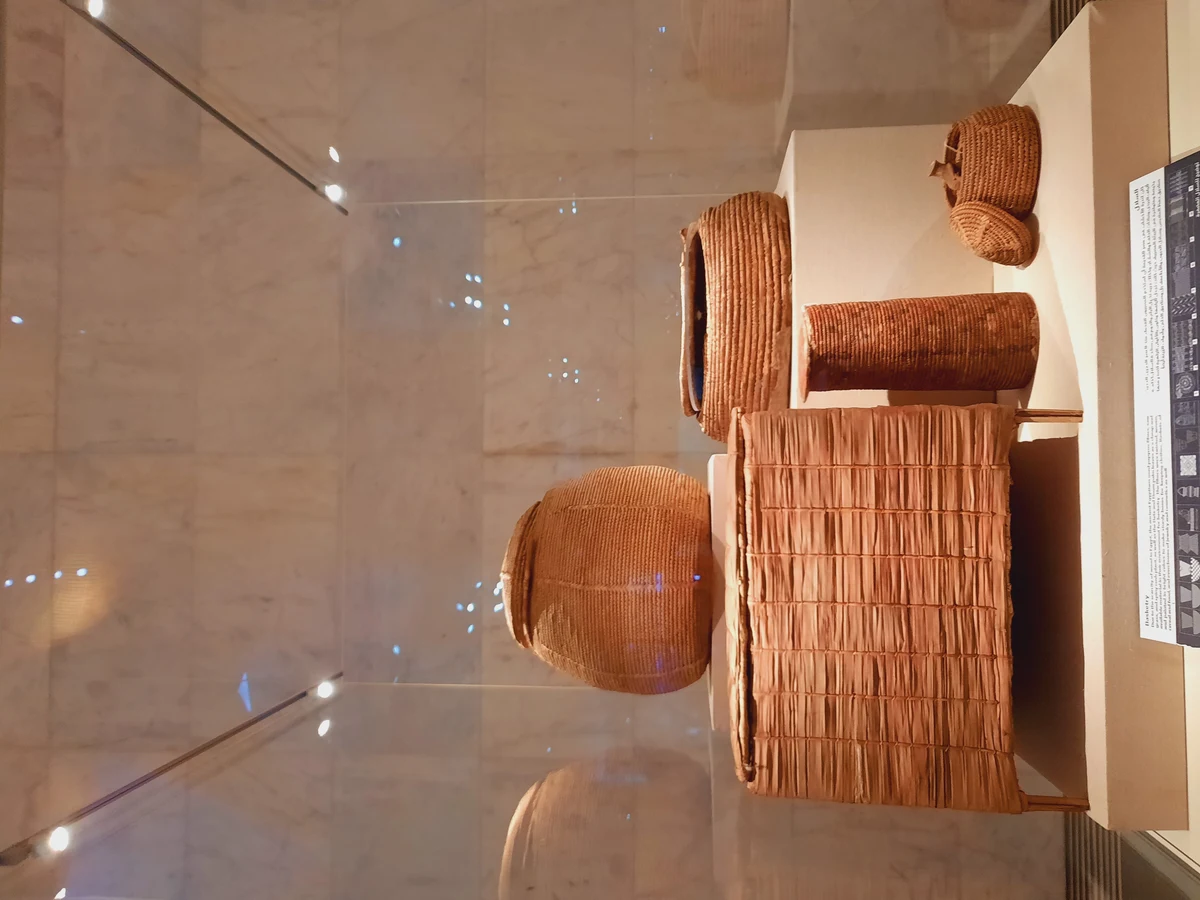
When visitors step out of the museum’s air-conditioned exhibition halls into the outdoor space, they are immediately enveloped by the vibrant and enduring indigenous cultural life of Old Cairo. This is a multi-layered living space where medieval past and everyday present intertwine with astonishing naturalness. The call to prayer (azan) rings out from the ancient minarets of surrounding mosques—most notably the Mosque of Amr ibn al-As, the first mosque built in Egypt and all of Africa—echoing through narrow alleys and blending with the sounds of local urban life.
This acoustic backdrop creates a distinct auditory landscape where the sound of mortar and pestle grinding spices in traditional markets, the cheerful chatter of locals at sidewalk cafes, and the footsteps of pilgrims merge into a vivid daily rhythm. The scent of frankincense and eastern spices like cumin, cinnamon, and cloves carried on the desert evening breeze, combined with rich Turkish coffee aromas from long-standing teahouses, stimulates visitors’ olfaction and introduces them to the culinary and daily cultural depth of the native people.
Strolling through the neighborhoods near the museum, visitors have the opportunity to encounter traditional artisans who quietly preserve ancient crafts such as copper smithing, handloom carpet weaving, and artistic pottery—trades breathing directly from the golden age of Fustat. The warm and sincere hospitality of native Egyptians, whose radiant smiles welcome foreign travelers with the familiar greeting “Ahlan wa sahlan,” turns every step of exploration into a warm cultural dialogue transcending all language barriers.
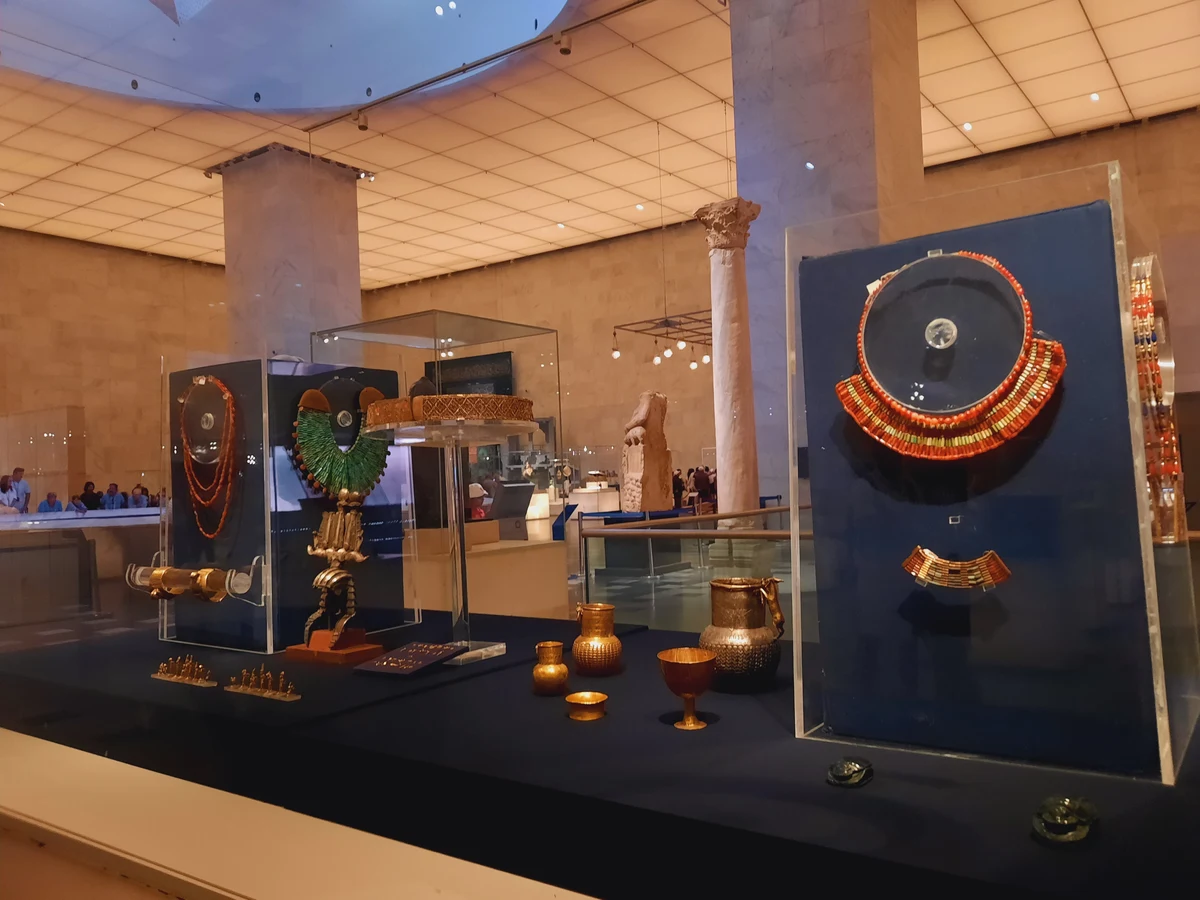
It is precisely this perfect combination of an international-standard museum institution—housing fifty thousand artifacts representing the complete chronicle of Egyptian civilization from prehistory through the Pharaonic, Greco-Roman, Coptic, and Islamic eras to the modern epoch—alongside the vibrant urban backdrop of Old Cairo and ancient Fustat ruins that creates a complete multi-sensory experience.
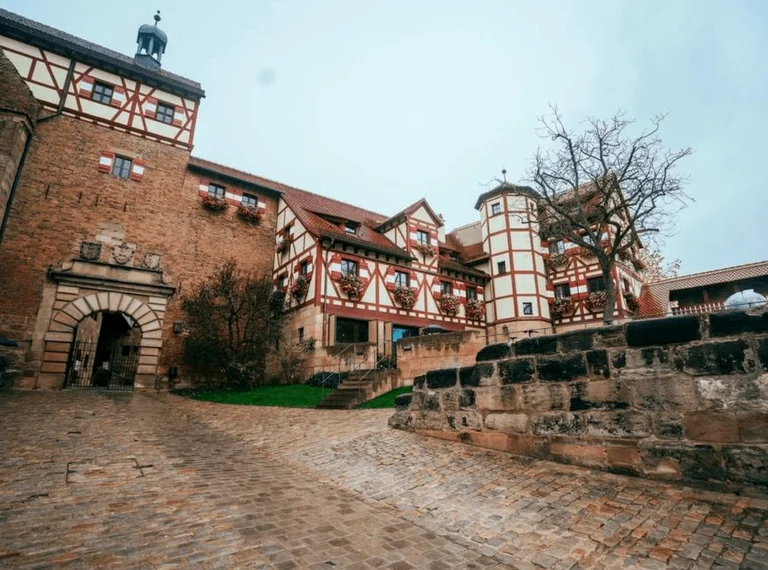
Real-world architectural and landscape perspective at the National Museum of Egyptian Civilization Cairo (Illustration 7)
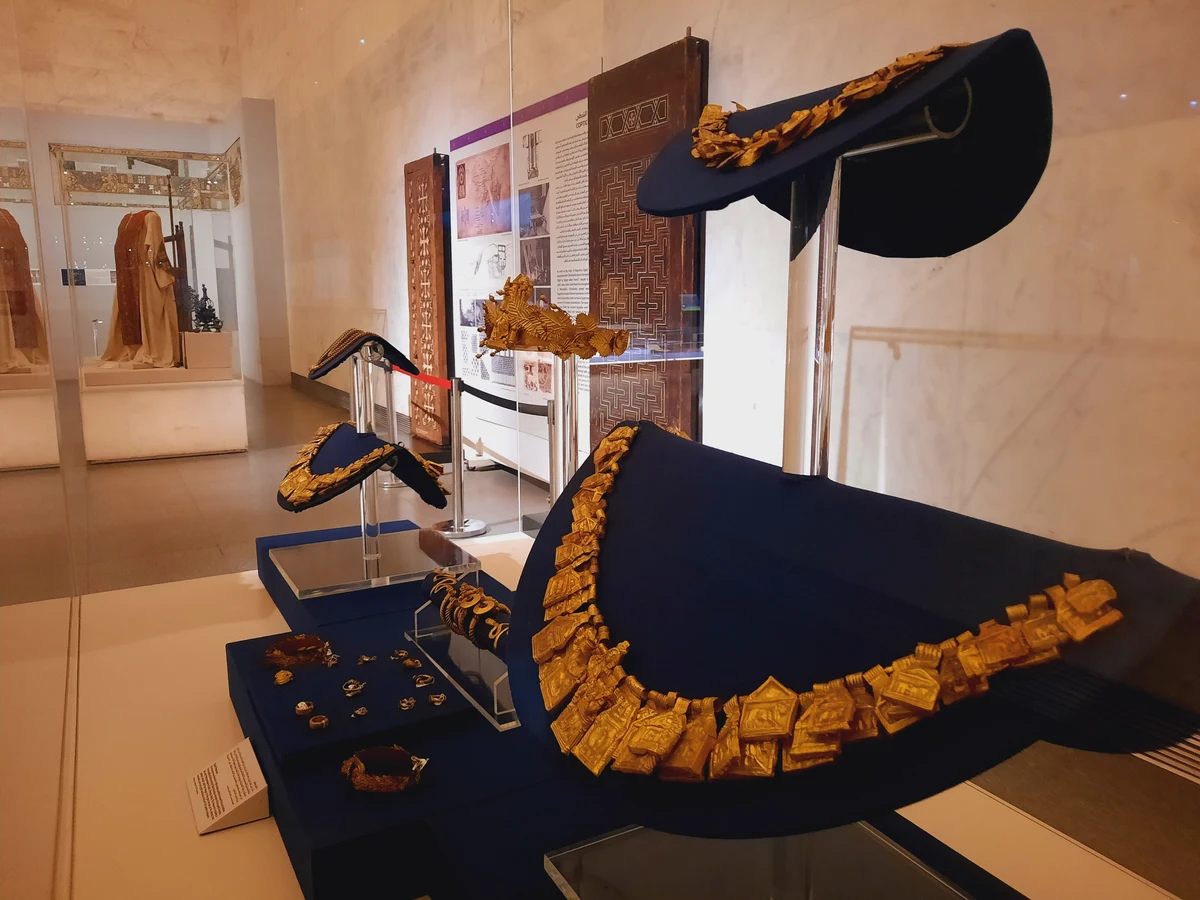
Visitors come not only to admire royal mummies behind state-of-the-art preservation glass or view ancient garments, jewelry, and musical instruments, but also to truly listen, smell, taste, and feel the pulse of a civilization that continues to thrive and flow ceaselessly in modern Egyptian daily life. An experience at the National Museum of Egyptian Civilization Cairo is thus much more than a journey through time via priceless artifacts; it is an emotional stroll through a richly traditional living space, leaving every traveler with lingering impressions of a land where history never sleeps.
The journey to discover the National Museum of Egyptian Civilization (NMEC), situated in historic Old Cairo and adjacent to the first Islamic capital of Fustat, would be incomplete without an in-depth study and tasting of surrounding culinary highlights, renowned local flavors, and heirloom dining traditions passed down for generations. Located on grounds that served as Egypt’s administrative power center from the 7th century under general Amr ibn al-As, this land not only conceals tens of thousands of precious antiquities underground, but also nurtures a vibrant culinary ecosystem uniting Middle Eastern, North African, Mediterranean culinary currents and unique indigenous Nile valley values.
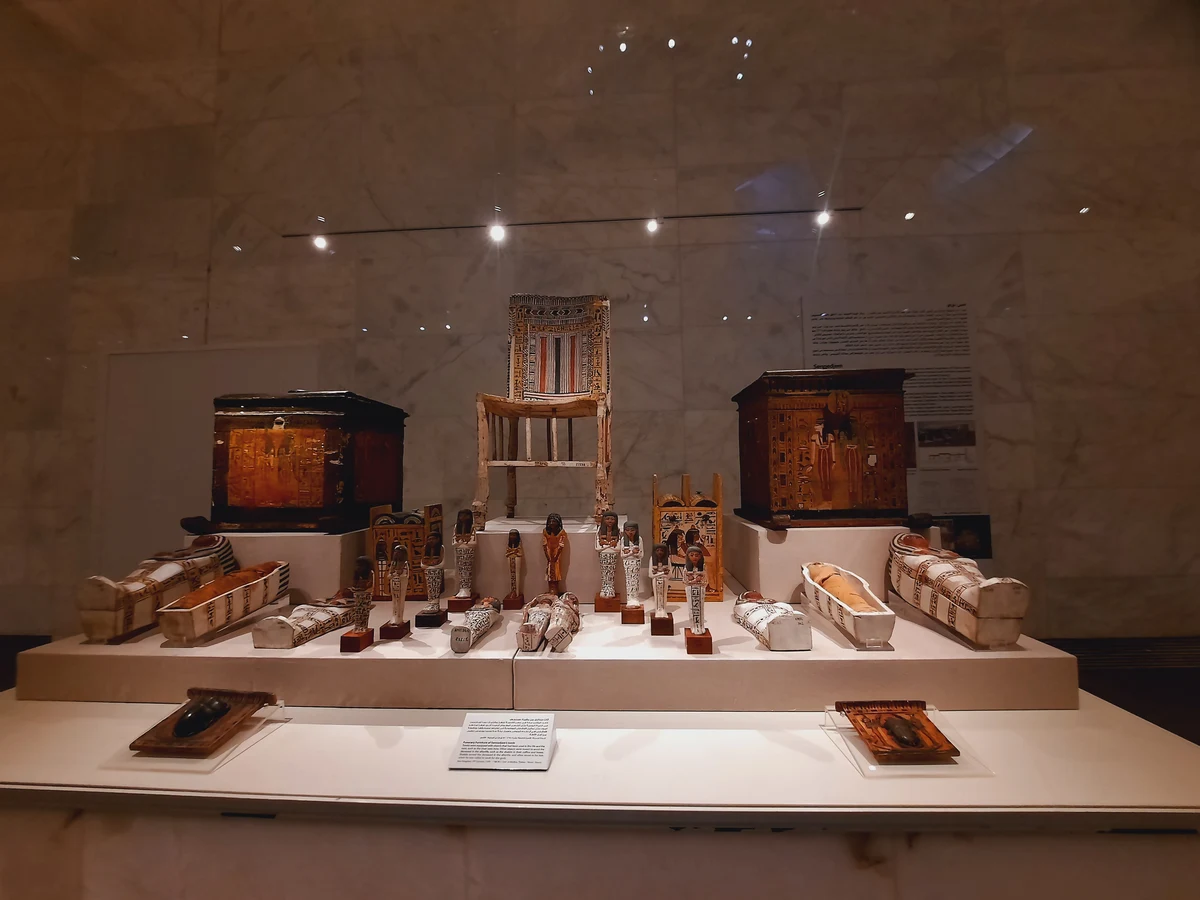
Upon stepping out of the solemn interior of the museum—which houses the mummies of great pharaohs from the Pharaohs’ Golden Parade—visitors are instantly drawn to the enticing aromas wafting from the ancient streets surrounding Fustat. Gastronomy here is a living testament to thousands of years of cultural exchange, reflected in how locals transform simple ingredients into humble street-food masterpieces. The iconic dish to mention first is koshari, an exquisite and unique blend of pasta, rice, brown lentils, chickpeas, crispy fried onions, and a rich tomato sauce spiced with tangy garlic vinegar and shatta chili oil. Koshari is not just a quick energy meal, but a work of art in texture and flavor, symbolizing social harmony and the profound popular cultural exchange of the land of the pyramids.
Alongside koshari, the street and traditional food landscape around the NMEC district is adorned with celebrated Middle Eastern grilled dishes such as kofta and kebab. Prepared from minced or cubed young lamb or veal, meticulously marinated with local herbs like parsley, fresh onions, dill, and coriander seeds, these meat skewers are grilled over glowing charcoal until fat sizzles and fills the air with savory smoke. Locals typically enjoy kofta and kebab with freshly baked baladi flatbread straight from traditional wood-fired brick ovens, accompanied by fresh herb salad, creamy tahini sauce made from toasted sesame seeds, and salty pickled vegetables. Biting into a warm baladi sandwich stuffed with spiced grilled meat amid the nostalgic atmosphere of Old Cairo creates a powerful connection with the past, when these ingredients and preparation methods were maintained nearly intact for centuries.
Delving deeper into the culinary customs of communities living around Fustat and Old Cairo, one finds that food culture here is tied to a leisurely, highly communal philosophy. Rather than rushed meals, Egyptians view time around the dining table or cafe as sacred moments for socializing, discussing current affairs, and enjoying open-air views along the legendary Nile. Traditional cafes (known as ahwa) appear densely across the heritage district, featuring low wooden stools where locals gather to smoke shisha (fruit-flavored waterpipe) and enjoy signature beverages.
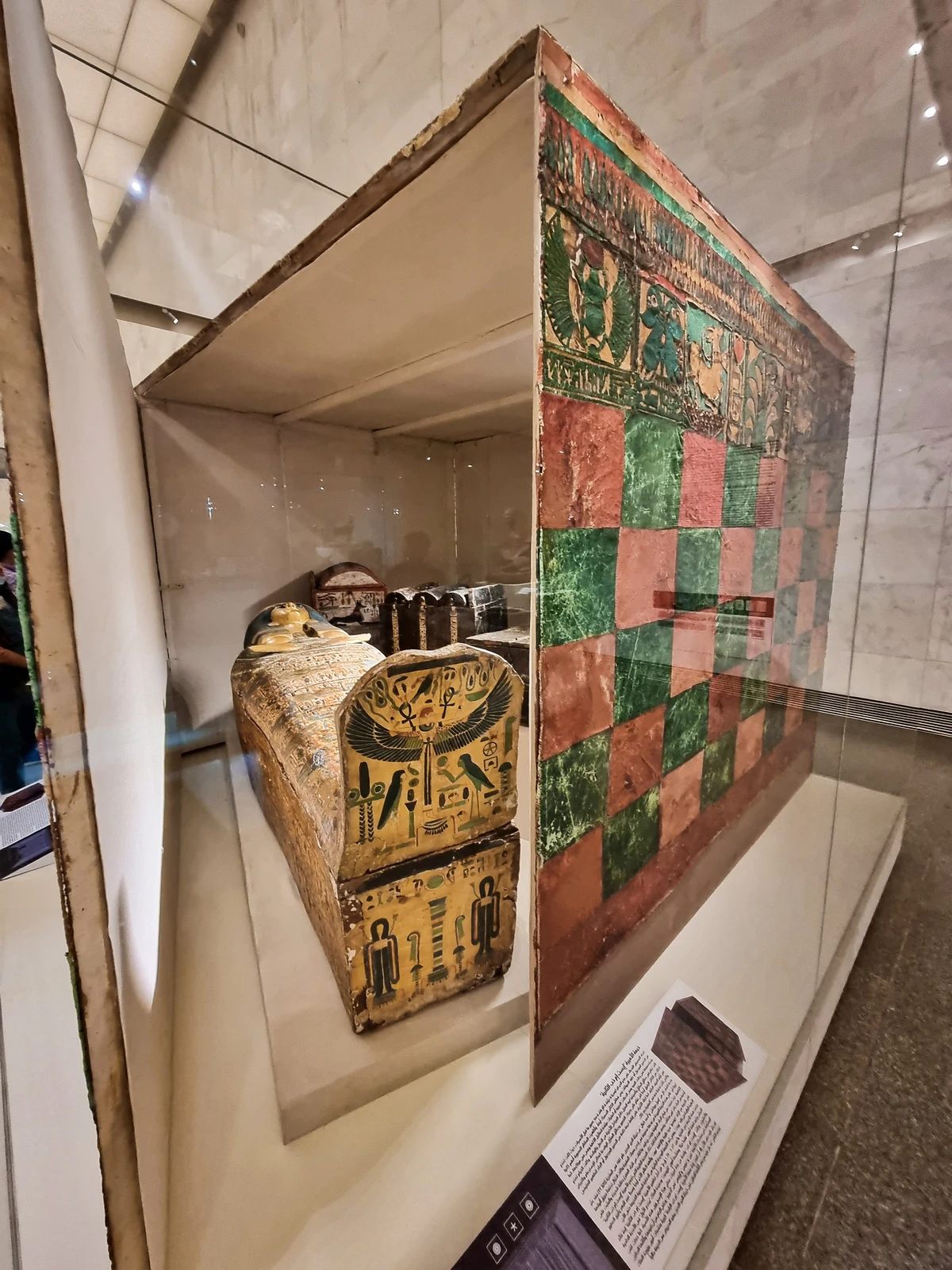
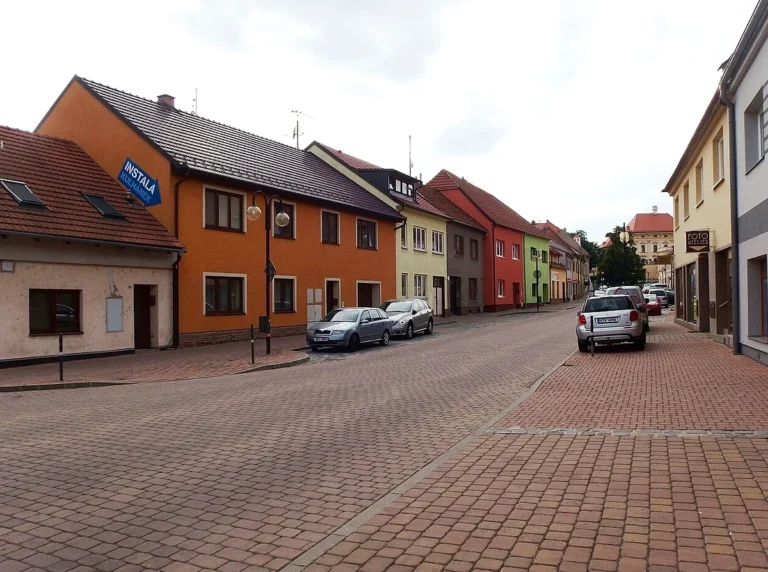
Real-world architectural and landscape perspective at the National Museum of Egyptian Civilization Cairo (Illustration 8)
The indispensable drink in every gathering here is strong black tea (shay), brewed in small metal pots, simmered over low heat, and poured from a height into small glass cups to create an appealing thin foam layer on top. Tea is usually sweetened heavily with cane sugar during boiling, and sometimes infused with fresh mint leaves (na’na’) for a refreshing coolness beneath the bright North African sun. Alongside black tea, traditional Turkish coffee (ahwa turki) holds a revered place in Cairo’s culinary culture. Brewed in small long-handled brass pots called cezve or rakwa, finely powdered coffee is boiled with sugar and water to absolute perfection, then poured into handleless ceramic cups leaving a fine silt at the bottom. Savoring a sip of rich Turkish coffee—slightly bitter on the palate yet leaving a deep sweet aftertaste—while observing the unhurried life of local artisans and pilgrims passing the ancient Amr ibn al-As mosque offers international visitors a complete, profound lens into modern Egyptian daily life rooted in ancient history.
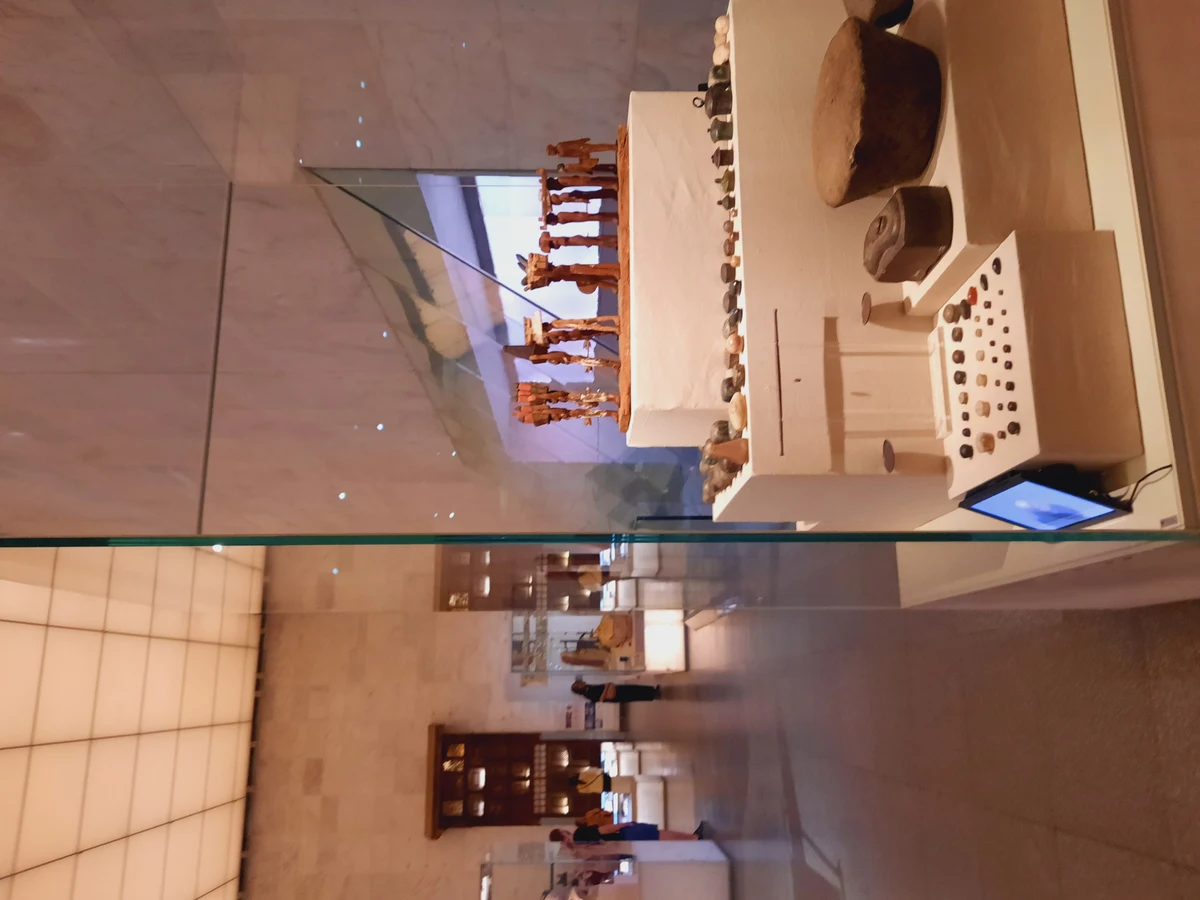
Central exhibition hall depicting the historical flow from prehistory to modern Egypt
To make the journey exploring the National Museum of Egyptian Civilization Cairo truly complete and rewarding, travelers should equip themselves with comprehensive practical knowledge—starting with choosing a departure time suited to the North African desert climate. Unlike temperate countries with four distinct seasons, Cairo features a subtropical desert climate with wide day-to-night temperature swings. Summers from June to August frequently exceed 40°C, bringing dry heat and haze that complicate outdoor tours and transit between monuments. Therefore, the ideal travel window is from October through March, when winter and spring bring pleasant, mild weather with daytime temperatures ranging from 15°C to 25°C, clear blue skies, and gentle sunshine—providing optimal conditions for cultural heritage exploration, architectural walks, and soaking in the tranquil history of this ancient land.
Regarding transportation to reach the museum located in Fustat—Egypt’s first Islamic capital founded in 641 AD by the Rashidun general Amr ibn al-As following the Muslim conquest—visitors can flexibly choose from public transit and private options depending on starting points and budgets. Historic Fustat reached peak prosperity in the 12th century with an estimated population of 200,000, serving as supreme administrative headquarters before burning in 1168 on vizier Shawar’s orders to thwart Crusader invaders, subsequently merging into expanding Cairo. Today, reaching this archaeologically rich site is extremely convenient thanks to modern urban transport: visitors can take the Cairo Metro subway for fast transit from Tahrir or Zamalek to stations near Old Cairo, then connect via traditional taxi or rideshare apps straight to the museum gates overlooking serene Lake Ain El-Sira. For maximum convenience and comfort, booking a private modern tourist car with an experienced local driver is optimal, saving navigation time, avoiding rush-hour traffic jams, and receiving full support throughout transit through time-worn streets.
The museum welcomes visitors daily with standard opening hours running from early morning to late afternoon, allowing travelers to schedule personal itineraries flexibly without time pressure—especially when combining indoor gallery exploration with scenic lakeside walks outside. Standard admission tickets for international visitors are posted at ticket counters and the official museum portal, covering general access to the central exhibition halls housing fifty thousand precious antiquities representing prehistory, Pharaonic, Greco-Roman, Coptic, Islamic, and modern eras. However, note that the Royal Mummies Hall—the final resting place of the twenty-two legendary kings and queens processed during the spectacular Pharaohs’ Golden Parade on April 3, 2021 (after the museum partially opened in 2017)—requires a separate admission surcharge due to strict climate, lighting, and conservation controls.
To optimize your real-world experience inside this world-class institution, allocate at least three to four hours to leisurely absorb the historical depth told through unique artifacts, rather than rushing through galleries. Renting an audio guide device or booking a multilingual professional guide is a worthwhile investment, helping you fully grasp religious, cultural, and political layers behind reliefs, granite sarcophagi, and royal garments. Inside the Royal Mummies Hall, absolute rules prohibit cameras, flash photography, or video recording of any kind to protect fragile ancient skin and mummification materials from intense light. Additionally, maintaining quiet, keeping minimum distances from glass display cases, and following one-way directional signage are essential cultural etiquette standards for international travelers.
Regarding cultural etiquette when visiting one of Cairo’s largest cultural institutions, travelers should wear modest, neat clothing covering shoulders and knees to show proper respect for local traditions and sacred historical exhibition spaces. While Egypt is an open, international destination, overly revealing attire in public or heritage areas may draw unwelcoming glances from locals. When interacting with museum staff, security personnel, or locals outside, a friendly smile coupled with basic Arabic greetings like “Ahlan” or “Shukran” opens doors to deep warmth and goodwill, creating memorable cultural exchanges. Furthermore, carry small local currency (Egyptian Pounds – EGP) for minor incidentals like luggage storage, bottled water, or tipping support staff—as this smooths transactions and reflects professional global traveler etiquette.
An essential field tip before finishing your tour is carrying a light jacket or scarf when entering the museum, as air conditioning runs at high capacity to maintain ideal temperature and humidity for fragile antiquities, creating a noticeable temperature drop from the Cairo desert heat outside. Bringing a personal water bottle (allowed in the large lobby but stowed away in galleries) and supportive walking shoes ensures you won’t tire after hours walking through vast modern exhibition halls. Before leaving, visit the official museum gift shop to pick up exquisite handicrafts, miniature replicas of famous artifacts, or valuable archaeological research books, bringing home a tangible piece of Nile civilization’s brilliant history.
To experience this journey seamlessly with a local guide, explore our 9-Day Germany – Austria – Hungary – Czech Republic Tour with a thoughtfully curated itinerary.