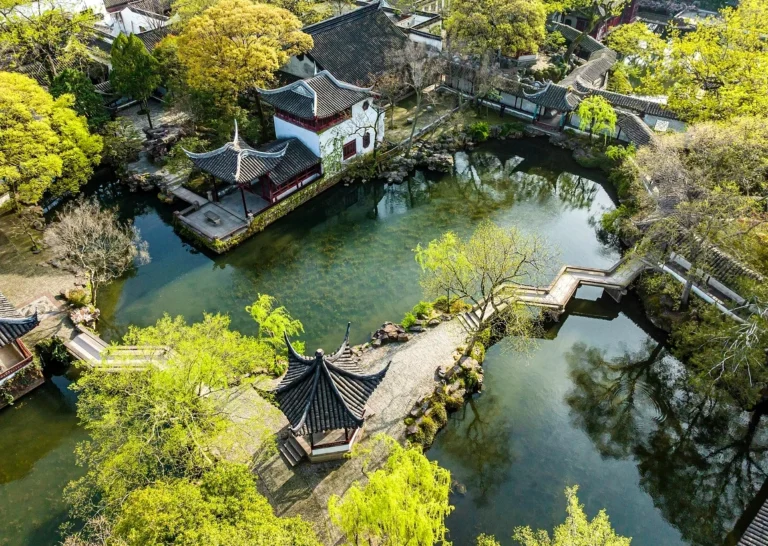
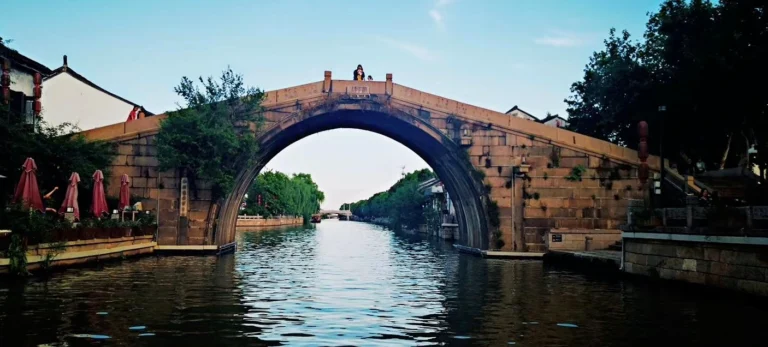
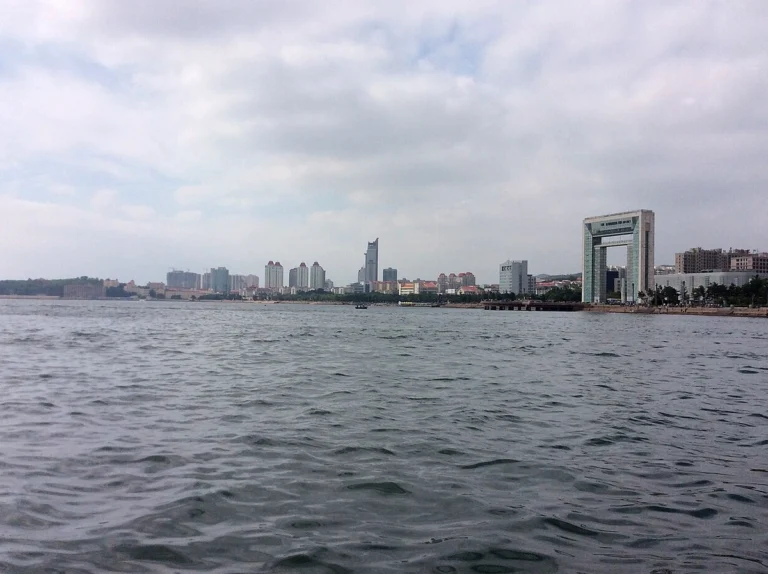
Stepping back through the stream of time to the tranquil Jiangnan region, where the shimmering waters of Lake Tai soothe rolling mountain ranges day and night, visiting the Lingshan Grand Buddha is not merely a religious sightseeing tour, but a profound spiritual pilgrimage into more than two thousand years of turbulent history of the Chinese nation. Located on the Mazhan Peninsula in Wuxi City, Jiangsu Province, this sacred Buddhist realm conceals rich cultural strata where every inch of soil and every tree preserves traces of time from primeval epochs down to the brilliant renaissance of the modern era. According to records in precious ancient gazetteers such as the Wudi Records and Wuxi County Annals, this land has borne ancient, battle-scarred names since ancient times, such as Cumiao Mountain and Fuchao Mountain. Here, during the fierce Spring and Autumn period, historic battles unfolded, typified by the Fuchao war, where swords overshadowed peace and warhorses once echoed across a mist-water Jiangnan sky.
Yet the destiny of the Mazhan peninsula did not halt at bloody pages of war and worldly power; it turned toward an entirely new chapter imbued with compassion and enlightenment thanks to a preeminent historical figure. During the glorious Tang Dynasty, when Great Master Xuanzang was journeying on his arduous pilgrimage to fetch Buddhist scriptures from India back to the capital Chang’an, he stopped to sightsee in this scenic realm. Gazing out at the majestic terrain where winding mountains embrace a placid lake, the accomplished eminent monk recognized a strange and wondrous coincidence: the landscape here was identical to Gridhrakuta Mountain at Rajgir in India, where Shakyamuni Buddha once resided and preached to save sentient beings. Overwhelmed with reverence, the Great Master officially named this land Lesser Lingshan, laying the first bricks to establish a temple and setting a solid foundation for the birth of the renowned Xiangfu Zen Temple. From then on, chanting and sutra recitations began echoing through the Mazhan mountains, transforming a former battlefield borderland into a human Pure Land and a spiritual anchor for generations of Jiangnan people across the Song, Yuan, Ming, and Qing dynasties.
Traversing historical epochs, as the flow of history entered the final years of the 20th century, though the ancient Xiangfu Temple had weathered dilapidation from war and time, the soul of the Dharma never extinguished. At that pivotal juncture, the late Zhao Puchu, President of the Buddhist Association of China—a personality with profound philosophical vision and great devotion to propagating the Dharma—courageously proposed the idea of reviving the ancient temple and erecting a towering Grand Buddha between heaven and earth as a symbol of peace and awakening for a new era. This grand vision rapidly translated into practical action with the consensus and joint efforts of society at large. In November 1994, the sacred foundation-laying ceremony was celebrated amid the joy of millions of Buddhists near and far, launching an unprecedented spiritual architecture project in modern history.
Realizing the 88-meter-tall Grand Buddha was a triumph of bronze casting and contemporary religious architecture, demanding endless labor and utmost dedication from thousands of artisans and engineers. In 1996, comprehensive construction items officially launched on a vast scale, overcoming immense topographical and metallurgical challenges. Following a brief yet intensely hardworking period, on November 15, 1997, according to the lunar calendar, the project reached a major historical milestone by successfully completing the crowning ceremony, lifting the magnificent golden body high and majestic among the azure clouds of the Mazhan Peninsula. The pinnacle of these events occurred on April 26, 1998, corresponding to the 1st day of the 4th lunar month, when the grand consecration ceremony of the Grand Buddha was solemnly celebrated amidst bells ringing across the Buddhist realm. This monumental event gathered tens of thousands of eminent monks, masters, scholars, and Buddhists worldwide to worship, marking a glorious milestone not only for Wuxi Buddhism but also officially opening an era of constructing large-scale religious culture parks in China, harmoniously combining millennia-old traditional heritage with contemporary global planning philosophy.
Stepping into the sacred realm of the Lingshan Grand Buddha in picturesque Wuxi, travelers are not only overwhelmed by a man-made wonder towering between heaven and earth but immediately perceive a pure, serene energy radiating from the pristine terrain and landscape. Viewed through the lens of traditional Eastern culture combined with profound Buddhist cosmology, Lingshan’s terrain is praised by feng shui masters and contemporary architects as a classic model where favorable timing, advantageous terrain, and human harmony converge perfectly within a flawless spatial map. Stretching along the southern slope of the majestic Qinglong Mountain, the entire grand Buddha complex leans securely against solemn rock cliffs, acting as a sturdy Xuanwu backing from the north, blocking harsh winds and providing a solid anchor for the mountain gate. Before it, an expansive vista opens up with the vast, crystalline blue waters of Lake Tai, serving as a bright hall gathering water and energy, where vital energies converge and radiate, bringing boundless prosperity and peace to all beings.
Delving deeper into the topographical planning structure of this grand scenic spot, one admires the exquisite spatial arrangement following the Mandala model—the symbol of sacred space in Esoteric Buddhism. The left and right flanks of the grand Buddha are embraced by graceful hills, creating an immensely majestic green dragon and white tiger formation. To the east, the Azure Dragon ridge winds softly like a green silk ribbon, while to the west, the West Tai Lake hills act as a potent White Tiger guardian, forming a sturdy curved armchair posture cradling the Buddha statue at the center. Notably, directly in front and to the right of the grand Buddha, the miraculous appearance of five small hills creates a rare natural feng shui formation praised by past masters as the “Five Dragons Supporting the Saint,” poetically likened to the “Five-Petaled Golden Lotus,” symbolizing five golden lotus petals respectfully uplifting the great lotus flower in the human realm. This natural yet divine layout makes anyone setting foot here experience a wondrous communion between heaven and earth, where the soul lightens, shedding all worldly afflictions.
Beyond supreme feng shui terrain, Lingshan Grand Buddha is favored by Mother Nature with a distinct subtropical humid monsoon microclimate, offering priceless ecological and scenic values to those seeking refuge. Thanks to its location on the southern slope of the main mountain range, this place captures warm sunlight year-round while forming a natural screen blocking bitter cold winds blowing from Siberia during winter. Conversely, during sweltering summer months, cool breezes blowing from vast Lake Tai drift into the space, regulating temperatures to bring a cool, fresh, and refreshing atmosphere. Moderate thermal amplitudes alongside abundant water sources from rock springs nurture a rich and secluded ecosystem where ancient ginkgo trees shed leaves seasonally, sweet-scented osmanthus trees emit gentle fragrances, and lush tea hills combine with straight bamboo groves to compose a vivid natural masterpiece, shifting gracefully across spring, summer, autumn, and winter.
The technical processes and landscape planning here also brilliantly demonstrate the Eastern mindset of respecting and relying upon nature, where every architectural structure is carefully measured so as not to harm the earth’s spiritual breath. From winding stone staircases following hill slopes to vast plazas, gradients and viewing angles are scientifically calculated to ensure visitors journeying in worship toward the grand Buddha always maintain the most reverent perspective while easily sensing subtle shifts of sound, light, and floral fragrance around them. The flawless combination of modern construction engineering and traditional spatial arrangement arts transforms Lingshan Grand Buddha from an ordinary spiritual destination into a serene Buddhist Pure Land, a living architectural and scenic masterpiece where humans discover profound resonance between inner stillness and the majestic, compassionate universe.
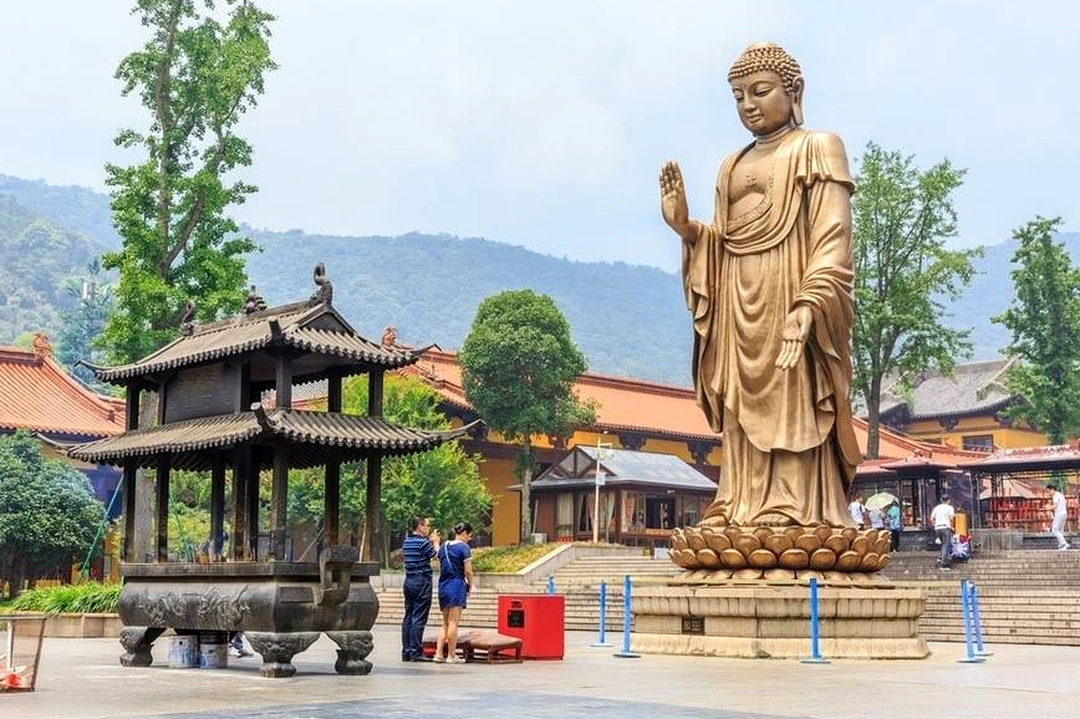
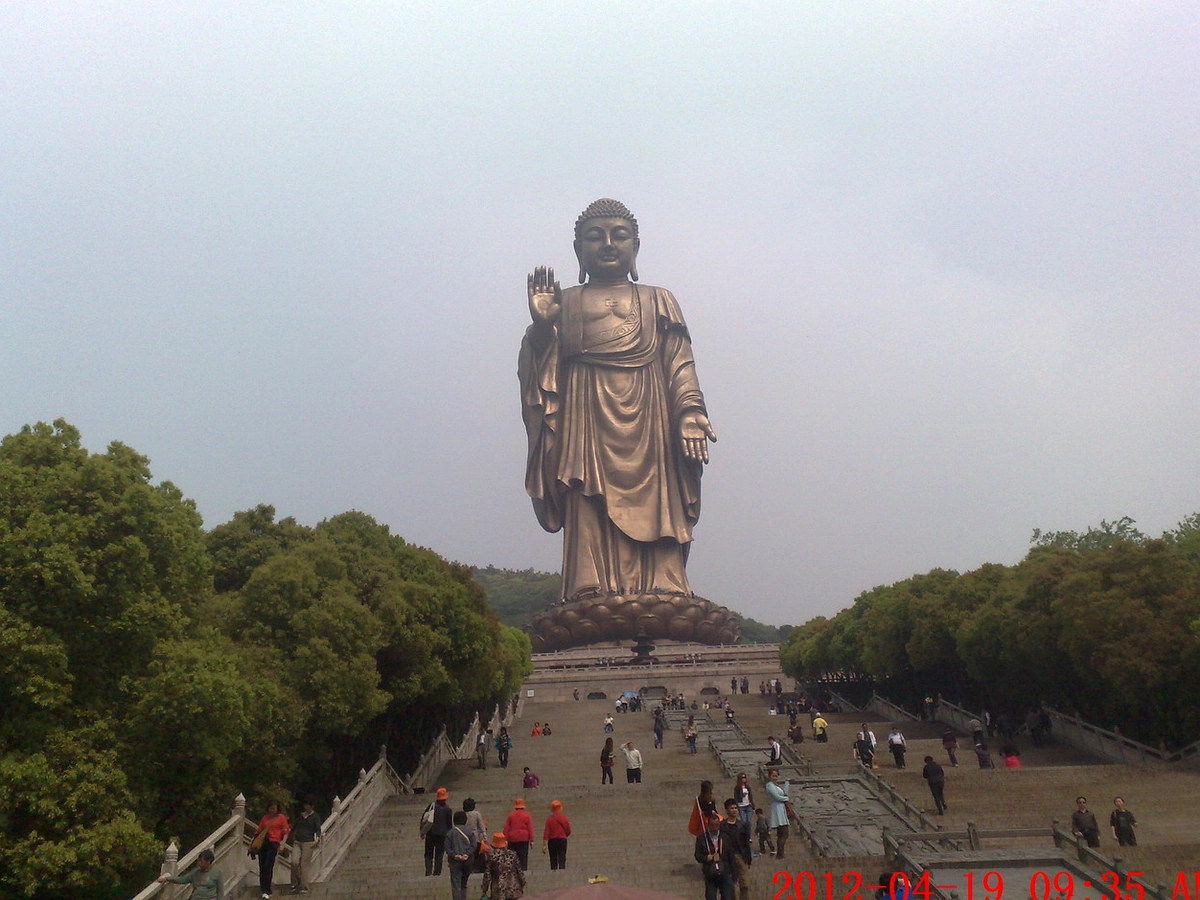
Stepping past spiritual spatial layers of the Lingshan scenic complex, any traveler’s gaze is transfixed by a wonder towering between Wuxi’s heaven and earth, where the peak of traditional Eastern metal casting art harmonizes completely with top-tier modern construction engineering. Lingshan Grand Buddha is not simply a large-scale religious project, but a timeless technical masterpiece testifying to the talent and erudite wisdom of top artisans and engineers of that era. Standing at the mountain foot, the entire statue of the Buddha appears majestic and imposing yet radiates an ethereal, wondrously compassionate beauty, blending into Lake Tai’s mists and waters to form a picturesque, serene, and spiritually charged landscape.
Regarding actual scale and spatial structure, the project possesses parameters astonishing anyone exploring its manufacturing techniques. The Grand Buddha’s total height reaches 88 meters, fully inclusive of the lotus throne and the grand substructure architectural system beneath. Specifically, the Buddha’s body alone towers 79 meters high, reigning atop a 9-meter lotus throne composed of exactly 48 large and small lotus petals opening and closing rhythmically, supporting the entire massive weight estimated at around 700 tons of the entire statue. To bear this extraordinary material load, the internal load-bearing frame is built extremely solidly with high-strength steel space trusses combined with a sturdy reinforced concrete core, providing astonishing earthquake resistance up to magnitude 8 while withstanding the harshest weather conditions of the lower Yangtze River delta plain.
Enveloping this robust steel skeleton is a special outer armor crafted entirely by hand using exquisite hammering techniques. The outer skin of the grand Buddha uses special silicon bronze with a standard thickness of about 6 millimeters, assembled from roughly 2,000 large and small copper plates. This silicon bronze alloy helps the statue retain the majestic, solemn hue of precious metal through time while possessing corrosion and oxidation resistance superior in the high-humidity environment around Lake Tai. The meticulousness in crafting each copper plate—from smelting, manual hammering to airtight welding of thousands of joints demanding absolute precision—transforms the Grand Buddha into a living metallic entity reflecting nature’s brilliance across different times of day.
Alongside architectural scale and metallurgy, the sculptural art value of Lingshan Grand Buddha lies in strict adherence to classical Buddhist canons. This open-air statue portrays Amitabha Buddha (or Shakyamuni Buddha) propagating the Dharma, with his right hand forming the Abhaya mudra to bestow peace and dispel fear, while his left hand forms the Varada mudra symbolizing compassion to relieve suffering. His facial features are carved delicately, with a wise high forehead and a gentle smile hinting at Zen subtleties, strictly following meticulous instructions of the ancient *Miaoxiang Zuozao Liangdu Jing* (Scripture on Iconometric Proportions of Buddha Images). Thanks to harmonizing standard proportional geometry and peak sculpture arts, the grand Buddha delivers a wondrous visual effect termed by artisans “compassionate eyes viewing sentient beings”—whether standing far away across Lake Tai’s waters or right at the base of the lotus throne looking upward, the Buddha’s compassionate gaze seems to follow, empathize, and protect every mortal life.
As night falls, the Wuxi Lingshan Grand Buddha does not submerge into millennia of seclusion but transitions into a powerful visual and auditory art space where cutting-edge technology converges with Eastern Zen philosophy. Leaving behind daytime brilliance, visitors enter a magical world crafted by top-tier architectural night lighting where solemn lines on shoulders, face, and robes of the 88-meter grand Buddha are illuminated by precise beams, creating floating visual effects as if he reigns among clouds. At the sacred mountain’s foot, a path of light named “lotus steps blooming” stretches out, guiding visitors into a mesmerizing spiritual pilgrimage where every footstep glows with pure floral hues matching breath rhythms.
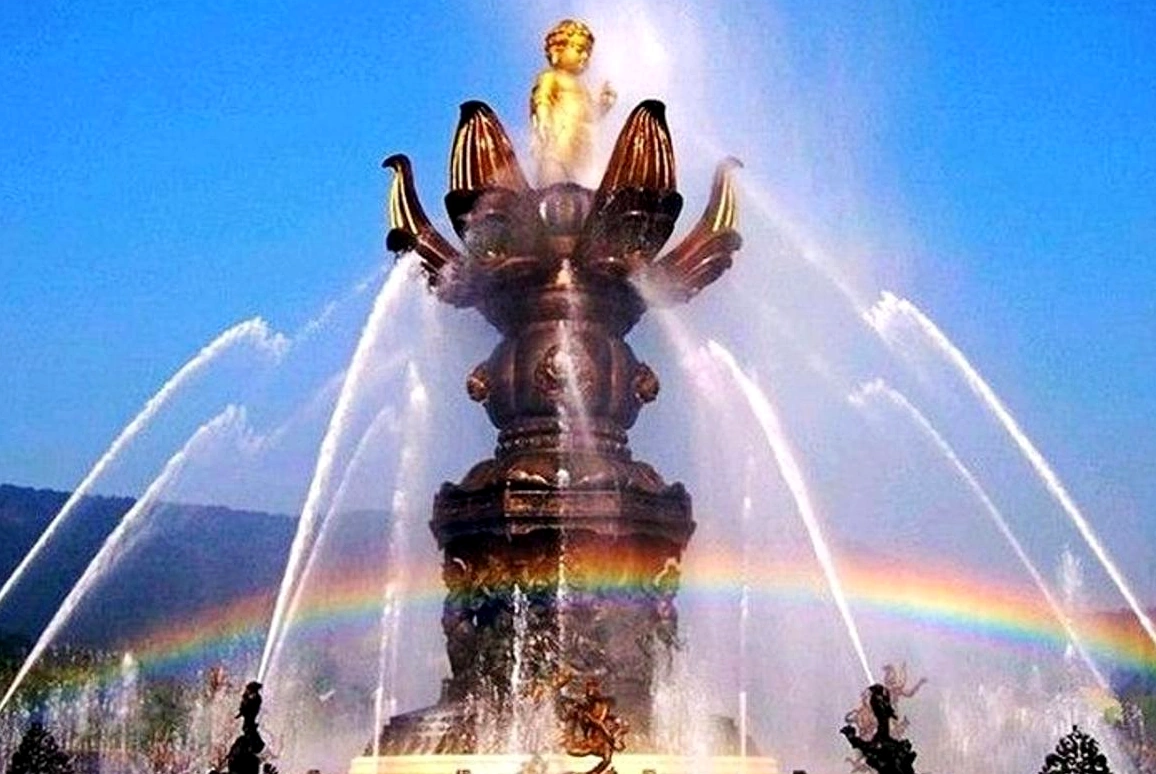
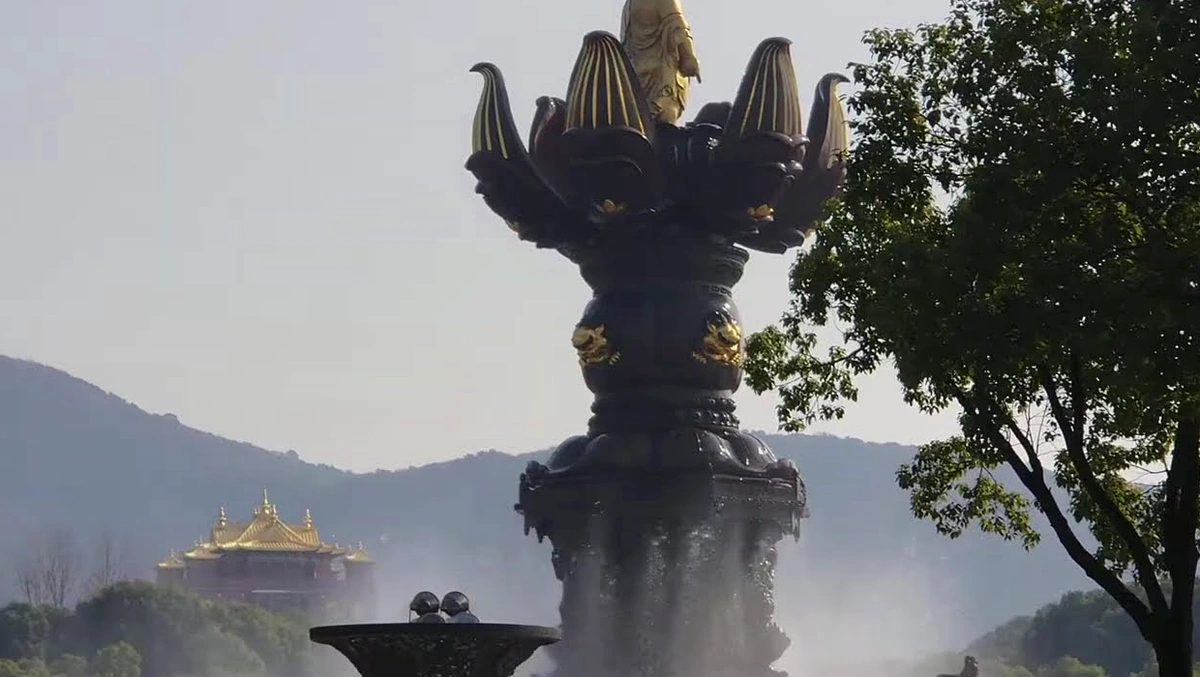
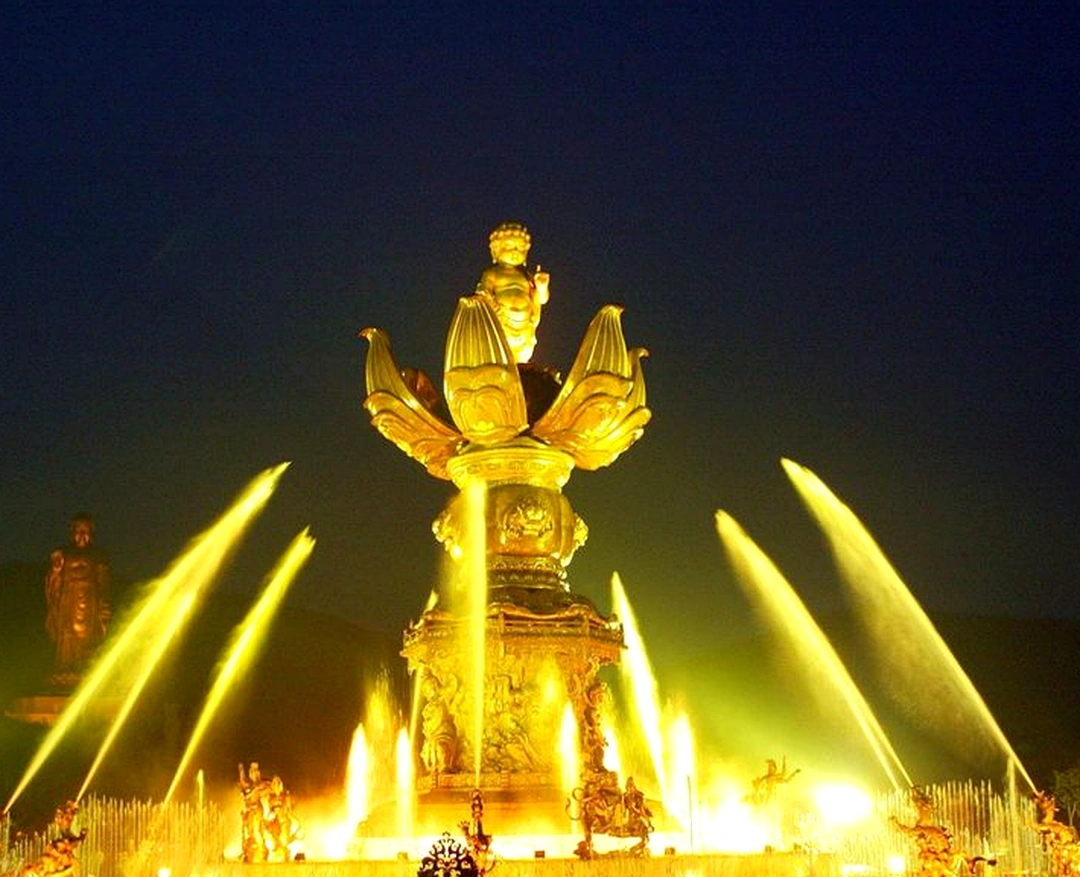
The living rhythm and performing arts here feature a dynamic landscape named “Jiulong Guanyu” located right in the center of Scenic Plaza. When traditional melodies merge with modern sound and lighting technology, a gigantic lotus flower over 30 meters in diameter slowly opens from the lake’s center. From that lotus, Prince Siddhartha rises amidst worldly worship, while eight exquisitely carved dragon heads shoot powerful water columns creating misty vapors. Moments later, the nine dragons simultaneously spray pure water to bathe the prince, vividly and grandly recreating the legendary Buddha birth legend, overwhelming witnesses with awe at the perfect blend of sculpture and advanced kinetic engineering.
Stepping deeper into the interior, the Brahma Palace stands so magnificent and splendid that global experts and travelers dub it an “Eastern Louvre” within the Buddhist realm. This structure is a powerful declaration of peak Buddhist architecture combined with contemporary fine arts, highlighted by cosmic nebula domes recreating boundless skies and stellar movements. It preserves top artisanal artworks of master craftsmen while staging a grand Buddhist musical titled *Auspicious Chant*. Equipped with a unique 360-degree rotating auditorium system, art water screens, cutting-edge holographic spatial projection technology, and multi-dimensional stages, the performance takes audiences across time and space boundaries to touch serenity, deeply experiencing compassion and wisdom through sublime artistic slices.
Exploring the Wuxi Lingshan Grand Buddha remains incomplete without experiencing its distinct culinary culture, gathering Jiangnan’s finest essence dubbed the “land of fish and rice.” Amidst serene monastic grounds, cuisine here transcends worldly dining to become a spiritual cultivation art, blending Zen culinary lightness with bounty from Lake Tai. Savoring flavors in Mazhan moves from inner stillness to sensory explosion through dishes carrying generational heirloom imprints.
Initiating this sensory journey is the renowned vegetarian noodle culture in Lingshan’s restaurants. Prominent above all is Lingshan vegetarian noodles (灵山素面), a culinary masterpiece demanding meticulousness and absolute patience from chefs. The broth avoids animal bones, simmered laborously for eight continuous hours from over ten rare wild mushrooms, combined with tender fresh bamboo shoots and refreshing bean sprouts. Upon tasting, diners experience natural, pure sweetness spreading across the tongue, stemming from time and dedication rather than additives. Additionally, diners relish exquisite Luohan Zhai (羅漢齋) prepared entirely from seasonal ingredients, symbolizing yin-yang harmony and Buddhist benevolence.
Leaving the monastery grounds, stepping into Mazhan suburbs and Wuxi City, the culinary picture transforms brilliantly and richly with famous specialties. Mentioning Lake Tai invokes the “Tai Tai Three Whites” (太湖三白), comprising whitebait, white shrimp, and silver carp. Local cooking highlights maximum original ingredient flavors with minimal masking spices. White fish is gently steamed with fine regional wine to remove fishy notes while retaining natural fish sweetness; meanwhile, white shrimp and silver carp are transformatively stir-fried with fragrant loofah, melting instantly upon touching the palate.
Wuxi’s culinary depth is proven by two culinary symbols surviving epochs: Wuxi sauce spare ribs (無錫醬排骨) and Wuxi small soup dumplings (無錫小籠包). Wuxi spare ribs impress diners with rich mahogany sauce, simmered until meat falls off bones using chopsticks, balancing aged soy sauce savors with Jiangnan sweetness. Meanwhile, Wuxi small soup dumplings represent a marvel in kneading and wrapping arts. With paper-thin translucent wrappers embracing fresh meat and savory soup, correct dining requires lifting gently, opening lids slightly, and sipping fragrant soup before enjoying the dumpling. These flavors—from monastic noodles to old town dumplings—weave a vivid culinary symphony portraying an ancient, heritage-rich land.
Concluding the pilgrimage and decoding spiritual layers at the Wuxi Lingshan Grand Buddha complex, preparing a meticulous practical guide is the master key ensuring every researcher, tourist, or traveler experiences a fulfilling, smooth, and deeply experiential journey. Nestled peacefully in picturesque Mazhan by expansive Lake Tai, this scenic spot demands spiritual reverence alongside precise scheduling, transport, and cultural etiquette to miss no architectural masterpieces or contemporary Buddhist art values.
Regarding operating hours, Lingshan Scenic Area welcomes visitors daily from 8:30 AM to 5:30 PM; however, schedules adjust flexibly during major festivals or special Buddhist events featuring evening lantern displays. A primary rule for modern travelers is booking real-name tickets in advance via WeChat or reputable online travel platforms before reaching gates, avoiding congestion or queueing under Jiangnan’s scorching sun or freezing cold. Proactivity optimizes time and reflects the civilized travel style of refined voyagers.
Getting to Lingshan Grand Buddha from downtown Wuxi offers diverse options depending on individual budgets and time. For public transit fans, from Wuxi railway station, take Metro Line 1 to Jiuzhen Zhongxin station, then transfer to Mazhan dedicated buses like Express Line 11 straight to Lingshan Scenic Area entrance, taking roughly one hour. For speed and convenience via private cars or taxis, fares from Wuxi station range from 100 to 130 RMB, carrying travelers across scenic lakeside roads into the Buddha’s tranquil realm.
To fully enjoy the grand scenic area without exhaustion, experienced travel experts recommend a closed 5-to-6-hour sightseeing route. Morning starts at Scenic Plaza to admire the grand water fountain reenacting Buddha’s birth (Jiulong Guanyu), proceeding past the powerful Subjugating Mara relief, visiting ancient Xiangfu Temple, and finally climbing the hill to worship the grand Buddha and pray for families. Lunch pauses at Brahma Palace for light vegetarian noodles. Afternoon suits exploring Brahma Palace’s splendid interiors, strolling Fragrant Sea Corridor, and admiring the mystical Mandala Five Seals Altar.
Beyond itineraries and transport, obeying cultural etiquette and dress codes is paramount in this sacred place. Visitors must wear modest, polite attire in shrines, maintain absolute silence, avoid loud speaking, and strictly prohibit flash photography inside sacred shrines to preserve religious solemnity. To avoid travel traps at pilgrimage sites, travelers should stay alert, keeping distance from hawkers selling fake incense or unverified consecrated artifacts outside gates; instead, procure spiritual items exclusively from official outlets inside the scenic area. Due to Lake Tai’s harsh weather, prepare umbrellas and sunscreen for hot summers, or warm windproof jackets for cold winters.
For deeper insights into history, architecture, and optimal trip preparation, readers can consult detailed information via all-inclusive tour packages to enjoy a complete, safe, and emotional world cultural heritage exploration journey.