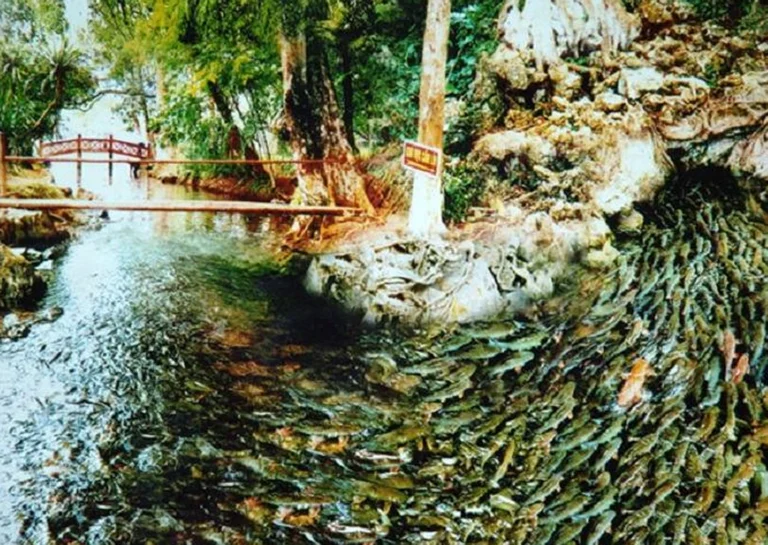
The history of Wuxi’s land began to unfold in the late Shang Dynasty in the 11th century BCE, when Taibo and his younger brother Zhongyong left the fertile Central Plains to travel south, reclaiming wasteland and founding the State of Gouwu. Choosing Maimen as their capital, the two founding figures ordered the excavation of the Badu Canal, which spans over three thousand years of history, laying the primitive irrigation foundation for the entire lower reaches of the Yangtze River delta. By 495 BCE, King Fuchai of Wu expanded his hegemonic ambitions by digging the Han Canal, linking the roaring Yangtze River with the Huai River. This dense network of canals not only transformed the area into a vital military supply transport artery during the Spring and Autumn and Warring States periods, but also permanently shaped the cultural identity of a southern city whose backbone is water.
The name Wuxi officially appeared on administrative maps in 202 BCE under the Western Han Dynasty, when Emperor Gaozu of Han decided to name the county in connection with a profound geomantic and geological phenomenon. When the rich tin mines on Jishan Hill were completely exhausted, local folklore passed down a symbolic prophecy: “When tin exists, the realm is in chaos; without tin, the realm is at peace”—implying that the exhaustion of tin mines signaled the end of weapon forging, inaugurating an era of peace and tranquility. Entering the Sui Dynasty, during the Daye era from 605 to 610, Emperor Yang of Sui mobilized millions of laborers to dredge the Jiangnan Grand Canal axis, creating a massive ribbon of water embracing ancient Wuxi city, transforming the land into one of the most prosperous silk-transfer and rice-granary hubs in the entire Jiangnan region.
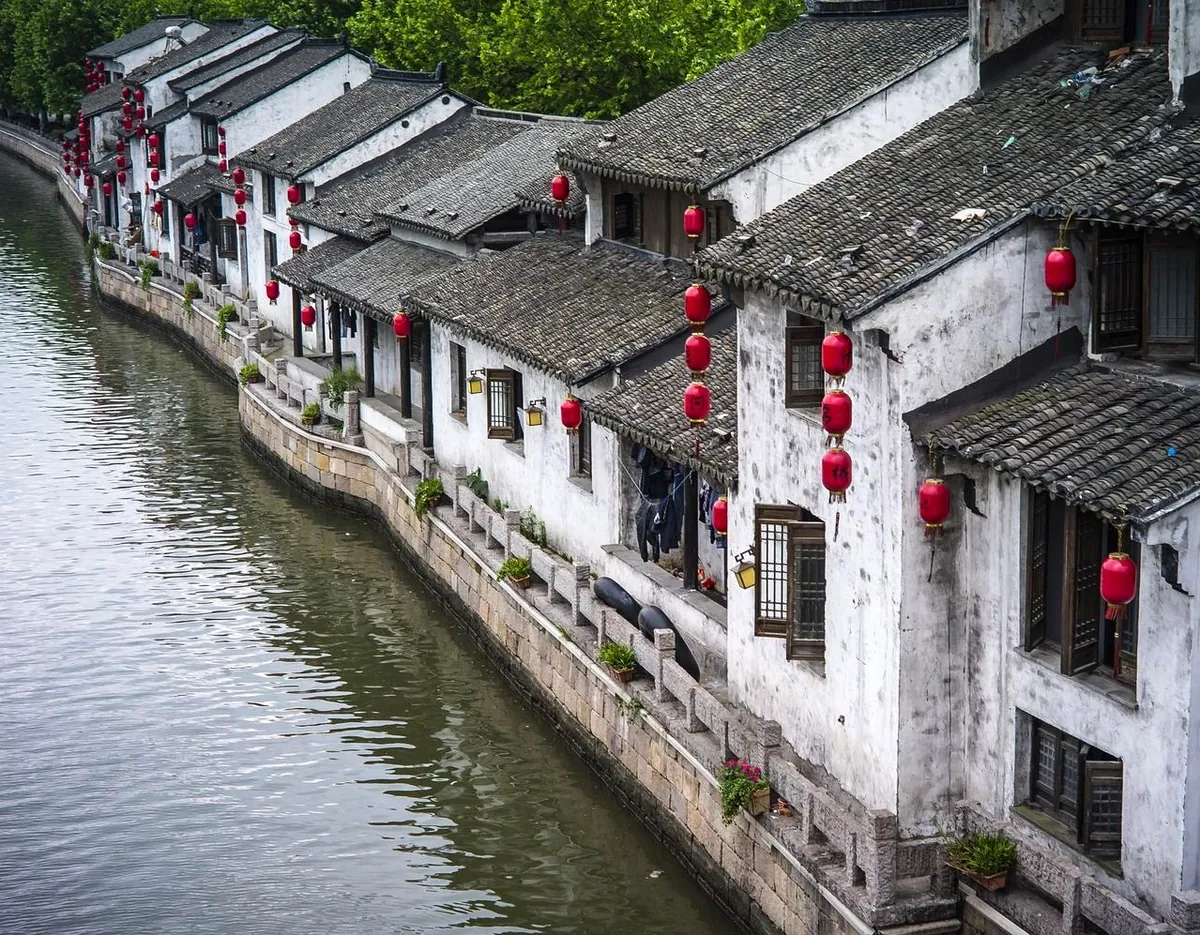
Standing majestically amidst the antique scenery of the water town is an ancient stone bridge with a graceful curved arch, proudly spanning the serene canal that has witnessed countless shifts of fortune. Along both banks of the canal, grey-tiled, white-walled historic homes with mossy roofs huddle beneath lush green foliage, reflecting into the clear water like a contemplative, sublime natural masterpiece. Accompanying the stone-paved riverside walkways are brilliant red umbrellas shading visitors’ resting corners, while atop the bridge arch, travelers stroll leisurely, taking in the panoramic views of tranquil waterway commerce preserved for hundreds of years.
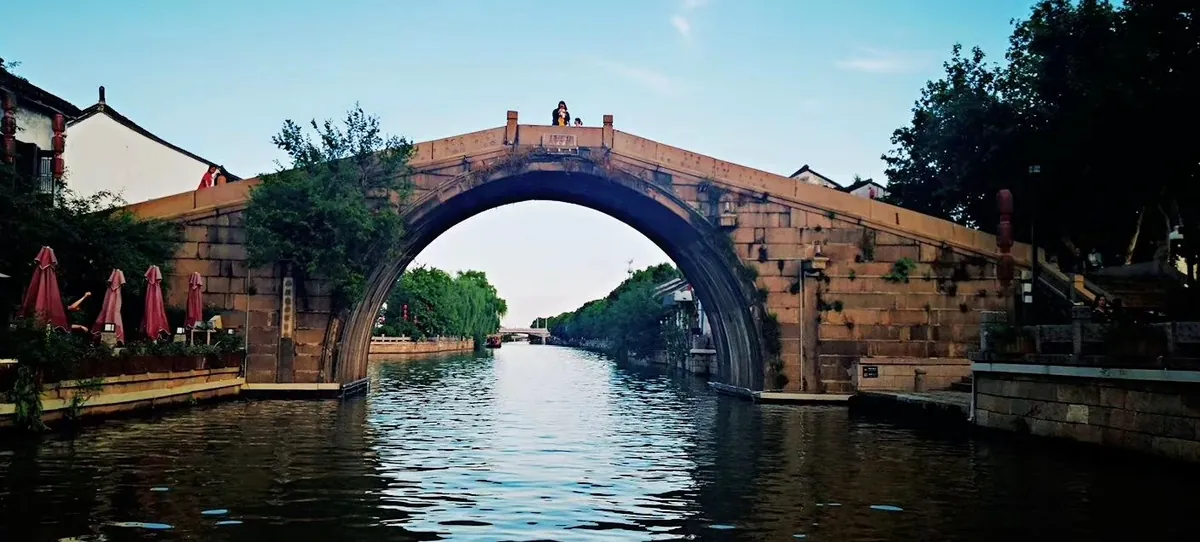
The masterpiece stone arch spanning the ancient canal is none other than Qingming Bridge, an iconic structure begun in the 9th year of the Wanli era during the Ming Dynasty (1581). Originally named Qingning Bridge, it was built entirely through the pious donations of local hometown brothers—magistrates Pan Ban-cheng and Pan Ban-he—to help commoners on both banks escape the hazards of river crossings. Having weathered the ravages of war and water erosion, the bridge underwent major restoration in the 8th year of the Kangxi reign (1669) under the Qing, before being rebuilt sturdily with solid granite in the 15th year of the Daoguang reign (1835) and officially renamed Qingming Bridge. In 2014, the historical value and original structure of the Ancient Wuxi Canal section alongside the Qingming Bridge span were inscribed by UNESCO as a World Cultural Heritage site.
Entering the modern era in the late 19th and early 20th centuries, the Nanchan Street river bend surrounding Qingming Bridge witnessed the spectacular rise of pioneering national capitalists. Under the leadership of the Rong family brothers—Rong Zongjing and Rong Desheng—Wuxi transformed from a traditional handicraft town into a brilliant industrial and commercial cradle, earning the moniker “Little Shanghai.” Along the flowing water, the Dayaolu brick-kiln complex burned brightly day and night alongside dense textile mills, blending the modern breath of early industrialization with the timeless elegance of a thousand-year-old water town.
Situated right at the geometric center of the lower Yangtze River delta basin, the city of Wuxi possesses a rare geomantic landscape structure featuring the cyclical fusion of mountain ranges and water bodies. The southwest of the urban area is sheltered by the sturdy ecological screen of Jishan and Huishan hills, while its entire eastern and southern territory opens toward the vast expanse of Lake Tai. Natural waters originating from Shiliu Tou Bay along the shores of Lake Tai wind backward into the core of the Liangxi old town, creating a seamless and fertile ecological-hydrological connection. In traditional Jiangnan feng shui concepts, this formation is celebrated as “pearls encircling and waters winding”—meaning a precious land embraced and cradled by myriad blue waves, accumulating millennial prosperity for the entire region.
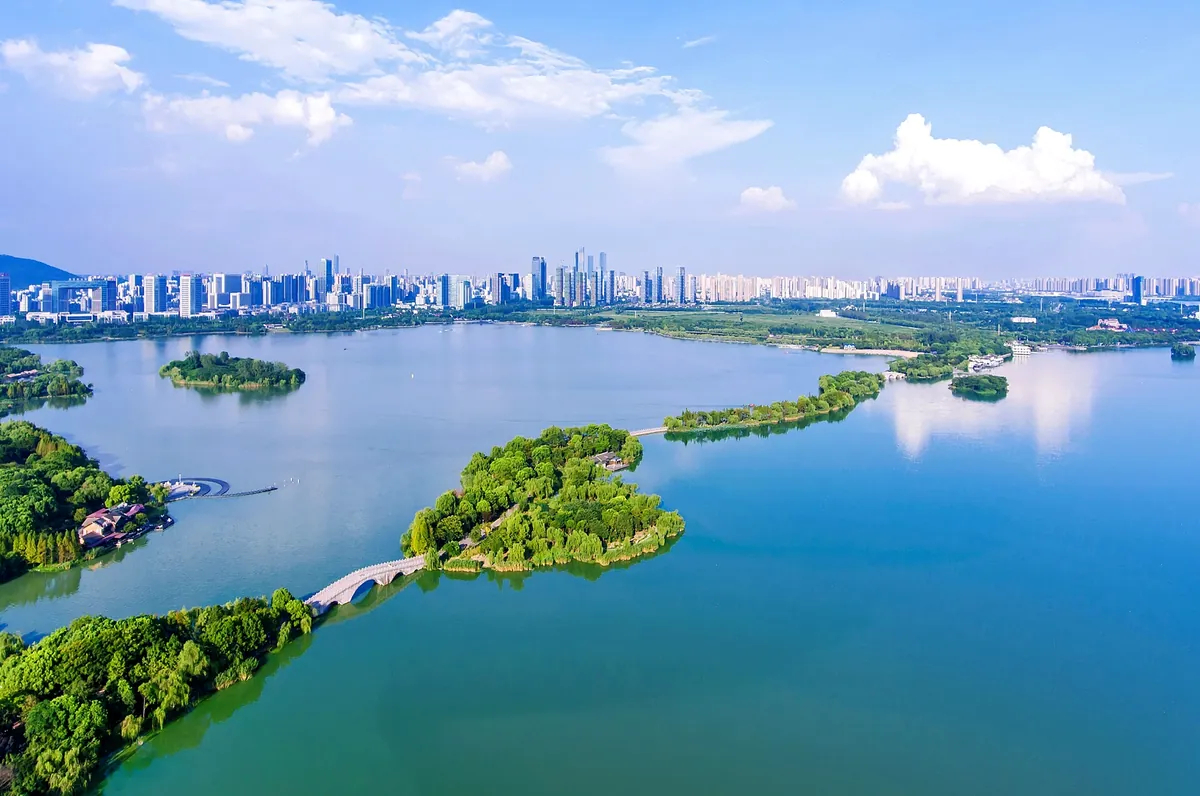
The foundational anchor in Wuxi’s ancient urban planning is the Ancient Canal axis spanning over 40 km, a unique heritage segment that preserves its “water and land running parallel” structure winding seamlessly through the city’s heart. Rather than digging straight, rigid channels, generations of local residents followed natural watercourses, linking the Grand Canal with the Badu Canal—the artificial canal initiated by Taibo during the Spring and Autumn period. The gently curving current separates and enfolds residential clusters, forming the renowned “Jiangnan water alley” (江南水弄堂) network. In this spatial layout, the overland stone road runs parallel right at the water’s edge, with the fronts of houses opening onto bustling streets while their rears step directly down stone stairs into the canal, creating a residential morphology intimately bound to every breath of the river.
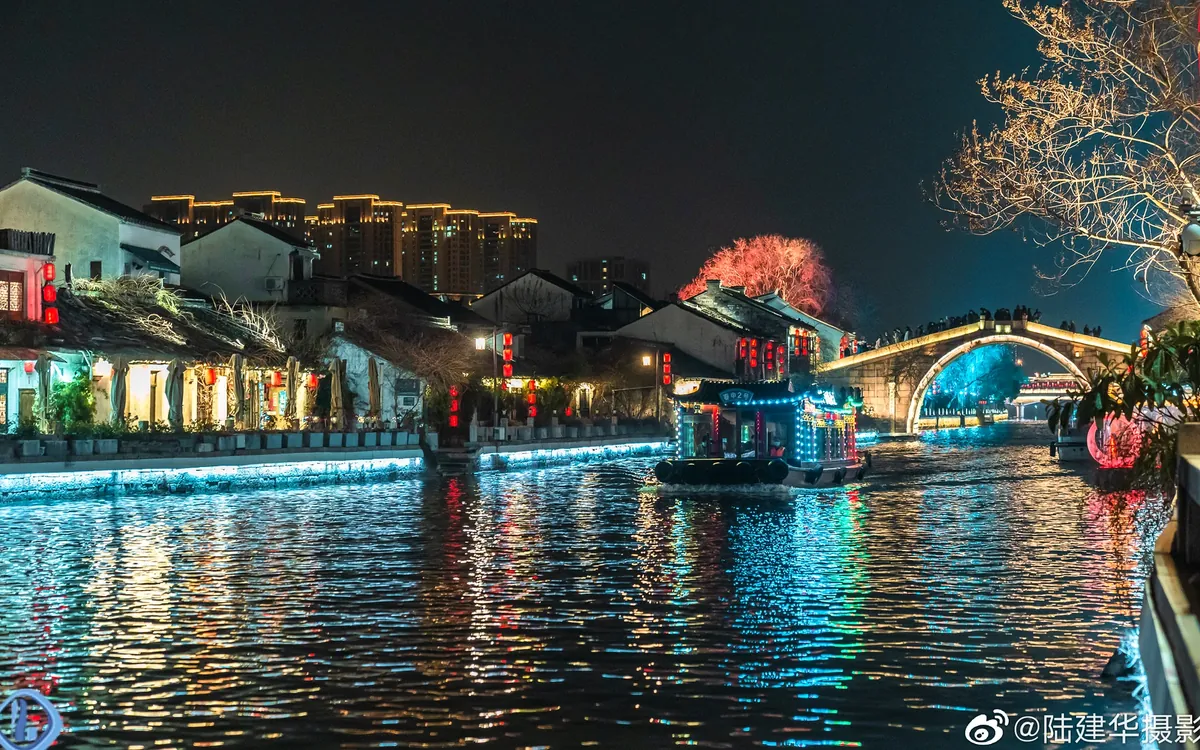
When night falls, the ancient hydrological panorama of the winding canal instantly lights up in a magnificent and magical guise. Along both banks of the narrow canal, continuous rows of traditional old houses with sloping roofs and weathered walls are brilliantly illuminated by warm golden lights, casting shimmering reflections onto the flat surface of the dark, silk-like water. In the distant background at the edge of the field of view, the silhouette of a graceful curved stone arch bridge spans the canal banks, standing out charmingly, linking both sides of the old town and becoming a supreme visual anchor reflecting the pure, contemplative elegance of a prosperous commercial port in the heart of Jiangnan.
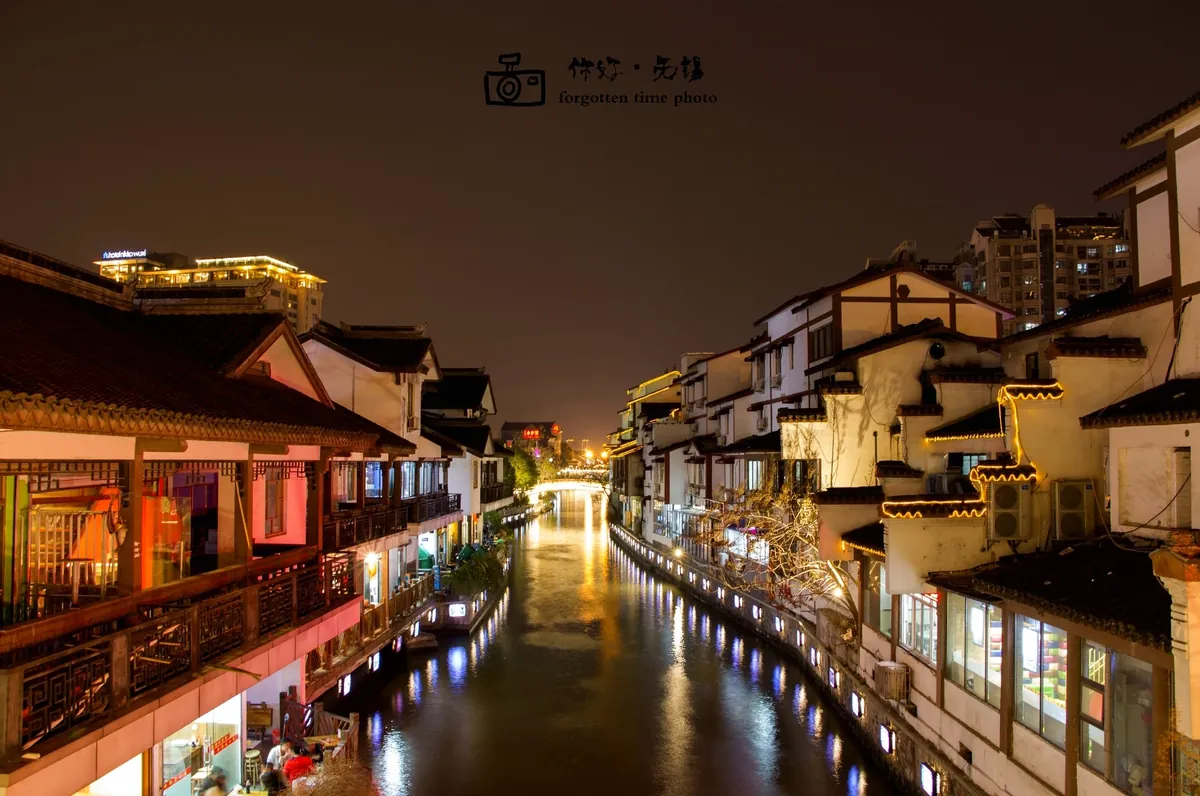
The art of spatial planning here reflects the pinnacle of adaptation to natural conditions, where water is not seen as an obstacle but as a nourishing bridge for the entire settlement structure. The dense river network with branching tributaries acts like capillaries channeling pristine sweet water from Lake Tai deep into every nook of Liangxi, combining with the low hills of Huishan to form a protective “mountains embracing water” formation shielding this land from harsh storms. The appearance of hundreds of bluestone public water wharves, ancient boat locks, and underground drainage floodgates demonstrates how ancestors precisely calculated tidal amplitudes and seasonal rainfall, ensuring that the scenery on both banks forever retains its peaceful charm, safe from flooding or drought across centuries of upheaval.
It is this harmonious symbiosis between nature and human creation that has forged a unique water-urban ecosystem on the settlement map of Chinese paddy-rice civilization. Every bend of the canal channel, every ancient stone bridge spanning the water, and every clump of weeping willows along the banks is the result of planning philosophy respecting natural flows, making Wuxi an immutable symbol of a fertile fish-and-rice region. The topographical scenery here is not merely a flat geographical space, but a living body carrying the soul of water, nourishing the gentle, elegant, and enduring lifestyle of residents across historical vicissitudes.
The scenic spatial complex of the Qingming Bridge on the Grand Canal represents the pinnacle of oriental ink-wash urban planning, where natural environments and civilian works merge into a flawless organic whole. The core defining the landscape identity here is the architectural principle of “Front Street, Back River” (Tiandian Houhe)—meaning storefronts open in front while rivers nestle behind—which served as a typical floor plan solution for Ming and Qing Dynasty commercial towns in the Jiangnan region. Along the two renowned old street axes of Nanchang Street and Nanxia Tang running symmetrically parallel across the water, historic houses possess a uniquely dual functional structure. Their shopfronts open continuously, paved with flat bluestone welcoming bustling pedestrians, while their rears lean closely against the breezy canal edge. Here, every house features private stone steps leading straight down to the water known as “Shuifutou” (水埠头), serving simultaneously as daily washing stations for residents and small docks for merchant boats to moor and unload cargo directly into the rear chambers.
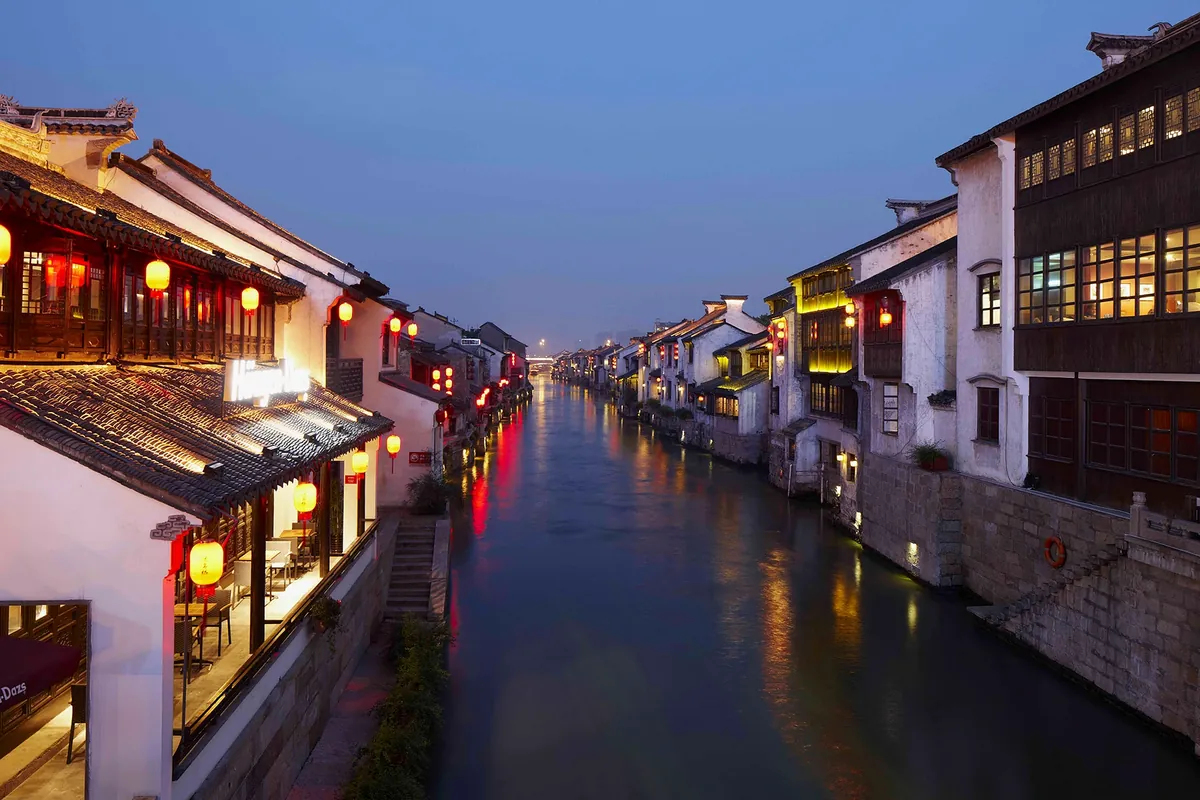
Guarding the distributary junction of the ancient canal stands proud Qingming Bridge, a single-span stone arch masterpiece hailed as the heart of Wuxi’s entire heritage space. The bridge spans the Grand Canal with a total length of 43.2 meters and a deck width of 5.5 meters, crafted entirely from white-grey granite blocks quarried from nearby mountains, carved with precision and linked sturdily across hundreds of years of weathering without shifting. The clear-span arch aperture reaches an impressive 10.8 meters with a vertical clearance of 7.3 meters from normal water levels to the crown. This standardized geometrical ratio not only delivers a graceful, soft silhouette resembling a crescent moon reflected in the water, but also reflects the supreme hydrological calculation of ancestors, ensuring large sampan merchant fleets of old could pass conveniently even during high flood seasons. Standing atop the bridge crown and gazing into the distance, intersecting aquatic and terrestrial life unfolds in a vibrant living panorama of past and present.
Northeast across from the bustling commercial streets lies the Dayaolu ancient brick-kiln ruins complex, a functional sub-district reflecting the deep heritage of handicraft manufacturing combined with unique water transport. This area still preserves dozens of ancient kilns dating throughout the Ming and Qing dynasties, built sturdily in a gentle arched structure resembling the back of a beetle. This kiln cluster ingeniously utilized fine clay deposited by Lake Tai’s river network alongside the Grand Canal waterway to transform Wuxi into a major workshop supplying imperial bricks and tiles for building northern capital palaces and aristocratic mansions. Raw clay transport and the shipping of fired bricks as solid as metal both took place seamlessly right at the riverbank, demonstrating the brilliant integration of handicraft production scale with ancient waterborne transport arteries.
Running along both canal banks are hundreds of consecutive Ming and Qing Dynasty old houses preserving the classic visual vocabulary of water-town aesthetics with pristine whitewashed walls contrasting sharply against dark-grey and blue-black yin-yang tiled roofs. Gentle curving eaves, intricate carved wooden balconies, and deep, winding alleyways paved with flagstone create a spatial order at once contemplative and worldly. The interplay between massive stone bridges, rustic civilian water wharves, and ancient industrial kiln complexes has forged a multi-layered spatial ensemble, proving the wonderful adaptation and harmony between human residence and the relentless flow of a millennial waterway.
When dusk drapes a thin veil of mist over the Grand Canal, the Qingming Bridge scenic area and Nanchang Street historic axis shed daytime tranquility to don the dazzling appearance of a flourishing night culture and economic hub. Rising far beyond a casual strolling spot, this historical space serves as a vital nighttime economic milestone, contributing up to 62% of Liangxi District’s total service spending. During peak festival seasons, it welcomes 180,000 to 260,000 visitors every day and night, creating a lively yet orderly human panorama along both banks of the ancient river. Beneath the yin-yang tiled eaves of historic houses, thousands of red lanterns light up brilliantly, casting warm fires onto flat waters resembling a dark silk ribbon, blending with sophisticated accent lighting highlighting every carved stone on ancient bridge arches, transforming the entire canal into a shimmering Milky Way winding through the urban core.
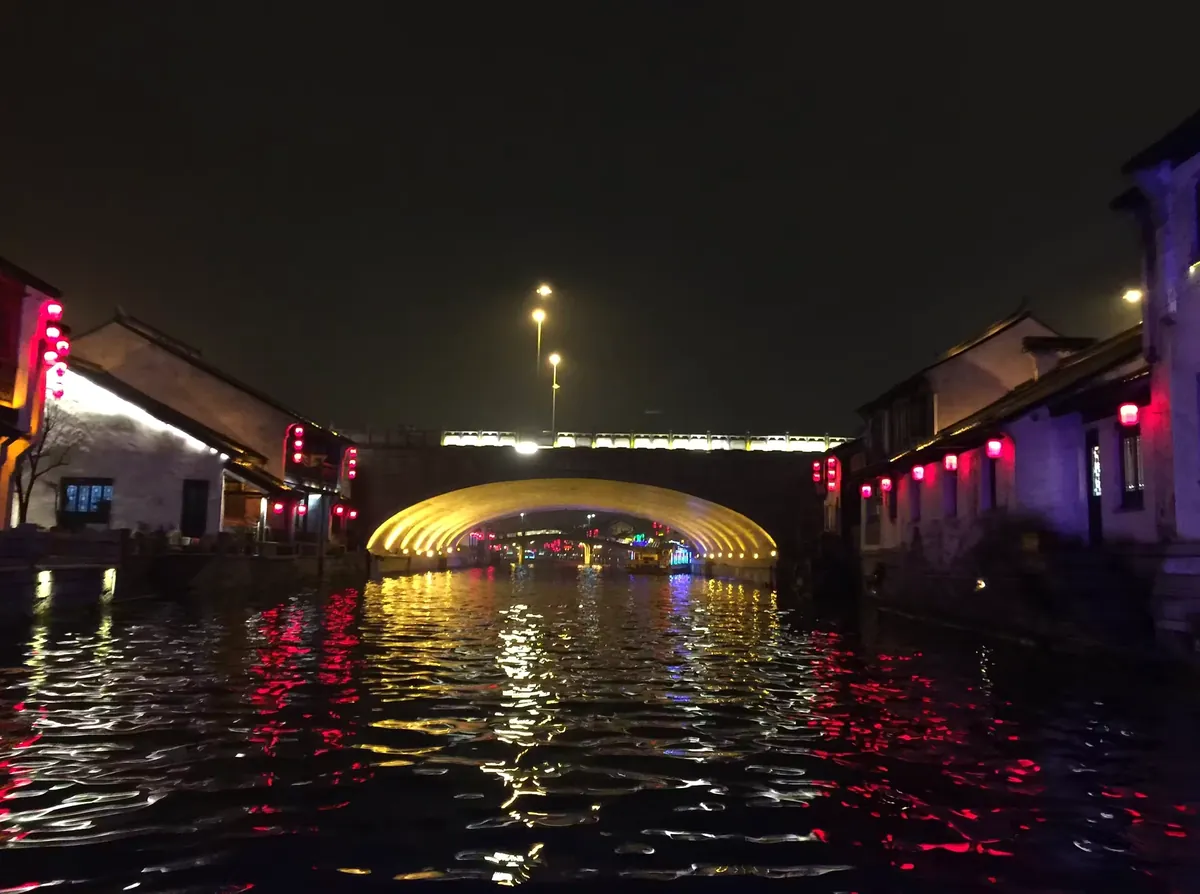
The breakthrough giving Wuxi’s night space its unique visual appeal is the flawless integration of contemporary projection technology with strict heritage conservation principles. Landscape managers applied advanced 3D Mapping projection techniques and Hologram 3D imagery directly onto weathered historical walls and ancient stone bridge arches. By precisely calculating projection angles and light intensity, optical films vividly recreated scenes of bustling merchant vessels sailing vast distances, prosperous imperial grain transport trade, and wind-filled sails of northern and southern merchant fleets along the millennial canal axis. Most admirably, this entire projection system operates on a non-contact optical mechanism, completely avoiding any intrusion or damage to the physical fabric and pristine moss of granite stones surviving centuries of history.
To fully experience the breathing rhythm of this historic watercourse, a 45-minute night wooden boat cruise is an unmissable contemplative journey for travelers. Departing from the ancient wharf beside the revered Nanchan Temple, the wooden boat cuts through ripples in tranquility, winding through contemplative river bends, passing beneath the graceful arch of Balang Bridge before drawing closer to the majestic Qingming Bridge. Passengers onboard are guided by an automated bilingual GPS positioning headset narration system, where every story of waterborne transport and bridge-building folklore syncs precisely with landmarks along the cruise route. Looking up from the water toward the banks, contemporary urban life unfolds through illuminated tea houses and craft workshops, creating a poetic contrast against the eternal silence of the ancient canal bed.
The artistic pinnacle of Wuxi’s night journey reaches its zenith aboard luxury tea-banquet cruise boats, where passengers admire scenery while immersing themselves in the renowned Jiangnan Pingtan ballad heritage. Amid a cozy ambiance infused with elegant tea fragrance, crystalline pipa lute notes blend with the deep resonance of sanxian plucked strings, guiding listeners through legendary classical tales. Sweet, graceful singing delivered through the soft intonation of Wu dialect echoes out open cabin windows, melting into night mists and resounding from mossy bridge masonry. This exquisite harmony between traditional music, magical lighting technology, and gentle rowing rhythm carries travelers across time boundaries, touching the soul of the Jiangnan water town deeply and completely.
Wuxi’s native cuisine—also known as Xibangcai—holds an unassailable, proud position on the Jiangsu culinary map thanks to its celebrated flavoring philosophy: sweet leads, savory follows. Unlike Huaian’s standardized clean lightness or Yangzhou’s intricate elaboration, Wuxi flavors celebrate rich sweetness from rock sugar as a catalyst enhancing the fresh richness of fertile delta produce. The immortal icon of this school is Wuxi Braised Pork Ribs (Xixiang Paigu), originating from the renowned Sanfengqiao Meat Shop founded in the 5th year of the Guangxu reign (1879) during the Qing Dynasty. Selected spare ribs are marinated with handcrafted artisanal soy store soy sauce, fragrant Shaoxing aged wine, and red yeast rice to yield a naturally glossy mahogany hue. Through hours of slow simmering with concentrated rock sugar proportions, the ribs achieve magical tenderness, falling off the bone at the lightest touch, releasing glossy fat and a deep, lingering sweet finish.
Accompanying the famous red ribs is Wuxi Xiaolongbao, a dim sum masterpiece that astonishes gourmets through its clear contrast with neighboring Shanghai styles. Wuxi wheat-flour dumpling wrappers are rolled roughly 1.3 times thicker than Shanghai xiao long bao to withstand heavy loads of coarse meat filling soaked in sauce and abundant soup inside. When biting gently into pleated dumpling folds at Wangxingji—with its history dating to 1913—or at Xishengji nestled along flagstone lanes of Nanchang Street, crystal-clear, piping-hot soup bursts across the palate with rich meat sweetness blending cleanly with rock sugar. To balance this surging sweet richness, local diners always pair dumplings with slivered fresh ginger soaked in Zhenjiang black vinegar, or choose crab-roe soup dumplings glowing golden with rich autumn harvest alluvial flavors.
If meat dishes favor rich flavoring, lake produce returns diners to pure natural purity through the celebrated Taihu Three Whites trio. This title honors the three finest aquatic products of the lagoon: Lake Tai white shrimp (Baiha), whitefish (Bainyu), and icefish (Yinyu). Thin-shelled white shrimp with jade-clear flesh need only a brief blanching in boiling water infused with Huadiao wine to preserve natural sweet crispness. Long sparkling whitefish are skillfully scaled, split down the back, and steamed with a dash of white soy sauce and ginger-scallion slices so rich fats melt smoothly into tender flesh. Meanwhile, boneless, slender icefish are pan-seared with beaten eggs on a cast-iron skillet, yielding fluffy, soft stir-fried fish carrying the fresh breeze of early seasonal winds blowing across the vast lake.
Wuxi’s culinary symphony would remain incomplete without traditional street snacks scattered across alleys around Qingming Bridge. At time-honored Mu Guiying, crisp-fried Yulan Cakes fried in lard draw long queues eager to bite into crisp rice-cake shells enclosing savory-sweet seasoned meat filling. Nearby, Huayuanqiao Tofu Pudding stalls capture hearts with silk-smooth bowls of silken tofu topped with dried shrimp, seaweed, and fragrant shrimp soy sauce. On misty mornings, locals seek out delicate silver-thread noodles floating in clean chicken and shrimp bone broth. Then as dusk falls over river waters, a bowl of Lao Zuntou fermented glutinous-rice rice balls—chewy and sweet with warm fermented wine—or osmanthu-red bean taro paste shimmering with red syrup and cassia fragrance settles into a sweet, lingering memory of Jiangnan gastronomy.
The Qingming Bridge Ancient Canal Heritage Scenic Area welcomes travelers with an open-space management policy. The entire old town and centuries-old stone bridges remain fully open 24/7 without charging admission tickets, turning the area into a living museum blending daily local life with global visitors. Actual sightseeing costs only arise if travelers wish to board ancient wooden boats for a night cruise along the Grand Canal, with official ticket prices ranging from 80 to 100 RMB per adult.
Thanks to surging regional transport infrastructure, reaching Wuxi from neighboring economic hubs is remarkably convenient. High-speed rail HSR lines connect Wuxi densely throughout the day. Travelers departing from Shanghai Hongqiao Station take just 28 to 45 minutes on express trains gliding smoothly across fertile plains, while journeys from ancient Suzhou to Wuxi take a mere 12 to 15 minutes. Once inside the city, visitors easily board Wuxi Metro Line 1, alighting at Nanchan Temple Station or Qingming Bridge Station to step straight into stone-paved riverside old streets.
To fully appreciate the aesthetics of the Jiangnan water town, visitors must understand locals’ unique biological clock. Old Vận Hà canal neighborhoods wake up quite late; the majority of family-run eateries, handicraft shops, and riverside teahouses officially open to guests only after 10:30 AM, so arriving too early diminishes vitality. The absolute golden window of the day runs from 4:30 PM to 6:00 PM, when sunset rays dye mossy tile roofs red and Qingming Bridge’s arch casts sharp reflections across calm water, creating priceless photography frames. Afterward, from 6:30 PM to 9:00 PM is prime time to experience the colorful night market, listen to oar strokes, and admire red lantern reflections from riverside taverns.
Alongside picturesque scenery, travelers must stay alert against commercial traps that have persisted across traditional tourist spots. Historic low-priced group tour histories in the region record pressures to visit designated shopping stops—especially Lake Tai Pearl centers with prices inflated 700% to 1000% over real value, Yixing Zisha teapot workshops casting mass-produced chemical pots, or tea rooms staging medical pulse-taking scams with exorbitant prices. Modern civilized travel trends have shifted decidedly toward standardized No-Shopping itineraries with real costs ranging from 16 to 24 million VND, ensuring absolute respect for visitors’ heritage appreciation time.
Wuxi’s ancient exploration is powerfully supported by open entry policies. International tourists can fully utilize the 144-hour visa-free transit policy linking the entire Jiang-Zhe-Hu triangle comprising Shanghai alongside Jiangsu and Zhejiang provinces, opening multi-destination itineraries without cumbersome visa paperwork. Furthermore, cash payment barriers are eliminated as digital payment super-apps like Alipay and WeChat Pay integrate international Visa or Mastercard directly, making transactions from artisanal coffee to cruise tickets instant. To guarantee a complete excursion free of complex logistics worries, choosing a high-quality all-inclusive tour package is the optimal solution for unhurriedly absorbing every layer of historical sediment across the East China water towns.