Before Western expeditionary sails cut through the waves into this fog-shrouded bay, the winding coastal stretch surrounding the San Francisco Strait was the ancestral homeland of the Indigenous Ohlone people—specifically the Ramaytush subgroup. For thousands of quiet years, the Ramaytush community lived in pure harmony with the ocean, relying on abundant halibut, shellfish, and ancient oak forests that swept from the hillsides right down to the water’s edge. Back then, nature remained in its untamed, majestic state, where surging Pacific currents churned through a narrow gorge wedged between sheer sandstone cliffs, perpetually veiled in drifting mist that concealed the entrance to one of North America’s safest inland harbors.
That primeval order took a dramatic turn in 1776, when Spanish explorer Juan Bautista de Anza led an expedition to colonize the coast of Alta California. Keenly recognizing the strategic military value of the coastal headland, de Anza ordered the establishment of the fortified Presidio de San Francisco alongside a nearby mission. Flying first under the flag of the Spanish Empire and later the Mexican Republic, this military outpost became the crucial linchpin guarding the entire maritime gateway, laying the earliest foundations for a military and commercial port city destined to achieve global prominence in the centuries to follow.
By the summer of 1846, the geographic narrative of the region reached a deeply symbolic cultural milestone tied to explorer and topographical engineer John C. Frémont. Standing atop a windswept hill overlooking the deep-water strait opening directly onto the vast ocean, Frémont was reminded of the famed ancient harbor of Chrysoceras in magnificent Byzantium. He chose to inscribe the name Chrysopylae—meaning Golden Gate—onto his military map, investing it with the fervent belief that this stretch of water would soon become a wide-open, jeweled portal linking prosperous maritime trade between the interior of the new continent and the fabled kingdoms of the East.
John C. Frémont’s foresight swiftly became reality just two years later, when the California Gold Rush erupted in 1848 at Sutter’s Mill. The allure of gold and silver sparked a massive wave of migration from all five continents toward the West Coast. Once a tranquil body of water, the Golden Gate Strait suddenly teemed with the masts of thousands of warships and merchant vessels dropping anchor after braving the storms of Cape Horn. Almost overnight, a sparsely populated frontier transformed into the Pacific’s most bustling hub of commerce and maritime services, driving an insatiable demand for provisions to sustain the surging tide of prospectors.
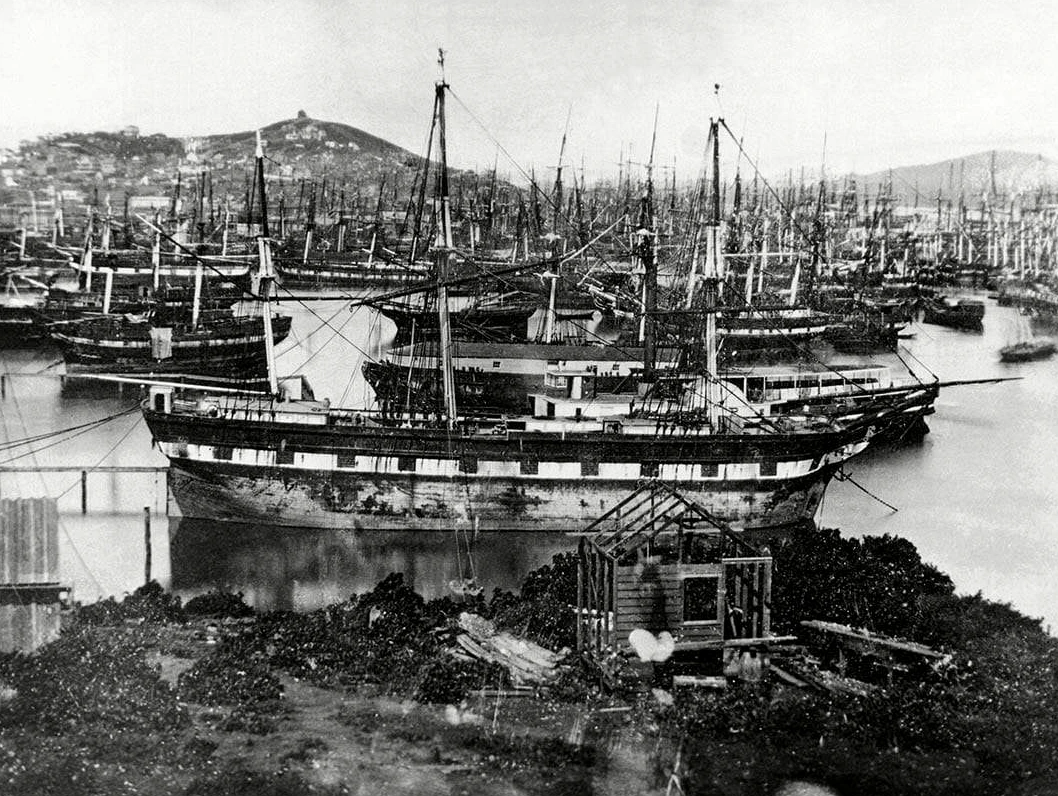
Amid the shifting currents of the era, Fisherman’s Wharf began taking shape in the 1860s, born from a wave of Italian immigrant fishermen hailing largely from storied coastal regions such as Genoa and the island of Sicily. They brought with them mastery in Dungeness crab trapping, cod netting, and traditional wooden felucca sailboats painted in the vibrant hues characteristic of the Mediterranean. The once-rugged pier quickly blossomed into a thriving fish market, infused with the rich aroma of heirloom Cioppino seafood stew simmered right aboard the boats from the day’s freshest catch—etching an unmistakable culinary and cultural identity into the waterfront.
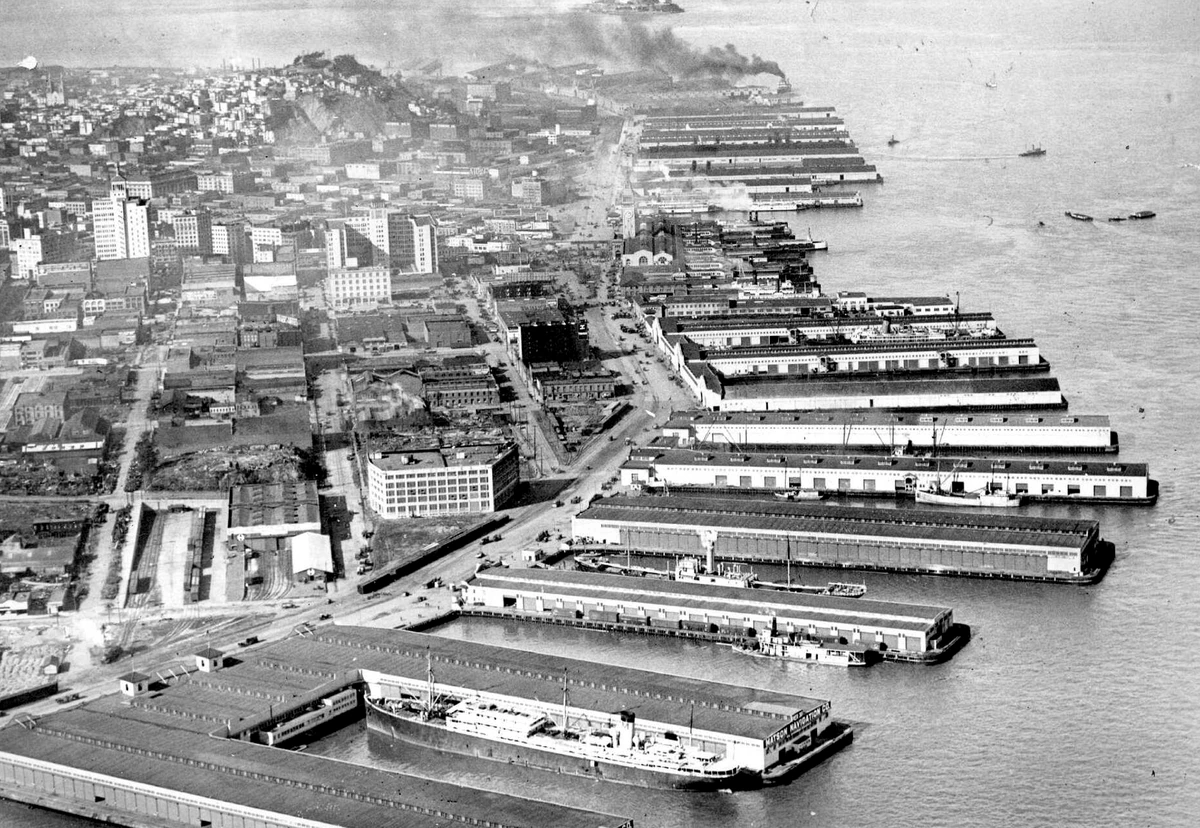
Through decades of evolving port infrastructure and the shift of modern shipping lanes, the wharf district gradually shed its purely cargo-handling role to enter an era of heritage revitalization. Most notably in 1978, Pier 39—originally a dilapidated, abandoned industrial cargo pier—was masterfully redeveloped into an open-air destination for culture, dining, and historical preservation. This seamless blend of heroic Gold Rush maritime memory and contemporary urban energy has turned the entire coastal corridor linking the Golden Gate Bridge and Fisherman’s Wharf into a living testament to the resilient, free-spirited character of San Francisco Bay across centuries of change.
Viewed through the lens of geographic feng shui and natural topography, the Golden Gate Strait occupies a rare chokepoint on the North American coastline, where the churning waters of the Pacific Ocean converge with the calmer waters of San Francisco Bay. Geomorphologically, this natural throat stretches roughly three miles long and barely one mile wide, yet its channel plunges into an abyss reaching 370 feet—more than 110 meters—below sea level. This abrupt narrowing of terrain, combined with the colossal volume of water surging through with every tidal cycle, makes it one of the most ferocious tidal currents and riptide zones on the planet. In classical geographic terms, the land embodies the water-gathering, wind-sheltered harmony of a deep enclosed bay, while simultaneously presenting a formidable natural chasm separating the San Francisco Peninsula from the hills of Marin County—posing a daunting engineering puzzle for early urban planners.
To conquer this treacherous terrain and violent water flow, the engineering process behind the ocean-spanning suspension bridge became an epic triumph in infrastructure history. Most astonishing was the positioning and construction of the south tower, situated over 335 meters offshore right in the crosshairs of crashing swells. Engineers had to construct a massive concrete fender capable of withstanding extreme ocean pressure so divers could blast the submerged bedrock and pour hundreds of thousands of tons of underwater concrete to form a rock-solid foundation. From two soaring steel towers, colossal main cables—each spun from more than 27,500 individual steel wires—were strung continuously across the strait and anchored into reinforced concrete anchorages weighing tens of thousands of tons on either shore, allowing the structure to flex gracefully against howling gales and seismic tremors from the nearby San Andreas Fault.
Beyond its extraordinary engineering, the visual identity of the strait is intimately bound to a signature meteorological phenomenon known as the marine layer. This coastal fog arises from a sharp thermodynamic clash between the frigid California Current flowing down the West Coast and the hot, dry inland air accumulating in the Central Valley. As warm inland air rises, a natural vacuum pulls low-lying ocean moisture pouring through the narrow strait, transforming the seascape into a billowing waterfall of fog that envelops the bridge’s frame. The bridge’s striking International Orange paint was chosen not merely for its aesthetic contrast against the deep blue sea and emerald hillsides, but as a precision optical solution engineered to maximize light reflection, ensuring optimal visibility and maritime safety whenever thick fog rolls in.
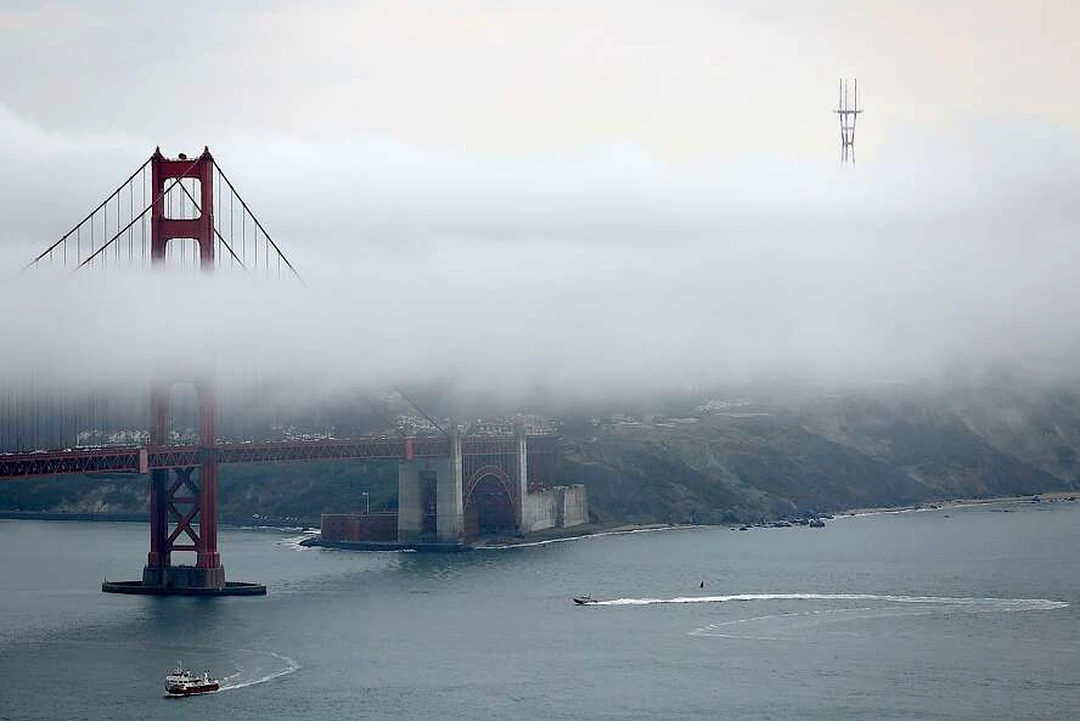
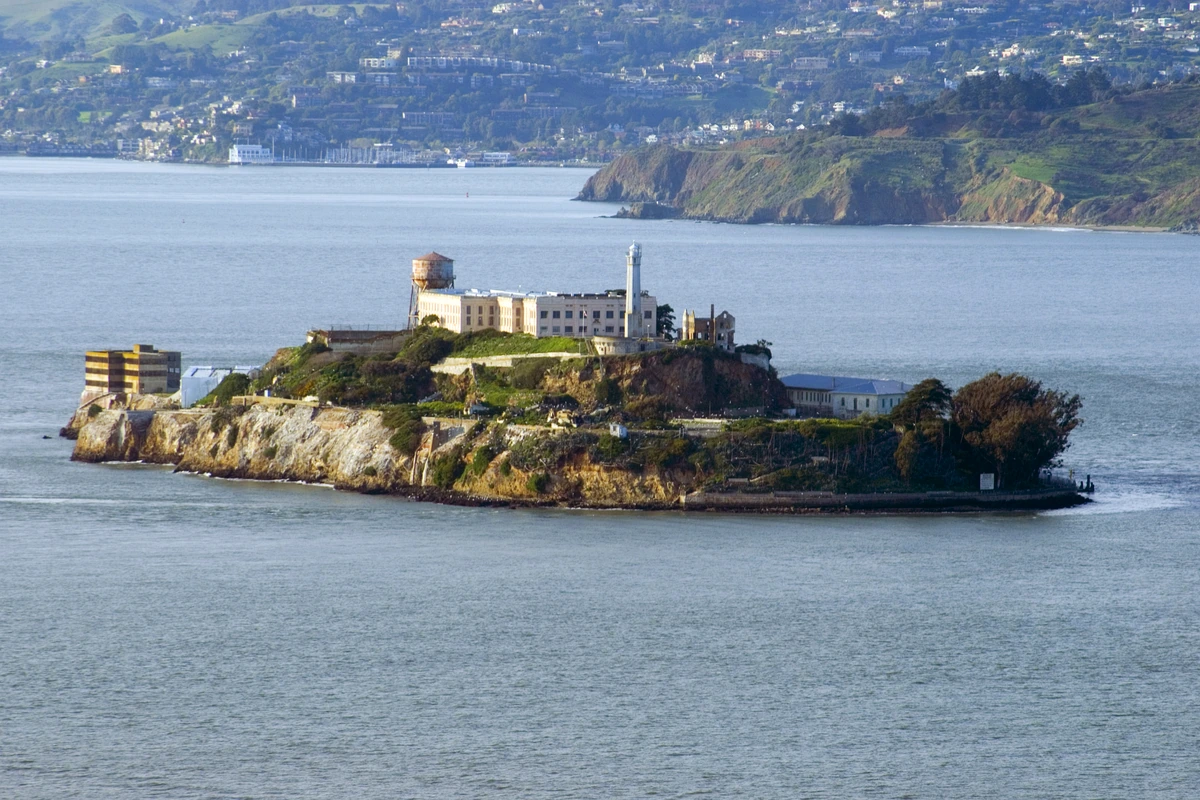
Tracing the southern shoreline southeastward, the terrain slopes gently down into a sheltered cove, opening onto the historic waterfront of Fisherman’s Wharf and the Pier 39 complex with its weathered wooden piers jutting out over the water. From a spatial planning perspective, this waterfront axis establishes a dramatic visual counterpoint to Alcatraz Island rising boldly out of the swirling currents. This barren 22-acre sandstone outcrop sits isolated roughly 1.25 miles offshore, ringed on all sides by icy currents and brisk winds, acting like a natural screen shielding the fishing harbor from heavy swells rolling in through the ocean mouth. The interplay between raw coastal cliffs, the solitary prison island, the vintage docks, and the steel span soaring through ethereal mist composes a topographic panorama at once majestic, rugged, and steeped in the deep historical memory of the American West Coast.
Standing sentinel at the gateway linking the San Francisco Peninsula to Marin County, the Golden Gate Bridge rises like a resplendent mechanical hymn to the 1930s Art Deco movement. Spanning 8,981 feet—more than 2,737 meters—across the perilous strait, the structure commands the horizon with two monumental steel towers soaring 746 feet above the restless surf. Departing sharply from the raw, utilitarian steel trusses of its era, consulting architect Irving Morrow infused the massive metalwork with refined artistry, incorporating stepped, ziggurat-inspired vertical fluting that orchestrates ever-shifting rhythms of light and shadow beneath the Pacific mist. Every load-bearing joint across the span is locked together by roughly 1.2 million red-hot steel rivets, driven by hand by ironworker crews battling roaring ocean winds—a lasting monument to the craftsmanship and industrial prowess of the machine age.
One of the enduring visual signatures cementing this masterpiece on the global architectural map is its iconic International Orange hue. Originally, the U.S. Navy lobbied fiercely to paint the bridge in alternating yellow-and-black stripes for high aerial and maritime visibility, while Bethlehem Steel had coated the girders in a temporary red-lead primer to prevent corrosion during their ocean voyage. Yet Irving Morrow recognized how harmoniously this warm, earthy orange complemented the deep sapphire waters of the bay and the rolling sage-green hills of the Marin Headlands. Formulated with specialized optical properties, International Orange not only accentuates the bridge’s graceful Art Deco lines, but also maximizes light dispersion so ocean-going vessels can easily spot the steel span through dense, year-round fog.
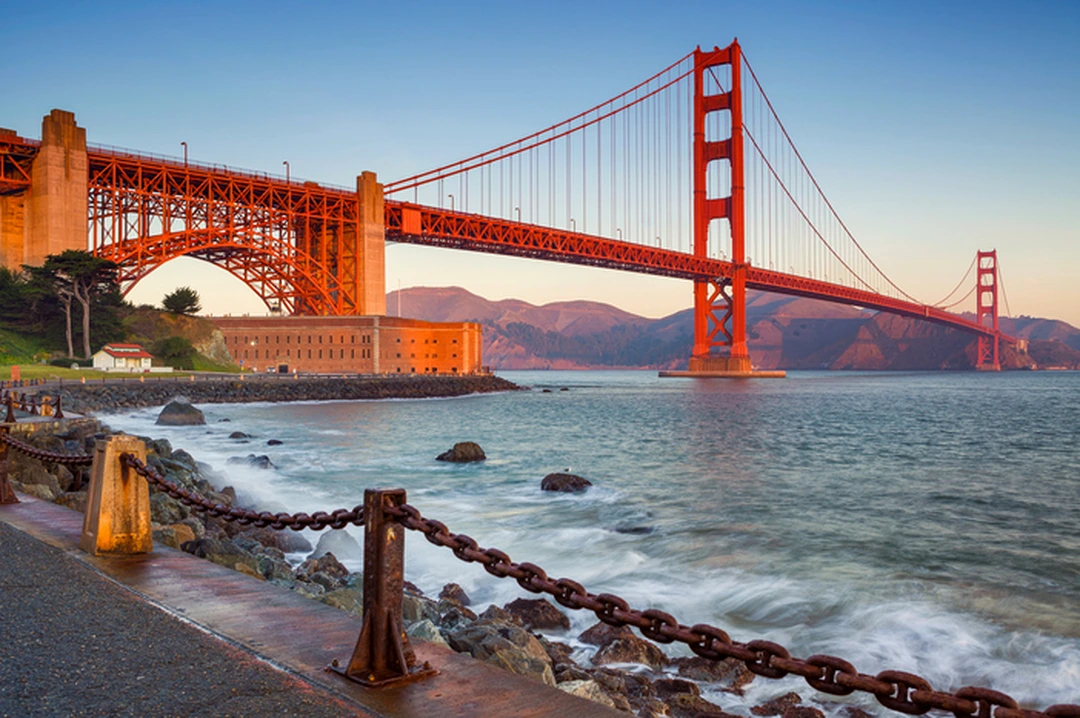
Heading back along the waterfront toward the northeastern edge of the peninsula, Fisherman’s Wharf—anchored by the Pier 39 complex—invites visitors into a maritime architectural setting steeped in early twentieth-century nostalgia. This entire 45-acre waterfront ensemble was built atop thousands of reclaimed Douglas fir pilings salvaged from aging piers, embodying sustainable design well ahead of its time. The layout is thoughtfully tiered like classic harbor lanes with two-story timber walkways, where merchant shops, small boatbuilding workshops, and traditional eateries stand shoulder to shoulder. Salt-bleached pine planks, rusted iron capstans, and the creak of weathered boardwalks underfoot vividly recreate the bustling spirit of a Mediterranean immigrant fishing village thriving in the heart of a modern metropolis.
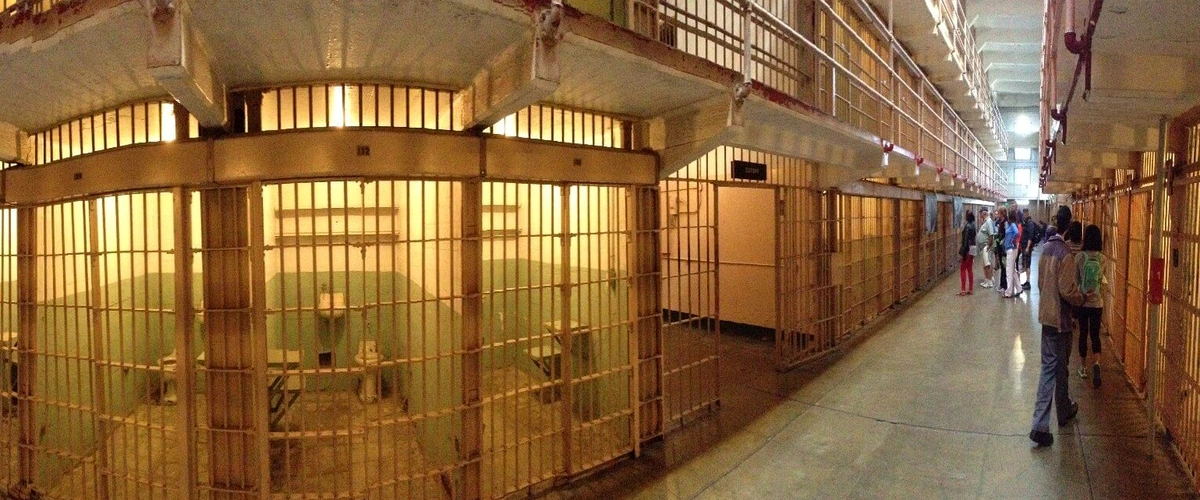
Looking out from the water’s edge across the bay, the stone fortress of Alcatraz looms as a brooding architectural contrast to the lively wooden piers. “The Rock” represents a rare convergence of nineteenth-century Civil War military fortifications and hardened penitentiary design imbued with later Brutalist severity. Dark masonry ramparts and weathered brick walls interlock with stark reinforced concrete blocks, dense arrays of mechanical iron bars, and claustrophobically narrow multi-tiered cellblocks. That closed, relentlessly utilitarian spatial design was engineered to isolate human beings completely amid fierce natural elements, creating a somber symphony of materials where stone, cold iron, and the ocean carry on an eternal dialogue across centuries of upheaval.
As twilight settles along the boundary between the Pacific Ocean and the narrow strait, the Golden Gate Bridge begins an enchanting metamorphosis into a luminous stage. Unlike the cool white LED lighting of twenty-first-century landmarks, the nocturnal pulse of this monumental span is shaped by high-pressure sodium lamps casting a warm amber glow across its International Orange steelwork. Engineers positioned high-output floodlights along the main suspension cables—each nearly a meter thick—directing beams upward from the tower bases to heights of 227 meters above sea level. On nights when dense advection fog rolls through the strait, optical scattering transforms the Art Deco girders and taut suspender ropes into glowing ribbons suspended in midair. This visual interplay not only defines the boundary between the dark bay and the night sky, but also paints a dramatic chiaroscuro tableau where lighting engineering merges seamlessly with the vast coastal wilderness.
Stepping away from the wind-swept majesty of the bridge, nightlife at Fisherman’s Wharf erupts with an entirely different kind of energy, anchored by a nonstop wildlife spectacle at Pier 39. Ever since the historic 1989 Loma Prieta earthquake, this wooden marina has served as the chosen domain of a resident colony of California sea lions (Zalophus californianus). The booming barks, loud flipper slaps, and constant jostling for prime lounging spots on floating wooden docks by hundreds of sea lions create an unmistakable natural soundtrack that drowns out the lapping waves beneath the pier. Surrounding this wild amphitheater is a lively street-food scene centered around steaming copper cauldrons boiling fresh Dungeness crabs right along the curb. Briny ocean aromas mingle with the tangy scent of crusty sourdough loaves baked from a nineteenth-century wild starter at the legendary Boudin Bakery, turning every evening stroll into an intoxicating feast for both ears and senses.
Nightfall across San Francisco Bay also carries a haunting, contemplative note when one looks out toward rocky Alcatraz Island. Evening tours of the historic penitentiary are crafted as an immersive sensory journey, plunging visitors into total maritime isolation. When the heavy iron cellhouse doors clang shut with a stark metallic echo in the dark, a dramatic contrast immediately takes hold: inside lies the frigid confinement that once held notorious inmates like Al Capone; outside sweeps the rhythmic beam of the Golden Gate lighthouse alongside the glittering skyline of downtown San Francisco. Separated by little more than a nautical mile, that narrow stretch of water draws a profound line between incarceration and freedom, turning the city lights across the bay into a psychologically gripping work of art in the stillness of the night.
The evening tapestry of the bay draws to a close along The Embarcadero waterfront promenade, where vintage yellow streetcars on the F Market & Wharves line glide steadily along historic tracks. Chilly gusts sweeping down from the Marin Headlands cut right through wool coats, beckoning pedestrians into cozy wine bars for a glass of Napa Valley Cabernet or lively coastal craft breweries. Public lighting artistry, local gastronomy, and thriving coastal wildlife converge here to bestow a rare cultural depth upon the waterfront after dark—at once untamed before the open Pacific and effortlessly refined in every beat of America’s West Coast.
The salty breath of the Pacific Ocean mingling with wisps of silver-blue mist over San Francisco Bay has long nurtured a rustic yet remarkably nuanced culinary culture at Fisherman’s Wharf. Along cobblestone Jefferson Street and time-worn wooden piers, local gastronomy is far more than a showcase of fresh catch—it is a living chronicle of Mediterranean fishermen who migrated here seeking their promised land during the mid-nineteenth-century California Gold Rush. Amid the lively symphony of clanging ship bells and wheeling seagulls, rich aromas billowing from giant sidewalk copper cauldrons issue an irresistible invitation to discerning travelers.
Reigning supreme on the culinary map of the American West Coast is the Dungeness crab (Metacarcinus magister), a prized delicacy of the cold waters along the Pacific continental shelf. Since the late 1800s, small wooden felucca sailboats helmed by Italian fishermen have sliced through offshore fog to haul in thick-shelled, meaty crabs. At open-air stalls lining the wharf, live Dungeness crabs are plucked straight from seawater tanks and plunged into bubbling cauldrons right before diners’ eyes. Their sweet, firm white meat and rich, creamy crab butter—infused with the clean salinity of the ocean—retain peak freshness without any need for heavy seasoning, requiring nothing more than warm melted unsalted butter and a squeeze of juicy San Joaquin lemon.
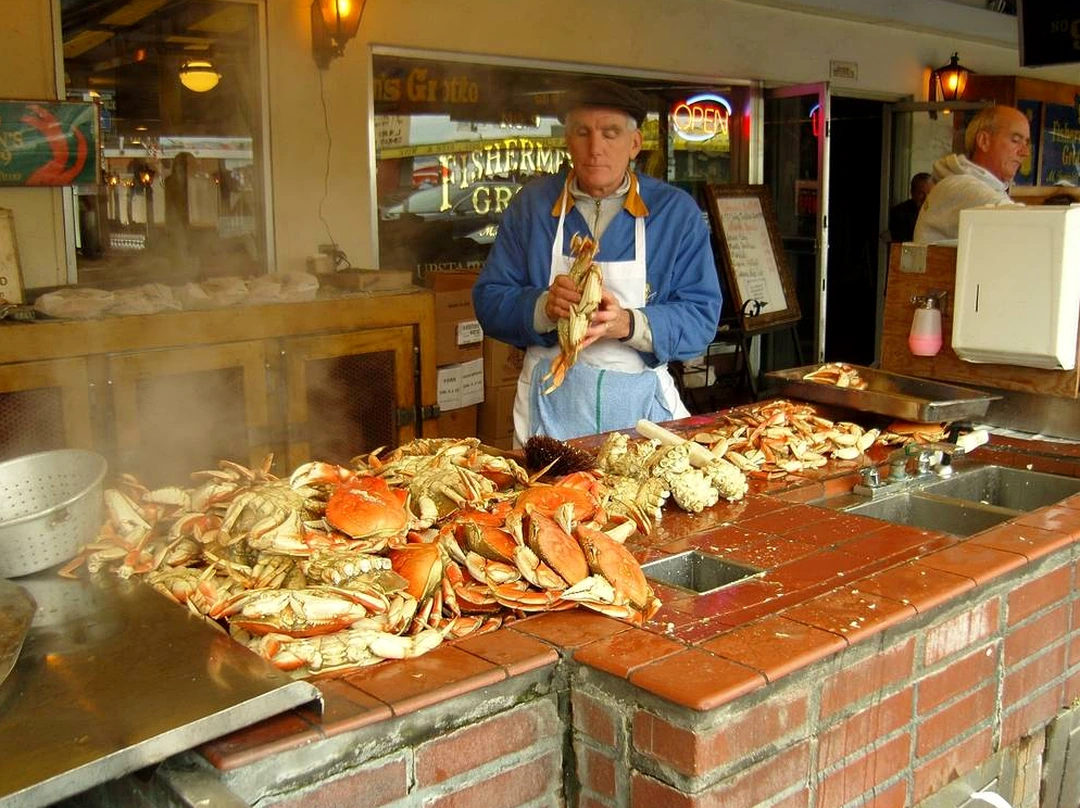
If Dungeness crab embodies nature’s generosity, Cioppino seafood stew stands as the ultimate expression of camaraderie and mutual aid among seafarers. Originating from the Genoese and Ligurian dialect word “ciuppin”—meaning “to chop” or “pitch in”—the dish was born when impoverished fishermen returned to port empty-handed after stormy days at sea. Anyone without a catch would walk down the docks carrying an empty pot, and fellow fishermen would each toss in a share of their haul: a few shrimp, a handful of clams, rings of squid, or chunks of crab. Perfected by generations of North Beach cooks, the medley of seafood is simmered in a rich crimson broth of ripe tomatoes, robust red wine, fragrant sautéed garlic, oregano, and fresh thyme. Savoring a piping-hot bowl of Cioppino—spooning up tangy, deeply savory broth soaked into sweet, tender seafood on a brisk, wind-whipped afternoon—is an essential taste of the bay’s soul.
No culinary tour of San Francisco would be complete without its world-famous sourdough bread, forever linked to the legendary Boudin Bakery founded in 1849. While gold-seekers tore into the earth in search of fortune, French master baker Isidore Boudin discovered true gold hiding in the cool, foggy air of the bay itself. By marrying traditional French fermentation techniques with San Francisco’s unique coastal microclimate, the family cultivated a wild starter powered by a bacterium scientists later named Lactobacillus sanfranciscensis. Working alongside wild yeast, this culture produces a bright, nuanced tang, a crackly amber-brown crust, and a chewy, airy crumb. The pinnacle of this local tradition is rich, velvety clam chowder ladled into a hollowed-out sourdough bread bowl—where the sturdy crust slowly absorbs the sweet flavors of tender clams, cream, and butter, creating a timeless comfort-food classic.

Exploring this Pacific coastal wonderland rewards travelers who attune themselves to the distinctive transit rhythm of the Fog City. Rather than driving a private car across steep, winding hills only to face some of the highest parking rates in the country around Jefferson Street and Pier 39, the most scenic and practical way to navigate the waterfront is aboard the historic F Market & Wharves streetcars. This living transit museum features meticulously restored mid-twentieth-century streetcars from cities around the globe, gliding leisurely along The Embarcadero to connect the Financial District with the historic piers. For active travelers, cycling along the bayfront through Crissy Field, crossing the Golden Gate Bridge’s western bike path, and coasting down into the artistic hillside town of Sausalito before returning by ferry remains an iconic visual adventure.
The Golden Gate Bridge’s eastern sidewalk welcomes pedestrians free of charge from sunrise to sunset, offering an unforgettable opportunity to touch the monumental steelwork up close and hear the ocean wind hum through its massive suspension cables. Meanwhile, family-run seafood stands at Fisherman’s Wharf and the flagship Boudin Bakery operate from early morning well into the night, serving hollowed-out sourdough bowls brimming with steaming clam chowder. Venturing out across the bay to tour the historic prison island of Alcatraz, however, requires advance planning. Ferry tickets and the award-winning cellhouse audio tour must be booked 60 to 90 days ahead through the sole official concessionaire, Alcatraz City Cruises, as international demand routinely sells out departures from Pier 33 months in advance.
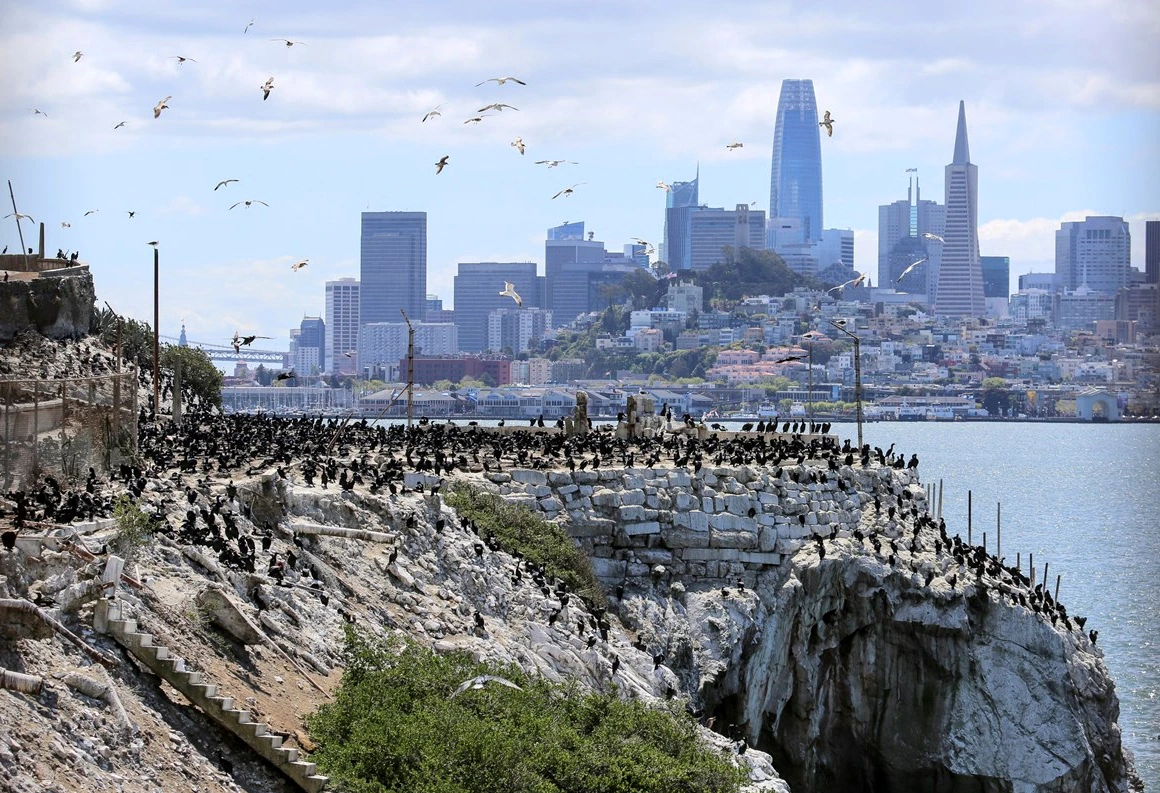
Alongside smart itinerary planning, respecting local conservation and coastal ecology is the golden rule for every visitor to San Francisco Bay. When stepping onto moss-draped Alcatraz Island—once home to America’s most notorious inmates—visitors must strictly follow Leave No Trace principles to protect nesting colonies of migratory seabirds perched along its sheer cliffs. Over at Pier 39, where hundreds of California sea lions bask packed together on wooden floats, local ordinances strictly prohibit feeding or disturbing the animals in order to safeguard the natural balance of the bay’s marine ecosystem.
The most coveted moment to capture the surreal beauty of the Golden Gate Bridge through a camera lens is at dawn, just as its signature blanket of marine fog begins to dissolve beneath the first golden rays of morning light. In that fleeting transition, the International Orange towers rise proudly in vivid contrast against the deep blue bay and mist-draped horizon, composing a visual masterpiece that has captivated generations of photographers. To experience every historical milestone and culinary highlight—from the rugged Pacific coast to the cosmopolitan metropolises of the Atlantic seaboard—without the stress of logistics or transit bookings, joining an all-inclusive East-to-West Coast USA tour package offers the ideal gateway to living out your American travel dream in effortless style.