Perched at an altitude of nearly two thousand meters above sea level, Dianchi Lake resembles a giant piece of jade inlaid in the heart of the Yunnan-Guizhou Plateau, embracing the southwest of the “Spring City” of Kunming. With a vast water surface spanning over three hundred square kilometers, this great lake has, since time immemorial, not only been the cradle of life for indigenous tribes but also a stage for monumental shifts, tragic epics, and historical turning points that have shaped the entire cultural landscape of Yunnan over thousands of years of change.
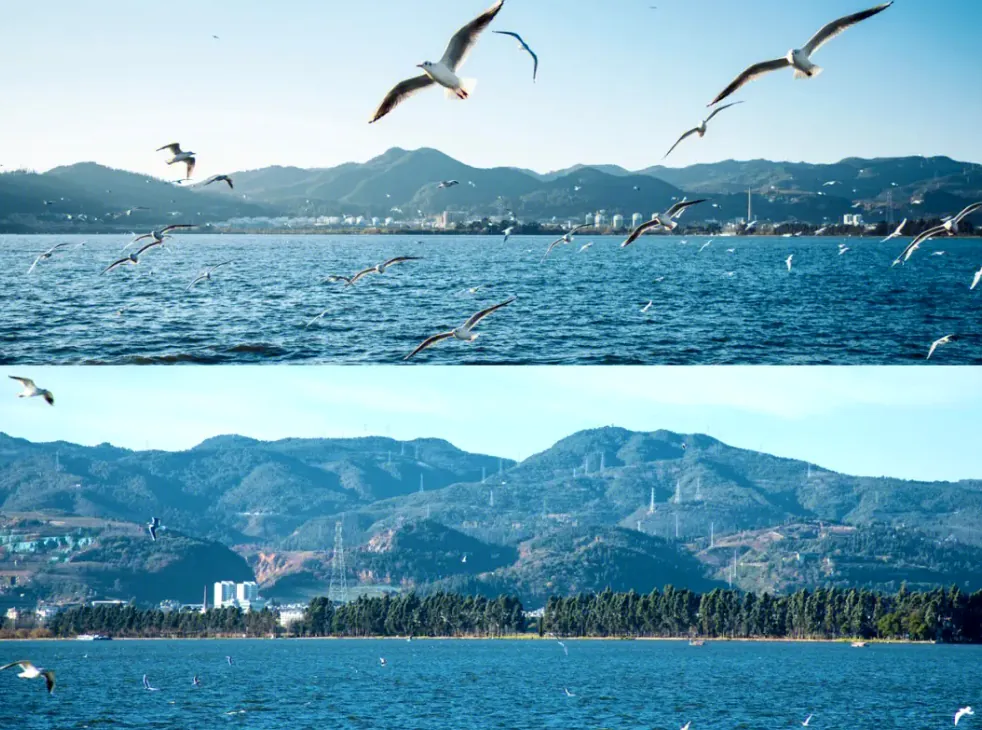
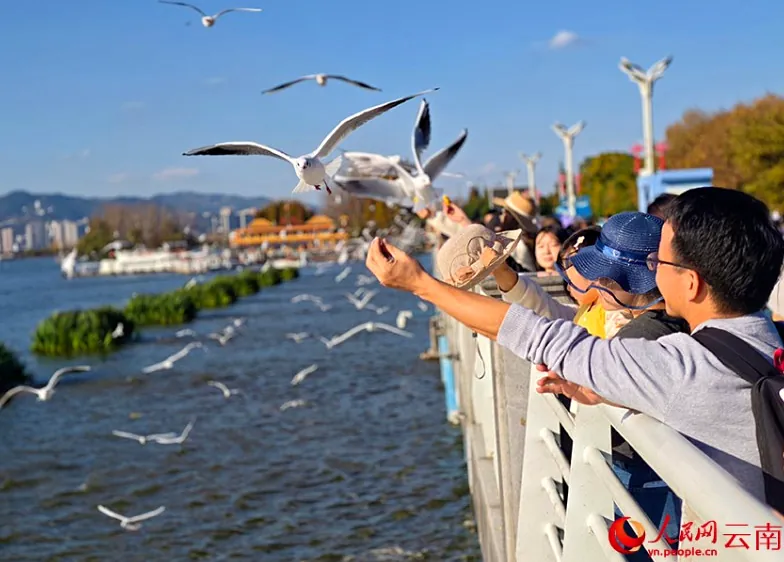
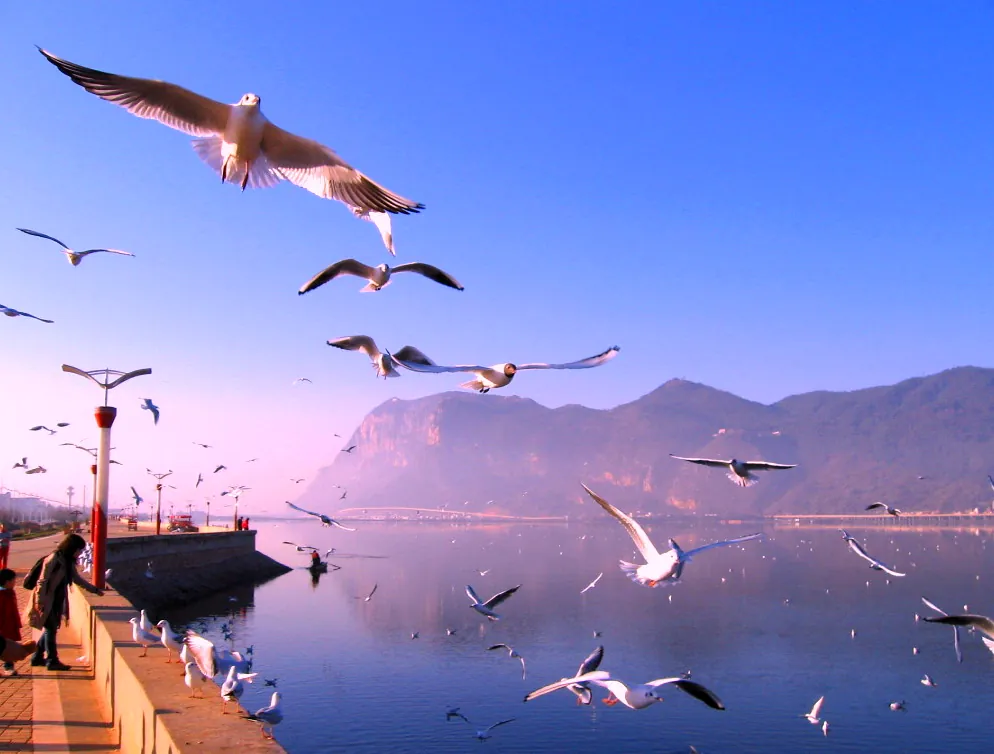
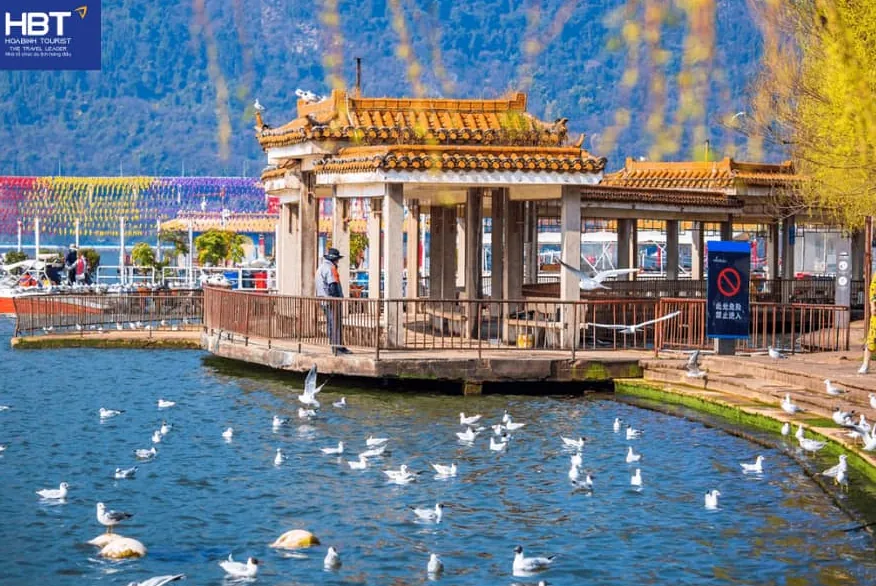
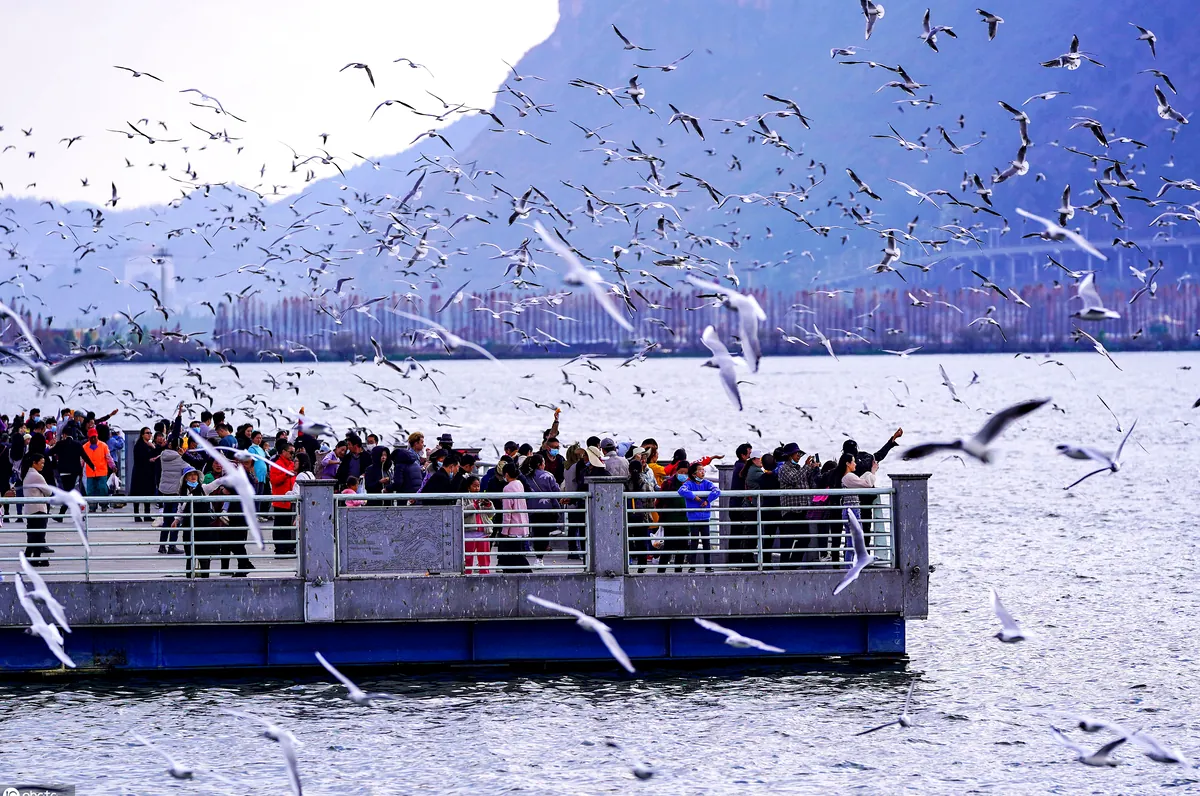
The scene captured in the photo is a beautiful harmony between expansive nature and the dance of living creatures at the Haigeng Dam on the edge of Dianchi Lake. Under the clear plateau sky and the morning sun gilding the blue waves, tens of thousands of red-billed seagulls soar across the sky, creating soft curves against the backdrop of the majestic Western Hills, which resemble the silhouette of a sleeping maiden. The piers stretching out into the water and the moss-covered stone railings have become peaceful resting spots, where visitors can leisurely offer bread, receiving pure trust from the migratory birds from the North amidst the misty atmosphere. Tracing back to the 3rd century BC, during the turbulent Warring States period, General Zhuang Qiao of the State of Chu was ordered by King Qingxiang of Chu to lead an expedition up the Yangtze River, crossing countless treacherous mountains to penetrate deep into the Dianchi basin. When news arrived that the State of Qin had captured Qianzhong and cut off his path home, Zhuang Qiao made a history-altering decision: he cast aside his armor, adopted local customs, and declared himself king, establishing the brilliant ancient Dian Kingdom. The Dianchi civilization of this era reached its peak with world-class bronze casting artistry, vividly expressed through bronze drums, ritual vessels, and artifacts engraved with intricate hunting and sacrificial scenes.
By the second year of the Yuanfeng era under Emperor Wu of Han, the Han imperial army pacified the Southwest, and the King of Dian surrendered, receiving a solid gold seal inscribed with the words “Seal of the King of Dian.” The Han Dynasty officially established Yizhou Commandery, turning the fertile land around Dianchi Lake into a vital administrative and economic hub, connecting trade routes from the Central Plains to ancient Burma and India. Through the Tang and Song dynasties, this area remained a strategic battleground and a cultural cradle for the illustrious Nanzhao and Dali kingdoms, witnessing the rhythmic hoofbeats of pack horses on the legendary Ancient Tea Horse Road.
The great turning point that permanently altered the hydrology and geomorphology of Dianchi occurred during the Yuan Dynasty, after Kublai Khan personally pacified the Dali Kingdom. The first Pingzhang Zhengshi (Administrator) of Yunnan Province, Sayyid Ajjal Shams al-Din Omar, initiated an unprecedented water management project. He dredged the Haikou outlet, clearing the flow to channel water from Dianchi Lake into the Panlong River and out to the Jinsha River. This miracle lowered the lake level by more than a zhang, saving the surrounding areas from chronic flooding while turning thousands of acres of saline marshes into fertile fields, laying the foundation for the prosperous Kunming that has left its mark through the Ming and Qing dynasties to this day. Having weathered the storms of military and political history, Dianchi wrote a new, poetic, and miraculous chapter in its ecological history in the late 20th century. On an early winter day, the first flock of black-headed, red-billed seagulls flew thousands of miles from Lake Baikal and the frozen Siberian tundra, crossing the treacherous Tianshan Mountains to find the warm waters of Dianchi Lake for the winter. The unexpected arrival of these messengers from the North captivated the people of Kunming, beginning a silent yet enduring covenant that has lasted for four decades. Every time the winter winds turn chilly, Dianchi welcomes tens of thousands of white wings back, turning the lake of ancient legends into an endless hymn to the pure harmony between humanity and nature.
Impressively situated within the deep basin of the Yunnan-Guizhou Plateau at an average altitude of approximately 1,886 meters above sea level, Dianchi Lake appears as a giant jade mirror, covering nearly 300 square kilometers with a shoreline stretching over 140 kilometers. In terms of geomancy (feng shui), this location was praised by the ancients as one of the most perfect “water-gathering and wind-welcoming” sites in the Southwest, as the entire Kunming basin is embraced by majestic mountain ranges. To the west, the undulating Western Hills (Xishan) act as a sturdy screen against harsh winds, while to the east, the gentle slopes of Golden Horse Mountain create a rare “sitting against the mountain, overlooking the water, flanked by peaks” formation, turning the lakeside plains into a fertile, prosperous land throughout millennia of history. Standing on the Haigeng Dike and gazing into the distance, visitors will be overwhelmed by the mirror-like surface of Dianchi Lake, stretching vast and wide as if touching the azure horizon. Under the brilliant golden sunlight characteristic of the plateau, the deep blue water reflects the white clouds and the hazy, rolling silhouettes of the Western Hills in the distance. Flocks of snow-white seagulls glide rhythmically through the air, swooping down to the rippling water before soaring high again, adding a lively, graceful, and poetic touch to this magnificent natural landscape.
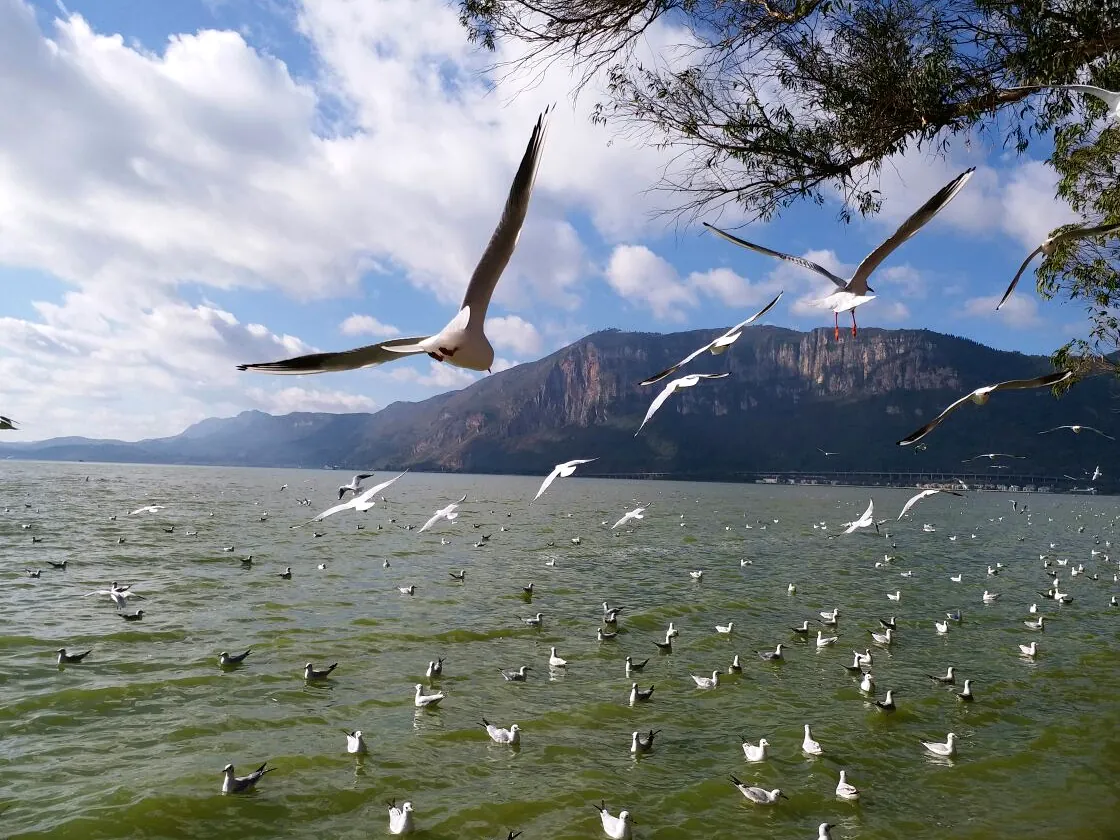
According to ancient geomorphology, the lake’s structure is the result of deep geological subsidence during the Quaternary period, creating a vast basin that receives the flow of over twenty tributaries, such as the Panlong and Baoxiang rivers. The Western Hills on the left bank are also respectfully called “Sleeping Buddha Mountain” or “Dianchi Sleeping Beauty” by locals, as the undulating mountain ridges resemble a peaceful reclining Buddha or a beautiful woman letting her long hair cascade into the calm lake. This “coiled dragon and crouching tiger” terrain not only creates a mild, spring-like microclimate year-round for Kunming but also traps the earth’s vital energy, fostering the cradle of the illustrious ancient Dian Kingdom civilization from the Warring States and Western Han periods.
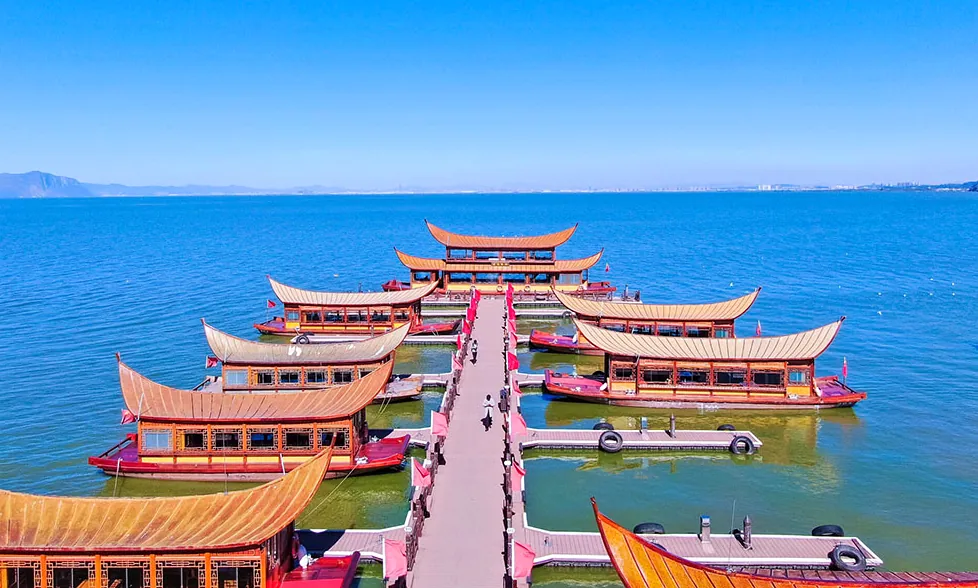
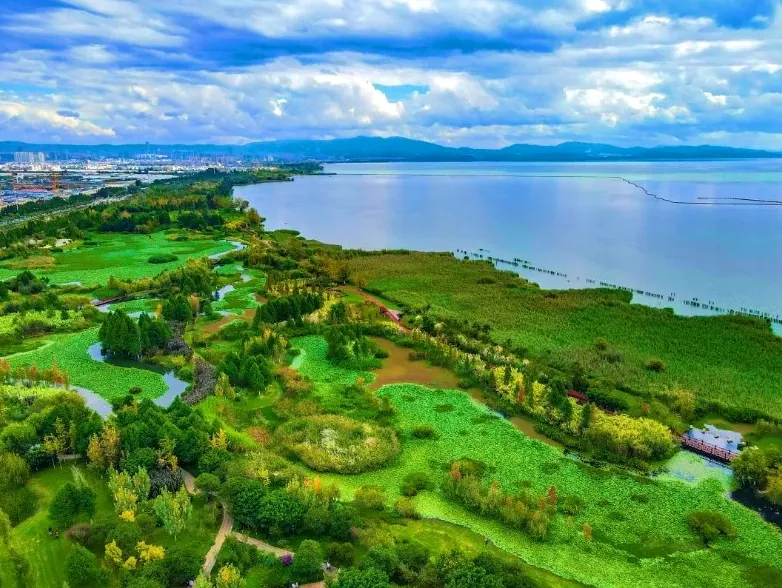
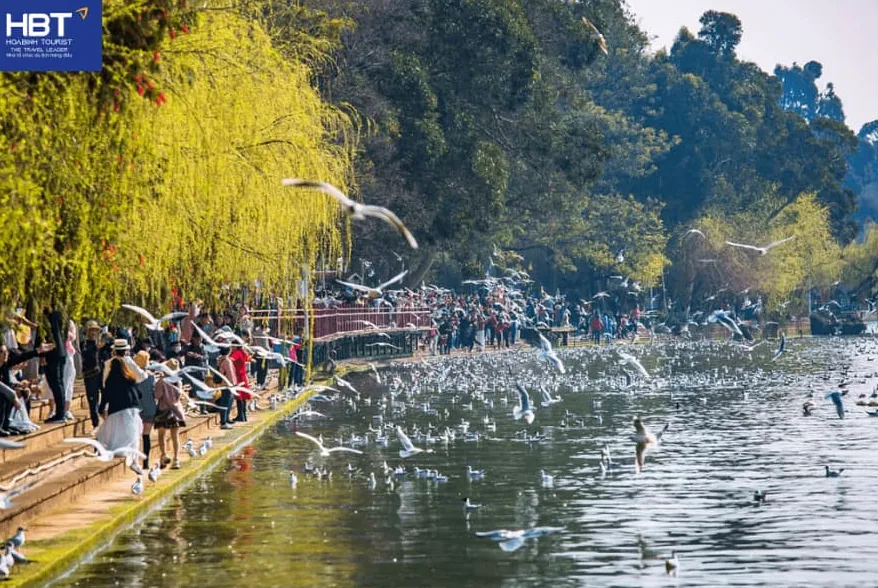
Beyond the natural feng shui elements, the landscape planning around Dianchi Lake is a masterpiece of interaction between human artistry and magnificent nature. The historic Haigeng Dike, stretching for kilometers, rises like a soft silk ribbon cutting across the water, cleverly dividing it into inner and outer lake ecological zones. It serves both to regulate water flow during surges and to create a spacious pedestrian promenade along the water. Along the dike, weeping willows and native vegetation are arranged in layers, creating a cool ecological corridor that shields travelers from the sun and wind, while also serving as a sanctuary for various bird species. In particular, the wonderful blend of the warm temperate plateau climate and the abundant aquatic life at the bottom of the lake has turned Dianchi into one of the most magical ecological stopovers on the transcontinental migration route. Every time cold winds blow from the north, red-billed seagulls from the distant Siberian steppes and Lake Baikal travel thousands of miles to take refuge here, seeking warm waters and abundant food. The sight of tens of thousands of snow-white wings fluttering amidst the green mountains and blue waters is not merely a spectacular natural phenomenon; it is also viewed by feng shui experts as a clear testament to the saying “birds choose the best land to perch,” a place where vital energy converges to bring luck and peace for all living things.

As the amber glow of dusk fades behind the rolling Xishan Mountains, the waters of Dianchi Lake begin to transform into an entirely different dimension. The black-headed gulls, having spent the day in tireless flight, retreat to the grassy islets along the bay to rest, leaving the vast expanse to a symphony of darkness and contemporary visual art. When the sunset finally vanishes, the three-hundred-square-kilometer expanse of water dons a magnificent evening gown, where artificial light blends with the deep indigo of the plateau night sky, awakening a shimmering, poetic rhythm of life along the shores of this historic lake. Under the quiet veil of night, along the Haigeng Dam embankment and the ancient piers, a system of artistic lighting bursts into life, gilding the rippling lake surface with streaks of shimmering gold. The waters of Dianchi act as a giant mirror reflecting the brilliant horizon, a perfect contrast to the solemn, majestic silhouette of the Sleeping Beauty mountain range to the west. Strolling through the cool lake breeze, fragrant with herbs, visitors can gaze across arched bridges and granite railings to admire the ethereal ribbons of light winding along the water, fully experiencing the magical intersection of majestic nature and the breath of modern urban civilization.
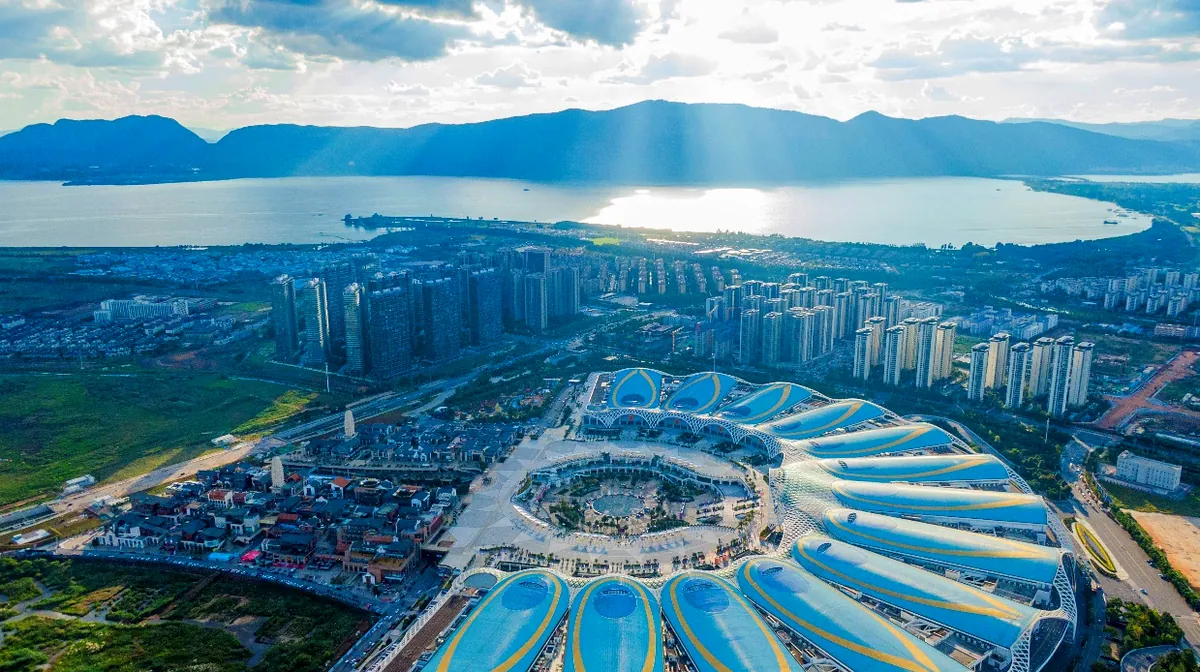
The vitality of the night around the lake is not limited to static scenery but erupts powerfully through large-scale performance art spaces. Kunming, the cradle of the brilliant Ancient Dian civilization dating back to the Warring States and Western Han periods, is vividly recreated through spectacular live-action performances that combine 3D mapping technology and laser fountains by the lakeside. The heroic echoes of the Tanglang bronze drums blend with the gentle melodies of the lusheng pipes of the Yi, Bai, and Miao ethnic groups, leading the audience into a magnificent epic space. Legends of fishermen capturing dragons and the original peacock dance, immortalized by renowned choreographer Yang Liping in her masterpiece ‘Dynamic Yunnan,’ seem to find a resonant soul in the waves of Dianchi, turning every performance into a ritual honoring the heavens, the earth, and the roots of indigenous culture.
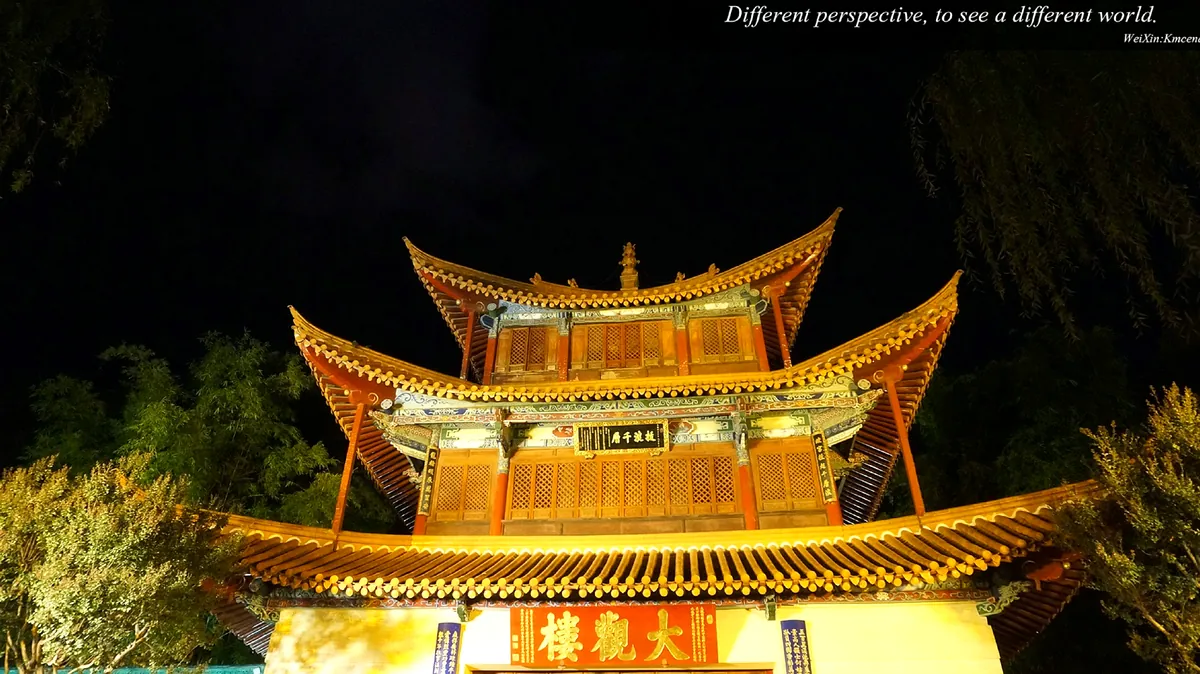
For those seeking a more relaxed experience, a night cruise departing from Daguan Pavilion or Haigeng Park offers a rare and breathtaking perspective. Gliding smoothly through the thin mist in the heart of the lake, the lantern-lit boat reveals an expansive view in all directions, where visitors can sip aged Pu’er tea with its rich, smoky aroma while watching the distant city shimmer like a galaxy descended to earth. As the boat docks, crowds flock to the lakeside night food markets, where the mouth-watering scent of traditional ‘crossing-the-bridge’ rice noodle broth, topped with golden chicken fat, spicy lotus-leaf grilled fish, and crispy rose pastries, helps ward off the characteristic chill of the high-altitude plateau. As the night deepens, the atmosphere of Dianchi gradually settles, restoring the pure tranquility inherent to this land of legendary figures. The colored lights slowly dim, leaving the flat lake surface to swallow the vast starlight and the moonlight filtering through the mountain passes. This rhythmic transition from the vibrant celebration of light art to the peaceful slumber of pristine nature is an eternal charm, nurturing the quiet dreams of thousands of migratory birds before welcoming the radiant dawn of a new day.
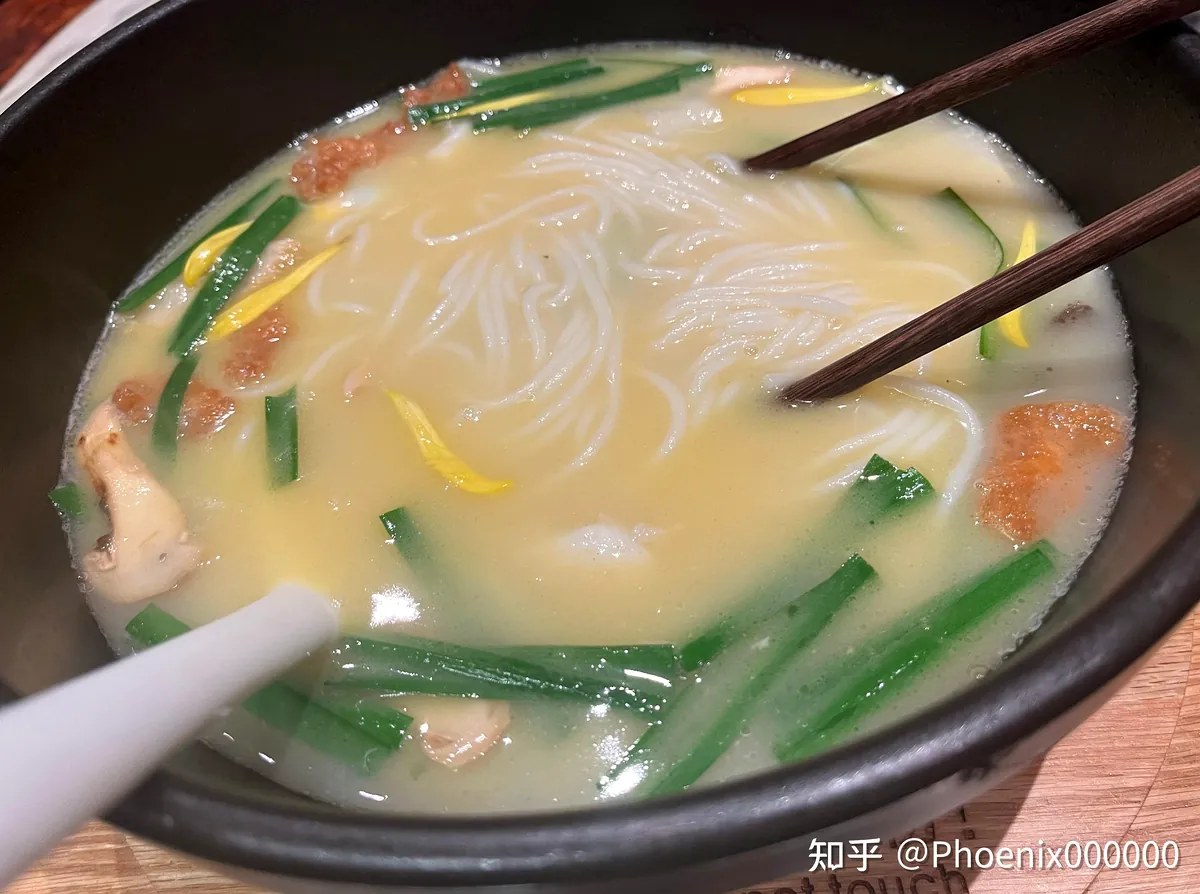
After hours of strolling along the breezy Dianchi Lake embankment, watching the seagulls soar, the culinary essence of Kunming unfolds through a traditional feast rich in the identity of the Yunnan plateau. On the steaming banquet table, the centerpiece is the legendary “Crossing-the-Bridge” rice noodles, featuring a golden, rich broth complemented by dozens of thinly sliced, fresh ingredients, placed beside a dark brown Jianshui pottery pot containing sweet, steamed chicken. Each dish not only awakens the senses with the vibrant red of dried chilies, the green of fresh vegetables, and the golden sheen of the oil layer, but also encapsulates the essence of the abundant produce from this land of eternal spring around Dianchi Lake. When it comes to the culinary art of Kunming, “Crossing-the-Bridge” noodles naturally hold a supreme position as an intangible cultural heritage passed down for hundreds of years. Originating from a touching legend about a devoted wife in Mengzi who crossed a large bridge to bring meals to her husband studying for exams during the Qing Dynasty, this dish demands absolute precision in simmering pork bones, old chicken, and marrow bones for many hours. The core secret lies in the thin, natural layer of chicken fat covering the surface, acting as a perfect thermal barrier that keeps the soup below simmering at an extremely high temperature, even while it appears as still as a mirror on the surface. Diners add ingredients one by one—paper-thin pork loin, chicken breast, pork kidney, and fresh quail eggs—allowing the heat to instantly poach them, followed by shiitake mushrooms, pea shoots, yellow chrysanthemum petals, and snow-white rice noodles, creating a harmonious, elegant, and perfectly balanced symphony of flavors.
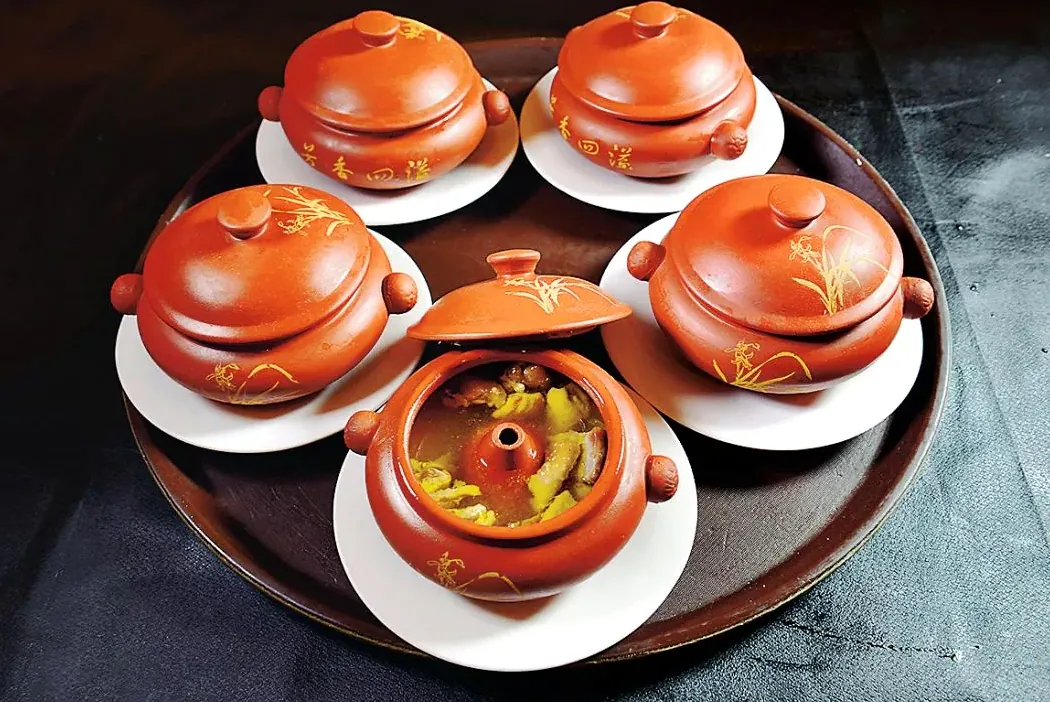
Alongside the noodles, Jianshui steam-pot chicken is a testament to the pinnacle of health-conscious cuisine among the local residents. This dish contains absolutely no plain water; instead, it operates on the principle of steam condensation through a hollow conical tube located in the center of the famous purple pottery pot. Local free-range chicken is chopped into uniform pieces, marinated with fresh ginger and sea salt, then arranged around the steam tube, accented with rare Yunnan Panax notoginseng and bright red goji berries. The pot is placed over a boiling water vessel and sealed for several hours; the rising hot air condenses on the pottery lid and drips down as pure, sweet essence, dissolving the marrow’s sweetness and the gentle herbal aroma to create a clear, nourishing soup famous for its health benefits.
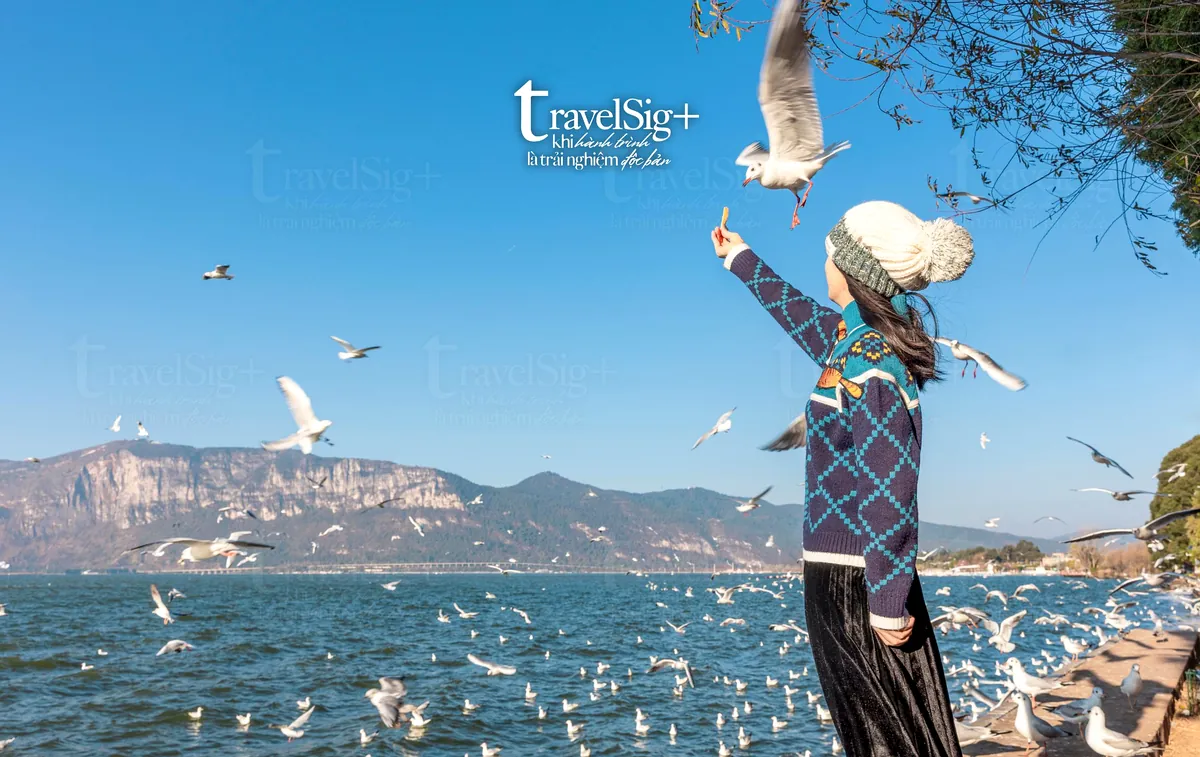
The ecosystem around the Dianchi Lake basin and the vast pine forests of Kunming also provides one of the richest sources of wild mushrooms in the South. Every early autumn, golden boletes, matsutake, termite mushrooms, or cantharellus, all smelling of damp earth, are stir-fried by chefs in a flaming cast-iron pan with minced garlic and spicy dried chilies, retaining their crisp, juicy sweetness. In the ancient fishing villages by the lake, charcoal-grilled carp with lemongrass or salt-and-pepper Dianchi shrimp still preserve the rustic flavors passed down through generations. The meal concludes perfectly with a hot rose pastry, where the flaky, crispy crust gives way to a delicate, sweet filling of fresh rose petals harvested at dawn from the hillsides surrounding the calm lake. Amidst the expansive space of the Haigeng Dam, the surface of Dianchi Lake stretches out like a jade silk ribbon at the foot of the towering Western Hills, where black-headed gulls migrating from the distant Lake Baikal fill the sky. Visitors lean against the white stone railing that stretches for kilometers, gently tossing specialized feed into the air to capture the moment hundreds of snowy wings swoop down in rhythm, creating a lively and peaceful dance of nature. This scene blends the blue of the plateau sky, the cool, moist mist rising from the nearly 300-square-kilometer lake, and the lively chirping of migratory birds, weaving a classic travel tableau that captivates anyone who sets foot in the “Spring City.”

The Haigeng Dam area and the Dianchi Lake parks are open public spaces accessible 24/7 with no admission fees. However, the seagull spectacle truly reaches its peak from late October through the end of March. To capture the most breathtaking moments, visitors should aim for the two golden hours of the day: early morning from 7:30 AM to 9:30 AM, when the birds wake up and forage in dense flocks amidst the morning mist, or late afternoon from 3:30 PM to 5:30 PM, when the sunset paints the lake and the Western Hills in golden hues, creating a stunning photographic backdrop. The transportation network connecting to the shores of Dianchi Lake is highly developed and convenient for international travelers. From downtown Kunming, the fastest and most modern way is to take Metro Line 5, get off directly at Haigeng Daba Station, and enjoy a leisurely stroll along the lakeside promenade. Additionally, city bus routes such as 24, 44, or 73 run continuously from the Golden Horse and Jade Rooster Archways or Kunming Railway Station, taking visitors straight to the entrance of Haigeng Park. After admiring the seagulls, visitors can easily purchase tickets for the Dianchi Lake cable car to glide over the turquoise waters, heading directly to visit the Longmen Taoist grottoes perched on the cliffs of the majestic Western Hills.
Regarding entry and exit routes, travelers from Vietnam have two popular and optimal options: flying directly to Kunming Changshui International Airport via commercial flights, or experiencing a land-and-rail journey through the Haojiabang – Hekou international border gate to catch the high-speed train from North Hekou to Kunming, which takes just over four hours. In terms of procedures, visitors need a passport valid for at least six months and a Chinese L-category tourist visa, or they can opt for the highly convenient electronic group visa. Locally, payments are entirely cashless, so travelers should proactively install and link their international cards to Alipay or WeChat Pay, and prepare an international roaming SIM or eSIM to stay connected.
A few essential tips for a great experience involve following eco-friendly interaction rules. Visitors should only purchase bird feed specifically approved by the local forestry management board; absolutely do not throw greasy bread or spoiled food, as it negatively affects the digestive systems of the Siberian seagulls. Since Kunming is peacefully nestled on the Yunnan-Guizhou Plateau at an altitude of nearly 2,000 meters above sea level, there is a significant temperature difference between day and night, making a windbreaker, a light scarf, and sunscreen essential. After a breezy walk by the lake, stopping at a traditional shop along the embankment to enjoy a steaming bowl of “Crossing-the-Bridge” rice noodles or a nutritious Jianshui clay pot chicken is the perfect way to conclude a long day of exploration. For those seeking a seamless journey to fully enjoy the breathtaking beauty of this “City of Eternal Spring” without worrying about entry procedures or transportation arrangements, you can refer to the optimal itineraries in our all-inclusive tour packages for a perfect start to your northern excursion.