Tucked deep within Ban On Sub-quarter, Van Ho Commune, Moc Chau District, Son La Province, at central coordinates ranging from approximately $20^circ 51’N$ to $20^circ 54’N$ and $104^circ 37’E$ to $104^circ 40’E$, Na Ka Plum Valley stands as a one-of-a-kind destination on the plateau. Beyond being a scenic natural wonder, this space serves as a living geological museum where millions of years of tectonic history have carved a deep, basin-shaped karst valley into Middle–Upper Triassic limestone bedrock. Over millennia of chemical weathering, a thick, porous layer of reddish-yellow ferralsol soil rich in trace minerals has formed, creating a unique terroir that nurtures ancient, thriving *man hau* (black plum) orchards amidst the vast mountains and forests of Northwest Vietnam.
From the perspective of traditional feng shui geography under the Form School (*Hinh The Phai*), Na Ka possesses a rare and coveted terrain known as “gathering qi to generate prosperity.” Nestled amidst the majestic limestone mountain system of the Ma River Arc, the valley rests its back firmly against towering peaks to the southwest that shield it from monsoon winds, while opening up to natural water-gathering ravines to the northeast. This topography creates a perfect “nest-shaped acupuncture point” (*Oa huyet*)—a concave, basin-like formation that retains wind and concentrates energy. Strong gusts blowing over the high ridges slow down and condense into a tranquil energy field enveloping the valley, which combines with groundwater seeping from the limestone bedrock to generate abundant vitality and perpetual growth for all living things.
According to cultural-historical records and archaeological findings, the area surrounding Na Ka has borne the footprints of prehistoric humans belonging to the Hoa Binh–Bac Son culture since ancient times, evidenced by nearby cave systems such as Bat Cave (*Hang Doi*). Over the course of history, this land became deeply intertwined with the shifting cultivation and eventual settlement of the H’Mong and Thai ethnic communities. In the local language, the name “Na Ka” refers to a valley that was once terraced fields hidden deep within the dense forest, preserving legendary tales of gratitude toward heaven and earth, bountiful harvests, and the enduring bond of indigenous communities with every inch of their homeland.
In specialized archival records and the writings of heritage researchers, Na Ka is recognized as a natural and ecological heritage site carrying profound anthropological value. Through the lens of the press and cultural management agencies, Na Ka Plum Valley is far more than a seasonal tourist spot celebrated for its endless white blossoms or vibrant red fruit harvests; it is a historical witness preserving the sacred spirit of Northwest Vietnam’s mountains and rivers. Here, geology, climate, and indigenous culture converge in wondrous harmony, making the valley a timeless symbol of resilient vitality and enduring Vietnamese heritage.
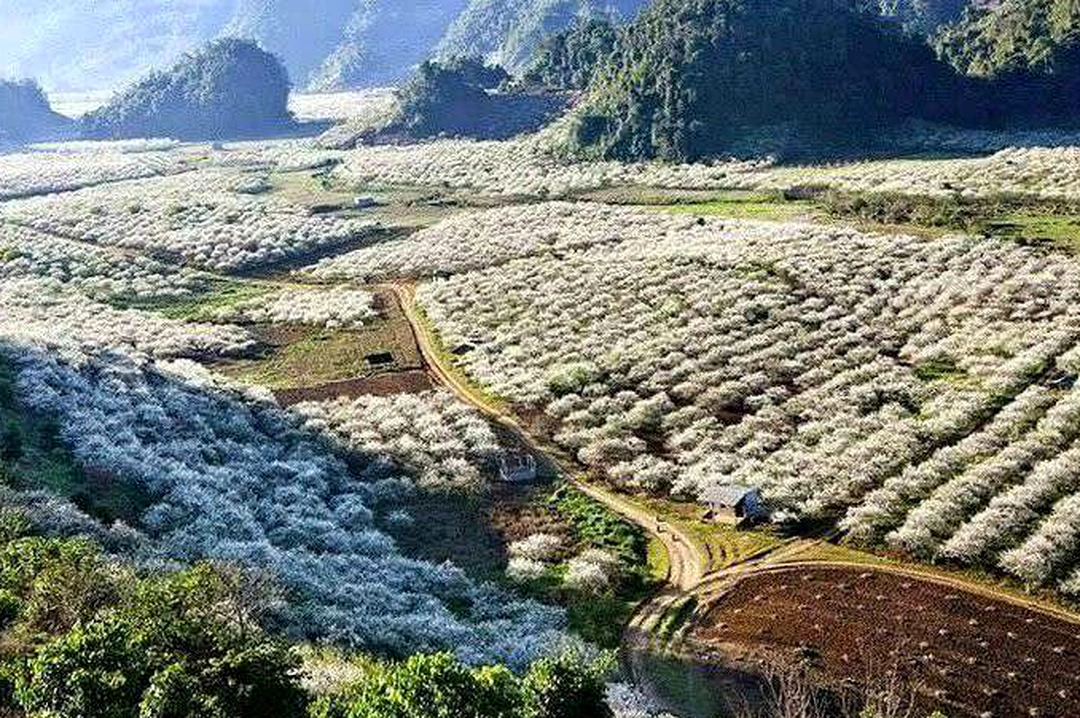
Na Ka is not merely a geographical coordinate, but a masterpiece of art meticulously sculpted by nature over millions of years of geological formation. Upon stepping into the valley, travelers are immediately overwhelmed by a magnificent work of “natural architecture”: tens of thousands of ancient *man hau* plum trees arranged in a way that feels spontaneous yet thoughtfully composed by the hand of creation. Gnarled, moss-covered trunks stretch their slender branches like calligraphic brushstrokes against the deep blue sky, creating a multi-layered spatial structure. In spring, when the plum blossoms burst into bloom, the entire valley is draped in an immaculate white mantle that softens the jagged limestone outcrops, transforming the landscape into an “ice palace” amidst the Northwest wilderness.
The most distinctive architectural highlight of Na Ka lies in the harmony between its basin-like *Oa huyet* terrain and the organic distribution of its orchards. Rather than growing in rigid, uniform rows like industrial farms, the plum trees follow the natural contours of the karst sinkholes, forming graceful curves that wind along the basin topography. Narrow, meandering footpaths weave between the tree trunks like lifeblood channels carrying vitality, connecting the central orchards with the sheer cliffs encircling the valley. This striking contrast between the delicate, snow-white blossoms and the rugged, brooding ancient limestone creates a rare visual depth, evoking a sense of stillness and majesty befitting a sacred land.
To capture the “million-dollar views” of Na Ka, professional photographers typically favor two classic vantage points. The first is from the top of the slope overlooking the entire valley at dawn (between 6:30 AM and 7:30 AM). At this hour, gossamer wisps of mist still cling to the treetops as the first rays of sunlight filter through the mountain passes, producing a backlighting effect that makes the plum petals glow like translucent crystal. It is during this fleeting moment that the valley’s energy-gathering terrain is most visible, with ribbons of clouds swirling around the mountain bases to form a living ink-wash painting.
The second vantage point lies at the heart of the basin, home to the oldest plum trees featuring dramatic, dragon-like postures (*Long vuon*). The ideal time to shoot here is at sunset (between 4:30 PM and 5:30 PM), when amber sunlight washes across the rugged trunks, accentuating the lichen clinging to the bark and casting long, enchanting shadows across the ground. Using a wide-angle lens here allows you to capture both the soaring sky and the surrounding limestone peaks, conveying an awe-inspiring sense of scale. For macro photography enthusiasts, capturing close-ups of dewdrops resting on plum buds at dusk—set against a backdrop of misty cliffs—yields images of remarkable artistic depth.
Na Ka is more than just a destination; it is a visual experience where geology meets aesthetics. Every angle here stands as a testament to nature’s fierce vitality, where every plum tree and boulder tells its own story of time and creation. For travel journalists, Na Ka is the “uncut gem” of Moc Chau—a living museum whose architecture is built not with brick and mortar, but nurtured by time and the favor of heaven and earth.
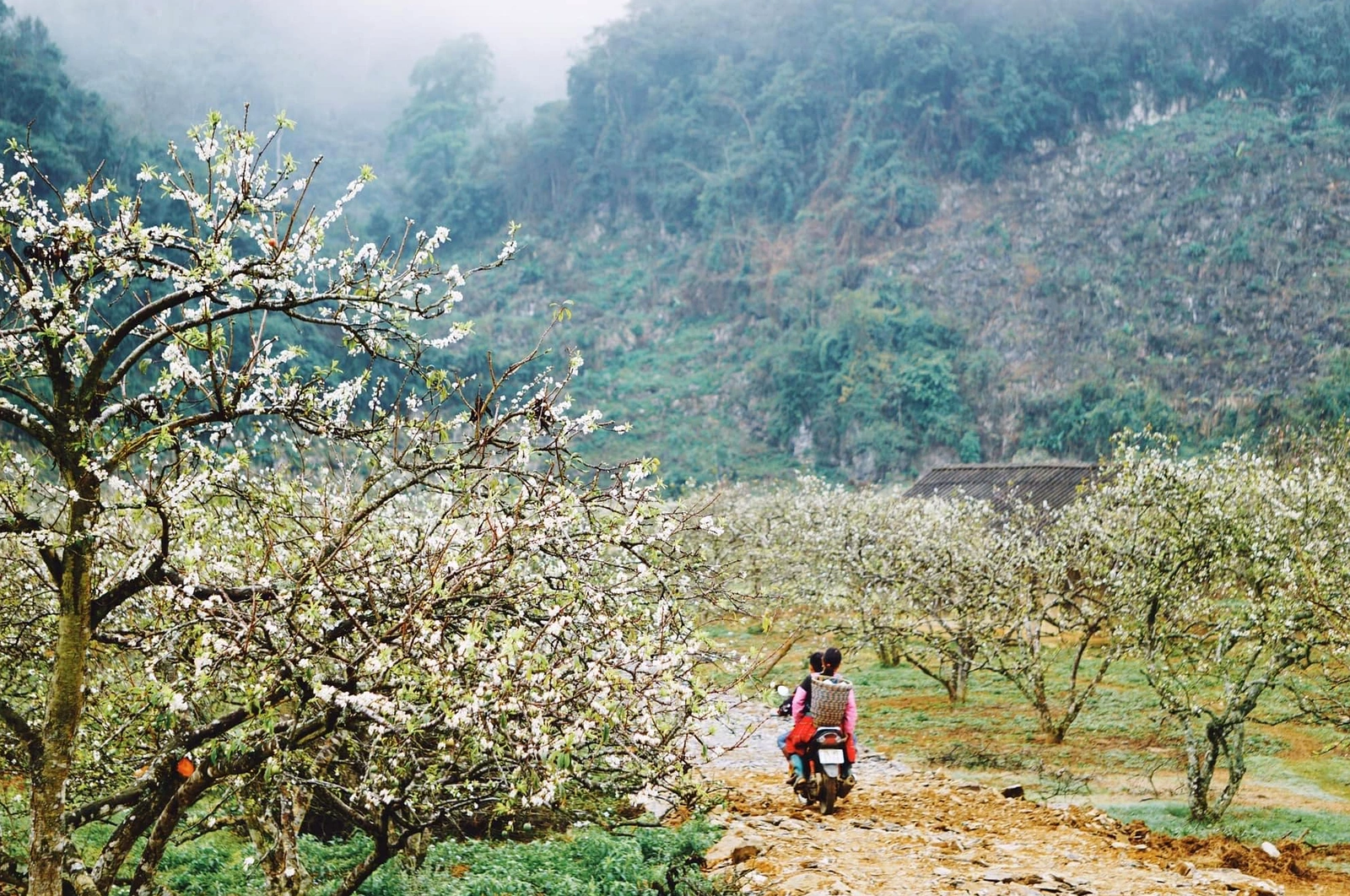
Stepping into Na Ka Plum Valley on an early spring morning, every visitor is left breathless by the sweeping panorama unfolding before their eyes. Looking down from the high, precarious limestone crags, an expansive expanse spanning hundreds of hectares suddenly transforms into an ethereal white wonderland. Tens of thousands of ancient plum trees intertwine, bursting with clusters of pure blossoms that blanket the entire sunken basin. Drifting morning mist mingles with faint wisps of hearth smoke rising from distant H’Mong villages, composing a serene yet mesmerizing ink-wash tableau that calms the traveler’s soul and washes away all the hustle and bustle of city life.
Exploring Na Ka goes beyond visual delight, offering a series of exhilarating physical experiences. To truly appreciate its unique, energy-gathering terrain, visitors can challenge themselves on trekking routes scaling sheer limestone cliffs and winding along narrow, shaded forest trails. Reaching the high overlooks to take in a bird’s-eye view of the nest-shaped valley delivers an unmatched rush of euphoria. During the high-water season when the natural drainage ravines fill up, gliding silently on rustic bamboo rafts across crystal-clear waters that mirror the sky—weaving right through the ancient plum trees—offers a completely fresh perspective that is both poetic and tinged with natural mystery.
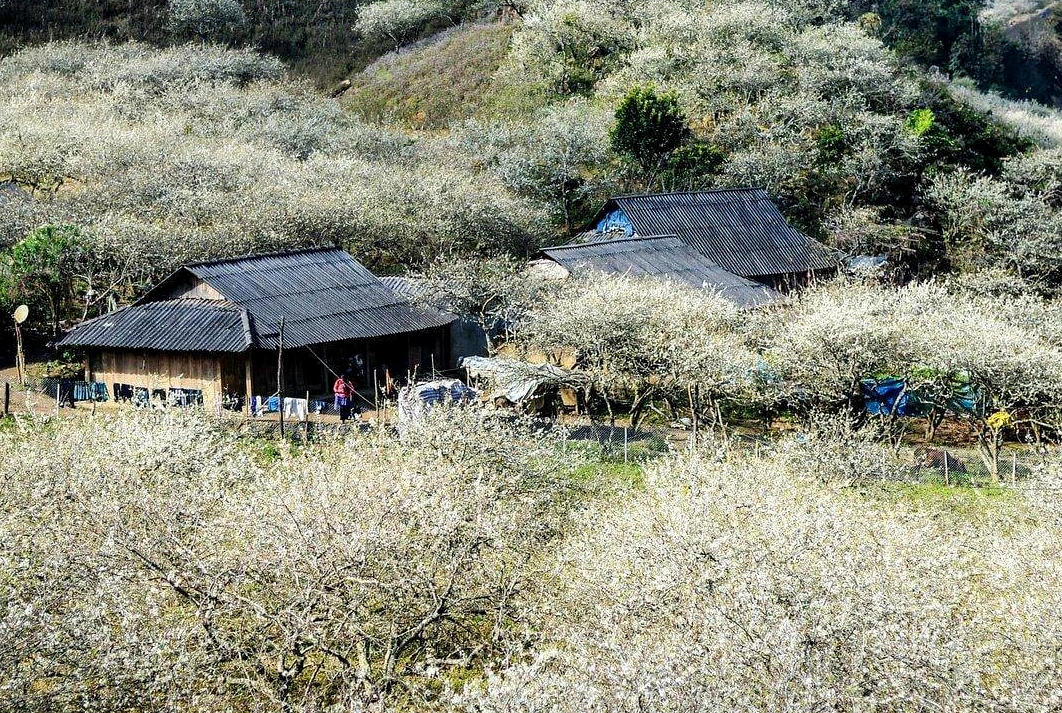
The cultural and spiritual landscape here also holds plenty of wonders to revere and explore. Tucked within the surrounding rocky ridges are the enduring indigenous traditions of the H’Mong and Thai ethnic groups. Visitors can stop by traditional rammed-earth houses emerging through the morning fog, listen to the haunting melodies of the *khen* (bamboo mouth organ) echoing off the cliffs, or learn about local spiritual beliefs connecting humanity with mountain deities through traditional harvest-praying festivals. This fusion of sacred nature and humble human life fosters a contemplative spiritual depth, inspiring reverence and appreciation for natural heritage with every step.
Capping off an immersive journey through Na Ka Plum Valley are its renowned culinary delights, guaranteed to captivate any food-loving traveler. Amid the crisp chill of the Moc Chau plateau, gathering around a glowing hearth to savor mountain specialties—such as *mac khen*-spiced smoked pork, fragrant bamboo-tube rice (*com lam*), bitter bamboo shoots dipped in *cham cheo* spice paste, or sipping warm corn wine—is an unforgettable experience. Better yet, visiting during the harvest season lets you hand-pick and bite into crisp, sweet-and-tart *man hau* plums straight from the branch. Together, these quintessential flavors and majestic landscapes etch a vivid, unforgettable portrait of Na Ka in the heart of everyone who visits.
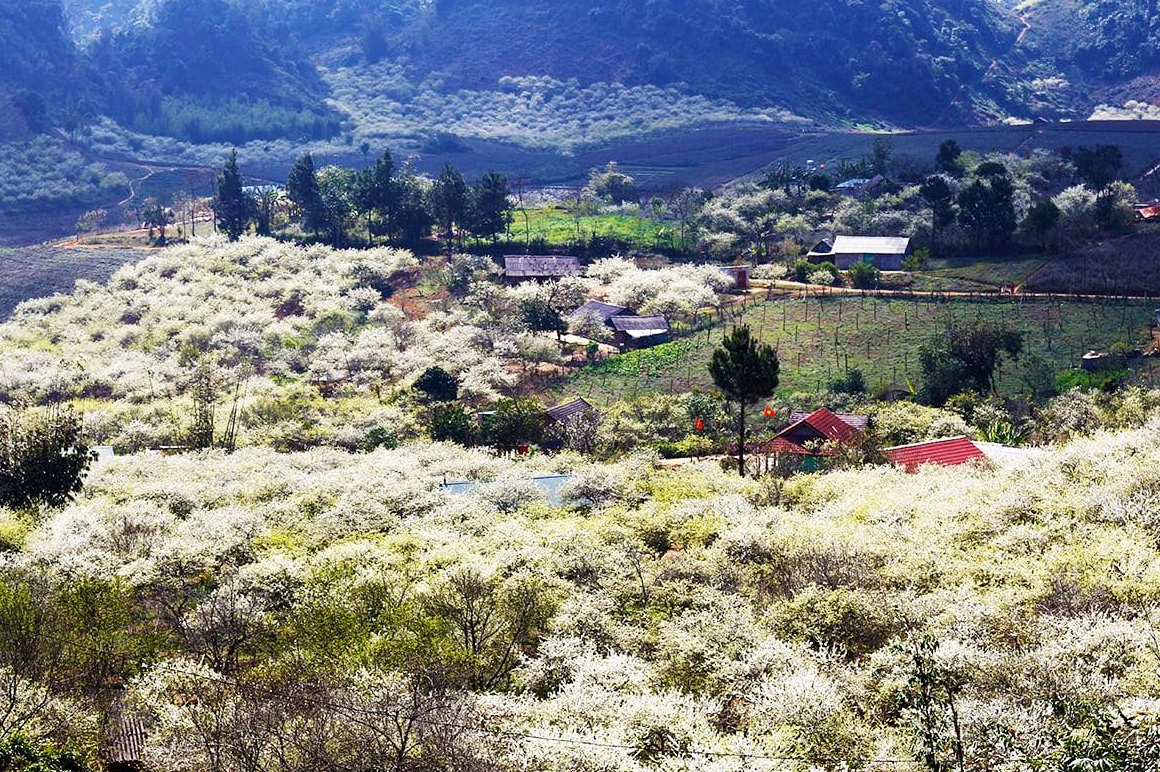
Na Ka Plum Valley is not only a geological marvel, but also an outstanding eco-tourism destination. To make the most of your journey into this basin valley, it helps to keep a few essential operational details and travel tips in mind. Regarding opening hours, the valley generally welcomes visitors from 7:00 AM to 6:00 PM daily. These hours ensure ample natural daylight to admire the ancient plum canopies while keeping navigation safe across the steep, mountainous terrain. Admission fees are typically posted clearly at the entrance, ranging from 20,000 to 30,000 VND per person depending on the management policies of individual orchard owners or local authorities at the time. These proceeds go primarily toward maintaining the landscape and supporting the conservation of the valley’s agricultural ecosystem.
As for transportation and routes, visitors departing from the center of Moc Chau Farm Town (*Thi tran Nong truong Moc Chau*) can opt for a motorbike or private car for maximum flexibility. The most optimal route heads toward Ban On. Although the distance is not overly long, the road features steep inclines and sharp hairpin turns typical of the highlands, requiring confident driving skills and a thorough brake check before setting off. For travelers unfamiliar with mountain roads, hiring a local motorbike taxi (*xe om*) is a smart alternative that ensures safety while offering a chance to hear fascinating stories about plum cultivation directly from local residents.
The best times to visit Na Ka are during the plum blossom season—when the valley looks blanketed in snow, usually in the early months of the year—or during the peak fruit harvest in mid-year. Each season brings its own distinct charm, though both require thoughtful wardrobe preparation. Because the terrain consists of a limestone valley with numerous crevices and ferralsol soil, visitors should prioritize sturdy sneakers with good traction and avoid high heels or slippery sandals. Dress comfortably and modestly to respect highland culture and adapt to rapid temperature shifts between day and night. Wearing outfits in colors that contrast with the white blossoms or red plums will also help you capture truly standout travel photos.
Finally, when visiting Na Ka, travelers should strictly adhere to environmental protection guidelines. Never break branches or pick fruit without the orchard owner’s permission, and avoid littering so as to preserve the pristine beauty of this natural sanctuary. Be sure to respect the cultural spaces of the local H’Mong and Thai communities by maintaining polite, mindful conduct. Every visitor’s respect is the key to safeguarding the long-term natural and cultural heritage of Na Ka Plum Valley, ensuring it remains a captivating destination for generations of travelers to come.
To enjoy a seamless getaway and take in the full splendor of Na Ka Plum Valley without worrying about arranging transportation, booking entrance tickets, or planning itineraries, travelers can choose from VDS Travel’s premium all-inclusive Son La tour packages. Each itinerary is thoughtfully designed to optimize photo check-in times when the scenery is at its most breathtaking, accompanied by knowledgeable local guides and top-tier hotel and dining standards.