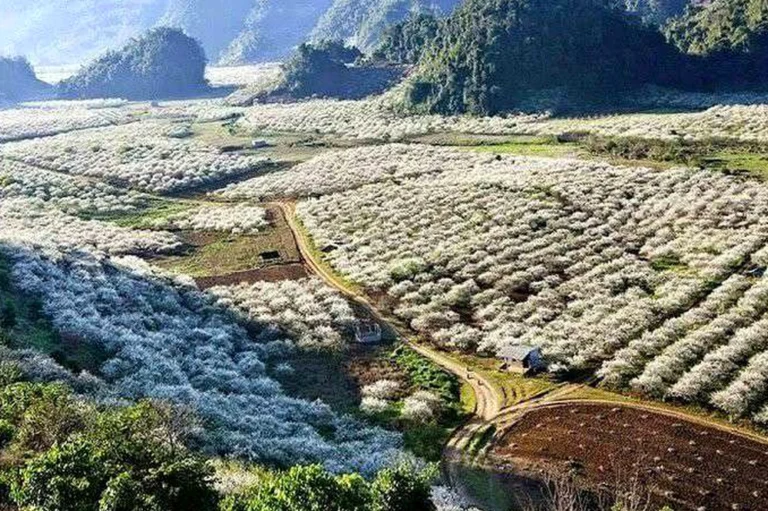
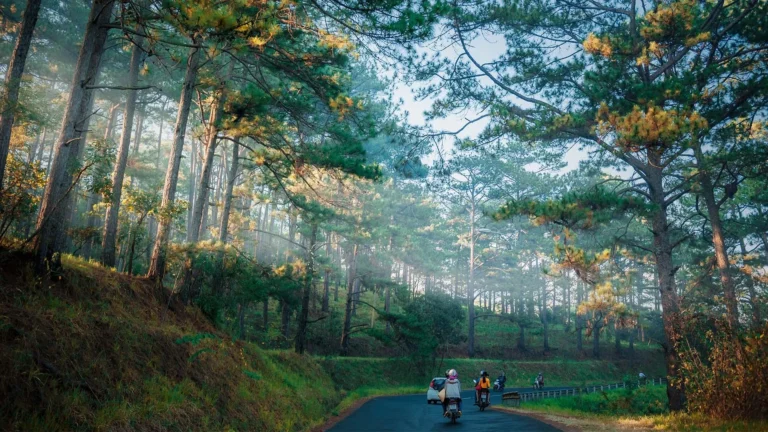
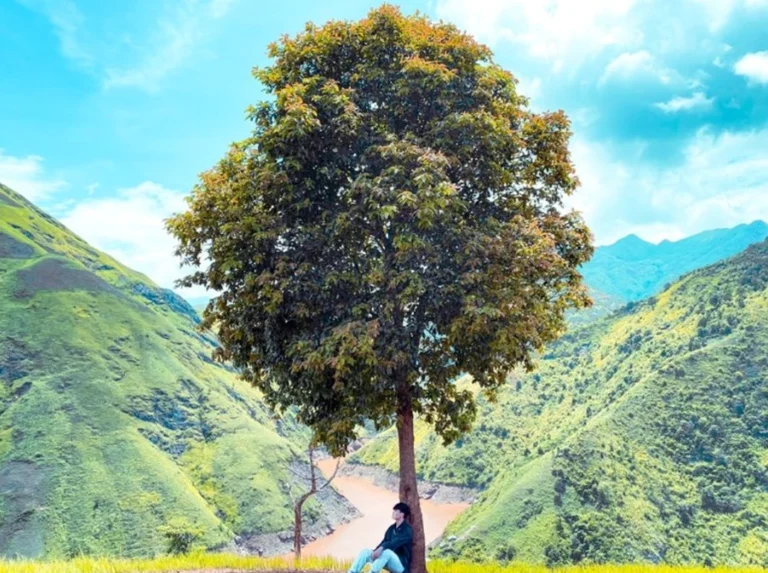
Nestled amidst the pristine and majestic plateau of Vietnam’s Northwest region, the agricultural heritage and cultural landscape complex of Thanh Son Tea Hills (Moc Chau) stands as a symbol of sublime harmony between nature and human perseverance. Geographically, this distinctive agricultural subregion stretches across an ancient limestone geological formation dating back millions of years, characterized by a temperate climate veiled in mist and clouds year-round, alongside dramatic diurnal temperature variations. The terrain unfolds like a breathtaking natural painting in the classic geomantic posture of “coiling dragon and crouching tiger,” encircled by rolling mountain ranges embracing fertile ferralsol valleys formed by ancient alluvium and natural weathering. It is precisely the pure groundwater filtered through limestone veins, combined with the signature mountain mist, that bestows upon Thanh Son Tea Hills an unrivaled ecological privilege—yielding a rich, refined tea flavor unmatched anywhere else along Vietnam’s S-shaped land.
Turning the pages of historical records and ethnographic fieldwork, the name “Thanh Son” is far more than a modern administrative designation; its roots reach deep back to an ancient dong (hamlet/village) of the indigenous Thai people who long inhabited Ta Hoa Prefecture under the former Hung Hoa Garrison. In the cadastral land registers of the Nguyen Dynasty and the research archives of the French School of the Far East (EFEO), the Moc Chau region has for generations been a vibrant crossroads of cultural exchange among the Kinh, the Thai (Black Thai and White Thai), and the Hmong peoples. Contrary to the common assumption that tea cultivation here was entirely introduced by French colonialists in the 1930s via the colonial plantation model (Ferme Coloniale), historical evidence and field research confirm a much older cultural stratum. Since the Revival Le period, indigenous Thai communities had already mastered harvesting, domesticating, and preserving ancient wild Shan Tuyet tea populations growing on high mountain slopes. This unbroken continuity demonstrates that Thanh Son Tea Hills hold not merely economic value, but also preserve an enduring stream of ethnic memory across space and time.
The historical turning point that shaped the contemporary landscape of Thanh Son Tea Hills is tied to the milestone date of April 8, 1958, when the Moc Chau State Farm was officially established under the highland economic development policy of the Government of the Democratic Republic of Vietnam. From wild slopes overgrown with cogon grass, this land transformed into a sacred “space of collective memory,” bearing the sweat, blood, and nation-building aspirations of tens of thousands of youth volunteers, demobilized soldiers of Uncle Ho’s Army, and ethnic minority communities during the economic reconstruction of Northern Vietnam. Through countless historical upheavals, and thanks to generations of dedicated agricultural experts and pioneering workers devoted to the land and its tea, Thanh Son has risen to become a unique agricultural landscape heritage. Widely recognized by heritage management authorities and the press alike, it serves not only as a cradle of Vietnam’s tea industry but also as a premier cultural heritage tourism destination, where visitors can touch layers of historical sediment, listen to the pulse of nature, and fully feel the heroic spirit of an era of nation-building.
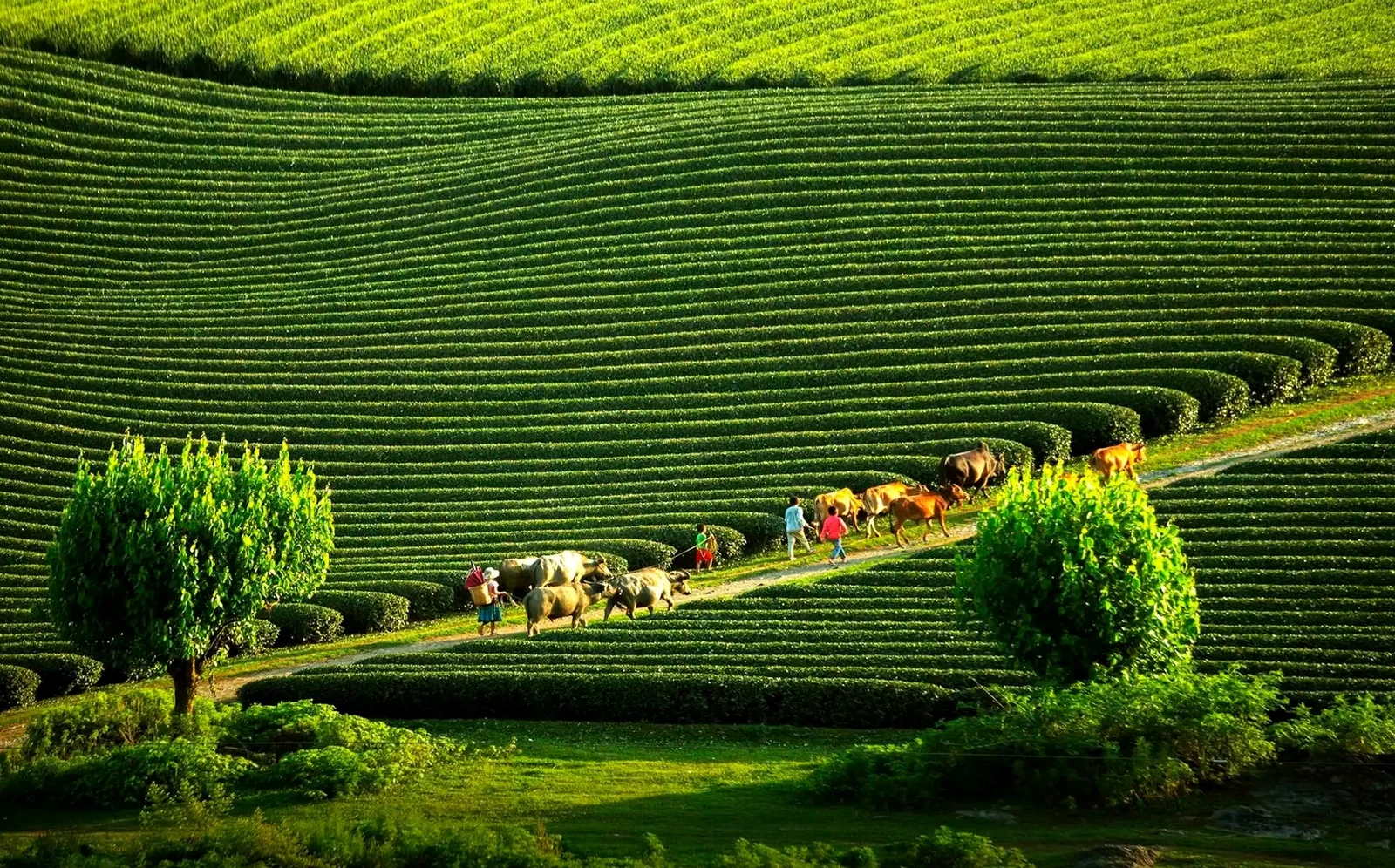
Set amid the windswept Moc Chau plateau, the heritage and cultivated landscape complex of Thanh Son Tea Hills emerges like a magnificent natural tableau sculpted by the patient hands of time and human labor. The terrain here is characteristic of a semi-mountainous highland, featuring soft, undulating bowl-shaped hills stretching endlessly toward the horizon. Across multiple historical eras, this landscape has represented far more than an agricultural raw-material zone; it possesses a grand spatial composition where the interplay of earth, sky, mountain clouds, and endless emerald rows of tea creates one of the most extraordinary masterpieces of agricultural architecture in the Northwest.
Viewed from above, the tea rows at Thanh Son do not run in rigid, sterile checkerboard lines; instead, they were gracefully contoured along the natural elevation lines of the hillsides by state farm workers and local ethnic communities. Concentric circles and fluid curves embrace the small valleys, forming vivid, organic geometric patterns. In the early morning, when silver mist still clings to young tea buds glistening with night dew, the entire expanse of tea hills appears to float atop a sea of white clouds. Rooted in fertile red basaltic soil, each row rises vibrant and full of life, releasing a delicate, soothing fragrance—a living testament to the enduring bond between humanity and nature across generations.
To capture the full breathtaking beauty of this remarkable agricultural subregion, professional photographers and travel journalists often pass along classic vantage points. The very first check-in spot not to be missed is the “Thanh Son Tea Heart”—the intersection of the highest slopes where winding tea rows naturally converge to form a giant heart shape. The most magical time to visit here is at sunrise (from 5:30 AM to 6:30 AM), when the first golden rays of dawn pierce through the thin mist and illuminate every dew-kissed tea bud like sparkling jade, evoking a sense of stillness and grandeur that takes one’s breath away.
The second highly prized photography spot lies along the winding paths hugging the western hillsides, offering sweeping panoramic views across the entire state farm valley. This vista reaches absolute perfection at sunset (from 5:00 PM to 6:00 PM). At this hour, the Northwest sky shifts into brilliant hues of magenta, violet, and fiery orange, reflecting off the deep emerald carpet of the tea hills to create an unforgettable visual feast. The harmony of twilight glow, silhouettes of local workers leisurely returning home after a day’s labor, and an atmosphere steeped in heroic historical memory rewards visitors with viral-worthy, deeply artistic, and nostalgic shots.
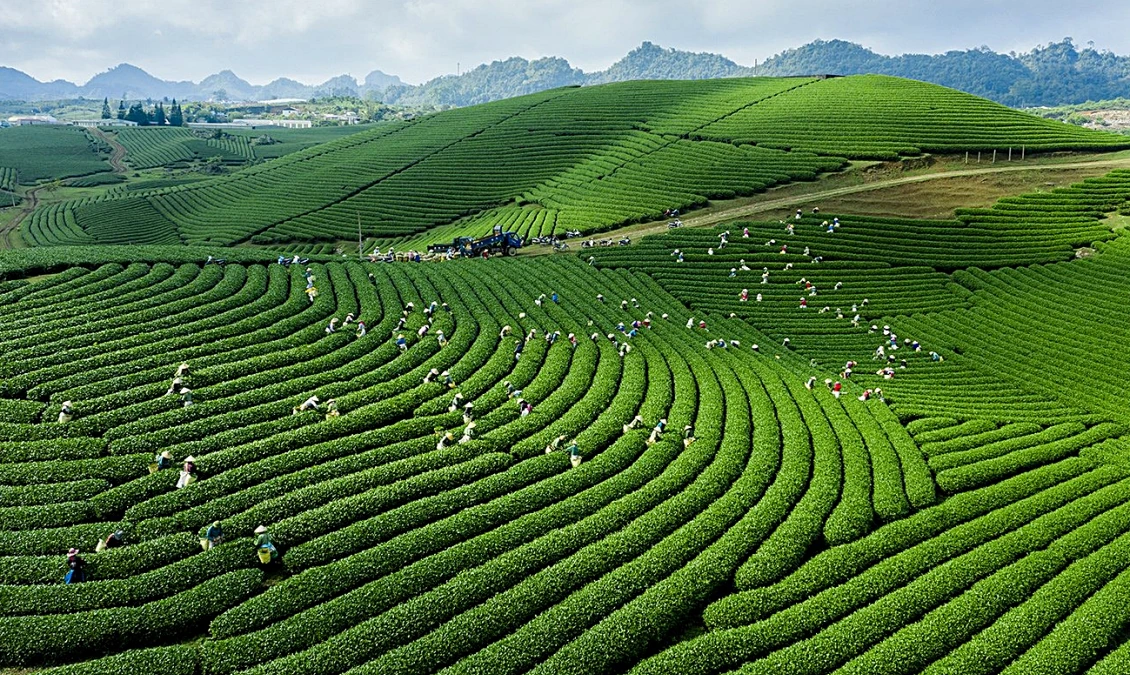
Stepping onto Thanh Son Tea Hills, the very first thing that awakens every sense is the pure, crisp morning air of the Moc Chau plateau. As delicate wisps of mist cradle the heart-shaped tea rows and undulating hillsides, an overwhelming sense of awe before this boundless emerald expanse washes over the soul. Looking out from the highest hilltop, a true marvel co-created by human hands and nature unfolds dramatically—where the vibrant green of tender tea leaves blends seamlessly with drifting clouds and distant limestone peaks, offering a sanctuary of absolute stillness to cleanse the mind from the noise and bustle of urban life.
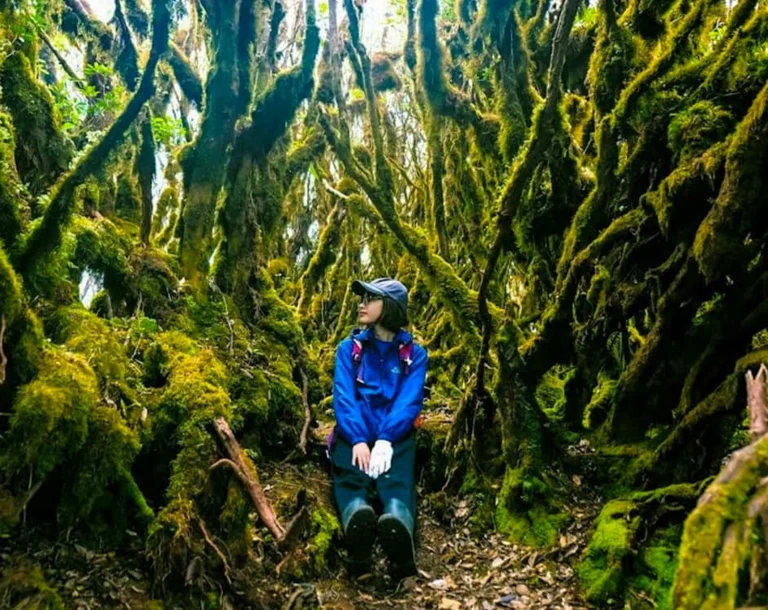
Exploring this extraordinary agricultural subregion goes far beyond passive sightseeing; it is a deeply moving journey of hands-on experiences. Visitors can challenge themselves on gentle trekking trails weaving along sloping hills to touch gnarled, moss-covered ancient Shan Tuyet tea trees—living witnesses to centuries of history. At times, the journey extends into neighboring valleys, where meandering streams allow travelers to drift lazily on scenic boat rides, listening to the rustle of mountain winds harmonizing with birdsong, and immersing themselves in the unhurried, peaceful rhythm of the Northwest highlands.
Moreover, this landscape is imbued with profound spiritual depth and vibrant indigenous culture. Travelers can visit sacred worship sites tucked quietly within local villages and learn about the humble yet rich customs and daily lives of the Kinh, Thai, and Hmong peoples. This cultural fusion is preserved intact in every stilt house, every traditional khen (bamboo mouth organ) dance, the haunting melodies of courting khen calls, and a celebrated repertoire of highland culinary specialties.
A journey through Thanh Son Tea Hills would be incomplete without savoring its authentic local gastronomy. Amid the breezy highland air, visitors can sip a warm cup of green tea brewed from pure plateau spring water, experiencing a gentle astringency that gives way to a lingering, sweet aftertaste. Paired with renowned local delicacies such as rich, tender Moc Chau pan-seared veal (be chao), fragrant grilled stream fish seasoned with wild mac khen pepper, and aromatic sticky rice cooked in bamboo tubes (com lam), every bite composes an unforgettable symphony of flavors. The seamless union of majestic scenery, heroic history, and living indigenous culture turns every footstep across Thanh Son Tea Hills into a cherished memory that lingers long in the hearts of all who visit.
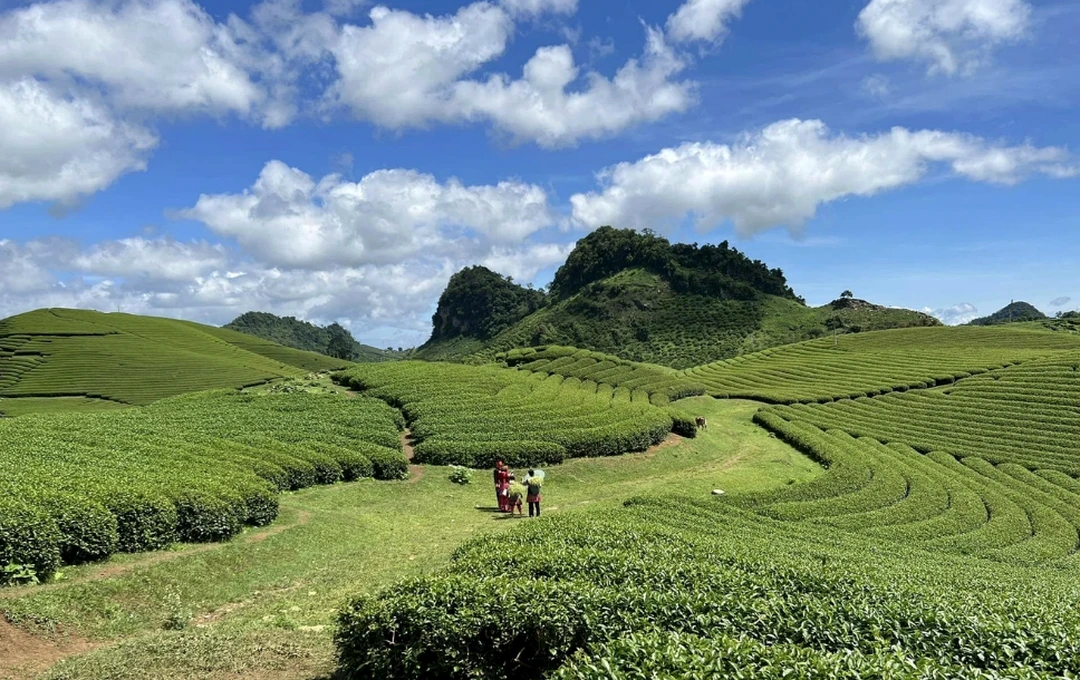
Welcoming travelers year-round, the agricultural heritage and landscape complex of Thanh Son Tea Hills (Moc Chau) remains an unmissable destination for nature lovers and those who cherish historical value. To ensure a seamless and fulfilling journey exploring this space of collective memory and unique farming heritage, knowing practical details regarding visiting hours, costs, and travel routes is essential. Entry to Thanh Son Tea Hills is completely free of charge, as the area has long been open to both local communities and visitors from afar to admire its distinctive agricultural scenery and explore the layered cultural heritage shared by the Kinh, Thai, and Hmong peoples.
Regarding operating hours, the tea hills welcome visitors daily from 6:00 AM to 6:00 PM. The most ideal times of year to visit are from March to August, when lush green tea rows stretch out under the morning sun, or from October to December, when ethereal mist blankets the slopes to create a magical, painterly landscape. For optimal photography and sightseeing conditions, visitors should arrive early in the morning (between 6:30 AM and 9:00 AM) to breathe in the crisp air, admire morning dewdrops glistening on ancient Shan Tuyet tea buds, and avoid the harsh midday highland sun.
The best route from downtown Moc Chau town to Thanh Son Tea Hills spans approximately 15 to 20 kilometers. Travelers can drive a private car or ride a motorbike along Old National Highway 6 before turning onto inter-commune roads heading toward the former state farm zones. In terms of transport, motorbikes offer the greatest flexibility for navigating narrow red-dirt trails hugging the hillsides; however, riders should carefully inspect brakes and tires beforehand due to steep inclines and sharp hairpin turns. Traveling in a high-clearance SUV ensures a smoother, more comfortable ride regardless of weather conditions.
Notably, because Thanh Son Tea Hills are not merely a natural landmark but also a cultural and historical space closely tied to the spiritual life of indigenous communities, visitors should strictly observe dress code etiquette. Opt for neat, comfortable attire paired with athletic shoes or hiking boots with good traction for walking safely on sloped dirt paths. At the same time, dress modestly and respectfully, avoiding overly revealing or inappropriate outfits when entering traditional cultural areas of the Thai and Hmong peoples, while maintaining cleanliness and refraining from picking tea leaves or breaking branches indiscriminately so this heritage landscape remains intact for future generations.
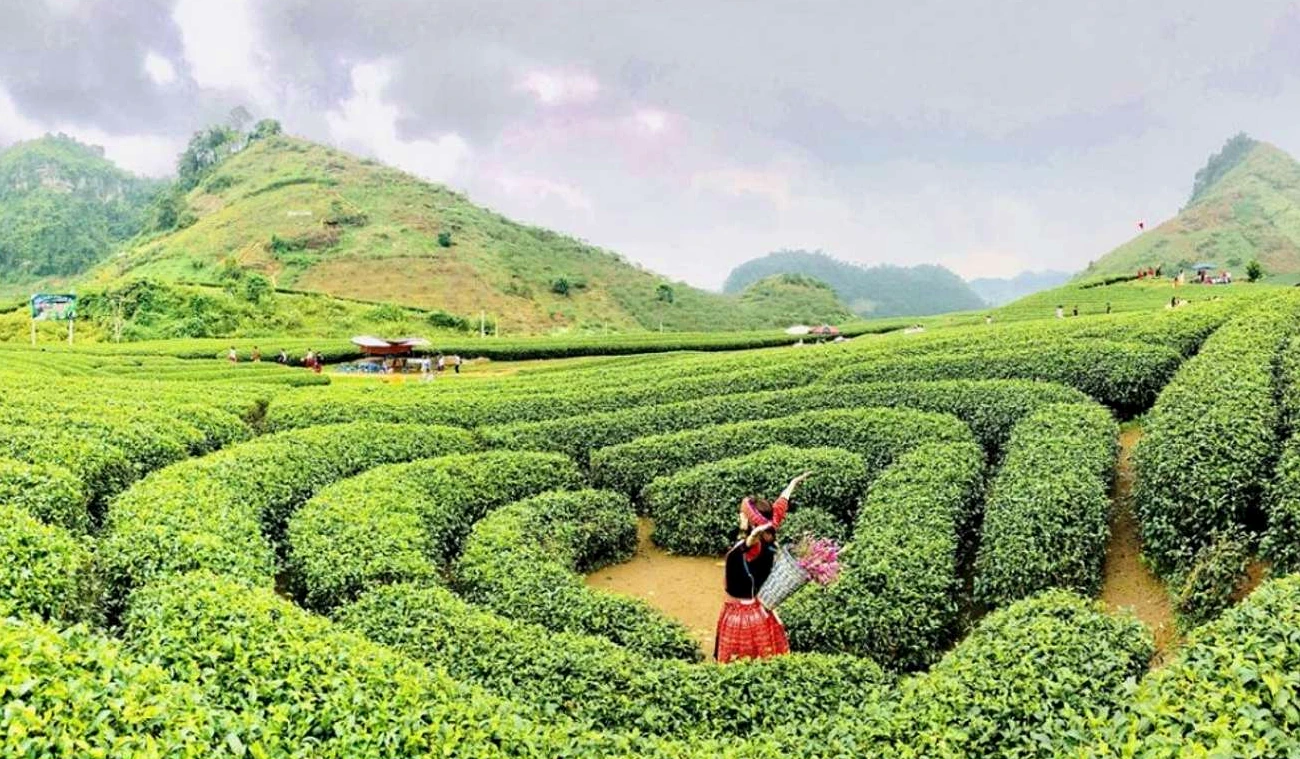
To enjoy a completely worry-free getaway and experience the full splendor of Thanh Son Tea Hills without the hassle of arranging transportation, admission tickets, or itineraries, travelers can choose VDS Travel’s premium all-inclusive Moc Chau tour packages. Every itinerary is thoughtfully timed for check-ins during peak scenic beauty, accompanied by knowledgeable local guides deeply versed in regional culture alongside top-tier hotel accommodations and authentic dining standards.