Located at the confluence of rivers in Jianshui County, Honghe Prefecture, the Double Dragon Bridge—locally known by the rustic name Seventeen-Arch Bridge—embodies an epic history spanning from the mid-to-late Qing Dynasty to the modern era. The bridge’s origins date back to the Qianlong era (1736–1795). At that time, the Taichong River, a treacherous tributary of the Lu River, would frequently surge during the rainy season, washing away makeshift paths and severing vital trade routes connecting the villages of Southern Yunnan. Faced with this transportation crisis, local elders and officials mobilized labor to lay foundations, carve stone, and construct the first three-arch stone bridge on the northern bank, providing a safe passage for mule caravans.
Unpredictable hydrological changes in the early 19th century triggered a second major construction phase that defined the masterpiece’s current form. In the nineteenth year of the Daoguang era (1839), a massive flood and unique geological shifts caused the main channel of the Lu River to change course, merging directly into the Taichong River. The sudden increase in water volume widened the riverbed significantly, leaving the small three-arch bridge isolated in the vast expanse of water. In this urgent situation, the Prefect of Lin’an, along with local gentry and merchants, initiated a large-scale fundraising campaign. They decided to extend the structure by adding fourteen sturdy, interconnected stone arches to the south, merging them with the existing three ancient arches to create a 148-meter-long, seventeen-arch stone bridge, standing tall and winding like two green dragons riding the waves together.
Admired from the calm riverbank, the ancient stone bridge stands across the water like a silent ribbon, its graceful arches creating a rhythmic architectural cadence. Above the bridge, traditional multi-story pavilions rise with elegant, sweeping eaves, their reflections perfectly mirrored in the still, ripple-free water. The surrounding space is enveloped by the lush greenery of the riverbanks and the hazy mountains on the horizon, standing out against a blue sky dotted with white clouds, painting a picturesque landscape imbued with the marks of time.
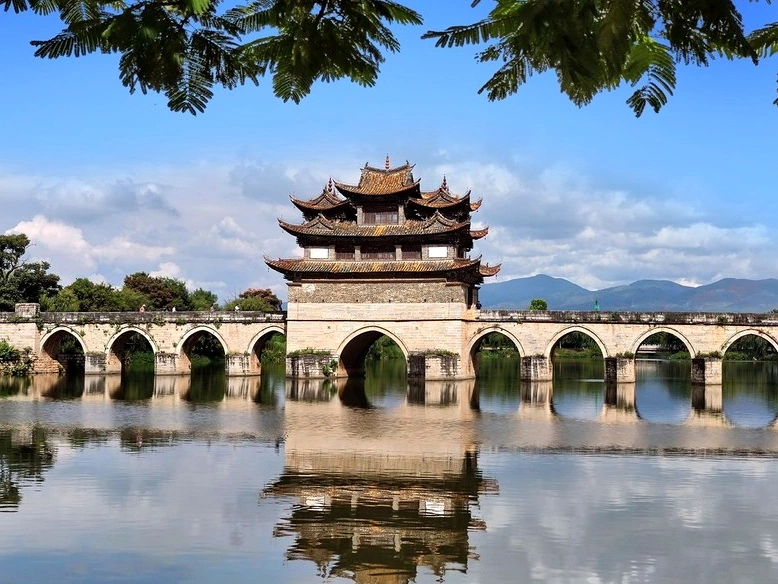
However, the fate of the Double Dragon Bridge has not always been peaceful amidst historical turmoil. In the sixth year of the Xianfeng era (1856), the peasant uprising and armed movement led by Ma Long spread across Yunnan, and fierce fighting reduced all the wooden pavilions on the bridge to ashes. It was not until the period between the twenty-second and twenty-fourth years of the Guangxu era (1896–1898) that the people of Jianshui completed a meticulous restoration, rebuilding the three massive wooden pavilions with exquisite multi-tiered roofs, restoring the magnificent appearance of this landmark.
Entering the early Republican era in 1916, the smoke of the National Protection War against Yuan Shikai’s imperial ambitions once again cast a shadow over the structure. The small pavilion at the northern end of the bridge was completely destroyed by artillery fire and mutiny. After this incident, the locals maintained the existing layout, turning the bridge’s pavilion architecture into a unique asymmetrical structure with a majestic three-story main pavilion in the center and a two-story small pavilion to the south, creating a profound and ethereal beauty that remains intact to this day.
The unparalleled architectural and historical value of the Double Dragon Bridge has been recognized at the highest academic level. In 1965, the renowned Chinese bridge expert Mao Yisheng, after conducting field surveys, officially included the Double Dragon Bridge in the list of the most representative large-scale ancient bridges in the country. In that same year, it was ranked among the first batch of key protected monuments in Yunnan Province. In May 2006, the State Council of China upgraded the Double Dragon Bridge to a Major Historical and Cultural Site Protected at the National Level (the sixth batch, code 6-743), forever honoring the structure as a great architectural symbol at the gateway to Southern Yunnan.
Located at the geographical coordinates of 23°37’02” North latitude and 102°46’22” East longitude, the Double Dragon Bridge lies about four and a half kilometers west of the center of the ancient city of Lin’an in Jianshui County, Honghe Hani and Yi Autonomous Prefecture. This land belongs to the fertile basin of the Southern Yunnan plateau, where the rare flat terrain amidst the rugged mountains of southern Yunnan became an early, prosperous agricultural cradle and a vital trade hub for centuries. The presence of the bridge is not merely a solution for land and water transportation, but a crucial link connecting the ancient thousand-mile routes with the prosperous periphery of the ancient city of Jianshui.
According to the principles of Feng Shui and traditional Eastern geography, the bridge holds a strategic “throat” position, standing impressively at the confluence of the Lu River and the Taichong River. In local Feng Shui belief, the two large rivers winding softly from distant canyons toward the plains resemble two great dragons traveling together between heaven and earth. The point where the two waters meet is where the “dragon vein” converges, accumulating the spiritual energy of heaven and earth to nourish the enduring prosperity of the scholarly land of Lin’an. The long stone bridge spanning the river junction acts like a jade talisman, fulfilling the mission of “locking the river and restraining the water,” both preventing flood disasters during the rainy season and retaining wealth and vitality from flowing away to the south.
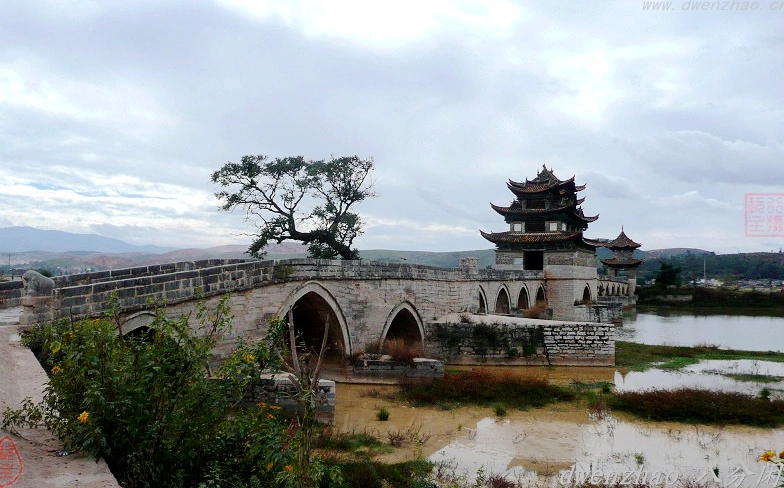
Real-life imagery captures the serene beauty of the ancient stone bridge, standing proudly over the mirror-like water. At its center stands a grand multi-story pavilion, embodying traditional imperial architecture with gracefully curved tiled roofs reaching toward the blue sky. In the distance, the silhouettes of rolling blue mountains create a tranquil backdrop, perfectly contrasting with the intricate stone arches. The reflection of the ancient bridge and the pavilion in the crystal-clear water, combined with a traditional red seal in the corner, weaves a vivid and ethereal ink-wash painting masterpiece.
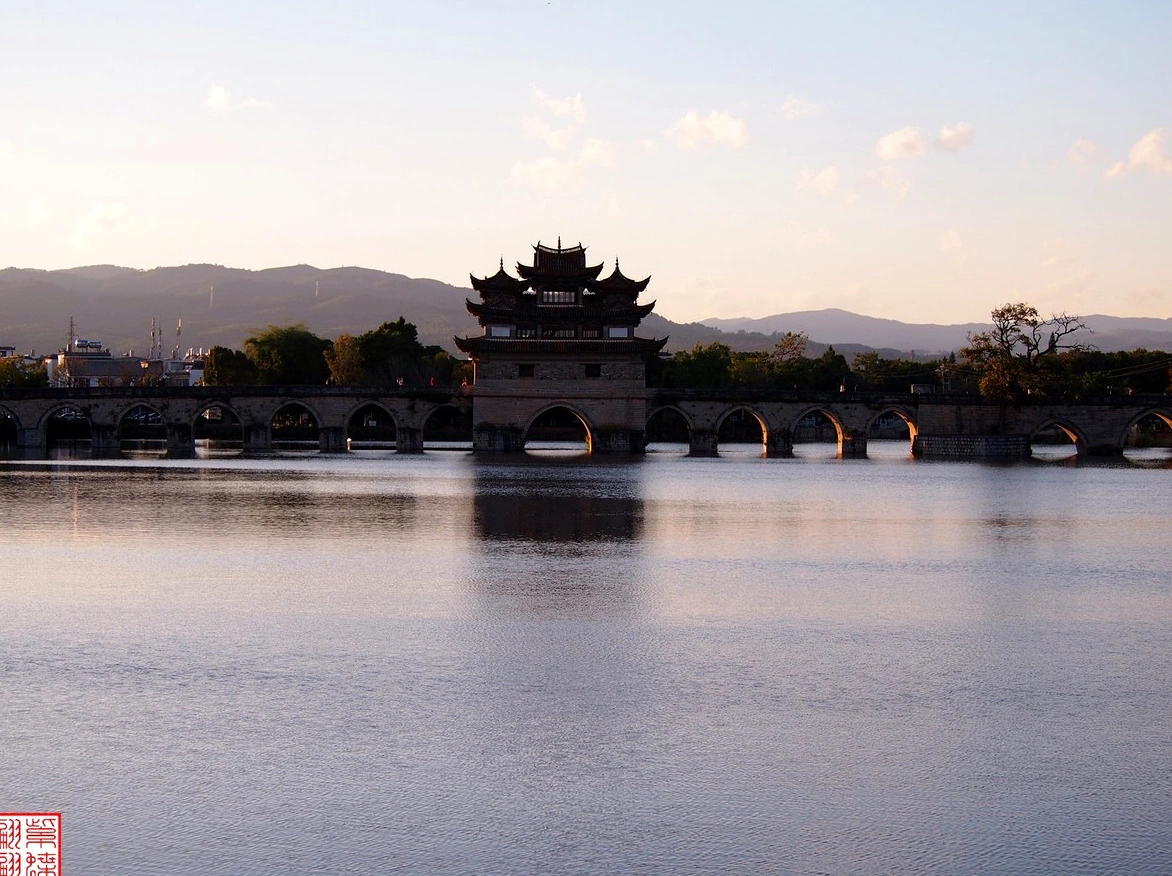
Blending with this magnificent man-made structure is the lush ecosystem of the national wetland reserve surrounding the Shuanglong (Double Dragon) Bridge. The scenery here changes magically with the four seasons, painting a pastoral river landscape typical of the Diannan region. In spring, the riverbanks are blanketed in vibrant yellow rapeseed flowers stretching to the horizon; as summer passes and autumn arrives, the fertile delta fields don a coat of golden ripe rice, rippling like waves in the mountain breeze. On the calm river, the seventeen silent stone arches reflect in the water, punctuated by white water birds gliding near the surface, immersing visitors in a tranquil space where pristine nature and millennial heritage breathe in peaceful harmony.
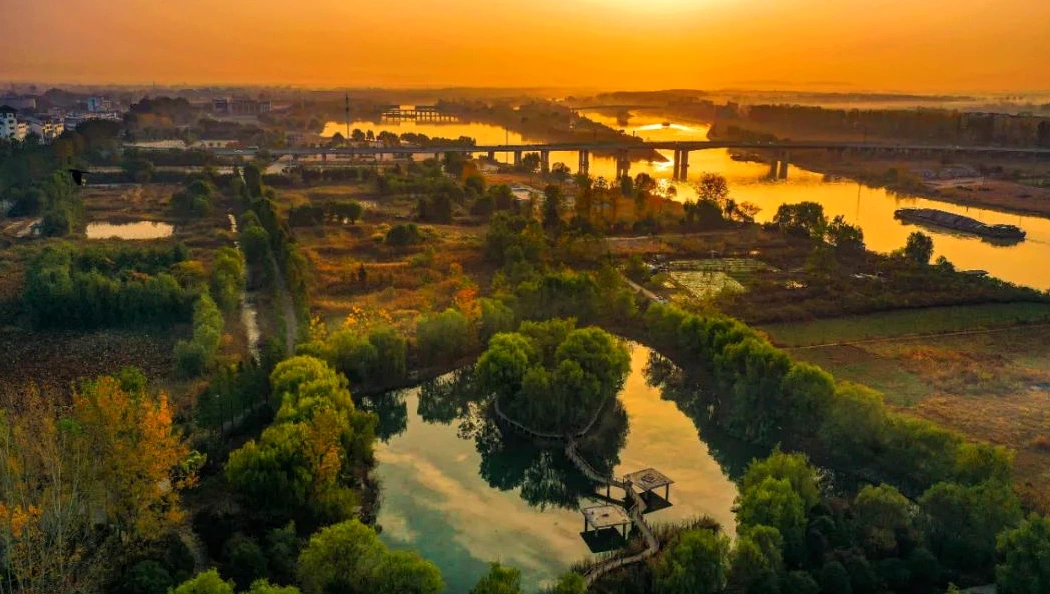
In terms of ancient engineering, the Shuanglong Bridge is hailed by experts as a masterpiece of multi-arch stone bridge construction in China, perfectly converging hydraulic mechanics and Eastern architectural aesthetics. The entire structure spans 148 meters, with a bridge deck width varying from 3 to 5 meters and a gentle slope toward both ends. This construction marvel is crafted from tens of thousands of massive sandstone blocks, locked together entirely by sophisticated mortise-and-tenon techniques without the use of any modern cement mortar. The system of 17 stone arches is calculated with astonishing hydrodynamic precision: the central arch has the largest span, with the side arches narrowing symmetrically toward the banks, helping to disperse the pressure of floodwaters while creating a graceful visual rhythm like a soft rainbow spanning the blue waves.
Viewing the panorama from afar, the structure appears as a vast ink-wash masterpiece, with the ancient stone bridge and its continuous arches proudly spanning the vast, calm lake, shimmering in a beautiful jade-blue hue. Nestled peacefully in the center is the majestic multi-story wooden pavilion, distinguished by its curved tiled roofs characteristic of classical Chinese architecture. Completing this magnificent scene is the backdrop of rolling blue mountains on the horizon, standing out against a clear, expansive sky dotted with drifting white clouds.
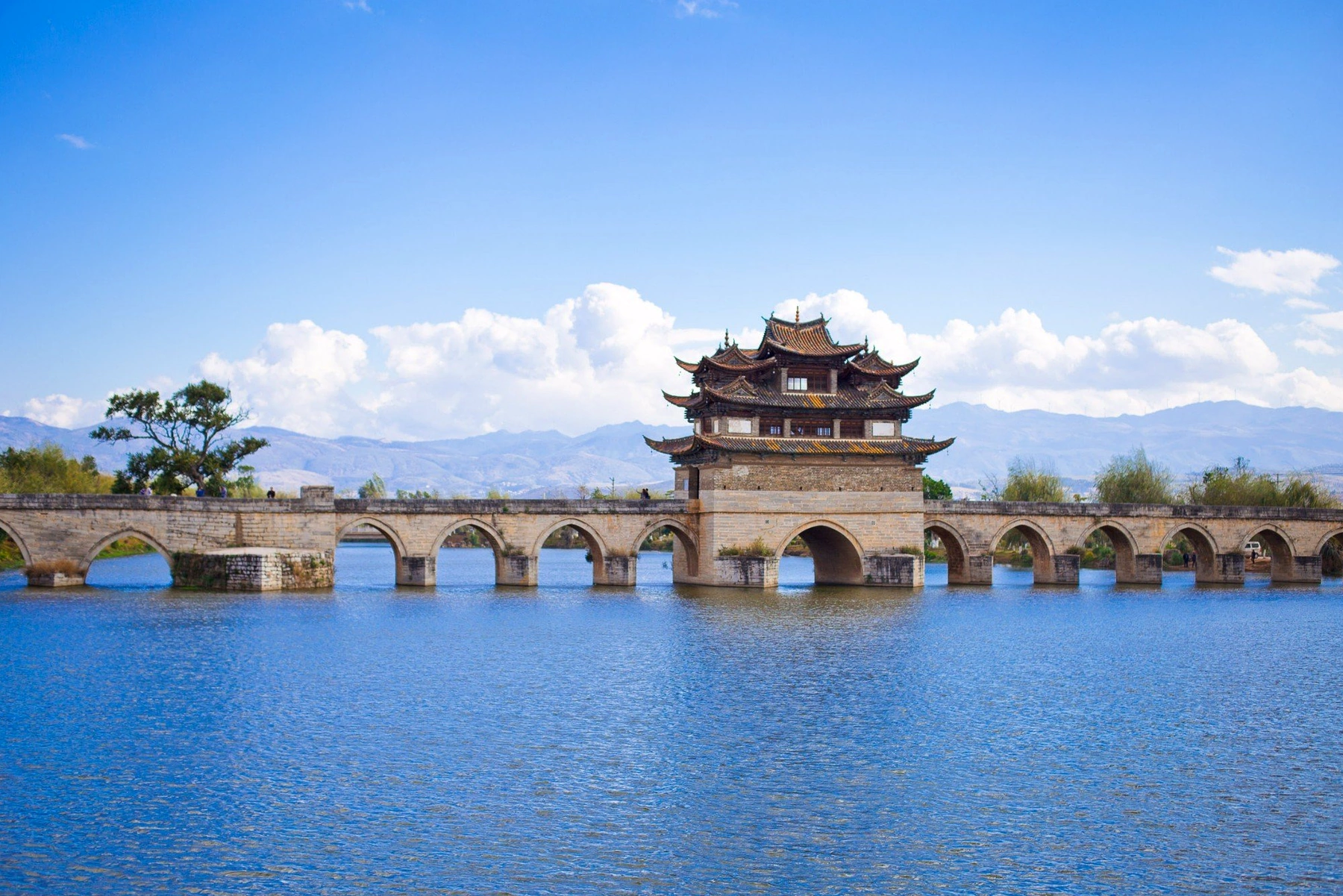
Beyond its structural engineering feats, Qing Dynasty artisans transformed inanimate stone into vivid sculptural art. On the bridge piers facing the current, triangular water-splitting structures were sharply carved to break the force of floodwaters before they hit the arches. On the stone ledges and railings, master stone carvers meticulously sculpted the ‘Bafu’ mythical beasts—guardians believed to suppress water monsters and prevent floods—alongside intricate reliefs depicting golden dragons, cranes with lotus flowers, and swirling auspicious clouds. After more than two hundred years of weathering and erosion, over eighty-five percent of these carvings retain their sharp details, a testament to the superior stone-crafting skills and the enduring quality of Yunnan sandstone.
The soul and unique prestige of the Double Dragon Bridge (Song Long Bridge) are defined by the towering pavilions that grace its deck, earning it the title of the Diannan Grand View Pavilion. Standing guard at the center of the largest arch is the massive three-story wooden Main Pavilion, soaring between 16 and 20 meters high with a perfectly square 16-meter base, balanced flawlessly on a sturdy stone foundation. The pavilion’s load-bearing frame is a masterclass in traditional joinery, blending the robust “thao luong” (beam-and-column) structure with the flexible “xuyen dau” (interlocking) technique. Its three-tiered, multi-eaved roof is supported by an exceptionally intricate system of dougong brackets, with eaves curving upward like the wings of an eagle in flight, completely dispelling the sense of heaviness from the massive timber structure above.
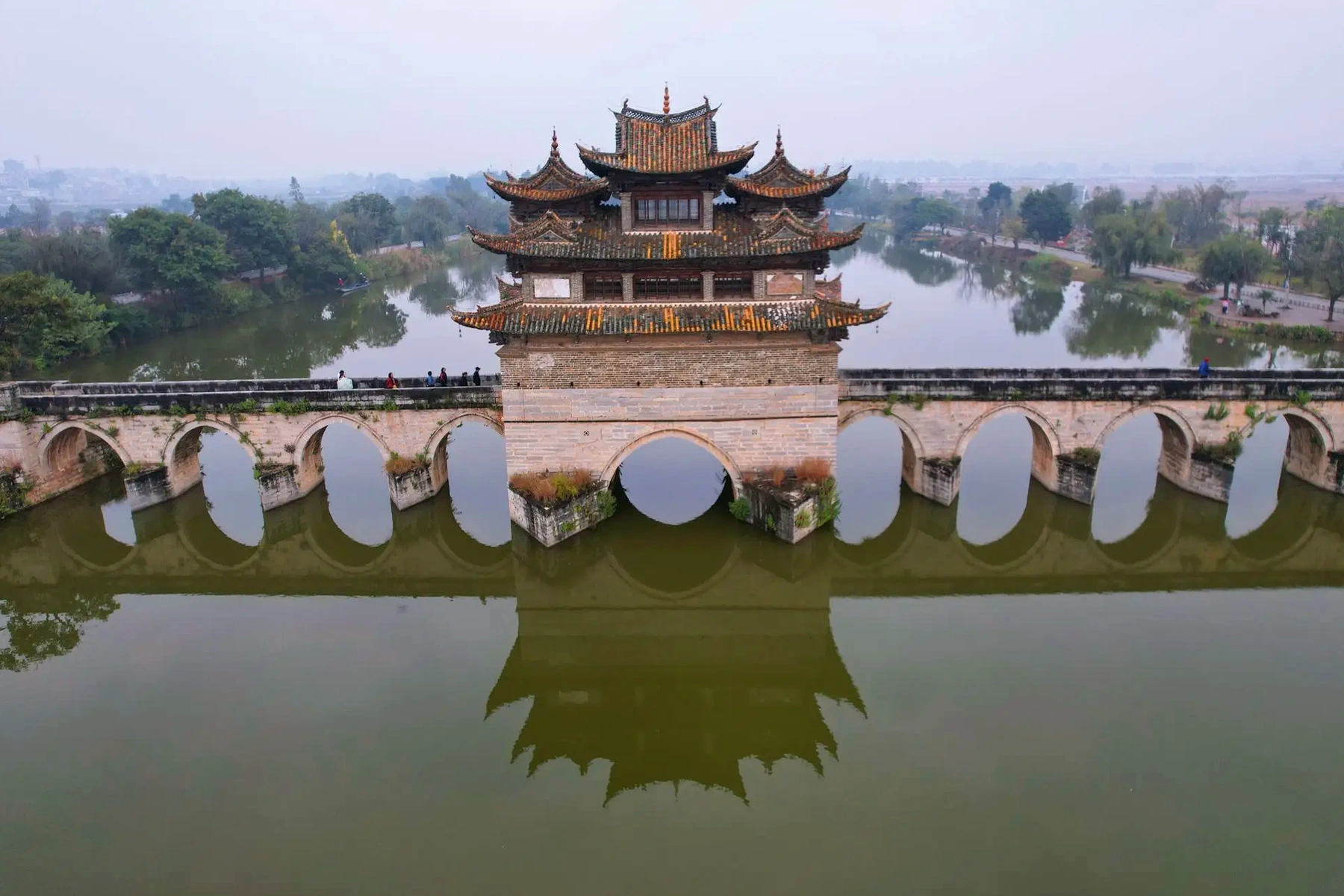
The spatial planning of the bridge gains further depth from the smaller pavilions at either end of the approach spans. Originally, two small watchtowers guarded the north and south ends, though today only the ancient square pavilion at the southern end remains intact, featuring an elegant single-eave design. Viewed from a distance, the rhythmic height difference between the imposing central pavilion and the humble end pavilion creates a balanced spatial axis, transforming the bridge into a floating palace that perfectly fuses the stoic, solid nature of mountain stone with the airy, ethereal grace of Diannan forest timber.
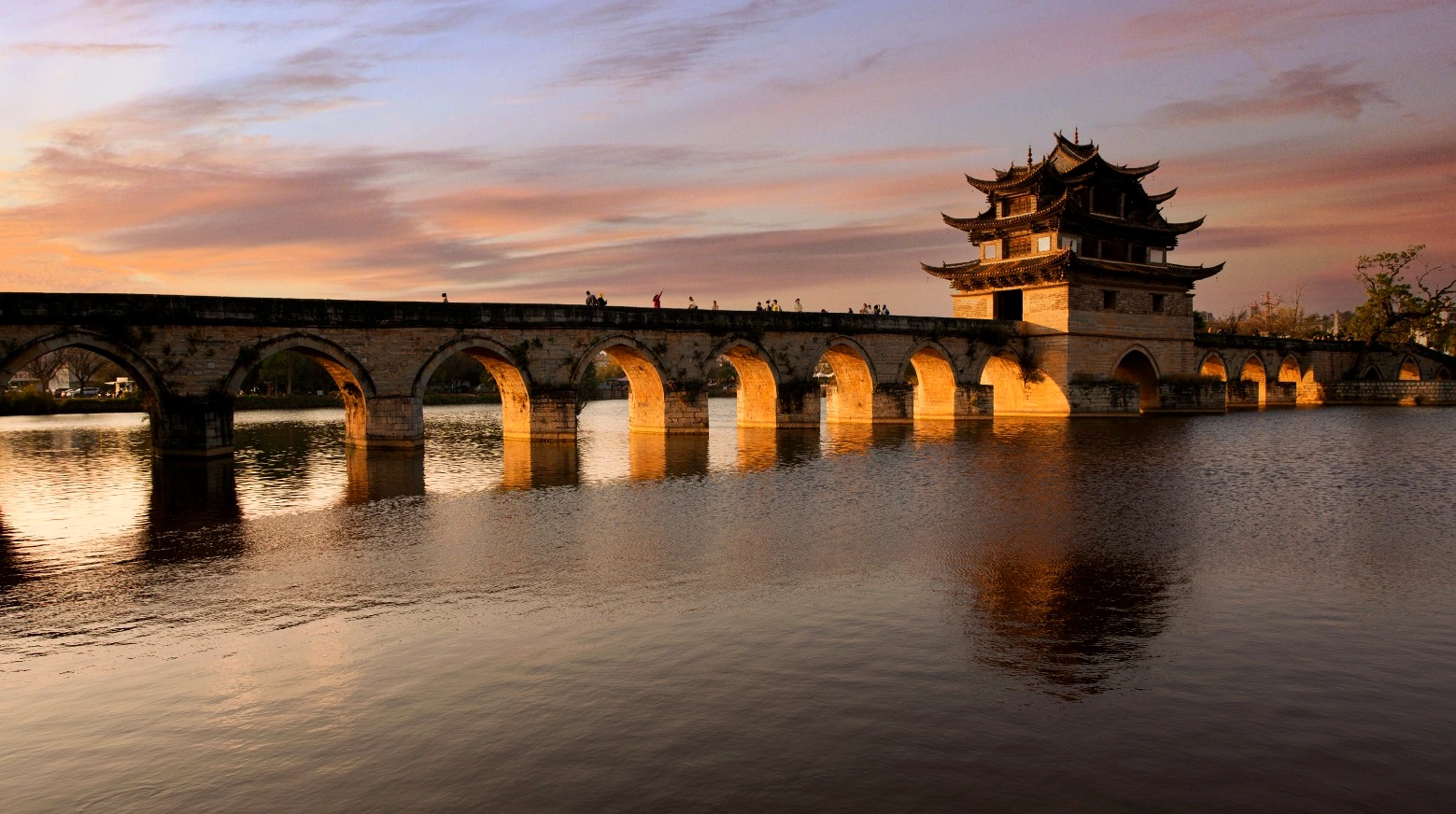
As the sun begins to dip toward the western mountains, the Diannan region enters its most magnificent visual transition of the day. Due to its high-altitude location on the southwestern plateau, sunset in Jianshui arrives about an hour later than in coastal plains. The period from 5:30 PM to 7:15 PM is considered the golden hour, when the sun, like a giant cinnabar orb, slowly descends, casting slanted rays directly through the seventeen limestone arches of the Song Long Bridge. This late-day light dyes every mossy stone texture, reflecting onto the calm waters at the confluence of the Lu River and Ta Chong River, weaving a spectacular optical phenomenon akin to thousands of golden shuttles dancing across the waves. This breathtaking scene is celebrated in local poetry and art as the “Golden Light of the Seventeen-Arch Bridge at Sunset,” an unparalleled natural masterpiece that no stage design could ever replicate.
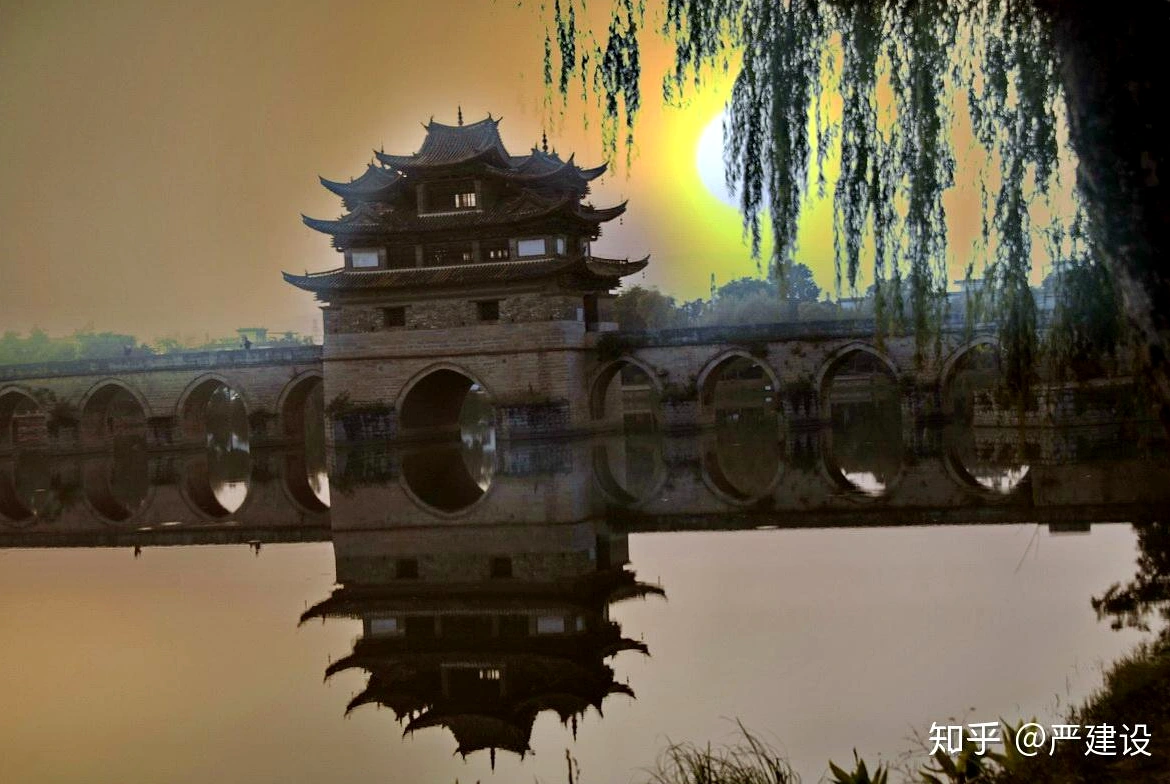
In stark contrast to the rampant commercialization seen in many modern tourist cities, the area surrounding Song Long Bridge is strictly preserved, with high-intensity floodlights and harsh laser effects banned to prevent light pollution. The lighting art here respects the pristine rhythm of nature and the riverine ecosystem. As the twilight fades, the massive form of the ancient stone bridge gradually sinks into the mysterious blue-gray hues of night, casting a silent reflection onto the vast wetlands. The absence of artificial light makes the area around the bridge an ideal coordinate for astrophotography enthusiasts. Under the clear night sky of the plateau, one can easily admire the moon hanging directly above the three-story pavilion, or capture the rotation of the stars and the Milky Way stretching across the seventeen stone dragon arches, creating a surreal painting that feels detached from the linear flow of time.
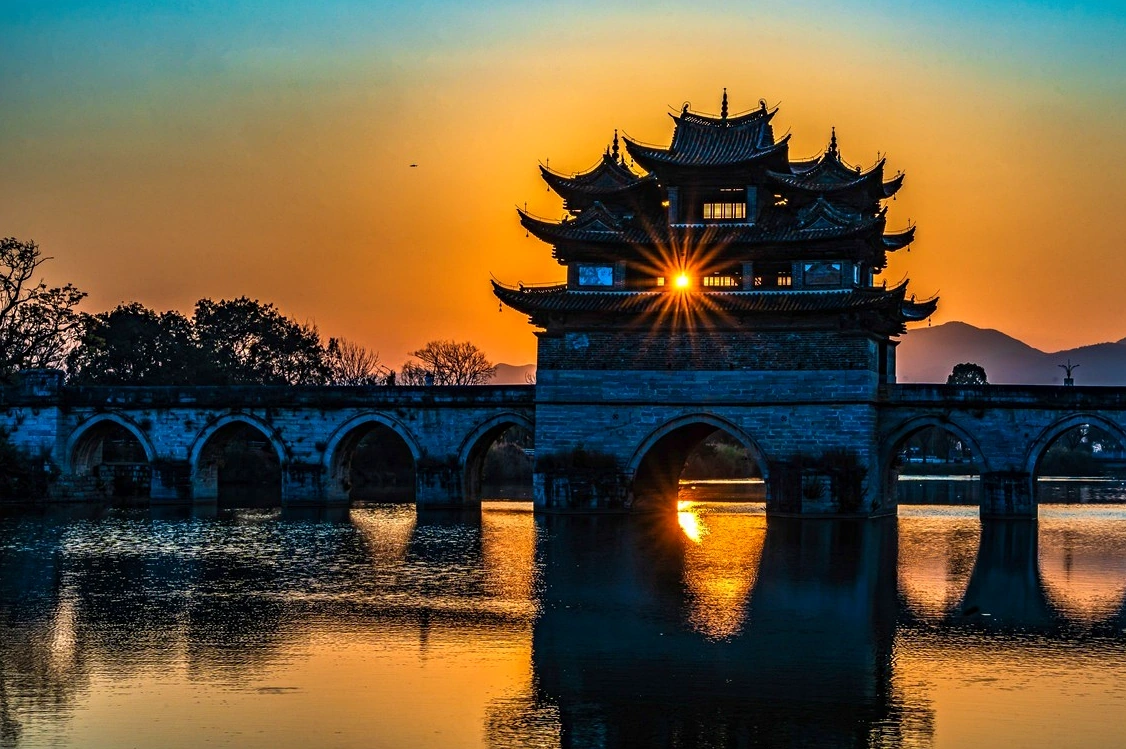
The nightlife around Song Long Bridge is like a gentle coda, where visitors might encounter local artisans sitting at the base of the bridge piers, humming rustic Diannan folk tunes to the accompaniment of rhythmic string instruments. The night breeze whispers through the reeds along the banks, blending with the chirping of insects to create a peaceful, serene soundscape. This quietude provides a poetic cultural counterpoint to the vibrant bustle inside the ancient city of Lin’an, where the Purple Pottery street is alive with the smoke of street food and the night market beneath the Chaoyang Pavilion glows with red lanterns. The narrow-gauge railway with its vintage steam train acts as a bridge, transporting travelers from the lively urban rhythm back to the boundless silence of the fairytale river.
Guided by the sustainable development vision of Jianshui County, the entire Double Dragon Bridge heritage site is open to the public free of charge, 24/7, transforming this Ming-Qing architectural masterpiece into a truly public entity. The harmonious blend of the bridge’s open space with the subtle light art installations at local landmarks creates a self-contained night-time economy. Here, the Double Dragon Bridge retains its serene soul, offering a profound moment of stillness for visitors to listen to the echoes of centuries of history, completing the poetic, slow-living experience of this ancient land in southern Yunnan.
The traditional culinary landscape of Jianshui, a land of thousand-year culture, has cultivated a unique and sophisticated flavor profile distinct from the rest of the Diannan region. The local culinary identity is deeply rooted in a famous trinity: ancient sweet well water, handcrafted purple clay pots, and glowing charcoal fires. Through the many historical shifts since the ancient Lin’an Prefecture, the local people have preserved their strict ancestral cooking customs, turning every daily meal into a profound journey of sensory art.
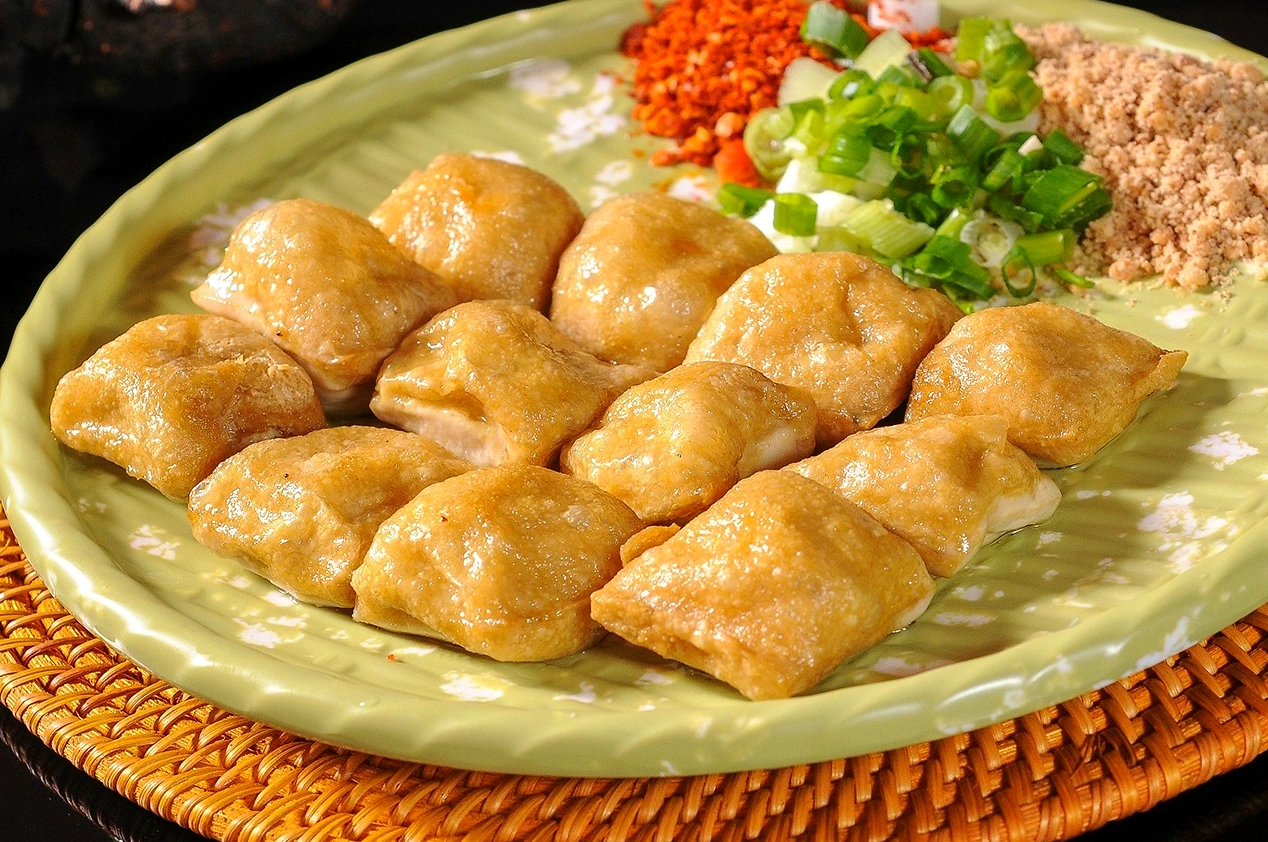
At the top of the list of rustic delicacies is the famous Ximen grilled tofu, a treat inextricably linked to the natural mineral water of the Ban Jing well at the west gate of the ancient city. The tofu makers strictly avoid chemical gypsum for coagulation, instead relying solely on natural fermentation driven by the pure, sweet groundwater. Each three-centimeter square block of tofu is lightly fermented and placed on the iron grate of a glowing charcoal brazier, flipped skillfully until the outer skin is crispy and golden, while the inside puffs up soft and round like a ball. The experience of enjoying grilled tofu in Jianshui preserves a unique cultural interaction: diners gather around the warm charcoal stove, the vendor sits in the middle, nimbly grilling the tofu, and each piece eaten is counted by a dried corn kernel dropped into a porcelain bowl for billing, then dipped into a bowl of spicy dry chili powder or a fragrant cilantro-infused soy sauce.
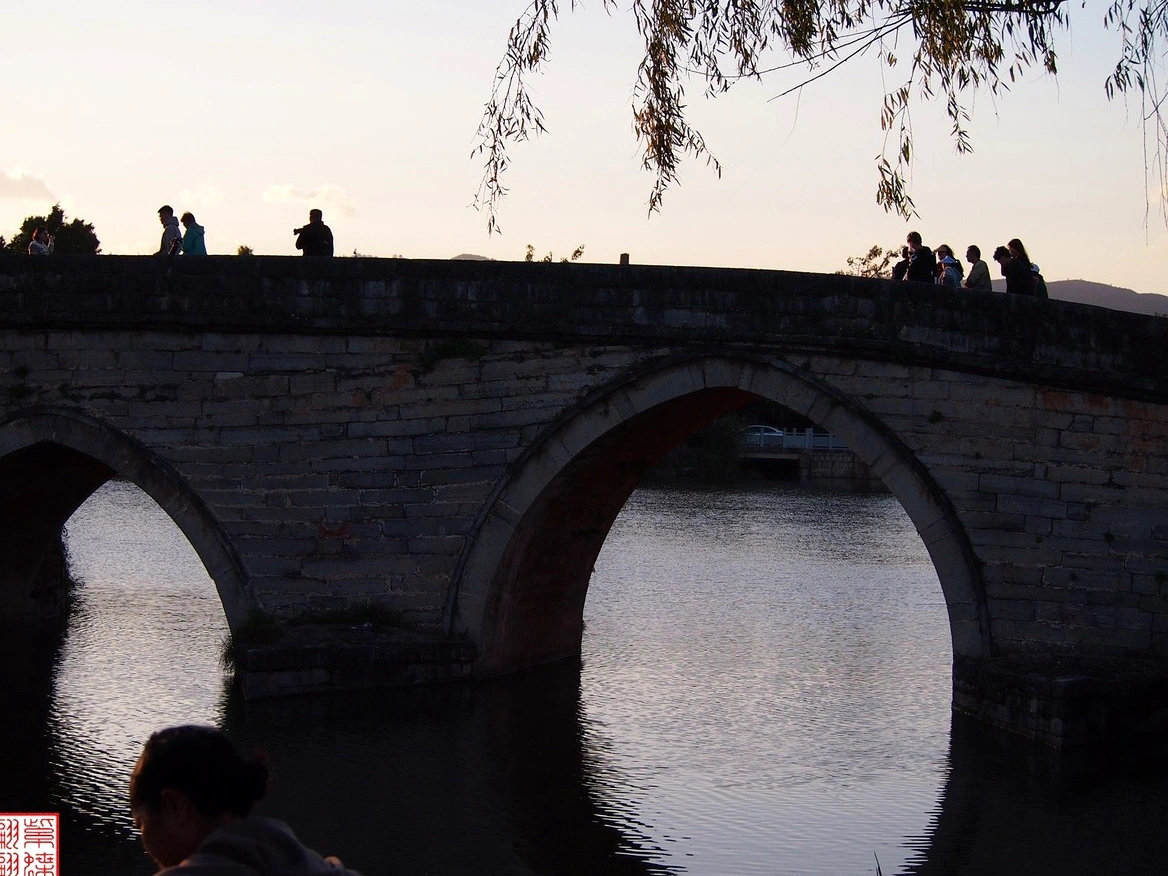
As the sunset fades over the Lu River, the seventeen-arch Double Dragon Bridge appears solemn and ancient amidst the fiery red twilight reflecting the passage of time. The scene captures each softly curved stone arch spanning the vast water, with lush trees and rolling hills stretching into the distance in the background. On the flat bridge deck, groups of travelers stroll leisurely or pause against the stone railings to admire the twilight, while in the foreground below, the silhouette of a woman quietly contemplating the towering stone bridge creates a vivid contrast, connecting contemporary human life with an ancient architectural marvel.
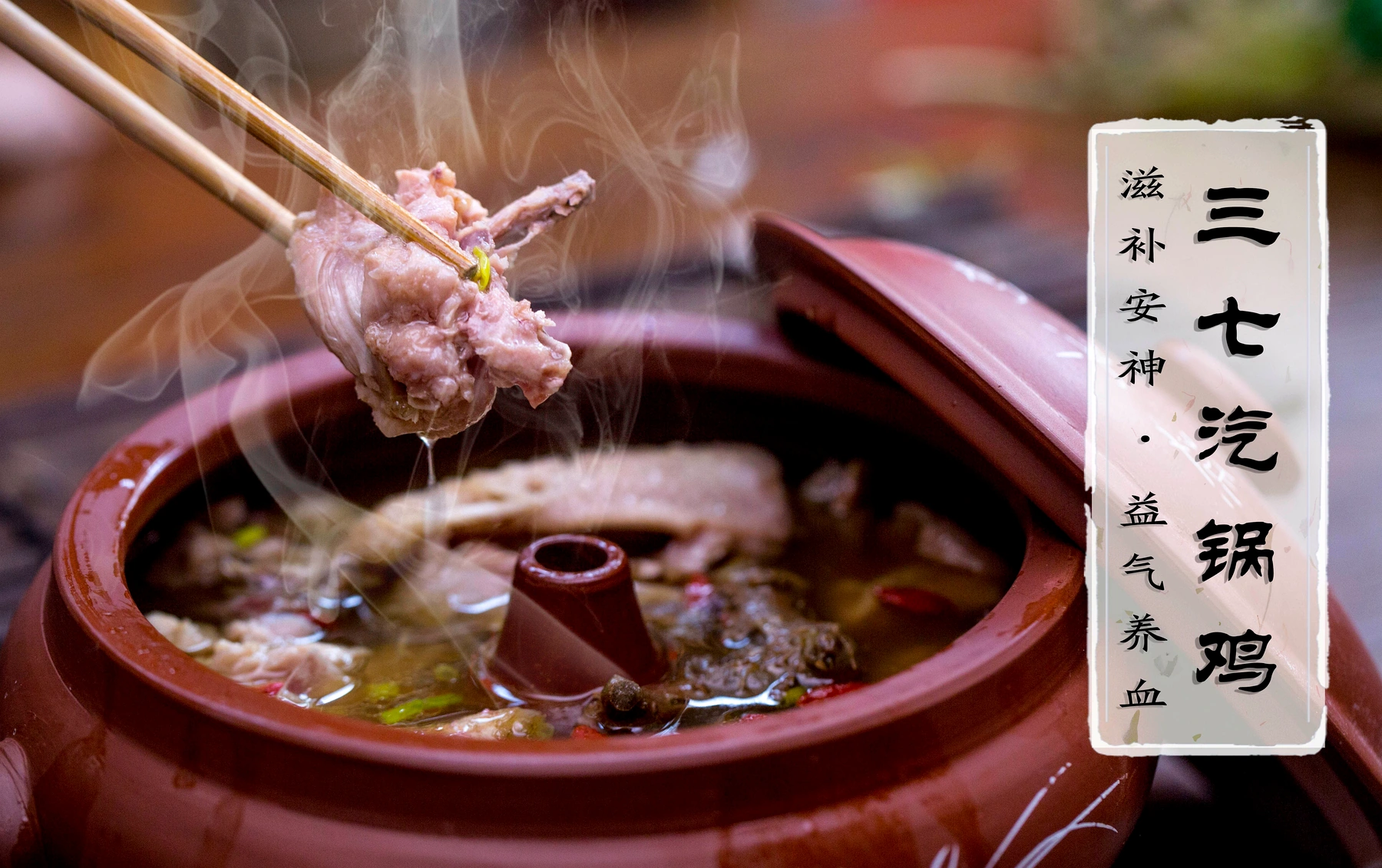
If grilled tofu represents rustic simplicity, then chicken steamed in a purple clay pot is the pinnacle of the intersection between culinary art and national intangible cultural heritage. The ‘qi guo’ (steam pot) made from handcrafted Jianshui purple clay is uniquely designed with a hollow conical steam vent in the center. Local free-range chicken, cleaned and chopped into bite-sized pieces, is neatly arranged in the pot without adding a single drop of water. Placing the steam pot over a deep pot of boiling water, high-pressure steam from below shoots through the central vent, condenses on the curved lid, and drips down to tenderize the chicken. After hours of steaming, the essence of the chicken blends with precious medicinal herbs like Panax notoginseng or Gastrodia elata from the highlands, crystallizing into a clear, delicate broth, with meat so tender it falls off the bone, rich in flavor and nourishing for longevity.
Furthermore, the abundant nature has gifted the Jianshui wetlands a rare aquatic vegetable hailed as ‘underwater white jade’: Jianshui wild rice shoots (cao ya). Harvested from deep mud, these shoots are as white and tender as young ivory; when bitten, one can clearly feel the crisp, succulent texture and the natural, refreshing sweetness of the alluvial soil. Sliced diagonally, these shoots are often stir-fried quickly in a cast-iron pan over high heat with shredded pork loin, or serve as the soul that brings out the delicate sweetness in a traditional bowl of ‘crossing-the-bridge’ rice noodles. At night, the ancient streets of Lin’an glow with the light of charcoal grills, offering a myriad of enticing flavors such as smooth, juicy tofu, rich oven-baked pork marrow, seared Jianshui yellow beef, or fresh river fish grilled with fragrant lemongrass and herbs, closing a vivid and unforgettable portrait of local culinary culture.
To reach the tranquil space of the Double Dragon Bridge (Song Long Bridge), one of the most poetic transport experiences that travelers should not miss is the nostalgic train ride on the century-old narrow-gauge railway. Departing from the historic Lin’an station located right next to the center of Jianshui Ancient Town, this wooden train, bearing the distinct mark of the once-famous Yunnan-Vietnam railway, will slowly roll through peaceful countryside before making a thirty-minute stop at the Song Long Qiao station. This stopover provides enough time for travelers to disembark, stroll onto the mossy stone spans, and capture stunning photos before the train continues its journey toward the ancient village cluster of Tuanshan. Besides this nostalgic journey, visitors can also easily catch public bus number 919 from the city center or travel by taxi or ride-hailing services, which takes only about ten to fifteen minutes. The area in front of the entrance to the wetland park surrounding the bridge is equipped with a spacious parking lot, providing maximum convenience for those who choose to drive themselves or rent a private car.
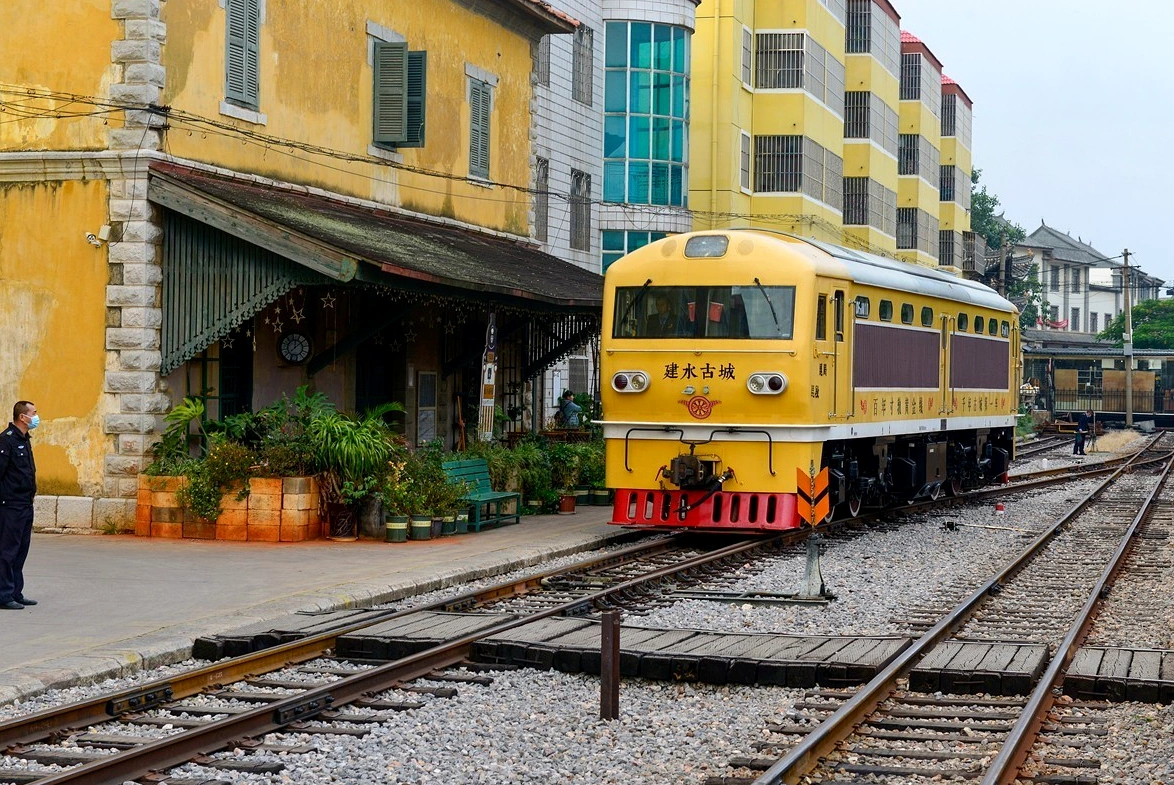
A unique attraction of this one-of-a-kind architectural monument is that the entire seventeen-arch bridge and the surrounding wetland park are open completely free of charge twenty-four hours a day for public viewing. Except for the cost of the narrow-gauge tourist train ticket, which ranges from 100 to 120 RMB depending on whether it is a one-way or round-trip ticket (which should be booked in advance during peak seasons), visitors do not have to pay any additional entrance fees to walk on this Qing Dynasty wonder. The most ideal time of day to visit is at dawn, when mist from the confluence of the Lu River and Ta Chong River rises to shroud the three-story pavilions, or at sunset, when the golden rays dye the ancient blue stone slabs and reflect the seventeen shimmering arches on the calm water surface.
The area at the bridgehead is always bustling with traditional costume rental stalls, where travelers can dress up in flowing Hanfu or vibrant brocade dresses reflecting the identity of the Yi people in the Honghe region. Rental costs usually range from 50 to 100 RMB per set, but renters should note to agree clearly from the beginning on the rental duration, hair and makeup services, and accompanying accessories like silk fans or hairpins to avoid unexpected surcharges. To fully feel the essence of this picturesque landscape, visitors should be wary of offers for unusually cheap three-to-four-day tours, as these itineraries are often distorted into stops at shops selling jade, silver, or Pu’er tea, shortening the time to admire the Double Dragon Bridge to a fleeting fifteen to twenty minutes. Dedicating one and a half to two hours will provide a much deeper and more contemplative experience.
When walking on the bridge, visitors should be mindful of safety, as thousands of solid blue stone slabs that have weathered hundreds of years of rain and sun have become polished and smooth, making them very slippery after forest rains. Most of the bridge’s length lacks sturdy railings to preserve its ancient architectural form, so keeping a safe distance from the water’s edge and being careful when taking photos is of paramount importance. At the same time, as a National Key Cultural Relic Protection Unit, any act of vandalism, carving on the stone steps, or climbing on the pillars and intricate carvings of the pavilions in the middle of the bridge is strictly prohibited. For Vietnamese tourists crossing the border via the Lao Cai – Hekou international border gate, preparing full travel permits or valid entry visas along with complying with heritage protection standards will be the key to a complete excursion; and if you desire a well-rounded itinerary from transportation and in-depth cultural commentary to accommodation without any worries, you can consider choosing a comprehensive tour package designed with sophistication and professionalism.