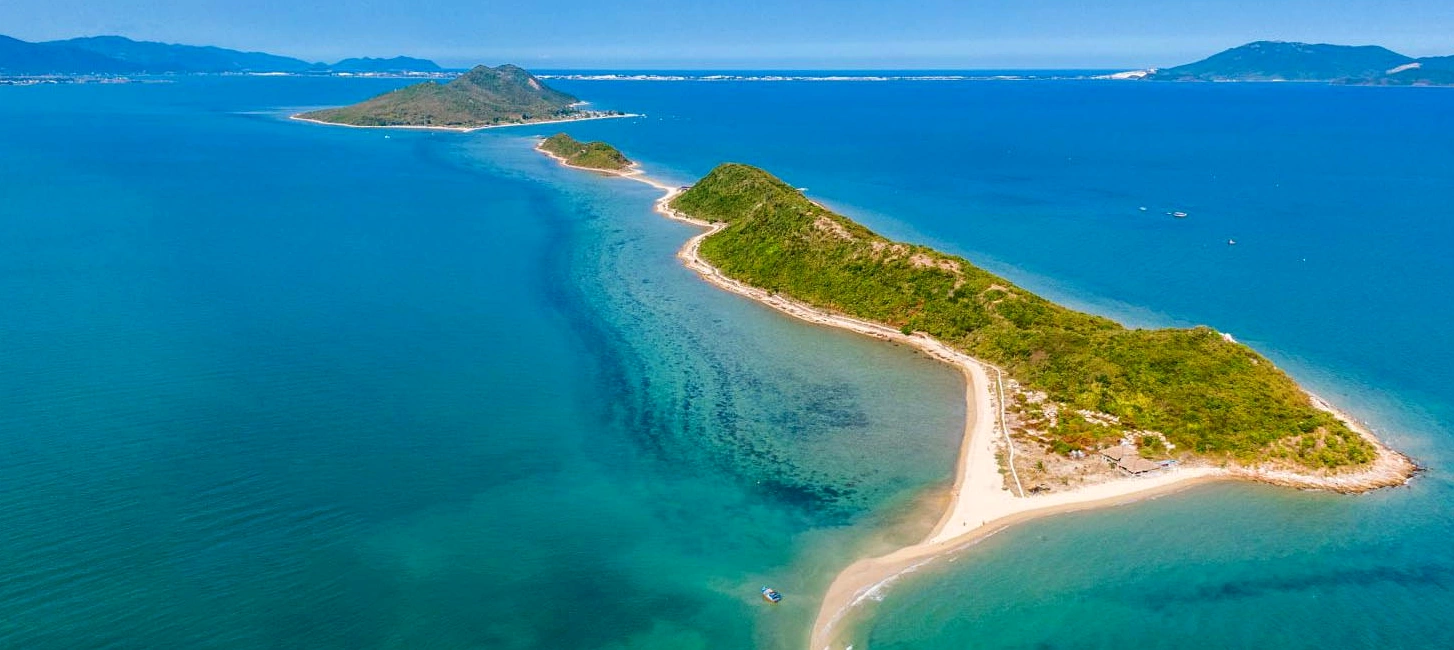
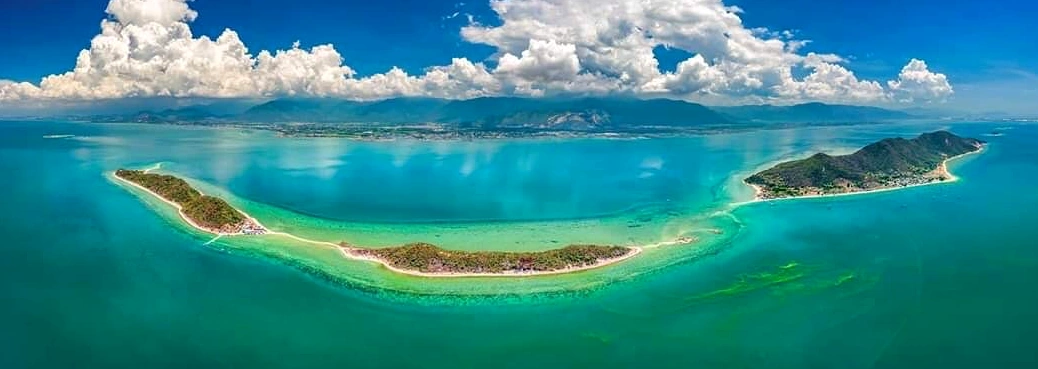
Diep Son Island emerges in the heart of Van Phong Bay—located in Van Thach commune, Van Ninh district, Khanh Hoa province—like a masterwork of natural creation and long-standing cultural heritage in the Land of Agarwood. Situated at focal geographic coordinates of roughly 12°38′ North latitude and 109°21′ East longitude, this archipelago is not merely a sensational ecotourism destination in contemporary travel journalism, but also a remarkable geological formation. Diep Son comprises three closely linked islets: Hon Bip, Hon Giua (Hon O), and Hon Duoc. What has earned Diep Son its resounding fame is its natural submerged sandbar stretching nearly one kilometer, winding gracefully beneath crystal-clear waters and allowing visitors to experience the thrilling sensation of walking right across the open ocean whenever the tide recedes.
Through the lens of traditional feng shui and landscape science, the topography of the Diep Son archipelago possesses all the hallmarks of an auspicious land that nurtures both people and spirit. The archipelago commands a remarkably solid “leaning against mountains and facing water” posture, resting its back against the majestic mountain range of the Hon Gom peninsula while facing directly toward the East Sea to welcome abundant vital energy. Surrounding Van Phong Bay serves as a vast “Ming Tang” (Bright Hall), the convergence point of gentle ocean currents. Arc-shaped mountain ranges on the mainland cradle the archipelago, forming a classic “Green Dragon bows to the master, White Tiger submits” configuration that shields Diep Son from direct gales sweeping in from the open sea, creating a setting that is at once grand and untamed, yet serene and peaceful.
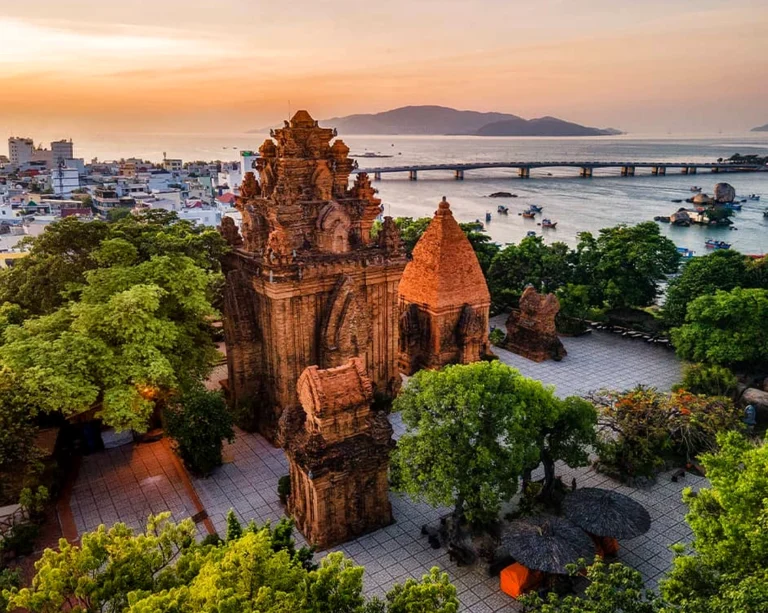
Tracing back through feudal historical chronicles and cultural records, the name Diep Son (also recorded as Hon Diep or Diep Tu Dao in Nguyen Dynasty land registers) is closely tied to generations of Vietnamese and Cham settlers who pioneered and defended these islands. Dating back to the ancient Champa era, the archipelago already served as a strategic natural resting station and anchorage along the central coastal maritime trade route. By the Le Dynasty, when the southward expansion of the Vietnamese reached Thai Khang prefecture and Dien Khanh garrison, Diep Son was officially inscribed onto administrative maps and into the collective consciousness of the Vietnamese people. The names “Hon Bip” and “Hon Diep” trace their origins to the flocks of coucal birds that once nested densely across the island, evoking a thriving primeval ecosystem from ages past.
Across centuries of historical change, generations of fishermen bound to the sea have cultivated distinctive indigenous traditions, from the sacred worship of the Whale (Nam Hai) to rhythmic rowing chants echoing across the waves. Today, cultural heritage authorities and mainstream travel media alike recognize Diep Son as a precious natural and geological treasure worthy of careful preservation. The seamless harmony between its unique geographic setting, spiritually resonant feng shui landscape, and centuries-deep historical strata has transformed Diep Son Island into an enduring symbol of Vietnam’s heritage travel culture, where past and present converge in the timeless cadence of the waves.
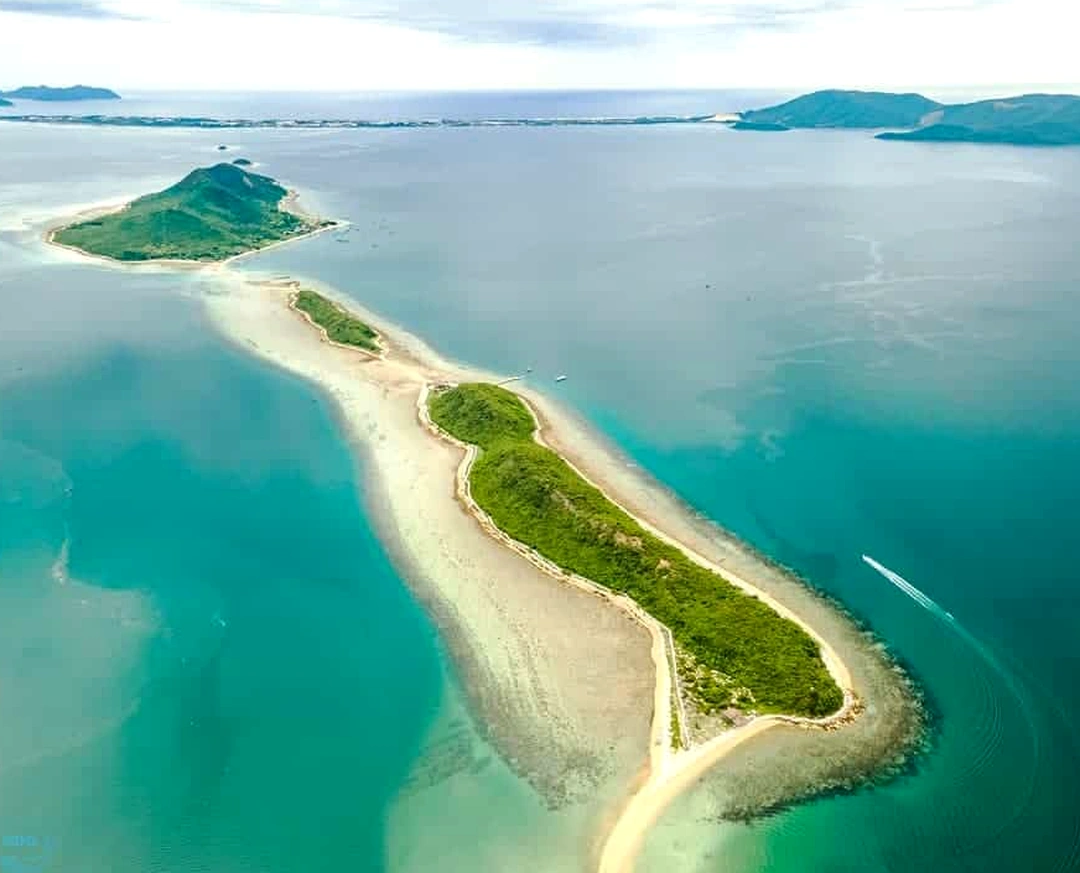
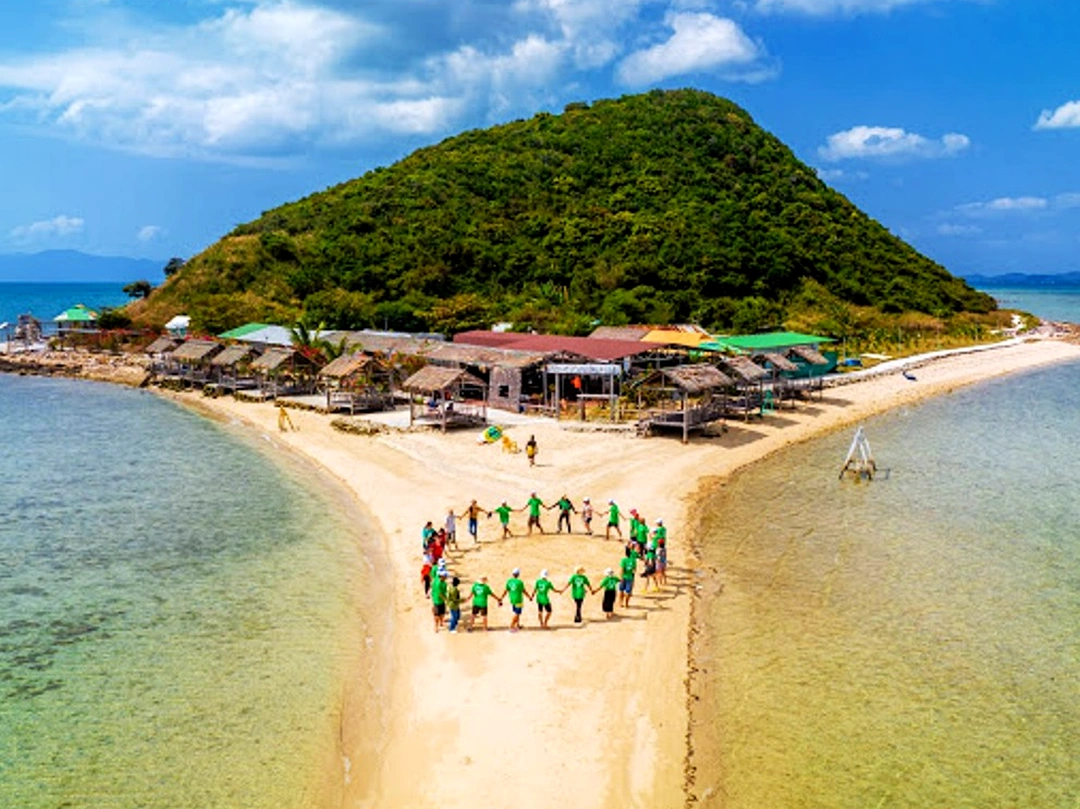
Endowed by nature with a striking silhouette, Diep Son Island rises like a sweeping landscape painting in the heart of Van Phong Bay, bringing together ecological wonders that captivate every traveler who sets foot ashore. The archipelago’s crowning natural architectural feature is its winding submerged sandbar—nearly one kilometer long—linking Hon Bip with Hon Giua. Sculpted by the artistry of nature and subtle ocean currents, a smooth, flat strip of white sand resembling a delicate silk ribbon emerges across the deep blue sea. Strolling along this pathway delivers a truly magical, almost otherworldly sensation: crystal-clear water flanks both sides to reveal the seabed and schools of darting small fish, while brisk sea breezes sweep all around, inspiring a thrilling blend of vulnerability and pure exhilaration. Untouched by concrete seawalls or ostentatious commercial structures, Diep Son’s scenery preserves its raw, unspoiled charm with lush tropical greenery, coconut palms swaying in the breeze, and ancient sedimentary rock reefs basking beneath the golden sunshine of Central Vietnam.
To capture the full splendor of this natural masterpiece, professional photographers and leading travel publications consistently highlight a few prized vantage points. The first unmissable perspective is an aerial drone shot directly above the center of the submerged sandbar connecting Hon Bip and Hon Giua. The ideal window for these postcard-worthy frames is early morning, roughly between 6:00 AM and 8:00 AM, when the receding tide fully exposes the white sand trail and soft dawn light creates a luminous ribbon slicing across the deep blue water. The second standout angle lies atop the high hillsides of Hon Bip, offering a sweeping panorama of the Diep Son archipelago resembling a pod of whales gliding across tranquil Van Phong Bay. At sunset, this vantage point takes on a contemplative, nostalgic beauty as the sun sinks behind the mainland mountains, bathing sky and sea in enchanting shades of rose and amber. Finally, a low-angle shot right at the water’s edge—where gentle waves lap against the sandbar—offers an ideal backdrop for artistic lifestyle portraits, especially when local fishermen’s coracles drift softly past, celebrating the quiet grace of coastal life amidst a magnificent natural wonder.
Stepping onto the Diep Son archipelago, travelers are immediately drawn into an engrossing journey of discovery where untouched nature and indigenous coastal life seamlessly intertwine. Walking along the winding submerged sand trail in the middle of the deep blue ocean stirs an unforgettable rush of emotion. Cool, velvety sand cushions every step, bordered by translucent waters teeming with darting fish and the boundless expanse of Van Phong Bay stretching to the horizon. Initial awe quickly gives way to a profound sense of freedom as this one-of-a-kind geological wonder unfolds vividly beneath your feet.
Beyond the legendary sandbar, the island invites visitors to immerse themselves in authentic coastal experiences. Hop aboard a local fisherman’s bobbing basket boat and glide across calm waters past Hon Bip, Hon Giua, and Hon Duoc to soak in the unhurried rhythm of island village life. For a rewarding challenge, hike up the island’s elevated hillsides to take in a panoramic view from above—from this height, the submerged sandbar looks like a soft white silk ribbon draped across the sea, linking lush emerald islets in a breathtaking coastal tableau.
Alongside its dramatic scenery, Diep Son moves visitors through a deeply rooted spiritual culture. Tucked beneath leafy green canopies, weathered Whale worship shrines serve as sanctuaries where generations of seafaring fishermen offer prayers for favorable weather, calm waters, and safe voyages. The tranquil atmosphere—infused with faint wisps of incense and the gentle rhythm of lapping waves—offers a welcome pause that calms the spirit amidst the open wilderness.
Rounding out a trip to Diep Son by savoring its celebrated coastal cuisine awakens every sense. Seated right along the breezy shoreline, feast on freshly caught seafood such as sweet squid poached in vinegar, fragrant sea urchin grilled with scallion oil, or steamed sea fish rolled in rice paper, each dish infused with the crisp salinity of the ocean and the warm, rustic hospitality of Khanh Hoa’s islanders. It is this rare harmony of striking nature, living local heritage, and memorable flavors that makes Diep Son an unforgettable destination lingering long in every traveler’s memory.
Diep Son Island, one of Khanh Hoa province’s enchanting hidden gems, continually draws travelers eager to explore unspoiled coastal beauty. To ensure your journey along this extraordinary ocean walkway goes smoothly, a few practical tips will come in handy. While visitors can plan a trip to the island year-round, timing your visit well makes all the difference.
The ideal season to visit Diep Son runs from December through June of the following year, when Van Phong Bay enjoys sunny skies, minimal rainfall, calm seas, and jewel-toned turquoise waters. Most importantly, pay close attention to daily tide schedules so you catch the submerged sandbar at its clearest. Around the first and fifteenth days of the lunar month—when tides typically recede in the morning—the nearly kilometer-long white sand path emerges prominently above the water, delivering the signature experience of walking across the sea.
To reach Diep Son from downtown Nha Trang, travel roughly 60 kilometers north along National Highway 1A by bus, rental car, or motorbike to Van Gia Port in Van Ninh district. From Van Gia Port, hop aboard a high-speed speedboat or a local wooden boat for a scenic 15- to 30-minute crossing to the island, depending on the vessel and sea conditions.
In terms of admission, Diep Son Island is an open natural destination with no fixed entrance fee. However, you will need to budget for round-trip speedboat or wooden boat transfers operated by local residents or tour companies, with rates varying reasonably depending on group size and whether you opt for a shared ride or a private charter.
Once on the island, opt for lightweight, comfortable clothing, prioritizing swimwear and sturdy sandals or water-friendly sneakers for navigating wet sand and rocky reefs. Because Diep Son is also home to a traditional fishing community and sacred coastal shrines, please dress modestly when visiting spiritual sites, dispose of waste responsibly, and avoid littering to help preserve the pristine beauty of this natural treasure.
To enjoy a seamless getaway and experience the full splendor of Diep Son Island without worrying about arranging transportation, booking tickets, or coordinating boat schedules, travelers can choose premium all-inclusive Khanh Hoa tour packages from VDS Travel. Each itinerary is carefully timed around peak tide and lighting windows when the scenery is at its most vibrant, led by knowledgeable local guides and paired with top-tier hotel and dining standards.