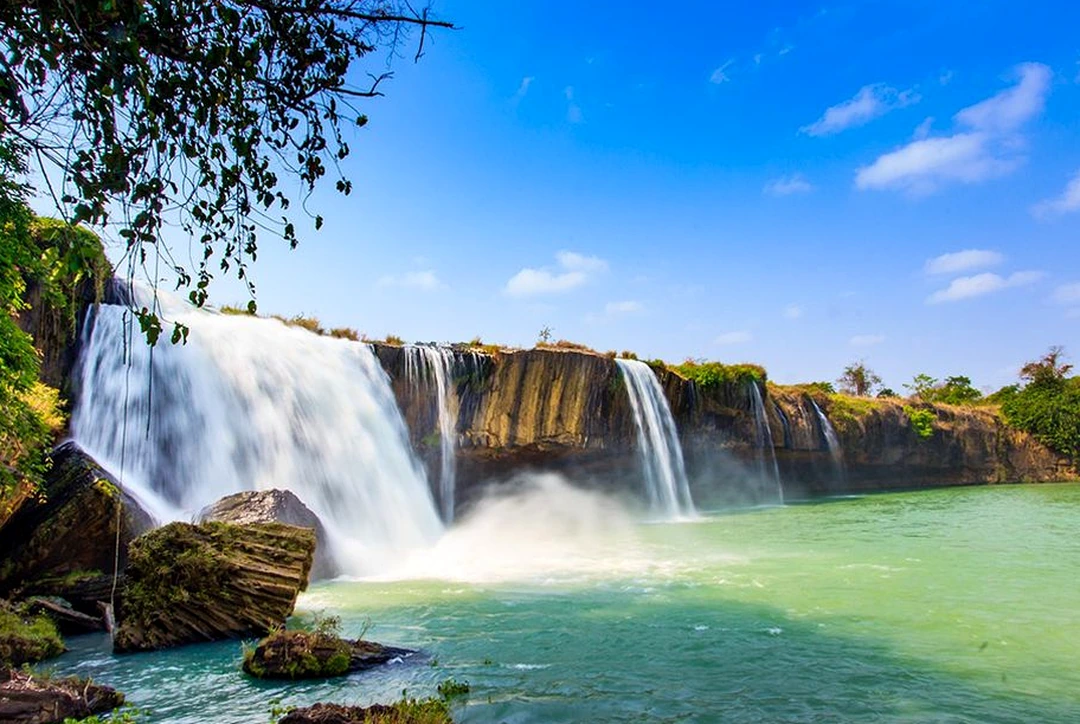
Nestled at a prime geographical location on the upper reaches of the majestic Srepok River, Dray Sap Waterfall is not only a natural wonder but also a silent witness to the geological history of the Dak Nong plateau. In the consciousness of the indigenous Ede and M’nong communities, Dray Sap—or “Smoke Waterfall”—carries a deeply symbolic linguistic origin. The word “Dray” in the Ede language means waterfall, while “Sap” means smoke, a direct naming method reflecting a magnificent physical phenomenon: a massive volume of water plunging from a height of tens of meters into the deep abyss, churning up white foam and creating hazy water vapor resembling smoke that blankets a wide expanse of space. It is this pristine, legendary beauty that has made Dray Sap the focal point of epic cultural spaces, where H’mon songs echo by the longhouse hearths, intertwined with legends of immortal love and divine retribution against oath-breakers.
From the perspective of historical geology, Dray Sap is a “living museum” of the Quaternary period. The formation of the waterfall is associated with violent volcanic eruptions from millions of years ago, when molten basaltic lava overflowed the ancient riverbed, creating pitch-black, sturdy basalt stone rapids resembling natural ramparts. This tectonic formation not only shaped a majestic geomantic terrain of “leaning against the mountain and facing the water” but also created a surrounding primeval forest ecosystem preserving rare geological heritage values. Heritage management agencies and geological researchers have recognized this as an important part of the Dak Nong UNESCO Global Geopark, where every layer of rock and every current tells the story of the earth’s crust’s incessant movement.
Throughout the flow of feudal and modern history, though lying outside the direct influence of royal architecture or Chinese-character steles, Dray Sap maintained a strategic position in ancient trade networks. This area served as an important connection point in the exchange route for forest and local products between the Kinh, Upper highland peoples, and Lao-Champa merchants. Precious commodities such as agarwood, elephant ivory, and rhinoceros horn traveled back and forth along the Srepok River, creating a multi-ethnic cultural intersection space. Although lacking magnificent temples, Dray Sap possesses a massive “intangible heritage” through customary laws and traditional rituals dedicated to waterfalls and water deities by the indigenous people. This is a testament to a civilization reliant on nature, where humans do not conquer but blend into the pulse of the great forest.
Today, Dray Sap is not only a tourist destination but also a symbol of Vietnamese heritage pride. The combination of majestic basalt terrain and epic cultural depth has transformed this place into a destination of profound historical education. Preserving and promoting the values of Dray Sap goes beyond maintaining landscapes; it preserves a fragment of memory belonging to the sprawling Central Highlands. Every traveler’s footstep here is a journey back in time, to feel the breath of the mountains and forests, listen to echoes from ancient geological strata, and cherish even more the indigenous cultural values day and night preserved beneath the shadow of the legendary Smoke Waterfall.
If the Srepok River is likened to a silver silk ribbon draped across the Central Highlands, Dray Sap Waterfall is its heroic highlight, where nature fully showcases the intersection of primitive power and exquisite sculptural beauty. Unlike waterfalls possessing a gentle appearance, Dray Sap emerges with the bearing of a guardian deity, towering and full of authority. The waterfall’s architecture was not built by human hands, but carved by basaltic lava flows from millions of years ago. Hexagonal and pentagonal columnar rock blocks stack neatly upon one another, forming sturdy natural ramparts where rushing water plunges from a height of over 20 meters, tearing through space with a roar echoing across the ancient forest.
The most unique aspect of Dray Sap’s “architecture” is the combination of pitch-black, cold basalt cliffs with soft, blindingly white water. As sunlight pierces through ancient tree canopies, shining upon the dense mist generated by the waterfall, a vibrant rainbow frequently appears, spanning across the abyss. This is not merely a natural landscape, but a grand sculpture of creation, where every slab of stone carries within it the memories of ancient volcanic eruptions. Caves hidden behind water curtains, mossy rock hollows, and ancient tree roots embracing the cliffs create a mystical, epic space, making anyone who sets foot here feel small before the grandeur of heaven and earth.
To capture “million-view” moments at this masterpiece, professional photographers typically prioritize two classic camera angles. The first angle is located at the upper observation deck, where you can overlook the panoramic waterfall tumbling down like a giant curtain. The ideal time is at dawn, when the first rays of sunlight pierce through the hazy mist, creating a “pure gold” lighting effect spilling onto the water surface, highlighting the contrast between the black basalt stone and the white foam. This is when the space is quietest, with only the sound of cascading water blending with forest bird calls, creating a deeply poetic scene.
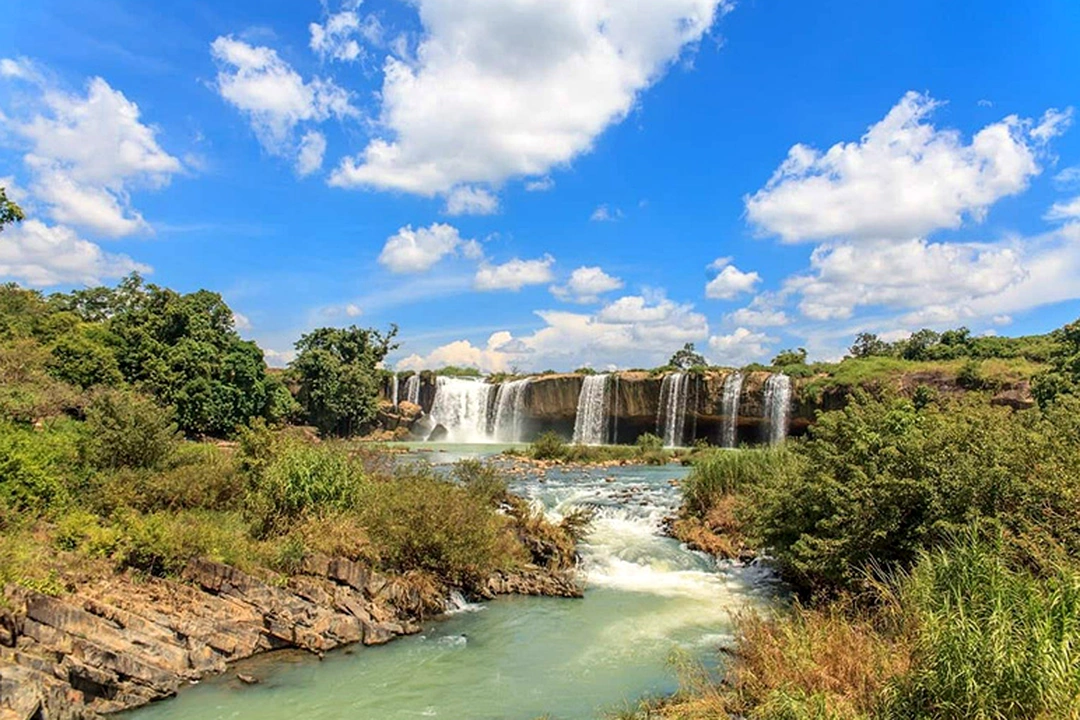
The second angle is located at the foot of the waterfall, where large basalt boulders are scattered. From this perspective, photographers can capture the full height and majesty of the waterfall from below, creating an overwhelming and powerful sensation. Sunset is the perfect choice for this angle, as sunlight gradually fades, the sky turns pinkish-purple, reflecting upon the calm lake surface at the waterfall’s base. The combination of end-of-day light and rising water vapor creates a mystical, enchanting space, giving your photos depth and profound emotion. Additionally, employing long exposure techniques here renders the water smooth as a silk ribbon, contrasting entirely with the rugged, rigid basalt cliffs, crafting a perfect composition any photography enthusiast desires to own.
Dray Sap is not merely a landmark; it is an enchanting visual experience. Every perspective and time of day delivers a distinct beauty, turning this place into a vibrant geological museum where nature’s architecture is honored to the fullest. Coming to Dray Sap, visitors do not merely come to look, but to feel the heartbeat of the great forest, where geological history and magnificent beauty blend as one.
Upon setting foot at Dray Sap Waterfall, the first moment welcoming visitors is not the quiet of mountains and forests, but nature’s grand symphony. The roaring sound of water cascading from a height of over twenty meters crashing into the deep abyss reverberates across the sky, mingling with freezing water vapor brushing against faces to bring an instant refreshing sensation. Standing before the colossal, white, churning wall of water, everyone is inevitably overwhelmed by creation’s primitive power. Looking up from the deep abyss, drifting water vapor intertwines with sunlight to form a shimmering seven-color rainbow, resembling hazy smoke blanketing the space, fully illuminating the highly figurative name bestowed upon the waterfall by indigenous communities for generations.
The journey of exploring Dray Sap continues with enthusiastic conquest steps along winding trails flanking ancient basalt cliffs. Visitors can challenge themselves with light trekking through primeval forest canopies, where ancient tree roots cling deep into rugged volcanic rock formations. Intertwining between bird songs and the resounding sound of the Srepok River is the thrilling excitement of witnessing bizarrely shaped rock formations firsthand—testaments to lava flows from millions of years ago. And then when casting eyes panoramic from towering viewpoint platforms, the entire pristine, magnificent scenery of the Central Highlands great forest appears completely in sight, gathering the rolling river and lush green vegetation into the proud heart of the traveler.
Beyond natural scenery, the experience at Dray Sap also touches the immense depth of vibrant indigenous culture through the lives of the Ede and M’nong people. Visitors can sit on dugout canoes gliding smoothly across calm downstream waters, listening to village elders recount heroic epics of love and life associated with the sacred waterfall. Amidst the deep mountain forest space, the moment of contemplation, turning hearts toward natural origins, brings a strange stillness to the soul. All hustle, bustle, and worries of modern life seem to vanish completely, making way for peace, serenity, and profound reverence before heaven and earth.
Concurring the exploratory journey, nothing is more wonderful than gathering around a warm campfire to enjoy famous specialty dishes of the Dak Nong land. The fragrant aroma of indigenous grilled chicken dipped in bird’s-eye chili salt, the nutty richness of sticky bamboo-tube rice (com lam), combined with a touch of passionate wild myrtle wine create an unforgettable culinary symphony. Enjoying specialties while immersing souls in echoing gong sounds amidst the great forest and gazing at the legendary Dray Sap flowing endlessly, visitors will fully perceive the sacred soul of mountains and rivers and retain indelible memories of a pristine heritage region.
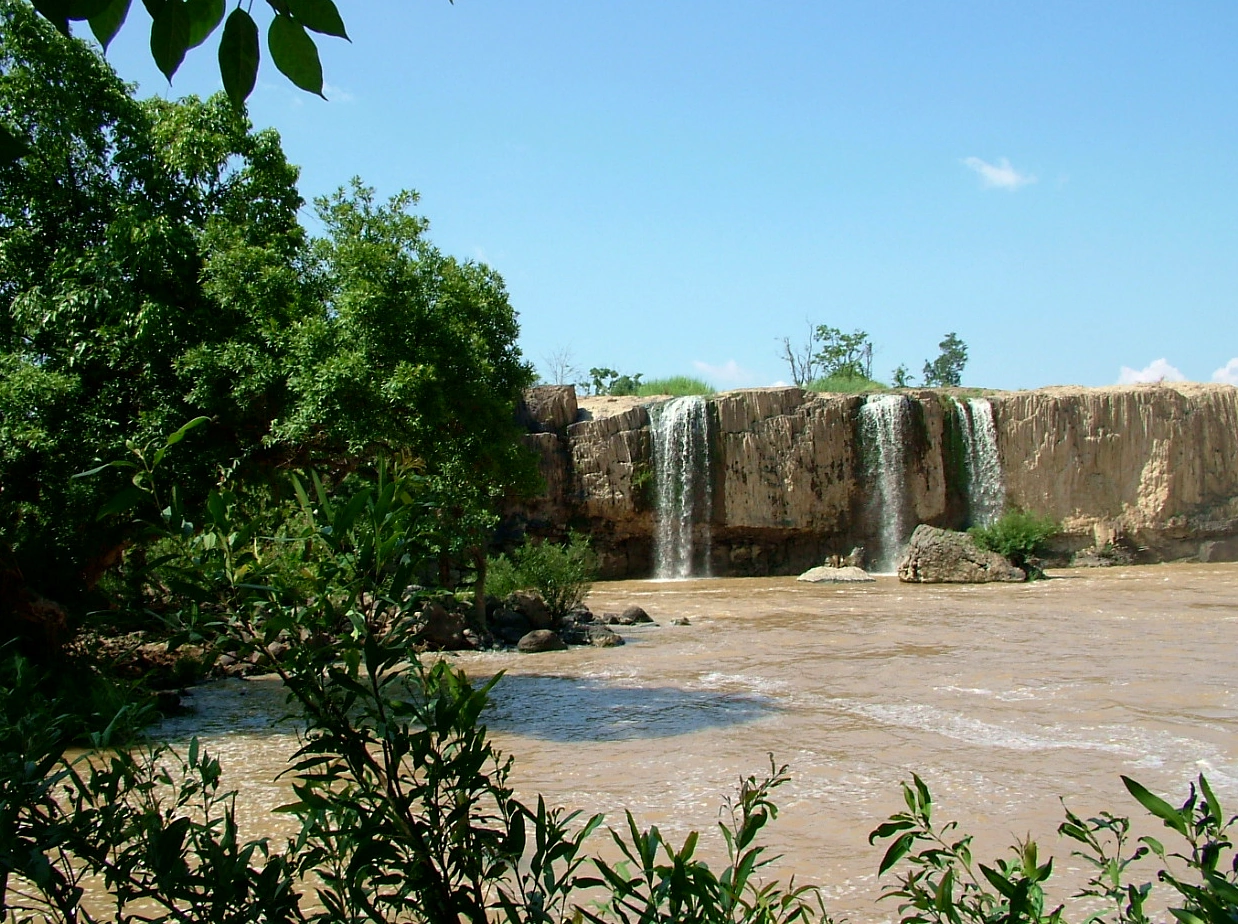
Dray Sap Waterfall is one of the most magnificent natural wonders in the Central Highlands, attracting a large number of distant travelers to admire it. For your journey exploring this smoky waterfall to be complete and safe, readers need to master practical experiences regarding timing, costs, and optimal transportation methods.
Regarding the ideal time to visit during the year, travelers should plan for the dry season lasting from November to April of the following year. At this time, Central Highlands weather is extremely pleasant, skies are clear, the Srepok River’s water turns a gentle turquoise color, and trails leading down to the waterfall abyss are dry, extremely favorable for photography and trekking. Conversely, the rainy season from May to October brings swirling waters and roaring white foam with intense wild beauty, yet requires extreme caution due to slippery rocks.
The scenic area opens to welcome visitors daily from early morning at seven o’clock until evening at seventeen o’clock. Admission ticket prices listed at the resort gate are very affordable, ranging around forty thousand VND to sixty thousand VND per trip for adults, while children are usually free or eligible for preferential rates. This fund is used to maintain landscapes, protect ecological environments, and build staircase systems and safety railings for visitors.
Regarding travel routes, starting from the center of Buon Ma Thuot City or Gia Nghia City (Dak Nong), the optimal vehicles for exploration are motorbikes or personal cars along National Highway 14 (now Ho Chi Minh Road). Upon reaching the intersection with directional signs toward Krong No District or Nam Da Commune, you continue turning onto a smoothly paved inter-commune route leading straight to the gate of Dray Sap Waterfall Eco-tourism Area. The winding route passing through sprawling coffee plantations will surely satisfy any travel enthusiast.
Finally, due to the rugged basalt mountain terrain characteristics and connection with indigenous sacred spaces, visitors should note choosing neat attire, wearing sports shoes with good traction to prevent slipping. Prioritize comfortable, sweat-absorbent clothing and bring insect repellent. Simultaneously, visitors need to behave civilly, absolutely avoiding littering to preserve the pristine, legendary beauty of the sacred waterfall amidst the great forest.
To enjoy a complete vacation and fully admire the beauty of Dray Sap Waterfall without worrying about arranging transportation, booking admission tickets, or travel itineraries, visitors can choose premium all-inclusive Dak Nong tour packages by VDS Travel. Each tour is designed to optimize check-in timing when scenery is at its most brilliant, accompanied by a team of tour guides thoroughly knowledgeable about local culture and top-notch hotel and culinary service standards.