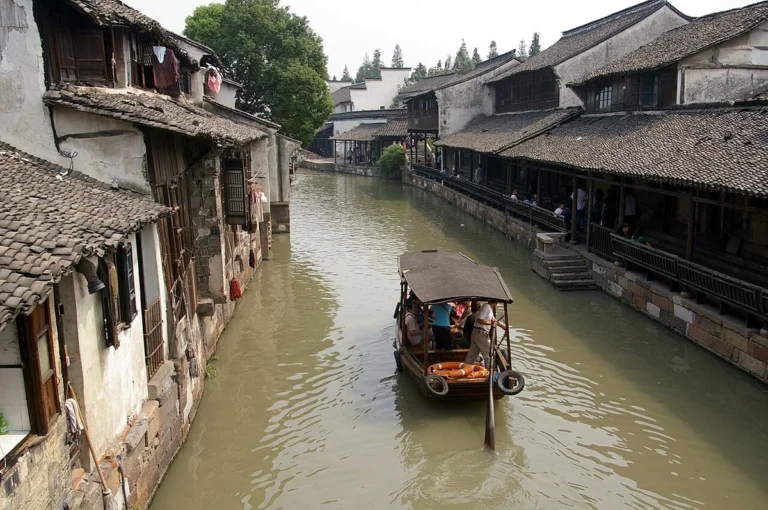
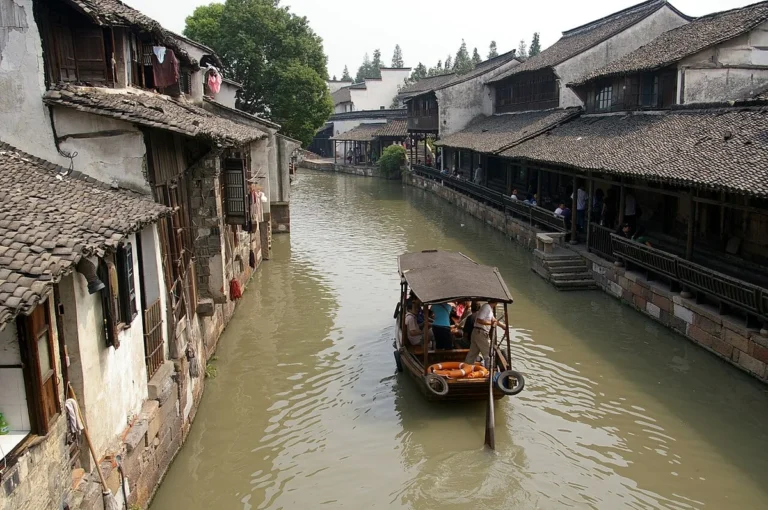
Tracing back through the deep strata of the past, the chronicle of Wuzhen Dongzha water town—reverently called East Wuzhen by locals and historians alike—is not merely the story of a riverside folk settlement, but a sweeping journey spanning seven millennia. Early archaeological traces clearly establish that land reclamation and habitation here can be traced back to the Liangzhu culture of the late Neolithic period, roughly seven thousand years ago. Through the shifting tides of time, by the turbulent Spring and Autumn period, this land served as a vital military bulwark and strategic bottleneck right along the sensitive border between the states of Wu and Yue, often described in historical texts with heroic grandeur as the “Wu–Yue frontier” and “head of Wu, tail of Yue.” In those earliest days, the town’s official name did not yet include the character “Wu” (乌), bearing instead a rustic name tied to its natural topography: “Wudun.” That name flowed quietly through successive Chinese feudal dynasties until the Zhiping era of the Song Dynasty—or more specifically, according to detailed local gazetteers, the fifteenth year of the Xiantong era (corresponding to 874 CE) during the Tang Dynasty, when the imperial court formally approved establishing a town administrative seat here. From then on, the name Wuzhen gradually replaced the earlier Wudun, stemming from an old tale steeped in folk belief and waterside imagination: in the northwest of the town stood a sacred shrine named Wu General Temple (Wu Jiangjun Miao), built to honor the capable general Wu Zan for generations. Entering the Song Dynasty, the administrative picture of this land took on a highly distinctive structure as the town’s territory was divided and placed under dual governance across two circuits and two prefectures—specifically distributed under Wuzheng County of Huzhou Prefecture in Liangzhe Circuit while closely tied to Tongxiang County of Jiaxing Prefecture. By the Yuan Dynasty, Wuzhen’s strategic stature and economic-demographic scale made a major leap when the court elevated it from town rank to sub-prefectural (zhou) status. Yet administrative geography did not stop shifting there; during the reign of Emperor Xuanzong of Ming—specifically during the Xuande era (1426–1435)—Wuzhen was reorganized and reassigned under Tongxiang County of Jiaxing Prefecture, thereby establishing a curious administrative arrangement recorded in history for centuries as “one town straddling two prefectures and two counties”—meaning a single town spanned and fell under the administrative sway of two different prefectures and two different counties, a remarkable status that persisted for hundreds of years until May 1950, when it was formally unified under the administrative jurisdiction of Tongxiang County, Zhejiang Province, down to the present day.
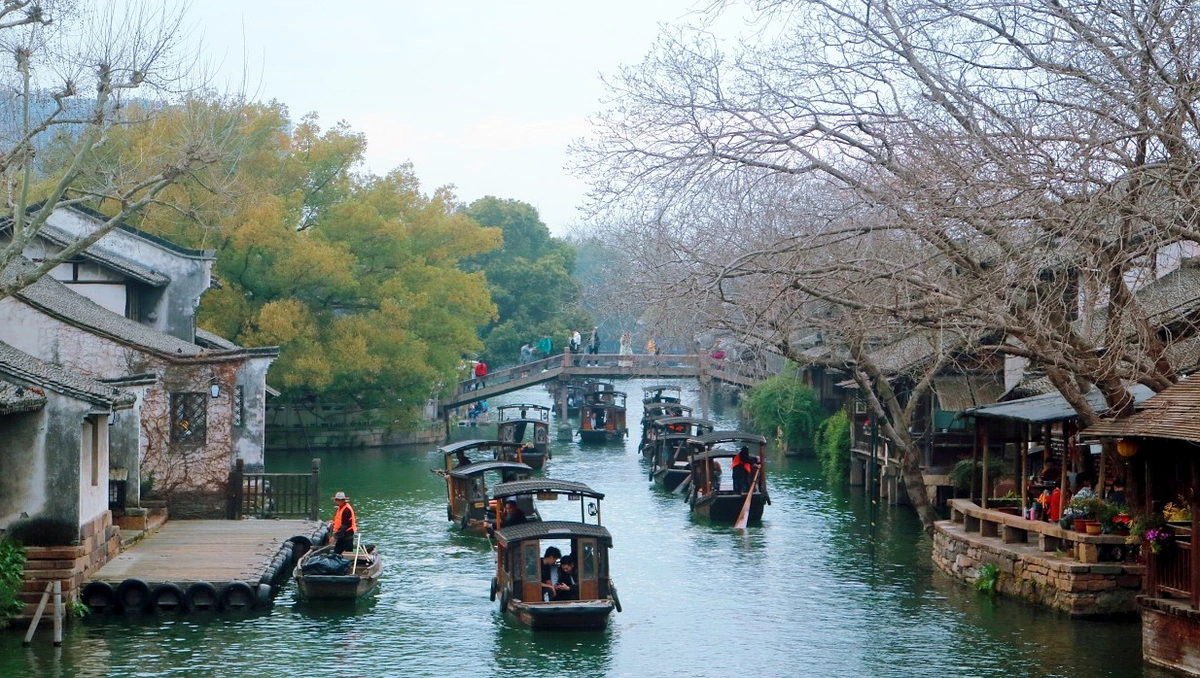
Alongside shifts in administrative boundaries and feudal dynasties, East Wuzhen is also a sacred space nurturing peak literary and scholarly heritage, serving as the intellectual fountainhead for eminent figures in the history of Chinese thought and literature. Delving into the region’s cultural memory, one cannot fail to mention the gifted prince Xiao Tong—eldest crown prince of Emperor Wu of Liang during the Northern and Southern Dynasties. Right in this picturesque waterside setting, Crown Prince Xiao Tong had a library and study pavilion built to immerse himself in books and literary classics, while initiating and compiling one of history’s premier literary anthologies, the “Selections of Literature” (“Wen Xuan,” later commonly known to posterity as the “Zhaoming Wen Xuan”). His mark remains preserved intact in the ancient architectural complex named Zhaoming Study Hall (Zhaoming Shuyuan), standing solemnly in the heart of Dongzha as undeniable proof of a literary current flowing across centuries. Without stopping in antiquity, that literary stream continued to be nurtured and exalted in modern times with the emergence of one of the towering giants of modern Chinese literature—the writer Mao Dun (茅盾), born Shen Dehong (1896–1981). Born and raised amid moss-covered lanes, arched stone bridges, and the signature canal-market atmosphere of Dongzha, the entire architectural landscape, daily way of life, and poignant struggles of local petty merchants and farmers became vivid, true-to-life prototypes in his immortal prose masterpieces such as “The Lin Family Shop” (“Lin Jia Puzi”) and “Spring Silkworms” (“Chuncan”). Under Mao Dun’s pen, Dongzha was not merely a quiet geographic backdrop, but became a spiritual emblem and literary monument reflecting the full sweep of Chinese society during an era of tumultuous transition. Thus today, when visitors set foot upon ancient flagstones worn smooth over the years and gaze upon numerous Ming- and Qing-era stone steles alongside restoration inscriptions at the ancient Taoist temple Xiuzhen Guan (修真观) preserved nearly intact, they are not merely viewing priceless relics of the past, but truly touching the most authentic primary documentary record of community governance, social institutions, and grassroots cultural life in traditional Jiangnan.
Nestled deep within the expansive Lake Tai basin on the fertile alluvial plain of the Hangjiahu plain, Wuzhen Dongzha water town (East Wuzhen) emerges as a masterpiece of aquatic urban planning co-created by nature and humanity. Examining the geographic structure of this land through both modern science and ancient Eastern philosophy reveals a highly sophisticated settlement strategy in which the entire spatial layout is planned around natural hydrology. Taking the Dongshi River as its central backbone, the network of waterways branches outward in a well-grid (“jing” 井) or cross (“shi” 十) pattern, weaving together into an integrated “parallel waterways and roads” layout where water routes and land paths run side by side alongside the daily rhythm of generations of residents. The philosophy of “dwelling beside water, pillowing one’s head on the river to sleep” is not merely a livelihood adaptation to the flood-prone environment of the Jiangnan plain, but testament to an ecological urban-planning vision at its finest, where people and flowing water merge into one living, adaptable, and enduring space over time.
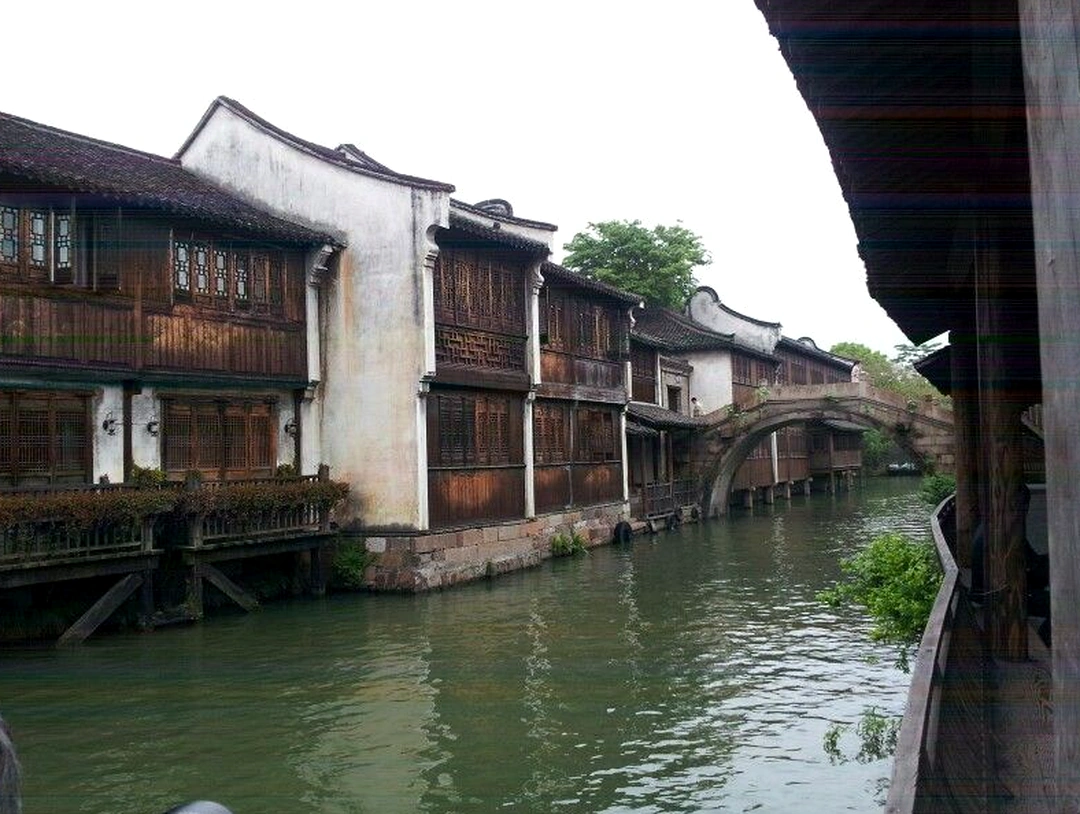
From the standpoint of traditional feng shui, Dongzha’s prime setting is a classic exemplar of the site-selection art of “concealing wind and gathering qi,” where auspicious energy is held intact thanks to an intricate yet harmonious water-transport network. Waterways running through the town never follow monotonous straight lines, instead winding gracefully with gentle bends and turns to neutralize harsh sha-qi caused by direct rushing currents, while regulating water velocity to bring peace and prosperity to households. Playing a key role in shaping this feng shui layout is the dense network of bridges, positioned like sturdy golden locks that both serve transport and carry deep spiritual meaning in “securing wealth qi” and “harmonizing yin and yang.” Exemplifying this blend of architectural craft and feng shui thought is the Fengyuan Twin Bridges cluster—where a straight stone bridge and a stone arch bridge intersect at a right angle to form a uniquely balanced stance—or the dignified Renshou Bridge spanning emerald waters, together creating a self-contained yet fluid spatial structure that turns Dongzha into a vessel preserving the vital spirit of Jiangnan across centuries of historical change.
Beyond feng shui and spiritual value, the architectural spatial structure of East Wuzhen also displays remarkable climatic adaptability through the arrangement of urban massing. Rows of ancient houses are built close together, forming streetscapes with tall walls sheltering narrow, winding lanes and naturally producing a highly effective ventilation-flue effect. During freezing winter months, these thick walls and deep alleys block biting north winds from sweeping into residential quarters; conversely, during muggy summers, they harness aerodynamic breezes rising from the river surface to temper the intense heat of the monsoon subtropics. The subtle pairing of traditional building materials—such as unfired/raw brick, yin-yang roof tiles, and dark timber—with the waterside terrain creates a distinct microclimate inside the historic quarter, keeping spaces cooler in summer and warmer in winter while safeguarding the health and daily routines of local residents across generations.
What gives Dongzha its enduring vitality lies not only in outward scenery, but also deeply in local ecological wisdom sustained through its system of “shibudou” (石埠头)—stone landing steps descending straight into the river. To the people of Dongzha, water is not only a transport artery or source of livelihood, but a living organism to be respected and relied upon. The shibudou steps stretching through lanes serve as multifunctional communal spaces where residents carry out everyday tasks from washing vegetables and doing laundry to catching up with neighbors. What is astonishing in this ancient planning mindset is how residents handled household greywater and rainwater: all of it was channeled directly via the shibudou steps into the natural flow of the river network. Thanks to continuous water circulation paired with the tidal rise and fall of the Lake Tai basin, the water here possesses a remarkable self-purifying capacity, turning Dongzha into a humane closed-loop ecosystem where people live in harmony with, respect, and depend upon nature’s cycle without harming the delicate balance of Jiangnan’s wetland ecology.
Stepping into the Dongzha ancient architectural complex of Wuzhen, travelers from afar feel as if they have entered a living open-air museum preserving the finest achievements of construction art and urban planning in the Jiangnan water towns. Unlike the somewhat newer planning of the Xizha zone, Dongzha retains its original spatial structure with ancient architectural clusters consisting largely of heritage surviving from the Ming Dynasty, Qing Dynasty, and Republican era. Architectural historians regard it as a pinnacle of traditional Jiangnan carpentry, where every house, bridge, or moss-draped wall holds a long story of survival wisdom, aesthetics, and life philosophy from the ancients.
Viewed as a whole, the spatial structure of Dongzha is primarily shaped by a seamless blend of vernacular residences, traditional craft workshops, and an interwoven network of water and land routes. The main load-bearing frames of ancient structures here are built from aged fir and pine timber, employing a sturdy hybrid structural technique led by chuandou (post-and-tie) framing as primary and tailiang (beam-and-column) as secondary. Under the skilled hands of traditional carpenters, large load-bearing wooden posts are not set directly onto damp earth, but rest upon carefully carved solid bluestone plinths that guard against moisture and termites while distributing weight evenly across the building, allowing houses to stand firm through centuries of wind and rain.
Enclosing this sturdy timber frame is a finely laid system of water-ground lime-jointed brickwork paired with soaring horse-head gable walls—also known as fire walls (fenghuogiang)—offering strong fire resistance in densely populated feudal neighborhoods. High above, roofs tiled with yin-yang tiles—also called small blue tiles or butterfly tiles—are tightly bonded with traditional lime mortar, forming a soft undulating wave like a silk ribbon hugging the shoreline. In particular, wood carving is regarded as the soul giving Dongzha architecture its highest artistic value. Details from window frames and door surrounds to structural members such as sparrow struts (eave-corner decorative brackets) and beam ends are intricately carved with classic motifs like the Five Blessings/longevity and happiness, or scholar-farmer-woodcutter-fisherman scenes, expressing homeowners’ hopes for peace and prosperity.
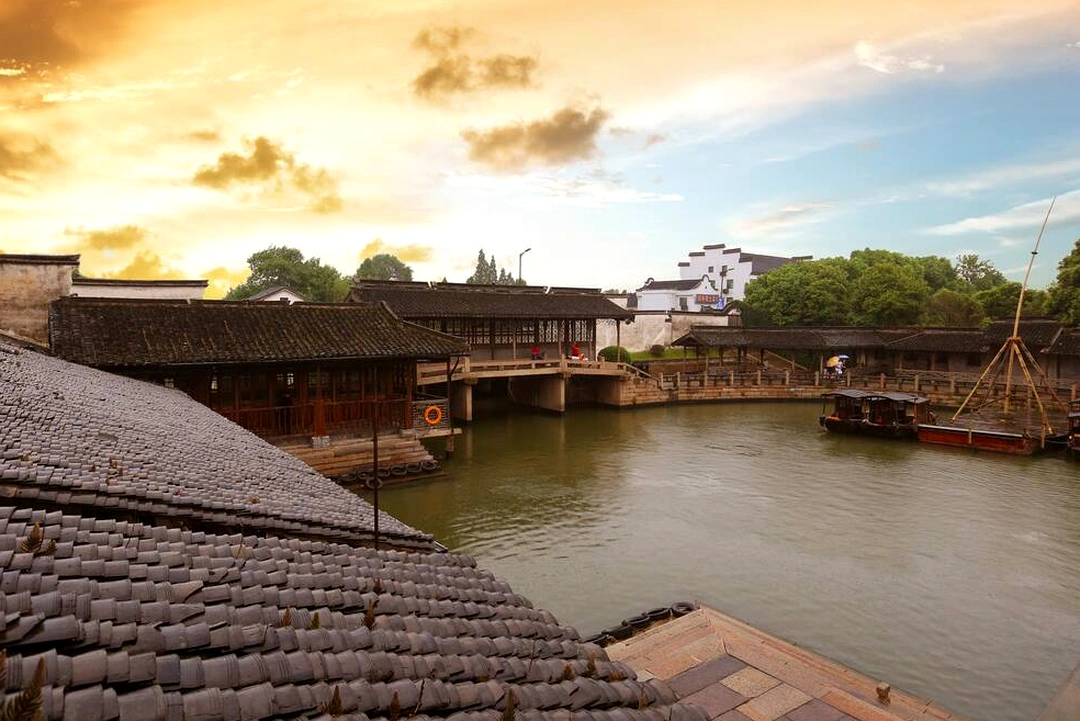
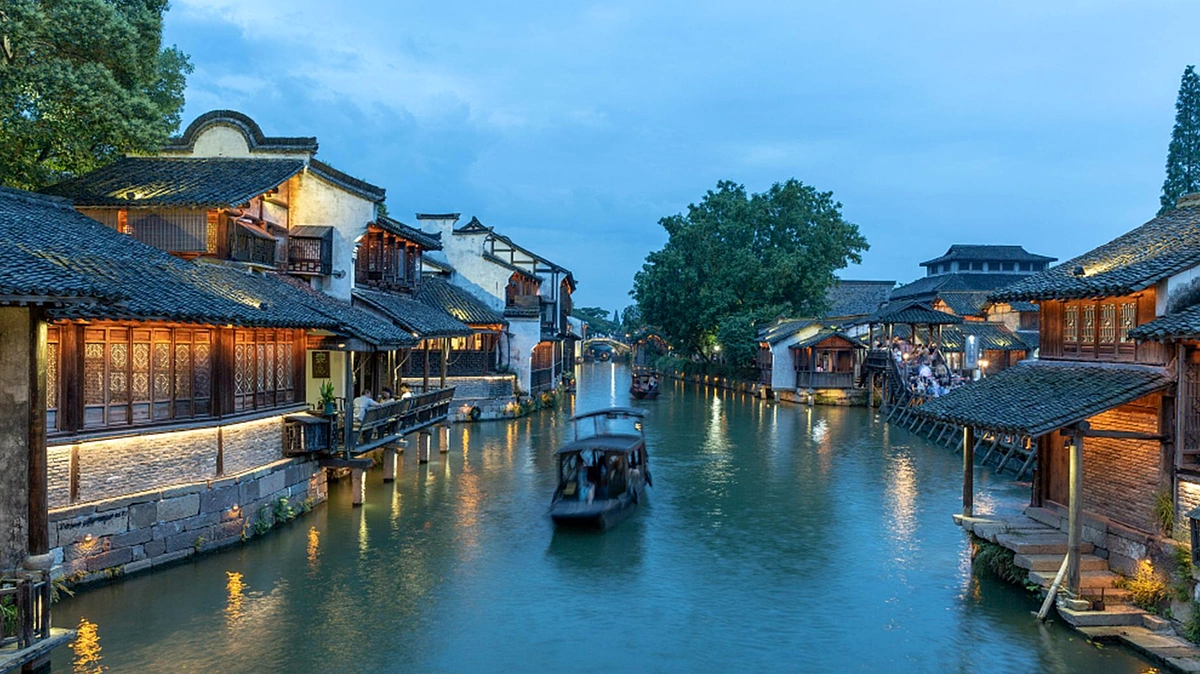
The refinement of ancient craftsmanship and spatial thinking at Dongzha is also clearly seen in the signature architectural style known as “shuige” (水阁, water pavilions). This is a distinctive residential form created by generations of local inhabitants to maximize living space amid crowded riverside land conditions. Under this design, the front half of the house rests on solid ground, while the entire rear half projects out over the water surface, supported below by timber pilings driven deep into the riverbed. This engineering solution not only thoroughly solves the challenge of saving precious land area, but also brings unmatched convenience to daily life—making it easy to draw water, wash clothes, moor boats, and load or unload goods right at the family’s back door.
Walking along moss-slicked bluestones through Dongzha’s winding lanes, visitors not only sense the quiet breath of time, but also see the far-sighted sustainability of ancestors’ planning. Every street corner, yin-yang roof, and arched stone bridge spanning the water is a piece completing a vivid, authentic encyclopedia of traditional southern Chinese architecture. Through all the ups and downs of history, Dongzha still stands as an enduring testament to the vitality of a waterside garden civilization where people and nature merge into poetic living spaces.
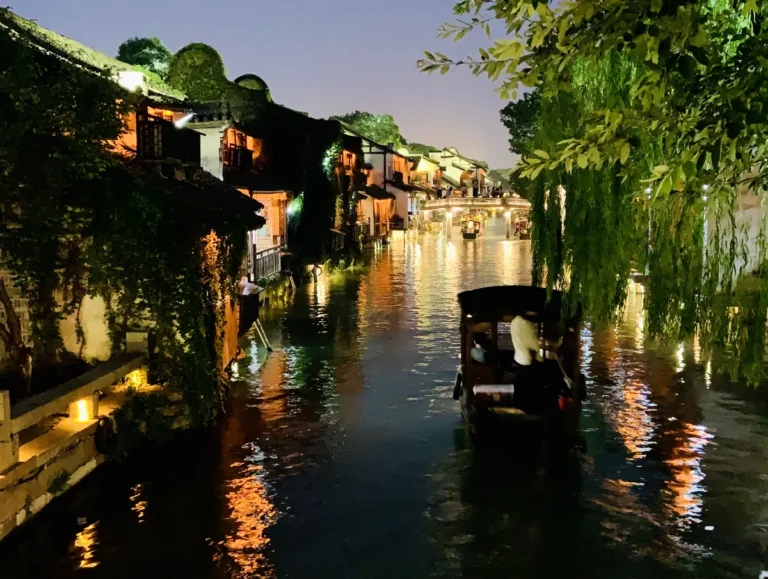
When night falls and sheds the bright, bustling golden cloak of daytime sunlight, Wuzhen Dongzha water town (East Wuzhen) seems to don a deep, contemplative silk robe, as the rhythm of life shifts from commercial bustle into a realm of nostalgic beauty. Unlike the dazzling, somewhat garish commercialization often seen in modern tourist zones, the nighttime spatial management philosophy here aims for utmost respect for the original fabric—an authentic continuation of local residents’ lives paired with restrained artistic enhancement of historic spaces. Nighttime lighting is planned on the principle of “seeing light without seeing the bulb,” a refined marriage of modern technique and classical aesthetics. Along waterside corridors, traditional lanterns cast a warm golden glow that softly reflects in clear water and brushes past white walls and gray tiles to evoke the full spirit of Tang poetry and Song ci in Jiangnan.
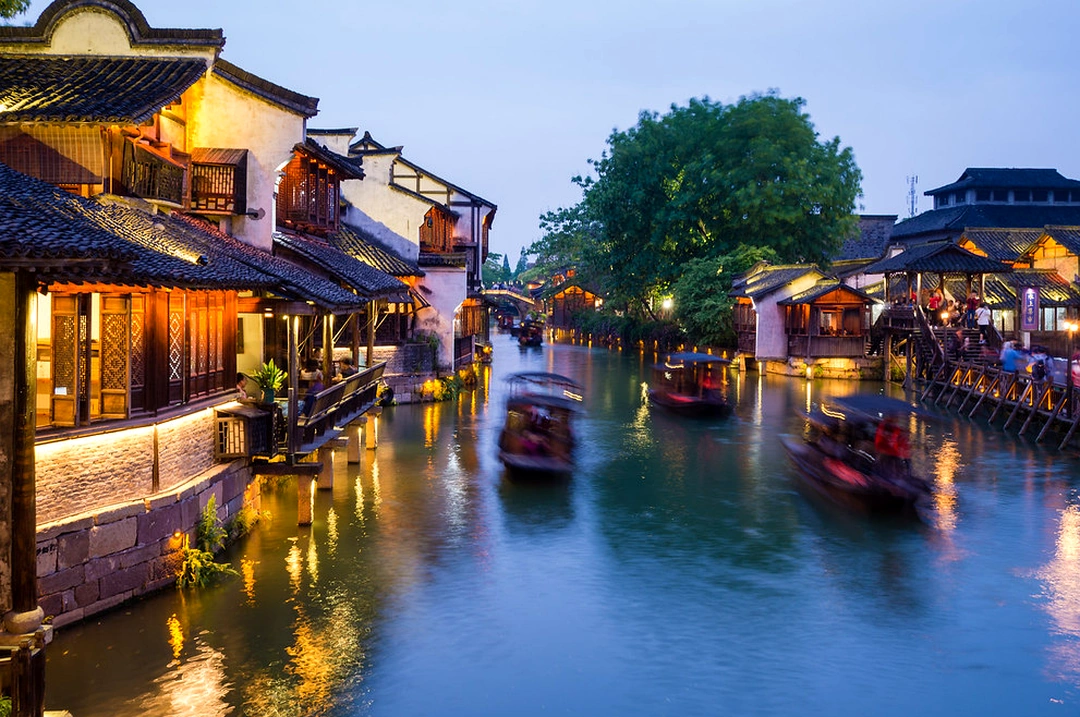
Wanderers strolling through bluestone alleys at dusk encounter a setting rich with everyday life, where the boundary between visitor and local blurs more than ever. As roadside shops simultaneously light up nostalgic lightbox signs, residents unhurriedly bring out chairs beside the waterside stone steps (hebudou) to wash up, cool off, and chat softly, preserving the age-old “yanhuoqi” (lively everyday warmth) of the town. That atmosphere is undisturbed by harsh industrial noise, instead woven thoughtfully with live folk performances that carry audiences back to Wuzhen’s proud national-level intangible cultural heritage. Standing out in the night scene is the thrilling high-pole boat performance, where daring performers execute feats like somersaults and handstands atop a tall pole raised vertically from a rocking boat amid swift currents—leaving onlookers holding their breath in admiration of a rare folk water-acrobatic skill.
Exploring East Wuzhen’s cultural depth at night also leads viewers into the enchanting realm of Hongyuantai, which preserves and recreates the traditional handcraft process of blue-and-white resist-dyed calico printing (lanyinhua) through meticulous stages: tying or stenciling patterns, applying resist paste, fermentation, scraping paste, and time-honored indigo vat dyeing. Soft golden light shining on indigo cloth panels fluttering in the night breeze creates an arresting visual scene that is both ancient and deeply rooted in Chinese folk art. From a moss-covered traditional stage in the distance drift smooth, graceful melodies of Jiangnan shadow puppetry. Under the nimble hands of puppeteers manipulating leather figures behind a translucent screen paired with expressive vocal narration, folk tales come alive once more, anchoring the soul of a flowing-water culture deep in the traveler’s memory.
Stepping into the culinary world of Wuzhen Dongzha, visitors enter a living museum where Hangzhou cuisine (Hangbangcai) blends seamlessly with the distinctive flavors of a Jiangnan water town. Food culture here is more than a combination of fresh ingredients; it is a distillation of history that has kept family secrets intact across centuries through generations of local artisans. Within this flavor tapestry, Wuzhen Sauce Duck (Wuzhen Jiangya) stands tall as a signature culinary highlight, demanding meticulous care from ingredient selection to refined cooking technique. To craft a top-grade plate of sauce duck, local chefs carefully select young ducks raised free-range on riverside farms, where movement keeps the meat firm yet naturally tender and juicy. The ducks are then thoroughly steeped in a long-standing family broth refined over many batches with dozens of precious herbs. Through slow simmering, turning, and reducing with a secret sauce, the finished dish emerges a rich, appetizing reddish-pink, with a delicate skin wrapping tender, flavorful meat that balances savory and sweet notes to awaken every sense from the very first bite.
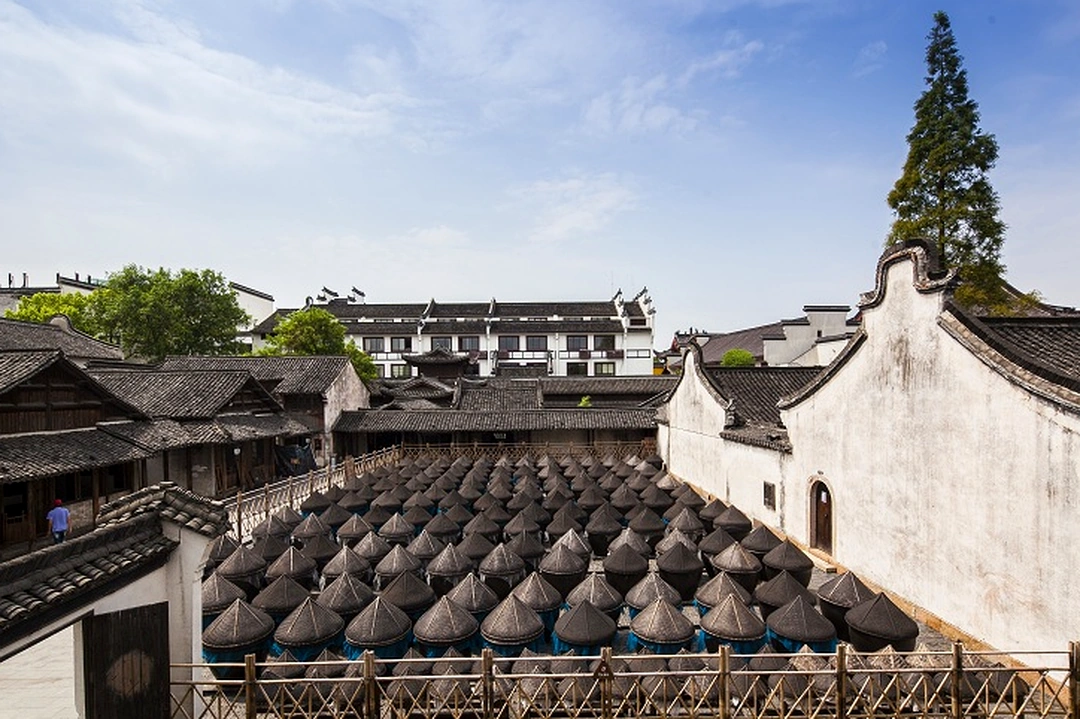
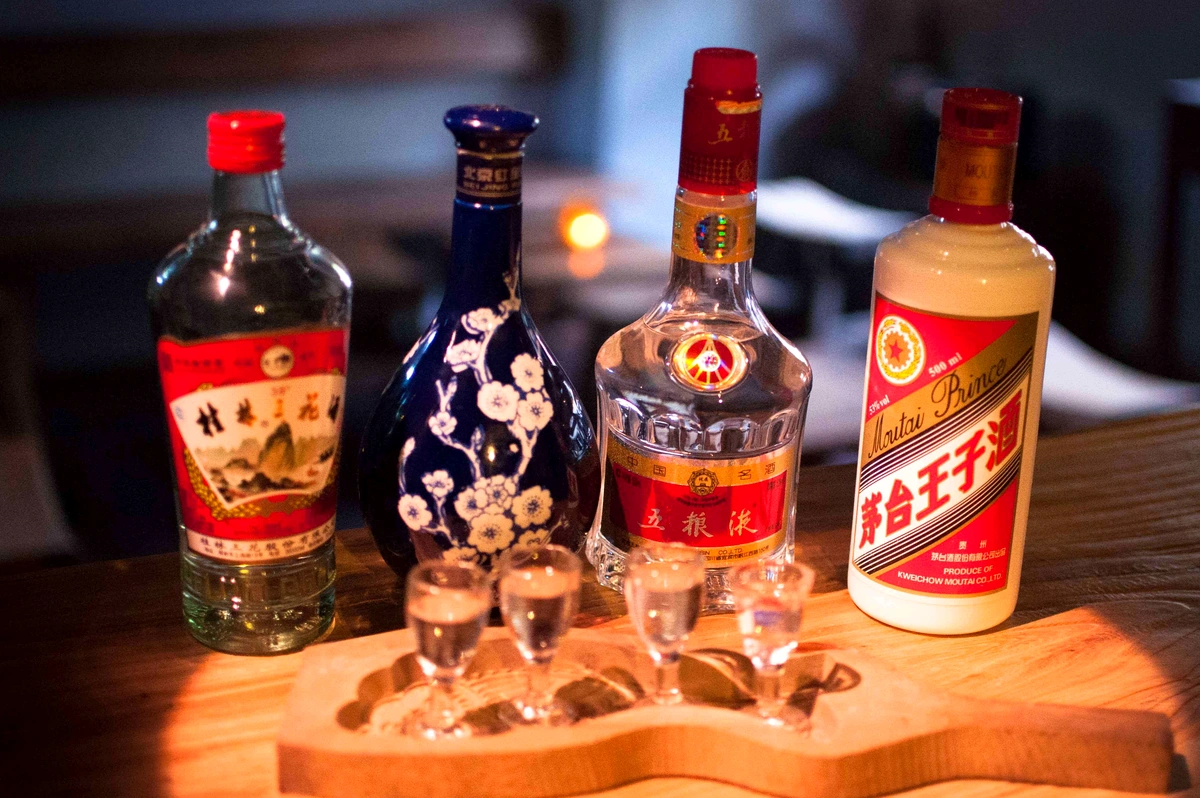
Alongside famous sauce duck, Dongzha is also renowned for Sanbai Jiu (Three-White Liquor), a traditional spirit once esteemed as imperial tribute during the Ming and Qing dynasties. This celebrated liquor distills a simple yet profound philosophy of the ancients, using only three of nature’s purest elements: select white rice, fine wheat yeast starter (qu), and pure spring water from Jiangnan. Brewed and fermented by traditional handcraft methods, Sanbai Jiu takes shape crystal-clear, offering a soft, smooth sensation on the palate before releasing a rich, deep, and refined finish. Its flavor not only warms chilly winter nights aboard gently rocking boats, but also serves as a fine companion to tea-table stories among local elders, preserving the spirit of a golden trading-port era.
Beyond hearty banquets, Wuzhen Dongzha’s heritage experience is also vividly expressed in traditional pastries and snacks carrying historical weight and warm family sentiment. Chief among them is Dingsheng Gao (Victory Cake), a cake bearing a heroic legend from the Southern Song Dynasty, originating as a morale-boosting food prepared by families at home to send off troops marching against the Jin forces. Made from a blend of fine glutinous and non-glutinous rice flour mixed with sweet red bean filling and steamed in wooden molds carved with classical patterns, the rosy-hued cake symbolizes good fortune, with a soft, chewy yet melt-in-the-mouth texture expressing wishes for triumphant return. Alongside Dingsheng Gao in local food memory are delicate handmade treats like Gusao Bing or the famed crispy fried stinky tofu. Crafting batches of Gusao Bing takes utmost patience through kneading wheat flour, fragrant roasted sesame, refined white sugar, and pure lard before baking just right, yielding a light, crisp pastry that shatters into delicate flakes melting on the tongue. Meanwhile, Dongzha’s stinky tofu wins diners over through skillful fermentation of high-quality soybeans in a traditional herbal brine before deep-frying—pairing a crisp exterior with a rich, creamy interior, best enjoyed with a touch of sweet bean paste or spicy chili sauce to create an unforgettable flavor harmony that affirms a century-old food culture beside gently flowing waters.
To complete a journey back in time to Wuzhen Dongzha without missing a single highlight, thorough practical preparation plays a vital role in a smooth trip. According to field guides and updated visitor information from the scenic area management, Dongzha divides operating hours seasonally to protect cultural spaces and serve guests efficiently. Specifically, during peak season from May 1 through October 31, attraction gates open from 07:30 AM to 06:00 PM; during low season from January 1 through April 30 of the following year, hours adjust from 07:30 AM to 05:30 PM to match winter daylight and schedules. Standard single-entry admission to Dongzha is roughly 110 RMB, and for travelers wishing to experience both sides of the water town, choosing a combined Dongzha–Xizha ticket package at around 190 RMB is a smart, cost-effective option. To avoid waiting in line under midday sun or biting cold, travel specialists recommend booking real-name tickets online in advance via the scenic area’s official mini-programs before arriving.
Reaching East Wuzhen from nearby major cities is also very convenient thanks to a well-integrated multimodal transport network among the best in Jiangnan. For travelers departing from Shanghai, Hangzhou, or Suzhou, the most optimal option is taking a high-speed train to Tongxiang Railway Station, exiting to the transfer area, and boarding public bus route K282 straight to Wuzhen Bus Station. From this central station, visitors can take local bus K350 or stroll leisurely along willow-lined roads to step directly into the historic grounds. For those who prefer freedom and wish to drive themselves along scenic riverside roads, satellite navigation can guide you straight to the spacious Dongzha Scenic Area Parking Lot using the search term “烏鎮東柵景區停車場.” Seamless connections across these transport modes shorten travel time and make reaching this waterside retreat easier than ever.
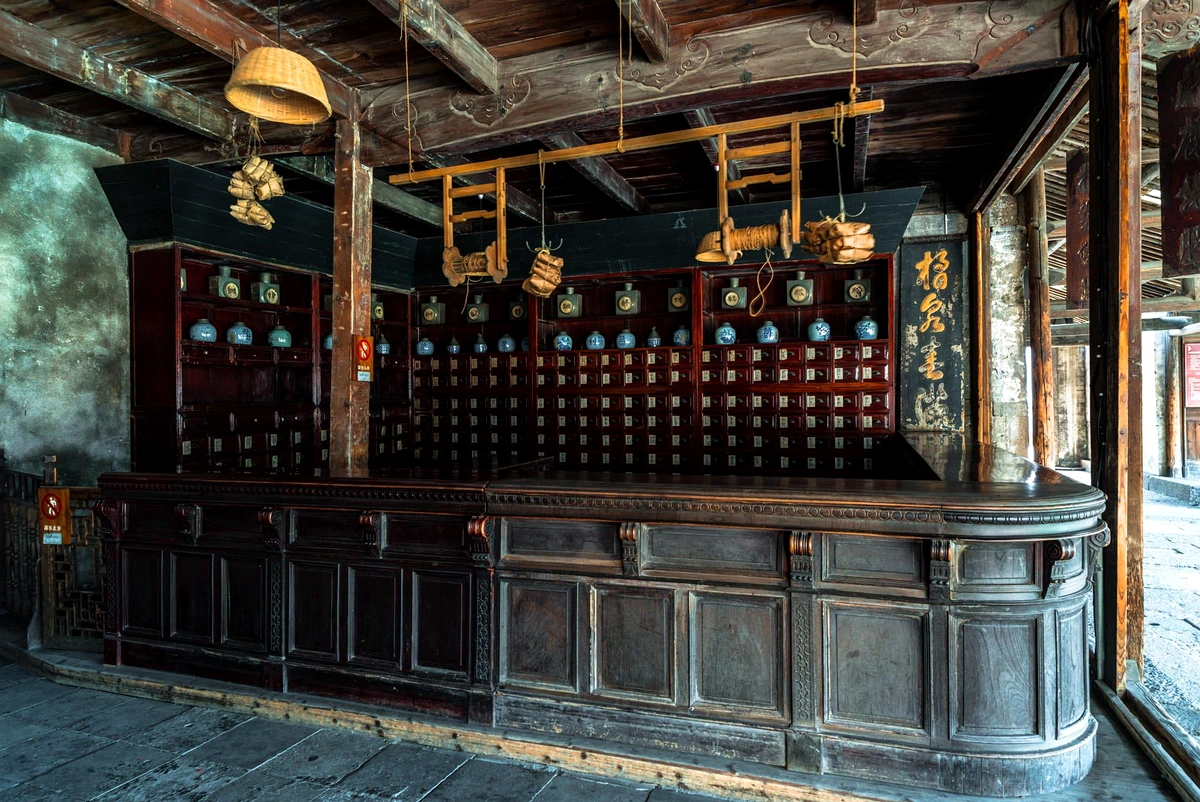
Once past the gates of the Dongzha Visitor Service Center, a self-contained sightseeing route of roughly two to three hours unfolds ahead, inviting visitors to walk slowly over moss-worn bluestones smoothed by time. A well-planned standard loop leads travelers through a connected sequence of heritage stops: starting at the centuries-old Xiangshantang Pharmacy (香山堂藥舖) with its faint scent of traditional Chinese herbs, visiting the former residence of literary giant Mao Dun (茅盾故居) to understand the mind of Wuzhen’s illustrious son, entering the solemn grounds of Lizhi Academy (立志書院) where scholars were nurtured, and admiring priceless collections at the Jiangnan Hundred Beds Museum (江南百床館). The route continues to the traditional indigo dye workshop Hongyuantai (宏源泰染坊) to see dyed fabrics swaying in the breeze, crosses the distinctive Fengyuan Twin Bridges (逢源雙橋) symbolizing blessings, and pauses beside the lyrical bend of Caishen Bay (財神灣) before wrapping up at the Dongzha exit. Because the entire complex is paved in bluestone, choosing the right footwear and clothing makes a decisive difference to your experience.
To make your exploration of Wuzhen Dongzha truly seamless, practical tips distilled from seasoned travelers serve as a golden key to avoiding minor surprises along the way. First, pack flat walking shoes with strong grip and reliable slip resistance, as historic stone paving becomes quite damp and slick on drizzly, breezy days characteristic of Jiangnan weather. Depending on the season you choose, bring sun protection and an umbrella for warm summer days, or a windproof thermal jacket and thick scarf to ward off the piercing chill of winter river winds. An essential cultural and travel-ethics reminder is to strictly respect the privacy and daily routines of local households still living long-term inside the scenic area; taking close-up photos of home interiors or private daily activities requires asking for and receiving consent first. To turn this encyclopedic knowledge into a vivid real-world experience without worrying about logistics, you can explore details on all-inclusive tour packages to travel alongside experienced cultural specialists every step of the way.