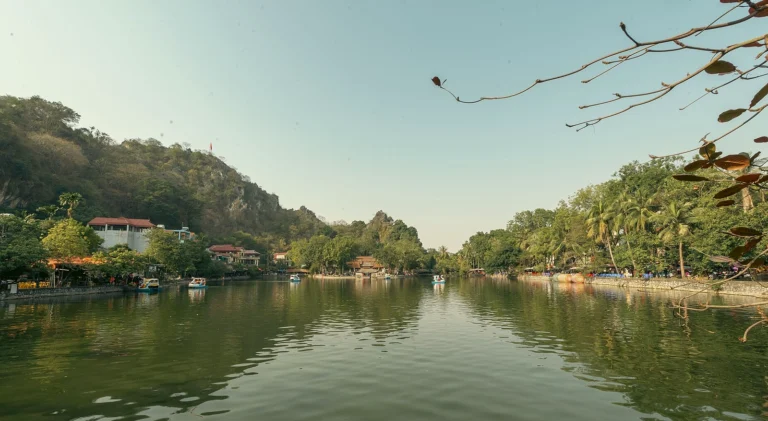
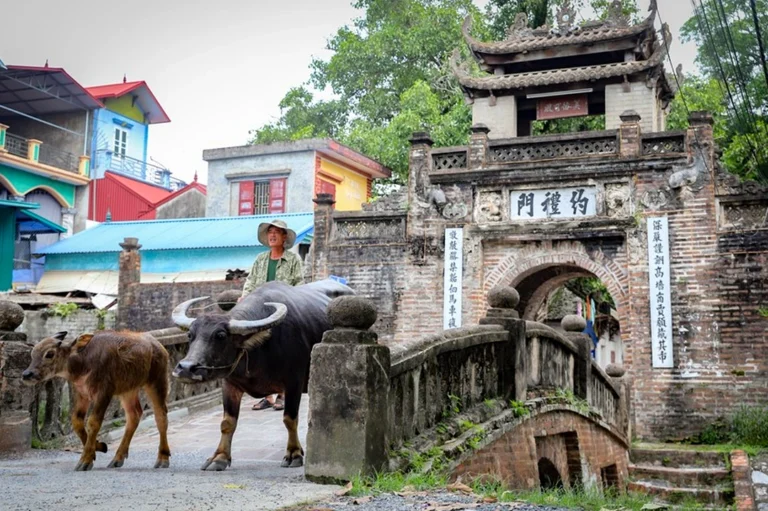
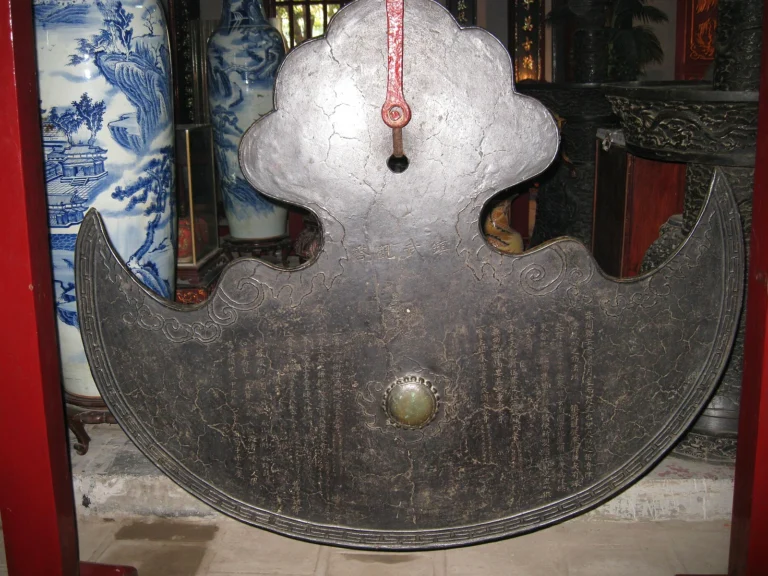
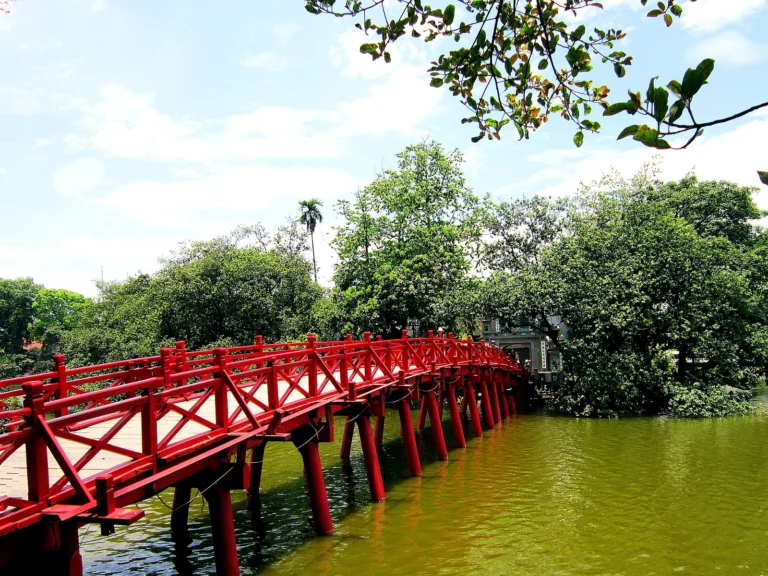
Perched quietly atop Câu Lậu Hill in Thạch Xá Commune, Thạch Thất District, Hanoi, Tay Phuong Pagoda (Sung Phuc Tu) is far more than a religious sanctuary—it is a living heritage site uniting the geographical essence and spiritual depth of the Doai region. Located at coordinates 20°59′58″N 105°36′04″E, this ancient temple rests upon a terrain formation that ancestors likened to a golden fish swimming amidst a vast forest. Its commanding “backed by the mountain, facing the water” orientation creates an auspicious feng shui posture: sheltered behind by rolling limestone ranges while opening out onto an expansive panorama across the fertile plains below, where the lush green rice paddies of Thạch Thất stretch out like an ink-wash painting. The interplay of ancient limestone topography and classical Buddhist architecture has forged a serene sanctuary where the earthly realm meets the transcendent.
The history of Sung Phuc Tu flows like an enduring current through time, tracing its earliest roots back to the Ly Dynasty (11th century)—the golden age of Vietnamese Buddhism. Yet the architectural masterpiece admired today represents the zenith of Later Le Dynasty craftsmanship (17th–18th centuries). The “Tay Phuong Linh Ung Tu” stone stele preserved at the pagoda stands as a silent chronicler marking pivotal restoration milestones. In 1632, during the Duong Hoa era, the temple was rebuilt on a grand scale. Most notably, in 1794 under the Tay Son Dynasty (Canh Thinh era), the pagoda underwent a comprehensive renovation that shaped its classic “inner craft, outer nation” (nội công ngoại quốc) layout with three parallel halls: the Front Hall, Middle Hall, and Upper Sanctuary. The marriage of master woodcarving by period artisans and the teachings of the Cao Dong Zen sect transformed the complex into a living museum of culture and faith.
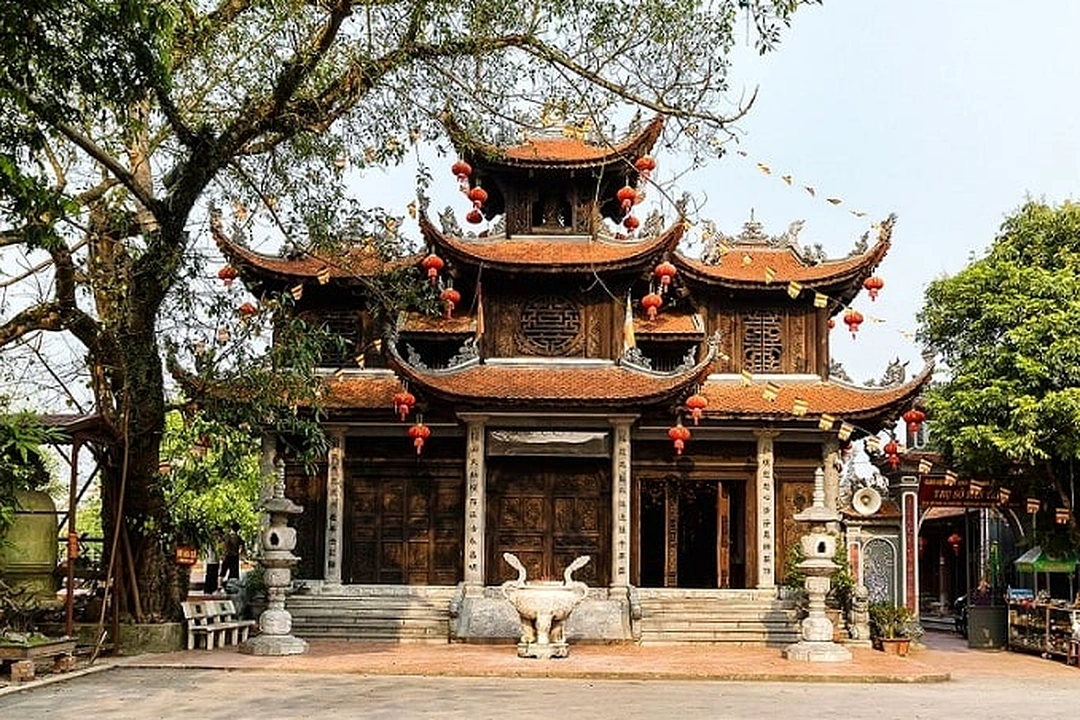
The beauty of Tay Phuong Pagoda lies not only in its double-tiered roofs clad in gracefully curving overlapping tiles, but also in the seamless harmony between human artistry and the surrounding natural landscape. Structural trusses and tie-beams are intricately carved with motifs of coiling dragons, stylized foliage, and lotus blossoms, reflecting the pinnacle of 18th-century Vietnamese aesthetic sensibility. Designated a Special National Monument by the Prime Minister under Decision No. 2408/QĐ-TTg on December 31, 2014, Tay Phuong Pagoda holds an esteemed place within Vietnam’s cultural heritage system. It draws both pilgrims seeking spiritual roots and researchers or cultural travelers uncovering priceless historical artistry—where every stone step ascending the hill and every vermilion-lacquered, gold-gilded jackfruit-wood statue tells a story of endurance, aspiration toward goodness, and the flowering of national sculpture in the heart of the Doai homeland.
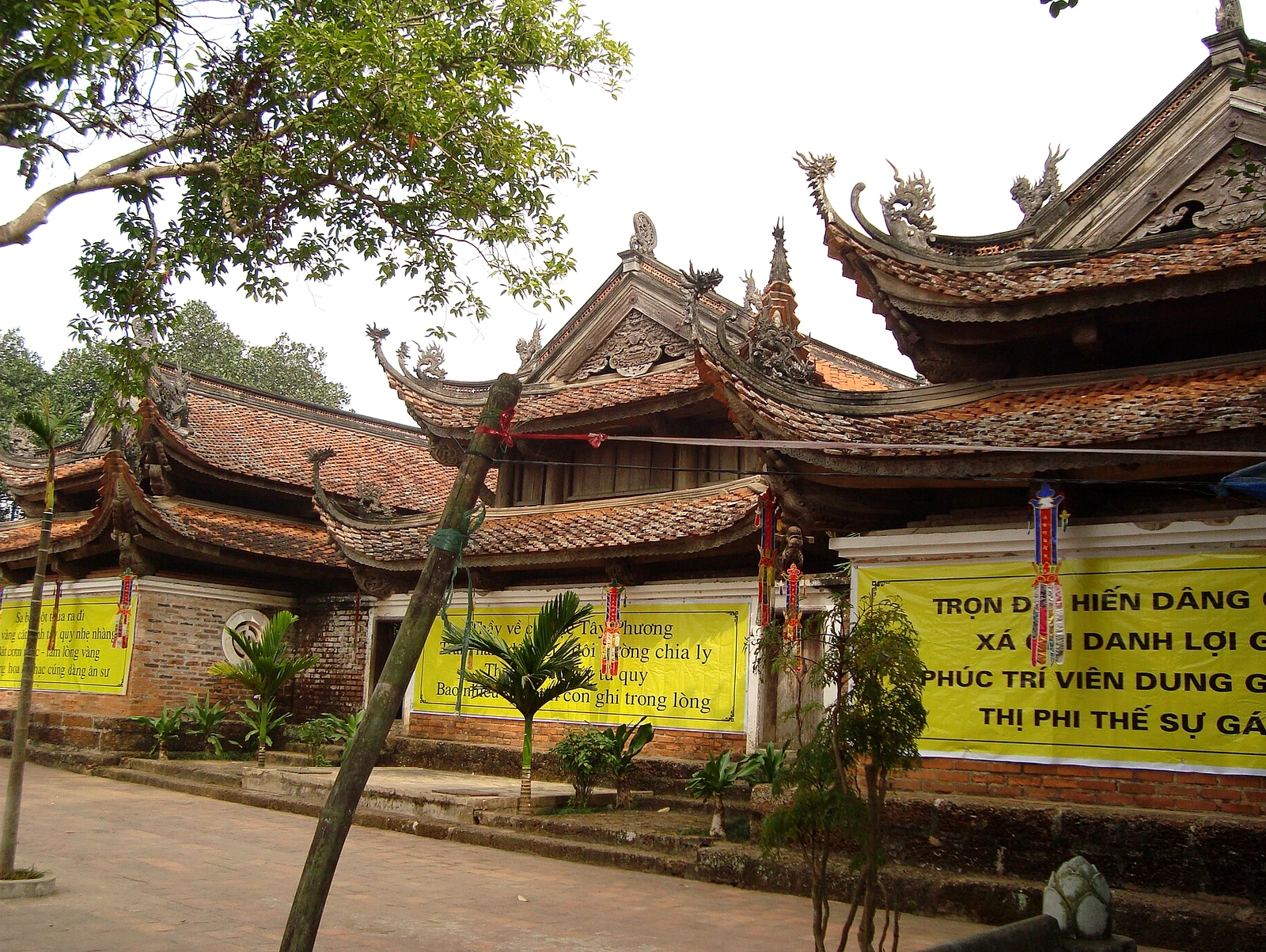
Upon ascending Câu Lậu Hill, your first impression is not only the serene spiritual stillness, but also sheer wonder before an architectural masterpiece in complete harmony with nature. Tay Phuong Pagoda (Sung Phuc Tu) is far more than a place of worship—it is an epic poem carved in wood by the master hands of 18th-century artisans. Resting along the “golden fish” ridge overlooking fertile plains, the temple leans against limestone peaks to welcome vital energy from heaven and earth, creating a landscape at once majestic and ethereal that refreshes every visitor’s spirit.
The architecture of Tay Phuong Pagoda stands as a supreme testament to Later Le sculptural artistry. Comprising three parallel halls—the Front Hall, Middle Hall, and Upper Sanctuary—arranged in the traditional “inner craft, outer nation” plan, the pagoda rises with tiered, sweeping curved roofs whose upturned eaves soar skyward like birds in flight. Its finest treasures lie in the intricate relief carvings across the roof trusses and tie-beams, where coiling dragons, curling acanthus leaves, and lotus blossoms are chiseled with such lifelike vitality that timber and stone seem to breathe. Stepping inside reveals a mesmerizing sanctuary housing 73 vermilion-lacquered, gold-gilded jackfruit-wood statues—an extraordinary sculptural gallery in which each Arhat and Bodhisattva displays a vivid, deeply human expression of joy, sorrow, contemplation, or quiet compassion, capturing the authentic soul of 18th-century Vietnam.
For photography enthusiasts and admirers of classical beauty, Tay Phuong Pagoda offers unforgettable, frame-worthy vantage points. The first unmissable spot is the stairway leading up to the pagoda along 239 weathered laterite stone steps. Dawn is the ideal hour here, when early morning sunbeams filter through ancient tree canopies, casting long shadows across the warm reddish-brown stone steps and surrounding greenery for a tranquil, cinematic composition.
The second prime vantage point sits in the courtyard before the Front Hall, framing Tay Phuong Pagoda’s signature double-tiered curved roofs against the silhouette of distant limestone peaks. Visiting at sunset—as the sun dips behind the mountain ridge—bathes the aged clay roof tiles in a warm amber-gold glow, creating the golden hour when every architectural contour appears at its sharpest and most evocative.
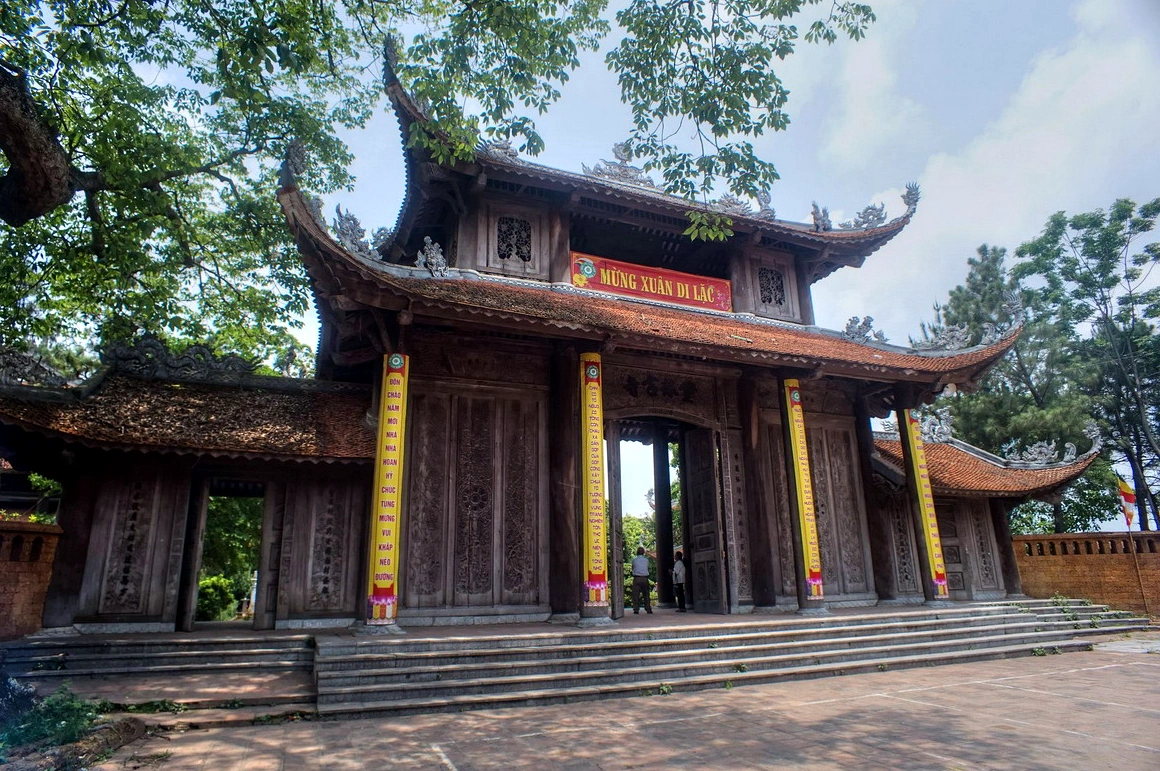
Finally, be sure to capture close-up details of the carved wooden lattice doors and crossbeams. Natural light streaming through doorway crevices creates dramatic contrasts of light and shadow that accentuate the time-patinated vermilion and gold leaf of the statues. Every corner of Tay Phuong Pagoda invites you to slow down, observe closely, and savor the meeting of timeless heritage and natural beauty.
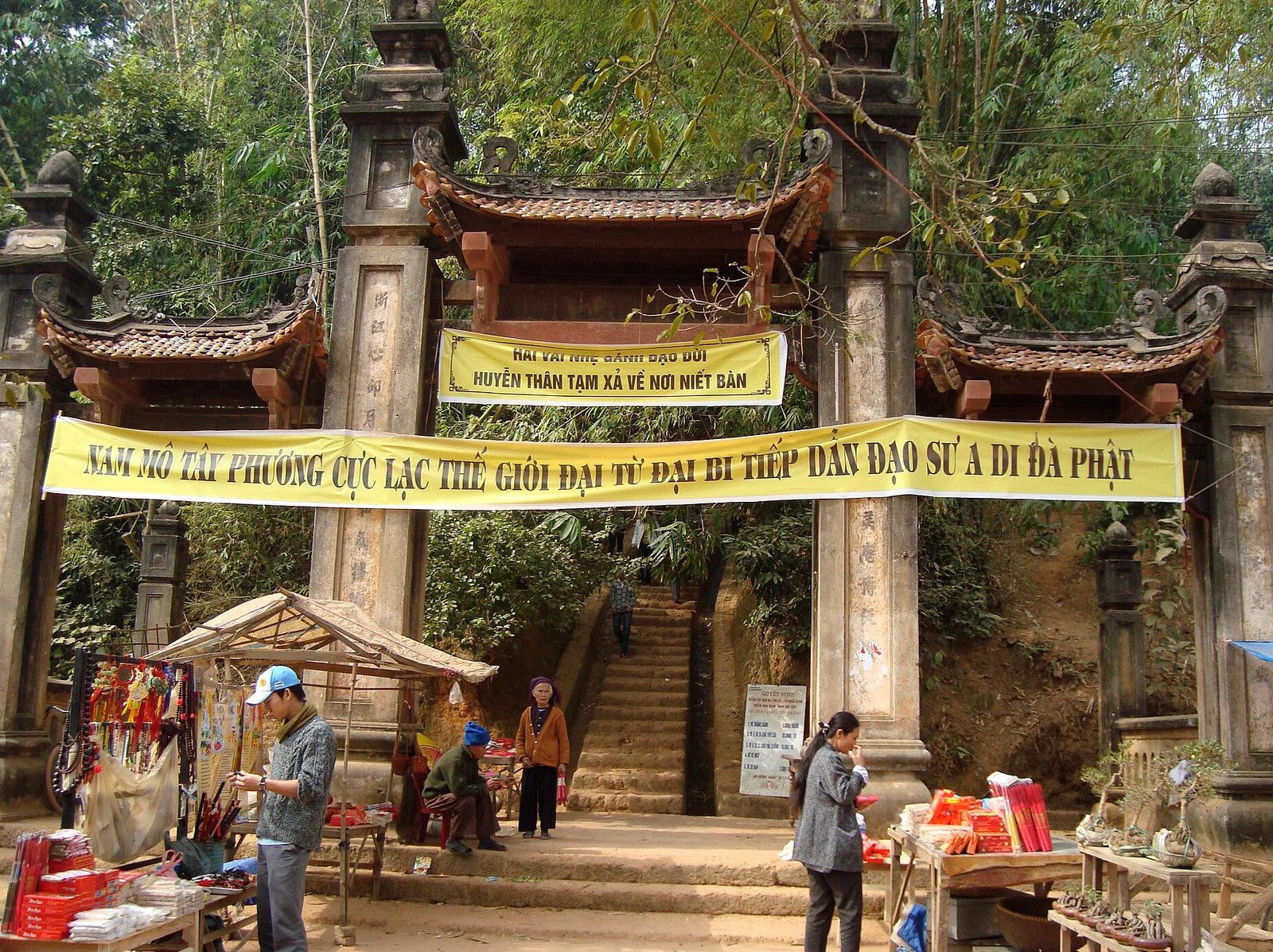
Visiting Tay Phuong Pagoda is far more than a routine sightseeing stop—it is a quiet immersion into a sacred realm where every step echoes with history. To reach the ancient sanctuary crowning Câu Lậu Hill, visitors climb 239 moss-touched laterite steps winding beneath centuries-old trees. The ascent encourages an unhurried, reflective pace until the graceful, soaring temple roofs emerge against the sky like a giant lotus blooming midway to heaven. The initial awe stems not from monumental size, but from the seamless union of architecture and landscape.
Standing atop the hill and gazing out across the horizon reveals a sweeping ink-wash panorama of Thạch Thất District. From this “backed by the mountain, facing the water” vantage point, emerald rice fields and peaceful villages unfold through soft mist. On clear days, the hush of the hilltop punctuated by the resonant chime of temple bells brings an immediate sense of inner calm, dissolving urban hurry and reconnecting visitors with cultural roots.
The unforgettable centerpiece of any visit to Tay Phuong is standing in quiet contemplation before its 73 Buddhist statues. Inside the main halls, soft shafts of daylight filtering through wooden doors illuminate intricate carvings on vermilion-lacquered, gold-gilded jackfruit wood. The renowned Arhat statues are celebrated masterpieces of realistic sculpture: each figure conveys a distinct emotional nuance—deep meditation, gentle humor, quiet sorrow, or worldly empathy—rendered with such lifelike precision in every robe fold and hand gesture that the statues seem poised to speak.
After paying respects in the sanctuary, exploring the local culture of Thạch Thất rounds out the day. Nearby traditional craft villages offer a glimpse into generations-old artisanal life, while sampling regional specialties is a must—most notably Thạch Xá sweet sticky rice cakes (chè lam Thạch Xá), prized for their delicate sweetness and fragrant yellow-flower glutinous rice. Savoring a slice of chè lam alongside a warm cup of green tea on a shaded wooden veranda overlooking the fields captures the simple, enduring peace of the Doai countryside.
Tay Phuong Pagoda is more than a static monument; it is a living bridge between past and present, leaving every traveler with lasting stillness, admiration for ancestral craftsmanship, and deeper appreciation for Vietnam’s cultural heritage.
As both a Special National Monument and one of northern Vietnam’s most revered spiritual landmarks, Tay Phuong Pagoda rewards thoughtful preparation so you can fully appreciate its architecture and sculptural treasures.
Regarding visiting hours, the pagoda welcomes guests daily, including weekends and public holidays. Spring is the ideal season to visit, offering crisp, pleasant weather—especially during the annual traditional temple festival held on the 6th day of the 3rd lunar month, when the grounds come alive with authentic northern rural heritage. Admission tickets are collected at the entrance in accordance with state regulations for Special National Monuments; carrying small-denomination cash is convenient for purchasing tickets and making voluntary offerings at the altars.
Reaching Tay Phuong Pagoda from central Hanoi is straightforward via several routes. The fastest drive follows Thang Long Boulevard west before turning toward Thạch Thất District, a smooth and convenient route for both motorbikes and private cars. Travelers using public transit can take city buses serving Thạch Thất District and complete the final stretch to the foot of Câu Lậu Hill by taxi or motorbike taxi. Because reaching the temple requires climbing 239 ancient stone steps, comfortable flat shoes or sneakers with reliable grip are essential.
Because Tay Phuong Pagoda is an active, solemn place of worship, visitors should dress respectfully. Wear modest, neat clothing and avoid shorts, sleeveless tops, or overly short skirts when entering the sacred halls. When admiring the historic Buddha and Arhat statues, refrain from touching the wood surfaces, respect restricted photography zones, and keep voices low so as not to disturb resident monastics and worshippers.
Finally, take your time examining the intricate carvings on the roof trusses, tie-beams, and Arhat sculptures—priceless masterpieces of traditional Vietnamese woodcarving. With an unhurried pace and attentive eye, your visit to Sung Phuc Tu will be an inspiring, restorative journey into Vietnam’s artistic and spiritual heritage.
To enjoy a seamless getaway and experience the full beauty of Tay Phuong Pagoda without worrying about arranging transportation, booking tickets, or planning itineraries, travelers can choose premium all-inclusive Hanoi tour packages from VDS Travel. Each itinerary is thoughtfully timed for peak scenic lighting, accompanied by expert guides deeply versed in local culture and top-tier hotel and dining standards.