Nestled quietly along the left bank of the Red River at coordinates 20°59′02″N 105°55′15″E, Bat Trang Pottery Village is far more than a mere point on the administrative map of Gia Lam District; it is a living heritage entity where the flow of history and the essence of white clay merge to forge an unrivaled cultural identity. In the Vietnamese consciousness, Bat Trang embodies the convergence of “auspicious land” and “noble craft,” where a “Dragon Flanking, Tiger Crouching” (Long chầu hổ phục) feng shui setting enabled a large-scale ceramic production center to take shape as early as the Early Le Dynasty, rising to become a celebrated emblem of ancient Thang Long.
Tracing history back to the 14th and 15th centuries, historical records in Nguyen Trai’s Du Dia Chi (Geography of Vietnam) alongside stone stelae at the village communal house firmly establish Bat Trang’s status as a pivotal ceramic hub. Legends of the Nguyen Ninh Trang clan migrating from Bo Bat Village (Yen Mo, Ninh Binh) to the alluvial clay fields of Bach Tho Ward along the Red River still echo today as proof of their ancestors’ foresight. They chose to settle here not only for the abundant deposits of kaolin clay, but also for its strategic location beside the Red River—the vital trade artery linking the imperial capital with the East Sea, where gathering waters deposited fertile silt to sustain kilns whose fires never went out.
Bat Trang’s vitality has been forged by historical figures who have passed into legend. Hua Vinh Cao, revered by villagers as the “Founding Father of Pottery,” laid the earliest foundations for firing and glazing techniques, transforming inanimate clay into works of art infused with the Vietnamese soul. Alongside him, the presence of First-Rank Scholar (Trang Nguyen) Nguyen Binh during the Revival Le Dynasty helped codify village regulations, turning Bat Trang into a “village of scholars” alongside its renown as a “craft village.” This union of erudite scholarship and refined craftsmanship cultivated a distinctive cultural identity, where every piece of crackle-glazed or cobalt-blue ceramic is not merely a utilitarian object, but a historical message chronicling the subtle technical interplay between Vietnamese heritage and regional ceramic traditions.
Bat Trang’s heritage value is further attested by its ensemble of ancient architecture. Bat Trang Communal House, dedicated to Bach Ma Dai Vuong (the White Horse Great King), together with Kim Truc Pagoda and the Bat Trang Temple of Literature (Van Chi), forms a serene spiritual and cultural precinct preserving one-of-a-kind ceramic statues and priceless royal edicts. Deep cultural strata beneath the village soil, where archaeologists have unearthed ceramic shards dating back to the Early Le Dynasty, serve as “wordless chronicles” affirming the historical depth of a land that has weathered countless vicissitudes to safeguard the nation’s authentic spirit. Today, recognized by heritage authorities, Bat Trang is not just a traditional craft village but a living museum, where every footstep allows travelers to touch the breath of time and sense the miraculous crystallization of geology, feng shui, and Vietnamese artisanal mastery.

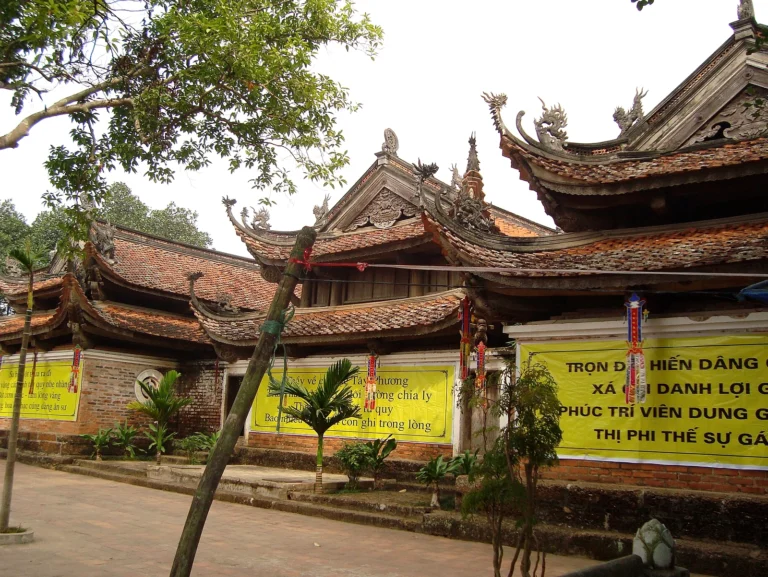
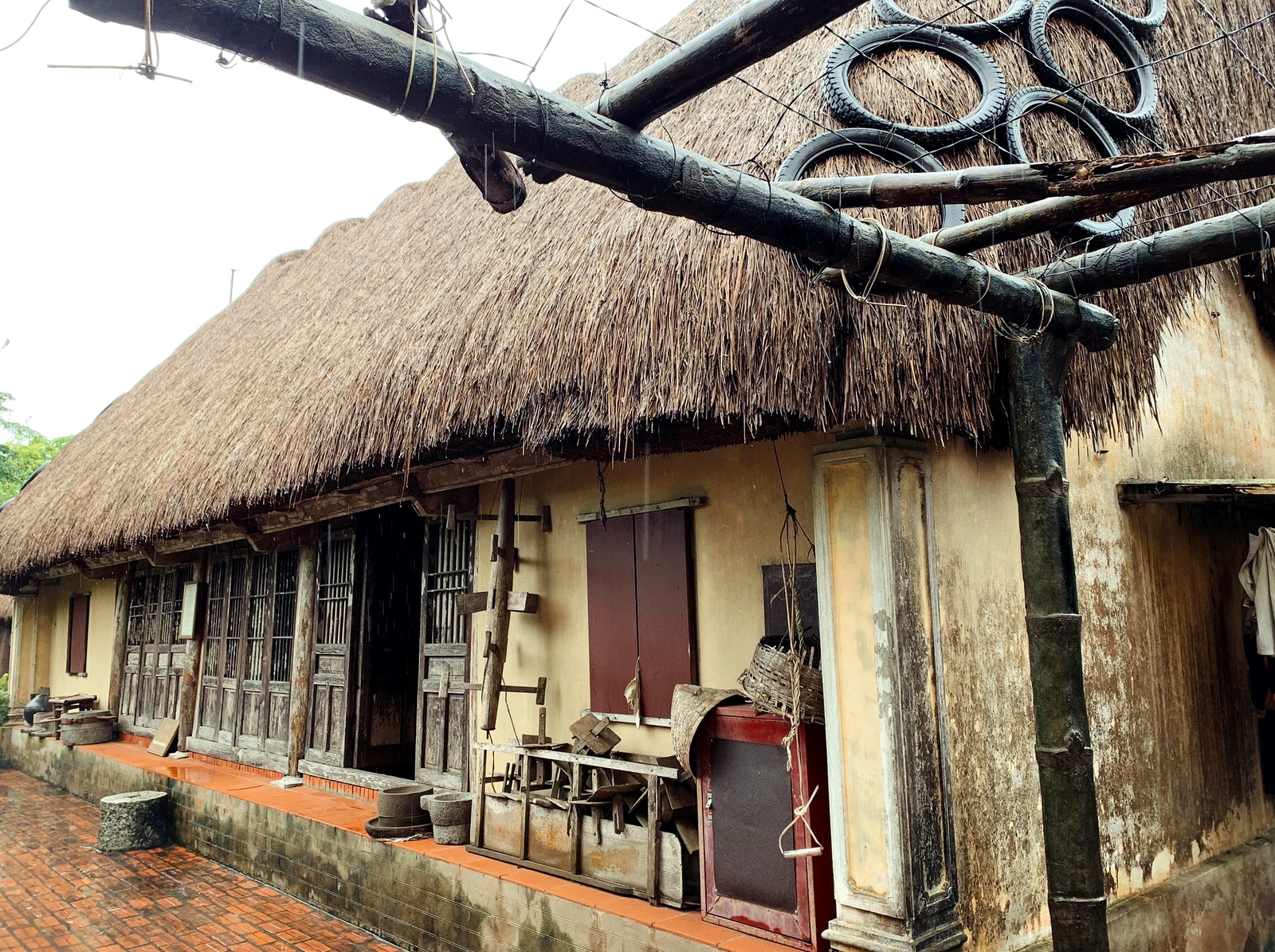
Stepping into Bat Trang, visitors not only brush against history, but wander through an architectural ensemble that seamlessly bridges time-worn antiquity with bold contemporary artistry. At the heart of the craft village stands Bat Trang Communal House, a grand timber structure where every pillar and tiled roof bears the patina of centuries. Intricate wood carvings, paired with royal decrees dating from the Revival Le Dynasty, evoke an atmosphere of sacred solemnity. Every sculpted motif of dragons, phoenixes, and stylized foliage goes beyond mere ornament—it speaks a visual language recounting a golden age of Vietnamese artisans, whose hands breathed life into wood and stone to create enduring masterpieces.
Standing in striking contrast to the tranquil communal house is the grandeur of the Bat Trang Pottery Museum—a contemporary architectural landmark that has garnered widespread acclaim in international art circles. Inspired by traditional potter’s wheels, the building features mesmerizing spiraling curves resembling mounds of clay being shaped by an artisan’s hands. Stacked terracotta-toned walls create a dramatic visual rhythm where light and shadow intertwine, carving out deeply philosophical spaces. More than a repository of heritage, it stands as a monumental sculpture in the heart of the craft village, where every vantage point opens onto a fresh dimension rich in visual poetry and emotion.
To capture “million-view” photographs in Bat Trang, professional photographers typically favor two classic camera angles. The first is along the spiraling corridors of the Pottery Museum. The ideal window is during the “golden hour”—roughly 4:30 PM to 5:30 PM—when sunset light slants through architectural openings in warm amber shafts, accentuating the raw ceramic textures and fluid curves of the facade. At this hour, soft directional light enhances spatial depth, turning every shot into a cinematic work of art.
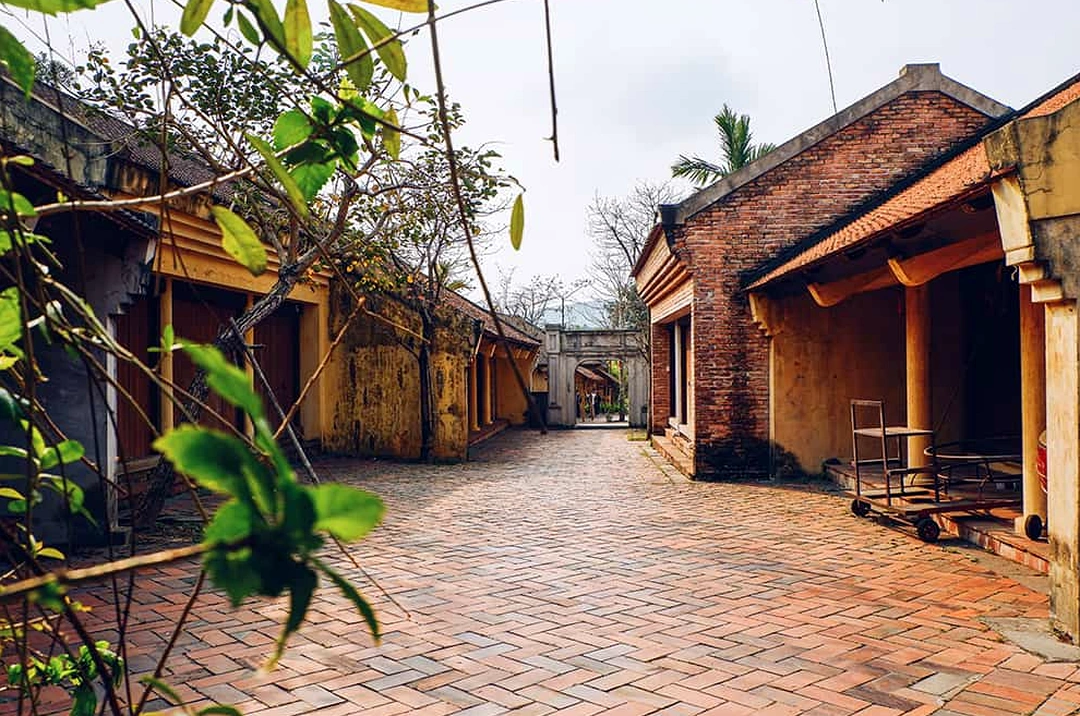
The second unmissable vantage point lies around the ancient village gate and narrow alleyways paved with herringbone bricks, where weathered, moss-draped ceramic walls still endure. Dawn is the finest time here, while the craft village remains veiled in thin morning mist drifting off the Red River. Early sunlight filters through tree canopies onto crackle-glazed walls, conjuring a nostalgic, contemplative, and deeply poetic mood. This angle lets viewers feel the breath of time and the quiet resilience of a craft village that has endured centuries of change. Additionally, framing reflections in rain puddles or sunlit pottery-drying courtyards yields high-contrast compositions highlighting the living dialogue between artisans and heritage.
Today, Bat Trang is far more than a center of ceramic production—it is a vibrant living museum where every lane and landmark forms a chapter in a cultural story. The union of its “Dragon Flanking, Tiger Crouching” setting beside the silt-laden Red River and its remarkable architecture makes it an irreplaceable destination. Whether you are a photography enthusiast, a traveler seeking unvarnished authenticity, or simply someone longing to reconnect with cultural roots, Bat Trang knows how to captivate with beauty at once noble and intimate, turning every frame into an unforgettable memory.
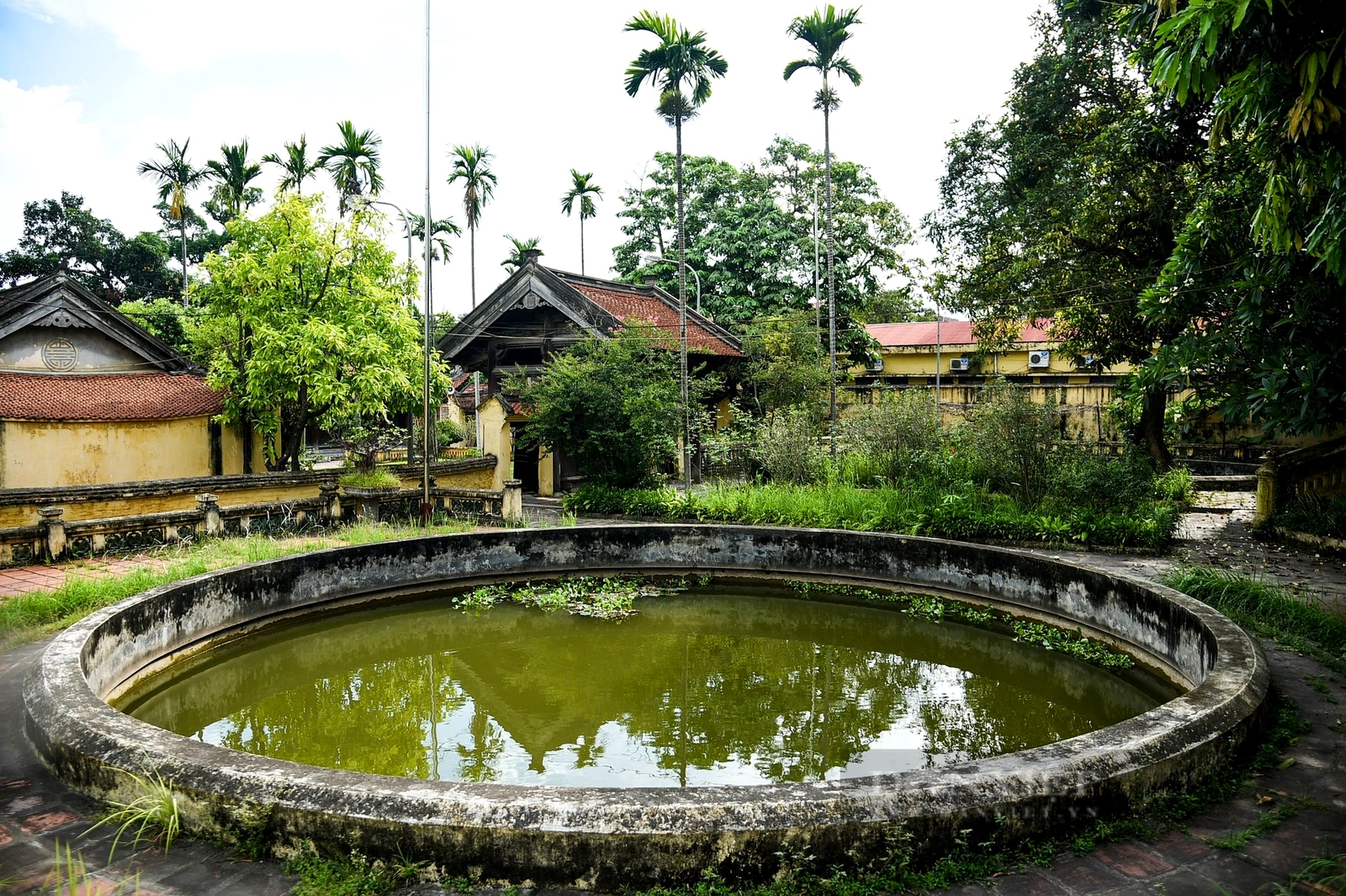
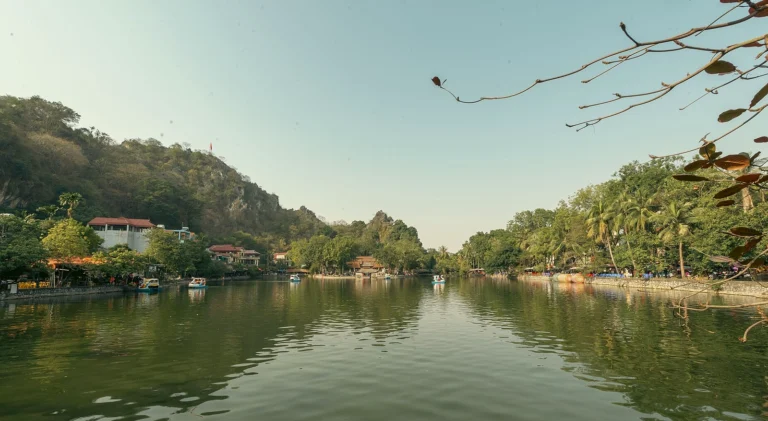
Arriving in Bat Trang means more than entering a repository of historical memory—it means immersing yourself in a captivating, multi-sensory cultural journey. The moment you leave urban clamor behind, you are greeted by the compelling rhythm of a thousand-year-old craft village that feels at once tranquil and industrious. To truly absorb its essence, begin with a gentle boat ride gliding down the silt-reddened Red River. Viewed from the water, the pottery village unfolds like a traditional ink-wash painting of mossy tiled roofs interspersed with towering kiln chimneys, forming an unmistakable skyline where past and present mingle on every river breeze.
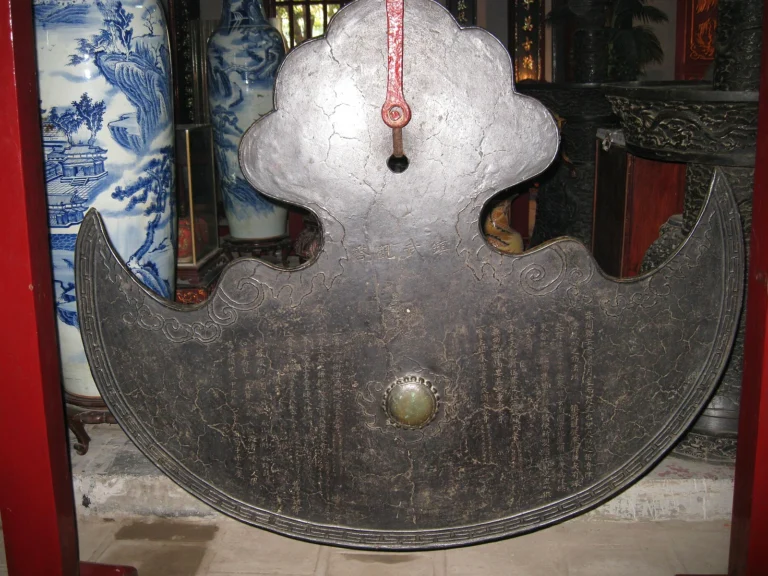
After your river excursion, let your footsteps wander into winding narrow alleys where aged brick walls tell silent tales of generations of diligence. Essential stops include Bat Trang Communal House and the Village Temple of Literature (Van Chi)—quiet historical witnesses to the village’s past. Here, visitors experience a deep sense of inner calm while paying respects before unique ceramic Buddha statues at Kim Truc Pagoda. The delicate tracery of crackle glazes and the solemnity of ancient royal edicts inspire genuine awe at the skill of master potters of old. In these moments, the noise of the outside world fades completely, giving way to profound reverence for ancestral heritage.
A hands-on visit to Bat Trang would be incomplete without engaging directly with clay and fire. Inside family-run workshops, visitors can place their own hands on a spinning wheel, feeling the cool, supple clay gradually take artistic shape between their fingers. Guided by local artisans, anyone can become an amateur ceramicist, throwing and shaping bespoke pottery pieces bearing their personal touch. The anticipation of waiting for a piece to emerge from the kiln—or the delight of watching cobalt-blue brushwork bloom beneath a glossy glaze—adds a memorable spark that lingers long after your visit.
As dusk settles over the Red River, your senses are awakened by the celebrated culinary specialties of the village. Be sure to savor canh mang muc (dried bamboo shoot and squid soup)—a refined, painstakingly prepared delicacy of Bat Trang cuisine—alongside rustic countryside cakes brimming with traditional flavor. Dining while looking out over the pottery village from an elevated terrace leaves the spirit light and content. Initial awe gently softens into a lingering fondness difficult to put into words. Bat Trang is not merely a sightseeing stop, but a living organism where every brick and ceramic vessel holds a piece of the Vietnamese soul. Leaving Bat Trang with a handcrafted ceramic keepsake in hand, you carry home not just an object, but the living breath of a craft village that has preserved its cultural identity across the centuries.
To ensure your trip to Bat Trang Pottery Village is smooth and rewarding, it pays to keep a few essential logistical tips in mind. Bat Trang Pottery Village welcomes visitors every day of the week, from early morning until late afternoon. However, the liveliest times to visit are on weekends or during traditional village festivals, when the cultural atmosphere buzzes with energy, kilns glow with fire, and master artisans give live demonstrations of intricate wheel-throwing and sculpting techniques.
In terms of costs, exploring the old village lanes, communal house, and historic alleys is completely free of charge. Visitors only pay for specific hands-on activities such as pottery-making workshops, admission to the Bat Trang Pottery Museum (Center for Quintessence of the Vietnamese Craft Village), or electric cart tours around the village. Prices for these experiences remain very affordable, making them accessible to students, families, and international travelers alike.
Getting there from central Hanoi is straightforward with several flexible transport options. If traveling by motorbike or private car, the best route follows the Red River dike across either Chuong Duong Bridge or Vinh Tuy Bridge before turning toward Bat Trang. This scenic drive is not only convenient, but also offers picturesque views along the riverbanks. For those preferring public transit, city buses provide a budget-friendly and reliable alternative, with direct routes connecting central Hanoi to a stop right near the village entrance—letting you reach the heart of the village effortlessly without worrying about parking.
When visiting sacred sites such as the communal house, Kim Truc Pagoda, or the Temple of Literature, please dress politely and modestly out of respect for local cultural and spiritual traditions. While Bat Trang lacks steep mountain terrain, navigating narrow alleys paved with antique bricks calls for comfortable flat shoes or cushioned sneakers so you can explore every corner of the craft village with ease.
The ideal seasons to visit are autumn and spring, when cool, dry weather makes outdoor walking tours and hands-on pottery sessions especially enjoyable. Try to avoid days of heavy rain so your itinerary remains safe and uninterrupted. Above all, arrive with an open mind ready to listen to the stories of local artisans—their insights into crackle glazes, cobalt brushwork, and multi-generational family traditions serve as the most valuable ticket into the true soul of this thousand-year ceramic heritage.
To enjoy a seamless getaway and take in the full charm of Bat Trang Pottery Village without worrying about arranging transportation, booking admission tickets, or planning itineraries, travelers can choose VDS Travel’s premium all-inclusive Hanoi tour packages. Every itinerary is thoughtfully timed so you can capture photos when the scenery is at its most radiant, accompanied by knowledgeable local guides deeply versed in regional culture alongside top-tier hotel and dining standards.