Located at 40 Nha Chung Street in Hoan Kiem District, St. Joseph’s Cathedral (affectionately known as Hanoi’s “Grand Cathedral”) is far more than a religious monument; it is a singular landmark where the turbulent historical currents of ancient Thang Long converge. In Hanoi’s human geography, this site holds an auspicious feng shui anchor along the sacred axis linking Hoan Kiem Lake with the western quarter of the former imperial citadel, once the long-standing administrative and spiritual heart of the capital. Selecting this ground in the late 19th century to lay the foundation for a grand Catholic edifice was no mere coincidence, but a symbolic statement of authority marking a profound shift in Vietnam’s cultural and religious landscape during the French colonial era.
Tracing history back through the centuries, this very parcel of land was once home to Bao Thien Pagoda—counted among the legendary “Four Great Treasures of Annam” during the Ly–Tran dynasties and a celebrated emblem of Buddhist prosperity and national spirit. The ancient pagoda and its soaring Bao Thien Tower were long a source of pride for residents of the imperial capital. Yet under the pressures of historical upheaval and political shifts during the reign of Emperor Dong Khanh, the Buddhist complex was cleared to make way for a Western architectural monument. Although the event left lingering emotional resonance and quiet resistance among local residents, it inadvertently created a multi-layered cultural stratum where traditional spiritual heritage and European Gothic architectural ideals coexist within a single geographical space.
Begun in 1884 and consecrated on Christmas Day in 1886, St. Joseph’s Cathedral was realized through the vision and decisive leadership of Bishop Puginier. The edifice stands as a testament to subtle technical synthesis: while modeled after the medieval Gothic style of Notre-Dame de Paris with pointed arches, vibrant stained-glass windows, and imposing buttresses, its building materials breathe a distinctly local spirit. Plastered terracotta-brick walls, combining Western structural engineering with the deft craftsmanship of Vietnamese artisans, yielded a unique architectural identity at once foreign and deeply familiar within Hanoi’s urban landscape.
Today, heritage authorities classify St. Joseph’s Cathedral as a Tier-1 Urban Architectural Heritage site, a designation affirming its exceptional preservation value within the planning of the Old Quarter and the Hoan Kiem Lake precinct. Preserved relics—such as the bronze bells whose resonant chimes once served as the neighborhood’s “timepiece,” alongside sandstone reliefs echoing Nguyen Dynasty artistic sensibilities—form a living museum of history. The cathedral is not merely a venue for liturgical worship, but an enduring “architectural witness,” where every brick and every chime recounts the story of a transforming Hanoi in which geological and cultural heritage remain an inseparable part of a thousand-year-old capital’s identity.
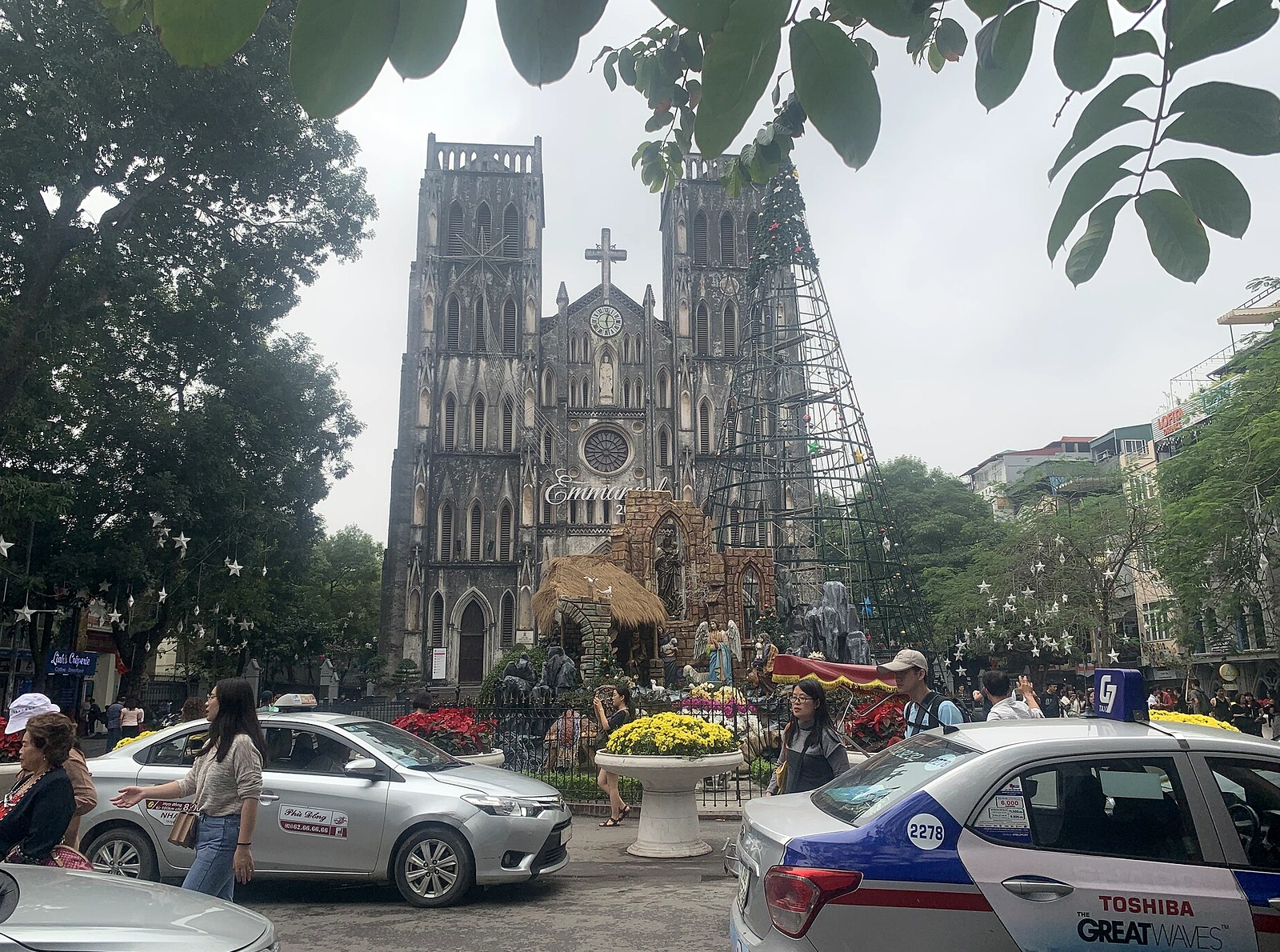
St. Joseph’s Cathedral is not merely a place of worship, but a medieval Gothic masterpiece recreated with quiet pride in the heart of Vietnam’s capital. Standing before its facade, visitors are immediately struck by the solemn, weathered beauty of time-stained terracotta-brick walls. Signature Gothic elements shine through pointed lancet arches, soaring buttresses, and luminous stained-glass windows. Yet its most captivating hallmark lies in subtle cultural fusion: despite its Western soul, sandstone carvings reveal unmistakable echoes of Nguyen Dynasty decorative art, creating an enchanting “localization” rarely seen in colonial-era architecture.
The surrounding setting harmoniously blends old-world French architectural charm with the vibrant pulse of Hanoi street life. Ancient trees ring the grounds like silent sentinels, casting dappled shade across the small forecourt square. Situated at 40 Nha Chung Street, the site occupies a premier geomantic position along the spiritual corridor connecting Hoan Kiem Lake to the western side of the ancient capital. This synergy between monumental architecture and auspicious feng shui generates a distinct sense of tranquility, offering visitors an immediate sanctuary from the bustle and dust of the streets outside.
For photography enthusiasts and travelers seeking “million-view” frames, St. Joseph’s Cathedral offers several classic camera angles. The first and most popular vantage point is from across the forecourt square, where you can capture the entire facade with its twin bell towers rising straight into the sky. Sunset is the prime window, when warm late-afternoon rays cast long shadows across moss-patinated brick walls, conjuring a nostalgic, cinematic mood reminiscent of vintage European films. At this hour, soft golden light highlights the intricate sculptural details of the facade while creating a gorgeous contrast against a twilight sky tinged with violet and rose.
A second classic angle runs along the flank of the cathedral on Nha Chung Street. Here, you can frame the soaring rows of arched windows and characteristic Gothic flying buttresses in crisp perspective. Visiting early in the morning—when dawn light filters through ancient tree canopies and slants across weathered sandstone—yields images with remarkable depth of field. Clean morning light accentuates the building’s quiet gravitas, while focusing on finely carved sandstone reliefs at the base of the pillars adds rich cultural depth that underscores the monument’s timeless heritage value.
Whether you are a professional photographer or simply a traveler seeking Hanoi’s authentic character, St. Joseph’s Cathedral is an unmissable stop. Every perspective here tells a story of cultural dialogue, temporal endurance, and a Hanoi at once ancient and modern. Take time to savor the stillness between chimes, admire the architectural grandeur, and let your photographs become part of a journey through this extraordinary cultural landmark.
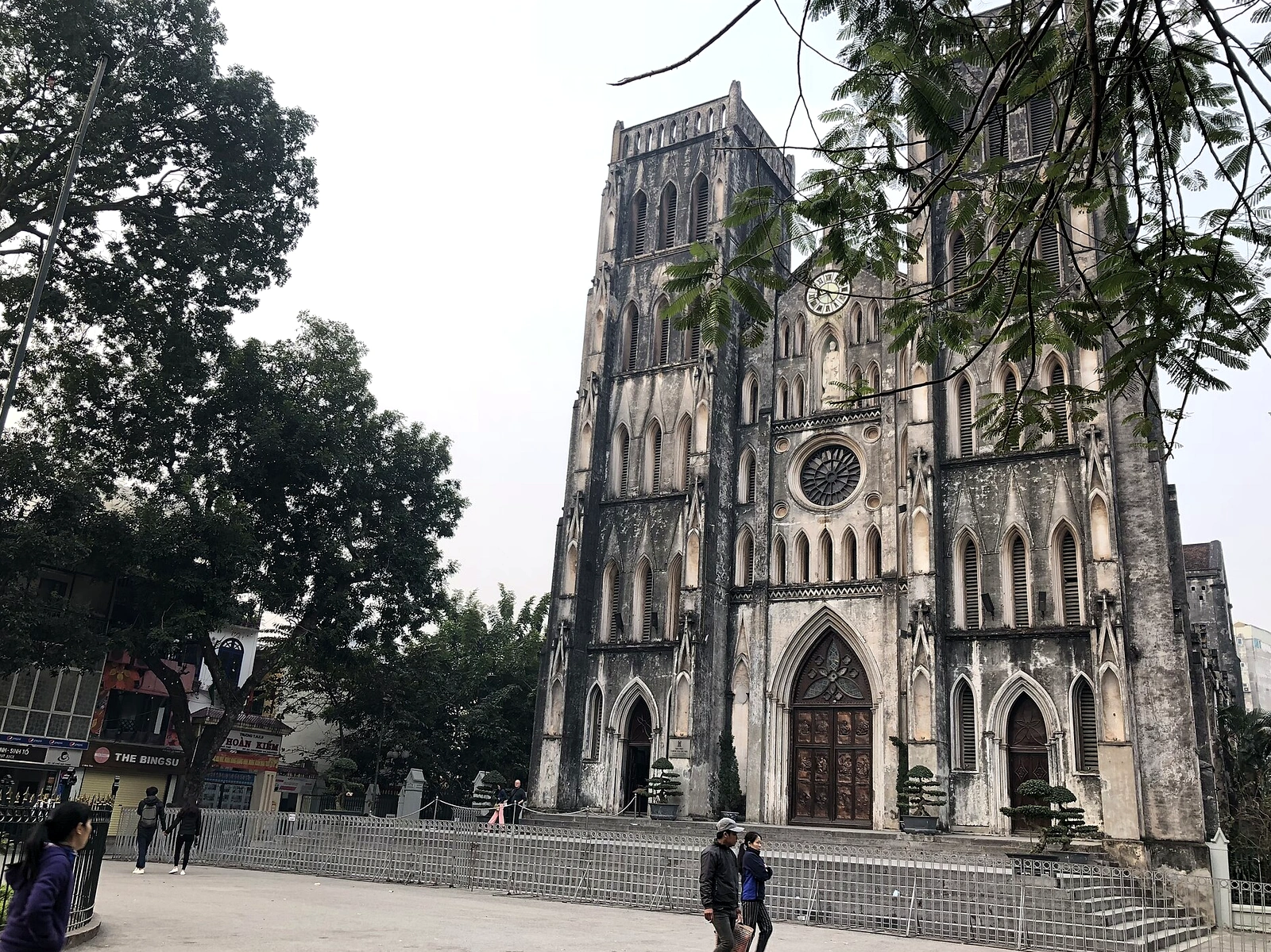
As dusk casts long shadows across weathered brick walls, St. Joseph’s Cathedral emerges not just as an imposing Gothic landmark, but as a living heartbeat in the center of the city. For visitors, experiencing the cathedral goes far beyond admiring its exterior; it is a journey into deeper cultural layers where Western spirituality intertwines with the everyday rhythm of Hanoi life. Stepping onto the cathedral grounds brings an immediate, captivating contrast between the hushed reverence of the sanctuary and the energetic buzz of the surrounding streets.
Stepping inside for quiet contemplation offers a rare pocket of stillness in the heart of the capital. Once past the heavy wooden doors, the interior feels completely insulated from the honking traffic outside. Jewel-toned light filters through stained-glass windows onto dark timber pews, creating a sacred atmosphere that naturally prompts visitors to lower their voices. Many choose to sit quietly and listen to the resonance of the bronze bells—a sound once known as the “clock of the Old Quarter” and an acoustic heirloom woven into the memories of generations of Hanoians. That moment of calm is a priceless spiritual gift no digital device can replicate.
Stepping back outside from the tranquil nave, local street culture bursts to life right around the square. While there are no mountain trails or boat rides here as at natural scenic spots, the signature experience of St. Joseph’s Cathedral is Hanoi’s iconic sidewalk “lemon tea culture” (trà chanh nhà thờ). Perching on low plastic stools, sipping refreshing iced lemon tea, cracking roasted sunflower seeds, and watching the world go by beneath the cathedral spires has become an unmistakable local ritual. From here, you enjoy a sweeping view of the entire facade, its intricate sandstone details glowing softly beneath warm streetlamps as night falls.
The neighborhood around the cathedral is equally rewarding for culinary exploration. Just steps away lie beloved eateries serving everything from aromatic beef pho fragrant with star anise and cinnamon to steaming plates of delicate banh cuon (rolled rice crepes) and time-honored French-style patisseries tucked inside narrow lanes. Pairing classic Gothic architecture with bold Vietnamese flavors creates an unforgettable multi-sensory experience—a meeting of old-world European elegance and the warm, unpretentious soul of Vietnam.
When night descends, St. Joseph’s Cathedral takes on an even more luminous, mysterious aura. Standing beneath its soaring bell towers, it is easy to feel humbled before the sweep of history—impressed not merely by architectural scale, but by the structure’s quiet endurance across turbulent eras. St. Joseph’s Cathedral is more than a sightseeing stop; it is an eloquent witness whose bricks and bells tell a living story of cultural convergence. For everyone who visits, the lasting impression is not simply admiration, but an invisible thread connecting them to Hanoi’s living history—where past and present move side by side in captivating harmony.
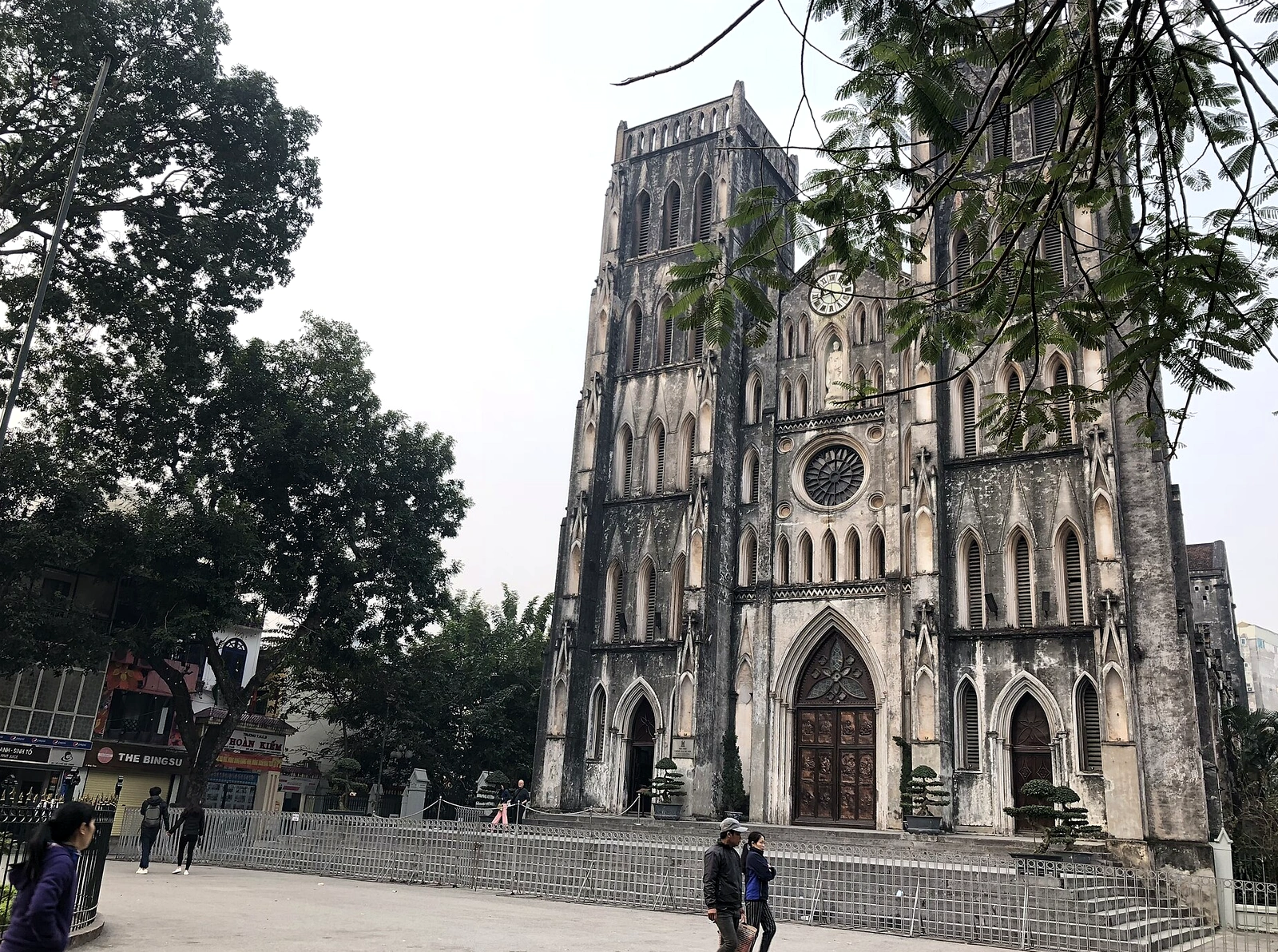
St. Joseph’s Cathedral—affectionately called the Grand Cathedral by locals—is an essential stop on any Hanoi itinerary. To ensure a smooth visit while respecting this sacred space, keep the following practical guidelines in mind.
Regarding opening hours, the cathedral generally welcomes visitors during set daily windows, typically from 08:00 to 11:00 in the morning and from 14:00 to 17:00 in the afternoon. However, schedules may adjust during major religious holidays or parish Mass services. Please note that interior sightseeing is restricted while Mass is underway to preserve quiet reverence for worshippers. A welcome perk for travelers is that admission to St. Joseph’s Cathedral is completely free for all visitors, whether pilgrims or casual sightseers.
Getting to the cathedral is effortless thanks to its prime address at 40 Nha Chung Street, Hoan Kiem District. If you are starting from central landmarks like Hoan Kiem Lake, the best approach is a pleasant stroll down Nha Tho Street to soak up the Old Quarter atmosphere. If arriving by motorbike or private car, park at public lots along nearby Nha Chung or Ly Quoc Su Streets, as stopping directly in front of the cathedral is restricted. For public transit users, several city bus routes pass close to Hoan Kiem Lake, leaving just a short walk to the square.
As for dress code, because this is an active religious sanctuary of deep historical and spiritual significance, visitors should dress politely and modestly. Avoid overly short, revealing, or inappropriate attire when entering the interior nave. Keeping voices low and refraining from taking photos during Mass are basic courtesies every visitor should observe.
The best times to visit St. Joseph’s Cathedral are during Hanoi’s crisp autumn days or around the Christmas season. At year’s end, the square is lavishly decorated with a towering Christmas tree and festive illuminations, turning the precinct into a sparkling, magical scene. If you prefer peace and quiet, weekday mornings offer the finest opportunity to admire the weathered Gothic architecture without urban crowds. Whenever you visit, the solemnity of its time-stained brick walls and the resonant bells ringing out from high above are guaranteed to leave an indelible impression of a Hanoi where past and present meet.
To enjoy a seamless getaway and take in the full charm of St. Joseph’s Cathedral without worrying about arranging transportation, booking tickets, or planning itineraries, travelers can choose VDS Travel’s premium all-inclusive Hanoi tour packages. Every itinerary is thoughtfully timed so you can capture photos when the scenery is at its most radiant, accompanied by knowledgeable local guides deeply versed in regional culture alongside top-tier hotel and dining standards.