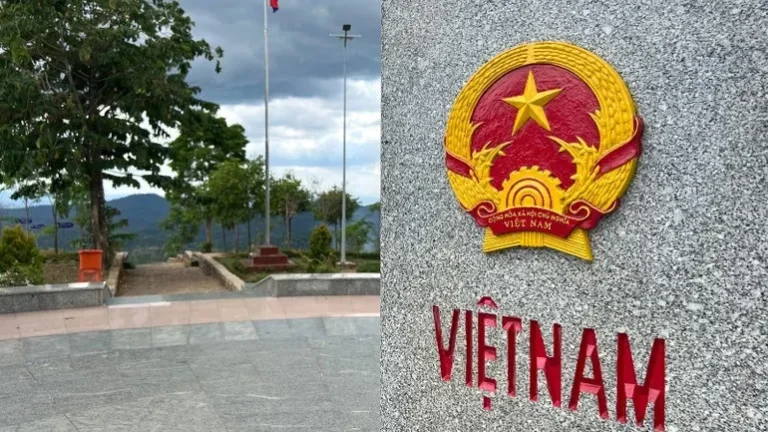
Nestled in the heart of the fertile northern delta, where the thousand-year-old Red River tirelessly deposits alluvial silt, the land of Hanoi has possessed the destiny of a supreme seat of royal power since the dawn of time. Surviving the primordial eras of Cổ Loa Citadel under King An Dương Vương or the administrative ruins of Tống Bình and Đại La during the Northern Domination, the imperial destiny of this land truly unfolded in the autumn of Canh Tuất 1010. When the royal dragon boat docked at the ancient citadel, King Lý Thái Tổ—endowed with extraordinary geopolitical vision—issued the epochal “Edict on the Transfer of the Capital,” resolving to move the court from the rugged mountainous valley of Hoa Lư to the flat, expansive plains with a terrain of a coiling dragon and crouching tiger. The auspicious omen of a golden dragon soaring amid boundless white clouds not only birthed the magnificent name Thăng Long, but also laid the enduring foundation for the eternal capital of an independent, autonomous, and prosperous nation.
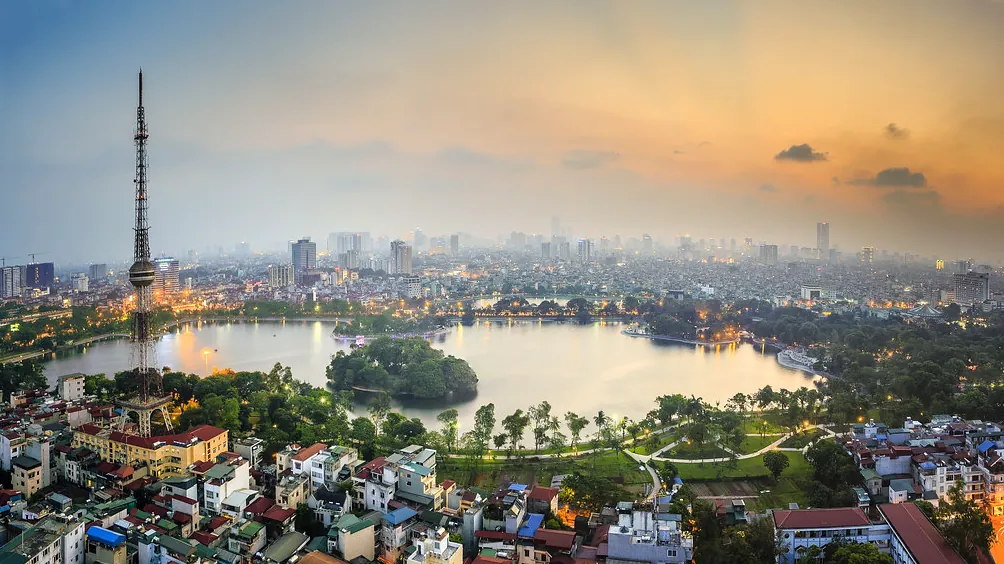
The imprint of a thousand years of civilizational heritage is distinctly concentrated along the central axis of the Thăng Long Imperial Citadel, where mossy arched gateways and the silent Đoan Môn gate stand firm against the fierce ravages of time. Every green stone slab and Lê-dynasty brick spanning numerous conflicts maintains the majestic, imposing dignity of a primary seat of power across multiple centuries. The quiet space here opens a profound dimension, where multi-layered archaeological strata intertwined beneath the capital’s soil vividly recreate ancient court life, reminding admirers of a brilliant golden age of Đại Việt emperors.
Under the Lý, Trần, and Later Lê dynasties, Thăng Long continuously underwent brilliant floriferous periods of political civilization and indigenous cultural identity. During the Lý and Trần dynasties, Buddhism flourished immensely and bound itself closely to state affairs, engineering monumental spiritual symbols such as the One Pillar Pagoda (Chùa Diên Hựu) and Báo Thiên Tower, while forging the Đông A heroic spirit that thrice shattered invading Mongol-Yuan cavalry with the resounding victory at Đông Bộ Đầu. By the 15th century, after leading the Lam Sơn uprising to total victory, King Lê Thái Tổ renamed the capital Đông Kinh, inaugurating a Confucian golden age linked to the legend of returning the sacred sword at Lục Thủy Lake. The Later Lê dynasty not only shaped the planning of the Imperial Citadel with the towering dragon stone steps of Kính Thiên Palace, but also erected doctoral steles at the Temple of Literature (Van Mieu – Quoc Tu Giam) to honor men of talent, while planning a bustling commercial network along the Red River that laid the foundation for the renowned thirty-six trade guilds.
The violent turns of modern history continued to deepen the resilience of this imperial land. When the Nguyễn dynasty unified the realm in the early 19th century and established its capital at Phú Xuân, Thăng Long was converted into the capital of the Northern General-Governorship (Bắc Thành). In the year Tân Mão 1831, during Emperor Minh Mạng’s nationwide administrative reform, Hanoi province was officially established with the profound geographical meaning of a land situated within the bends of the Red River. Entering the French colonial period, Hanoi was planned as the capital of French Indochina, bearing a unique synthesis of massive Western architectural works and traditional Eastern alley networks. Surviving the smoke and fire of wars to safeguard territorial integrity, the ancient capital still fiercely preserves its elegant, poised character, becoming an indissoluble spiritual symbol and the eternal heart of the Vietnamese homeland.
Viewed from an ancient human-geographical perspective, the designation Hanoi inherently signifies a land nestled snugly within the alluvial bends of millennial rivers. This imperial land is embraced by a unique arc-shaped topography, where underground waterways originating from the majestic Hoàng Liên Sơn range pour down onto the Red River delta plain in the classic formation of a coiling dragon and crouching tiger. In the year Canh Tuất 1010, casting his gaze across the realm, King Lý Công Uẩn recognized the gathered spiritual energy in this flat, expansive, and elevated land where all things flourish most abundantly in the southern realm. This is the foremost confluence of vitality where the four directions converge, facing a protective major river in front while backing against the towering Tam Đảo and Ba Vì mountain ranges as a rear anchor, engineering a sturdy natural geomantic fortress for all eternity.
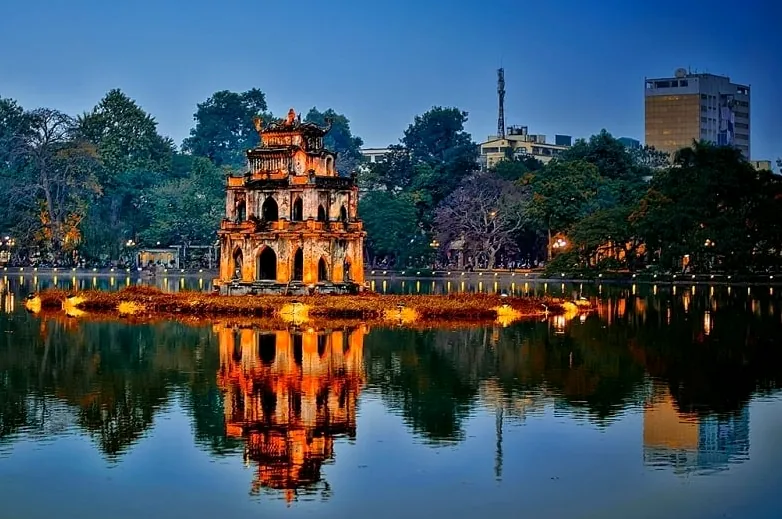
The aquatic ecosystem is the living soul that shaped the geomantic structure and millennial heartbeat of the capital, brilliantly highlighted at its center by the ancient Hoàn Kiếm Lake. Standing beside weeping willows drooping over jade-green waters, the traveler’s gaze is instantly captivated by the silent Turtle Tower (Tháp Rùa) reigning over an elevated islet, and the curved, crimson Thê Húc Bridge resembling a rainbow leading into the solemn, ancient Ngọc Sơn Temple. Encompassing the surface of the lake spanning over twelve hectares are ancient Barringtonia acutangula trees trailing bright red blossoms, and centuries-old banyan trees plunging roots deep into stone banks, harmonizing with a moist, mist-laden atmosphere steeped in history. That wondrous scenery is not merely an urban park, but a living natural masterpiece where cultural strata blend intimately with fresh natural breath in the heart of the capital.
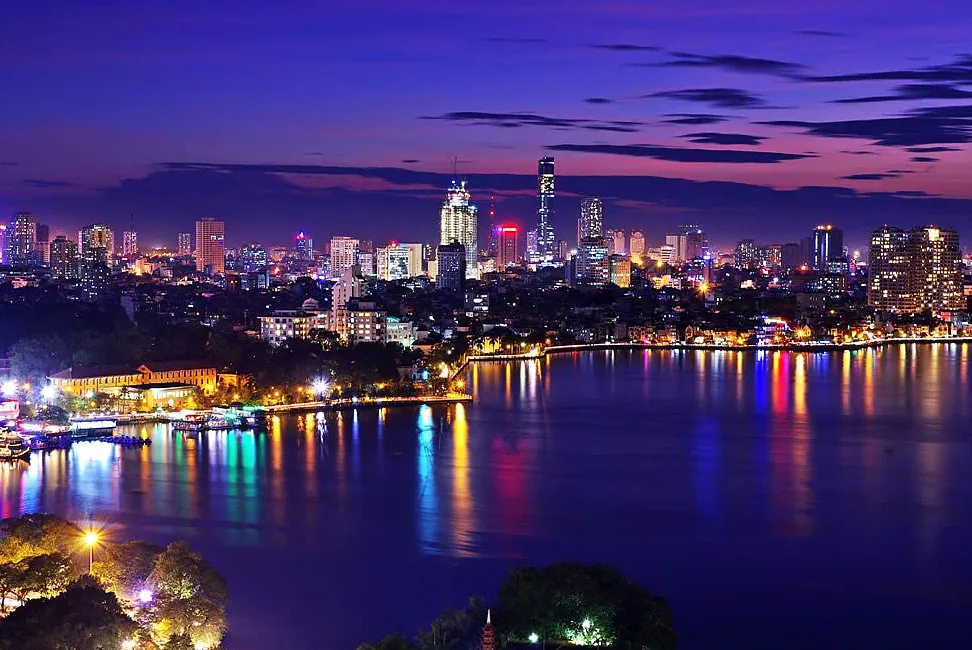
The natural ground planning of Hanoi possesses the characteristic nature of a low-lying river and lake urban area within the lower delta depression. When the Red River shifted its course across tens of millennia of formation, the legacy left behind was a chain of interconnected lakes and marshes, serving as invaluable natural hydrological regulation basins. West Lake (Hồ Tây), once an isolated bend of the ancient mother river with a vast surface area exceeding five hundred hectares, serves as a green lung softening the scorching summer heat and blocking chilling northern winter winds. Together with Trúc Bạch Lake, Bảy Mẫu Lake, and Đầm Trì, this aquatic network resembles a giant bagua mirror keeping the city’s foundation constantly gathering vital energy and sheltering wind, warding off the perils of floods and moderating the microclimate for the capital through centuries of rise and fall.
The interaction between natural currents and human architecture turned the river and canal system into the defensive backbone and strategic trade axis. The ancient Tô Lịch and Kim Ngưu rivers once wound around the capital’s borders, not only serving as defensive moats protecting the Forbidden City but also as lifeline waterways transporting arts and crafts, products from the four quarters converging on the thirty-six trade quarters. Through ingenious indigenous geomantic knowledge, ancestors built dikes along the Red River, creating a dual boundary distinguishing the outer floodplains from the peaceful residential space inside the dikes. The stepped elevation structure from ancient earth hills around West Lake sloping southward shaped an ecological urban area adapting flexibly to water, forging the elegant, serene, and remarkably sustainable character of the Tràng An people through all historical vicissitudes.
Hanoi emerges across every spatial slice as a living outdoor architectural museum, where moss-grown, leaning tiled roofs nestle quietly beside classic villas bearing the distinctive yellow paint of the Indochina era. Beneath an overarching canopy of mahogany and ancient dracontomelon trees, refined moldings, majestic Corinthian or Ionic columns blend delicately with wooden louvered shutters designed to catch tropical breezes. The harmonious contrast between nostalgic yellow lime, dark rain-soaked terracotta tiles, and the emerald green of nature has sculpted an elegant urban landscape that fully encapsulates the refined character of the capital through all historical ups and downs.
The spatial essence of Hanoi originates from the Eastern royal geomantic planning model structured around “triple concentric ramparts” shaped during the Lý dynasty, inherited and enriched through the Trần, early Lê, and Nguyễn dynasties. The outermost ring is La Thành, serving simultaneously as a Red River flood dike and a military defense line; the middle ring is the Imperial Citadel (Hoàng Thành) sheltering the imperial court’s primary agencies; and the inviolable nucleus at the center is the Forbidden City (Tử Cấm Thành), where the emperor reigned. The natural water network of the Red River, Tô Lịch River, Kim Ngưu River, and a dense network of lakes created an organic “river-water urban” structure, turning the ramparts not only into a sturdy defensive fortress but also into a bustling riverboat trading center conforming to the cosmic law of gathering vitality and sheltering wind.
Adjoining the eastern side of the Imperial Citadel is the residential area of thirty-six streets, a masterwork of spontaneous planning with remarkable ecological and economic adaptability. Here, the traditional tube-house structure flourished with a narrow street-front width of just two to four meters to optimize commercial frontage, yet extending tens of meters deep through multiple layers of rooms separated by open-air courtyards known as skywells (giếng trời). This architecture helps circulate outdoor air, captures natural light, and creates a cool year-round microclimate. Sturdy ironwood roof trusses, undulating sail-shaped fire-prevention gable walls, and mossy yin-yang tiled roofs compose a cozy civic spatial matrix, where each street is linked to a renowned traditional craft village across the northern region.
The turning point in urban morphological transformation occurred when the French imposed Western planning upon the heart of Hanoi, creating a magnificent synthesis known as Indochinese architecture. Under the guidance of renowned architects such as Ernest Hébrard, iconic works such as the Indochina University, the Department of Finance, the Louis Finot Museum, and the Hanoi Opera House—modeled after the Paris Opéra Garnier—skillfully combined European neoclassical forms with multi-layered sloping tile roofs characteristic of Asian temples and pagodas, widening deep balconies and creating ventilation holes to resist tropical humidity. Sprawling tree-lined grand avenues intertwined in a checkerboard pattern, connecting the Old Quarter smoothly with the new French Quarter, creating the appearance of a “little Paris of the East” that is both imposing and close to the local climate.
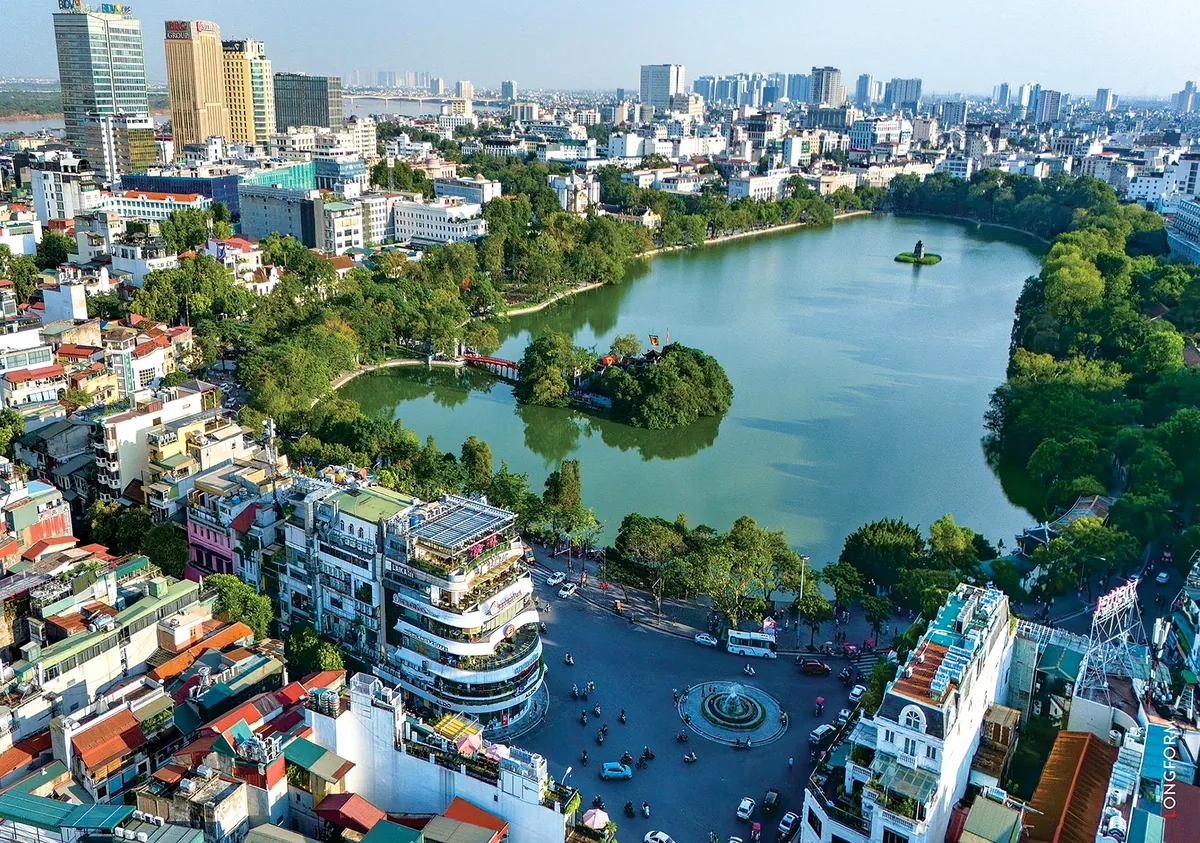
In the contemporary integration era, Hanoi’s spatial stature has surged powerfully following the historic decision to expand administrative boundaries by annexing all of Hà Tây province and Mê Linh district, bringing the total capital area to over 3,300 square kilometers. The scale of investment in technical infrastructure and public spaces has risen to a multi-polar, multi-center mega-city scale featuring strategic ring roads, modern cable-stayed bridges spanning the Red River, and elevated urban railway networks. Alongside spectacularly rising smart ecological urban areas, hundreds of thousands of billions of dong allocated for restoring and preserving the heritage of Thăng Long Imperial Citadel, the Temple of Literature, and beautifying the Old Quarter affirm a balanced development strategy: rapid modernization while resolutely preserving the soul of millennial heritage.
When crimson twilight sinks behind ancient mahogany canopies and West Lake’s waters turn deep purple, Hanoi sheds its habitual haste to step into a magical spatial dimension. The capital’s night is not merely the stillness of time, but the continuation of millennial cultural strata awakened by modern lighting technology and the expressive language of contemporary stage arts. From serene historical monuments in the heart of the city to hazy suburban outskirts, nocturnal performance art has turned Thăng Long’s millennial strata into living entities that stir every traveler’s senses.
Beneath the mysterious night sky, the immersive performance space unfolds as a magnificent natural landscape with vast lake surfaces reflecting myriads of glowing points of light. Curved tiled-roof houses appear and fade amid hazy artificial mist, blending with the silhouettes of four-piece traditional dresses (áo tứ thân) and oars gently plying mirror-flat waters. The delicate synthesis of multi-layered lighting technology and pristine natural scenery has created a half-real, half-illusionary world where a thousand years of northern folk memory suddenly awaken enchantingly, pulling viewers into an unquenchable nostalgic journey.
The pinnacle of this art form is vividly captured in the live real-scene show “Quintessence of Northern Việt Nam” (Tinh hoa Bắc Bộ) nestled at the foot of the sacred Thầy Mountain in Sài Sơn commune, Quốc Oai district. Across a lake surface spanning over 4,300 square meters designed as an intricate sunken stage, more than 200 actors—mostly rustic farmers from the Đoài region—vividly recreate the millennial character of the Red River Delta. The show guides viewers through six core emotional currents: Poetry, Buddhism, Nostalgia, Music & Painting, Joy, and Festival. Legends of the 12th-century Zen Master Từ Đạo Hạnh founding Thầy Pagoda and the art of water puppetry are elaborately recreated, combined with smooth quan họ melodies, silent sutra chanting, and labor dances on water. A surround-sound system and hundreds of high-power lighting points concealed beneath the water deliver breathtaking visual effects as an entire ancient village communal house weighing tens of tons slowly rises from the lake amid awed cheers.
Returning to the inner city, nightlife takes on the serene hue of pioneering heritage night tours. At the Thăng Long Imperial Citadel relic site, a theme-guided night tour leads pedestrians past the Đoan Môn gate guided by lantern light, paying homage to the sandstone dragon steps of Kính Thiên Palace from the early Lê dynasty and drawing cool water by hand from the deep ancient Trần-dynasty well hidden underground. Not far away, the Temple of Literature opens up the “Quintessence of Scholarly Learning” space with brilliant 3D Mapping projection technology cast across the Constellation of Literature Pavilion (Khê Văn Các) and the walls of Heavenly Clarity Lake (Hồ Thiên Quang). Ancient book pages, images of scholars grinding ink under oil lamps, and the moment of triumphant return to native villages are vividly rendered through sharp laser beams, turning the millennial tradition of respecting teachers and valuing education into a supreme visual epic.
Alongside golden nostalgia, Hanoi by night strongly asserts itself with vibrant civic life. Small alleys around the Tạ Hiện intersection explode with the energy of youth and international visitors over chilled mugs of draft beer, contrasting completely with the solitary, ghostly mood of the century-old Long Biên Bridge spanning the churning Red River. As dawn approaches, Quảng An flower market bursts with the colors of countless daisies and roses freshly transported from the gardens of Mê Linh and Tây Tựu, creating a refined closing note for the magical night symphony of millennial Thăng Long.
Hanoi’s culinary culture has long transcended the boundaries of ordinary nutritional intake to become a vivid philosophical system, symbolizing the elegant lifestyle and character of the Tràng An people. Positioned at the focal point of economic and cultural exchange for a millennium, Kẻ Chợ absorbed products from the four quarters and distilled them into sophisticated yet consistently restrained and delicate delicacies. From a bowl of fish sauce dotted with drops of pungent Cà Cuống beetle essence to a refined bowl of radish soup, every dish of the capital clearly reflects seasonality, the rule of yin and yang, and strict respect for the pristine flavor of each local ingredient.
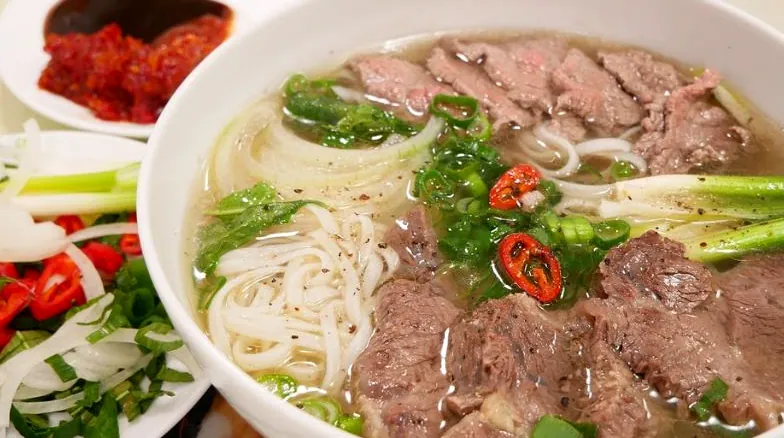
Vividly present in the culinary space of the capital are renowned dishes meticulously prepared by the hands of heritage artisans, where bowls of steaming beef phở showcase the supreme art of utilizing fire and broth. A wisp of thin blue smoke carries the blended aromas of star anise, cardamom, and roasted cinnamon mingling with the deep sweetness of beef bones simmered for dozens of hours; individual strands of silky white phở noodles—soft yet unbroken—lie beneath thin slices of beef rippling in waves, dotted with the fresh green of chopped scallions, fragrant culantro, and a plate of golden, crispy crullers (quẩy) to compose an irreplaceable visual and gustatory whole.
Mentioning capital delicacies cannot omit Chả Cá Lã Vọng, originating in the late 19th century at number 14 Hàng Sơn street, now named Chả Cá street. Under the hands of the Đoàn family, the dish originally created to entertain Đề Thám’s insurgent troops has become a unique culinary icon. Fresh, succulent catfish from the confluence of the Bạch Hạc river is expertly filleted, marinated with fresh turmeric, sour fermented rice (mẻ), pounded galangal, and lard, then grilled over charcoal. When served, the fish chunks are poured into a sizzling pan of bubbling fat placed over a small brazier right at the table, quickly tossed with dill and green onions. Diners pick up the firm, golden-hued fish chunks, eating them with soft rice vermicelli (bún rối), crispy roasted peanuts, and a bowl of shrimp paste (mắm tôm) whipped into froth with lime and fresh chili, creating a fatty, aromatic, yet thoroughly refined symphony.
The pinnacle of Thăng Long culinary sophistication and housewife craftsmanship is fully crystallized in a bowl of bún thang, a dish traditionally appearing during the ritualistic burning of votive paper concluding Tết holidays. Resembling a multi-colored natural masterpiece, bún thang delicately combines nearly twenty different ingredients: shredded boiled chicken breast with golden skin, finely julienned silky Vietnamese pork roll (giò lụa), thin egg crepes cut into delicate threads, sweet-and-sour crunchy dried radish, pulverized dried shrimp (ruốc tôm), and fragrant shiitake mushrooms. The broth used to scald the noodles must be simmered from dried sea shrimp (tôm he), tubular bones, and chicken wings, filtered multiple times to achieve mirror-like clarity and a deep, pure sweetness. Just a touch of Cà Cuống essence added with a toothpick tip spreads the aroma instantly, awakening all of a gourmet’s senses.
Alongside elaborate noodle soups, the local culinary picture is woven by renowned street snacks across historical vicissitudes. There is the plate of Thanh Trì rolled rice pancakes (bánh cuốn) as thin as cicada wings, smeared with glossy scallion fat and eaten with fragrant cinnamon pork roll; a plate of charcoal-grilled pork vermicelli (bún chả) wafting rich aromas from street corners with pork patties wrapped in lolot leaves char-grilled at the edges, immersed in a bowl of warm sweet-and-sour fish sauce dropped with salted Cà Cuống and fresh chili; or emerald-green young sticky rice (cốm Làng Vòng) cradled in the gently fragrant lotus leaves of northern autumn. By the mid-twentieth century, the unique egg coffee beverage invented by Mr. Nguyễn Văn Giảng at an Old Quarter street corner added a fresh high note: a fluffy, rich whipped egg cream cradling the bitter intensity of strong drip coffee, encapsulating the nostalgic flavor of the capital in every sip.
The core spirit that keeps Hanoi’s cuisine enduring through all trials is adherence to rules in enjoyment and heirloom art strictly preserved across generations. Hanoians value “eating with fragrance and blossoms,” focusing on elegant presentation, choosing rustic ceramic tableware, enjoying meals at the proper time of day, and strictly avoiding sloppiness or crudeness. Culinary culture here is thus not merely satisfaction of the palate, but a living summary of historical depth, the skill of artisan hands, and a profound pride in a standardized, refined lifestyle in the imperial capital.
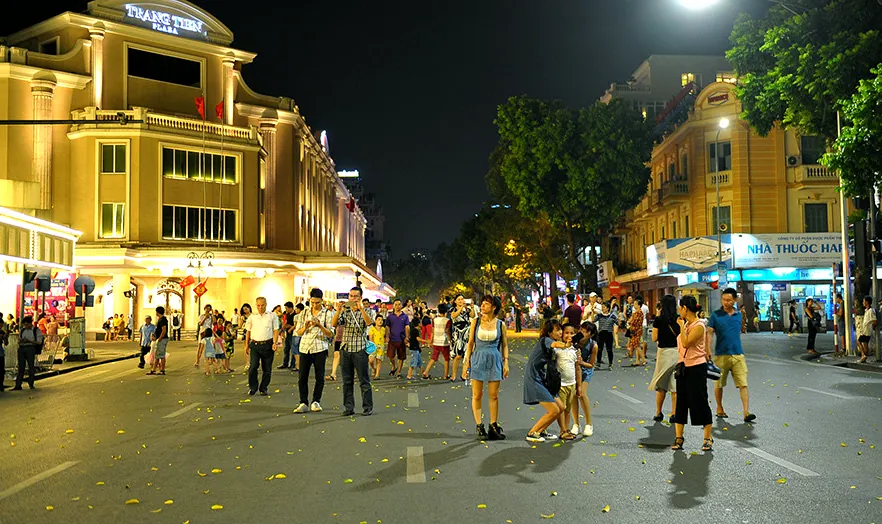
The scenery of Hanoi’s streets emerges enchantingly in imagery where daily life intertwines ancient strata with bustling contemporary breath. Every moss-grown tube house, iron-curved balconies bearing Indochinese architectural imprints nestle beneath overarching mahogany canopies casting cool shade, where morning sunlight casts golden rays across stone-paved streets. Vibrant fresh flower baskets weaving through traditional áo dài tunics and the silhouette of leisurely cyclos create a living painting, fully portraying the elegant, serene, yet alluring character of a thousand-year-old capital of culture.
Hanoi capital welcomes guests from Nội Bài International Airport, located about twenty-eight kilometers from the Old Quarter center via the Võ Nguyên Giáp axis crossing Nhat Tan Bridge. To travel into the inner city, high-quality bus route 86 connecting the airport straight to Hanoi Railway Station is both economical and convenient with a route passing central streets, alongside traditional airport taxis or ride-hailing services readily available at arrival lobbies on the first floor of domestic and international terminals. When immersing yourself in the inner-city traffic network, riding a cyclo winding through thirty-six mossy trade quarters or taking an eco-friendly electric vehicle roaming around Hoàn Kiếm Lake and the Old Quarter preservation zone yields a deeply nostalgic perspective on local life.
When scheduling visits to iconic heritage sites, travelers should note the specific operating hours of each destination. President Hồ Chí Minh’s Mausoleum and the Presidential Palace relic site only open for homage on weekday mornings, closing periodically on Mondays and Fridays for maintenance; this site requires polite, modest attire, strictly forbidding short skirts, tank tops, or bringing cameras inside the embalmed body chamber. Meanwhile, the Thăng Long Imperial Citadel complex and the Temple of Literature open continuously from 8:00 AM to 5:00 PM daily, frequently organizing vibrant night experience tours featuring artistic lighting and traditional performances. Specifically for the Hoàn Kiếm Lake area, the pedestrian zone is activated from Friday evening lasting until midnight every Sunday, creating a bustling street culture square gathering everything from traditional o an quan games and tug-of-war to outdoor chamber music bands.
Hanoi’s weather divides distinctly into four seasons, among which autumn from September to November featuring deep blue skies, gentle honeyed sunlight, and fragrant milkflower fragrance is always considered the ideal time for strolling. Dry, chilling winters require warm coats, while tropical summers call for hats and electrolyte water when walking at midday. Local culture reveres solemnity: when visiting spiritual temples such as Quán Thánh Temple, Trấn Quốc Pagoda, or Ngọc Sơn Temple, visitors should step across thresholds rather than stepping on door sills, maintain a solemn attitude, and leave shoes outside main sanctums. Although digital payment via QR codes and bank cards has spread widely, preparing small-denomination cash remains essential when enjoying sidewalk cuisine, from snail noodle stalls at Hàng Chai street corner to bowls of phở wavering with morning smoke.
For travelers wishing to extend their cross-border cultural emotional thread, the convenient connection between Hanoi’s aviation gateway and northern heritage centers opens up extremely rich and seamless experiences. Choosing an all-inclusive tour package designed professionally not only helps optimize immigration procedures and cross-border transit, but also crafts a refined cultural dialogue between the millennial Thăng Long current and neighboring ancient capitals.