Located at the very heart of Hanoi, Ngoc Son Temple is far more than a conventional architectural landmark—it is an iconic cultural monument embodying the historical and spiritual essence of Hoan Kiem Lake. Perched on Ngoc Isle—a small island in the northern section of the lake—this heritage site is embraced by emerald waters, forming a singular, peerless setting in Eastern feng shui. Traditionally, this spot is regarded as the lake’s “dragon head,” where vital energy and the spiritual arteries of ancient Thang Long converge, creating a tranquil sanctuary detached from urban bustle, where heaven, earth, and the human spirit harmonize in an unhurried rhythm of time.
The historical roots of Ngoc Son Temple weave a rich cultural tapestry reflecting the shifting tides of Vietnam’s feudal dynasties. Long before becoming the scenic landmark visitors admire today, this site was home to Khanh Thuy Palace, the lavish lakeside residence of the Trinh lords, symbolizing authority during a turbulent era. After the Tay Son dynasty overthrew the Trinh lords, the palace fell into ruin, leaving a historical void on Ngoc Isle. It was not until the early 19th century, under the Nguyen dynasty, that a pagoda named Ngoc Son was erected upon the old foundations. By 1841, during the reign of Emperor Thieu Tri, the site was transformed into a temple dedicated to Van Xuong De Quan—the patron deity of literature and imperial examinations—and Hung Dao Dai Vuong Tran Quoc Tuan, the revered national hero who stands as an enduring symbol of patriotism and indomitable resolve.
The architectural and scenic beauty of Ngoc Son Temple reached its zenith in 1865, when Confucian scholar Nguyen Van Sieu—one of Thang Long’s most celebrated intellectuals—spearheaded a comprehensive restoration. He masterfully crafted a harmonious cultural landscape uniting architecture and nature. Structures such as the Pen Tower (Tháp Bút), rising like a brush tip toward the sky, the Ink Slab (Đài Nghiên), resting upon the backs of three stone toads, and the curving The Huc Bridge, draped like a vermilion silk ribbon across the water, serve as profound metaphors for the philosophy that “literature conveys morality” and the deep-rooted scholarly spirit of the Vietnamese people. Every architectural detail here transcends mere physical form, carrying cultural messages inscribed in stone epigraphy and parallel couplets that affirm the temple’s stature as one of Hanoi’s premier spiritual and intellectual centers.
Beyond its architectural splendor, Ngoc Son Temple preserves priceless biological testimony to the legend of Hoan Kiem Lake. Displaying two preserved specimens of the legendary Hoan Kiem giant softshell turtle—creatures deeply woven into the sacred consciousness of the lake—has transformed the site into a living heritage museum. Designated a Special National Monument in 2013, Ngoc Son Temple is not only a must-visit destination for travelers, but also a guardian of thousand-year-old Hanoi’s soul, where every stone slab and ancient pine bough tells stories of cultural resilience across the passage of time.
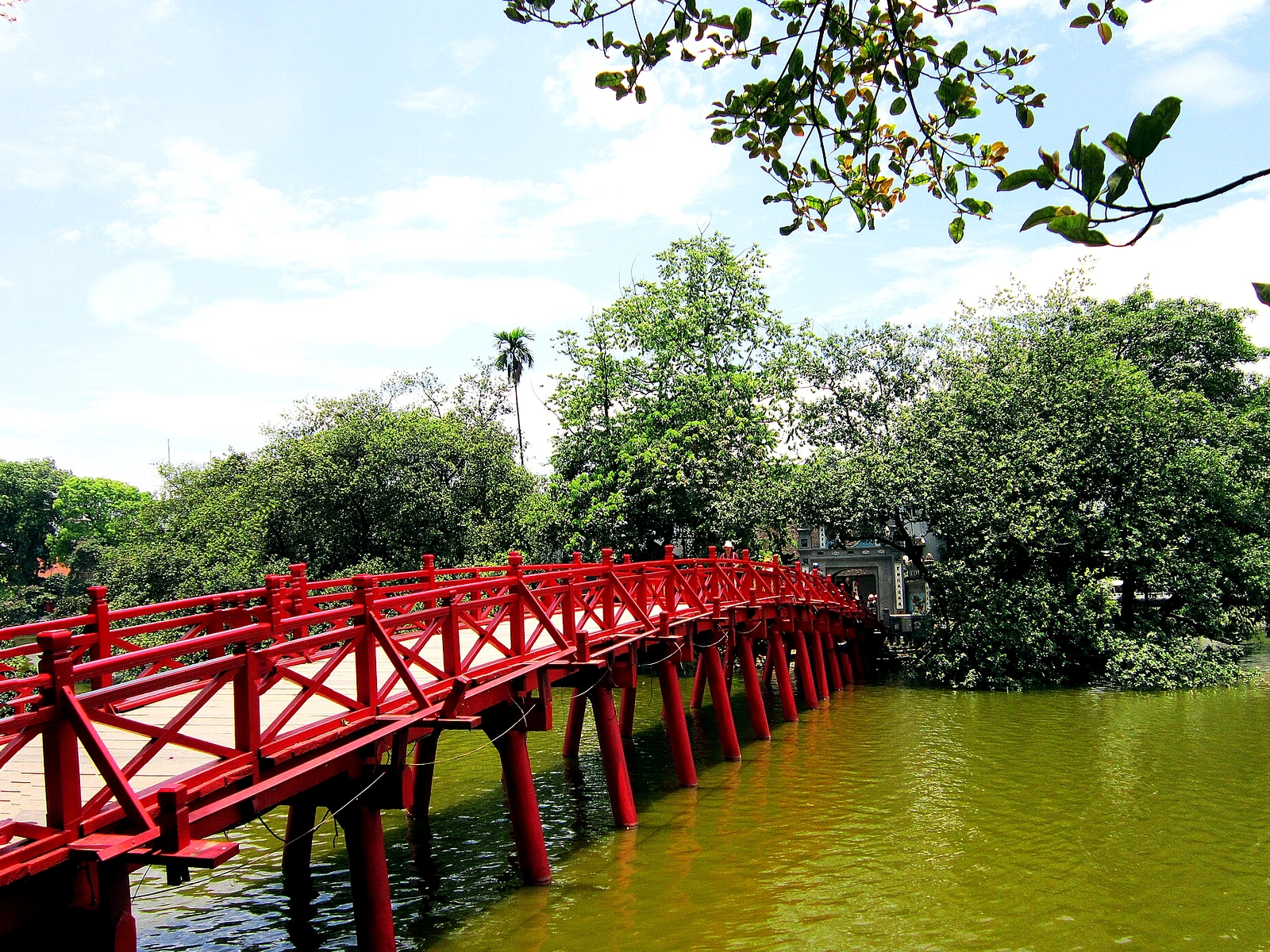
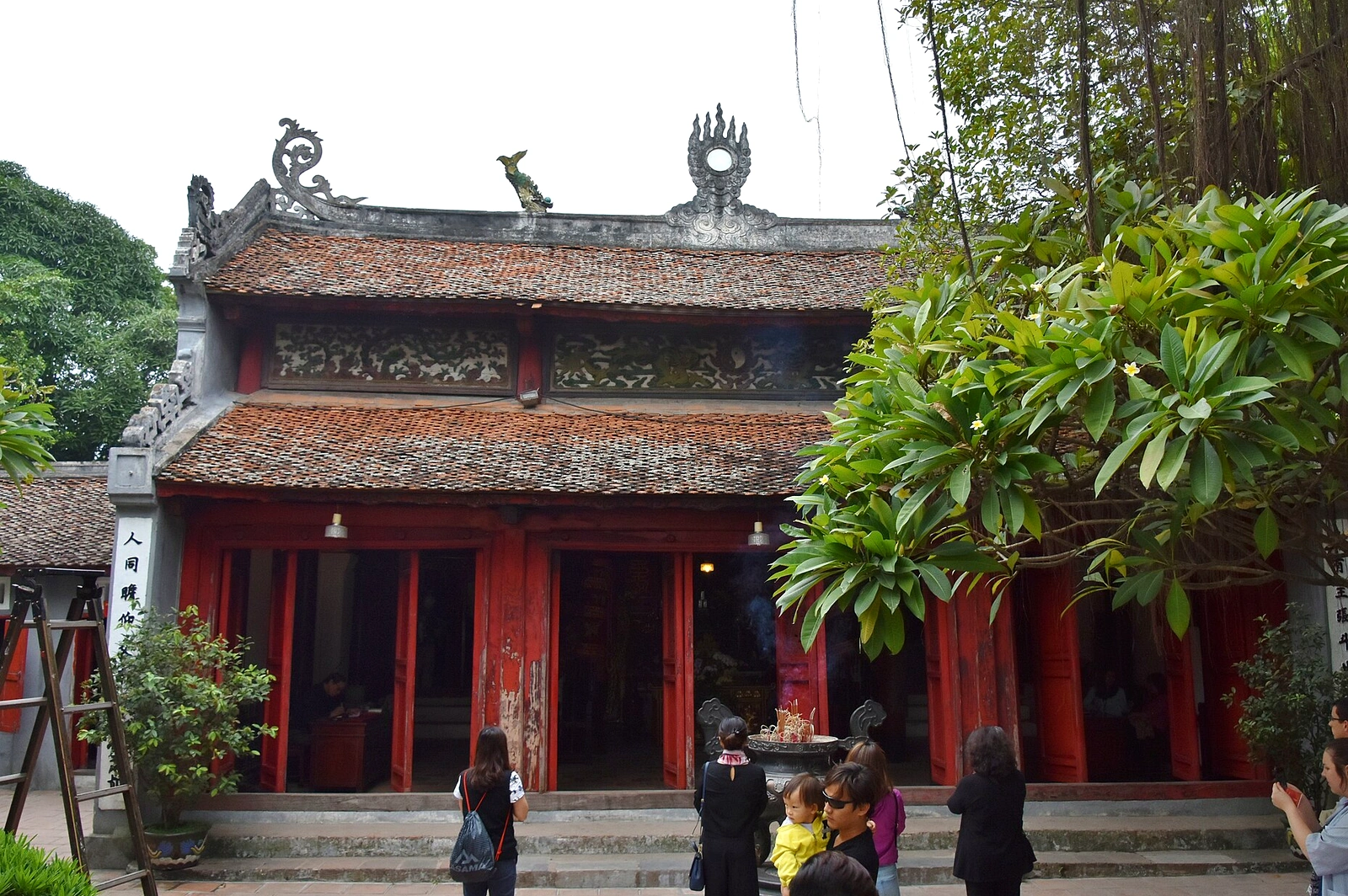
Ngoc Son Temple is not only a historical monument, but also an architectural masterpiece that blends seamlessly into its natural surroundings, creating a living ink-wash painting in the center of the capital. Stepping onto The Huc Bridge—the scarlet silk ribbon arching over emerald lake waters—visitors feel as though they are crossing through time, leaving behind the clamor of city streets to enter the serene, sacred realm of Ngoc Isle. The temple showcases classic Vietnamese architecture with yin-yang tiled roofs and intricately carved upturned eaves nestled beneath ancient tree canopies, radiating a quiet, dignified, yet poetic grace.
Its most distinctive architectural highlight lies in the synthesis of Confucian and Daoist philosophies through symbolic structures. The Pen Tower reaches skyward like an arrow aimed straight into the azure heavens, embodying intellectual aspiration and Vietnam’s reverence for learning. Immediately at its base sits the Ink Slab, a masterpiece of stone carving shaped like a hollowed inkstone supported by three toads, giving physical expression to the timeless maxim that “literature conveys morality.” The thoughtful arrangement of these monuments reflects not only the refined aesthetic vision of scholar Nguyen Van Sieu, but also deep mastery of feng shui—every element is positioned to draw auspicious energy from Hoan Kiem Lake, establishing a harmonious setting where water and fortune converge.
To capture memorable, share-worthy photographs at this landmark, photographers and travelers typically favor two classic vantage points. The first is from the lakeshore, framing the vibrant red curve of The Huc Bridge against the emerald waters of the lake. Dawn is the ideal moment for this shot, when early morning light washes the lake in soft pastel tones, creating a peaceful, atmospheric scene before the city awakens. At this hour, slanting rays filter through ancient foliage, casting long shadows across the wooden bridge and lending striking contrast for artistic photography.
The second vantage point is from inside the temple courtyard, angling your camera toward the Pen Tower and Ink Slab. Sunset serves as the golden hour for this composition. As dusk gathers, the sky shifts into hues of rose and violet while the Pen Tower rises in timeless silhouette. Warm, late-afternoon light brings out the intricate stone carvings while infusing the frame with a nostalgic, contemplative mood. Additionally, shooting from a low angle to capture the temple’s reflection shimmering across the water is a favorite technique among photographers, adding depth and visual continuity between the present moment and centuries of history.
Every architectural element at Ngoc Son Temple—from sturdy ironwood pillars and red-and-gold lacquered horizontal boards and couplets to mossy Bat Trang brick walkways—tells its own story. It is a narrative not merely of historical events, but of enduring harmony between humanity and nature. Standing within these grounds, visitors do more than admire an exquisite monument; they feel the cultural pulse of Hanoi, where cherished traditions endure gracefully amid the swift currents of modern life.
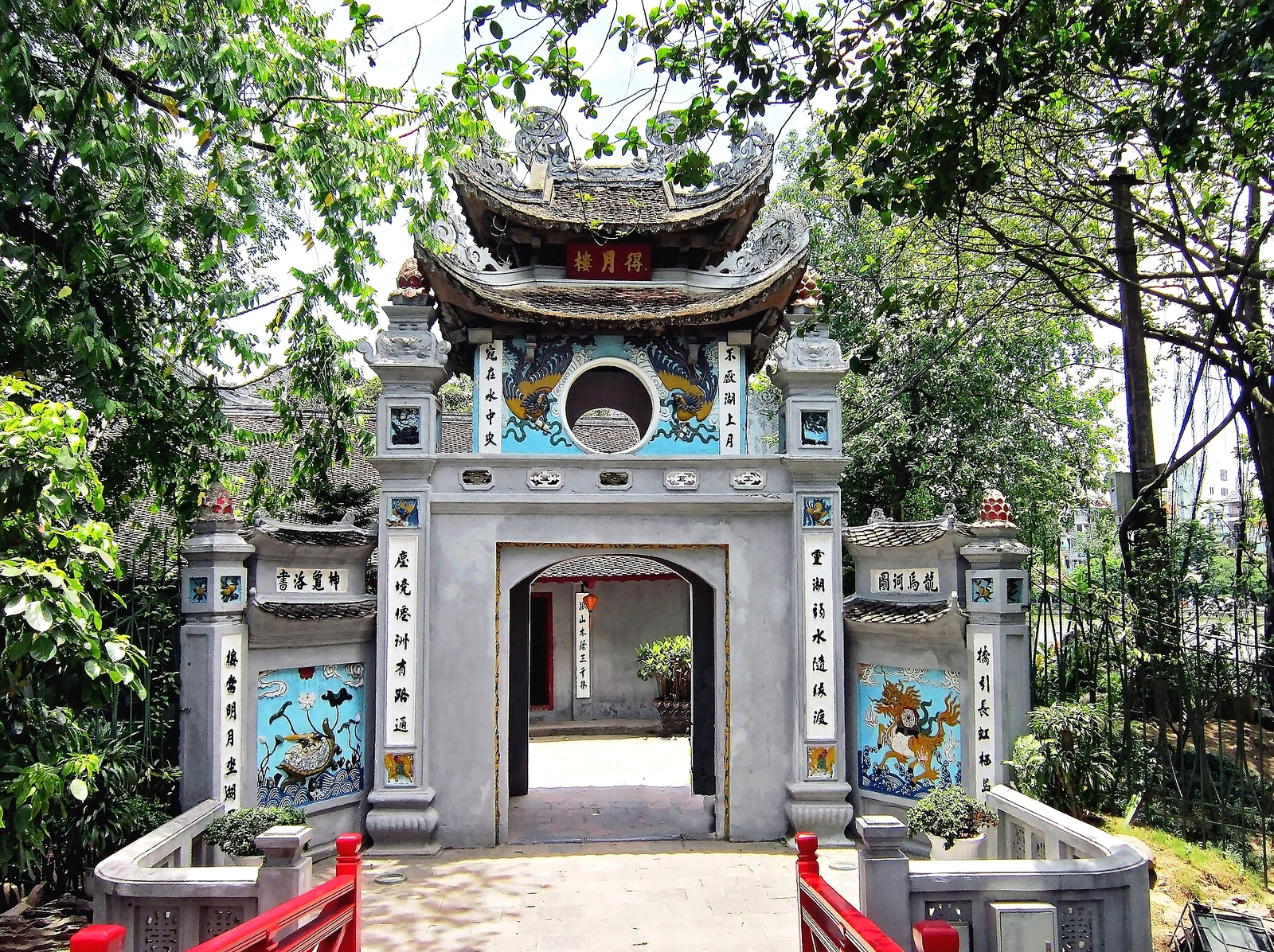
Stepping into Ngoc Son Temple is far more than a routine sightseeing stop—it is a journey into a tranquil sanctuary where the capital’s hurried pace seems suspended by the calm waters of Hoan Kiem Lake. From the moment you set foot on The Huc Bridge—the curving red silk ribbon linking the bustling streetscape to a dreamlike island retreat—you notice an immediate shift in atmosphere. The warm vermilion timber framed by lush green foliage forms a living ink-wash painting, inviting visitors to slow their steps, breathe deeply, and take in crisp air scented with wisps of incense drifting from the shrine.
The first memorable experience is paying respects inside the temple’s sacred precinct. Unhurried by noise or crowds, visitors naturally stroll through the entrance gate, looking up at the Pen Tower rising like a giant calligraphy brush inscribing verses against the blue sky. A quiet sense of reverence settles in as you stand before the Ink Slab, where ancestral ideals of “literature conveying morality” take form atop three stone toads. Inside the hushed ambiance of the main sanctuary, where statues of Van Xuong De Quan and Hung Dao Dai Vuong preside in solemn majesty, it is effortless to find inner stillness. The resonant chime of temple bells mingling with the breeze rustling through old pine branches creates a timeless symphony that gently dissolves everyday worries.
After finding calm within the temple grounds, taking a leisurely stroll or scenic boat excursion around Hoan Kiem Lake offers another unforgettable perspective. Looking back toward Ngoc Isle from across the water, the monument appears like a storied oasis set in the middle of the city. Ancient banyan and pine canopies draping over curved temple roofs shimmer on the lake’s surface, creating an enchanting reflection. From here, travelers can also admire Turtle Tower (Tháp Rùa) in the distance, bridging myth and reality—the legend of the Golden Turtle and the two historic turtle specimens preserved inside the temple. The contrast between Ngoc Isle’s quiet dignity and the lively energy along surrounding streets makes for a captivating urban vignette.
To round out your visit, sampling iconic local treats around Hoan Kiem Lake provides the ideal finishing touch to a culturally rich day. Few pleasures compare to sitting at a cozy lakeside cafe with a cup of rich, velvety Hanoi egg coffee, or enjoying a classic Trang Tien ice cream cone—a beloved local tradition that has become synonymous with the capital. Savoring these signature flavors while watching passersby stroll beneath century-old trees lets you experience the authentic rhythm of a Hanoi that is both timeless and vibrant. The pairing of Ngoc Son Temple’s cultural depth with Hanoi’s culinary charm leaves a lasting impression, ensuring every traveler departs carrying a piece of this millennial capital in their heart.

Ngoc Son Temple is not only a historical landmark, but also an enduring spiritual and cultural icon in the heart of the capital. To ensure your visit goes smoothly and rewardingly, keep these practical tips in mind. Regarding opening hours, the temple welcomes visitors daily—including weekends and public holidays—from 7:00 AM to 6:00 PM. Keeping these hours in mind makes it easy to plan your itinerary without arriving too early or missing last entry.
For admission, standard entry tickets are sold at the gate for 30,000 VND per adult, while children under 15 years of age enter free of charge. This modest fee directly supports ongoing conservation and preservation work at this Special National Monument. Carrying small-denomination cash is helpful for purchasing tickets quickly at the booth just before the entrance to The Huc Bridge.
Reaching Ngoc Son Temple is effortless thanks to its central location in Hoan Kiem District. If you are staying in the Old Quarter, walking is the best way to get there, letting you enjoy a pleasant stroll along the tree-lined lakeside promenade. Coming from farther districts, public buses offer an affordable and convenient option, with major stops right near Hoan Kiem Lake such as the Bo Ho terminal and stops along Dinh Tien Hoang Street. For visitors arriving by motorbike or private car, note that streets encircling the lake close to vehicular traffic on weekends for the Hoan Kiem Walking Street; licensed public parking lots on nearby streets like Ly Thuong Kiet and Hai Ba Trung provide safe and convenient parking.
Because Ngoc Son Temple is an active place of worship honoring revered scholars and national heroes, visitors should dress respectfully. Wear modest, neat clothing and avoid shorts, sleeveless tops, or overly short skirts when entering the inner sanctuaries. In addition, the complex features stone staircases and narrow walkways, so wearing flat shoes or comfortable sneakers will make exploring the grounds safe and effortless.
The best times of day to visit Ngoc Son Temple are early morning and late afternoon. In the morning, the atmosphere around Hoan Kiem Lake is crisp, uncrowded, and ideal for quiet contemplation and photography. Visiting in the late afternoon rewards you with the sight of The Huc Bridge glowing against the twilight sky, casting shimmering red reflections across the water. Especially during Hanoi’s cool, breezy autumn, Ngoc Son Temple takes on an even more poetic, serene charm. Take your time strolling across The Huc Bridge, admiring the Pen Tower and Ink Slab, and soaking in the thousand-year heritage of Thang Long – Hanoi preserved in every stone slab and ancient bough.
To enjoy a seamless getaway and experience the full beauty of Ngoc Son Temple without worrying about transportation, ticket bookings, or itinerary planning, visitors can choose premium all-inclusive Hanoi tour packages from VDS Travel. Each itinerary is thoughtfully timed for peak scenic beauty, accompanied by knowledgeable local guides deeply versed in Hanoi’s cultural heritage, alongside top-tier hotel and dining standards.