Spanning the churning, silt-laden waters of the Red River (Nhị Hà), Long Biên Bridge is far more than a piece of civil infrastructure; it is an iconic industrial heritage landmark located at 21°02′28″ N latitude and 105°51′21″ E longitude. In the collective memory of Hanoi’s residents, the bridge serves as a vital link connecting two distinct worlds: the historic, time-honored streets of Hoàn Kiếm on one bank, and the fertile expanses of Long Biên on the other—once the busiest trading gateway of ancient Thăng Long. From a traditional geomantic perspective, Long Biên Bridge occupies the pivotal “Water Gate” (Thủy khẩu) position, where the Red River curves like a silk ribbon embracing the imperial capital, forming an imposing, majestic terrain of “crouching dragon and tiger.” Arching across the current with its massive cantilever steel frame, the bridge represented not merely an imposition of Western engineering onto the native landscape, but a striking counterpoint that harmonized the quiet flow of the river with the relentless march of history.
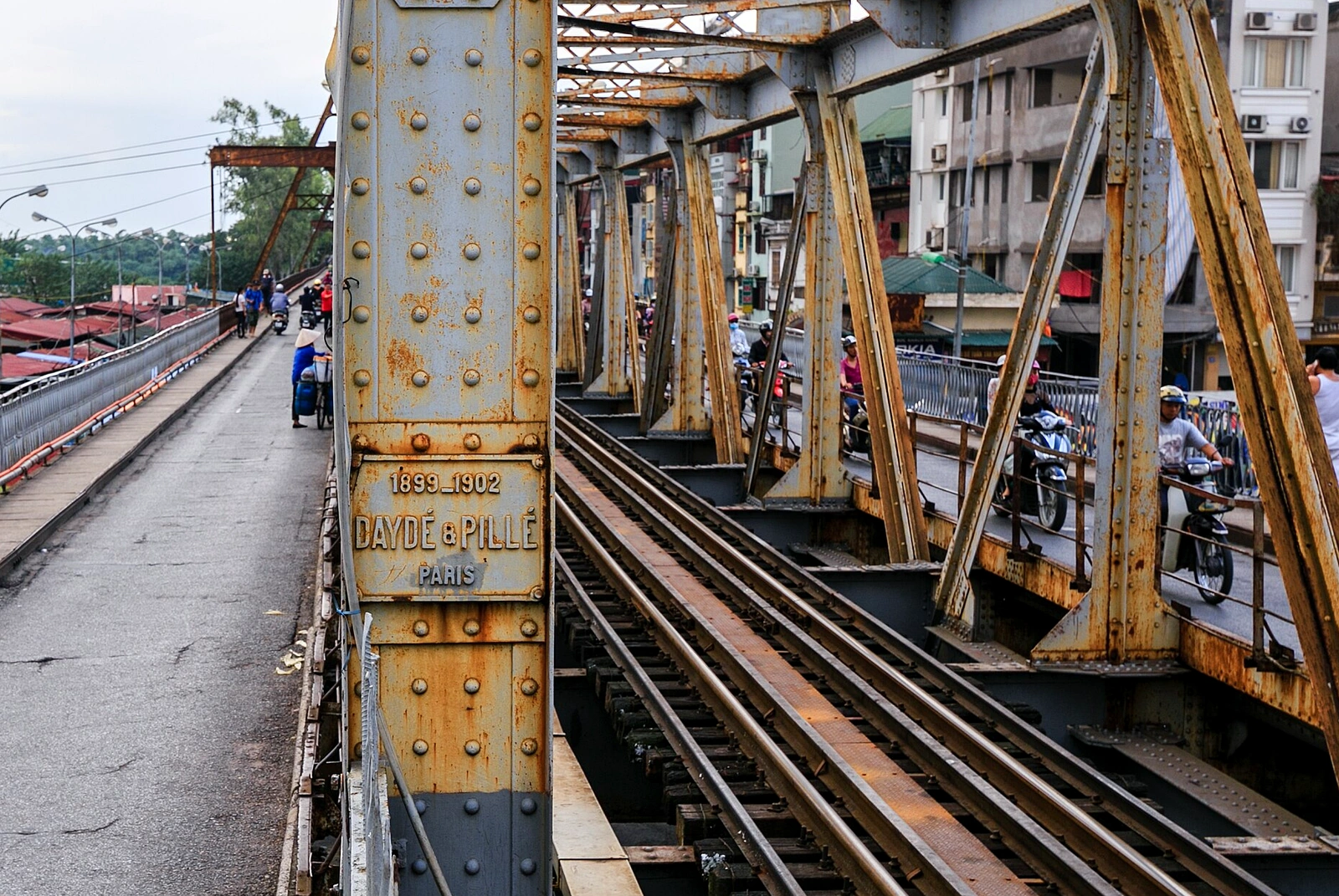
Tracing its origins back to the late 19th century during the reign of Emperor Thành Thái, construction of Long Biên Bridge began on September 12, 1898, under the direction of French Indochina Governor-General Paul Doumer. Originally named Pont Paul Doumer, the project stood as a symbol of colonial resource extraction and military control across Tonkin. Designed and built by the Parisian engineering firm Daydé & Pillé, the bridge—featuring 19 spans supported by 20 towering masonry piers—rose like a “steel dragon” stretching across the Red River. Although popular legend often attributes its design to Gustave Eiffel, it is in fact a masterwork of early 20th-century French industrial engineering, where meticulously riveted steel trusses formed an enduring structure capable of weathering wars, floods, and the passage of time.
The significance of Long Biên Bridge reaches far beyond its time-patinated, rust-hued steel girders; it is equally rooted in the cultural strata layered beneath its piers. Across the alluvial middle island (bãi giữa) of the Red River, stratigraphic surveys have uncovered traces of ancient fishing settlements alongside ceramic artifacts spanning from the Later Lê dynasty through the Nguyễn dynasty, reflecting centuries of riverside community life. These priceless remnants testify to the coexistence of modern industrial engineering with deeply rooted indigenous traditions. This union of Western craftsmanship and the soul of the Red River has forged a singular landscape where every span tells a story of cultural encounter and the dramatic turning points of a turbulent era.
On August 26, 2014, the Ministry of Culture, Sports and Tourism officially designated Long Biên Bridge a National Relic under Decision No. 2250/QĐ-BVHTTDL. This recognition affirms both the historical stature of a “living witness” that endured both the French and American resistance wars and the shared responsibility to safeguard this irreplaceable industrial heritage. Viewed from the Phúc Tân or Phúc Xá riverbanks, Long Biên Bridge emerges like a bold brushstroke against the Hanoi sky, where the rugged strength of steel and the gentle flow of the river intertwine to create an enduring travel icon in the heart of the capital.
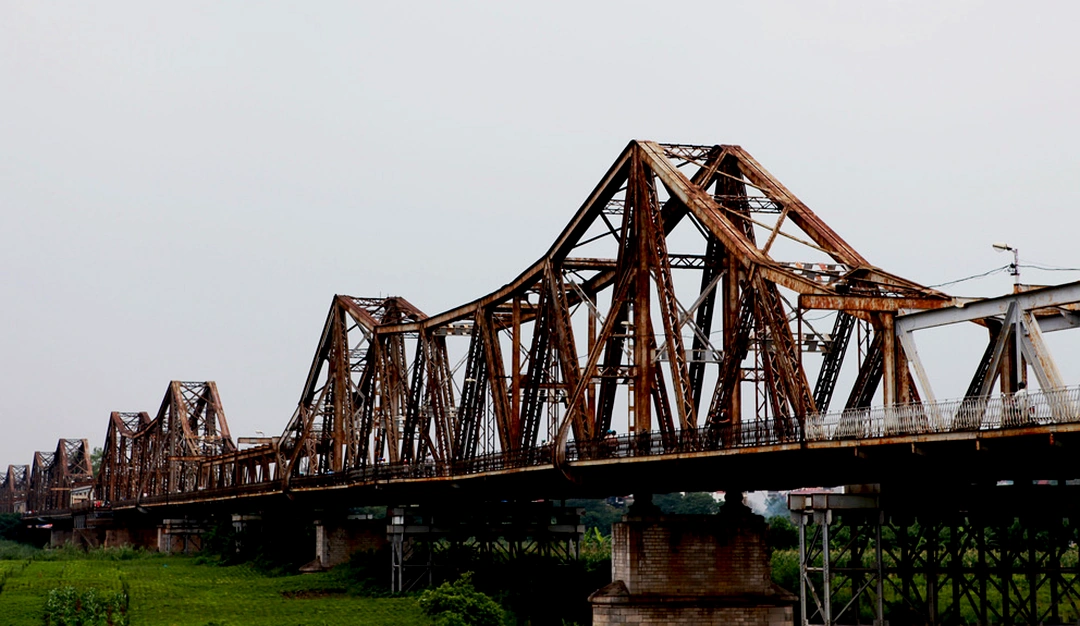
Long Biên Bridge is far more than a utilitarian river crossing; it is an architectural masterpiece breathing the spirit of the industrial age, where interlocking cantilever steel trusses weave an intricate geometric silhouette. Seen from afar, the bridge resembles a colossal steel dragon striding across the swirling Red River, supported by 19 sturdy steel spans resting upon 20 massive stone pillars. The structural lines engineered by Daydé & Pillé eschew the delicate curves of palaces or temples, radiating instead the bold, decisive character of early 20th-century industrial design. Every rivet and steel brace is assembled with precision, forming a skeleton at once monumental and unexpectedly graceful—catching sunlight at shifting angles to turn the bridge into a giant sculpture suspended over the water.
The surrounding natural landscape creates a captivating dialogue between the untamed greenery of the Red River’s middle island and the bustling cityscape beyond. Beneath the bridge, lush alluvial flats stretch out like a peaceful rural oasis, where banana groves and vegetable gardens tended by residents of Phúc Tân and Phúc Xá wards paint a pastoral scene right inside the metropolis. Standing on the bridge and gazing downstream offers a striking study in contrast: on one side, the unhurried, silt-laden flow of the Red River; on the other, the brisk pulse of modern Hanoi. The interplay between the weathered patina of aged steel and the vibrant emerald of riverside foliage creates a compelling palette that leaves every visitor moved by the poignant, romantic beauty of this historic witness.
For photography enthusiasts and travelers seeking memorable, frame-worthy shots, Long Biên Bridge offers unmistakable vantage points. One of the finest angles is from the Red River’s middle island looking back upward at the bridge at sunset. As the sun sinks behind the city skyline, warm golden-orange light bathes the steel spans, lending an ethereal, nostalgic glow that sharpens every girder against the twilight sky. Another favorite perspective is along the central railway tracks, where weathered wooden sleepers and converging rails create deep leading lines—especially at dawn, when early morning sunbeams pierce through the steel lattice to cast dramatic rays of light.
The golden hours for experiencing and photographing Long Biên Bridge are dawn (5:30 AM to 6:30 AM) and sunset (5:00 PM to 6:00 PM). During these windows, soft slanting light brings out the bridge’s signature weathered rust—a patina forged by over a century of sun and rain that no modern structure can replicate. Standing near the span joints, visitors can even feel the gentle vibration of the steel deck whenever a train rumbles past—a thrilling, tangible connection to living history. Long Biên Bridge is more than a photo stop; it is an open-air gallery where every angle tells a story of resilience, cultural exchange, and timeless heritage.
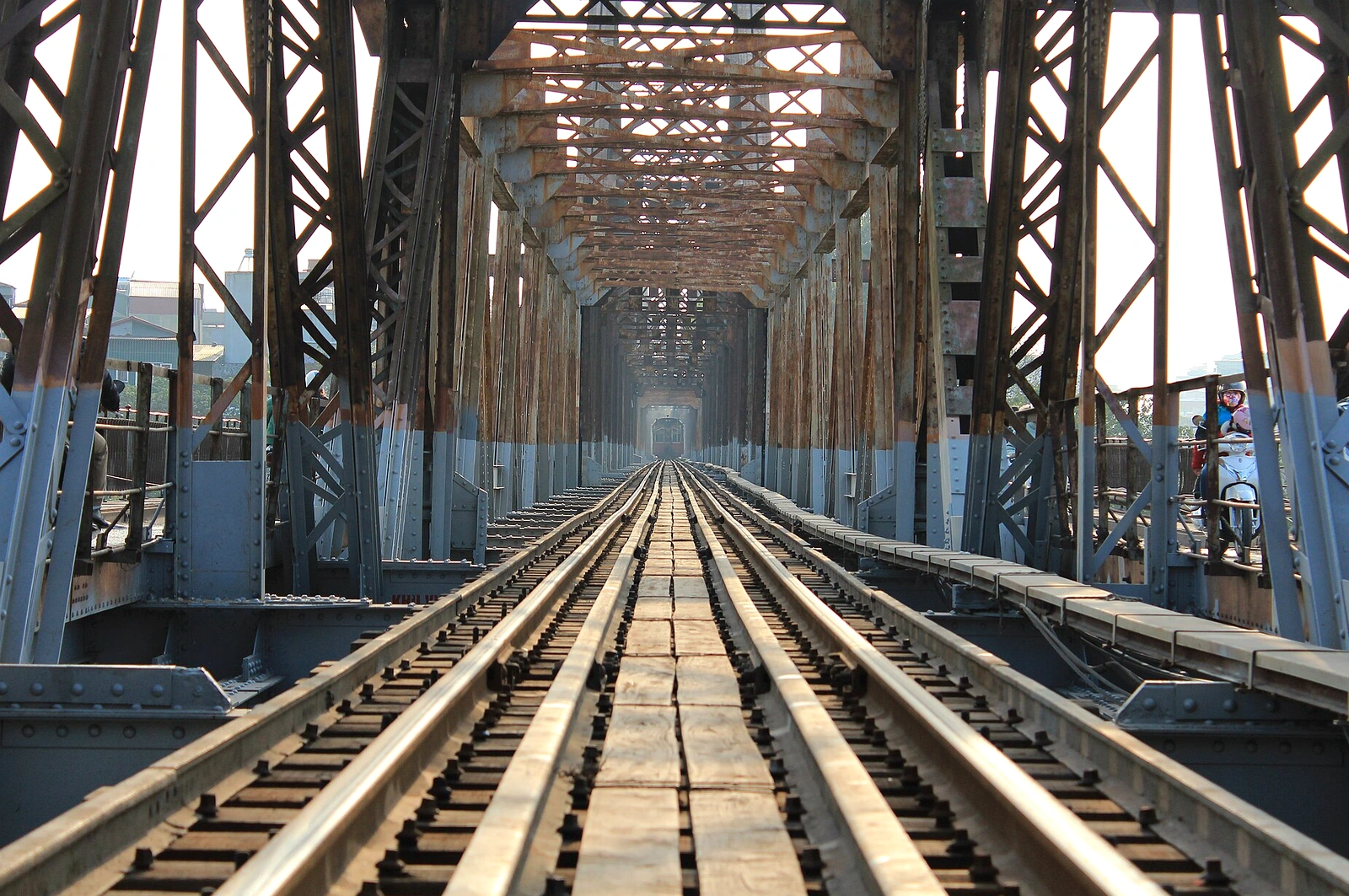
As the first rays of morning light gild the surface of the Red River, Long Biên Bridge comes alive not merely as a silent monument of weathered steel, but as a vibrant stage for everyday Hanoi life. One of the most rewarding ways to experience the landmark is strolling along the pedestrian walkway, where you can reach out and touch the century-old steel beams firsthand. A quiet sense of awe washes over you while standing suspended above the swirling red current, feeling the rhythmic rumble beneath your feet as a train passes by—an unforgettable intersection between modern daily life and living history.
Stepping down from the bridge deck, venturing onto the Red River’s middle island reveals a remarkably different world. Travelers can catch a small boat from Chương Dương Độ pier to admire the entire bridge from water level, where Long Biên Bridge soars overhead like an immense steel dragon. Out on the island, lush banana plantations and neatly tended vegetable plots create a tranquil countryside retreat in the heart of the capital—offering an authentic glimpse into the unhurried lives of the river-island community who have called these fertile flats home for generations.
From a spiritual perspective, tucked beneath the shade of ancient trees near the foot of the bridge on the Long Biên side stand small shrines and temples well worth a quiet visit. Local residents frequently stop here to offer incense and pray to the water deities for safe passage and peace. The stillness, faint aroma of incense, and cool river breeze form a serene sanctuary far removed from city traffic—creating a compelling contrast between the rugged industrial permanence of the steel bridge and Hanoi’s enduring folk beliefs.
No visit to Long Biên Bridge is complete without sampling its beloved street food. As dusk settles, the streets and alleys around the base of the bridge come alive with casual sidewalk stalls serving sizzling grilled meat skewers, piping-hot roasted corn, and classic Hanoi iced tea. The sweet smokiness of roasted corn and savory grilled skewers paired with a cool breeze drifting off the Red River create an unforgettable local experience. Sitting on low plastic stools watching commuters stream homeward as city lights flicker on brings a rare sense of relaxation and connection to the city.
Ultimately, the most memorable moment is standing on the bridge as day transitions into night. When warm golden lamps illuminate the spans, Long Biên Bridge transforms into a glowing ribbon of light stretching across the dark water. Initial wonder gives way to quiet emotion: this bridge is far more than steel and stone—it is woven into the identity, resilience, and pride of Hanoi, uniting past and present in an enduring urban story.
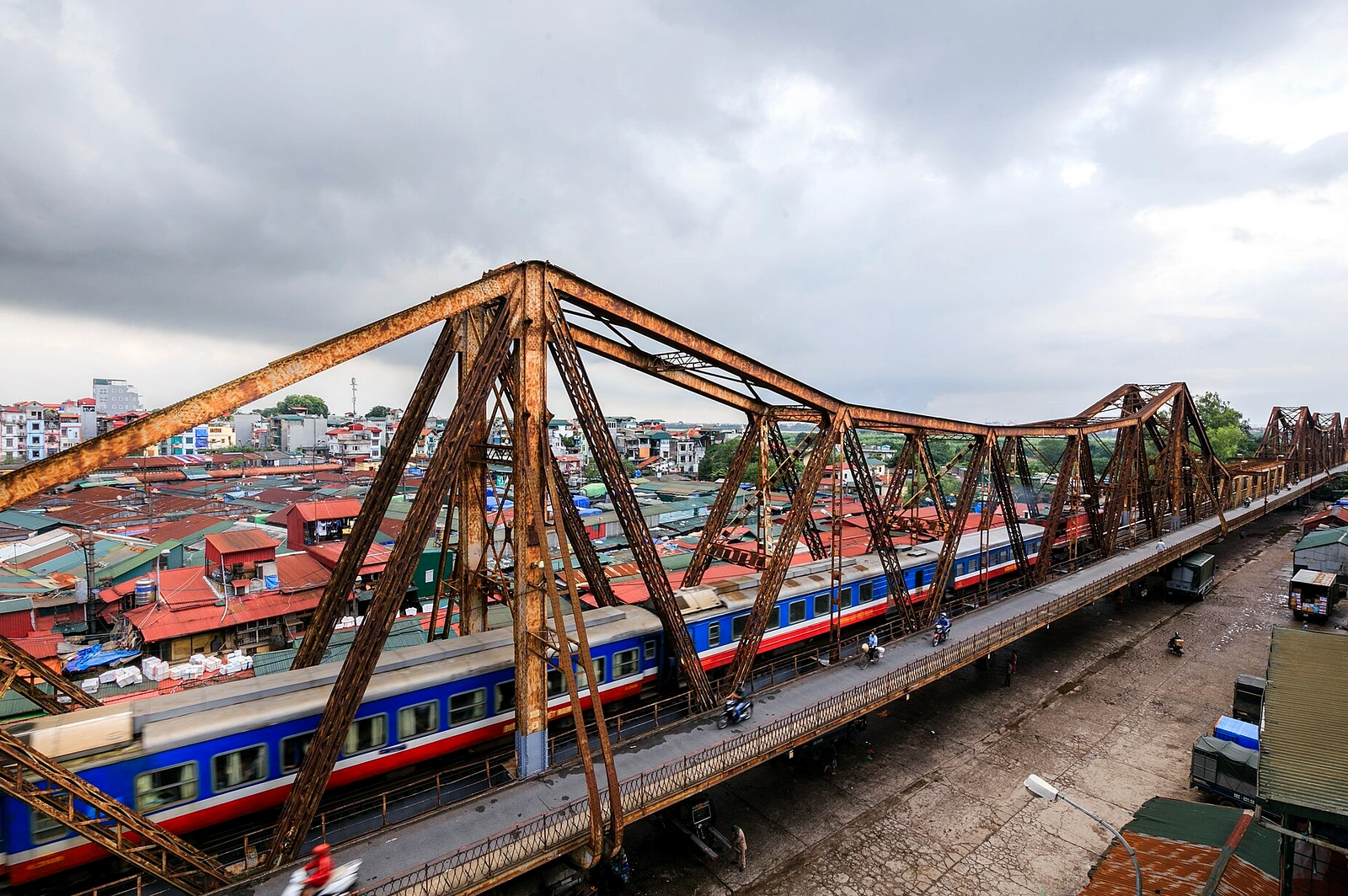
Long Biên Bridge is both a National Relic and an active everyday artery woven into the pulse of Hanoi life. To enjoy a smooth, safe, and rewarding visit, keep a few practical tips on timing, access, and etiquette in mind. Regarding hours, Long Biên Bridge is open to public crossing 24 hours a day. However, for safety and a more relaxed experience, visit during off-peak hours and avoid weekday rush hours when dense motorbike traffic fills the narrow lanes.
In terms of cost, walking or cycling across Long Biên Bridge is completely free of charge. It is an open public landmark where anyone can stroll, admire the historic steel lattice, take in views of the Red River, or snap photos. No admission tickets are sold at any bridge entrance, so disregard any unauthorized attempts to collect entry fees.
The easiest ways to reach Long Biên Bridge are on foot, by bicycle, or by motorbike, with access ramps located on both the Hoàn Kiếm and Long Biên sides. From central Hanoi, follow Trần Nhật Duật Street or Hàng Đậu Street to reach the pedestrian stairways and access ramps. City buses also stop conveniently near the base of the bridge. Because the bridge deck is narrow and carries steady traffic, never stop or park motorbikes on the roadway to take photos, as this obstructs traffic and creates serious safety hazards.
When it comes to attire, while there is no formal dress code on the bridge itself, the wooden and metal pedestrian walkways feature narrow gaps and brisk river winds. Wear comfortable, active clothing paired with sneakers or flat shoes with good grip—avoid high heels, which can catch in deck gaps or feel unstable on uneven surfaces. If you plan to visit the small shrines or walk through the middle-island gardens below, opt for modest, neat attire out of respect for local residents and sacred spaces.
The best times to visit Long Biên Bridge are on dry, clear days—especially during Hanoi’s cool autumn or crisp sunny afternoons, when golden sunset light casts dramatic shadows across the steel spans. For quiet contemplation and photography, early morning at dawn is ideal for watching the river island awaken. Above all, practice responsible travel by taking all litter with you and respecting the historic structure so that this beloved landmark endures for generations to come.
To enjoy a seamless getaway and experience the full beauty of Long Biên Bridge without worrying about arranging transportation, booking attraction tickets, or planning itineraries, travelers can choose premium all-inclusive Hanoi tour packages from VDS Travel. Each tour is thoughtfully timed so you arrive at scenic spots in the best light, accompanied by knowledgeable local guides and top-tier hotel and dining standards.