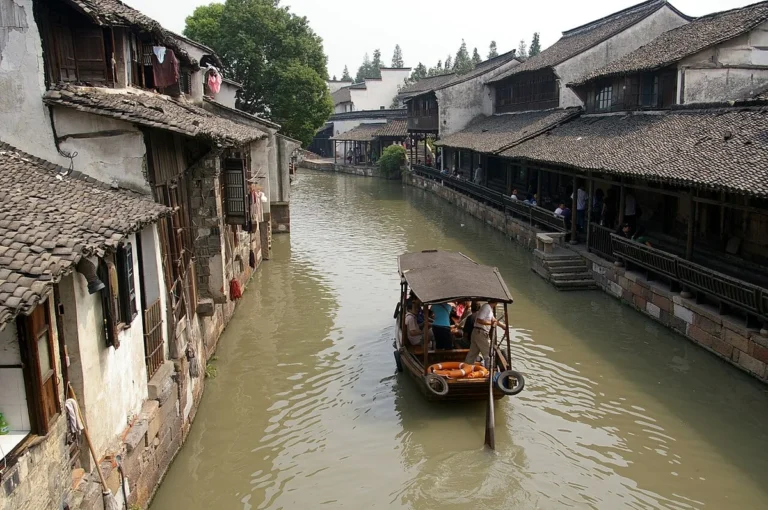
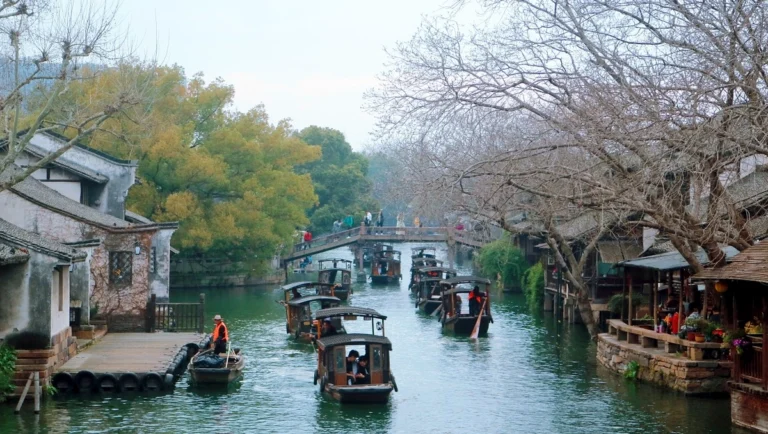
The Caomu Bense Dyeing Workshop in Wuzhen occupies a distinctive geographical setting in the lower Yangtze River basin, stretching along the intricate network of waterways in China’s Jiangnan region. Sitting at an average elevation of just a few meters above sea level, the terrain is characteristic of an ancient alluvial plain enriched by fertile sediments deposited over millennia by a dense hydrological network. A humid subtropical monsoon climate with abundant rainfall and high atmospheric moisture creates ideal ecological conditions for lush flora, supplying plentiful botanical raw materials for traditional handicrafts. This union of fertile soil and vital ancient waterways transformed the region into an important commercial entrepôt where cultural and economic currents from the Central Plains converged and radiated across southern China.
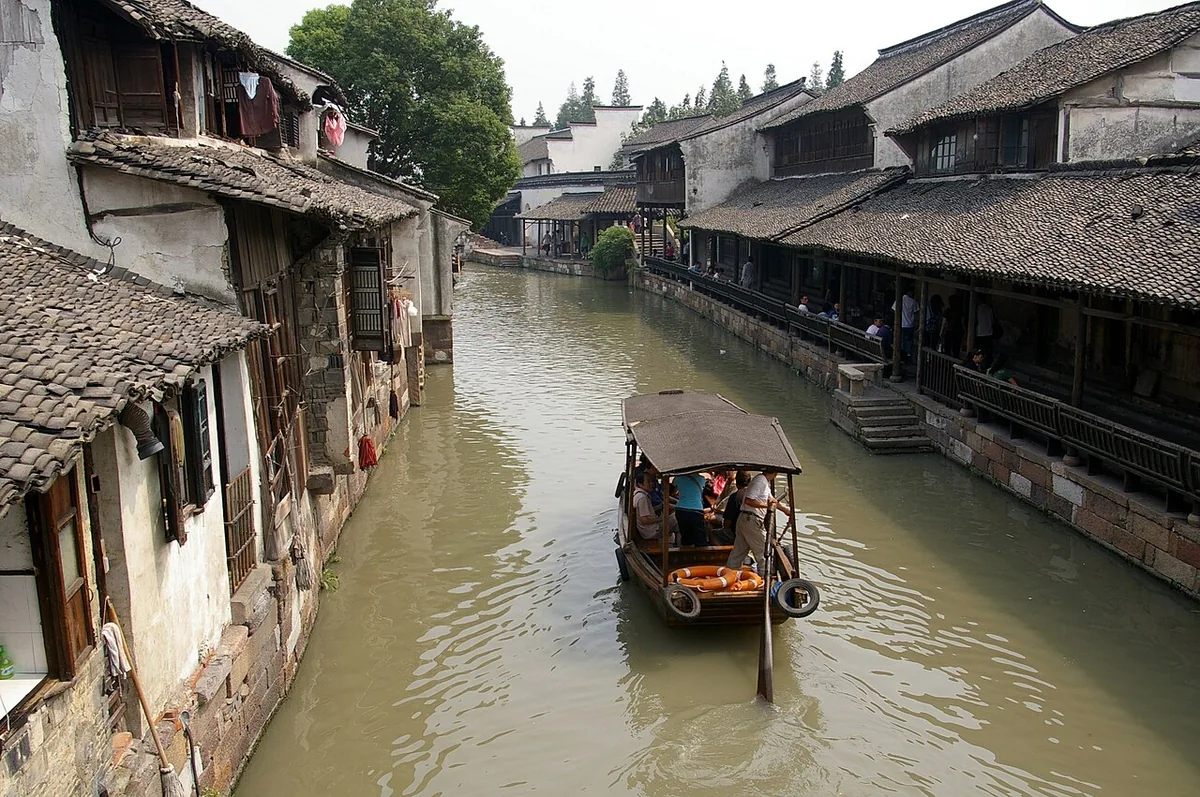
The founding milestones of the Caomu Bense Dyeing Workshop are closely bound to urbanization and the flourishing of artisanal commerce during imperial China, spanning the Ming and Qing dynasties when textile dyeing reached the height of refinement. Historical records note that by the fifteenth century, hand-dyeing operations here had organized into guild networks, drawing master artisans from far and wide to settle and pass down their craft across generations. Through turbulent eras—from late-Ming peasant uprisings to social transformations under the Qing Dynasty—the workshop upheld traditional production methods, emerging as a vital economic nucleus that helped shape the historic townscape of Wuzhen. Its endurance across historical epochs reflects not only the resilience of a traditional craft, but also the remarkable adaptability of the local community in the face of sweeping historical change.
Historical upheavals left deep imprints on both the architectural layout and operational techniques of the workshop at each stage of its evolution. In the modern era, as Western industrialization swept into Asian markets, traditional hand-dyeing faced the grave threat of obsolescence against competition from synthetic chemical dyes and machine-woven textiles. Yet rather than being swept away, the artisans at Caomu Bense steadfastly preserved ancestral processes—from harvesting natural botanicals such as indigo leaves, dioscorea tubers, and pagoda tree bark to biological fermentation and open-air sun drying. This strict adherence to inherited principles enabled the workshop to weather severe economic crises during the first half of the twentieth century, safeguarding an ancient technological heritage for future generations.
The national symbolic stature and cultural reach of Wuzhen’s Caomu Bense Dyeing Workshop extend far beyond an ordinary manufacturing facility, standing as an exemplar of East Asian intangible cultural heritage. Cultural scholars regard its traditional indigo-dyeing craft as a living museum of historical science and technology, preserving indigenous knowledge of plant chemistry, fermentation biology, and textile surface design. Indigo-dyed fabrics adorned with intricate patterns produced using antique carved wooden blocks embody the traditional Chinese philosophy of living in harmony with nature. This symbolism reflects cosmological principles rooted in the Five Elements, where indigo blue is far more than a garment color—it represents longevity, sustainability, and deep communal solidarity within traditional agrarian society.
In the contemporary era, the workshop continues to serve as an important center for heritage education and anthropological research, attracting scholars, fashion designers, and international travelers eager to study sustainable production methods of the past. Preserving rows of tall bamboo drying racks spread beneath open skies alongside neatly aligned traditional ceramic dye vats creates an immersive visual environment that invites visitors to engage with history through every sense. Modern scientific studies into its natural biological wastewater fermentation processes also offer valuable lessons for contemporary ecological sustainability, demonstrating that traditional wisdom can actively inform solutions to modern environmental challenges.
Viewed holistically through archaeology and cultural history, Wuzhen’s Caomu Bense Dyeing Workshop stands as an enduring emblem of Jiangnan identity, where time seems suspended in every thread dyed through the sweat and ingenuity of generations of artisans. Its proud survival amid the currents of modernity affirms the importance of safeguarding foundational heritage in shaping national identity and developing sustainable cultural tourism. By upholding exacting ancient technical standards, the workshop transformed centuries of trials and triumphs into a symbol of resilience, creativity, and reverence for nature, leaving a priceless legacy in the treasury of human culture.
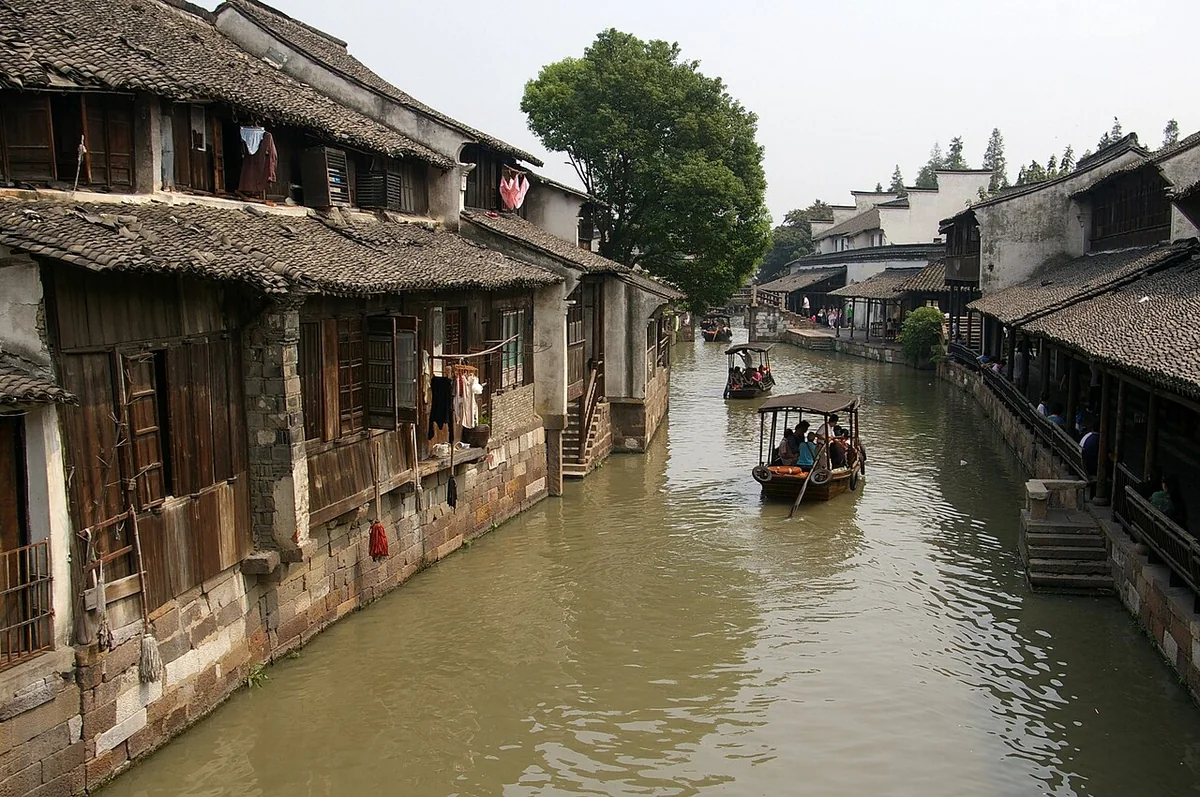
The Wuzhen Caomu Bense Dyeing Workshop—also documented in local historical records as the Hongyuantai Workshop—is a traditional artisanal architectural complex whose present layout crystallized during the Qing Dynasty, situated in the water-town ensemble of Wuzhen in Zhejiang Province, China. Its spatial design embodies the classic water-town urban planning philosophy of the Yangtze River Delta, where spatial organization is governed by intersecting canals and historic waterways. Spread across thousands of square meters, the workshop is far more than a craft production facility; it is vivid proof of architecture adapted to wetland environments, where every courtyard, building wing, and skywell was scientifically calculated to optimize natural chemical processing, sun drying, and storage of botanicals used in indigo dyeing.
Architecturally, Wuzhen’s Caomu Bense Dyeing Workshop strictly follows the southern Chinese residential-workshop compound model, characterized by towering horse-head fire walls, two-story timber structures topped with moss-covered gray yin-yang clay tiles, and long covered corridors curving alongside the canal. Primary construction materials include local fir and pine prized for durability in damp riverside conditions, high-fired antique load-bearing bricks, and bluestone slabs paving courtyards and canal embankments. Traditional carpentry craftsmanship shines through mortise-and-tenon joinery built entirely without iron nails, allowing timber frames to expand and contract naturally with fluctuations in temperature and humidity while protecting structural beams from rot caused by moisture rising from subterranean water channels.
The workshop’s floor plan is organized along a disciplined longitudinal axis, dividing the complex into distinct functional zones that house an end-to-end production cycle from raw fiber to finished cloth. The front hall opening directly onto the main waterway serves as a showroom for finished textiles and a reception space where indigo fabrics flutter in natural daylight. Deeper inside lies the botanical soaking and preparation hall, housing dozens of large earthenware vats filled with fermented indigo liquor derived from native Strobilanthes cusia plants. Adjacent to this hall opens the expansive central drying courtyard—the iconic architectural centerpiece of the entire complex—where hundreds of long indigo cloth panels hang from towering parallel bamboo racks, forming undulating curtains of deep and pale blue swaying gently in breezes blowing off the canal.
The main two-story production halls rise between six and nine meters high, providing essential vertical clearance for heat dissipation and vapor ventilation during boiling and dyeing operations. Steeply pitched roofs laid with handmade barrel and flat tiles shed rainwater rapidly during Jiangnan’s prolonged rainy seasons while projecting deep eaves that shield timber walls from driving rain. Traditionally carved wooden lattice windows offer both refined aesthetic beauty and crucial cross-ventilation, maintaining steady airflow through raw-material storerooms and finished-goods warehouses.
Visitor capacity and public circulation within the workshop were thoughtfully upgraded during Wuzhen’s comprehensive heritage conservation program, enabling thousands of travelers and cultural researchers to visit daily without compromising the authentic fabric of the historic architecture. Visitor pathways are guided along elevated wooden boardwalks and stone bridges spanning narrow water channels, allowing guests to observe the complete traditional craft workflow from a respectful distance while preserving maximum authenticity. Broad setbacks around the drying yard give visitors ample room to move freely, take photographs, and learn woodblock resist-printing techniques on indigo cloth under the guidance of local master artisans.
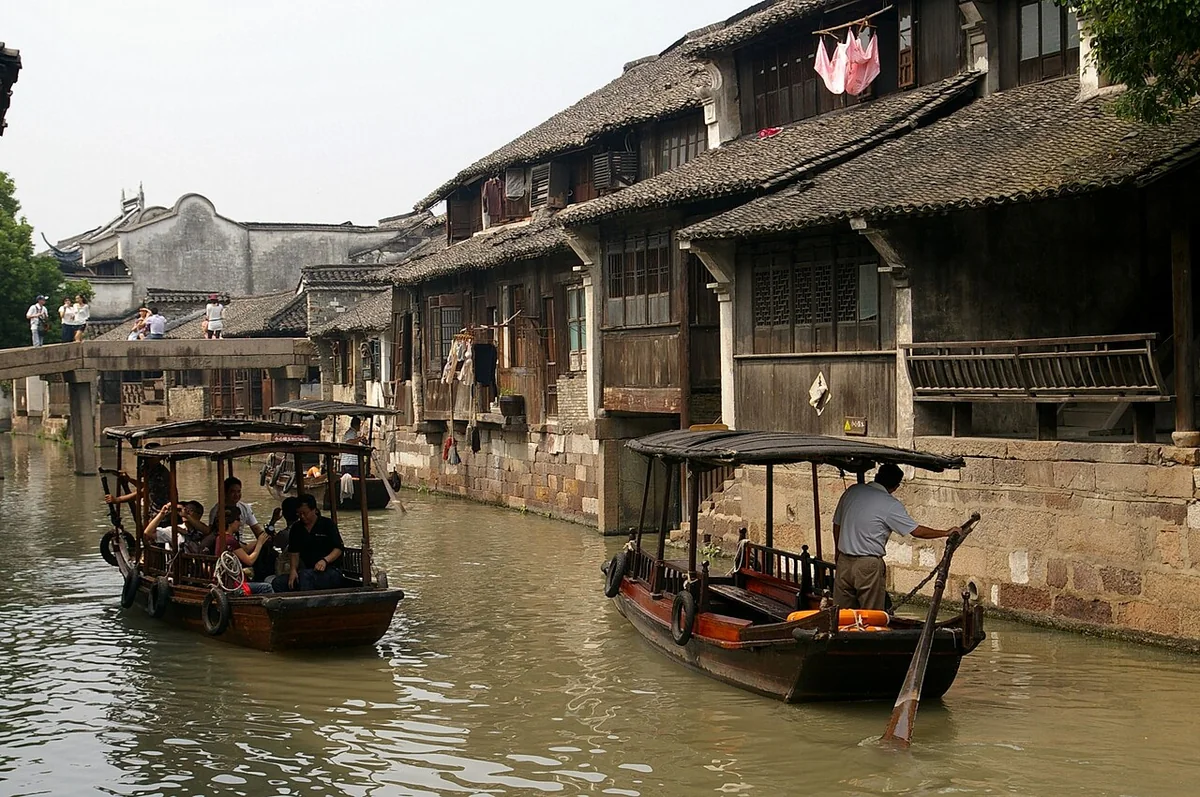
Beyond engineering ingenuity and functional zoning, the workshop’s layout also reflects the feng shui principles and worldview of imperial Chinese merchant families, arranging inner courtyards around the maxim that “gathering water nurtures prosperity.” Canal water is channeled gracefully into landscaped basins throughout the compound—supplying vast volumes of water needed for dyeing batches while moderating the indoor microclimate to keep spaces cool in summer and sheltered in winter. This harmonious interplay of weathered timber, vibrant indigo cloth, slate-gray roof tiles, and gently flowing water composes a textbook masterpiece of vernacular East China architecture.
Routine maintenance and conservation of the workshop’s timber structures and masonry walls rely exclusively on traditional materials fully compatible with the original fabric, avoiding modern concrete or steel interventions so as to safeguard architectural archaeological integrity. Centuries-old fir load-bearing columns are reinforced through traditional mortise-and-tenon joinery, keeping the structural frame rock-solid against the passage of time and heavy daily foot traffic. Through strict adherence to historic urban conservation standards, Wuzhen’s Caomu Bense Dyeing Workshop preserves the authentic character of a pre-modern artisanal manufacturing hub, offering cultural researchers and global travelers an invaluable living document of how Jiangnan’s water-town communities designed spaces for work and daily life.
Wuzhen’s Caomu Bense Dyeing Workshop—whose roots reach back to the Song Dynasty and flourished through centuries of preservation under the Ming and Qing dynasties—represents the pinnacle of traditional hand-dyeing craftsmanship in the Jiangnan region. Set beside Wuzhen’s intricate network of canals in Zhejiang Province, this space is more than a pre-modern industrial workshop; it is a cultural architectural complex imbued with Eastern humanist philosophy. Its overall layout mirrors yin-yang and Five Elements cosmology through open-sided pavilions oriented toward the water, where canals serve not only as transport arteries but as an essential element in botanical textile dyeing. Historic timber halls built with pine and nanmu columns and topped with traditional yin-yang roof tiles achieve an architectural balance that resists high marshland humidity while exuding grace through intricate carvings across roof trusses, partition doors, and crossbeams.
Stepping inside the compound, visitors are immediately captivated by the central drying courtyard, where hundreds of long cotton cloth panels in signature shades of indigo hang freely from tall seasoned bamboo poles. Arranged according to strict spatial geometry, the hanging bolts create layered gradients shifting from deep midnight indigo to sky-pale blue, expressing an aesthetic sensibility attuned to impermanence and natural cycles. Laid out open to the elements, this courtyard harnesses Jiangnan’s sunlight and river breezes—two natural forces decisive in fixing botanical pigments onto cotton cellulose fibers. From an architectural anthropology standpoint, the drying yard symbolizes harmony between humanity and cosmos, where handcrafted textiles merge seamlessly into surrounding water and open sky.
Moving deeper into the preparation and fermentation halls, the architecture shifts from open air to semi-enclosed galleries lined with hundreds of large stoneware vats arranged in disciplined grid rows. Fired at high temperatures in nearby traditional kilns, these earthenware vats are living artifacts holding the soul of ancient indigo dyeing. Inside each vat rests fermented indigo dye liquor extracted from native botanical leaves through complex biological fermentation combined with slaked lime and natural catalysts. This process demands deep mastery of traditional microbiology, relying on master dyers’ seasoned sensory judgment to regulate temperature, pH balance, and fermentation time—transforming green plant extracts into a permanent pigment that bonds irreversibly to cloth upon contact with oxygen in the air.
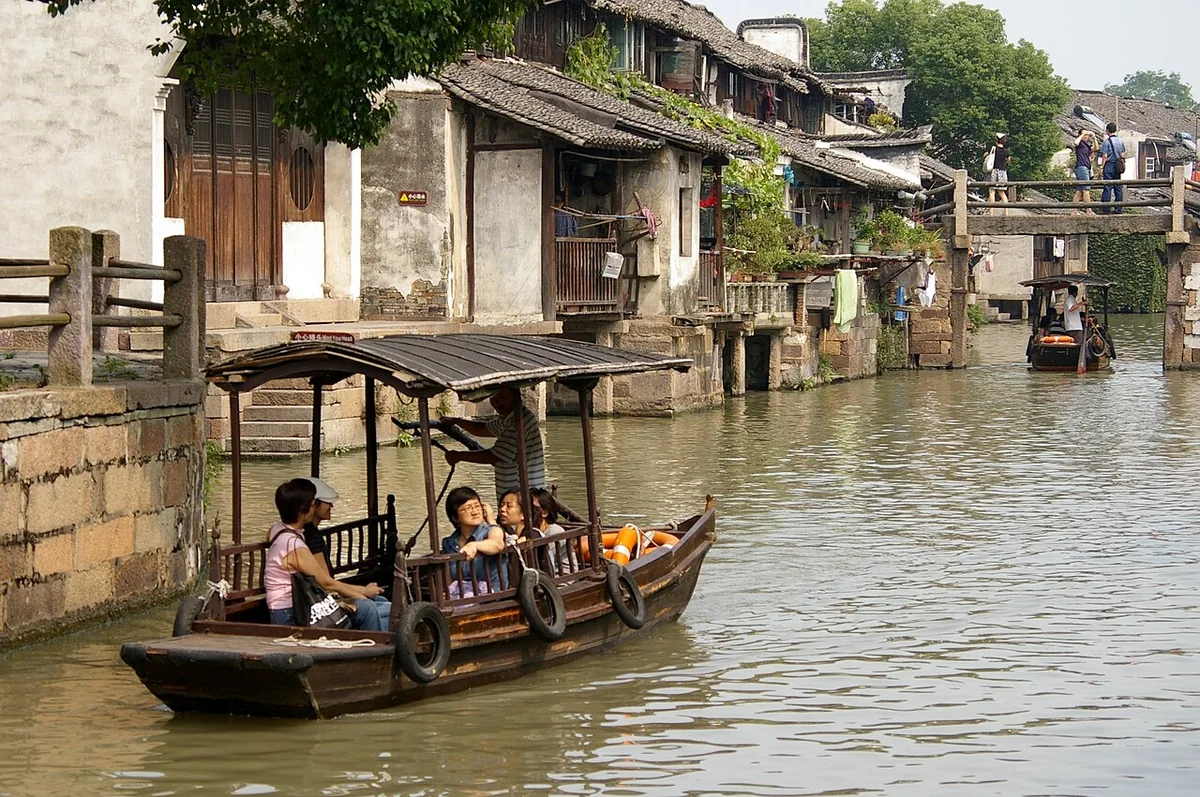
The workshop’s shrine hall and ceremonial sanctuary preserve deep spiritual traditions reflecting the beliefs of historical artisan guilds. Dedicated to the patron deity of dyeing—often associated with legendary pioneers credited with originating textile dyeing in Chinese history—the sanctuary is adorned with gilded calligraphic plaques and couplets carved onto deep red lacquered wood. Incense tables, bronze tripods, and ritual vessels display Ming-dynasty artistic elegance, richly carved with dragons, phoenixes, qilin, and auspicious motifs. Maintaining incense offerings here across centuries honors founding craft masters while reinforcing communal solidarity and strict professional ethics within the artisan guild.
Examining the artifacts and treasures displayed here, cultural researchers pay special attention to carved pearwood and jujube-wood printing stencils used in wax-resist or soybean-lime paste-resist indigo printing. These woodblocks are miniature masterpieces of relief sculpture, featuring hairline incisions depicting classic auspicious motifs—the Eight Treasures, the Four Gentlemen (pine, chrysanthemum, bamboo, and plum blossom), lotus blossoms, rolling water clouds, and geometric patterns symbolizing blessings, protection, and longevity. Each block represents weeks of painstaking labor by master woodcarvers, requiring absolute precision so that when pressed onto cloth, the resist paste leaves crisp white motifs against deep, velvety indigo.
The philosophical ethos behind dyeing at Caomu Bense aligns closely with Daoist ideals of simplicity and harmony with nature. Within traditional East Asian color symbolism, indigo possesses neither the dazzle of imperial gold nor the fiery drama of cinnabar; instead, it embodies serene yin depth—symbolizing mother earth, endurance, and humility. Repeatedly dipping cloth to achieve deeper hues serves as a metaphor for self-cultivation, through which human character grows steadier and richer over time and trial. Combining natural cotton, botanical indigo, and time-honored handcraft produces textiles free of industrial uniformity, each piece carrying the singular imprint of human hands.
At the same time, the workshop’s spatial organization reflects the economic and social workings of feudal merchant guilds across Jiangnan. Raw-material sorting rooms, botanical boiling hearths, dye-vat galleries, canal-side rinsing platforms, and sun-drying yards link together in an unbroken yet airy workflow that optimizes collective labor. Moon-gate arches and covered colonnades regulate the indoor microclimate—keeping workspaces cool in summer and sheltered in winter to protect artisans working long shifts beside natural dye vats.
The workshop’s greatest treasure lies not in static objects behind glass cases, but in the unbroken chain of oral knowledge and hands-on skills passed down from senior masters to younger apprentices through direct mentorship. Nurturing this living craft inside an intact architectural landmark makes the workshop one of the finest living museums of Jiangnan water-town cultural anthropology. Every weathered timber beam, every indigo-stained stoneware vat, and every carved stencil testifies to the vitality of traditional material civilization, where architectural artistry and cultural heritage flow seamlessly alongside human history.
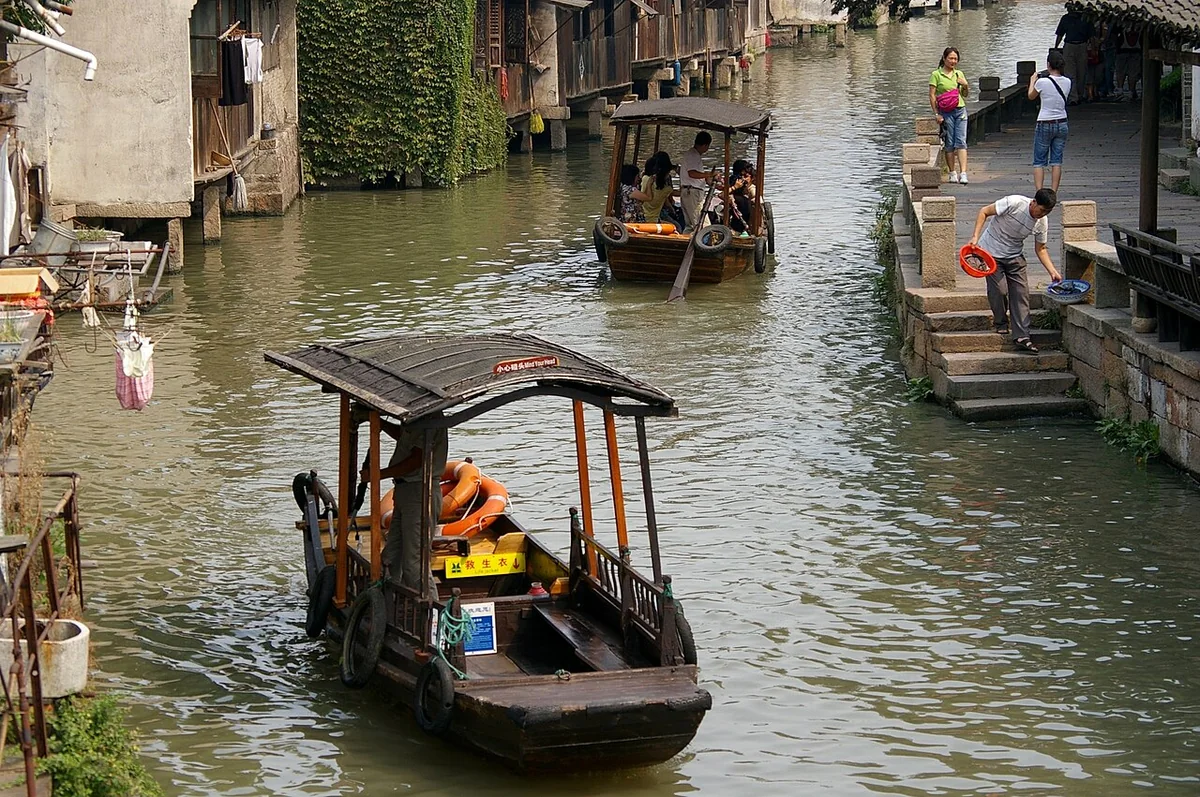
Cultural chronicles of the Jiangnan region recognize Wuzhen’s Caomu Bense Dyeing Workshop as a steadfast historical witness to ancient indigo dyeing, where daily community rhythms align closely with the cycles of sun, moon, and water. Far from a silent monument, this space operates as a living organism reflecting a philosophy of harmony between people and the land along the water town’s interlacing canals. Exploring its spatial and temporal rhythms means observing how shifting daylight across hanging bolts of cloth transforms the compound into a magnificent, historically rich visual tableau throughout the day.
Dawn at Wuzhen’s Caomu Bense Dyeing Workshop begins while morning mist still lingers over the tranquil waters of the canal network. The first rays of sunlight filter through louvered wooden shutters onto the expansive drying courtyard, where hundreds of tall bamboo poles await the morning sun. Local master dyers with decades of devotion to their craft arrive early to check the moisture of raw cotton bolts freshly lifted from large steeping vats. Soft footsteps across moss-patinated bluestone flags and the gentle splash of oars gliding down the canal outside compose the signature dawn soundscape of a water town. The air carries the earthy fragrance of medicinal herbs, native roots, and the tangy aroma of natural fermentation cultures used in botanical dyeing. Morning quiet soon gives way to rhythmic motion as artisans hoist dozens-of-meters-long indigo cloths onto towering racks, turning the courtyard into a colossal open-air gallery of graduated blues determined by the number of dye immersions.
As the sun climbs toward midday, activity inside the workshop enters a brisker, more technical phase that captivates ethnographers and international visitors alike. Rows of giant earthenware vats inside the yin-yang-tiled halls become the stage for live craft demonstrations. Here, dye baths are prepared from fresh indigo leaves, wheat bran, and plant ash according to closely guarded family formulas handed down across generations. Visitors and scholars can observe the hand-dipping process up close, watching artisans time each immersion to the second so pigment penetrates evenly into every fiber without blotching. Strong midday sunlight pours through skywells and timber eaves, casting dramatic shafts of light against deep blue vats and neatly folded bolts of cloth. Quiet exchanges in the Jiangnan dialect among master dyers discussing water temperature and vat pH create an atmosphere of focused craftsmanship honoring manual artistry in an industrial age.
Late afternoon brings golden-amber sunset light washing across thousands of indigo banners fluttering in the river breeze, creating the most prized panoramic vista at Wuzhen’s Caomu Bense Dyeing Workshop. Viewed from the arch of an antique stone bridge spanning the adjacent canal, the scene captures the full visual dialogue between Wuzhen’s traditional architecture and the dramatic drying yard. Arranged in orderly parallel rows, hundreds of cloth panels ripple in the evening breeze off the water like giant indigo waves breaking along a shore, catching the warm late-day sun in an enchanting optical display. This is the golden hour when photographers and architectural researchers seek the finest angles capturing handcrafted color meeting Jiangnan twilight. Meanwhile, artisans gather dried bolts of cloth, roll them neatly, and carry them into storage—bringing a demanding yet proud workday to a close.
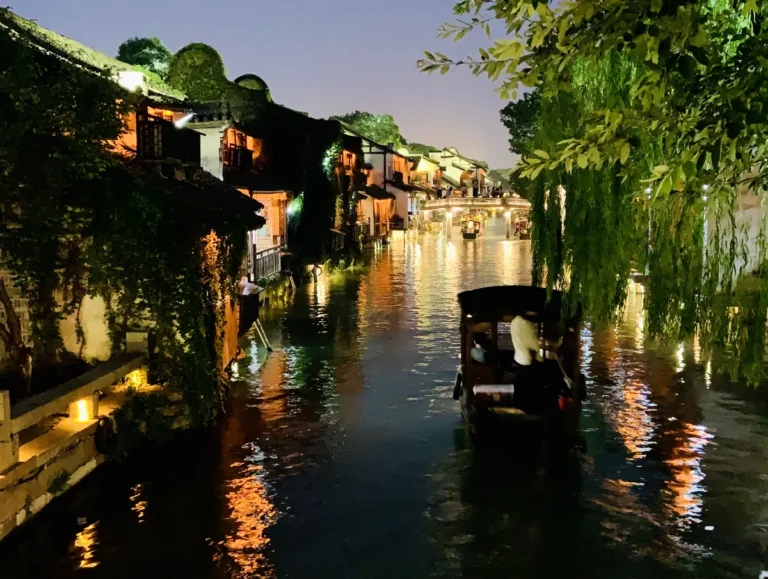
Once night falls, Wuzhen’s Caomu Bense Dyeing Workshop takes on an entirely different character—quieter yet deeply evocative under warm golden lanterns strung along pathways around the compound. Soft light from oiled-paper lanterns shimmers across the canal surface, casting dancing reflections onto bare brick workshop walls. During traditional festivals or local cultural weeks, evening programs frequently feature artistic lighting showcases alongside reenactments of ancient guild rituals honoring the patron deity of dyeing. Senior artisans dressed in traditional attire recount the origins of indigo dyeing and the historical trials Wuzhen weathered across imperial dynasties. Combined with the gentle murmur of canal water, distant strains of traditional flutes, and time-worn architecture, the evening atmosphere offers a profound encounter with southern Chinese culture, where past and present coexist with quiet dignity.
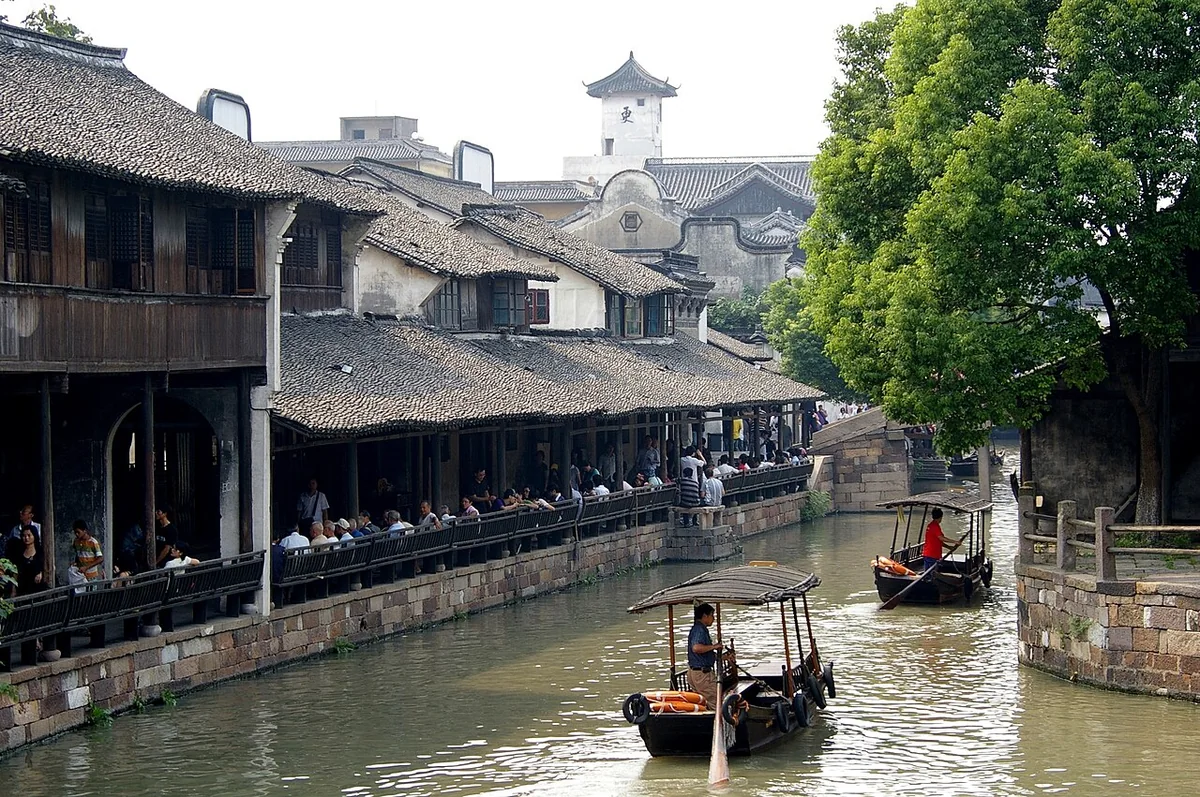
The low-lying Jiangnan plain, crisscrossed by an intricate network of canals, has long nurtured a distinctive water-based civilization in which waterways served not only as vital transport arteries, but also sustained one of China’s richest culinary ecosystems. Around Wuzhen’s Caomu Bense Dyeing Workshop, local food culture mingles with the earthy aroma of botanical herbs used in traditional textile dyeing, creating a uniquely multi-sensory experience for travelers. Winding canals and a temperate monsoon climate yield abundant freshwater seafood, alluvial-plain vegetables, and regional seasonings rooted in time-honored preservation traditions. Refined over centuries during the Ming and Qing dynasties, local gastronomy evolved from hearty fare sustaining craftspeople into a nuanced culinary repertoire embodying harmony with nature, seasonal rhythms, and traditional Eastern yin-yang dietary balance.
Among the iconic culinary specialties associated with historic Wuzhen, Jiangnan-style braised pork belly—widely known as Dongpo Pork—holds pride of place among discerning diners. Preparing this classic demands meticulous care at every step, from selecting cuts of pork belly with balanced layers of lean meat and fat to blanching and slow-braising in earthenware pots for hours. Traditional chefs combine aged soy sauce, fine rock sugar, authentic Shaoxing rice wine, and local aromatics to produce a glossy, rich amber glaze. When savored, the tender meat melts effortlessly on the palate without feeling greasy, leaving a delicate sweetness balanced by fragrant cassia bark, star anise, and scallions. This unhurried cooking method mirrors the tranquil pace of life along the canals, where time itself is treated as an essential ingredient perfecting traditional flavor.
Alongside rich braised meats, street stalls and cozy eateries lining bluestone lanes around the dyeing workshop are celebrated for soup dumplings, known as xiaolongbao. Rolled from fine white wheat flour into wrappers remarkably thin yet elastic, each dumpling encloses finely minced pork blended with savory jellied bone broth simmered for hours. Steamed inside traditional bamboo baskets, the gelatin melts into piping-hot, deeply flavorful soup infused with pork and fresh shrimp. Enjoying xiaolongbao calls for patience and technique: lift a dumpling gently onto a porcelain spoon, nibble a tiny opening at the top to release steam, sip the fragrant broth, and dip the dumpling into Chinkiang red vinegar topped with slivered fresh ginger. This ritual embodies a mindful dining philosophy engaging sight, aroma, taste, and texture in every bite.
Regional gastronomy is further enriched by freshwater fish caught directly from surrounding rivers and canals, highlighted by crucian carp braised with preserved mustard greens and grass carp simmered in fermented soy sauce. Thanks to gentle currents and abundant natural feed, local freshwater fish boasts firm flesh and clean natural sweetness. Local cooks often braise fish slowly with traditional fermented soybean paste so rich savory flavors permeate every flake of meat down to the softened bones. Rice-flour delicacies—such as glutinous rice balls filled with black sesame served in warming ginger syrup during winter, or sweet steamed cakes crafted from newly harvested glutinous rice—also play a cherished role in seasonal community festivals, preserving collective memories of generations living along the waterways.
Tea culture in this district carries equally deep roots, centered on chrysanthemum infusions, Longjing green tea, and local specialties enjoyed alongside Wuzhen’s renowned Sanbai White Wine. Riverside teahouses featuring antique timber architecture and views over passing canal boats have long served as vital social gathering spaces for merchants, textile artisans, and travelers alike. Tea is traditionally brewed using pure water drawn from ancient neighborhood wells and heated over clay charcoal braziers for precise temperature control. Preparing and pouring tea follows gracious etiquette expressing respect for guests and gratitude toward nature. The delicate floral scent of chrysanthemum tea mingling with savory steam from nearby food stalls creates a nostalgic cultural ambiance where time feels suspended amid modern life.
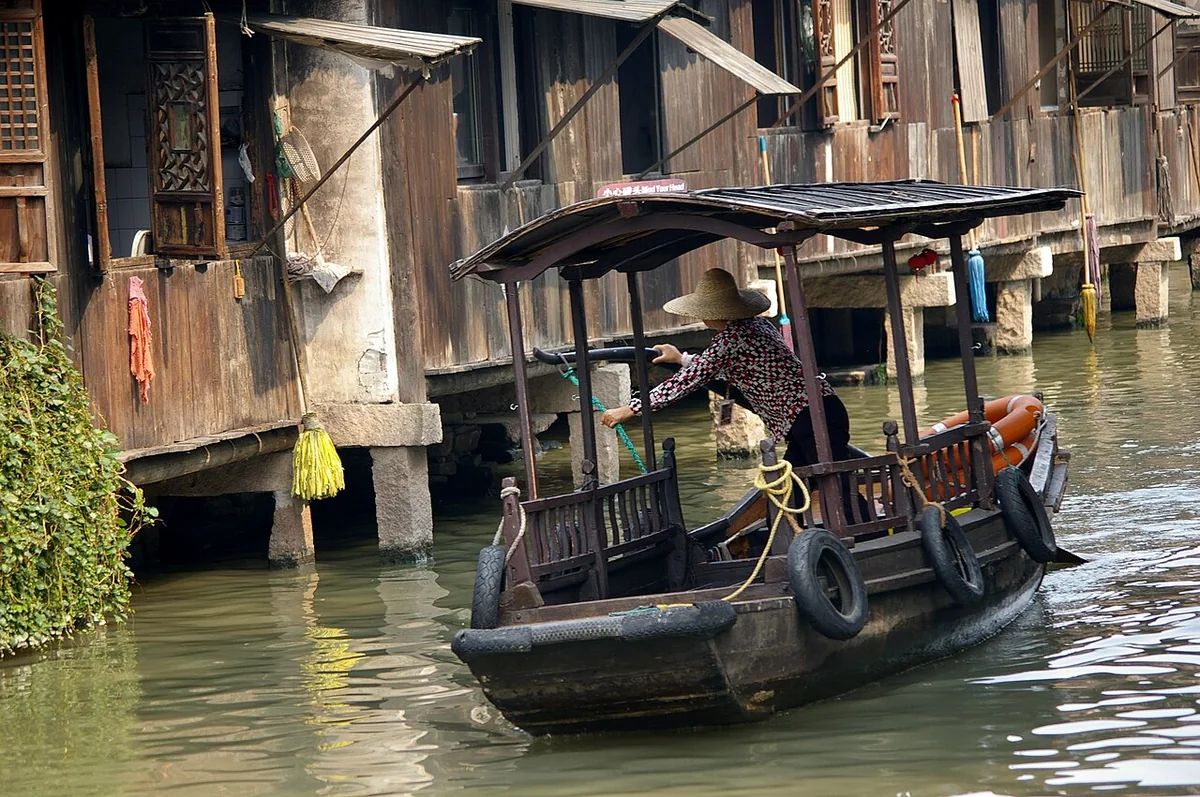
Strolling along lively food streets curving beside historic canal embankments, visitors are drawn to artisanal stalls preparing traditional snacks fresh before their eyes. Aromas of cinnamon, star anise, simmering soy sauce, and toasted sesame oil drift through the cool water-town air, enticing passersby at every turn. Street artisans demonstrate time-honored skills such as pulling maltose taffy, roasting chestnuts in hot black sand, and baking flaky red-bean pastries passed down through generations. Far more than commercial lanes, these streets form living cultural corridors preserving Jiangnan’s culinary customs intact across centuries. Through distinctive regional dishes and gracious dining traditions, the neighborhood surrounding the dyeing workshop reinforces its stature as a vibrant living cultural hub where history, handcraft, and culinary artistry intertwine.
Wuzhen’s Caomu Bense Dyeing Workshop, a time-honored artisanal landmark in the historic water town of Wuzhen in Zhejiang Province, China, rewards thoughtful logistical planning and an appreciation of local rhythms for a seamless visit. Reaching this traditional indigo-dyeing sanctuary begins with navigating the Yangtze River Delta’s highly integrated regional transit network. Because Wuzhen itself does not have an airport or high-speed rail station, travelers typically connect through major neighboring gateway cities such as Hangzhou, Shanghai, or Suzhou. From Hangzhou East Station or Shanghai Hongqiao Station, high-speed trains reach Tongxiang Railway Station in roughly 30 to 45 minutes. Right outside Tongxiang Station plaza, local public bus route K282 runs frequently and directly to Wuzhen Xizha (West Scenic Zone), where the Caomu Bense Dyeing Workshop is located. Travelers prioritizing privacy and convenience can also hire ride-hailing cars or private taxis directly from major city centers for a smooth, effortless ride along modern expressways.
Jiangnan’s seasonal climate directly shapes the on-site experience at this open-air hand-dyeing workshop, making timing an important consideration. Spring, from March through May, brings mild weather with signature misty drizzle that enriches moss-green hues on ancient brick walls and maintains ideal humidity around the indigo drying racks. Summer, spanning June through August, brings high heat and humidity, calling for breathable clothing and sun protection when exploring the expansive outdoor drying courtyard. Autumn, from September through November, is widely considered the finest time of year to visit, offering crisp dry air and golden sunshine illuminating towering indigo banners fluttering in the breeze. Winter, lasting from December through February, brings brisk northern winds and occasional light snow dusting yin-yang tiled roofs, transforming the workshop into a serene, poetic ink-wash painting.
Time of day also plays a decisive role in shaping your experience, particularly for photographers and cultural researchers. Early morning—from opening at 8:00 AM until 10:00 AM—finds thin mist still drifting over the canals with relatively few visitors, offering peaceful conditions to observe master dyers working up close beside giant indigo vats. Conversely, between 11:00 AM and 3:00 PM, tour groups arrive in peak numbers and hands-on souvenir dyeing workshops bustle with activity. Late afternoon toward sunset offers another magical window, as slanted sunlight filters through rows of hanging indigo cloth to cast dramatic patterns of light and shadow across raw cotton panels, evoking classic Chinese aesthetics.
Dressing for a visit to the Caomu Bense Dyeing Workshop calls for balancing visual harmony with practical comfort. Because pathways throughout the West Scenic Zone consist largely of antique, uneven bluestone paving alongside stone steps around dye vats and drying racks, supportive flat shoes or sneakers with good traction are essential. For flattering photographs that complement the rich blues of the hanging fabrics, opt for neutral tones such as cream white, light gray, or warm earth shades, and avoid overly loose garments that might brush against looms or residual indigo dye on tools. Packing a lightweight windbreaker in autumn or winter—or a sun hat and umbrella in summer—adds practical comfort throughout your walk.
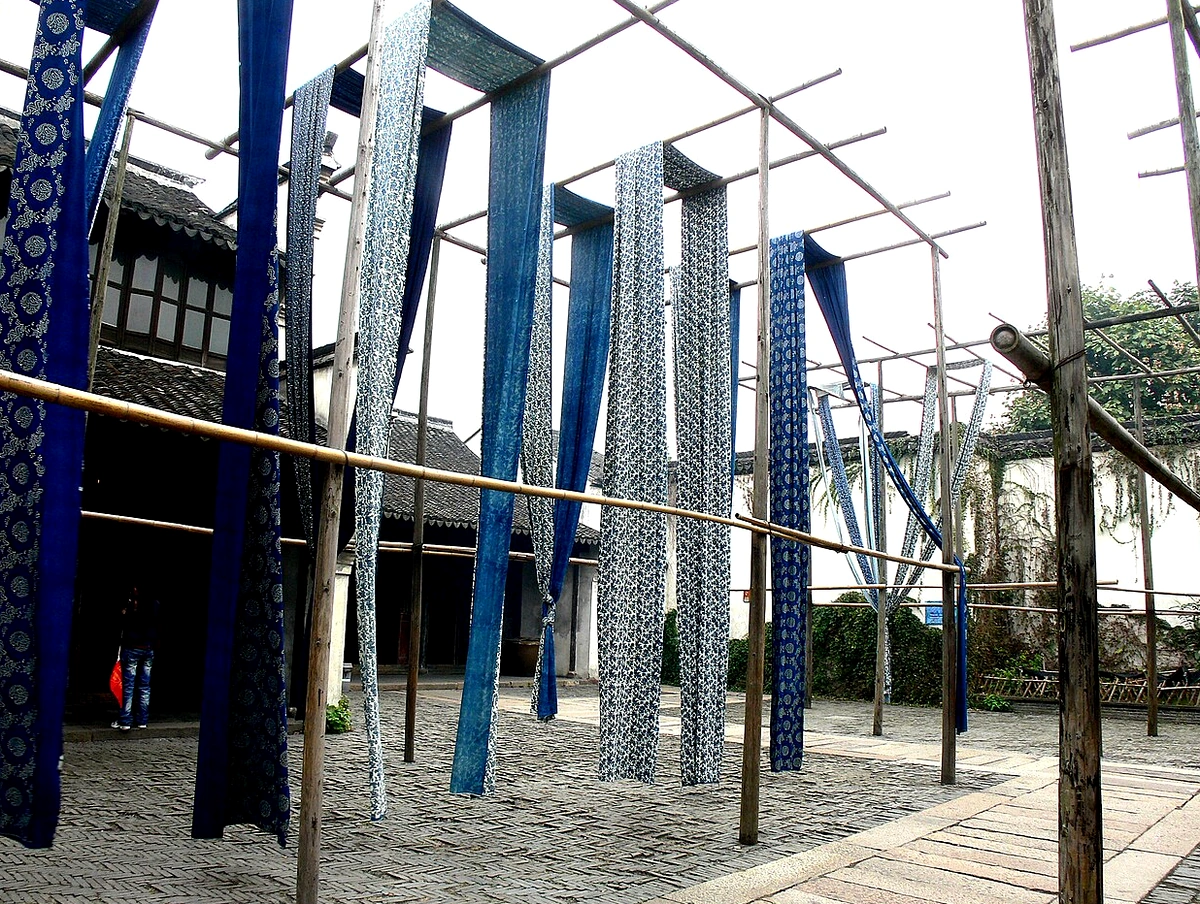
Admission to the workshop is integrated into the Wuzhen Xizha (West Scenic Zone) ticket system, so tickets should be purchased through official ticket counters at the entrance gate or authorized online booking platforms. Keep your admission ticket handy throughout the day, as it is valid for same-day entry and checked at internal heritage sites including the dyeing workshop. While exploring the grounds, observing proper etiquette shows respect for this living craft heritage: never touch hanging bolts of cloth without permission from staff, as natural oils from hands can affect indigo pigment bonding. Additionally, commercial photography or filming with professional lighting rigs inside production areas requires advance approval from site management to avoid disrupting the daily work of senior artisans.
To experience this journey to the fullest alongside a local guide, explore our Beijing – Suzhou – Hangzhou – Wuzhen – Shanghai Tour with a thoughtfully curated itinerary.