The Yue Fei Temple in Hangzhou, Zhejiang Province, China, occupies a strategic location on the northern boundary of West Lake, right at the foot of Qixia Hill and adjacent to the famous ink-wash landscapes of the Jiangnan region. The geographical coordinates of this historical site are linked to the transitional zone between the low hilly terrain of the Tianmu Mountain system and the sedimentary basin of West Lake, creating a landscape with moderate elevation differences that exudes both solemnity and tranquility. In terms of natural scenery, this area is strongly influenced by a subtropical monsoon climate with abundant precipitation, nurturing a rich surrounding flora ranging from centuries-old ancient trees such as black pine and camphor to aquatic plants along the lake. Since ancient times, Song Dynasty feng shui masters and urban planners considered this location to be a convergence point of heaven and earth’s spiritual energy, convenient for both water and land trade since the Southern Song period, and serving as a natural barrier protecting the capital of Lin’an from military upheavals originating in the north. Choosing this site to build a mausoleum and shrine dedicated to the military general who symbolizes the spirit of resistance against foreign invasion not only held strategic topographical significance but also deeply reflected the socio-political and religious spatial mindset of that turbulent historical era.
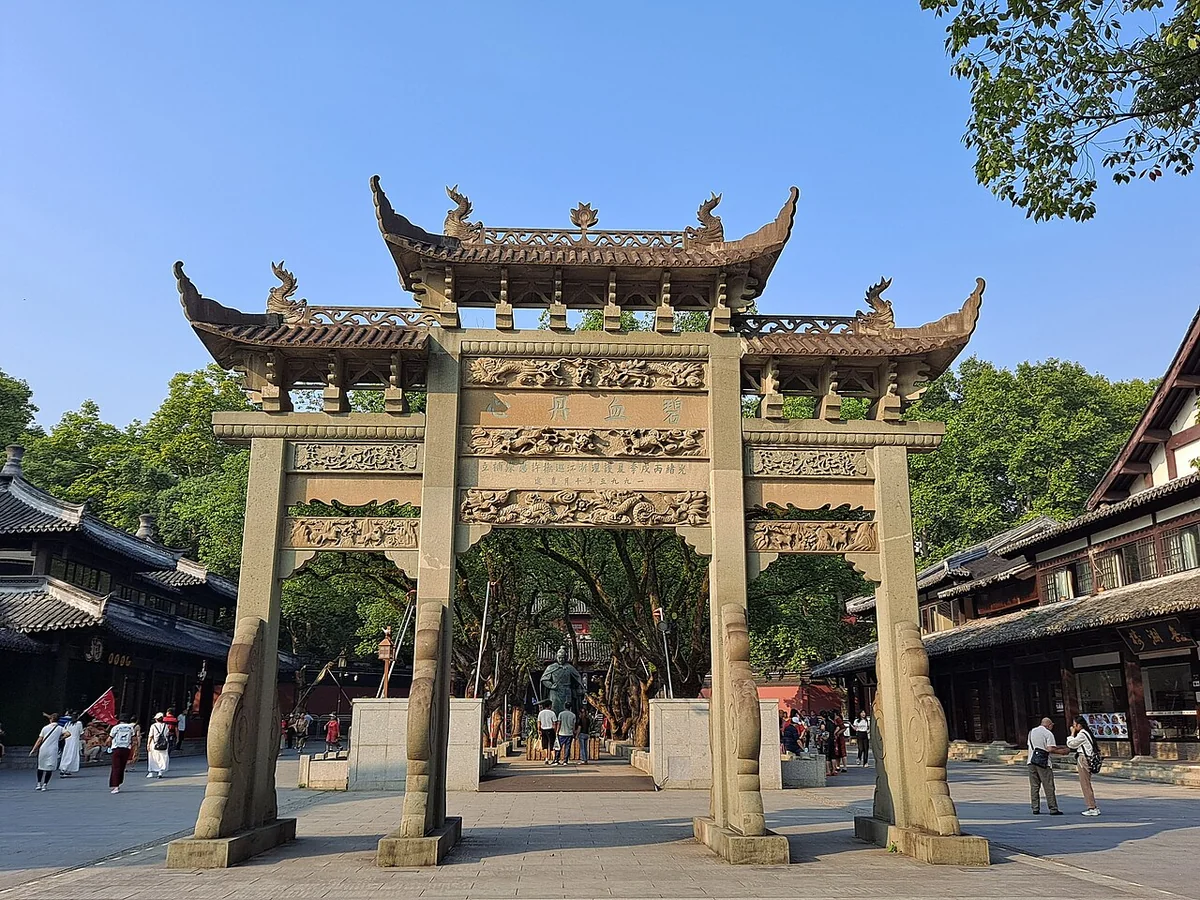
The history of the formation and development of the Yue Fei Temple is closely intertwined with the tragic and heroic events of the Southern Song dynasty, originating from the wrongful execution of the renowned general Yue Fei in 1142 due to the conspiracy of the treacherous official Qin Hui and the cowardice of Emperor Gaozong of Song. His remains were initially smuggled out and buried by a courageous guard named Ling Shun near the Zixiang Hall gate at the foot of Guzhang Hill along the shore of West Lake, sparing him from utter desecration by the contemporary court. It was not until later, when the court carried out a large-scale rehabilitation under Emperor Ningzong of Song in 1194, that the marshal’s remains were solemnly reburied in their present location according to rituals reserved for a prince, marking the first milestone in the official establishment of this memorial space. Through the subsequent Ming and Qing dynasties, the temple was continually restored and expanded in scale, upgrading from a local memorial shrine into a national memorial architectural complex that has attracted millions of scholars, officials, and citizens to pay their respects and express reverence toward a historical figure of timeless stature.
Having weathered the passage of time alongside countless upheavals of war, turmoil, and periods of decline during the twentieth century, the Hangzhou Yue Fei Temple has repeatedly suffered severe destruction before being reconstructed thanks to the perseverance of the community and heritage preservation agencies. During the late Qing dynasty and early Republic of China period, the temple fell into a state of severe disrepair due to a lack of maintenance funds, with many wooden architectural components damaged by termites and mold, while the ritual statues suffered heavy damage. Following the founding of the People’s Republic of China, the local government carried out large-scale major renovations in the 1950s and 1980s, relying on ancient blueprints and archaeological materials to restore the original Ming-Qing architectural style. Structures such as the Main Hall, the Stele Pavilion, the Majestic Tomb, and the bronze statue area were carefully restored using traditional materials to maximally preserve the original value of the historic site. This restoration effort not only rescued an architectural structure at risk of collapse but also re-established an intact historical and cultural space, serving historical scientific research and patriotic education for future generations.
The national symbolic value of the Yue Fei Temple transcends the limits of an ordinary place of worship, standing as a core representative of the spirit of loyalty to the sovereign, patriotism, and unyielding resistance against foreign invaders in Chinese political culture. Through his brilliant military campaigns against the Jin army and his vow of “utmost loyalty to serve the country,” the figure of Yue Fei has been elevated into a form of secular religion, shaping the moral ethical system for generations of Chinese people across dynasties. The temple in Hangzhou, serving as his official mausoleum and largest memorial center, acts as a national spiritual monument where any feudal dynasty wishing to assert its legitimacy had to come offer incense and bestow honorary imperial titles. The presence of the kneeling cast-iron statues of Qin Hui, Lady Wang, and their accomplices in front of Yue Fei’s tomb for centuries serves as the material embodiment of historical justice and eternal public judgment against those who betrayed national interests, creating a profound socio-psychological impact regarding the clear distinction between loyalty and treachery.
The cultural influence of the Hangzhou Yue Fei Temple has also spread widely across the fields of literature and art, calligraphy, and East Asian philosophical thought for hundreds of years. The temple’s architectural space preserves countless horizontal inscribed boards, parallel couplets, and stone steles composed by historical figures across generations, most notably the four-character grand inscription “Utmost Loyalty to Serve the Country” written by major leaders and scholars, alongside the text of the famous lyric poem “Man Jiang Hong” exquisitely carved into stone. These art works transform the temple into a living museum of traditional Chinese calligraphy and classical literature, attracting cultural researchers to decode historical and aesthetic layers of meaning. Furthermore, the annual memorial festivals held here have become an important part of the intangible cultural heritage of the Jiangnan region, helping to maintain traditional ritual ceremonies, court music, and folk art forms related to the Yue Fei legend. Through this, the site maintains its vibrant vitality in contemporary life, serving as an important bridge between the glorious past and the developing present of Hangzhou’s urban culture.
Overall, the historical research and status of the Hangzhou Yue Fei Temple demonstrate that it is a complex heritage entity where natural geography, traditional architecture, turbulent political events, and enduring ideological values converge. From a quiet grave buried silently along the shores of West Lake during the sorrowful years of the Southern Song, this site has gradually risen to assert a central position on the national historical monument map due to the weight of civic virtue and undying patriotism. The enduring existence of the temple through wars and socio-political changes proves the miraculous resilience of cultural heritage against the ravages of time and history. Further research on this complex in the future will continue to clarify many unexploited aspects regarding Song, Ming, and Qing construction techniques as well as shifts in social perceptions of national heroes, reinforcing the status of the Yue Fei Temple as an eternal cultural symbol of Chinese civilization along the picturesque shores of West Lake.
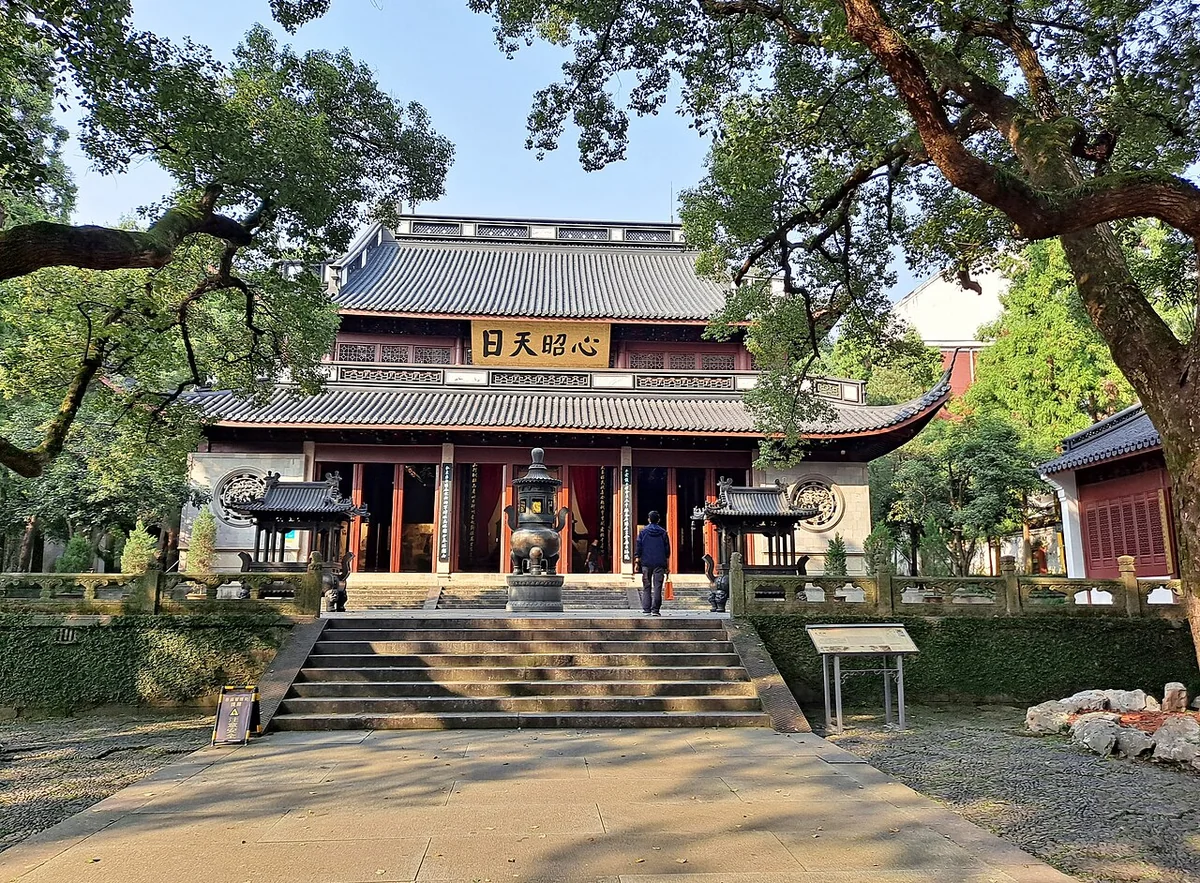
The Yue Fei Temple in Hangzhou, located at No. 80 Beishan Street on the northern shore of West Lake, is shaped not simply by the length of the fluctuating history of China’s feudal dynasties but also by the specific topographical structure of the Qiantang River delta plain adjacent to ancient sedimentary hill systems. First appearing in the 12th year of Jiading during the Southern Song dynasty (1219), the structure has endured centuries of destruction by wars, natural disasters, and large-scale restorations during the Ming and Qing dynasties as well as the modern republican era, resulting in a complex architectural ensemble deeply imprinted with traditional Chinese styles characterized by centripetal spatial layout and strict symmetry. The total area of the entire current historical site reaches over 4,000 square meters, clearly delineated into functional areas including the main temple, the mausoleum, the historical artifact exhibition area, and surrounding auxiliary spaces, designed to accommodate the influx of millions of visitors and cultural-historical researchers each year while preserving the necessary solemnity of a national memorial space.
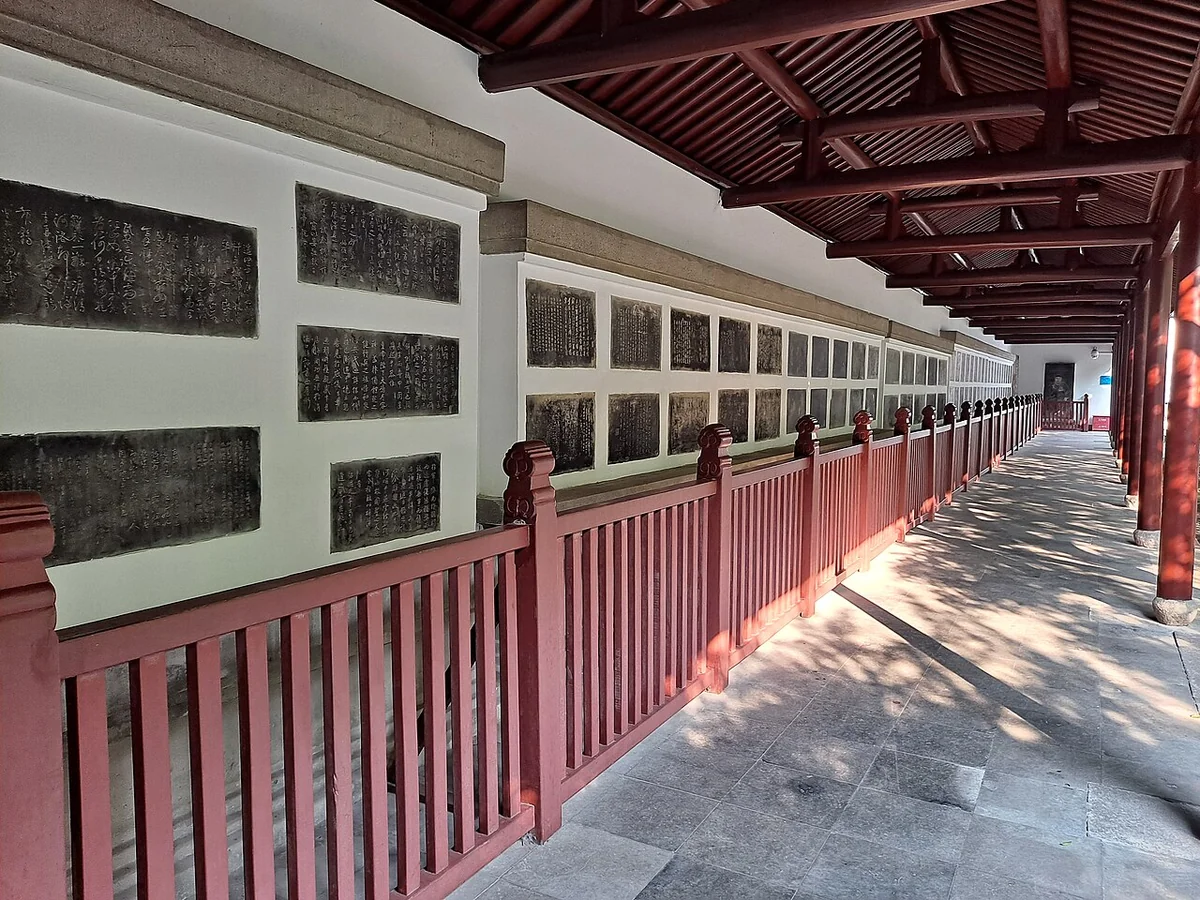
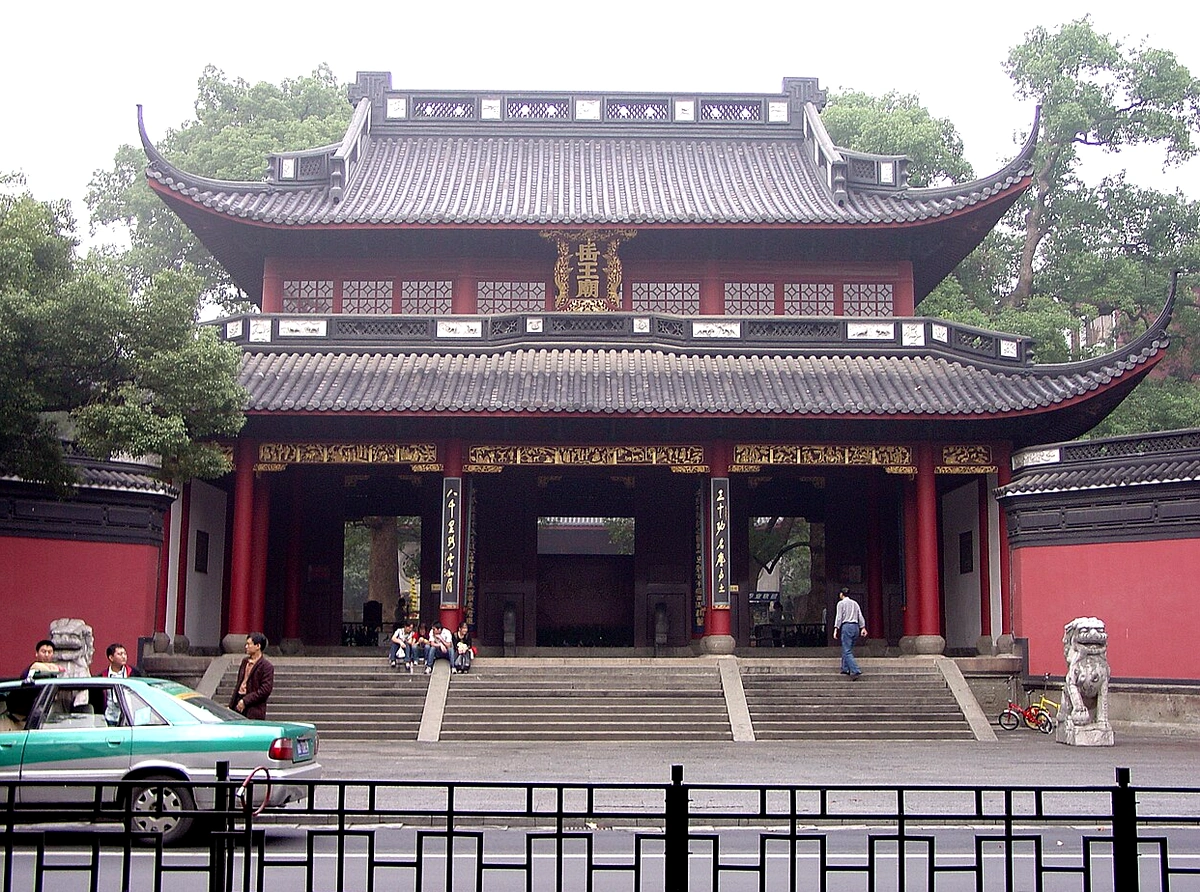
Regarding overall spatial planning, the Yue Fei Temple strictly adheres to traditional feng shui principles combined with the rigorous ritual order of feudal palace and ancestral hall architecture. The main axis of the heritage complex is designed along a north-south orientation, facing directly toward the water landscape of West Lake, creating a strong visual and spiritual connection between the man-made structure and the surrounding nature. The main gate of the temple, also known as the mountain gate, opens onto a spacious front courtyard paved with natural bluestone slabs smoothed by the footsteps of time. From this courtyard, visitors step into the front hall area, which houses a large statue of Yue Fei made of bronze or gilded wood depending on the restoration period, reflecting the dignified demeanor of a valiant military commander. Long covered corridors connect the front hall with the Main Hall, creating a closed circulation system that protects worshippers from the adverse weather conditions of the Eastern monsoon temperate climate while clearly defining tranquil and reverent inner courtyards.
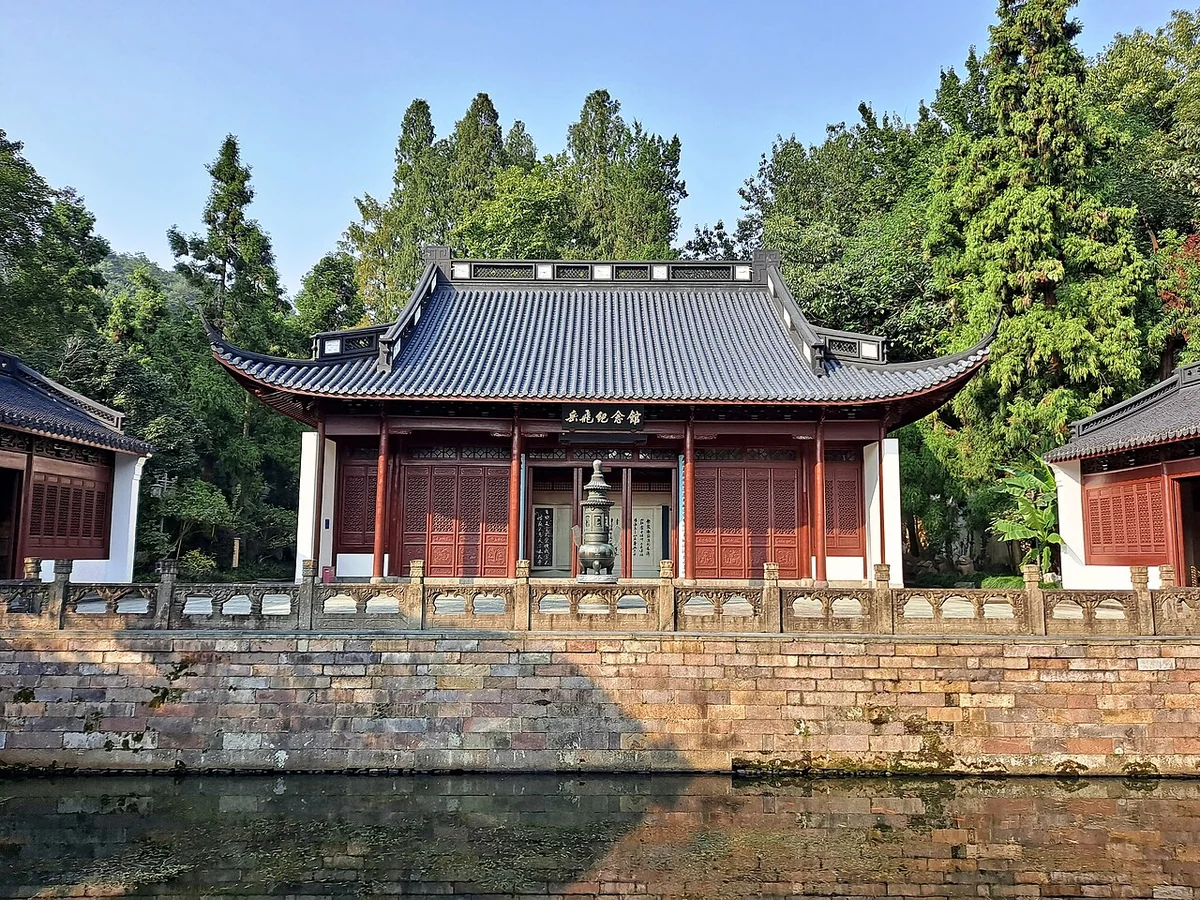
The Main Hall is the most important architectural core of the entire complex, representing the pinnacle of traditional Chinese carpentry techniques featuring a double-eaved roof structure covered with traditional dark grey glazed tiles characteristic of Jiangnan architecture. The load-bearing wooden bracket system within the Main Hall employs complex dougong joinery techniques, allowing the roof weight to be scientifically distributed onto large-diameter load-bearing wooden columns without the use of iron nails, showcasing the ancient craftsmen’s profound understanding of material mechanics. These load-bearing wooden columns are typically made from precious timber highly resistant to termites, placed on intricately carved marble column bases to prevent ground moisture from seeping upward into the wood. The height of the Main Hall reaches approximately 12 meters, creating a dignified, imposing architectural proportion that remains harmonious with the surrounding landscape punctuated by ancient tree shadows.
Alongside the main shrine area, the overall layout includes the mausoleum area of Yue Fei and his son Yue Yun, located in the northwest of the complex and enclosed by moss-covered grey brick walls. The mausoleum is designed according to standards for critical historical figures, featuring a simple yet solemn mushroom-shaped earthen burial mound preceded by stone statues of historical villains such as Qin Hui, Lady Wang, Zhang Jun, and Wang Shiqi carved in kneeling postures to atone for their crimes forever before the loyal minister’s coffin. The stone carving technique in the mausoleum area reflects the sophisticated chisel work of Ming and Qing artisans, who used local green limestone to create extremely vivid clothing details and facial expressions, carrying profound educational and historical value for future generations visiting to pay respects.
The primary building materials used throughout the structure represent a harmonious combination of pine and fir wood for the structural frame system, traditional hand-fired rectangular bricks for boundary walls, glazed tube tiles for essential roofs, and bluestone from the areas surrounding Hangzhou for foundations, stone steps, balustrades, and sculptures. The construction technique requires absolute precision in assembling wooden mortise-and-tenon joints, ensuring the building’s elasticity against geological disturbances or major storms characteristic of China’s eastern coastal plain. Wall surfaces are plastered with traditional lime mortar combined with natural lacquer, keeping the structure durable against high atmospheric humidity from West Lake. Underground drainage systems and open gutters are scientifically arranged around the bases of the structures, thoroughly preventing flooding during rainy storm seasons.
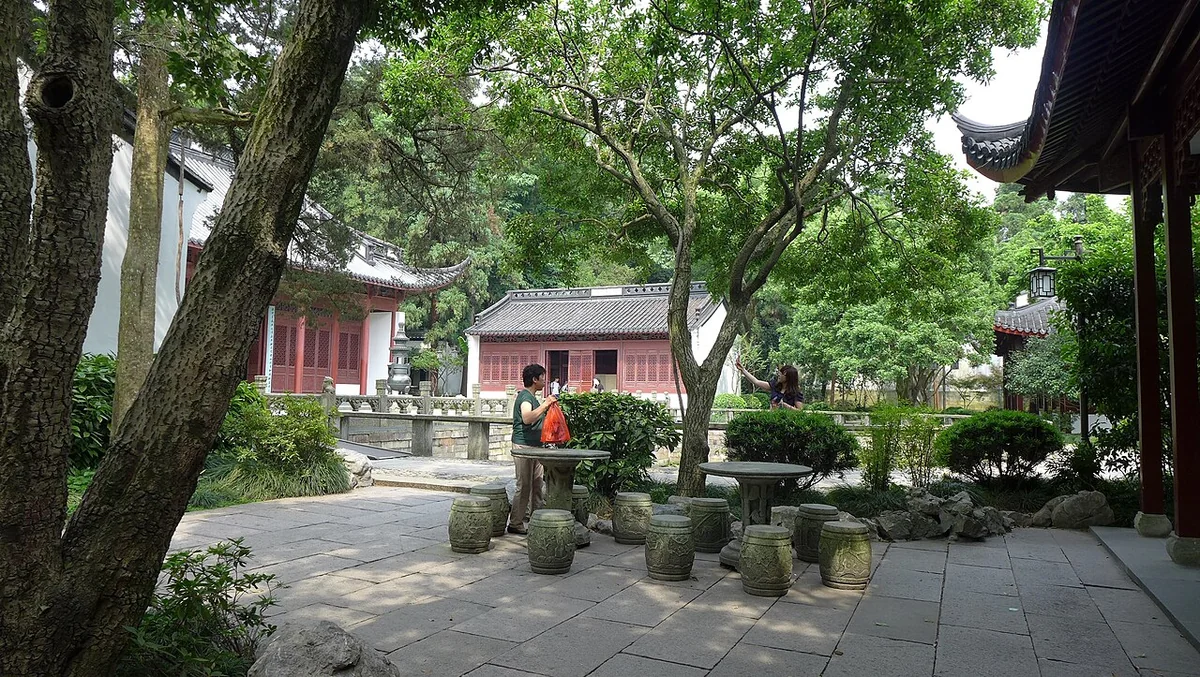
The visitor capacity and handling capability of the Yue Fei Temple have been optimized through expansions of exhibition spaces and upgrades to approach transportation systems over the past several decades. Additional exhibition buildings have been constructed in an architectural style harmonizing with the traditional landscape while utilizing modern structural solutions hidden underground or blended into side wings, helping preserve thousands of historical documents, ancient steles, calligraphy works, and archaeological artifacts related to Yue Fei’s life and career without disrupting the overall ancient architectural landscape. Walking paths are arranged with clear one-way traffic flows, combined with multi-lingual directional signs and scientifically planned public service areas at the outermost boundaries of the historic site, allowing the management of huge tourist crowds during peak tourism seasons while maintaining the solemn, quiet, and academic order inherent to one of eastern China’s most important historical and cultural museums.
The Hangzhou Yue Fei Temple, located at No. 80 Beishan Street on the northern shore of West Lake, is shaped through its architectural space and cultural ideology as one of the largest memorial spaces dedicated to the renowned Song dynasty general. Through centuries of turbulence from the Song dynasty, across the Ming and Qing dynasties down to modern restoration periods, this structure retains the typical structure of an ancestral temple combined with a mausoleum following traditional Eastern rituals. The entire architectural complex is laid out along a strict longitudinal axis, divided into two main functional areas: the front temple and the rear tomb, creating an entity that is both dignified and solemn while deeply imbued with the philosophy of life and traditional ethics of Confucianism combined with the Chinese martial spirit.
Passing through the triple main gate, visitors approach the opening space of the temple—the vast courtyard highlighted by the Main Hall, which officially houses the spirit tablet of Yue Fei. The Main Hall’s architecture bears the characteristics of traditional palace style featuring a blue-grey glazed tile roof, gracefully upturned eaves, and a wooden load-bearing framework supported by intricate dougong joinery. Inside the hall, a large statue of Yue Fei is cast in pure bronze in a dignified posture wearing Song dynasty battle armor, his expression revealing steadfastness and profound patriotism. High above the main hall, a horizontal board bears four large characters styled after the handwriting of emperors or historical figures, exalting the spirit of utmost loyalty to serve the country—the core ethical value that created the name and immortality of the Marshal in the consciousness of the Chinese nation.
Surrounding the main hall and enclosing corridors is an extremely rich treasure trove of artifacts, including hundreds of ancient stone steles inscribed with poems, commemorative essays, imperial calligraphy, and edicts from various historical periods. These steles hold immense value in philology and calligraphy while providing precious historical evidence regarding the life, military career, and rehabilitation process of Yue Fei after centuries of suppression by the peace-fading faction in the feudal court. In particular, the stone-carved calligraphy works here showcase various writing styles from regular script (Kaishu), running script (Xingshu) to cursive script (Caoshu), reflecting the peak of traditional stone-carving art and the reverence for knowledge and culture held by later generations of literati toward this historical figure.
Venturing deeper inward through the front and middle halls, the architectural space gradually transitions into a more tranquil and tragic atmosphere at the Qin Hui Hall area, which displays statues of the four treacherous officials held responsible for the wrongful framing and murder of Yue Fei in the 12th century. Four cast-iron statues in kneeling postures before the tomb area—including Qin Hui, his wife Lady Wang, Zhang Jun, and Wang Shiqi—are positioned much lower than the general floor level to signify historical judgment and human justice. Over the centuries, these statues have become symbols of public contempt for betrayal and petty scheming, while strongly reinforcing the traditional moral values of loyalty and the inevitable punishment awaiting national traitors.
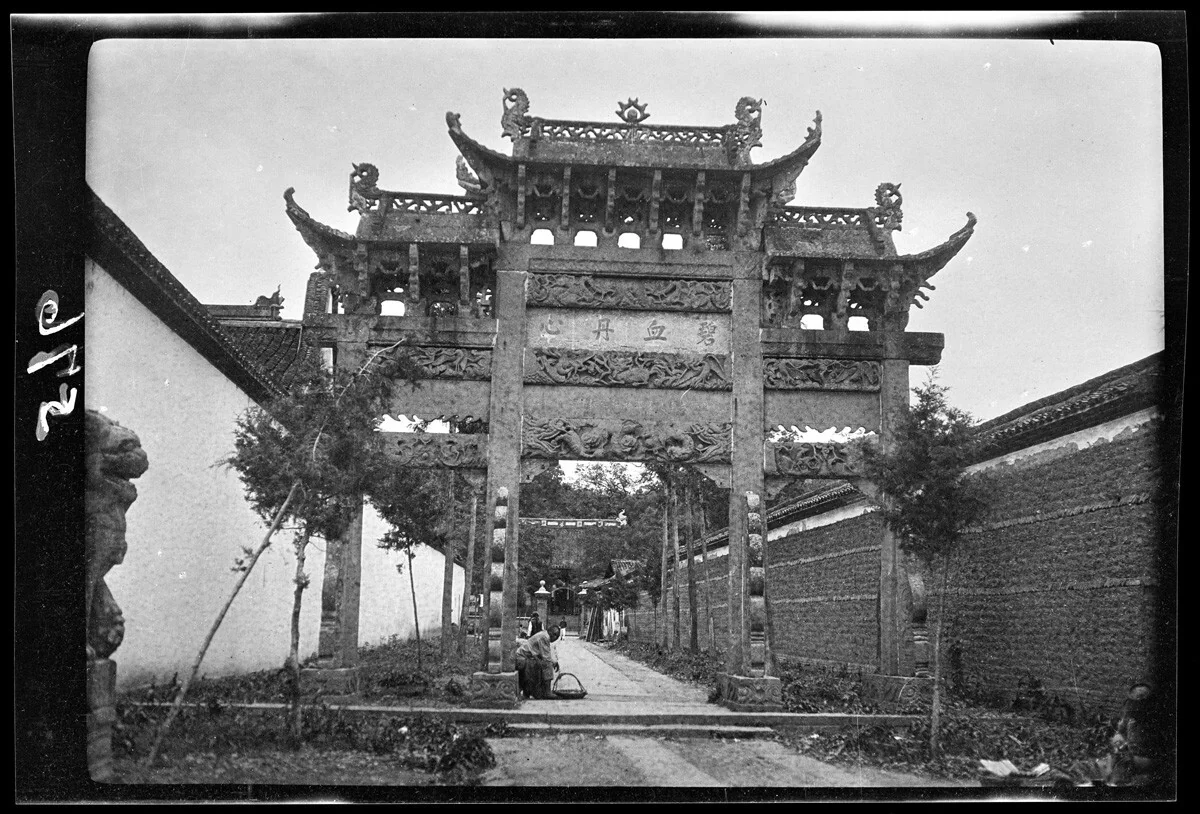
The mausoleum area is located at the very rear of the complex, enclosed by ancient brick walls and evergreen ancient trees, creating a sacred and serene memorial space. The burial mound of Yue Fei and his son Yue Yun is built with raised earth following burial rituals reserved for senior military commanders of the feudal era, preceded by stone elephants, stone horses, and stone attendants in accordance with traditional mausoleum regulations. These stone guardians not only serve decorative purposes but also symbolize the eternal reverence of posterity while demonstrating strict adherence to feng shui architectural standards and funerary rituals of the Chinese imperial court in honoring meritorious officials who made great contributions to the state.
The decorative patterns and carved motifs on wood and stone throughout the temple buildings showcase the peak craftsmanship of ancient artisans. Wood carvings on pillars, beams, and door panels vividly depict historical allusions, famous battles of the Song dynasty, along with auspicious symbols such as dragons and phoenixes, the four seasons, lotus flowers, and swirling clouds. Every chisel stroke is meticulously calculated, harmoniously combining religious symbolism, Eastern philosophy, and architectural molding art, transforming every room in the temple into an immensely valuable outdoor sculpture art gallery.
Regarding philosophical and spiritual depth, the Yue Fei Temple is not merely a place of worship for an individual but has become a spiritual symbol for unyielding willpower, patriotism, and the spirit of self-sacrifice for a greater cause on behalf of the nation. The temple’s architecture, through the close combination of geographical feng shui principles, spatial art, and material symbol systems, fully conveys the humanistic philosophy regarding the eternity of righteousness in the face of harsh upheavals of time and history. Preserving the original wooden architectural structures, the stele system, and precious artifacts here plays an essential role in studying the cultural appearance, architectural history, and social consciousness of China through centuries of development.
The Hangzhou Yue Fei Temple, a memorial monument dedicated to the renowned Song dynasty general of profound historical and cultural value, is located at No. 80 Beishan Street, right beside the northwestern shore of West Lake in Hangzhou City, Zhejiang Province. Through centuries of turbulence, the space here is not purely a museum preserving memories of loyalty and righteousness; it simultaneously maintains a distinctive local daily rhythm reflecting the subtle harmony between modern urban community life and long-standing spiritual traditions. Field surveys show that the pulse of life around this historical site moves in a closed cycle, beginning with the first movements of early morning mist on the surface of West Lake until night lights cloak the ancient structures in a subdued, secluded solemnity, creating a multidimensional picture of human life for any cultural researcher or international traveler setting foot here.
The dawn moment at the Yue Fei Temple area carries a uniquely solemn and tranquil character as the first rays of the new day pierce through the weeping willows along the banks of West Lake and illuminate the red masonry walls of the main gate. Before the massive wooden gates open to welcome visitors, the space outside the plaza and nearby gardens is already bustling with the daily life of local residents. Senior citizens in the area typically gather here very early to practice Tai Chi, traditional sword dancing, or play traditional musical instruments beneath the shade of ancient trees. The sound of swords gently cutting through the air and bamboo flutes resounding in the chilly early morning atmosphere blends with the bell chimes from nearby ancient temples, creating an ambiance deeply imbued with Eastern philosophy. The presence of the local community during these hours transforms the heritage site into a living community space where history does not rest quietly inside textbooks or cold steles, but breathes and continues through the bodies and rhythms of the contemporary generation.
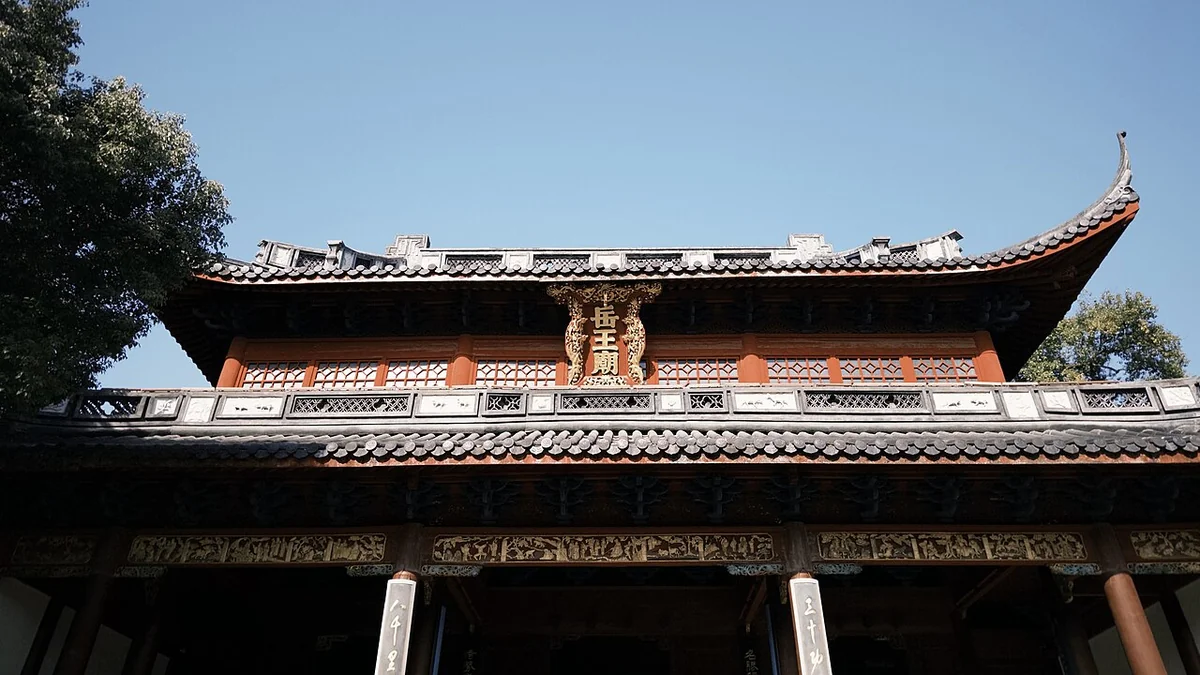
As the sun reaches its zenith, the rhythm at the temple shifts toward a more formal and academic tone as tour groups, historical researchers, and students from everywhere flock in to pay respects and learn about Yue Fei’s life. Local tour guides and scholars often choose this time to lead in-depth discussions regarding the intricately carved horizontal boards, couplets, and steles lining the corridors. Visitors can closely observe classic calligraphy masterpieces—notably the four Chinese characters meaning “Serve the Country with Utmost Loyalty” inscribed by later literati—or pause before the majestic bronze statue of Yue Fei housed in the main hall. Daytime operations maintain a high degree of focus, where every footstep on the ancient stone floor recalls the tragic atmosphere of the Song-Jin conflict while offering travelers an opportunity to contemplate traditional Chinese gentlemanly moral values.
In the late afternoon, when sunset casts a warm amber glow over the lake surface and the temple’s glazed tile roofs, the rhythm here shifts into a contemplative silence of deep introspection. Mass tourist groups gradually thin out, making way for those seeking quiet to ponder life’s philosophies. This is also when panoramic viewing angles at the historical site become most valuable for photographers and sketch artists. From the upper levels of the viewing pavilions behind the mausoleum area, observers can capture panoramic views of West Lake with small wooden boats gliding gently across mirror-flat waters, and in the distance, the hazy silhouettes of hills surrounding Hangzhou. Sunset light reflecting off the water creates magical color bands, highlighting the ancient architectural contours of the stele pavilions and the tomb area preserving the remains of the general and his son Yue Yun.
When night falls, artistic lighting systems turn on, transforming the Yue Fei Temple into a shimmering architectural entity completely isolated from the bustle of the surrounding modern city. Nighttime lacks noisy sightseeing activities, replaced by a profound stillness blanketing the entire heritage space. Yellow lights cast against fortress-like walls and large wooden pillars highlight the traditional wooden architectural structure typical of the Jiangnan style. Local residents often stroll along tree-lined paths outside the temple walls in the chilly evening air, enjoying cool breezes blowing from the lake. The nighttime space offers a vastly different exploratory experience, where spiritual, historical, and natural elements blend together under dim moonlight, creating deep emotional resonance for anyone observing and experiencing it.
Alongside daily temporal cycles, the rhythm of life at the temple is clearly shaped through festival events and performance arts occurring year-round. On major commemorative occasions related to Yue Fei’s life and career—such as his birth or death anniversaries—traditional regional cultural rituals are solemnly organized. Local artisans often re-create ancient sacrificial rituals featuring court music, traditional costumes, and Shaolin or Southern Fist martial arts performances to honor the martial spirit the general represented. These artistic performances attract large numbers of locals and tourists, creating a vibrant cultural exchange space where past and present converse directly through the sounds of festival drums, bronze gongs, and sharp, powerful martial arts movements.
The vivid exploratory experience at the Hangzhou Yue Fei Temple thus transcends standard sightseeing, rising into a journey of comprehensive historical and cultural understanding. The perfect combination of local daily life during early morning, solemn academic spaces by day, the romantic beauty of sunset over the lake, the magical stillness of night, and traditional festival activities creates a deep cultural tourism entity. Approaching this historic site requires travelers to possess a certain sensitivity toward historical layers and subtlety in observing local life, realizing that values of loyalty, filial piety, steadfastness, and community spirit remain eternal and flow strongly through the veins of Hangzhou across centuries.
The land surrounding the temple dedicated to the Song dynasty general Yue Fei in Hangzhou not only holds deep historical and spiritual value but is also one of the most brilliant culinary centers in the lower Yangtze River basin. The culinary system formed and developed around this area is tied to Zhejiang culinary traditions, one of China’s eight great culinary systems. Here, cooking art achieves high sophistication thanks to the harmonious combination of fresh ingredients from West Lake, masterful knife skills, and the philosophy of balancing yin and yang in traditional Chinese medicine. Dishes served in traditional eateries around the Yue Fei Temple carry strong Song dynasty cultural imprints, reflecting an elegant lifestyle that values refinement while remaining rich among Hangzhou’s literati and merchant classes across centuries.
Mentioning the culinary heritage associated with the history around Yue Fei’s temple inevitably brings to mind the legend of West Lake vinegar fish, a symbol of the art of blending natural flavors. According to folk historical records, this dish originated from a spontaneous yet exquisite combination of the mellow sourness of Zhenjiang rice vinegar and the gentle sweetness of rock sugar, coating tender grass carp meat harvested directly from the lake. Preparation requires absolute precision in timing, with the fish briefly boiled in a special broth and drizzled with a thick sauce made of vinegar, sugar, soy sauce, and minced ginger. The fish meat retains its smooth tenderness while its outer skin glistens with a natural pinkish-red hue; diners experience a harmonious blend of gentle sourness and pure sweetness without being overwhelmed by freshwater fishy odors.
Additionally, the culinary art of pork preparation featuring nearby Dongpo pork plays a major role in shaping the flavor identity of northern West Lake. This dish is associated with the great polymath Su Shi during his tenure in Hangzhou, who improved traditional meat-stewing techniques by simmering on low heat for hours so excess fat melted away while moisture was preserved. Cubed pork belly slices are tied securely with fragrant rush twine and simmered with pure Shaoxing wine, scallions, fresh ginger, and brown sugar in an earthen clay pot. Served to the table, the dish displays a deep amber color, fat layers that melt on the tongue, and lean meat fully saturated with spices, creating a rich yet refined tasting experience completely devoid of greasiness thanks to local rice wine’s aromatic fermentation.
The journey exploring culinary flavors around the Yue Fei Temple also leads epicures to beggar’s chicken, a masterpiece of whole-chicken baking inside traditional clay. Legend says this dish originated from a poor beggar who wrapped a stolen chicken in mud and buried it in hot embers, accidentally creating a superior heat-retaining and moisture-locking method. Longtime local chefs select free-range spring chickens, stuffing their cavities with a mixture of shiitake mushrooms, salted pork, scallions, herbs, and local spices, then wrapping them in multiple layers of fresh lotus leaves before sealing them tightly with thick clay. Slow-roasting over charcoal allows the lotus leaf aroma to penetrate deeply into every meat fiber, making the chicken tender and easily falling off the bone while retaining the poultry’s natural sweetness.
The local culinary cultural space here cannot be separated from the art of Longjing tea appreciation, China’s most famous beverage harvested directly from hillsides enclosing the lake’s northwest. Traditional teahouses along roads leading to the historic site maintain strict tea-brewing rituals, from selecting pure Hupao spring water to ideal boiling temperatures so tender tea buds are not scorched. Boiling water is poured into Yixing purple clay pots or premium glass cups so guests can observe vibrant green tea buds slowly sinking to the bottom, blossoming like lotus petals in crystal-clear water. The initial taste of Longjing tea carries a slight astringency on the tip of the tongue but quickly shifts into a deep, lingering sweetness in the throat, inducing a calm, relaxed feeling completely blending with the serene atmosphere of the sacred sanctuary.
Ancient streets intersecting with areas around the temple, such as Beishan Street or pathways along the Su Causeway, serve as vital culinary trade arteries preserving numerous long-standing restaurants and traditional street food stalls. Here, life moves leisurely as locals enjoy steaming baskets of translucent shrimp dumplings and crispy meat-filled pastries steaming in the early morning air. Fresh noodle craftsmanship at family-run eateries achieves high refinement with chewy, soft handmade noodles pulled from premium flour, cooked in bone broth and seasonal fresh bamboo shoots. Each dish carries a historical story and a synthesis of survival experiences and culinary art creation across generations of lake-dwelling residents.
Culinary customs in this area always adhere to principles of following nature and respecting seasonal cycles, evident in seasonal menu changes across local eateries. Spring features fresh bamboo shoots stir-fried with salted pork; summer brings lotus root stuffed with glutinous rice simmered in sweet osmanthus sugar; autumn offers West Lake hairy crabs steamed with perilla leaves and ginger vinegar; and winter warms guests with freshwater fish hot pots rich in family flavors. Meticulousness in ingredient preparation—from selecting traditional fermented soy sauces to presenting dishes on elegant celadon plates—demonstrates the refined aesthetic taste of Hangzhou residents. Thus, culinary experiences surrounding the general’s sacred space transcend ordinary dining, becoming a deep dialogue between modern humans and the intangible cultural heritage of China’s feudal history.
The Hangzhou Yue Fei Temple, a memorial monument for the renowned Southern Song Dynasty general holding profound historical and cultural value, is located at No. 80 Beishan Street, right beside the northwestern shore of West Lake in Zhejiang Province, China. To fully comprehend this sacred and serene space, planning transportation, grasping seasonal climate characteristics, and understanding traditional etiquette are prerequisites for every distant traveler. Hangzhou features a distinct subtropical monsoon climate bringing profound ecological changes across four seasons, directly governing visual and emotional experiences for visitors entering the site. Spring from March to May brings mild humid weather with warming temperatures as willows along West Lake sprout and flowers bloom, creating peaceful scenery enveloping the temple. However, this is also peak tourism season with huge crowds, requiring visitors to prepare for congestion in main exhibition areas. Summer from June to August brings high temperatures with high humidity and occasional sudden Jiangnan showers; conversely, temple surroundings overflow with pink lotus blossoms blooming on the water, offering ancient beauty under glaring sunlight. Autumn from September to November is considered by historians and travel experts as the ideal time to visit. Skies are clear and high, weather dry and cool, and sweet osmanthus aromas fill gardens, creating a perfect backdrop for viewing ancient wooden architecture and pondering the tragic history of national hero Yue Fei. Winter from December to February brings biting cold, sometimes with snow blanketing ancient glazed tile roofs, transforming the space into a subdued, quiet, and nostalgic ink-wash painting ideal for peace-seekers and history scholars.
Hangzhou’s public transport system is highly developed and synchronized, making access to the Yue Fei Temple convenient for both international and domestic travelers. The subway is the optimal transit method to avoid persistent traffic congestion on main axes around West Lake during holidays or weekends. Using the city subway system, visitors can take Line 1 or Line 3 to stations near the northern lake area, then enjoy a leisurely walk or transfer to local public buses directly to the temple gate. The local bus network spans widely with routes running along Beishan Street and Yuelong Road, offering panoramic views of Hangzhou’s urban architecture combined with nature through large windows. For travelers prioritizing speed or carrying heavy luggage, taxis or ride-hailing apps popular in China are viable options, noting morning and evening rush hours when personal vehicles face restrictions on lake-side roads to preserve ecological heritage. Choosing daily visiting hours also dictates experience quality; early mornings when gates open from 7:30 to 8:00 AM are ideal for enjoying stillness, watching early sunlight hit red walls and ancient trees while avoiding crowds arriving later. Late afternoons before closing at 5:00 PM offer nostalgic atmospheres as sunsets wash over West Lake waters and reflect onto architectural complexes, recalling Southern Song dynastic upheavals.
Regarding attire and etiquette, entering a sacred and memorial space like the Yue Fei Temple requires following traditional Eastern cultural standards. Attire should be polite, elegant, and modest—avoiding overly short or offensive clothing—to show respect for the general who protected the nation and for Confucian moral values enshrined here. Footwear should consist of flat shoes or soft sports shoes with good traction, as the temple grounds include large brick courtyards, ancient stone steps, and long corridors requiring hours of continuous walking. In summer weather, bringing umbrellas, hats, and sunscreen is essential against intense solar radiation, while in winter, thick coats, scarves, and thermal gloves are mandatory against southern lake damp cold. Inside main shrines, visitors should keep quiet, speak softly, and refrain from touching ancient display artifacts, bronze statues, or centuries-old stone sculptures to prevent physical heritage damage. Photography is allowed in outdoor areas and courtyards, but inside main shrines housing Yue Fei’s statues, some areas may ban recording to preserve sacredness. Visitors must also follow guidelines regarding incense burning or offering gifts to ensure fire safety for ancient wooden structures.
Ticket purchases and financial management during visits require thorough preparation due to China’s strong digital payment shift. The Yue Fei Temple is a paid historical site with admission fees posted publicly at the main gate, subject to seasonal changes or preferential policies for seniors and students per cultural authorities. However, a major hurdle for international visitors is that electronic ticketing is almost entirely integrated into domestic mobile apps like WeChat or Alipay, requiring accounts linked to international bank cards or pre-authenticated e-payment services. Buying tickets with cash at counters often hits obstacles because ticket inspectors prioritize QR code scanning, so preparing online payment methods on smartphones helps save queuing time and avoids gate confusion. Beyond regular tickets, travelers wanting deep insights into Song-Jin conflicts and Yue Fei’s tragic life can rent multilingual electronic guide devices or hire live docents at the temple service desk. These guides provide accurate information regarding historical relics like dynastic presentation boards and poetry steles while recounting details of the general’s frame-up and public hatred toward treacherous official Qin Hui represented through kneeling statues. Finally, respecting local customs, following guide signs, and maintaining civilized behavior will ensure a complete, deep cultural-historical research trip at one of Hangzhou’s paramount heritage complexes.
To fully experience this journey alongside a local guide, you can refer to the Beijing – Suzhou – Hangzhou – Wuzhen – Shanghai Tour with a pre-arranged itinerary.