Tracing back the geological timeline of the Quaternary period some 12,000 years ago, West Lake originally originated from a shallow sea bay separated from the surging Qiantang River by nature’s persistent alluvial sedimentation. The agricultural and transport turning point only truly emerged in 610, during the Daye era of the Sui Dynasty, when the southern section of the Grand Canal was fully dredged, connecting the cross-continental water trade network with the lower reaches of the Qiantang River. Ever since that transport lifeline intersected at Hangzhou, the lake bed was no longer merely a pristine lagoon, but officially stepped into the urban development flow, becoming the ecological heart and invaluable agricultural water source of the entire fertile Jiangnan plain.
The first human imprint deeply etched into the heart of the lake is associated with the great poet Bai Juyi when he assumed office as the Prefect of Hangzhou in the years 822–824, during the Changqing era of Emperor Muzong of the Tang. Empathizing with the people’s anxiety over floods and droughts, he ordered the construction of dams to block saltwater and retain fresh water, solving the irrigation puzzle for thousands of acres of fields in the Qiantang region and opening a flood-release route for the lake basin. This benevolent civic achievement is remembered by posterity through the graceful Bai Causeway nestled against the water’s surface. During the Five Dynasties and Ten Kingdoms period, King Qian Liu of Wuyue, when establishing his capital in Hangzhou, specially established a dedicated military corps named the ‘Liao Hu Bing’ with a standing force of 1,000 soldiers, dredging silt and clearing away seaweed day and night to decisively prevent the risk of West Lake turning into a dried-up swamp due to sedimentation.
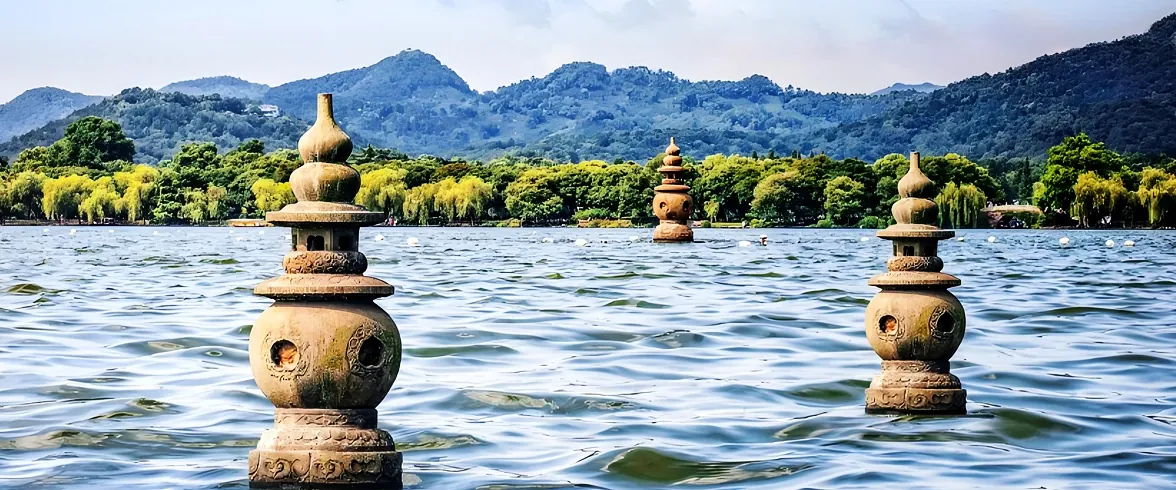
By the Northern Song Dynasty, the destiny of West Lake reached its brilliant peak under the statesmanlike hands of Prefect Su Shi. In 1089, in the 4th year of the Yuanyou era under Emperor Zhezong of the Song, the poet submitted a memorial to the court with a decisive warning: West Lake is like the eyes of Hangzhou; if the eyes go blind, the city must perish. Immediately thereafter, Su Dongpo mobilized up to 200,000 laborers to carry out a historic grand dredging. All the silt and weeds salvaged from the lake bottom were utilized to build a 2.8 km long causeway running along the north-south axis, punctuated by six stone arched bridges named Yingbo, Suolan, Wangshan, Yaodi, Dongpu, and Kuaqiao. He also erected three gourd-shaped hollow three-legged stone pagodas in the deepest part of the water, laying the premise for the Three Pools Mirroring the Moon scenic spot while establishing strict boundaries forbidding citizens from planting water chestnuts, which would cause lakebed sedimentation.
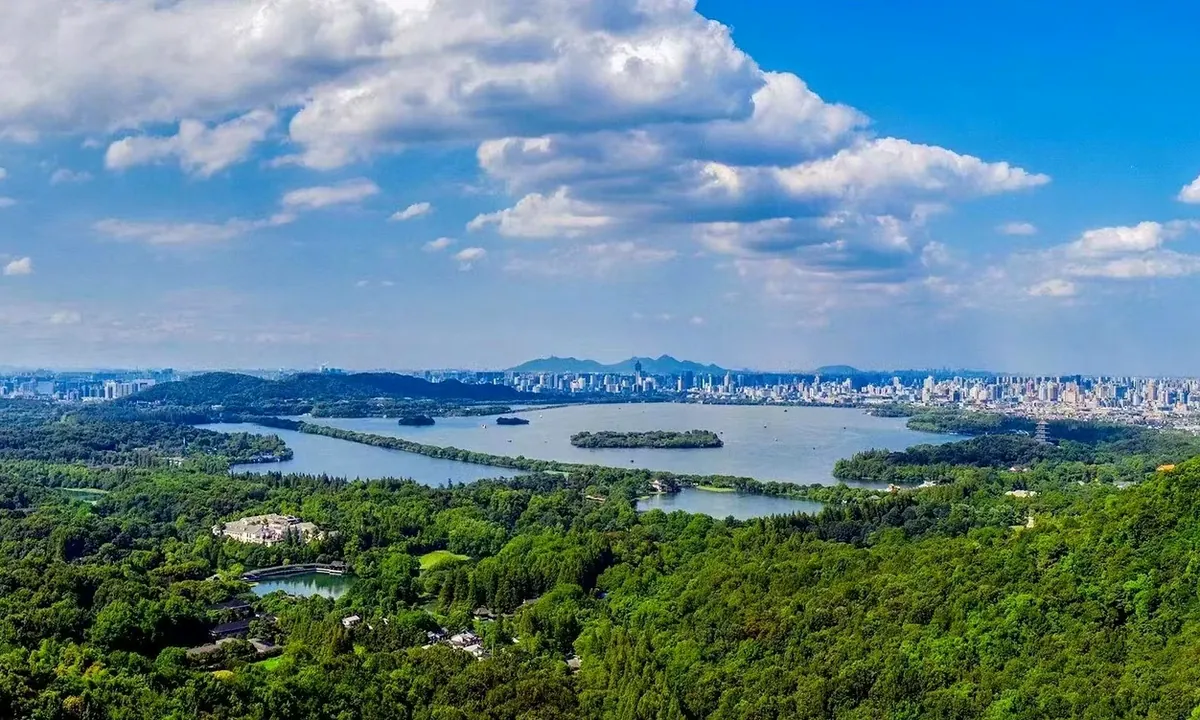
Observed from a comprehensive aerial perspective, West Lake resembles a magnificent shan-shui painting opening up spacious and free in the heart of nature. The flat, crystal-clear water surface is skillfully divided by a long causeway draped with weeping willows, stretching out to connect lush green islets standing out against the sky and water. Three sides of the lake are completely embraced by vast rolling hills and dense evergreen vegetation, creating a green boundary separating the secular rhythm of life. Far across the water’s edge, the skyline of the Hangzhou city modern area stretches out with magnificent high-rises, proudly casting their reflections against the backdrop of misty mountain ranges and the blue dome of heaven dotted with wispy white clouds.
As times shifted when the Southern Song Dynasty moved its capital to Lin’an, West Lake was immediately elevated into a supreme ritual space and imperial scenic spot. Renowned painters from the Imperial Painting Academy distilled the essence of the four seasons’ scenery to fully designate the classic ten scenic spots known as the Ten Scenes of West Lake, including Su Causeway in Spring Breeze, Orioles Singing in the Willows, Viewing Fish at Flower Pond, Crooked Courtyard and Lotus Pool, Evening Bell at Nanping Hill, Autumn Moon over the Calm Lake, Setting Sun Glowing on Leifeng Pagoda, Broken Bridge in Remnant Snow, Three Pools Mirroring the Moon, and Twin Peaks Piercing Clouds. This space is also a place that nurtures immortal love stories imbued with the karmic philosophy of Asian culture, from the tearful reunion between Lady White and Xu Xian on the Broken Bridge to the lingering ten-mile parting of Liang Shanbo and Zhu Yingtai at the ancient Changqiao Bridge.
Through the vicissitudes of dynasties, in 1508 during the Hongzhi era of the Ming Dynasty, Prefect Yang Mengchong exerted great effort to eradicate encroachment evils and dredge the flow, laying the foundation for the lake’s everlasting survival. By the Qing Dynasty, two emperors, Kangxi and Qianlong, during their six southern tours, endlessly praised the area and personally inscribed a four-character stone tablet to commemorate all ten scenic spots. This millennia-accumulated heritage culminated splendidly on June 24, 2011, when UNESCO officially honored the West Lake Cultural Landscape of Hangzhou as a World Cultural Heritage site with a strictly protected core zone spanning 3,323 hectares and a surrounding buffer zone of up to 7,270 hectares, affirming the enduring value of a masterpiece combining human creative craftsmanship with the divine energy of nature.
Situated at the geographical coordinates of 30°14’45” North latitude and 120°08’30” East longitude, West Lake Hangzhou reigns amidst the cradle of the southern subtropical humid monsoon climate, where nature generously bestows abundant rainfall and year-round lush vegetation. Under the lens of traditional geographical feng shui, this land perfectly crystallizes the famous layout of “three sides of cloudy mountains and one side of city.” The west, south, and north sides are embraced by undulating limestone mountain ranges, acting as winding dragon veins sheltering against harsh winds, gradually sloping down in altitude to gather at the flat lake basin—an extremely auspicious gathering basin for waters. Meanwhile, the eastern side opens up directly adjacent to the historic urban center of Hangzhou, establishing a wonderful equilibrium between the tranquil meditation of green mountains and blue waters and the bustling prosperity of the urban metropolis.
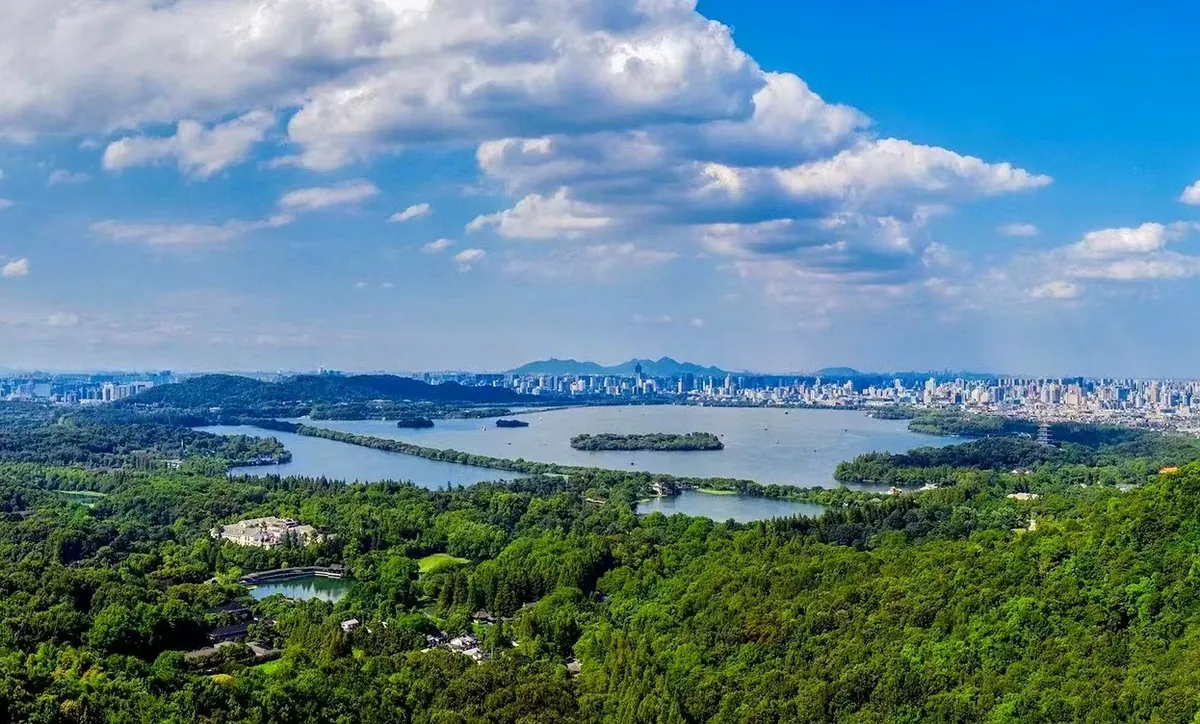
The water scale of West Lake is shaped with a total surface area of 6.38 km², of which the central depression accounts for up to 5.66 km², fringed by a gracefully winding shoreline approximately 15 km long. With an average depth of 2.27 m, the lakebed accumulates a layer of fertile sediment that nourishes a rich aquatic flora and fauna. To sustain this giant jade mirror through the ups and downs of time, the hydrological system here is designed with extreme sophistication. Surface water is not only regulated and continuously replenished from the mighty Qiantang River, but also receives sweet currents from winding streams around the renowned Longjing tea hills and the Maojiabu ecological area. Water flows through a network of intermittent underground culverts and natural lotus ponds, being continuously filtered before merging into the heart of the lake, keeping the water surface consistently clear and tranquil.
The cyclical transition of the four distinct seasons weaves a multi-layered vegetation, transforming West Lake into an exquisite natural landscape that shifts magically with each weather cycle. Soft, delicate willow branches trail gracefully along ancient dykes, intertwining with the vibrant pink of peach blossoms every spring. When summer arrives, tens of thousands of pink lotus flowers bloom proudly across the waters of Quyuan Garden, releasing a pure fragrance that soothes the southern heat. In autumn, the sweet scent of sweet osmanthus from the foothills weaves through the tree canopies, perfuming the gentle breeze; and when winter falls, a blanket of pristine white snow quietly covers the arches of Broken Bridge, creating a moving, secluded beauty.
From the expansive openness across the vast lake, travelers’ gazes take in the distant skyline, where a lush green hill rises amidst a vibrant landscape. Reigning majestically atop the hill is a multi-tiered pagoda with elegant, upturned eaves, bearing the deep imprint of ancient Oriental architectural tradition. Layer upon layer of lush greenery surrounds the shores and covers the slopes, creating a magnificent landscape backdrop for two small tour boats peacefully parting the waves, gliding across the flat waters under a sky dotted with wispy white clouds.
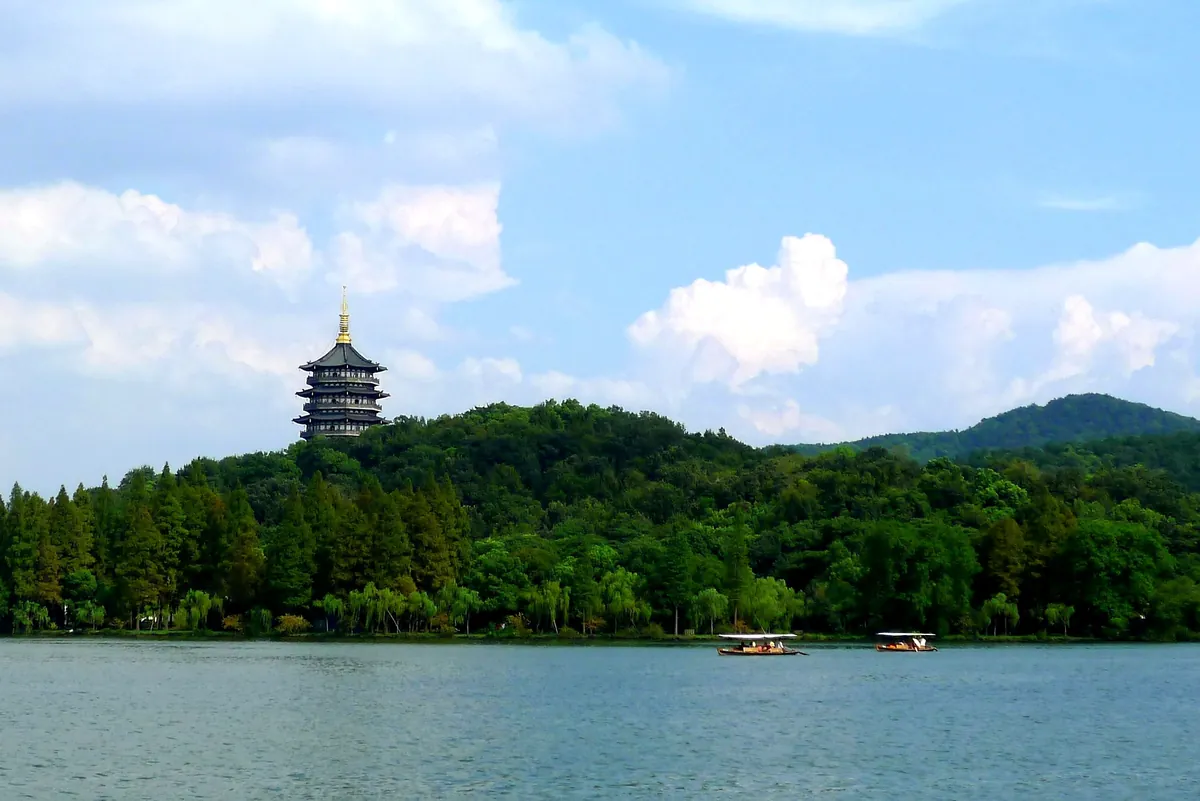
The harmonious arrangement of ancient architectural works against the backdrop of green hills and vast waters reflects the exemplary philosophy of “unity between man and nature” in classical landscape planning. Here, human hands do not seek to crudely alter nature but skillfully honor every topographic contour, borrowing the reflection of mountains on the water to create an illusion of infinite space. When the boat leaves the pier and drifts floatingly amidst the blue water, the boundary between reality and painting seems to dissolve, leaving the viewer with a sense of absolute tranquility in the heart of a living heritage.
The landscape planning of West Lake is the pinnacle crystallized from millennia of irrigation improvements combined harmoniously with traditional feng shui aesthetic philosophy, operating according to the classic structure of “One mountain – Two dykes – Three islands – Five lakes”. The entire water area is not displayed expansively and flatly, but is clearly demarcated by an artificial dyke system into five interconnected sub-lakes: Outer West Lake, West Inner Lake, Posterior West Lake, Little South Lake, and Yue Lake. This delicate water-division solution completely shatters the empty feeling of a large-scale natural lagoon, creating a magical visual effect of “changing scenery with every step” (bu bu huan jing). Every bend of the boat’s side, every curved stone arch bridge opens up multi-layered viewing angles, guiding visitors deep into a spatial composition with profound depth.
Serving as the backbone connecting the entire water landscape system are two engineering dyke routes bearing the marks of ancient scholars. The Su Causeway stretches 2.8 km along the North-South axis, gracefully opened through six ancient stone arch bridges named Yingshan, Suolan, Wangshan, Yazdi, Dongpu, and Kuqiao, both acting as water flow regulators and dotting graceful curves on the blue waves. Crossing the East-West axis is the 1 km long Bai Causeway, connecting from the famous Broken Bridge to the lonely Gushan Island. Deeper in terms of landscape ideology, the lake fully simulates Taoist mythological cosmology through the technique of “One pool, three mountains”. Three artificial islands including Lesser Yingzhou (preserving the Three Pools Mirroring the Moon scenic spot), Huxinting, and Ruangongdun are positioned as the embodiment of the three fairy mountains of Penglai, Fangzhang, and Yingzhou, forming a tripod of eternal feng shui balance in the middle of the flat lake.
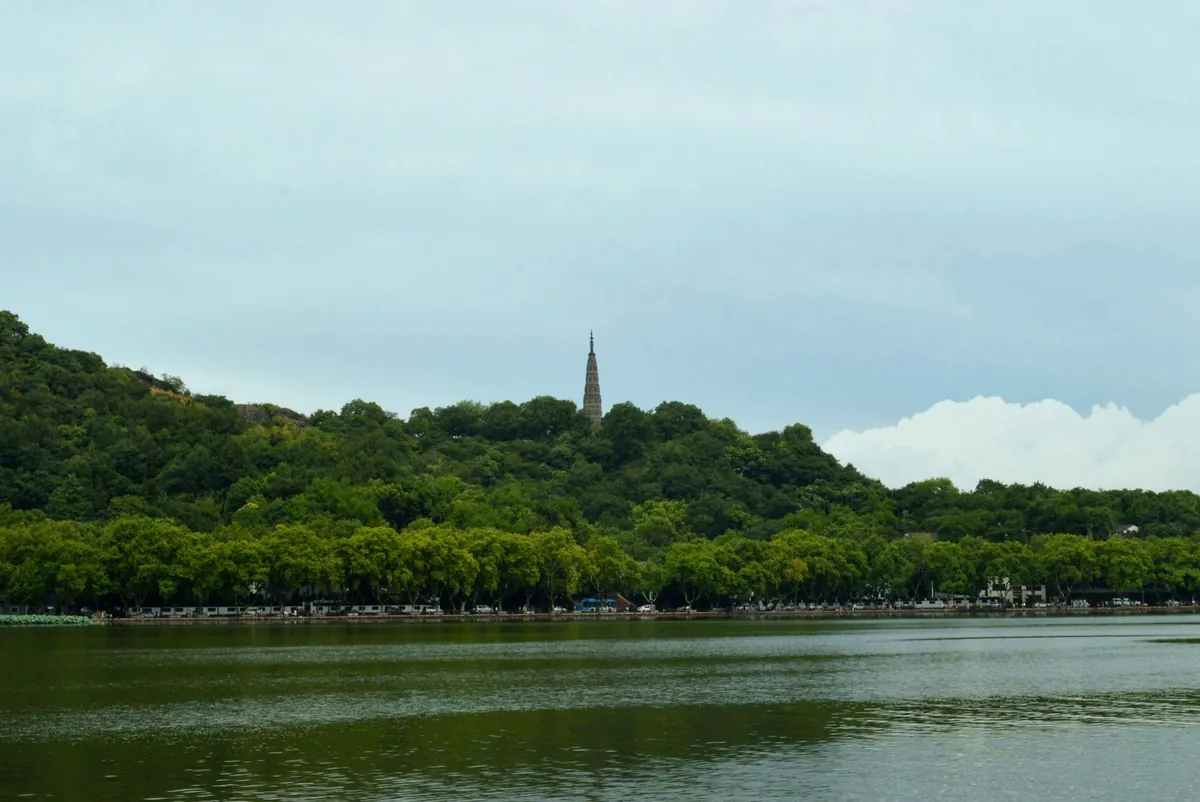
The inter-spatial “borrowed scenery” (jie jing) technique here also reaches an exemplary level thanks to the North-South visual axis controlled by two historical pagodas. Guarding the Xizhao peak on the southern shore is Leifeng Pagoda, originally built in 977, now extensively restored with a modern large-span steel frame structure combined with hundreds of tons of artistic cast bronze to protect the original Five Dynasties and Northern Song brick foundation ruins inside. Opposing on the northern shore is the slender Baoshu Pagoda rising high atop Baoshi Mountain, resembling the graceful figure of a beauty reflecting upon a thousand years of clouds and water. Every single shore-revetment or dyke surface is crafted from local green granite slabs, combined with symmetrical carved limestone balustrades according to Song dynasty standards and brilliant royal glazed tiles perched atop the stele pavilions from the Kangxi and Qianlong eras.
Along the gentle water’s edge, a traditional Chinese architectural structure nestles solemnly with quiet, deep red tiled roofs imbued with the classic flair of an ancient capital. Occupying the shaded space on the left side of the frame is an ancient, millennial tree with dense, lush green foliage drooping down to the stone embankment. Right in front of the ancient pavilion’s porch, a series of small sightseeing wooden boats are neatly and closely moored on the tranquil water alongside prominent lifebuoys, ready for the voyage. Far on the horizon, rolling hazy mountain ranges loom behind a thin veil of mist, perfectly portraying the harmony between the man-made and nature.
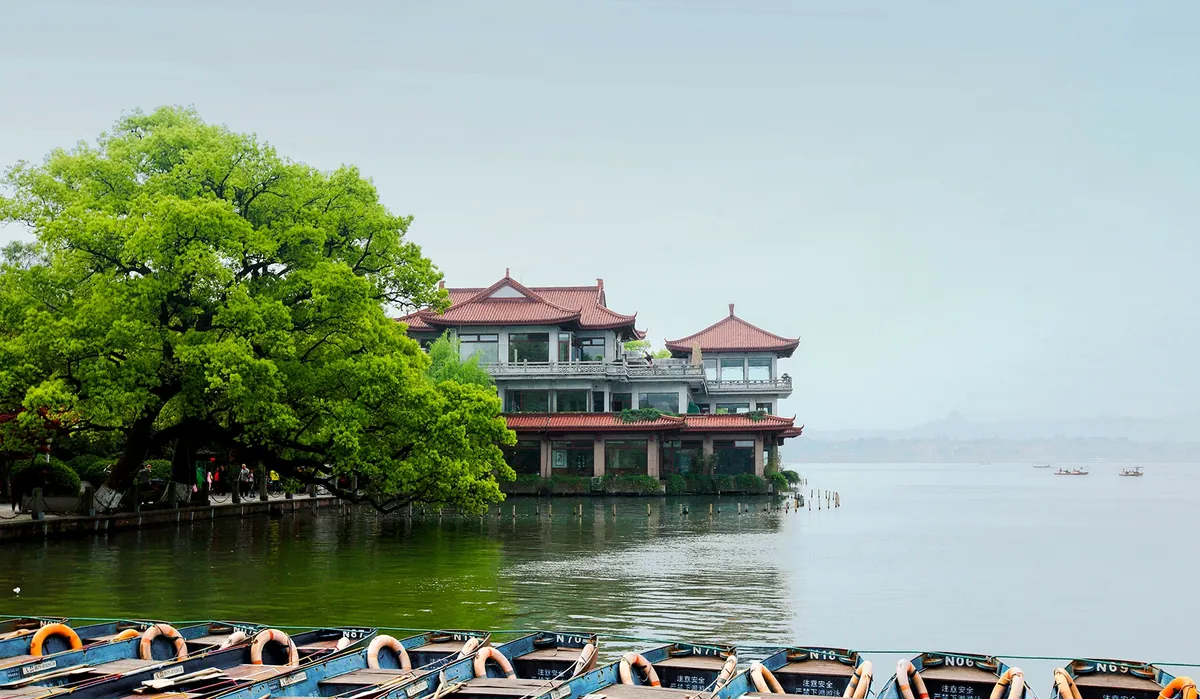
The seamless integration of contemporary material reinforcement technology and classical waterscape design thinking has transformed West Lake into an unparalleled open architectural complex. As the boat deck glides smoothly past moss-covered stone arch bridges or skims close to sturdy granite embankments, the waterborne tour goes beyond mere sightseeing to become an immersive experience of a spatial planning masterpiece where humanity and nature have co-created over centuries of prosperity.
As dusk gradually falls over the weeping willow branches, West Lake sheds its serene daytime antiquity to don a magnificent evening gown woven from top-tier lighting and sound artistry. The nighttime space here is illuminated according to a sophisticated East Asian aesthetic philosophy, utilizing specialized LED strips with warm yellow color temperatures ranging from 2700K to 3000K. This soothing light beam is meticulously calculated to embrace the slopes of Baoshu Hill, highlighting the slender height of Baoshu Pagoda and reflecting the millennial solemnity of Leifeng Pagoda without causing any optical pollution to the lake’s ecosystem. From Xinhu Wharf, gold-plated dragon boats emulating the Southern Song dynasty style begin to light up rows of vibrant festive lanterns, gently parting the waves to carry poets and travelers adrift between illusion and reality, admiring the full moon reflecting upon the Three Pools Mirroring the Moon stone pagodas.
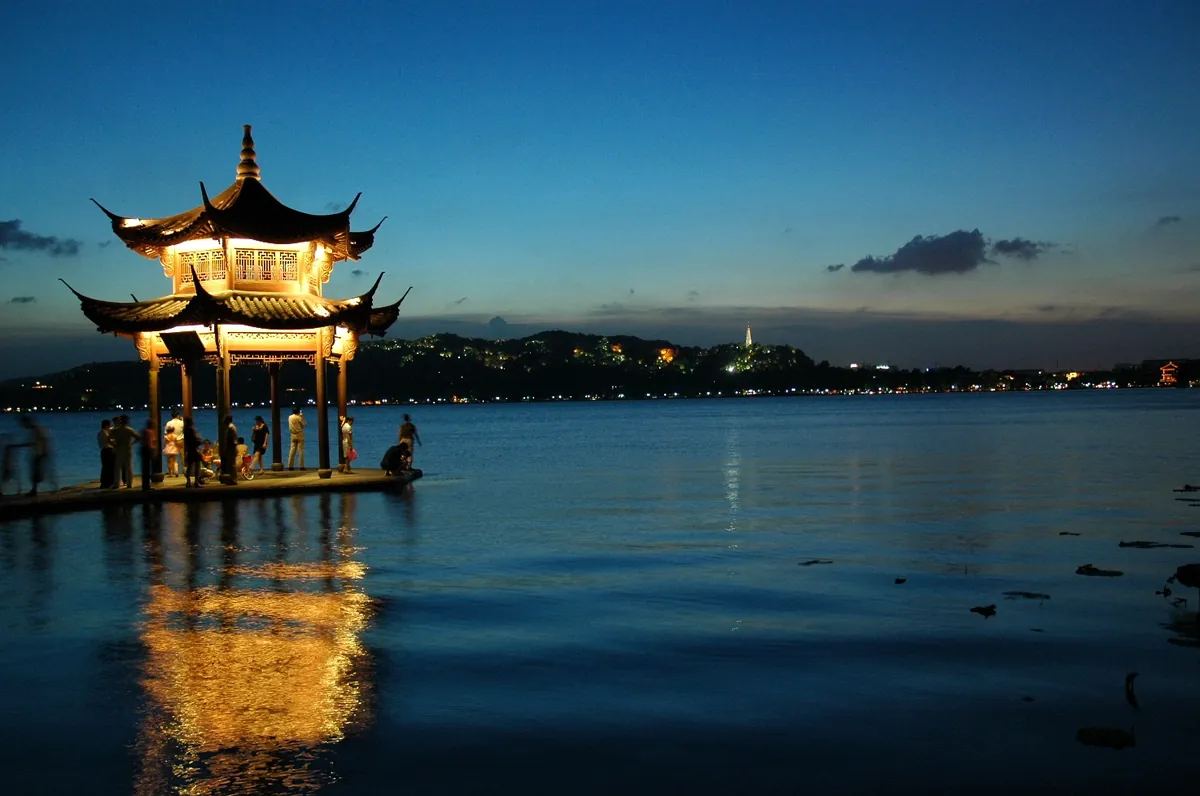
Gracefully reigning by the water’s edge at night, a traditional Chinese octagonal pavilion brightly illuminates with warm yellow lights enveloping every graceful curved roofline and intricate carved bracket. Impressively standing firm on a small pier protruding into the center of the lake, the structure resembles a brilliant golden lotus casting shimmering reflections, printing rippling light trails onto the emerald water surface. Groups of tourists leisurely stroll and pause for lively chats at the pier’s entrance, eagerly anticipating the night cruise. Across the water in the distance, rolling hills blend into deep blue darkness, dotted with shimmering urban lights and the proud silhouette of the ancient pagoda reaching up into the magical night sky.
The pinnacle of visual and emotional experience after nightfall is the renowned live-action spectacular entitled “Most Memorable is Hangzhou” (最忆是杭州). Under the masterful hands of Chief Director Zhang Yimou, this artistic masterpiece—which once shocked the world at the G20 Hangzhou Summit—has been comprehensively upgraded into an enduring epic set on the waters of Yue Lake. The stage’s most ingenious feature lies in its underground hydraulic lift system, positioned precisely 3 cm beneath the mirror-like water surface. This precise mechanical design creates a breathtaking optical illusion, transforming artists into immortals performing choreography, gliding effortlessly across the rippling waves amidst the expansive open space of heaven and earth.
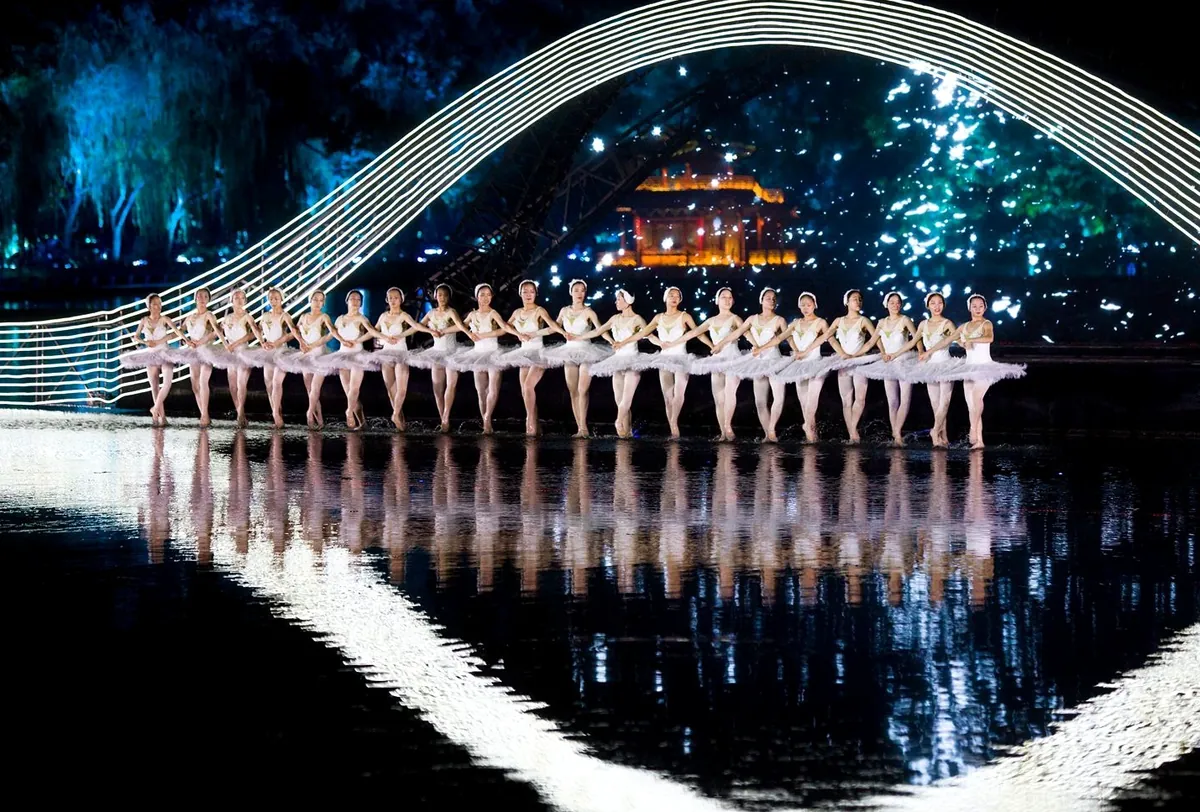
Throughout the performance, viewers are immersed in a magnificent blend of modern technology and profound human culture. Cutting-edge 3D laser projection technology paints ethereal natural landscapes amidst the night, serving as a backdrop for the classic ballet “Swan Lake” gliding lightly across the blue water, intertwined with the brisk and heroic pipa solo of the classical piece “Ambush from Ten Sides”. The explosive visual highlight occurs when a giant hand fan adorned with traditional patterns slowly unfolds in the center of the lake, emitting thousands of multicolored light beams that sparkle across the expansive water surface. To fully enjoy this masterpiece, visitors can choose standard grandstand tickets priced at 360 RMB (approximately 1.25 million VND), or experience the ultimate viewing positions on VIP stands and specialized floating cruises with costs ranging from 680 to 1,280 RMB per ticket.
Nestled deep within the origins of China’s Eight Great Culinary Traditions, Hang Bang cuisine—part of the renowned Zhejiang school—represents the pinnacle of Jiangnan’s refined culinary art. The local culinary philosophy strictly honors the fresh, sweet, and original flavors of river and lake produce, rejecting heavy seasonings in favor of delicate techniques like steaming, boiling, simmering over low heat, and preparing exquisite sweet-and-sour vinegar sauces. Under the skilled hands of master chefs, every dish along the shores of West Lake is not only a symphony of taste but also the crystallization of a cultural depth tied to poets, heroes, and historical anecdotes passed down through the centuries.
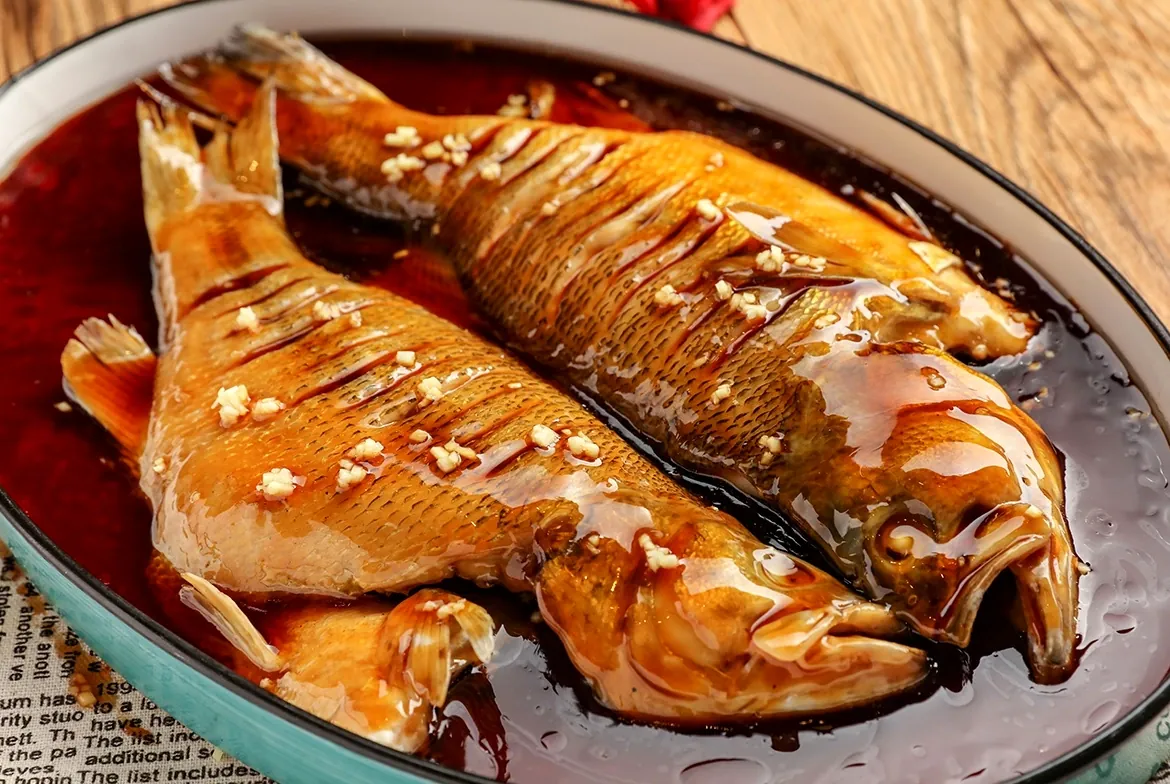
At the very top of the prestigious culinary list is the famous West Lake Sweet and Sour Fish, originating from the touching legend of a daughter-in-law surnamed Song who cooked spicy and sour soup for her brother-in-law during the Southern Song Dynasty. This dish requires an extremely rigorous ingredient selection process: fresh grass carp must be starved in net cages placed in the middle of the lake for two to three days to purge mud and keep the flesh firm. The technique of boiling the fish in boiling water must not exceed precisely three minutes to maintain its tender, smooth texture, after which the chef drizzles an amber-colored sauce made from premium Zhenjiang vinegar, rock sugar, heritage soy sauce, and minced ginger—strictly avoiding cornstarch for thickening. To fully savor the authentic flavor, diners often visit the famous Lou Wai Lou culinary pavilion, established in 1848 at No. 28 Gushan Road. Right next to it is the legendary Dongpo Pork, created by the great litterateur Su Shi in 1089 to reward the laborers who built the Su Causeway. Each cube of Jinhua pork belly is neatly cut into five-by-five centimeter dimensions according to the precise ratio of three parts fat to seven parts lean, carefully placed on a layer of scallions and fresh ginger at the bottom of a clay pot, and double-boiled for four solid hours with pure Shaoxing wine and rock sugar without a single drop of plain water. This creates a rind that melts like jelly, rich yet never greasy, at the Zhi Wei Guan – Wei Zhuang restaurant located at No. 10-1 Yanggongdi Road.
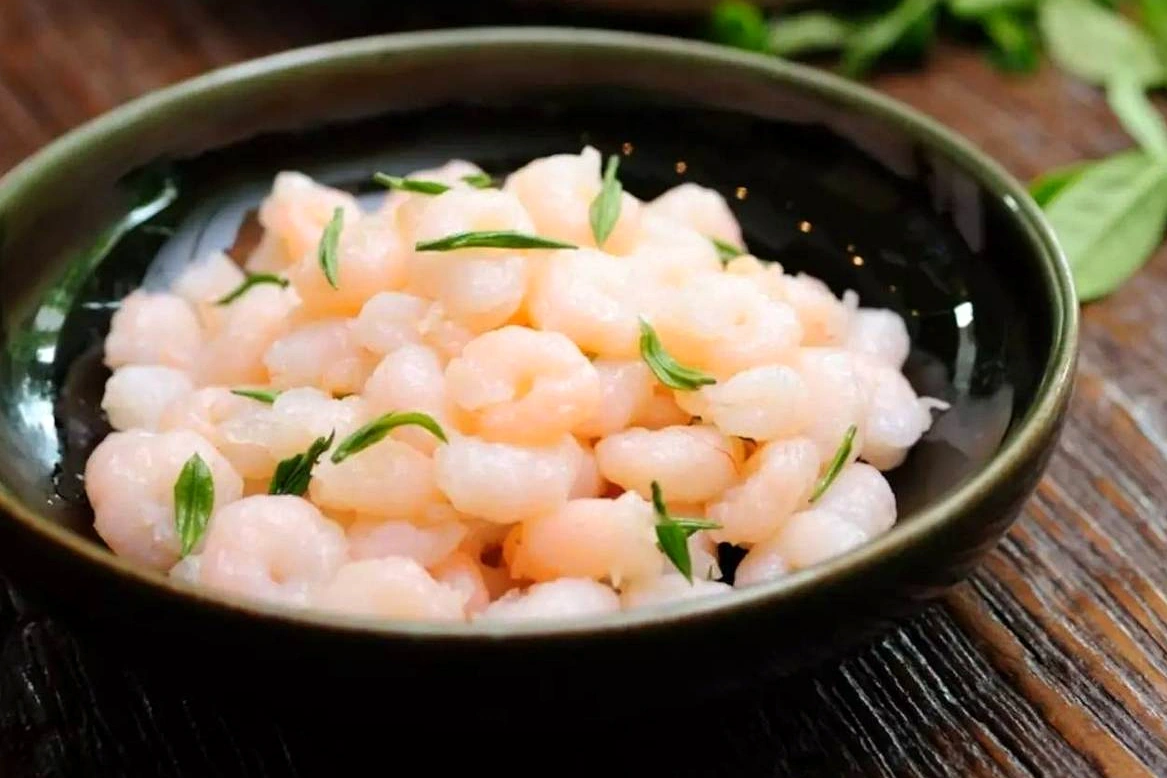
The elegant intersection of fine tea and Hangzhou seafood is fully expressed through the dish of stir-fried shelled shrimp with Longjing tea leaves, a delicacy that once captivated Emperor Qianlong during his southern tours. Freshly caught river shrimp are meticulously shelled, marinated with egg white and pure lotus root starch, quickly blanched in warm oil at sixty degrees Celsius for only about fifteen seconds, and then tossed over high heat with freshly brewed Tiangou Longjing tea buds. This offers diners crispy, sweet shrimp pearls with the refreshing aroma of tea at the Shan Wai Shan restaurant, tucked away inside the Hangzhou Botanical Garden. The nostalgic charm of the ancient capital is further enriched by a bowl of shimmering Song Sao fish soup at Hangzhou Jiujia on Yanan Road, featuring shredded perch meat blended with shiitake mushrooms, shredded bamboo shoots, and swirled egg yolks, accented with mild vinegar and warm white pepper. Equally unique is the Beggar’s Chicken, where a tender young chicken is tightly wrapped in fresh West Lake lotus leaves, coated in mud mixed with Shaoxing wine, and baked in an earthen oven for four hours. When the terracotta shell is cracked open, the intoxicating lotus aroma and tender, fragrant roasted meat awaken every sense of the traveler.
After hours of immersing oneself in the hazy, misty waters, a traveler’s footsteps often lead back to the bustling lakeside commercial streets as twilight falls. The urban landscape showcases a fascinating dialogue between two dimensions of time and space: on one side of the street are rows of buildings with traditional upturned eaves, while the opposite side features modern, luxurious skyscrapers glowing with brilliant lights. Green trees strung with twinkling lights shine like thousands of stars illuminating the leisurely strollers, blending with the gentle violet flower colors dotting the whimsical mouse miniature landscape, guiding admirers into Hangzhou’s flourishing culinary paradise as night lights up.
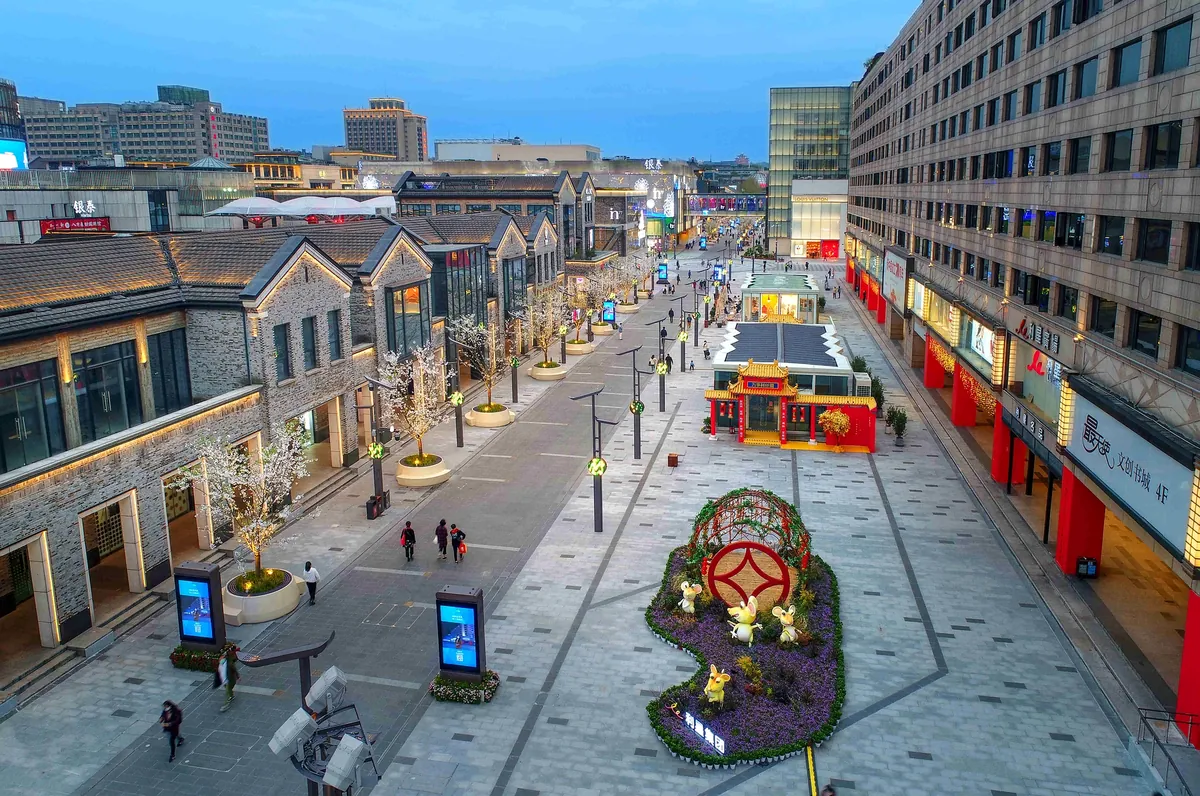
Hangzhou cuisine is not merely a blend of savory flavors, but also a cultural story traveling back through the past via every refined emotional nuance. Amidst the peaceful atmosphere of Jiangnan’s nature, raising a cup of warm Shaoxing wine, tasting a piece of rich braised pork, or sipping a spoonful of warm, mildly sour fish soup is the perfect harmonious piece that complements the tranquil, poetic essence reflecting upon West Lake’s hazy waves.
The water transport system on West Lake is organized very scientifically and orderly, with multiple vessel segments serving diverse sightseeing needs. The most popular option is the public motorized boat route with a capacity of 80 to 100 seats, priced at a listed fare of 55 RMB per trip—a fee that already includes the 20 RMB ticket to visit the Three Pools Mirroring the Moon islet. The superiority of this type lies in its flexibility, because after finishing the journey of strolling around the island, visitors have the freedom to choose one of four major piers—Huagang, Hutian, Yue Temple, or Zhongshan—to return to the shore without paying any additional surcharges. For those wanting to recapture imperial elegance, royal-architecture-simulating warships of the Southern Song Dynasty era with a capacity of 40 to 60 guests, priced between 70 to 90 RMB per ticket, make an unmissable choice. Meanwhile, groups seeking private space tend to favor traditional manual rowing boats called “dao lü chuan,” with rental prices ranging from 150 to 180 RMB per hour depending on size, or self-driven electric boats priced at 60 to 80 RMB per hour with a 200 RMB deposit.
}
The most invaluable field experience to fully enjoy the serenity of the scenic spot is to completely avoid overloaded piers such as No. 1 Park Pier and Duanqiao Pier during the two peak hours from 09:00 to 11:30 in the morning and 14:00 to 16:30 in the afternoon, when thousands of tour groups flood in simultaneously. Instead, savvy travelers usually start their journey from Zhongshan Pier nestled beside Gushan Island or the ancient Tiantang Temple Pier. To touch the mysterious and pristine beauty of West Lake to the west, Quyuan Fenghe Pier shaded by willows or the Maojiabu ecological waterway are ideal coordinates to admire the mirror-like flat water surface. Inter-regional transportation connectivity is also extremely convenient, as the Fuxing high-speed train network takes only about 45 to 58 minutes to transport passengers from Shanghai Hongqiao Station to Hangzhou East Station. In the city center, Metro Line 1 with Longxiangqiao Station is only about 150 meters from the lake edge, while Line 7 directly picks up visitors from Xiaoshan International Airport right to Wushan Station adjacent to the water surface.
A vital note for both independent and group travelers is to remain extremely vigilant against cheap tour traps that are rampant in the market. These programs typically cut down the West Lake sightseeing time to just 30 to 45 minutes of a whistle-stop tour on a large public boat, and then spend 4 to 6 hours forcing visitors into designated shopping spots such as fake Longjing tea plantations in Meijiawu village, silk museums selling synthetic-blend quilts, commercialized Zhang Xiaoquan cutlery workshops, or Taihu pearl feng shui centers. To preserve the complete cultural aesthetic, the itinerary should be planned with at least 2 to 3 hours of drifting on a hand-rowed boat and strolling across the arches of Su Causeway. In addition, the 144-hour transit visa-free policy in the Jiangnan economic triangle including Shanghai, Jiangsu, and Zhejiang, combined with flexible group visa procedures, creates extremely favorable conditions for international travelers; meanwhile, linking international credit cards to Alipay or WeChat Pay applications allows for smooth payment of boat tickets and lakeside cuisine without worrying about cash.
After hours of drifting on the hazy, misty waves, the local culinary experience is the perfect piece to conclude an elegant day. On a rustic wooden table, a traditional steaming black clay pot is served with layers of premium ingredients meticulously arranged, from glossy sea cucumbers, delicately sliced abalones, fresh and crispy shrimp to rich quail eggs and shiitake mushrooms that have absorbed the essence of heaven and earth. The creamy yellow broth is meticulously simmered from bones and meat for many hours, blending wonderfully with the green color of baby bok choy and pure slices of root vegetables, bringing a sweet, rich flavor characteristic of Zhejiang health-preserving culture.
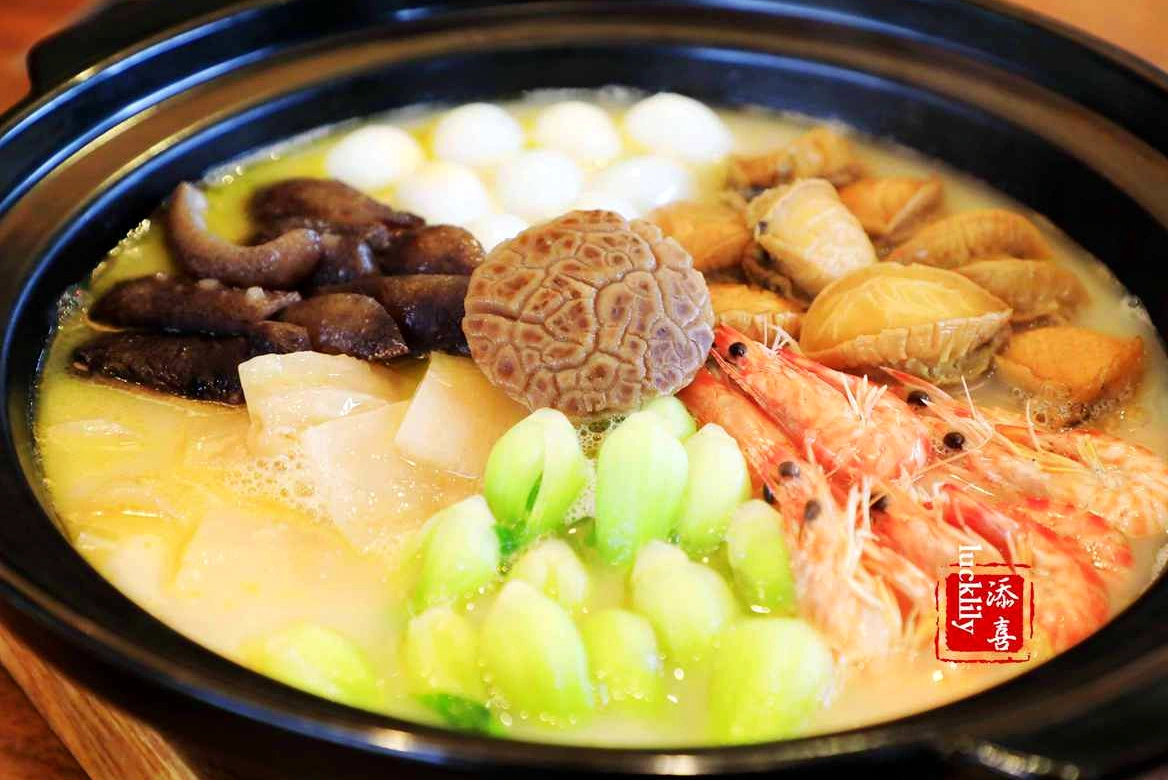
Admiring the picturesque landscape in the heart of Hangzhou is not merely a sightseeing excursion, but also a journey to awaken all senses and immerse oneself in the endless thousand-year poetry flow. The harmonious combination of modern rhythm and age-old heritage leaves a deep, lingering aftertaste in the heart of every traveler at every corner of the water and every row of willows at West Lake. For those who are nurturing a journey to explore the depth of Chinese culture in a thorough, complete, and worry-free manner regarding forced shopping schedules, referring to the Shanghai – Wuzhen – Hangzhou – Beijing 7 Days 6 Nights Tour will open the door leading to the most glorious heritage regions of the East.