Hanshan Temple (Cold Mountain Temple) sits in the western part of Fengqiao Town on the outskirts of Suzhou City, Jiangsu Province, China, at roughly 31 degrees 24 minutes north latitude and 120 degrees 35 minutes east longitude. This land features the low alluvial plain terrain typical of the Taihu Lake basin in the Yangtze River Delta, where a dense web of canals and waterways formed a vital arterial water-transport network from feudal times. Its geology consists chiefly of soft ancient alluvium deposited over millennia by river branches of the Grand Canal system, creating a level floor averaging just three to five meters above sea level. The interplay of natural and human-made waterways shaped the scenery around the ancient temple, where the old Kuzhukou Creek skirts the temple grounds and empties into the grand Beijing–Hangzhou Grand Canal, establishing a lively space for trade and culture centuries ago.
The founding history of Hanshan Temple is tied to dynastic shifts of the Northern and Southern Dynasties period, originating around the mid-sixth century under the Liang Dynasty—specifically during the Tianjian era from 502 to 519. Initially, the temple was named Miaoli Puming Temple, built as a religious site serving the spiritual life of local residents in the Fengqiao area. However, the greatest turning point in the temple’s naming history and intellectual structure came during the Tang Dynasty, when Zen master Hanshan—a recluse renowned for his free-spirited way of life and deep Chan (Zen) thought—came to reside and serve as abbot here. The presence of this eminent monk alongside his kindred spirit, Zen master Shide, transformed the temple into an important meditation center, leading locals and the court of the era gradually to set aside its original name and revere it as Hanshan Temple in honor of his virtue and philosophy.
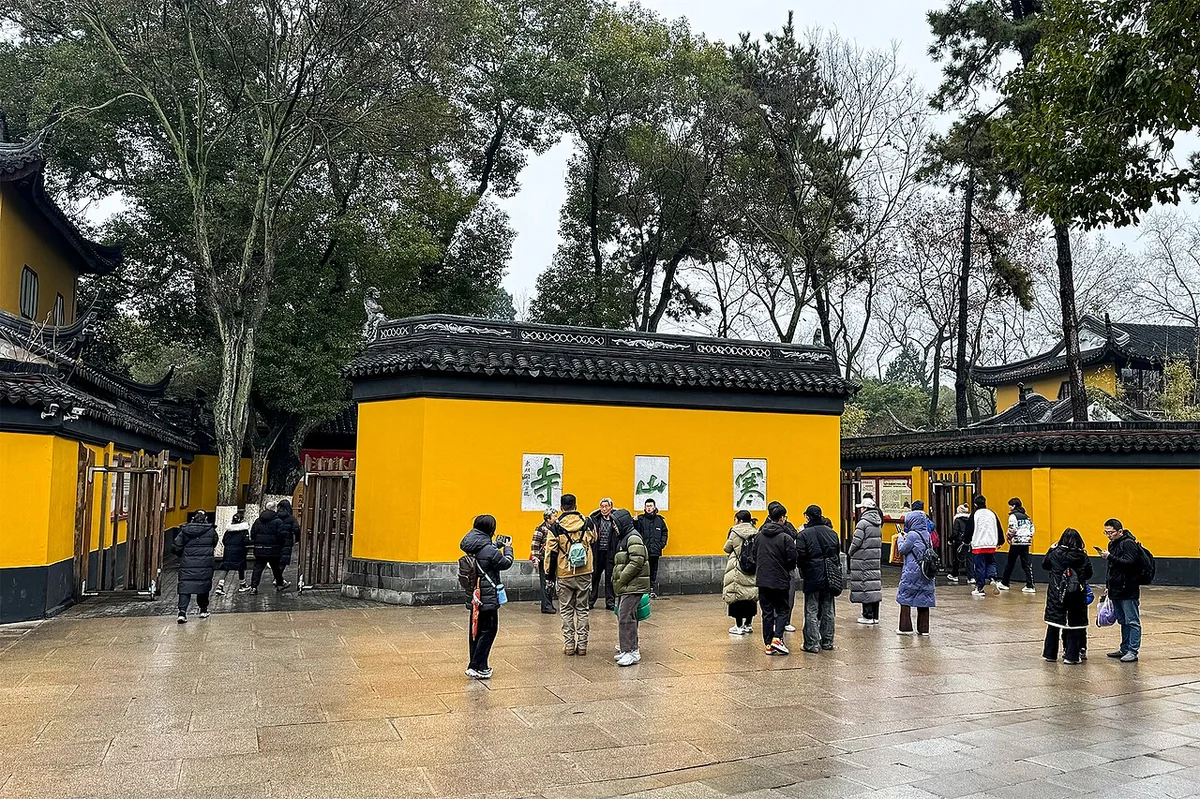
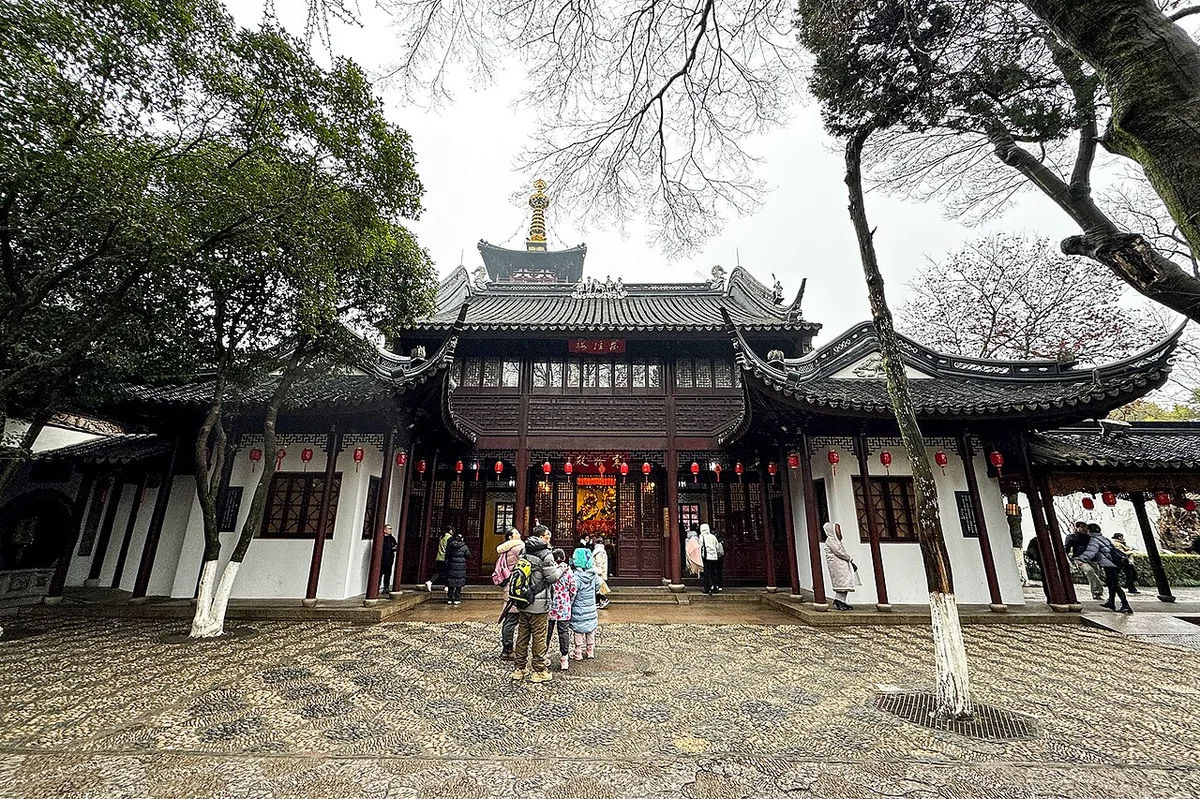
Hanshan Temple’s historical arc has weathered many vicissitudes from warfare, fire, and the wear of time, calling for large-scale reconstructions across successive feudal dynasties. According to archaeological records and historical chronicles, the temple has been completely destroyed and rebuilt from ashes at least seven times, with key restorations during the Song, Ming, and Qing dynasties. The most recent major rebuild in the late Qing Dynasty re-established its current architectural layout, including the Mahavira Hall (Great Hall), Shizun Hall, Sutra Pavilion, and the famous bronze bell. Each reconstruction reflected distinctive architectural styles of its historical era, with the Qing Dynasty leaving the clearest mark through its interlocking yin-yang glazed tile roofs, winding corridors, and signature yellow walls of Chinese Mahayana Buddhism—preserving its tangible heritage across centuries.
Hanshan Temple’s symbolic stature reaches beyond an ordinary religious site to become a global poetic and cultural emblem, sparked by Tang poet Zhang Ji’s masterpiece “A Night Mooring by Maple Bridge” (“Fengqiao Yebo”). The concise yet evocative poem—depicting an autumn night at Fengqiao ferry with the sound of Hanshan Temple’s bell carrying across at midnight—immortalized the temple in the minds of millions of readers across generations. The bell in Zhang Ji’s poem is more than a physical sound echoing over chilly water; it symbolizes the homesickness of a distant traveler, creating deep emotional resonance characteristic of ancient Chinese literati. So wide was the poem’s reach that for centuries, scholars, merchants, and envoys from neighboring countries within the Sinosphere regarded Hanshan Temple as an essential cultural pilgrimage stop upon entering the Jiangnan region.
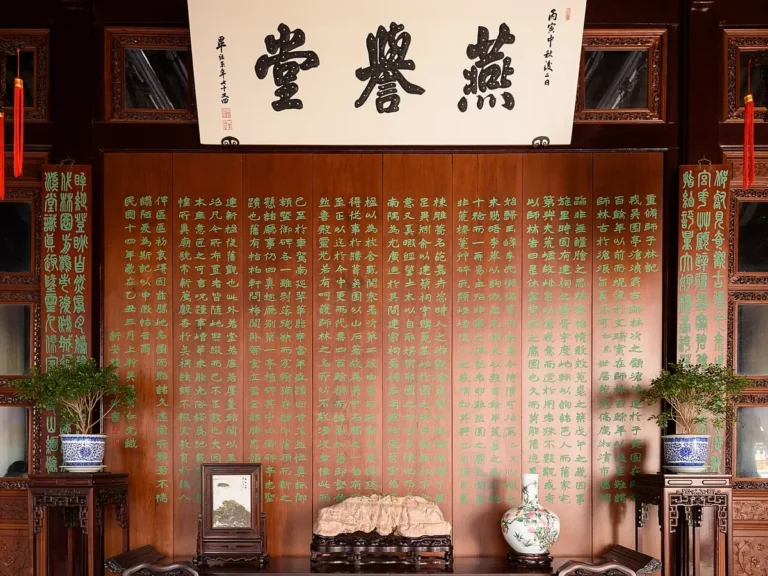
The cultural influence of this ancient temple is further reinforced by calligraphy and carving arts carefully preserved inside its grounds. A stone stele inscribed with “A Night Mooring by Maple Bridge”—rendered in flowing cursive script by Qing-era master Wen Zhengming—has become a national treasure drawing calligraphy researchers from around the world to admire and study its brushwork. Horizontal plaques and couplets intricately carved into precious timber along worship halls reflect a life philosophy harmonizing Confucianism, Daoism, and Buddhism, embodying the distinct spiritual culture of Jiangnan scholars in imperial times. These relics serve as priceless historical witnesses preserving traditional handcraft techniques and the high aesthetic sensibility of Suzhou artisans across centuries.
In the dimension of modern cultural diplomacy, Hanshan Temple continues to act as a special bridge of international friendship, particularly in the long-standing cultural bond between China and Japan. Owing to the deep influence of Tang poetry and Zen Buddhism in Japan since the Kamakura and Edo periods, the bell of Hanshan Temple has become a familiar motif in Japanese literature and spiritual life. In the 20th century, restoration and cultural exchange efforts between the two nations led to casting and gifting new bronze bells to replace historic ones lost or damaged during modern wars, reaffirming the heritage’s enduring vitality. This makes the temple a cross-border cultural exchange space where international scholars and travelers come to study East Asian cultural transmission and adaptation.
Contemporary heritage conservation and management at Hanshan Temple follow strict national heritage standards to protect its ancient architecture against rapid urbanization across the Suzhou plain. Local authorities and cultural agencies have carried out landscape planning projects around Fengqiao, regulating nearby building heights and maintaining traditional canal networks to recreate something of the original ecological setting recorded in history. Such efforts ensure the ancient temple is not isolated like a silent museum, but keeps a living connection with local residents and contemporary cultural life. Through archaeological research, international academic symposia, and museum work, Hanshan Temple remains one of the most important subjects for understanding the history, religious thought, and architectural art of China’s Jiangnan region.
Located in Fengqiao Town on the western outskirts of Suzhou City, Jiangsu Province, China, Hanshan Temple dates back to the Northern and Southern Dynasties and—across centuries of change—bears the strong mark of Chinese Chan Buddhist architecture blended with Jiangnan landscape art. In geography and formative history, this land was part of the Yangtze River Delta, characterized by soft sedimentary geology, ponds, and an intricate canal network typical of Jiangnan culture. Initial spatial planning for the ancient temple did not follow a rigid template, but adapted flexibly to complex hydrological conditions along the Grand Canal wetlands. Ancient planners made full use of natural water systems to define boundaries, turning creeks and channels into natural moats protecting the sacred precinct while creating a quiet, secluded atmosphere suited to Chan meditation. Across centuries of destruction and rebuilding under the Tang, Song, Ming, and Qing dynasties, Hanshan Temple’s spatial layout saw notable scale shifts while preserving the essence of traditional Jiangnan architecture, where people and nature intertwine in harmonious unity.
Hanshan Temple’s current total area—including its 20th-century expansion—spans roughly over 10,000 square meters, with zoning arranged along the traditional vertical axis of Chinese imperial and religious architecture yet streamlined to fit its actual site limits. The temple’s main axis runs north–south, starting from the triple gate facing Fengqiao Canal and guiding worshippers in sequence through sacred spaces from outer precinct to inner sanctuary. From front hall to rear hall, the complex is divided into clear spatial layers including Mahavira Hall, Shizun Hall, Bell Tower, Sutra Library, and long corridors linking functional zones. Each zone is carefully proportioned in geometry, height, and setback to create a solemn visual rhythm without feeling cramped despite a modest footprint compared with major sites in northern China. Main structures stand one to three stories tall with traditional curved roofs turned up at the corners, aiding rainwater drainage in Jiangnan’s humid monsoon climate while lending graceful lightness to the entire ensemble.
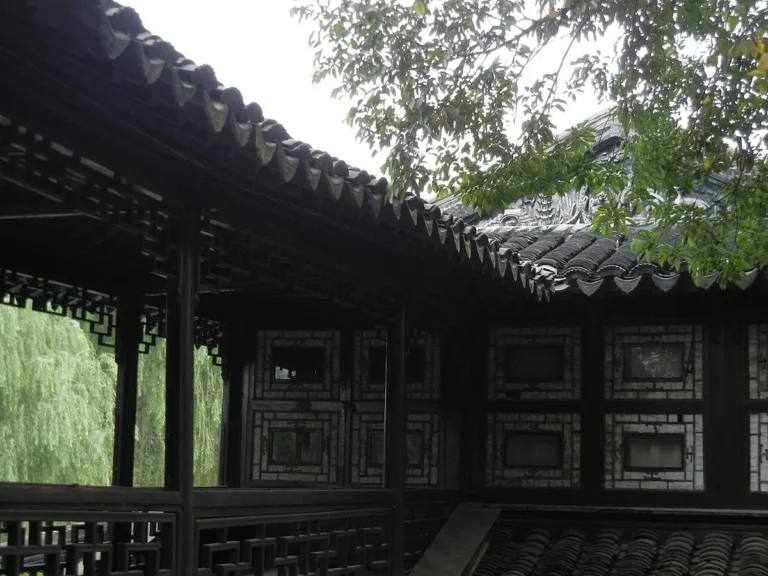
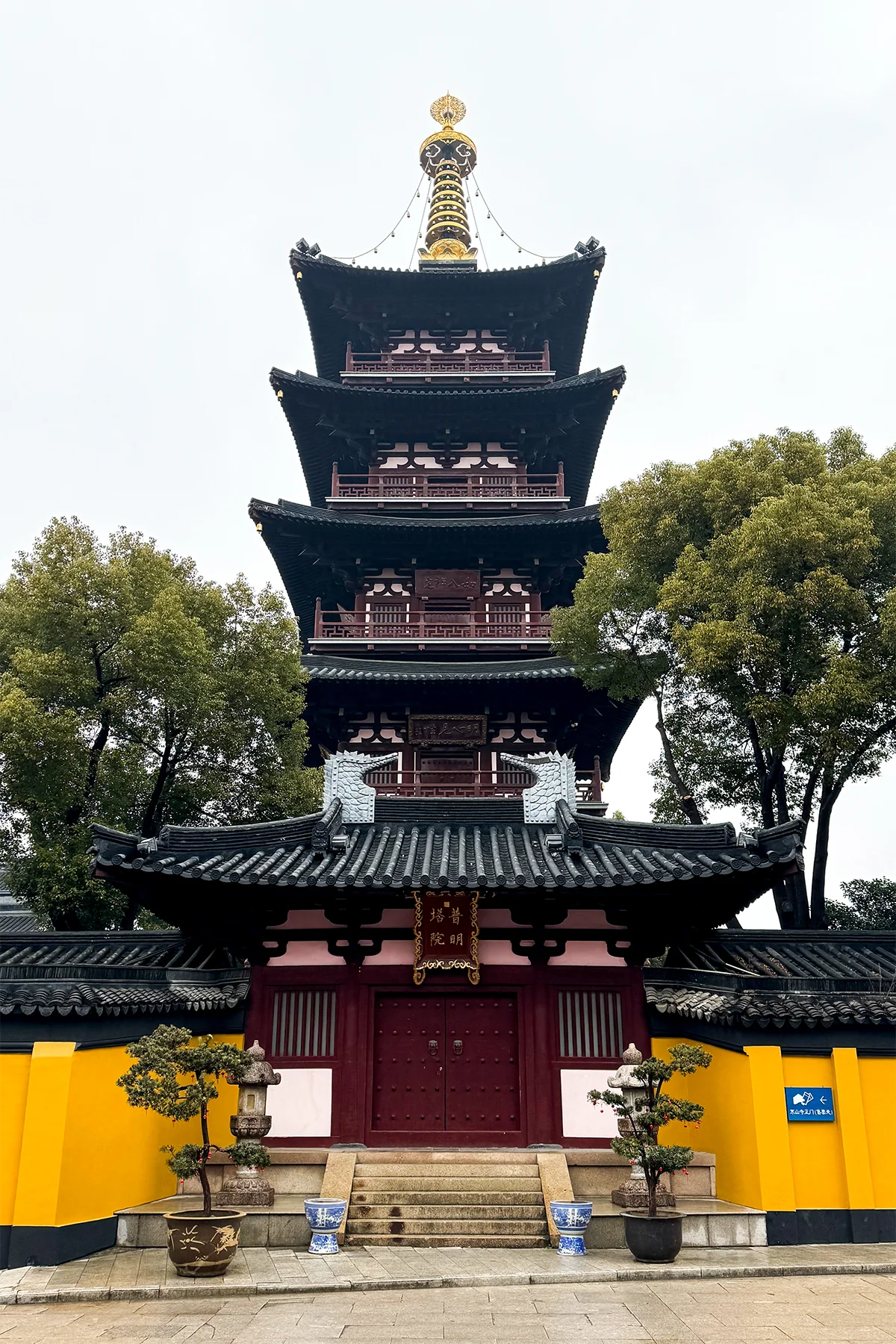
Construction craft and building materials at Hanshan Temple clearly reflect the high artisanal skill of feudal-era Suzhou carpenters and masons. Timber structures rely chiefly on high-grade cedar and pine treated carefully against termites and dampness before framing. Load-bearing frames of the halls avoid traditional iron nails, depending instead on tightly fitted mortise-and-tenon joinery that gives the structure resilience against ground tremors or strong storms. Large wooden columns rest atop carefully dressed stone plinths to isolate timber from ground moisture—a highly effective traditional damp-proofing technique of southern master builders. Perimeter walls are built of signature Jiangnan gray brick with traditional lime mortar, finished in ivory whitewash or left in natural fired-brick tones to create an understated, serene palette. Roofs are tiled in gray-black yin-and-yang tiles, with ridge lines and upturned eaves adorned with fine terracotta or glazed-brick sculptures of dragons, phoenixes, and florals expressing reverence and folk craftsmanship.
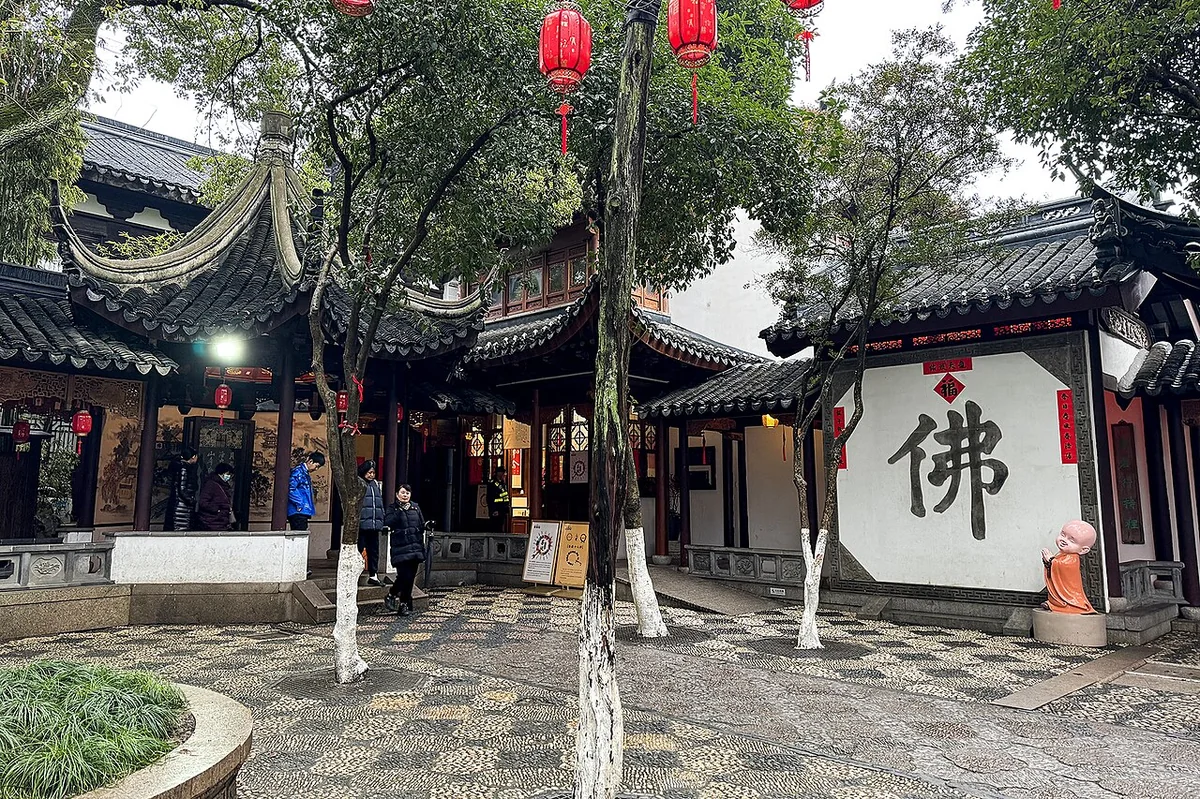
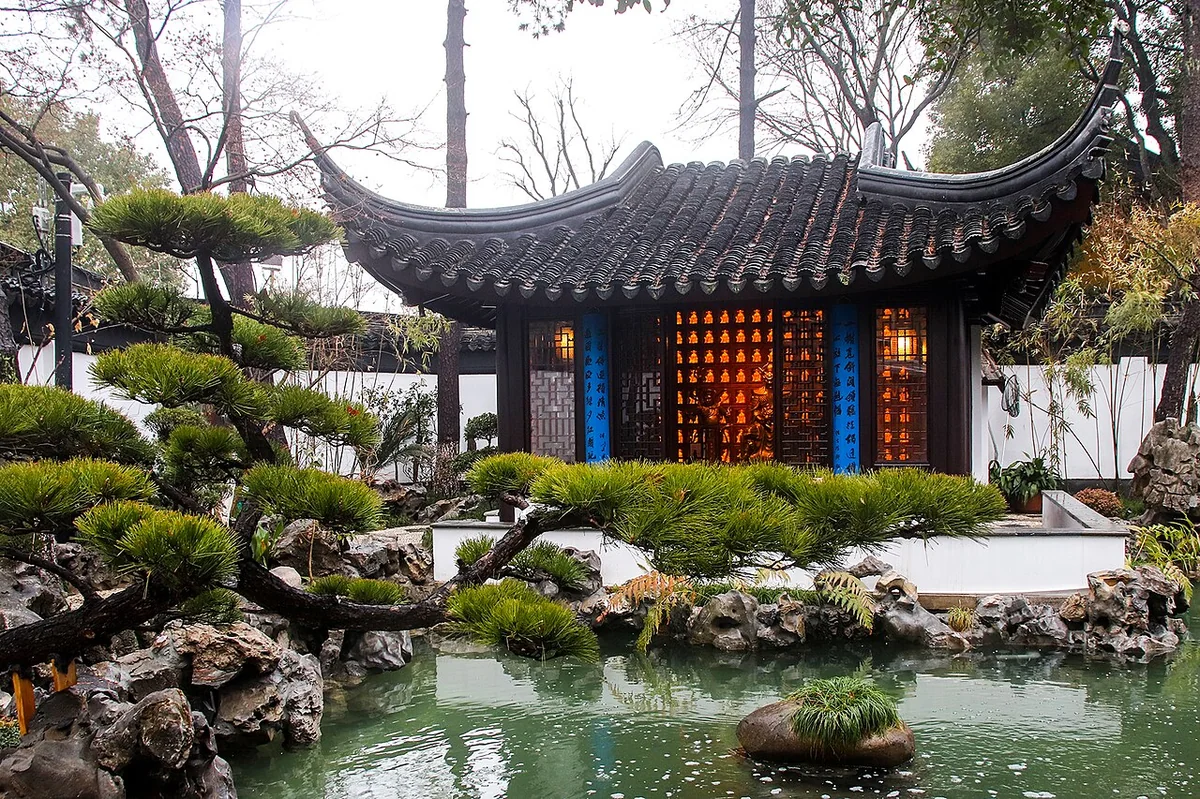
A distinctive highlight of Hanshan Temple’s spatial planning is the pairing of built architecture with traditional Chinese garden art—expressed in the fluid interplay of artificial rockery, waterside pavilions, and greenery. Courtyards set between buildings hold aged bonsai trees and Taihu stones with curious hollows carved out over centuries of weathering. Covered corridors running along the perimeter of main zones let visitors and monastics move comfortably in any weather while framing circular, vase-shaped, or fan-shaped windows that open quiet views onto garden vignettes. The bell tower, one of the temple’s iconic buildings, is constructed as a two-story pavilion in combined timber-and-brick framing, housing a large bronze bell cast in the distinctive style of the Qing Dynasty. Circulation paths around the bell tower and stele display areas are laid out in closed loops to keep heavy visitor flows orderly and prevent bottlenecks in tight spaces.
In terms of visitor capacity and contemporary function, Hanshan Temple’s technical infrastructure has been upgraded to welcome millions of pilgrims and international visitors each year without harming original heritage architecture. Auxiliary facilities—such as reception areas, a heritage information center, nighttime artistic lighting, and accessible pathways—are placed neatly along the outer perimeter, kept separate from the inner sacred precinct. Visitor flow is closely managed through e-ticketing and time-of-day capacity limits so human-generated humidity and heat never exceed the tolerance of historic timber framing and original wall paintings. These modern planning measures let Hanshan Temple preserve its full value as a living Buddhist center where architectural history, ancient building craft, and cultural research converge sustainably across space and time.
Situated west of Fengqiao Town on the outskirts of Suzhou City, Jiangsu Province, Hanshan Temple traces its origins to the Northern and Southern Dynasties and—across centuries of change—bears the hallmark of Chinese Chan Buddhist architecture blended with Jiangnan landscape art. The temple’s overall spatial layout does not follow the strict symmetry axis of grand sites in northern China, opting instead for a flexible structure aligned with canal flows and old-town fabric. This arrangement reflects an aesthetic mindset harmonizing people and nature, where architecture does not impose upon the landscape but blends with weeping willows, stone bridges, and whitewashed walls typical of Wu culture. The present architectural complex represents Qing-era restoration style, with halls, bell pavilion, corridors, and study rooms arranged closely across transitional spaces to form a pilgrimage route steeped in themes of impermanence and stillness.
At the heart of the hall system is the Mahavira Hall, the central structure shaping the layout of the entire complex. Stepping across the threshold, observers face statues carved in pre-modern times—notably the Three Buddhas of the Past, Present, and Future flanked by the disciples Ananda and Maudgalyayana. Placed on tall lotus pedestals of precious wood, the statues wear vermilion-and-gold lacquer mellowed by time, giving a quiet, solemn presence. Along both side walls of the Mahavira Hall stand the Eighteen Arhats with lifelike expressions, showcasing the peak of Jiangnan terracotta and lacquer sculpture. Behind the main hall is a carved stone relief mural depicting Avalokitesvara (Guanyin) and celestial guardian kings, attesting to the refined stonework of Qing artisans who blended traditional Chinese painting with three-dimensional architectural relief.
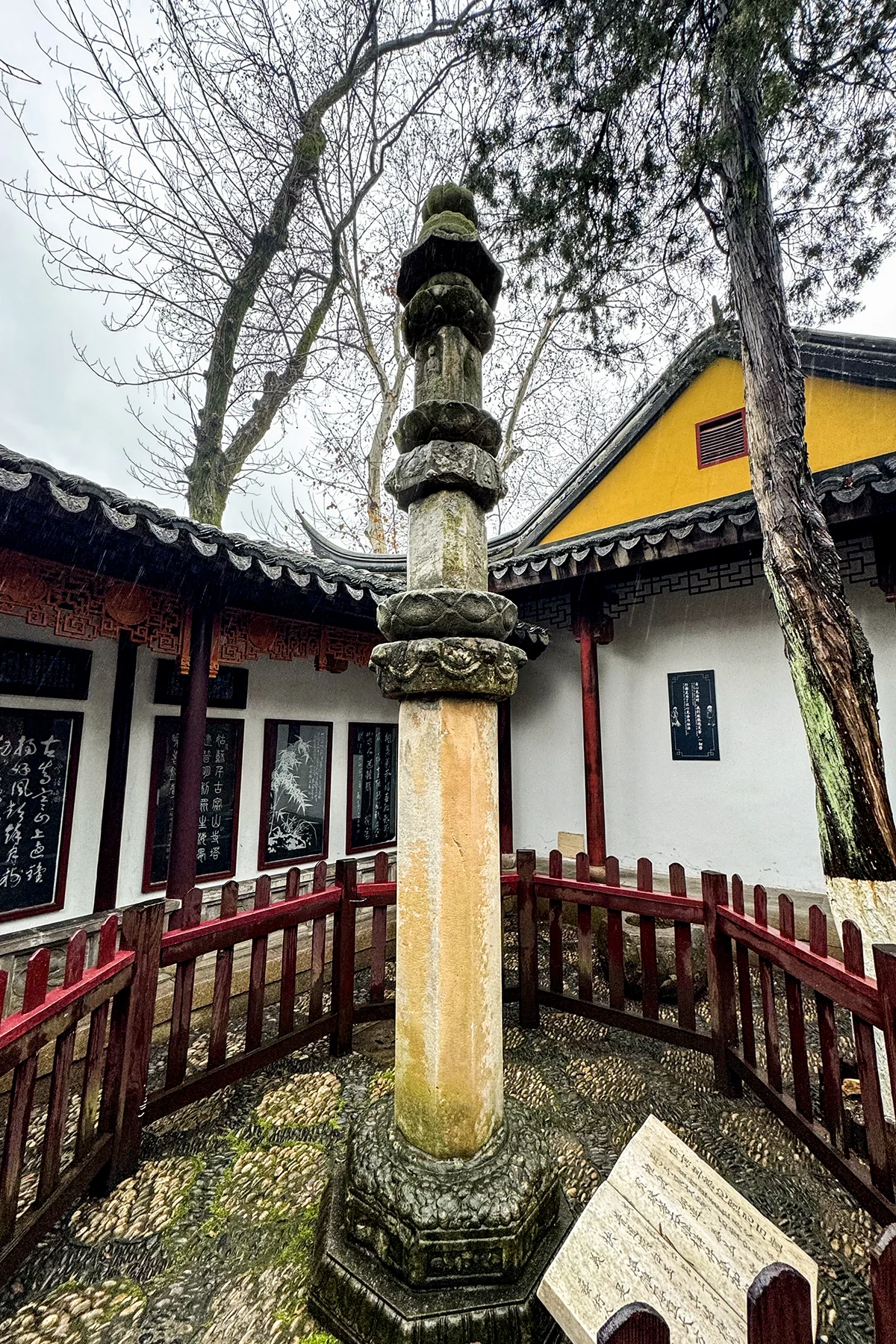
Moving deeper toward the east of the complex lies the Sutra Library and cultural-relics area, where the temple’s priceless archaeological and artistic treasures gather. The foremost scholarly and artistic highlight here is the stone stele bearing the poem “A Night Mooring by Maple Bridge” by Tang poet Zhang Ji. This stele is a carving modeled after the calligraphy of Yu Yue, a distinguished late-Qing scholar, executed in flowing, expressive semi-cursive script with disciplined poise. The characters in stone are more than a reproduction of a poetic masterpiece; they unite peak calligraphy with traditional stone carving, turning text into a visual work with lasting life. Every stroke across the stele surface carries the breath of time, holding the melancholic echo of a temple bell in chilly night mist—the very thing that made Hanshan Temple immortal in Eastern literary history.
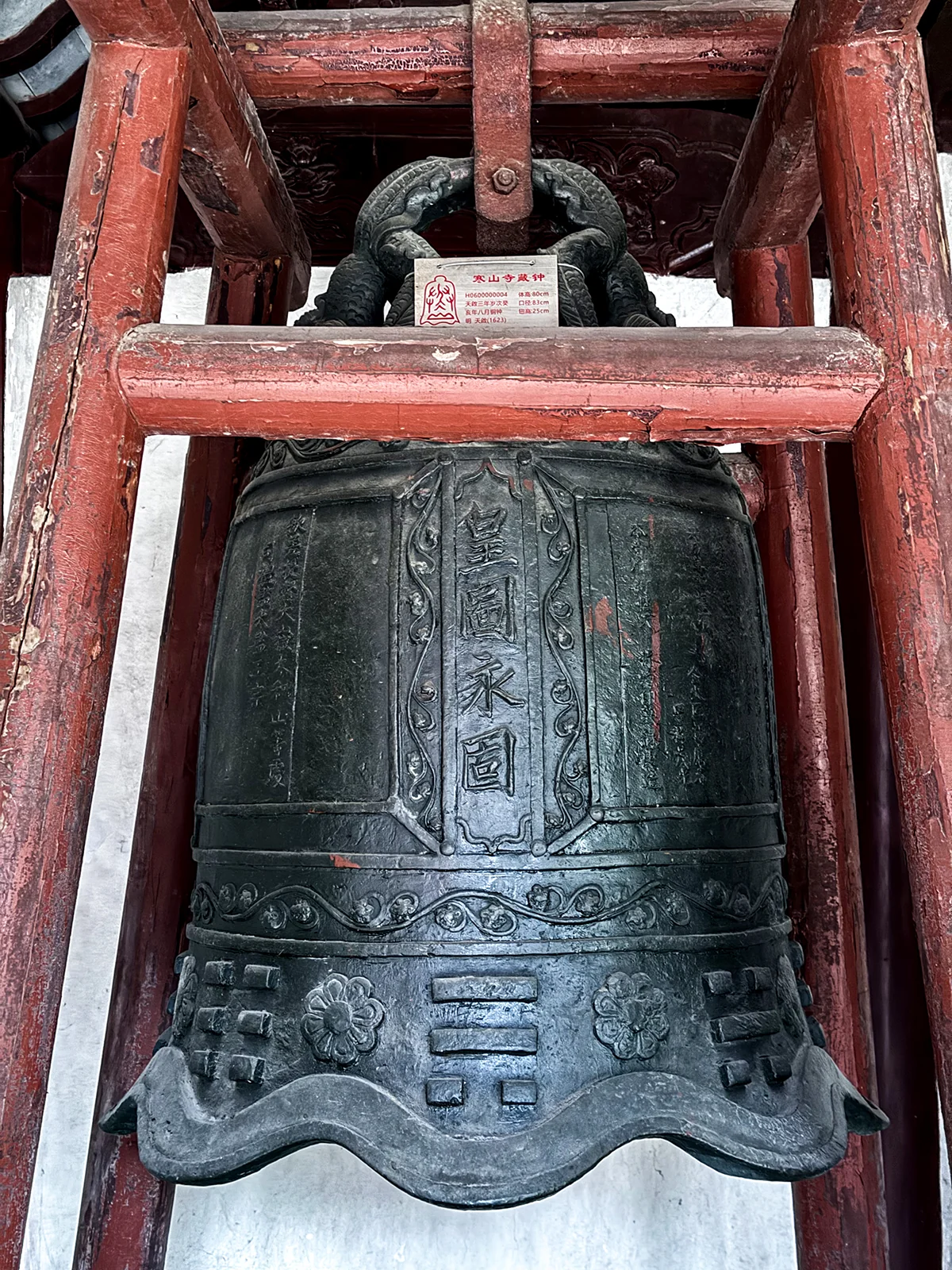
The bell pavilion architecture, another iconic feature of Hanshan Temple, is built in the style of traditional moon-gazing pavilions with a two-tiered curved roof tiled in deep gray yin-and-yang tiles. Although the current bronze bell was recast in modern times using traditional Ming- and Qing-era casting techniques, it retains the deep, resonant timbre described in classical poetry. Inscribed across its body are thousands of Chinese characters recording Buddhist sutras and donors’ names, reflecting close ties between popular belief and Buddhist teachings. Precision bronze casting with calibrated alloy ratios lets the bell’s sound carry far and linger across nearby canals, creating an auditory experience in tune with the monastery’s quietude.
Decorative motifs and carvings in wood and stone at Hanshan Temple carry deep Buddhist life philosophy and cosmology. Across load-bearing timber members—such as beams, bracket ends, and window frames—artisans of old carved lotuses, the Four Gentlemen (plum, orchid, bamboo, chrysanthemum), and Eight Auspicious Symbols. The lotus symbolizes purity rising above the mud of the mundane world, while the Four Gentlemen evoke the noble resilience of the Confucian scholar smoothly integrated within a Chan setting. Openwork carved wooden window panels not only aid ventilation, but act as folk picture stories recounting Buddhist tales so visitors can grasp teachings through vivid imagery.
Surrounding landscape spaces around the halls also play an important part in forming Hanshan Temple’s heritage depth. Small gardens with artificial rockery, lush bamboo groves, and little stone bridges arching over slow-moving water carry strong hallmarks of Suzhou garden art. This layout creates a rhythmic transition between the solemn stillness of worship halls and the gentle, poetic nature south of the Yangtze River. Every architectural element—from fish-scale roof tiles along eaves and red couplets hung beside columns to blue flagstones worn smooth by footsteps across centuries—helps tell the story of a cultural and spiritual center enduring through historical shifts, keeping a pure Chan spirit alive amid a modern city.
Hanshan Temple (Cold Mountain Temple), an ancient monastery situated in the Fengqiao area on the western side of Suzhou City, Jiangsu Province, is a spiritual and cultural landmark steeped in Tang-dynasty poetry. First built in the 6th century during the Liang dynasty, the temple has weathered centuries of historical change while preserving traditional Jiangnan architectural character where the gentle waters of the Grand Canal meet dark timber structures and moss-draped walls. The local rhythm of life here is more than biological time passing; it is a sequence of cultural rituals woven delicately into every hour of the day—from early mist clinging to aged maples to silvery moonlight illuminating the monastery’s signature ochre-yellow walls. Exploring Hanshan Temple within contemporary life calls for thoughtful inwardness, standing at the threshold between imperial history and Suzhou’s modern urban pulse to experience sacred stillness in full.
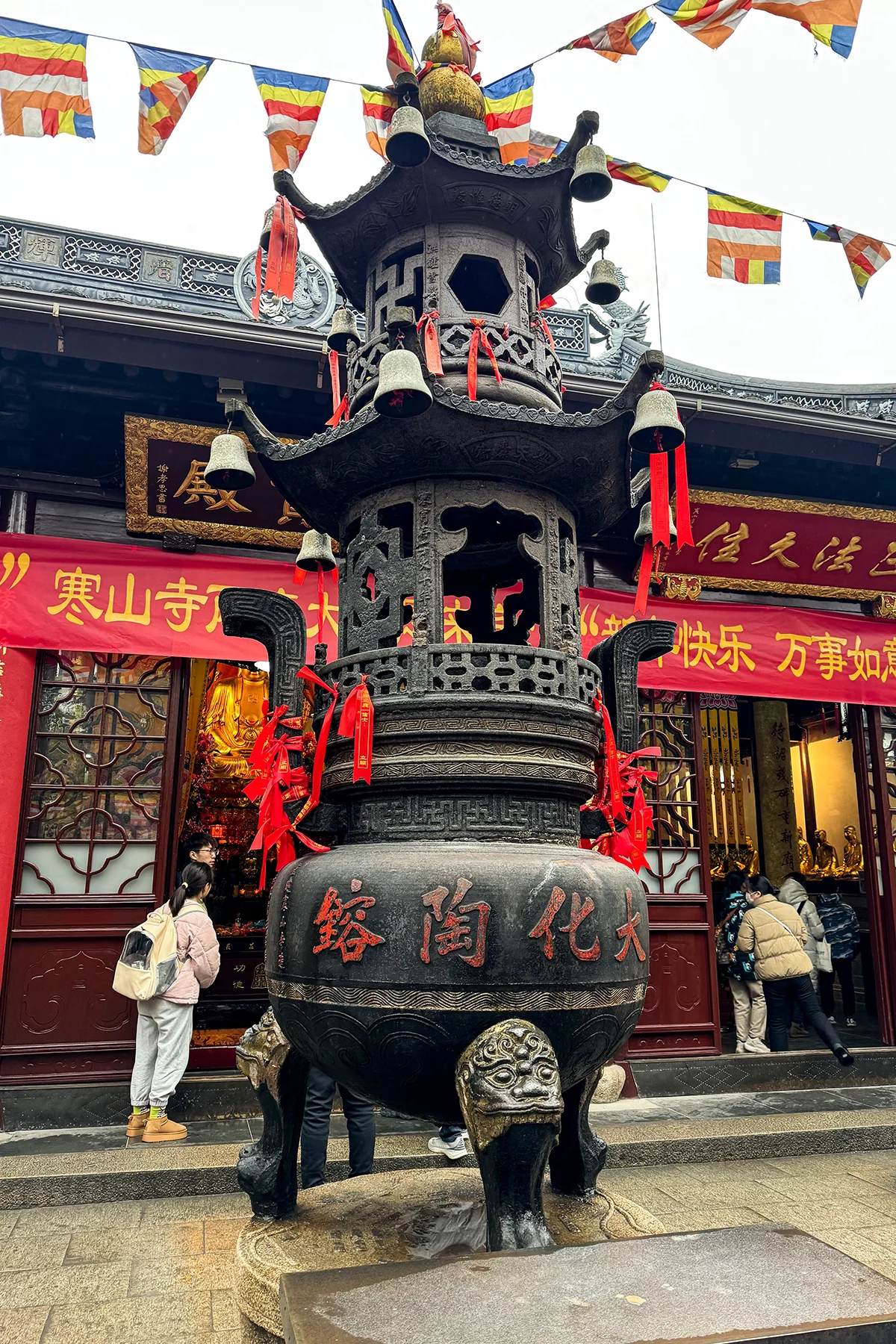
Dawn at Hanshan Temple begins with the deep resonance of the great bronze bell cutting through thick morning mist rising off the surrounding canal waters. Around 5:00 AM, before the first rays of morning sunlight clear the ancient maple trees beyond the outer walls, resident monks begin morning chanting as solemn Sanskrit-derived sutras mingle with thin wisps of incense rising from the large bronze censer before the main hall. At this hour, the grounds hold a primeval calm with hardly a tourist footprint, offering ideal conditions for cultural researchers to observe the traditional daily practices of Chan Buddhist monastics. Slow steps across moss-flecked flagstone, the steady rhythm of wooden fish percussion, and glimpses of russet-brown robes along vermilion-and-gold corridors create a scene of profound quiet reflecting traditional Eastern philosophies of impermanence and letting go.
As the sun climbs high overhead, the pace inside the ancient temple shifts toward a livelier hum with the arrival of pilgrims and international visitors coming to view the stone stele inscribed with Zhang Ji’s famous poem “A Night Mooring by Maple Bridge.” Now the courtyard fills with varied sounds—brisk footsteps, quiet prayers before the compassionate Bodhisattva statue, and gentle chimes from souvenir stalls displaying calligraphy reproductions modeled after Ming- and Qing-dynasty masters. Suzhou locals often choose midday or early afternoon to offer incense, pray for family peace, and wander the serene Zen garden, where artificial rockery, shallow lotus ponds, and graceful bamboo groves are tended in the classic Jiangnan landscaping tradition. Interactions between locals and visitors form a multicultural tapestry while keeping the solemn dignity of a centuries-old place of worship.
Late afternoon in Fengqiao brings slanting golden light through intricately carved windows of the halls, bringing out the warm patina of aged glazed roof tiles. This twilight hour is when Hanshan Temple’s architecture reaches a quiet aesthetic peak as shadows from the bell tower and sutra pavilion stretch across square stone courtyard pavers. It is also when traditional arts unfold discreetly yet engagingly, such as live calligraphy demonstrations by local artists near the bell tower. Onlookers can watch fluent brush strokes trace each character of the sixty-seven-character poem that made the temple famous, sensing the enduring vitality of Chinese script across centuries. These calligraphers do more than display technical skill; they channel the spirit of Suzhou scenery into black ink on crisp xuan paper.
When night falls, Hanshan Temple settles into thoughtfully designed architectural lighting that highlights classic lines without losing its original solemnity. Warm uplights along gray brick walls reflect onto the calm canal outside, creating an enchanting atmosphere that feels like stepping back into the Tang dynasty. The highlight of the evening is the late-hour bell-ringing ceremony, in which the bronze bell tolls 108 times to symbolize dispelling the 108 earthly afflictions in Buddhist belief. Its deep, lingering ring across the quiet Jiangnan night echoes not only inside the monastery grounds, but all the way to nearby stone spans like Fengqiao (Maple Bridge), stirring poetic memories in anyone listening in person.
Annual festivals at Hanshan Temple—especially the New Year’s Eve bell-ringing celebration—are major community gatherings drawing tens of thousands of locals and travelers from afar. The mood is lively yet preserves the solemnity of sacred ritual. Participants wait in long lines through the biting Jiangnan winter chill for their turn to touch the massive bronze bell, pull the thick rope, and send a wish for a peaceful new year into the night air. Accompanying activities such as traditional lantern displays, miniature court-style music performances, and street stalls serving Suzhou specialties like sweet glutinous rice cakes enrich the local cultural experience. The blend of religious devotion, folk art, and regional food turns festival nights here into a living chronicle of traditional Chinese culture.
For the most prized panoramic view of Hanshan Temple, look from the upper level of the new bell tower or from galleries facing the canal along the temple’s northwestern side. From this vantage point, the full architectural ensemble comes into view—sweeping tiled eaves of prayer halls, tree-shaded courtyards, and especially the ancient stone arch of Fengqiao spanning calm waters where boats have passed for ages. Morning sunlight from the east or soft evening lights reflecting on the water create striking photographic angles where present reality and poetic memory seem to merge. Standing at this viewpoint and letting the evening bell carry your thoughts is the fullest way to understand why Hanshan Temple in Suzhou remains an enduring cultural icon across centuries.
Suzhou has long held its place as one of the most celebrated culinary centers of the lower Yangtze River basin, where Su-style culinary philosophy blends deeply with scholarly wellness traditions. Around renowned Hanshan Temple, local flavors carry the hallmark of Suzhou cuisine (Su Cai): light, delicately balanced seasoning, natural gentle sweetness, fresh colors, and refined preparation. Unlike the bold heat of Sichuan food or the heavy saltiness of some coastal provinces, cooking here prioritizes honoring each ingredient’s seasonal character, reflecting the southern ancients’ philosophy of living in harmony with nature.
Exploring traditional dishes around Hanshan Temple and nearby canals reveals a long-standing reliance on freshwater fare from abundant Taihu Lake. Squirrel-shaped Mandarin fish (Songshu Guiyu) is a prime showcase of local chefs’ knife work and heat control. The fish is deboned, cross-scored finely with a blade, dusted, and deep-fried until its outer skin turns golden and flares like chrysanthemum petals, then sauced with a sweet-and-sour glaze made from Zhenjiang vinegar and concentrated tomato. When eaten, the crisp crunch of the exterior pairs with tender, savory fish flesh beneath, creating rich sensory layers born from centuries of traditional craft.
Beyond elaborate stir-fried and fried dishes, Suzhou’s court and folk traditions are also famous for clear, delicate noodle soups, especially fine noodles served with seasonal toppings. In spring and early summer, traditional eateries near the Hanshan scenic area often serve bowls topped with stewed goat meat or fresh lotus seeds and spring bamboo shoots. The broth is simmered for hours from pork marrow bones, dried shrimp, and traditional herbs to yield a crystal-clear liquid with deep natural sweetness and no harsh MSG aftertaste. Fresh handmade wheat noodles offer balanced chewiness alongside melt-in-the-mouth braised pork belly or salt-roasted small river shrimp, forming a simple yet refined culinary picture.
Pastries and light snacks also hold a vital place on the local flavor map, tied closely to solar terms on the traditional Chinese agricultural calendar. Glutinous rice cakes filled with sweet red bean or sweet lard paste, fragrant osmanthus cakes, and sweets made from water-caltrop or lotus-root flour are sold at historic shops along stone lanes around the temple. Each pastry carries symbolic meaning for seasonal festivals or serves as a southern gift rich in cultural sentiment. Baking craft demands care in selecting ingredients—from pure rock sugar to osmanthus blossoms gathered in the early morning dew—blending into an unmistakable, gentle fragrance.
Tea customs in Suzhou connect closely with long-standing Buddhist vegetarian culinary arts, most notably the tradition of Biluochun (Green Snail Spring) tea. This prized green tea is hand-picked on hillsides around Taihu Lake before the Qingming festival, its tender buds curled tightly like snail shells and covered in fine white down. When brewing, clear spring water heated to a moderate temperature is used so as not to scorch delicate leaves, with buds dropped into a glass to watch them sink slowly and unfurl like blossoms. Biluochun shifts gracefully from mild initial astringency to a deep, sweet finish, bringing calm clarity well suited to quiet temple grounds filled with ringing bells.
Along old lanes leading toward Fengqiao and Hanshan Temple, the food culture opens like a living museum of everyday life in old Jiangnan. Smooth granite pedestrian streets lined with whitewashed walls, dark tiles, and upturned eaves host countless small stalls selling down-to-earth food and drinks. Here, visitors can watch artisans pull maltose taffy, roll out paper-thin wonton wrappers, or catch the pungent aroma of crisp fried stinky tofu served with soy sauce and fresh chili. Such lanes do more than stimulate smell and taste; they carry visitors back to the bustling eras of China’s imperial dynasties.
Culinary philosophy around the heritage site also shows strict adherence to seasonal nourishment—a principle celebrated in writings by historical figures since the Tang and Song dynasties. Summer calls for cooling mung-bean and lotus-seed soup; autumn brings roe-rich Taihu Lake hairy crabs paired with warming ginger vinegar; winter offers tender stews of mutton and nutty lotus root. Shifting with natural cycles helps the body balance vital energy and adapt smoothly to southern monsoon-influenced seasons. Every dish is treated as a nourishing tonic and miniature work of art reflecting gratitude for nature’s harvest across each farming season.
Through historical ups and downs and waves of industrialization, traditional food culture around Suzhou’s spiritual landmarks retains its core values thanks to local preservation efforts. Pairing a light, refined Su-style meal with the distant sound of an evening temple bell creates a complete cultural experience that awakens every sense for those who visit. It is a graceful harmony between spirit and substance, heroic history and quiet daily life, keeping the soul of a radiant Jiangnan civilization alive across millennia.
Hanshan Temple, the famed Buddhist site in Fengqiao on the western side of Suzhou, Jiangsu Province, China, calls for thoughtful preparation so visitors can appreciate both its historical weight and sacred atmosphere. Geographically and climatically, Suzhou experiences a humid subtropical monsoon climate with four distinct seasons and markedly different weather patterns. Spring (March to May) awakens the temple surroundings with cherry blossoms, rapeseed blooms, and weeping willows along the Fengqiao waterway, though rainfall tends to increase late in the season, making a compact umbrella or light rain jacket wise. Summer (June to August) brings high temperatures and heavy humidity with occasional intense heat waves typical of Jiangnan, making midday outdoor walking demanding. Autumn (September to November) is widely considered by scholars and travelers to be the finest season to visit Hanshan Temple, offering drier weather, clear skies, crisp air, and golden-red maples that echo the mood of Zhang Ji’s classic poem. Winter (December to February) brings the sharp chill of the Yangtze basin with occasional light snow dusting ancient roof tiles—creating a quiet ink-wash scene that requires a warm coat, scarf, and non-slip footwear.
Suzhou’s urban transit infrastructure is well integrated and modern, making it easy for researchers and travelers to reach Hanshan Temple from major regional hubs. When traveling from nearby Shanghai, high-speed intercity trains from Shanghai Railway Station or Hongqiao Station reach Suzhou in under thirty minutes before continuing into the city. Once in central Suzhou, Metro Line 3 serves as a key line connecting visitors near the site; alight at Hushuguan Station or Xifengqiao Station and walk along tree-lined lanes or use public bike-sharing to reach the main temple entrance. For convenience and speed, public bus routes such as Lines 6, 9, 10, or 40 stop right near Hanshan Temple with budget-friendly fares and clear bilingual Chinese-English displays on electronic boards. Taxis or popular Chinese ride-hailing apps are also practical options—especially for larger groups or heavy luggage—though keep in mind potential traffic congestion during morning and late-afternoon rush hours along main roads leading into Fengqiao.
Choosing the right time of day to visit Hanshan Temple strongly shapes the quality of your cultural experience. Early morning from opening at 7:30 AM to 9:00 AM is the best window to experience the monastery’s quiet serenity while early mist still lingers over canals and morning bells ring out. Avoid the 10:00 AM to 3:00 PM stretch if you want to skip heavy crowds from domestic tour groups. Another special window prized by researchers and seasoned travelers is late afternoon at sunset, when warm light washes over signature ochre walls and timber halls, evoking the wistful mood of “A Night Mooring by Maple Bridge.” On Lunar New Year’s Eve, the annual 108-bell ceremony at Hanshan Temple has become a major cultural event drawing tens of thousands, though attending requires advance ticketing and strict security screening.
Preparing appropriate attire for Hanshan Temple involves respecting traditional religious norms as well as walking conditions. Because it is an active Buddhist place of worship and a closely protected national historical site, both men and women should wear neat, modest clothing covering shoulders and knees, avoiding overly short or torn garments or offensive graphics or slogans. Choose flat, soft-soled footwear with good grip, as temple courtyards are paved with various antique stones that can be slick after light rain or morning dew, and walking across halls and towers puts plenty of demands on your feet. In winter, dressing in light layers rather than a single bulky coat makes it easier to stay comfortable when moving between outdoor air and warm halls.
Local customs, etiquette standards, and taboos at Hanshan Temple should be carefully kept in mind to avoid unfortunate cultural missteps. When stepping across the thresholds of the main entrances to Buddhist halls, never step onto the horizontal wooden sill, as long-standing East Asian tradition holds that this beam symbolizes the shoulders of the guardian deities watching over the sacred space. Photography and video recording inside main worship halls housing large Buddha statues are generally strictly prohibited or heavily restricted to preserve relics and maintain solemnity; therefore, visitors should look closely for no-photography signs before taking out cameras. When lighting incense and bowing, move gently, avoid letting incense smoke drift directly into other people’s faces, and place incense sticks only in designated burners. Purchasing admission tickets today is strongly encouraged through the heritage site’s official online booking platforms to save time queuing at the gate, and visitors must bring their original passport so staff can verify identity details at the electronic security checkpoints.
To enjoy the full journey alongside a local guide, you can explore the Beijing – Suzhou – Hangzhou – Wuzhen – Shanghai tour with a pre-arranged itinerary.