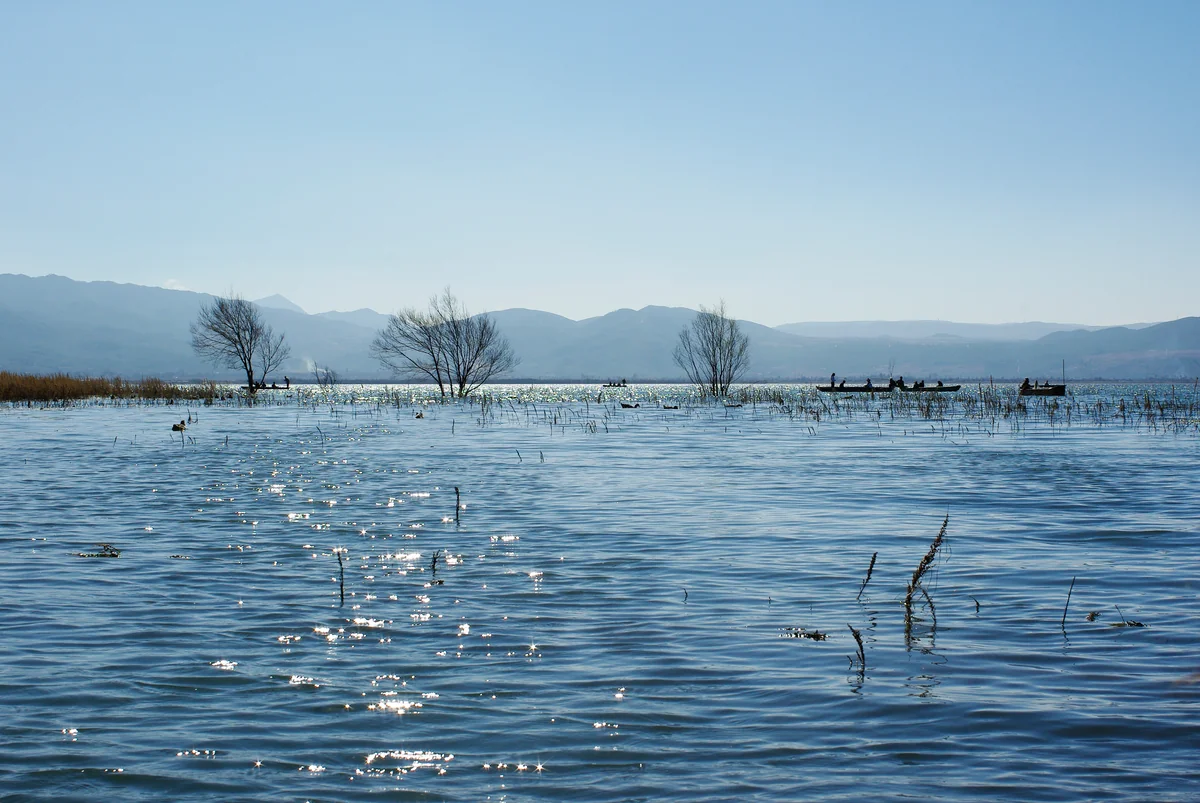
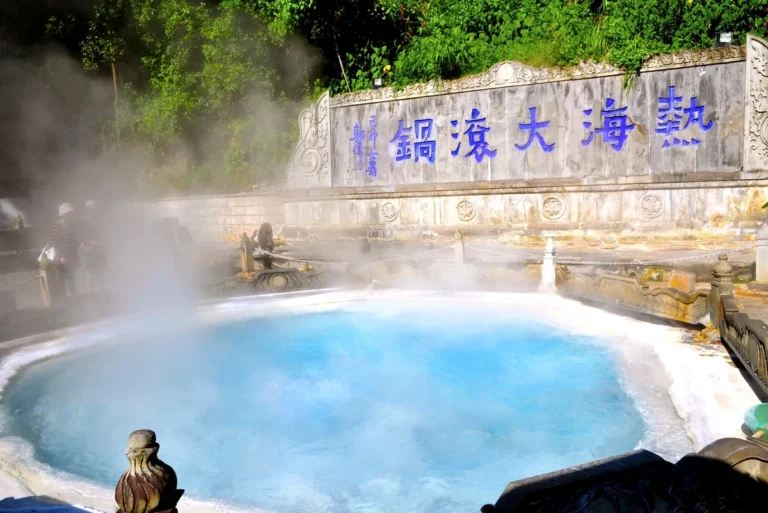
Tracing back through time to the southwestern frontier of China, where the biometric belt of the Hengduan Mountains stretches out along its southern section, lies one of humanity’s grandest geological wonders: Tengchong Volcano in Yunnan Province. Through the eyes of cultural historians and geologists, this destination is not merely an ecological scenic area with dramatic crater basins, but a chronicle written in volcanic rock by seismic upheavals of Earth’s crust millions of years ago. From a plate-tectonic perspective, Tengchong sits right along the eastern margin of the collision zone between the Eurasian and Indian continental plates—a geodynamically sensitive location that created key conditions for a complex volcanic system to form. In-depth scientific studies indicate that the eruptive sequence of this volcanic cluster began in the late Pliocene and continued all the way into the Holocene. Across the geologically turbulent early and middle Pleistocene periods, numerous large basaltic and intermediate-acidic volcanic cones gradually took shape atop the highland terrain. Later, entering a subsequent stage, eruptions shifted largely toward smaller explosive acidic lavas, sculpting the classic geological masterpieces that define the scenic area today—such as Da Kongshan (Big Empty Mountain), Xiao Kongshan (Small Empty Mountain), and Hei Kongshan (Black Empty Mountain), iconic volcanic cones boasting textbook structures and captivating pristine ecology.
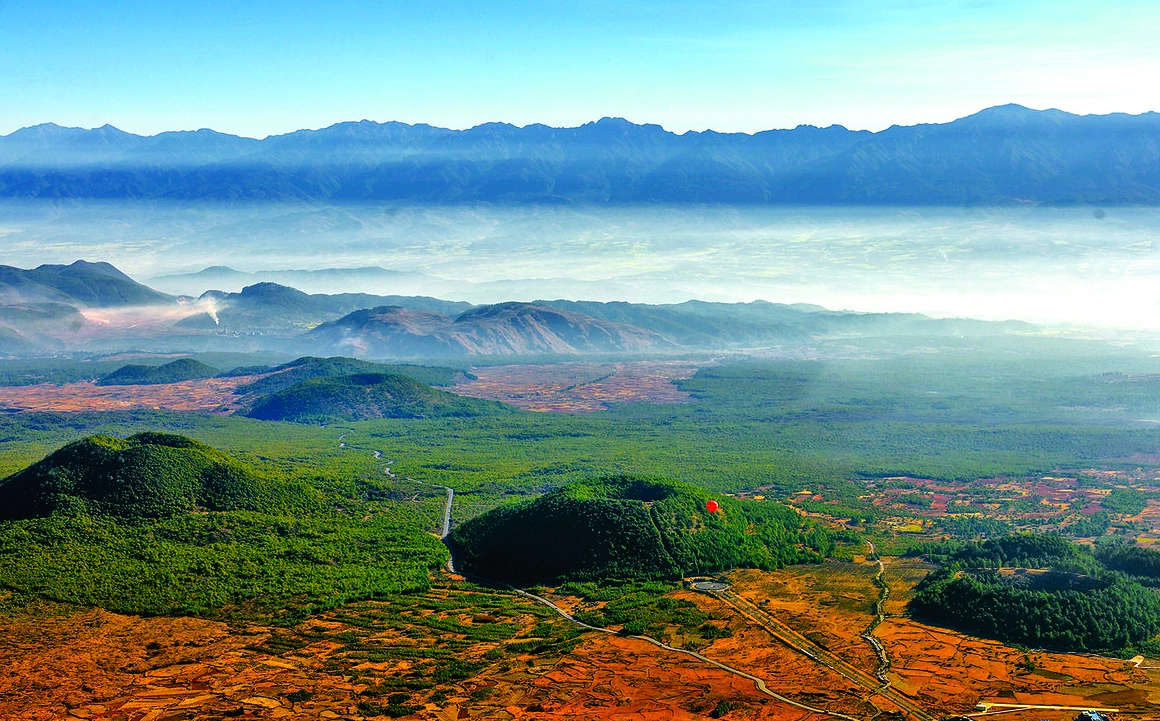
Yet Tengchong’s value does not stop at cooled lava strata or ashes of a geological past; it is also intertwined with a rich human history bearing the footprints of exploration and inquiry left by learned forebears. Turning back to golden pages of Eastern civilization, during the reign of the Ming Dynasty, one of China’s most distinguished scholars and geographers, Xu Xiake (1587–1641), braved distant roads and crossed ten thousand miles of mountains and rivers to visit the site firsthand. In the twelfth year of the Chongzhen era—1639 CE—after inspecting the region directly, he left priceless notes in his celebrated work “Travel Diaries of Xu Xiake – Diary of Dian Travels VIII.” In those travel journals, he sketched a vivid, refined picture of a mysterious natural landscape, describing village hearth smoke mingling with steam rising from the earth in his evocative line “Gazing afar, village hearth smoke rises…,” while recording in detail the abundant hot-spring systems spread densely across the area. Xu Xiake’s writings not only laid early foundations for human geography and natural history in this region, but also became vital historical records helping later generations decode how Tengchong’s ecological landscape evolved over centuries.
Throughout the shifting tides of northern feudal dynasties, Tengchong’s strategic position consistently drew special attention from imperial courts as they refined its administrative system. In the memory of golden dynasties, Tengchong was lauded as the “Foremost City on the Far Frontier”—a vital border bulwark at the far edge of the realm. As early as the Yuan Dynasty, the court formally established Tengchong Prefecture to oversee security and order as well as frontier land reclamation and settlement. By the Ming Dynasty, the region’s strategic stature rose further when the court established Tengyue Sub-Prefecture (Zhou) and ordered the fortification of the Tengyue Guard fortress to guard against external incursions. During the Qing Dynasty, to fit new administrative needs, the area was renamed Tengyue Department (Ting), affirming its core role as an essential frontier defense hub. Economically, socially, and commercially, Tengchong was also an irreplaceable lifeline along the legendary Ancient Tea Horse Road. That crossroads of trade and military strategy turned Tengchong into a distinctive land where deep cultural synthesis unfolded between Central Plains Han civilization and indigenous ethnic minorities long settled across the Yunnan-Guizhou Plateau. Fluid blending of customs, religious beliefs, domestic architecture, and everyday lifestyles forged a singular, multi-layered, vibrant Tengchong identity, leaving posterity an enduring legacy of intangible and tangible cultural heritage.
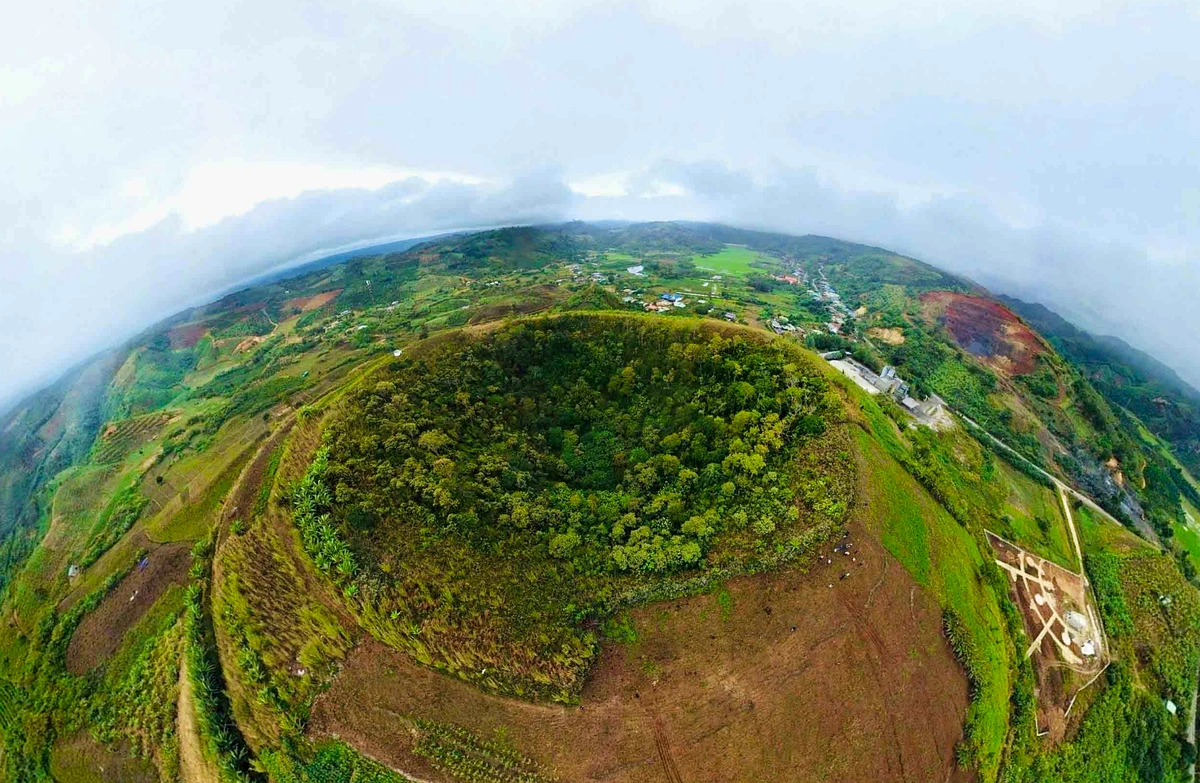
The Tengchong Volcano Crater Scenic Area unveils a grand geological panorama where nature painstakingly sculpted one of Asia’s most distinctive volcanic complexes. Spreading across the scenic area’s core is a cluster of ninety-seven Cenozoic conical volcanoes rising boldly between earth and sky, among which the trio of Da Kongshan, Xiao Kongshan, and Hei Kongshan stand out as supreme emblems of Earth’s inner power. Viewed from above, geomorphological structure here follows a strict tectonic order, with rhythmic alternation between subsidence basins and imposing volcanic cones. Shaped strongly by regional tectonic stress fields, the entire system stretches along a southwest–northeast axis, forming a geological corridor at once majestic and charged with deep geothermal energy from within Earth’s crust.
Deeper geomorphological analysis shows the area impresses not only with its count of textbook conical volcanoes, but also as a natural museum preserving rare eruptive features. Along hillsides and ancient valleys, scientists have documented “rootless streams,” porous vesicular lava layers, lightweight pumice floating on water, and distinctive lava-dammed lakes such as the Houjiaba wetland. Primeval lava flows once blazing hot have long since cooled, damming natural drainages to regenerate into lush marsh ecosystems that sustain endemic flora and help regulate Tengchong’s microclimate.
Beyond pure geological science, the space here is also a striking example of traditional Eastern feng shui planning. Through the lens of ancient geographical philosophy, feng shui specialists view the cluster of conical volcanoes as an expression of “fire-form stone mountains” possessing fierce, commanding power. Yet nature balanced this thoughtfully by surrounding the volcanoes with fertile expanses of the Tengyue basin, the year-round steaming hot springs of Rehai (Hot Sea), and the rushing waters of the Longchuan River. This harmony of earth and fire, stillness and motion, craggy volcanic stone and gentle water establishes a balanced feng shui layout of “water and fire in harmony” and “yin and yang complementing one another,” bringing flourishing vitality to all life.
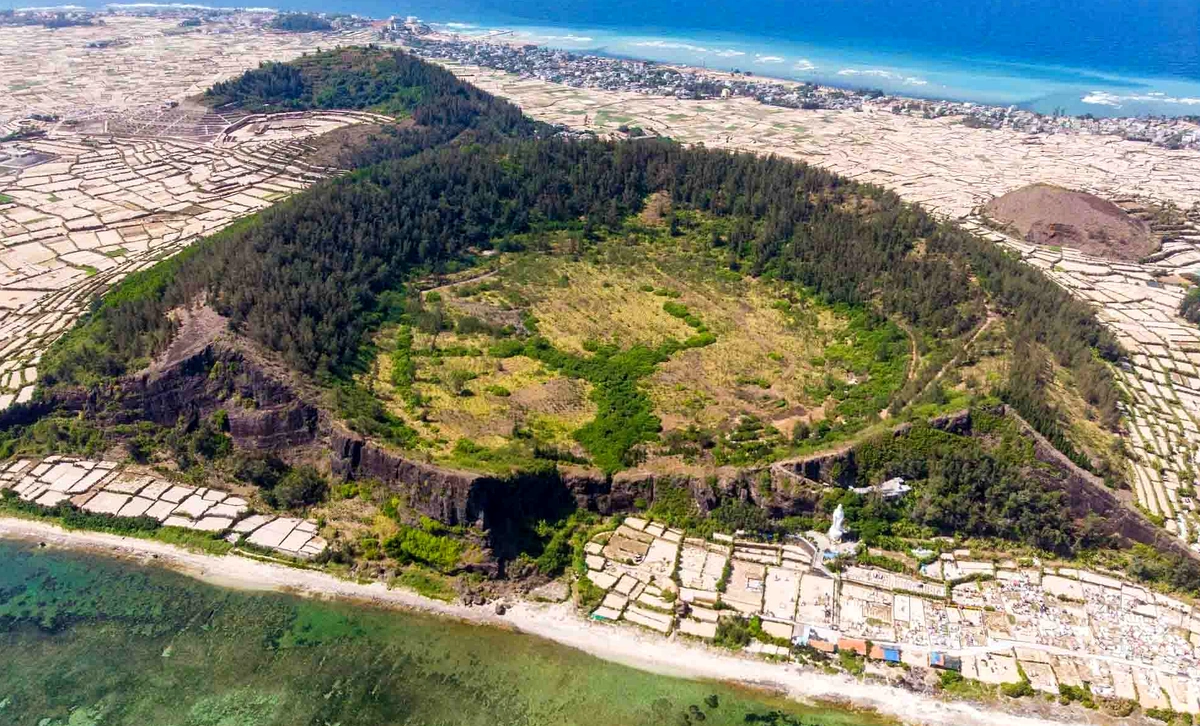
Deep understanding of nature’s laws guided ancestors in making wise, forward-looking settlement choices. Generations of local inhabitants long ago put nutrient-rich volcanic ash and gentle slope terraces to use for farming and village building, establishing enduring historic settlements such as the famed Heshun Ancient Town. At the same time, drawing on centuries of accumulated experience, they wisely chose safe sites well clear of ancient lava-flow paths—testament to high wisdom in harmonizing human life with ecological surroundings. Across historical shifts, this spatial structure retains its value, making Tengchong a harmonious meeting of nature’s destructive power and human culture’s resilient, adaptable vitality.
Stepping onto the Yunnan-Guizhou Plateau in far-western Yunnan Province, Tengchong Volcano Crater Geopark opens a living geological museum where nature and people have written grand historical chapters using raw materials from beneath the ground. Spanning a massive core area of roughly 221.36 square kilometers, the scenic zone is planned and zoned into distinct ecological and geological sub-areas, including the majestic volcano cluster, the mysterious geothermal zone at Rehai, and the dramatic waterfall scenery of Die Shui He. The physical space of the attraction is not merely ancient dormant volcanic peaks, but a scientifically calculated ecological layout where local architectural craft and real-world scale interlock closely, composing a resonant harmony between heaven and earth and the skilled hands of Tengchong artisans.
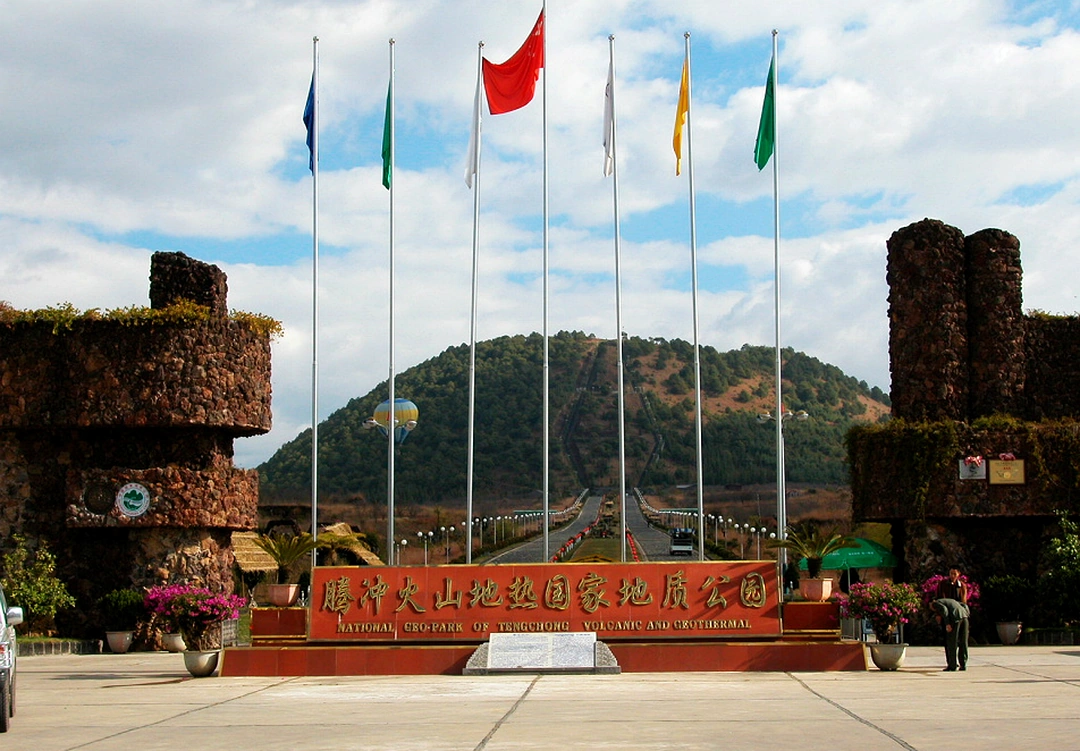
Examining material structure more closely, the foundation shaping all scenery and structures here is primeval volcanic lava—chiefly mineral-rich andesite and basalt. Over tens of thousands of years of weathering and cooling, these volcanic rocks took on distinctive traits: surfaces peppered with tiny gas vesicles, lightweight porous texture paired with surprising mechanical durability, plus strong resistance to acids and alkalis, good sound insulation, and heat retention. Those superior qualities inspired generations of local craftspeople to develop a “volcanic rock” architectural vocabulary deeply rooted in Yunnan culture. In civil construction and infrastructure, locals skillfully applied two core techniques—dry-stone stacking without mortar (“ganqi shi”) and white lime pointing (“baihui goufeng”)—to raise sturdy stone walls able to stand strong against gales and seismic tremors.
Looking at ancient villages or structures in the area, one cannot help admiring the practical yet refined aesthetic mindset of past artisans. Dark gray basalt walls are fitted together artfully, accented with crisp white lime joints that highlight a rustic yet dignified architectural character. Beyond that, the practical scale of tourism infrastructure here is reflected in a well-organized internal trail and road network. Trails, walkways, steps leading up to craters, and visitor plazas are paved with large volcanic-stone slabs dressed just enough to preserve wild natural charm while ensuring reliable grip and safety for visitors in all weather.
Entering the core of the scenic area, stone craft and landscape arrangement reach high refinement. Artisans make full use of “volcanic bombs”—lava masses ejected into the air during eruptions that solidified on descent—to build dramatic rockeries, unique garden vignettes, or sculptures infused with the ethnic cultures of southwestern China. Pairing natural material with hand-carved sculpture turns inanimate stone into works carrying the spirit of time, nestled amid the deep green highlands.
To keep the fragile ecosystem and unique geological structures of the craters intact, scenic area management invested in an elevated boardwalk and trail system stretching tens of kilometers in total. These wooden bridges and plank walkways wind gracefully around the rims of signature craters such as Da Kongshan and Xiao Kongshan. Elevated walkways not only link core viewpoints seamlessly, but also act as a sturdy ecological shield protecting volcanic ash layers and delicate ground vegetation from the footfall of tens of thousands of visitors each year. Through this, Tengchong’s real-world scale stands out not merely as a vast geopark, but as a model of sustainable tourism where architectural history, craftsmanship, and traditional engineering are honored, preserved, and passed on to inspire future generations.
When night falls over the Yunnan-Guizhou Plateau and drapes ancient lava landforms in a mystical quiet, Tengchong Volcano sheds its daytime stillness to enter an altogether different cultural chapter. The nighttime tourism economy here is not merely about extending visitor stays; it is a carefully planned work of visual and contemplative spatial art. Leading lighting designers integrated energy-saving cold-light LED fixtures alongside high-output floodlights along crater depressions. A deeply philosophical color scheme guides the scene: warm, nostalgic gold outlines the sweeping curves of volcanic cones, while cool blue and violet light bands shift in motion to vividly evoke magma simmering thousands of meters beneath Earth’s crust. This interplay of stillness and motion—between cool basalt and seemingly dormant heat—creates a striking tension that turns a million-year-old geological body into a powerful, enchanting stage.
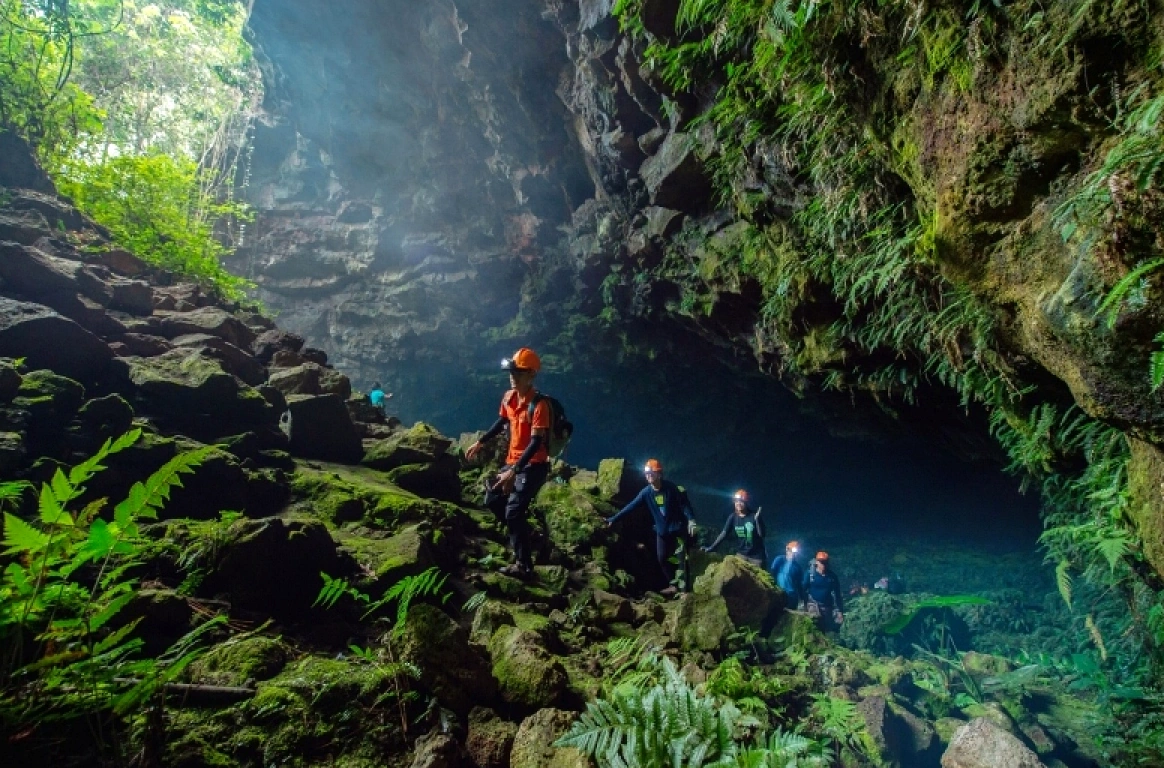
Tengchong’s nighttime cultural pulse reaches a crescendo in the large-scale live production “Dream of Tengchong” (梦幻腾冲), a composite artistic spectacle distilled from thousands of years of history on China’s southwestern frontier. Going beyond an ordinary show, it brings together sound, lighting, digital media, and mist effects to recreate poignant and heroic chapters of history. Across an open stage without walls, audiences travel back in time to witness frontier legends of taming peaks and rivers, hear the evocative clatter of caravan bells along the rugged Ancient Tea Horse Road—where Puer tea bundles and jade were traded for survival across misty passes—and experience a moving segment honoring the Expeditionary Force in western Yunnan during World War II, turning live performance into a sacred spiritual bridge between present and past.
Evening art and food spaces in central plazas and Tengchong night markets also paint a lively portrait of ethnic minority cultural blending. Here, night life is not drowned out by modern electronic beats, but echoes with deep drums and gongs of the Achang people performing the powerful Husa Knife Dance (户撒刀舞), where gleaming blades flash through the air beside flickering flames like a highland warrior’s call to spirits. Right beside it, the heart-stopping Lisu performance of “Climbing Knife Ladders and Walking Through Fire” (上刀山下火海) has spectators holding their breath at every bare footstep on sharp blades and glowing coals, testifying to resilient willpower and fierce vitality that overcame hardship across generations. These living intangible traditions mingle with the rich aroma of family-recipe grilled meats seasoned with Sichuan pepper and chuanxiong, wild mushroom hotpot, and the deep sweetness of local corn liquor, creating a full multi-sensory experience in this fabled land of fire.
Stepping into the food culture of volcanic Tengchong, travelers not only touch geological deposits tens of thousands of years old, but also have every sense awakened by a distinctive local culinary tradition where earth and people meet through family flavors. Nourished by mineral- and trace-element-rich volcanic ash soil, the local agricultural ecosystem yields renowned specialties found nowhere else in China—from tender green tea shoots on the Gaoligong Mountains and ancient ginkgo groves to fragrant upland rice behind the famed Erkuai rice cakes. Standing under frontier skies, enjoying a dish in Tengchong feels like turning living pages of human adaptation to natural forces, where heat from beneath the ground is harnessed skillfully for the refined cuisine of southwestern Yunnan’s ethnic communities.
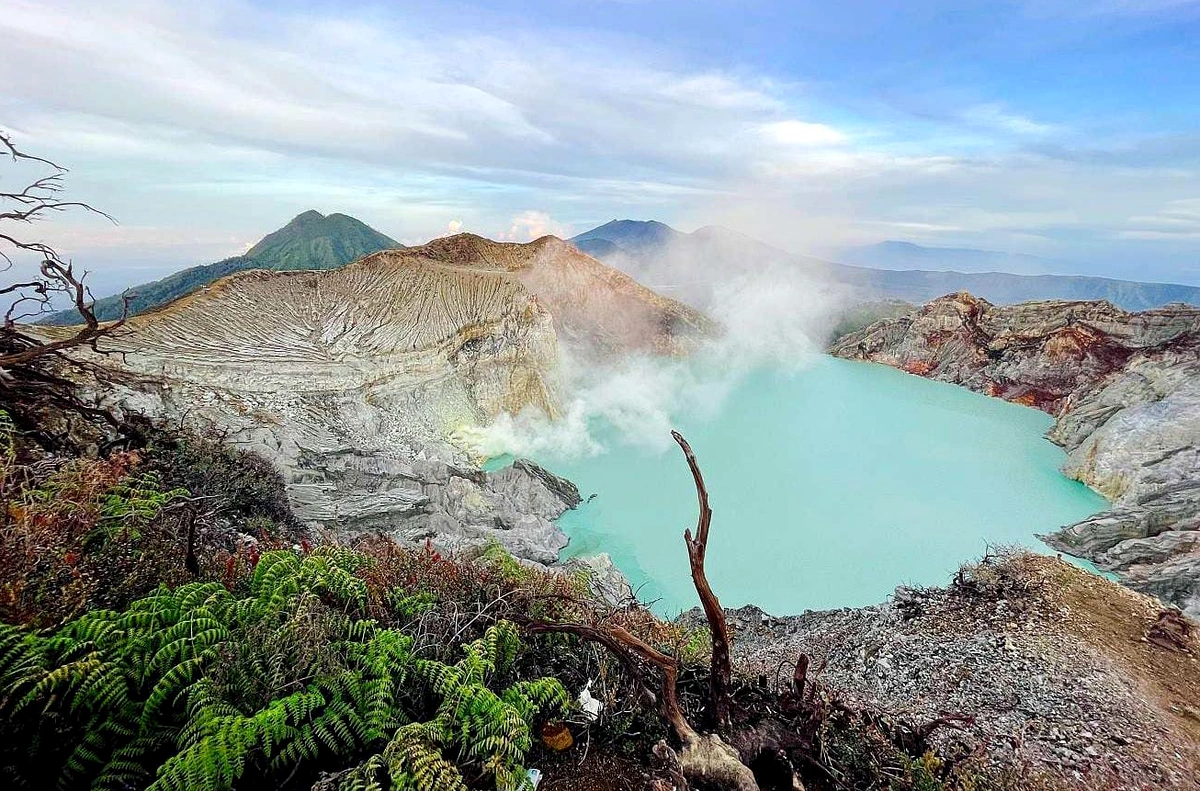
This traditional flavor journey begins at Rehai Scenic Area, where abundant underground geothermal energy is put directly to work in daily life and cooking. There, plumes of white steam rising from volcanic fissures serve as a perpetual natural steamer, producing two signature treats: Big Pot Erkuai and Hot-Spring Eggs. Erkuai—a traditional rice cake made from quality rice pounded smooth while piping hot—is steamed in a basket over hot mineral steam rising from Rehai’s largest boiling vent, picking up a subtle mineral savoriness alongside its chewy, fragrant texture. Alongside it are chicken eggs cooked in sulfur-rich geothermal water, with whites turning rosy-tinted and yolks rich and savory with natural mineral character—a rustic yet refined taste of living in tune with nature.
Leaving the misty steam of Rehai for Tengchong’s historic quarter, diners enter a folk food haven rich with traces of Ming- and Qing-era migration from the Central Plains. Leading the menu of imperial dishes adapted into folk fare is Tengchong Tuo Guazi (Tengchong Clay-Pot Hotpot), a symbol of gathering and warmth during festivals and village celebrations. A handcrafted truncated-cone clay pot with a central chimney holds greens and thinly sliced taro at the base to retain heat, topped with crispy fried smoked pork belly, puffed pork skin, flavorful meatballs, and wild mushrooms. As glowing charcoal warms the pot, sweet chicken-and-bone broth seeps through every layer, creating a clean yet deeply comforting flavor that warms spirits against the chill of the Yunnan plateau.
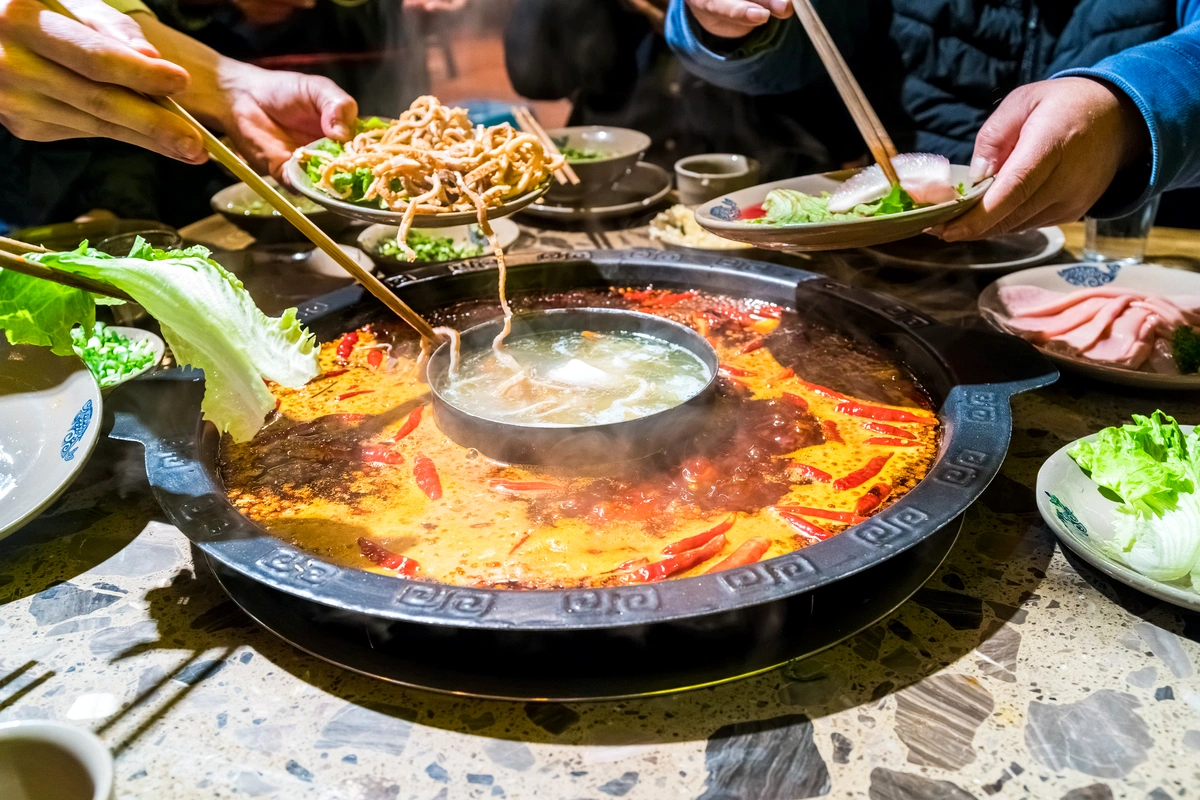
Alongside traditional clay-pot hotpot, pork preparation in Tengchong reaches high skill in Dabopian (“Large Thin Slices”), a celebrated frontier savory dish. To make it, seasoned chefs select cooked local black-pig head meat, press it firmly beneath a heavy stone to drain moisture and set its shape, and slice it with a razor-thin blade into wide, translucent sheets that hold together without tearing. Eaten dipped in a carefully mixed sauce of pure sesame oil, crushed garlic, tangy rice vinegar, and fiery red chili oil made from peppers grown on volcanic slopes, it delivers a lively contrast of crisp skin, balanced richness, and tingling heat.
Rounding out this rich culinary spread is Songhua Gao (Pine-Flower Cake), a delicate country sweet that tempers hearty highland meats. Crafted from pea starch, rock sugar, and extract from wild pine blossoms, the cakes have a naturally golden hue and jelly-like smoothness, melting coolly on the tongue with a gentle herbal aroma. To complete the family-style experience, people often gather over Songhua Gao and a pot of Gaoligong Mountain tea brewed with hot spring water, listening to wind sweep across volcanoes dormant for tens of thousands of years—showing that Tengchong cuisine is not merely about eating, but about preserving the soul of a grand geological land across centuries.
When planning a visit to Earth’s geological wonder at Tengchong Volcano Crater Scenic Area, knowing practical details on hours and ticketing procedures is essential for every traveler. Under scenic area regulations, the site welcomes visitors daily from 08:30 AM to 06:00 PM, with ticket sales and entry gates closing to new arrivals at 05:30 PM to ensure safe exploration before dusk. Notably, this geological heritage site enforces strict real-name registration, requiring visitors or online bookers to present valid ID when reserving and purchasing tickets. Thorough preparation optimizes wait times while helping protect precious natural resources under growing visitor numbers.
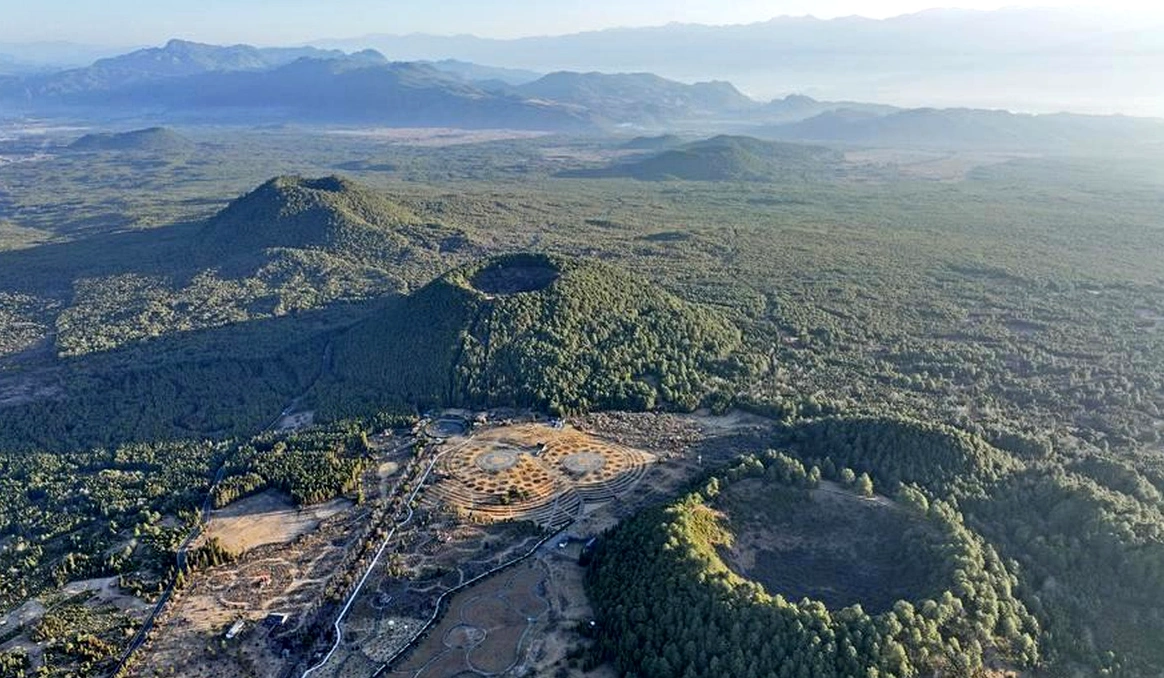
Regarding transport connections, reaching this volcanic region is now easier than ever thanks to well-developed air and road links in western Yunnan. For travelers flying in from major cities, the most convenient option is booking a flight into Tengchong Tuofeng Airport (IATA code: TCZ), strategically located roughly 12 kilometers from the urban center and about 25 kilometers from the volcano park cluster. Upon arrival at the terminal, visitors can easily rent a self-drive car, hire a private vehicle heading north along provincial highways in roughly 30 to 40 minutes, or choose a budget-friendly option via dedicated shuttle buses and coaches from the central station. This variety of transport makes scheduling flexible whether traveling in a large group or exploring independently.
To make the most of the space and savor every memorable moment in this special geological setting, travel specialists recommend following a well-paced itinerary starting early in the morning. In the morning, begin by climbing to the summit of Da Kongshan to take in panoramic views of the crater from above and catch golden sunrise light mingling with a sea of clouds filling the valley. When midday hunger sets in, head to local restaurants to enjoy traditional clay-pot hotpot (“tuguazi”) full of mountain flavors prepared from time-honored recipes. Afternoon is ideal for a leisurely stroll around Xiao Kongshan, visiting the Volcano Geology Museum to learn more about millions of years of formation history, and then heading to Rehai Scenic Area for a soothing soak in natural therapeutic mineral hot springs. If morning weather allows, do not miss the chance to take a hot-air balloon ride for a sweeping bird’s-eye view of this distinctive twin-volcano system.
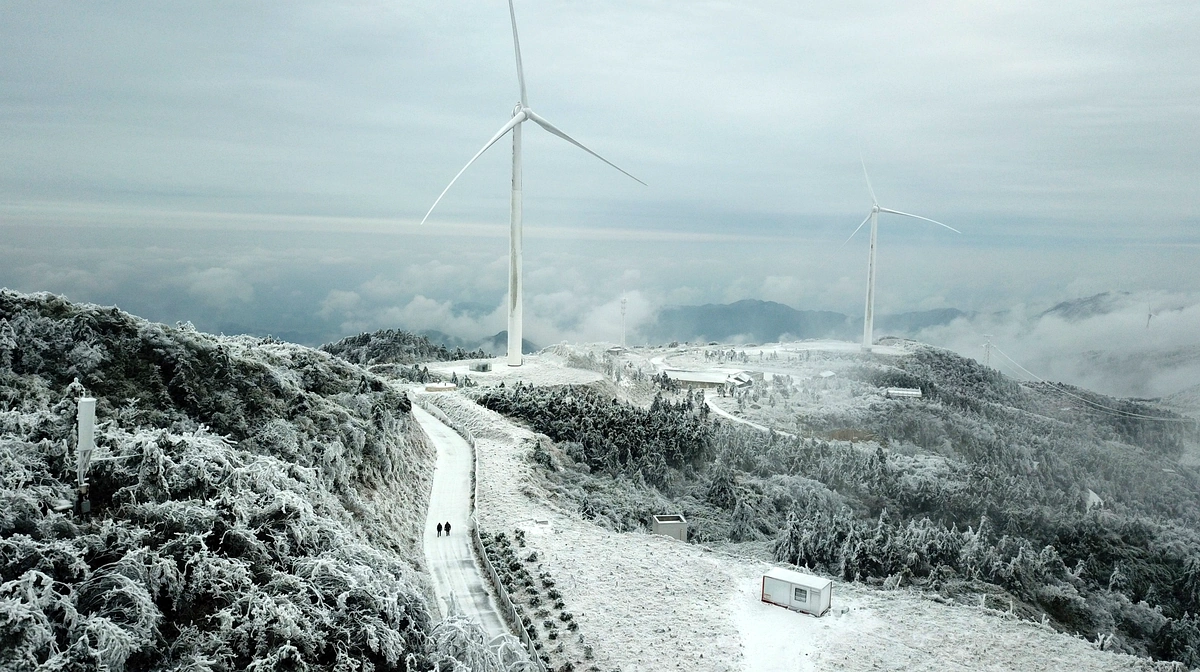
Sitting at an average elevation of 1,600 to 2,000 meters above sea level, Tengchong has a distinctive climate with large day-to-night temperature swings and strong ultraviolet radiation due to thinner mountain air and clear skies. Therefore, a top pocket tip for every explorer is to pack thoughtful gear, including high-grip hiking shoes for safe footing on loose basalt gravel and a windproof jacket to stay warm on chilly afternoons. Personal essentials such as a wide-brimmed hat, sunglasses, and high-SPF sunscreen are indispensable throughout the trip. Management also issues a firm safety reminder: visitors must never climb off-trail up slopes of volcanoes not opened to tourism, both to protect personal safety and preserve pristine scenery. To prepare for a complete, safe, and insightful journey through Tengchong’s cultural and geological beauty without worrying about logistics, you can explore details on all-inclusive tour packages crafted by experienced specialists.