Welcome to the comprehensive international travel encyclopedia section of VDS Travel. If you are planning an exploratory journey along legendary Chinese tourist routes, especially the dreamy Nanzhao-Dali-Yunnan region, the Honghe Prefecture route is an absolute must. Hidden here is an ancient, time-honored gem: the Bantingshui Ancient Well in Jianshui. This article will guide you deep into every corner of history, architecture, culture, and ultimate practical tips to ensure a flawless trip.
The Bantingshui Ancient Well is located in Jianshui County, under the administration of the Honghe Hani and Yi Autonomous Prefecture, Yunnan Province, China. Situated on the Yunnan-Guizhou Plateau at an average altitude of about 1,300 meters above sea level, Jianshui boasts a mild climate year-round, abundant natural landscapes, and notably, an ancient architectural heritage system preserved almost intact since the Ming and Qing dynasties.
Historically, Jianshui served as a vital political, military, economic, and cultural center of southern Yunnan, nicknamed “Little Lin’an.” It played a crucial role as a trading gateway on the southern Silk Road connecting China with Southeast Asia. Amidst this context, freshwater resources determined the survival and development of an entire ancient city. The Bantingshui Ancient Well emerged not merely as a domestic water supply project, but also as a living testament to the ingenuity of ancient hydraulic engineering and architectural artistry.
The Unique Symbolic Significance of Jianshui’s Well Culture
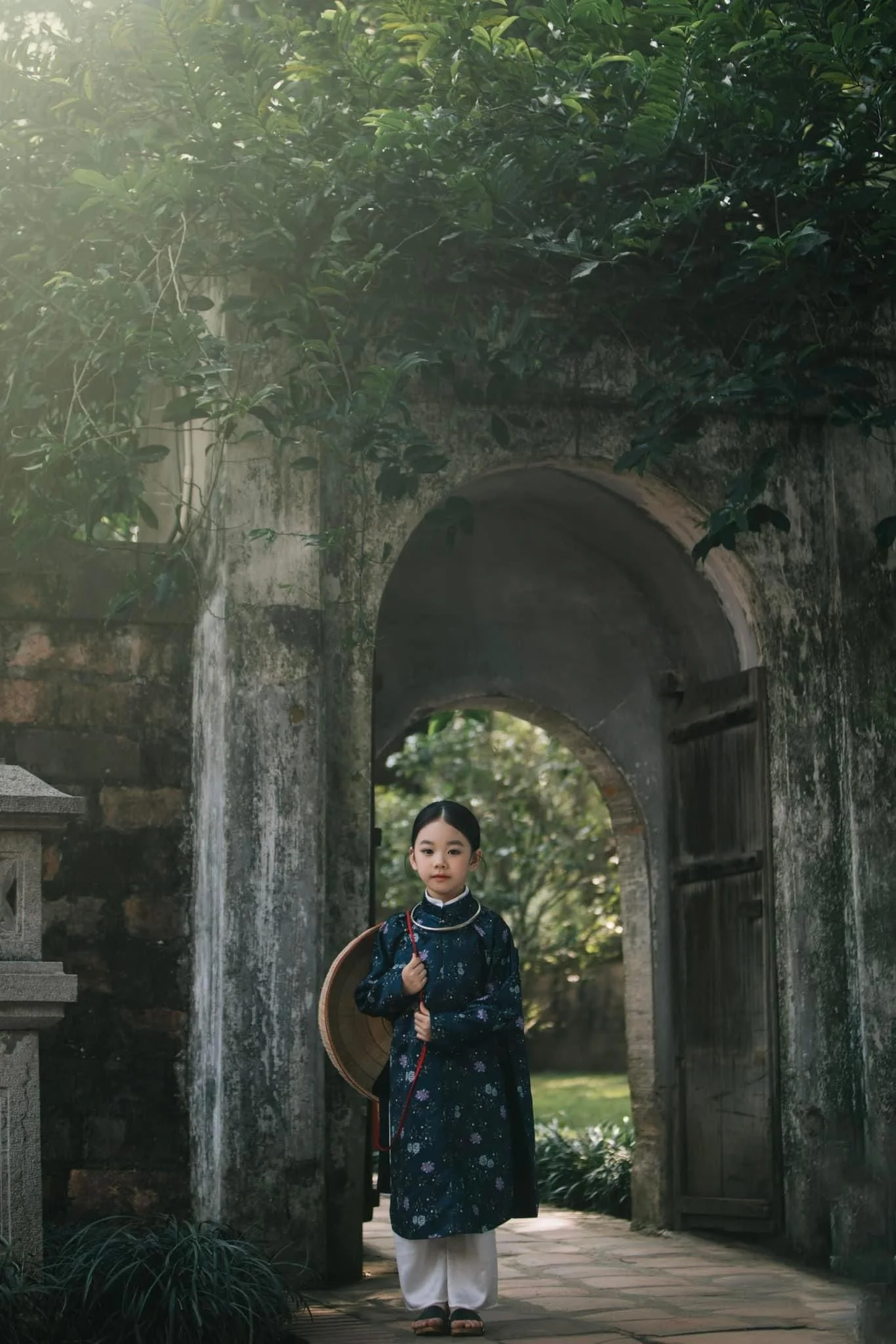
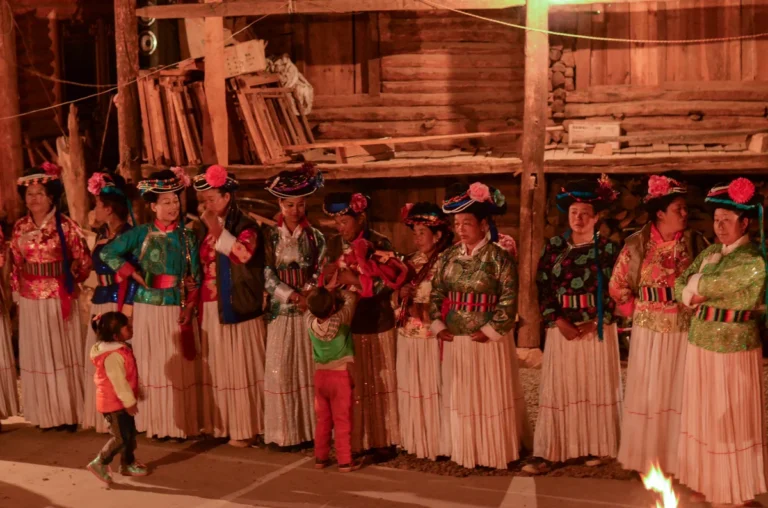
Children wearing traditional costumes standing in front of an ancient arched gate in Jianshui, China.
The symbolism of the Bantingshui Ancient Well is closely tied to the renown of Jianshui’s pottery manufacturing industry—one of China’s four great pottery treasures. The distinct water source from the Bantingshui well, combined with the region’s unique purple clay, created Jianshui Purple Pottery (Jianshui Zitao) famous worldwide for its bell-like acoustic resonance, exceptional durability, and exquisite carved patterns. Therefore, exploring the Bantingshui Ancient Well is essentially touching the roots of the culture, history, and long-standing handicraft art of the Honghe region.
Upon setting foot in the Bantingshui Ancient Well area, the first thing that astonishes visitors is the architectural scale and spatial layout imbued with traditional Chinese feng shui philosophy. Unlike ordinary wells featuring a simple stone rim, the Bantingshui Well is an integrated hydraulic architectural complex paired with sophisticated stone carving arts.
Spatial Structure and Construction Materials
The most visually unique aspect of the Bantingshui Ancient Well is its multi-tiered structure and scientific drainage and water-guiding system. The ancients cleverly utilized the natural slope of the terrain to create separate water basins: an area for fetching direct drinking water, an area for washing vegetables and fruits, and an area for laundering. This design not only ensured water hygiene but also demonstrated civilization in managing communal water resources since feudal times.
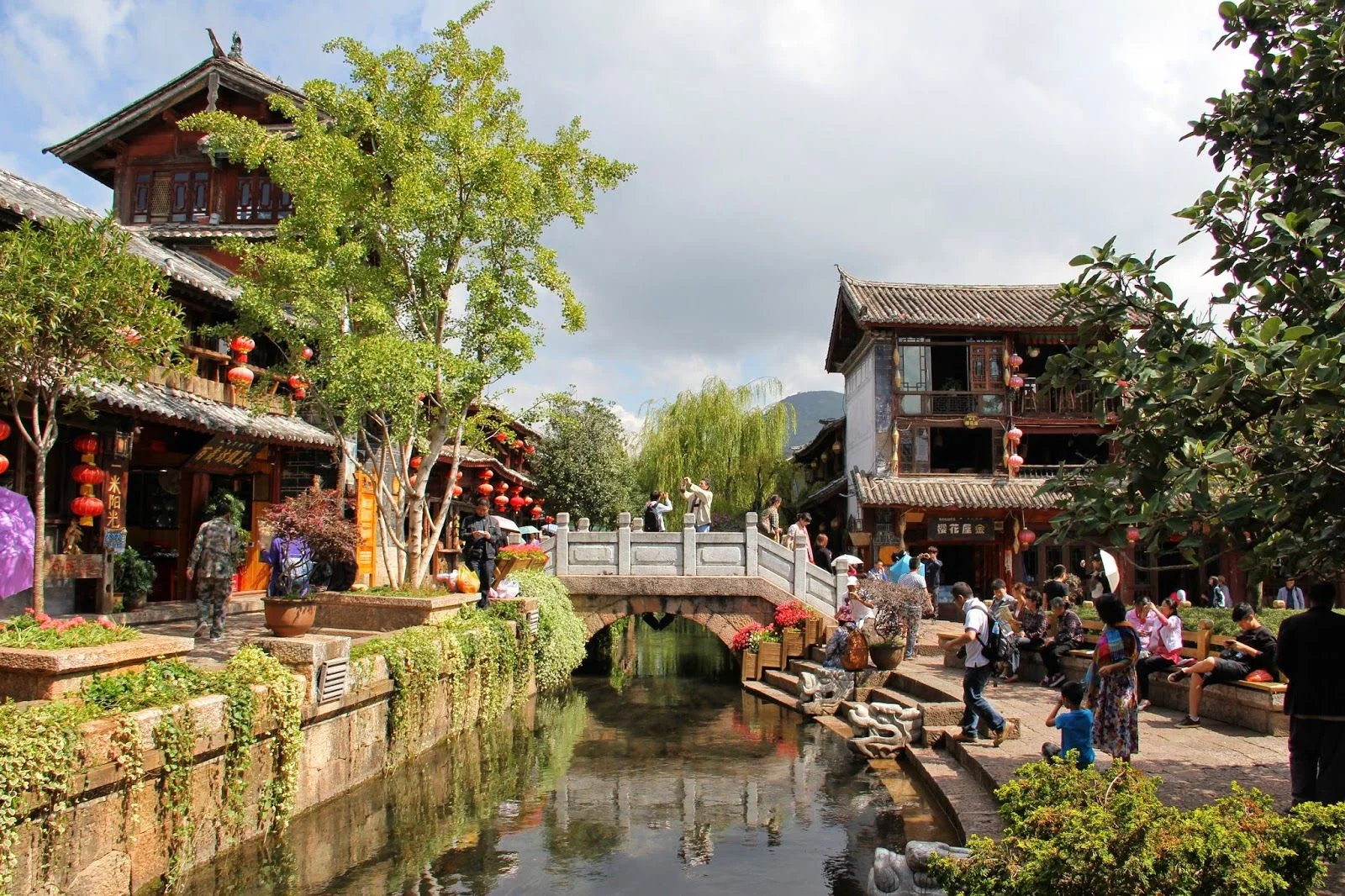
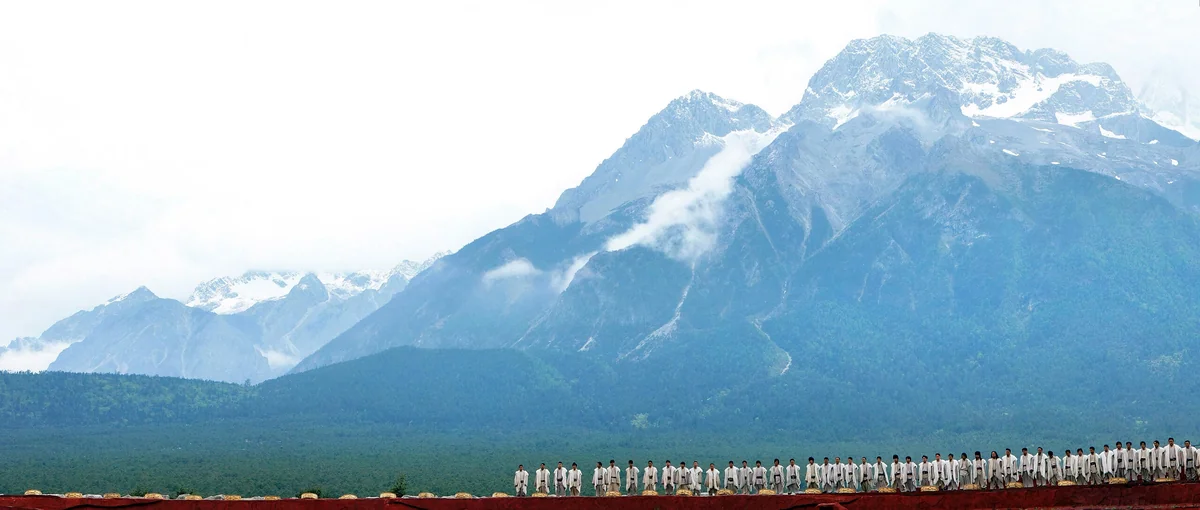
Scenery of Lijiang ancient town in Yunnan, China with canals, stone bridges, and traditional architecture.
Spectacular Visual Impressions Under Natural Light
A tour of the Bantingshui Ancient Well is not merely observing an ancient architectural structure, but also a series of authentic, vivid cultural experiences uniquely crafted by VDS Travel for Vietnamese travelers.
Immersing in the Slow-Paced Life of Locals
Unmissable Million-View Check-In Angles
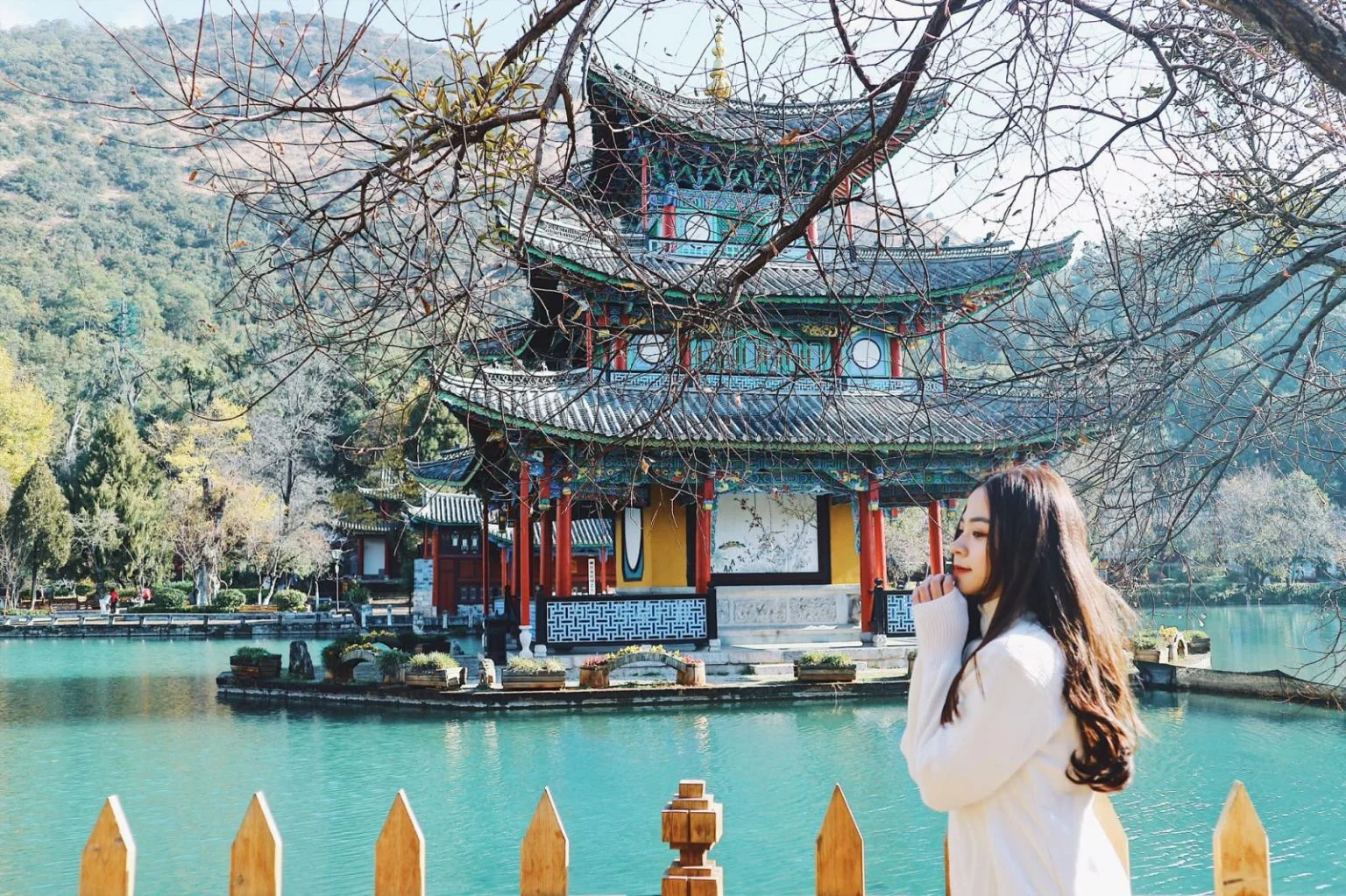
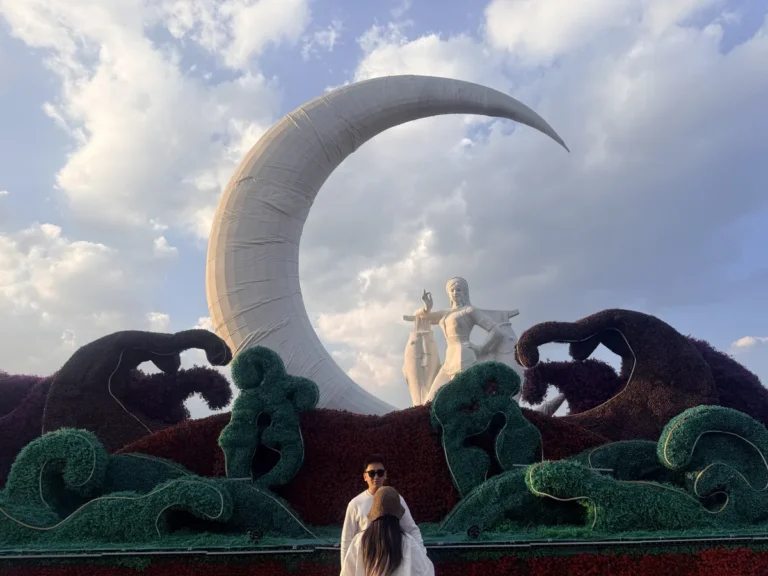
A female traveler in a white dress posing for souvenir photos at Black Dragon Pool Park in Lijiang, Yunnan, China.
Panoramic overhead angle: Find a higher vantage point or use a drone (if permitted) to capture the entire unique block structure of the ancient well and the surrounding old town landscape. Mossy close-up frame and crystal-clear water: Capture detailed carvings on bluestone combined with reflections of yourself under the cool water. Check-in with traditional water-carrying buckets: Experience the role of ancient locals using bamboo water-carrying props to create cinematic photos steeped in traditional Chinese costume style. Combine exploring Jianshui Ancient Town: Just steps away from the ancient well are ancient residential complexes, green slate-paved alleys, and Chaoyang Tower—dubbed the “Mini Tiananmen” of Yunnan.
The journey to explore the Bantingshui Ancient Well would not be complete without experiencing the rich cuisine and characteristic shopping culture in Jianshui. Pure water from ancient wells serves as the soul creating special flavors for local dishes.
Exquisite Cuisine Tied to Ancient Well Water Sources
Jianshui Grilled Tofu (Jianshui Kaidoufu): The famous national dish across China. Tofu is handmade using natural mineral well water, then lightly fermented and grilled over glowing charcoal until the outer crust balloons, turning golden while remaining soft, rich, and creamy inside. Dipping it into the characteristic spicy dipping sauce of the Yunnan region is truly culinary perfection. Crossing-the-Bridge Rice Noodles (Guoqiao Mixian): Yunnan’s famous traditional noodle dish featuring piping hot broth simmered from bones and chicken, combined with dozens of finely sliced fresh ingredients. Jianshui-standard broth always uses ancient well water to preserve its natural sweet freshness. Rose Pastry (Mihua Bing) and Pu’er teas: Enjoying pastries made from fresh rose petals paired with a cup of Pu’er tea brewed with mineral well water leaves an unforgettable, ethereal aftertaste.
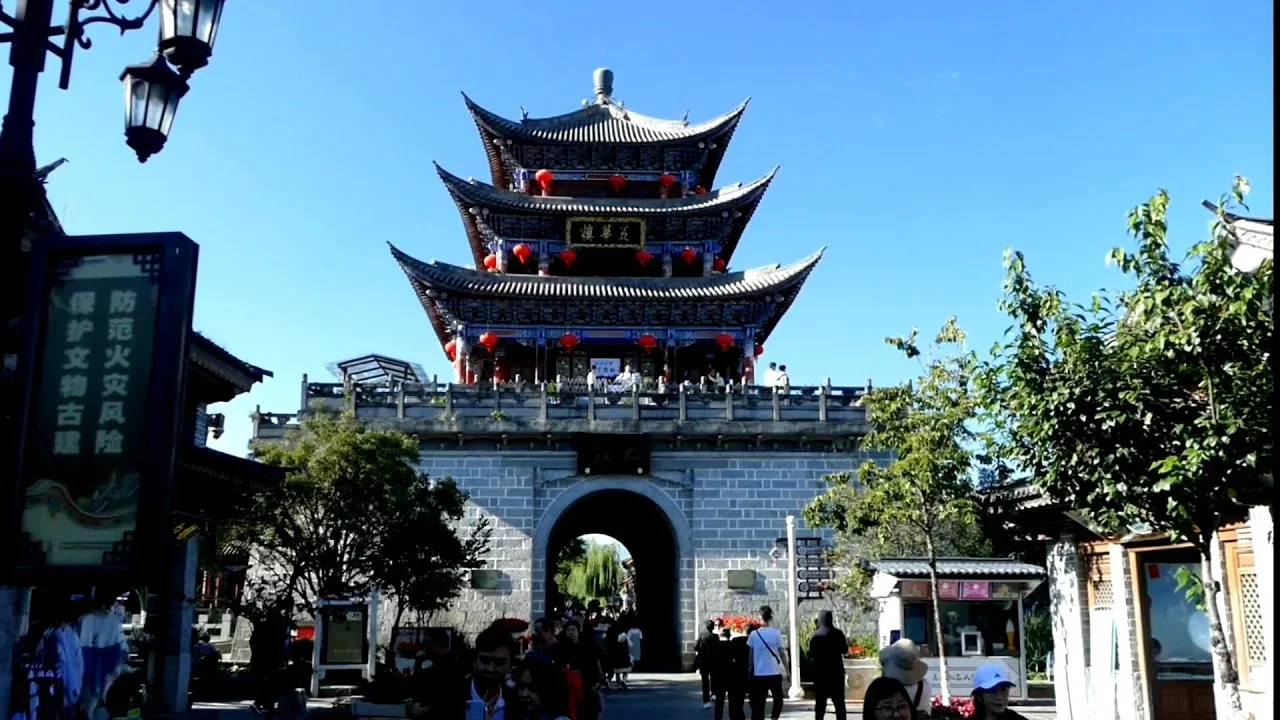
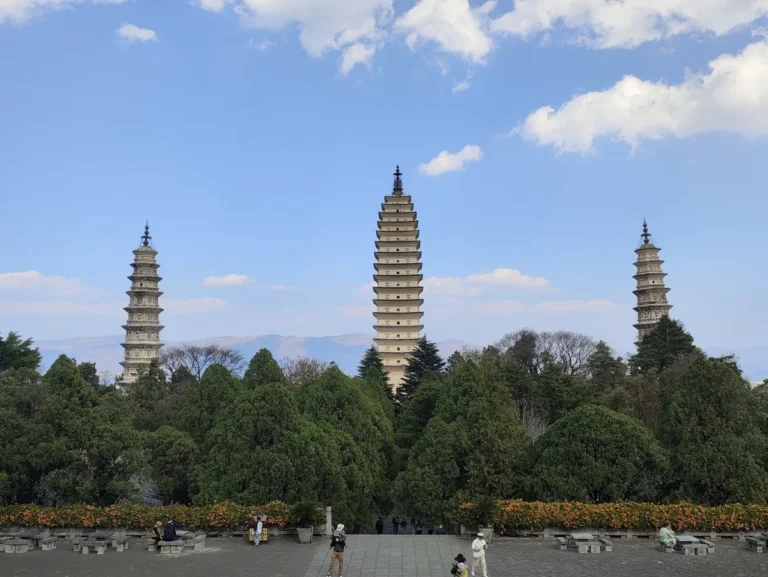
Traditional Chinese architectural ancient city gate in Honghe Prefecture, Yunnan.
Unique Souvenir Shopping Culture
To ensure your trip exploring the Bantingshui Ancient Well and the Honghe Prefecture route runs smoothly, VDS Travel experts summarize the following invaluable practical tips:
The Golden Time to Visit Jianshui
Optimal Means of Transportation
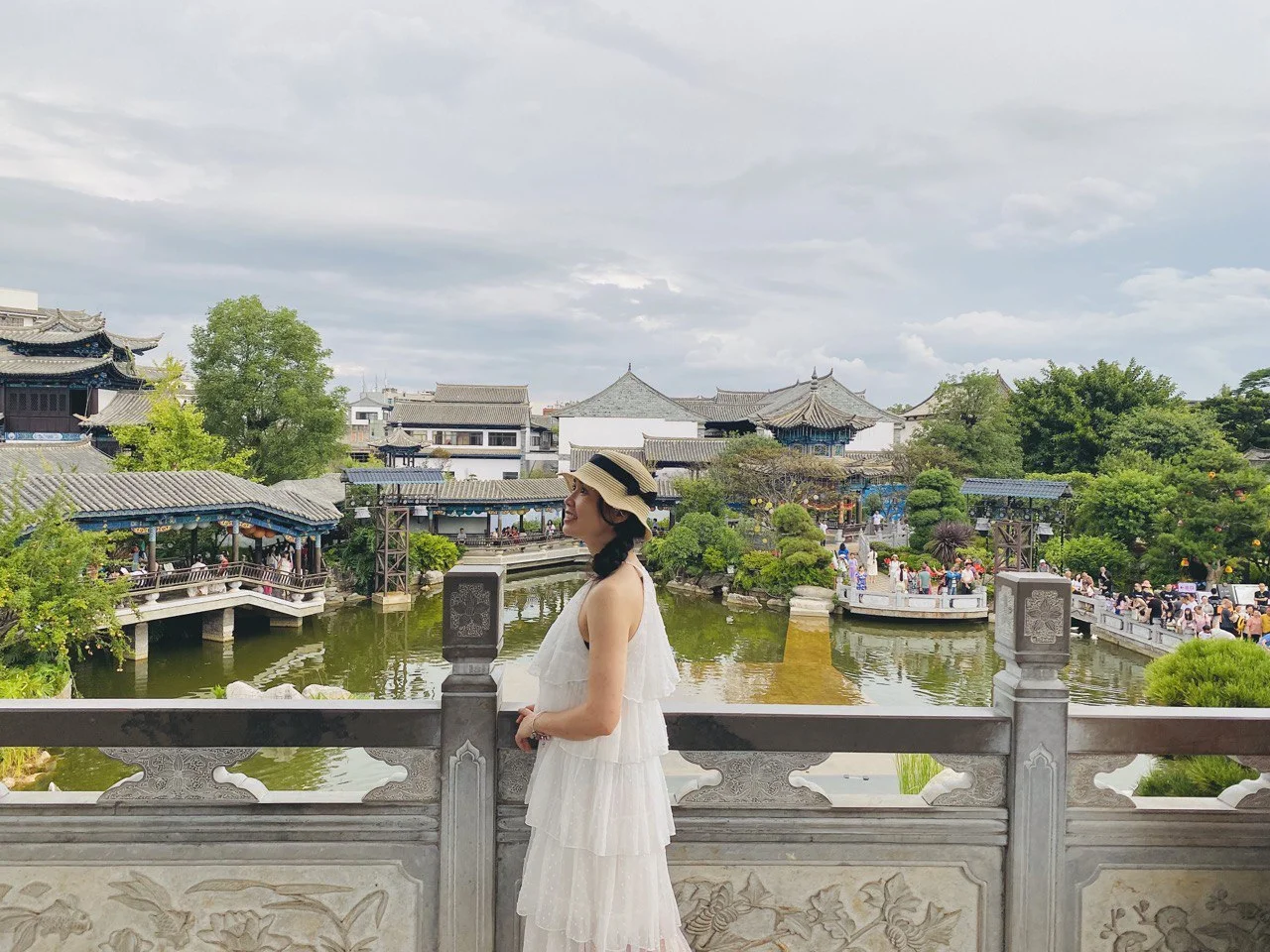
A female traveler in a white dress wearing a hat posing for photos at the Bantingshui Ancient Well campus in Jianshui.
Traveling to China and Yunnan: Vietnamese travelers can choose direct flights to Kunming or travel overland via the Lao Cai border gate (Hekou). From Hekou, it takes only about 1.5 to 2 hours on domestic Chinese high-speed rail to reach Jianshui station directly and conveniently.
Estimated Expenses
Important Cultural Notes and Taboos
Respect flexible water sources: Water wells are extremely sacred community cultural assets to local residents. Absolutely do not litter indiscriminately, and do not dip hands or feet directly to pollute the ancient well’s water source. Etiquette when photographing: When wishing to photograph locals living by the ancient well, ask politely with a smile or a friendly greeting. Prepare digital applications: In China, apps like WeChat Pay, Alipay, Baidu Maps, and translation software (Papago or offline Google Translate versions) are indispensable items since cash is rarely used and locals speak little English.
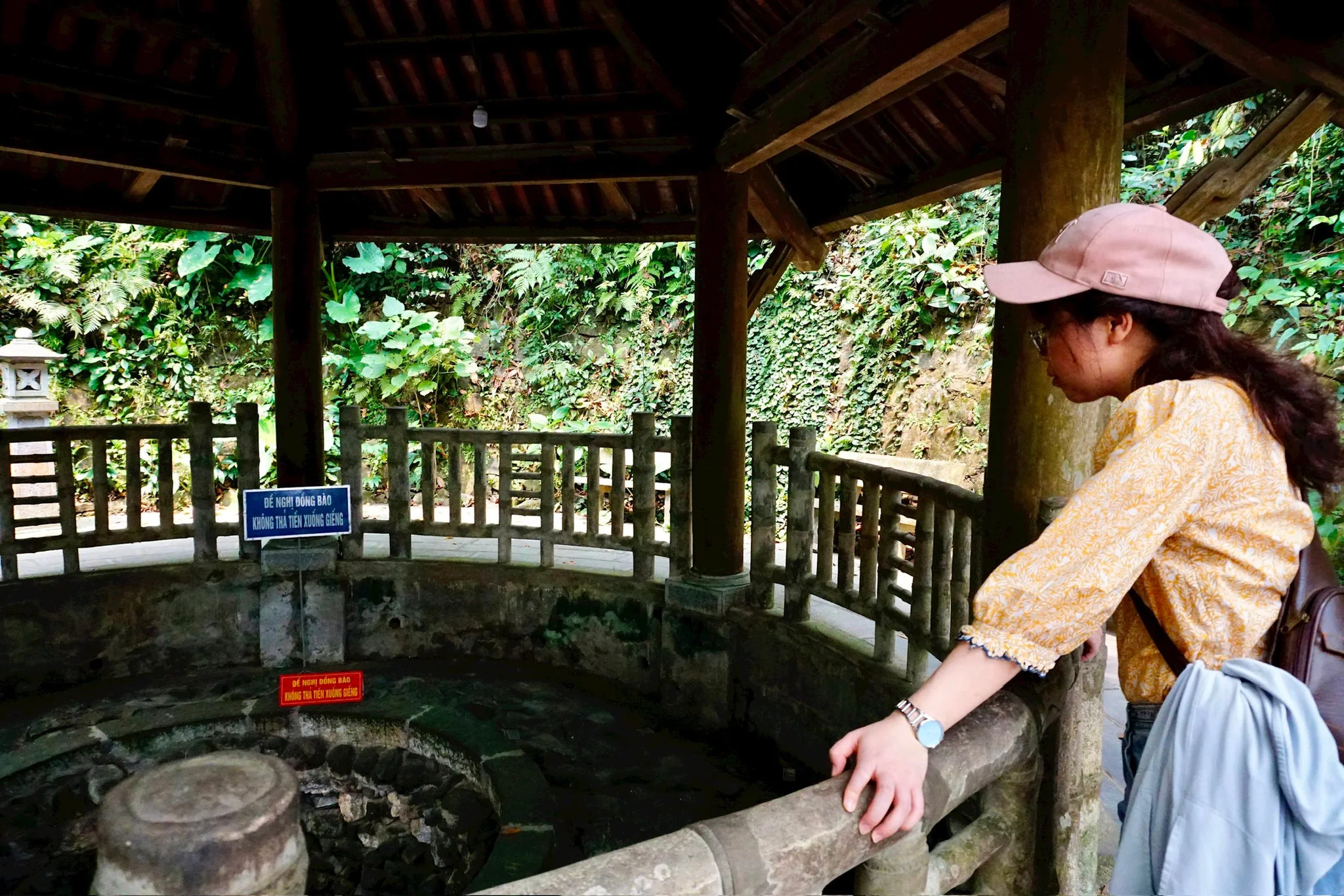
A female traveler standing and observing the Bantingshui Ancient Well in Jianshui inside a wooden-veranda campus.
1. Is there an admission ticket fee to visit the Bantingshui Ancient Well?
2. What locations should be combined when visiting the Bantingshui Ancient Well in Jianshui?
3. Can you drink water directly from the Bantingshui Ancient Well?
4. What is the main communication language in Jianshui? Is it easy for Vietnamese to travel independently?