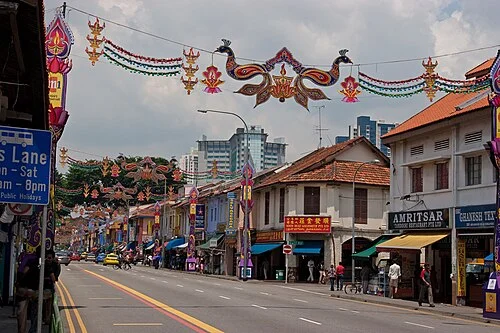
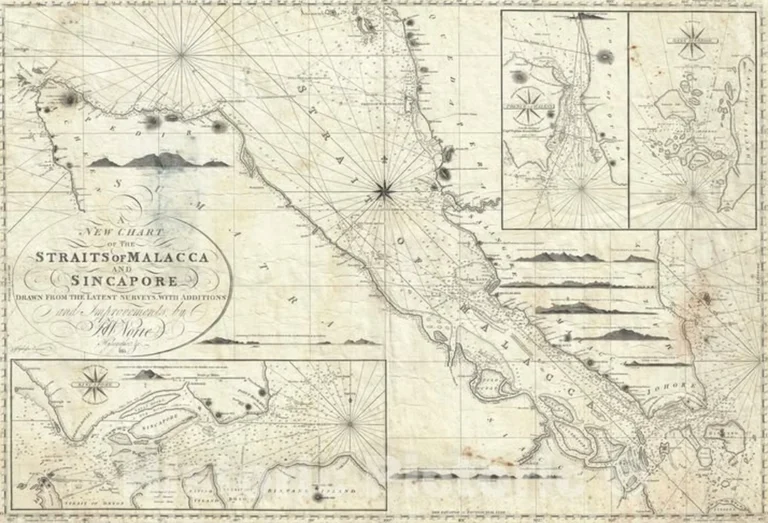
In the chronicles of urban transformation across Southeast Asian island civilizations, Chinatown in Singapore emerges as a living text written with the sweat, aspirations, resilience, and adaptability of millions of overseas migrants from mainland China arriving since the nineteenth century. Academic inquiry into this cultural space does not merely stop at pinpointing geographic coordinates or documenting ancient architectural relics; it must also situate it within the turbulent currents of British colonial history, world wars, post-independence nation-building, and modern globalization. Chinatown Singapore thus transcends the boundaries of a purely ethnic residential enclave to become a profound anthropological symbol, an interwoven space of diasporic memory and local pride, where immense traditional values are preserved and refracted through the lens of a twenty-first-century multicultural nation.
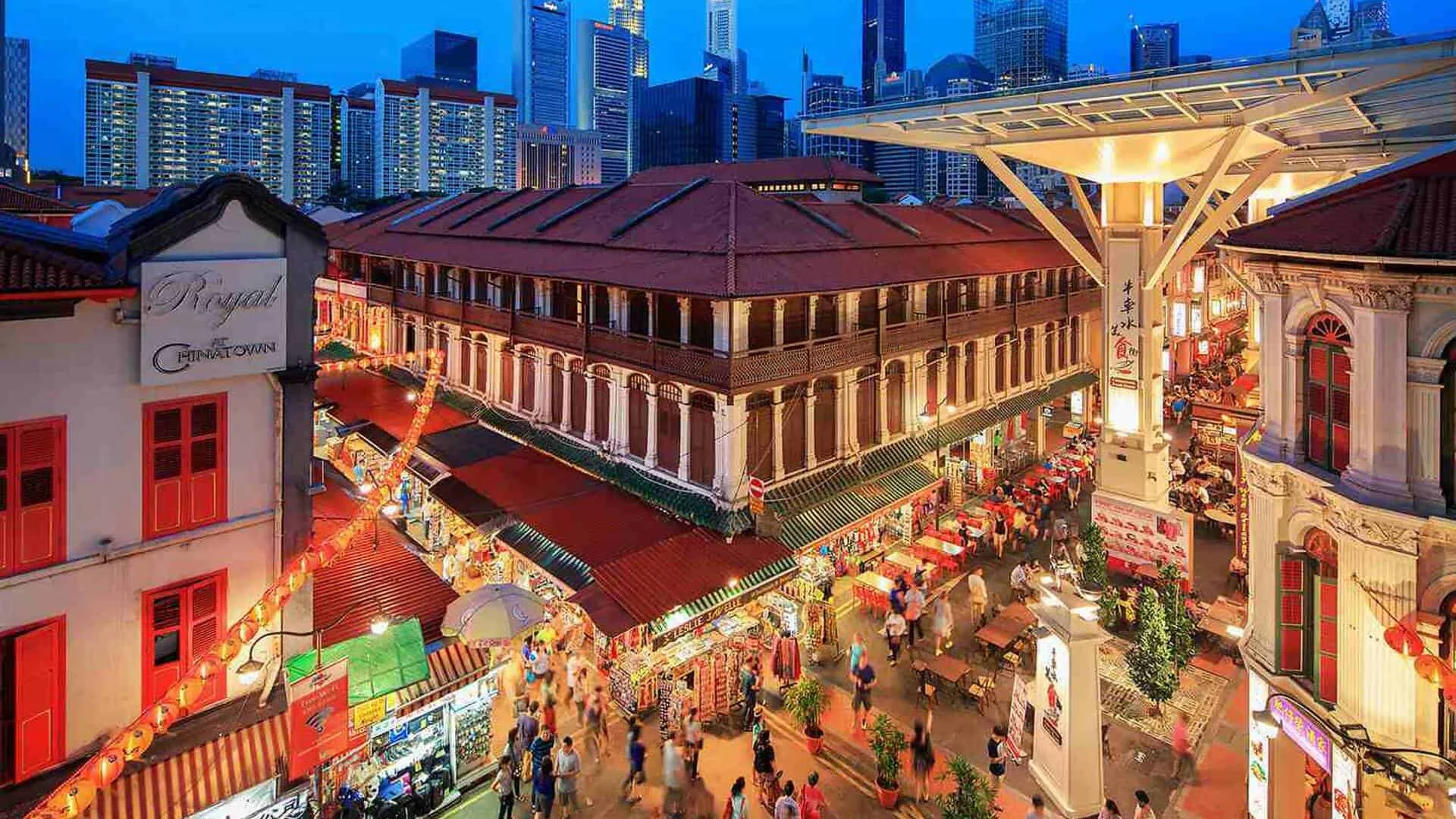
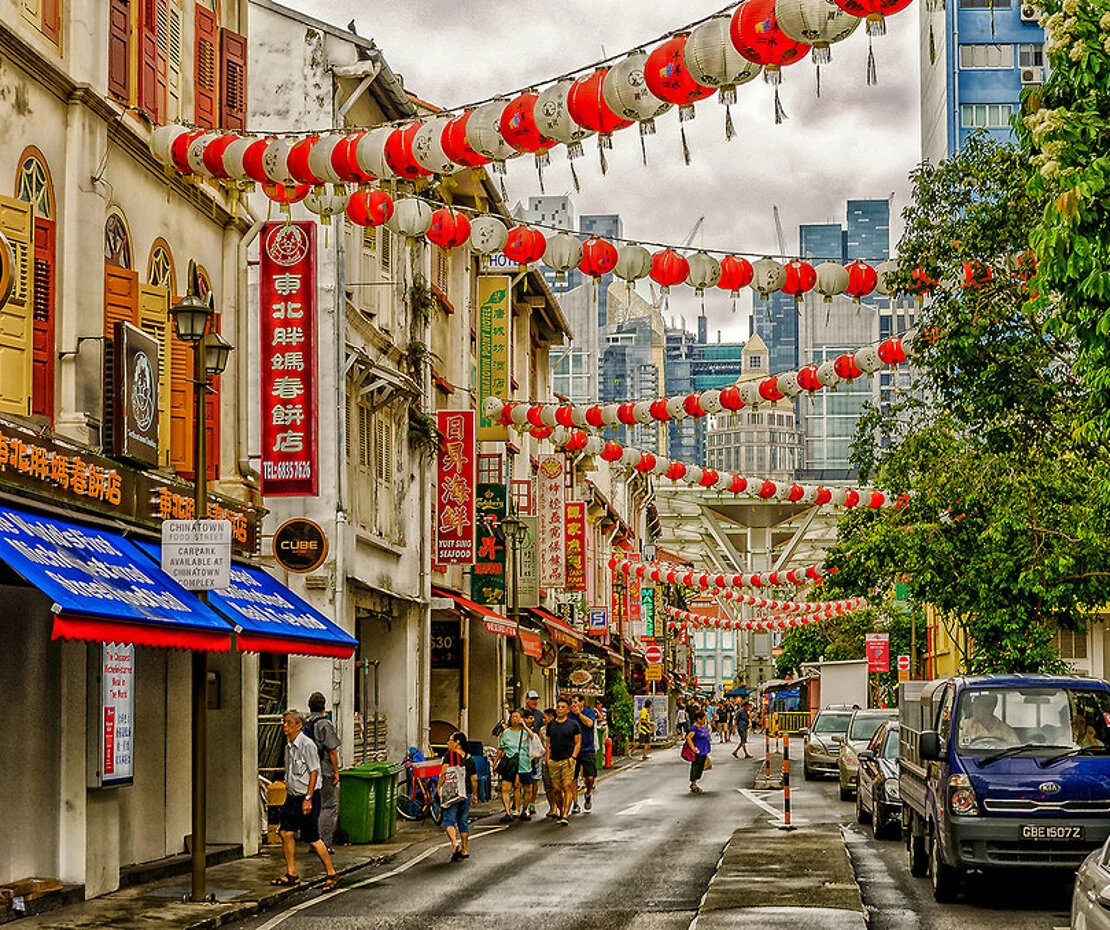
The historic scenery and characteristic appearance at Chinatown Singapore.
Regarding geographical coordinates and topographical morphology, this historic district lies in the southern part of the main island nation of Singapore, defined by natural and man-made boundaries of vital arterial roads alongside the historic flow of the Singapore River not far away. Positioned at approximately 1 degree 17 minutes North latitude and 103 degrees 50 minutes East longitude, Chinatown occupies a strategic location right beside the modern central business district, creating a fascinating counterweight between towering steel-and-glass skyscrapers and two-story heritage shophouses featuring distinctive East-meets-West architectural styles. Its terrain originally stemmed from low hills and riverside marshlands, which over centuries of reclamation, planning, and urbanization evolved into a dense urban plane compressing cultural layers dating back to when Sir Stamford Raffles promulgated the Raffles Town Plan in the early nineteenth century, laying the groundwork for ethnic settlement zoning to maintain colonial social order.
The formative context of Chinatown is directly tied to the pragmatic yet consequential immigration policies of the British Empire when turning the port of Singapore into a free-trade hub in eighteen nineteen. Recognizing the massive labor demand to build infrastructure, operate seaports, and develop plantation economies, waves of Chinese migrants from southern Chinese provinces such as Guangdong, Fujian, Hainan, and Chaozhou crossed the seas en masse to seek livelihoods through clan associations and labor guilds. Under the strict demarcation of colonial authorities, the Chinese community was directed toward the area south of the Singapore River, where sub-districts steeped in ancestral origins gradually took shape. Names like Kreta Ayer Road, Telok Ayer Street, or Pagoda Street do not merely reflect initial material living conditions, but encapsulate an entire complex spiritual-cultural ecosystem of people who embraced life far from home in pursuit of new destinies.
Across pivotal historical milestones, Chinatown witnessed fiercely harsh vicissitudes of time. During the late nineteenth century and the first half of the twentieth century, this district was once a space fraught with adversity—marked by severe overcrowding, disease outbreaks, social vices, and dilapidated tenements where impoverished laborers lived under dire deprivation. It was also a crucible nurturing revolutionary movements and clandestine meetings of patriotic organizations looking toward the mainland, as well as an area heavily scarred by World War II under the brutal occupation of the Japanese military. The suffering, loss, and resilient perseverance during this era forged an extraordinarily enduring community identity, transforming cramped street corners into a living space brimming with compatriot solidarity and mutual aid amid hardship.
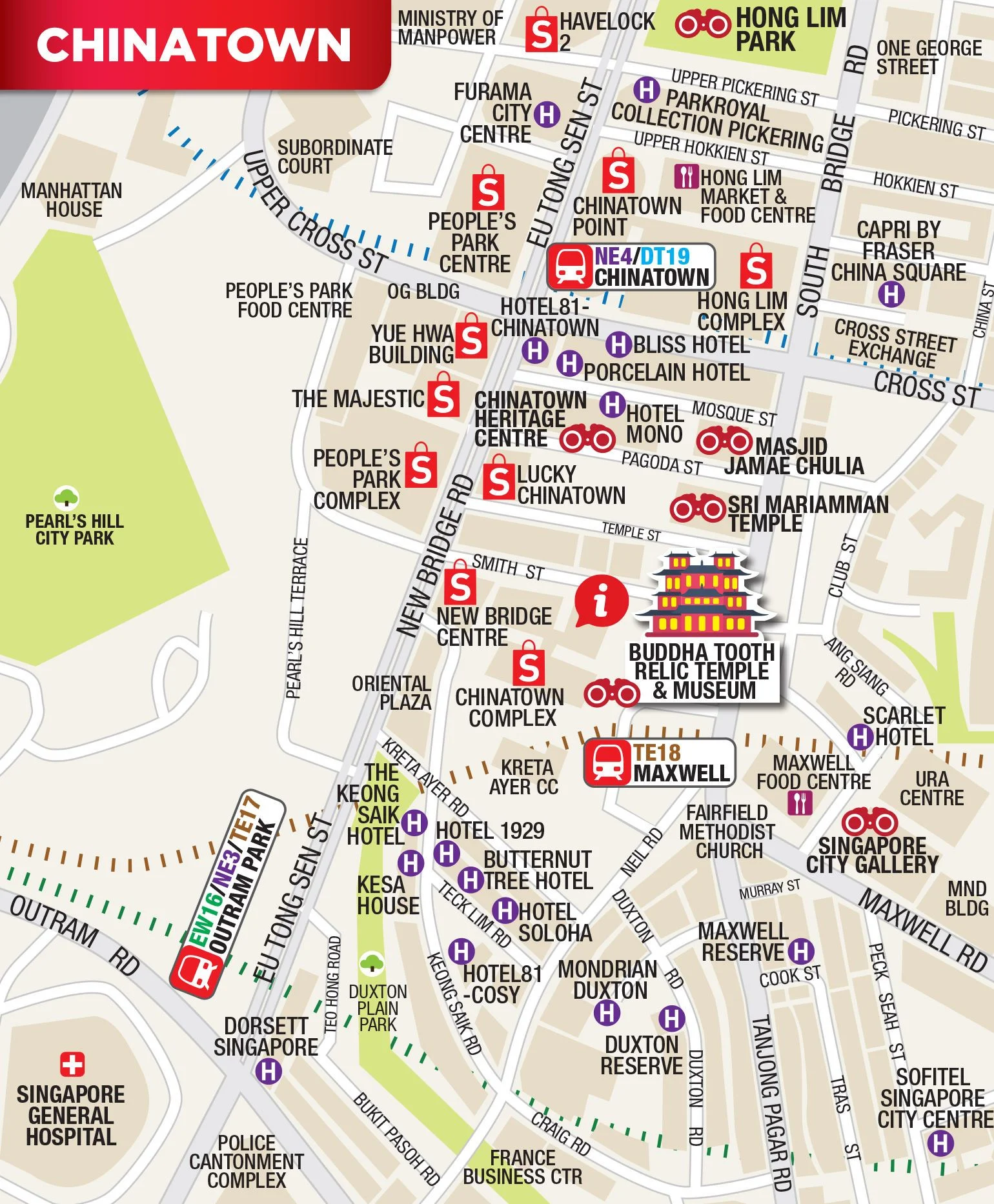
Harmonious spatial structure and urban planning lines of Chinatown Singapore.
Entering the post-independence period of the Republic of Singapore in nineteen sixty-five, as the fledgling nation confronted urgent economic development and urban modernization imperatives, Chinatown faced the threat of total demolition to make way for high-rise public housing projects and new financial centers. However, thanks to the strategic foresight of policymakers in recognizing cultural heritage as an invaluable asset for shaping a pluralistic national identity, a large-scale conservation campaign was launched in the nineteen eighties. Numerous rows of historic shophouses were restored to their original state, traditional architectural values were protected by law, and community living spaces were reimagined both to preserve their historic soul and to meet the stringent standards of a civilized modern metropolis.
The national symbolic value of Chinatown Singapore lies in its unique capacity to harmonize tradition with modernity, and Chinese cultural heritage with the inclusive spirit of a multi-ethnic nation. This area is not purely a sacred space of worship featuring ancient temples like Thian Hock Keng or the solemn Buddha Tooth Relic Temple; alongside them stands a living testament to social harmony policies, where Chinese, Malays, Indians, and other communities share a unified national space in diversity. The proud coexistence of Buddhist, Taoist, Islamic, and Hindu religious institutions standing side by side within the same geographic neighborhood has become a classic emblem of religious tolerance and social cohesion that the Singapore government continually strives to uphold as a cornerstone of political stability.
In terms of global influence, Chinatown Singapore functions as a cultural bridge and an instrument of soft diplomacy, attracting millions of anthropologists, historians, and international travelers eager to decode one of the world’s most successful models of urban development paired with heritage conservation. This district continuously reinvents itself to adapt to the digital age and economic globalization, where traditional commercial pillars such as Traditional Chinese Medicine halls, handicraft shops, and historic street hawkers have been elevated into a sustainable cultural tourism ecosystem meeting international standards while retaining intact historical depth. Through every historical imprint, from a wild coastal tract zoned for struggling migrants, Chinatown has risen to assert its stature as one of Asia’s greatest urban heritages, where past, present, and future converge in an endless current of memory and life.
Gracing the skyline amidst some of Asia’s most modern financial skyscrapers, Chinatown in Singapore stands as a living museum of urban history—an eloquent testament to the intersection of colonial town planning art and the traditional feng shui mindset of Hokkien, Cantonese, Hainanese, and Hakka migrants. Viewed through the lens of urban geographical evolution, this area sits upon alluvial sediment deposits along the Singapore River, once sprawling mangrove swamps and coastal sandbars before Sir Stamford Raffles arrived in 1819 to establish a strategic trading port. The earliest urban master plan drafted by Raffles and Lieutenant R. Jackson in 1822, known as the Jackson Plan or the Ethnic Segregation Map, laid the foundational stones shaping modern Chinatown’s spatial layout, dividing the town into distinct ethnic quarters to maintain social order and security control during the early British colonial era.
Chinatown’s initial planning layout did not follow rigid Western geometric principles, but was heavily governed by natural geographical features combined with East Asian feng shui philosophy, wherein the flow of the Singapore River acted as a sacred lifeline bringing auspicious energy and prosperity. The entire district was subdivided into enclaves based on dialects and ancestral provincial origins of resident groups, creating autonomous “bang” (clan sub-groups) tightly interconnected through intricate trade networks. Primary thoroughfares such as Telok Ayer Street, Cross Street, and Chinatown Street (now Eu Tong Sen Street and New Bridge Road) were laid out parallel to the river, while narrow intersecting lanes formed a multi-layered traffic grid. This zoning blueprint vividly reflected the survival and developmental imperatives of the immigrant Chinese community, where each clan association built its own community centers, temples, and core commercial enterprises right within the quarter, turning it into a self-contained yet vibrantly dynamic urban microcosm.
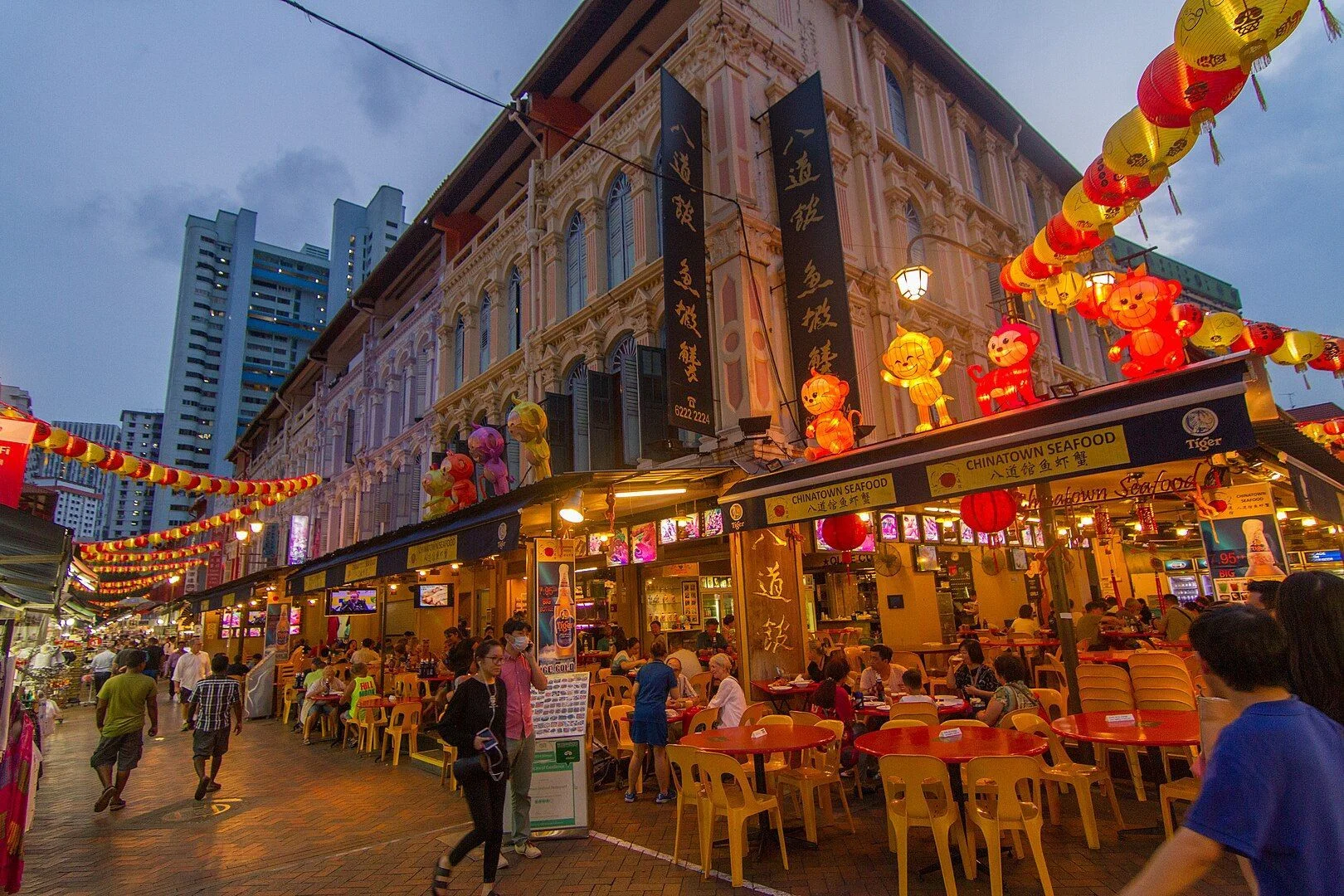
Artistic sculptural details and cultural depth at Chinatown Singapore.
In terms of architecture and construction engineering, the singular appearance of Chinatown Singapore is primarily defined by the iconic commercial-residential building typology widely known as the shophouse. These structures represent a wondrous synthesis of British colonial building techniques, indigenous Southeast Asian architectural styles, and southern Chinese construction traditions. Structurally, early shophouses employed traditional load-bearing timber frames paired with thick plastered brick walls, subsequently evolving into reinforced concrete frames and steel beams during renovations and reconstructions in the late nineteenth and early twentieth centuries. One of the most prominent engineering hallmarks of local shophouses is the five-footway system—a covered corridor measuring at least five feet wide running continuously along street facades, mandated by colonial building codes to shelter pedestrians from scorching equatorial sun and torrential downpours.
The facade systems of Chinatown’s shophouses form an open-air gallery of architectural art, showcasing a complex eclectic fusion of Chinese decorative arts, Western Baroque, and Neoclassical styles. Talented artisans of that era skillfully applied intricate wood carving, plaster stucco relief, and colorful glazed ceramic tiles of Peranakan or European origin to embellish window frames, balcony balustrades, and roof eaves. Across facade walls, visitors frequently encounter symbolic motifs steeped in auspicious philosophy, such as the Four Gentlemen (pine, chrysanthemum, bamboo, plum blossom), the Eight Immortals, dragons and phoenixes, lotuses, and emblems of wealth, rendered vividly through molded plaster relief art (jian nian). Natural ventilation and daylighting were also brilliantly resolved by early planners and master builders through central airwells designed inside each house, regulating airflow, bringing natural light deep into the long, narrow interiors of shophouses, and creating a cool microclimate amidst the tropical metropolis.
Regarding practical scale parameters and spatial distribution, modern Chinatown spans an extensive planned area of over 60 hectares, framed and intersected by the island nation’s vital boulevards. The area is divided into primary sub-districts bearing distinct cultural and architectural identities: Kreta Ayer (Old Chinatown), Telok Ayer, Tanjong Pagar, Bukit Pasoh, and Ann Siang Hill. In terms of elevation, building scale in Chinatown is largely governed by strict conservation regulations enforced by the Singapore government since the 1980s, whereby the vast majority of historic shophouse rows retain their traditional height of two to three stories, occasionally incorporating mezzanines or attics. This height restriction creates a dramatic yet harmonious contrast with the modern skyscraper cluster of the neighboring Central Business District (CBD), transforming Chinatown into a precious slice of time suspended between a colonial past and a high-tech future.
The scale of visitor arrivals and the annual flow of both international and domestic tourists flocking to Chinatown reach millions of visitors, transforming this district into one of the most powerful tourism magnets of the Republic of Singapore. Tourism infrastructure serving visitors has been comprehensively upgraded through large-scale urban heritage conservation projects, seamlessly combining the preservation of historic exteriors intact with the modernization of interior spaces to accommodate commercial, culinary, boutique hospitality, and cultural exhibition activities. The public transport system serving this area is extraordinarily well-developed, featuring underground Mass Rapid Transit (MRT) stations deep beneath the surface that directly connect streams of travelers from across the globe into a space steeped in traditional Eastern cultural character without harming the fragile historical fabric of its heritage structures.
Viewed from the perspective of architectural history research, the conservation and restoration process of Chinatown Singapore stands as an exemplary global model in the art of safeguarding urban soul amidst the pressures of rapid economic development. Rather than bulldozing the area to erect new urban districts, the government and people of Singapore surveyed every brick, every wood-carved motif, and every load-bearing beam across thousands of shophouses to carry out restorations utilizing authentic traditional techniques paired with high-standard modern materials. Underground spatial planning and strict height controls have fully preserved the golden proportions of the ancient streets, retaining that awe-inspiring yet intimate sensation as people walk beneath historic five-footway verandahs. Chinatown today is not merely a sightseeing destination, but a living testament to the capacity to preserve a unique cultural identity within the heart of a globalized metropolis, where past and present walk side by side, honoring one another within a sustainable urban planning framework that endures across time.
A close-up view of the heritage structural system of Chinatown Singapore.
Standing impressively alongside the vibrant rhythm of modern urban Singapore, Chinatown—historically designated in collective memory as Kreta Ayer—harbors a monumental spiritual and architectural cultural space, serving as living proof of migration currents, deep roots, and the flourishing identity of the southern Chinese community from centuries past. Through the passage of time and rapid urbanization, this district has retained priceless spatial sediments, where every street corner, every yin-yang tiled roof, and every horizontal plaque and vertical couplet whispers tales of homesickness, reverence for heaven and earth, and ancestral aspirations for longevity. This space is not merely a pure urban structure, but a living museum of cultural anthropology, where feng shui philosophy, Taoism, Buddhism, and folk beliefs intertwine to form an exquisite mosaic of Eastern consciousness in the heart of a multicultural island nation.
Stepping deep into the focal point of this space, the Temple of Heavenly Felicity—better known as Thian Hock Keng Temple—rises majestically as the oldest and most solemn architectural wonder of the Hokkien community in Singapore. Commenced in the mid-nineteenth century, the temple stands as a tribute offered to Mazu (Tianhou), the sea goddess who shielded merchant fleets crossing stormy oceans to reach the perilous lands of Nanyang. The most miraculous and astonishing feat in the construction techniques and aesthetic mindset of those ancient artisans is that the entire load-bearing wooden structure of the temple was built completely without a single iron nail. Instead, they applied traditional Chinese mortise-and-tenon joinery—a technique demanding absolute precision in every saw cut and chisel stroke so that beams, columns, and rafters interlock tightly, creating remarkable flexibility capable of withstanding tropical earthquakes and tempests across centuries. Woodcarving art here reaches the pinnacle of refinement, featuring hundreds of red-lacquered and gilded wood reliefs depicting historical tales from feudal China, characters from classical novels, and auspicious symbols such as the Four Sacred Beasts (dragon, qilin, tortoise, phoenix) alongside prized blossoms like peonies and plum blossoms.
The facade of Thian Hock Keng Temple is a harmonious blend of stone and porcelain, featuring monolithic bluestone reliefs meticulously carved down to the finest detail, depicting scenes of wild beasts, birds, and flora in nature. Notably, the art of colored porcelain sculpture and relief work atop the temple roof—known as the traditional cut-and-paste porcelain technique (jian nian)—demonstrates the transcendent artistic talent of master craftsmen invited directly from Fujian. Multi-colored porcelain shards were carefully cut and pieced together to form sinuous dragons contending for pearls along roof ridges, or immortals riding clouds and treading winds, creating a dazzling visual spectacle under the equatorial sunlight. Inside the main hall, the atmosphere is enveloped in mystical incense smoke, where priceless treasures have been carefully safeguarded across generations. Standing out within this sacred space is a precious wooden plaque bestowed personally by Emperor Guangxu of the Qing dynasty in nineteen hundred and seven, inscribed with four large gilded Chinese characters praising the universal grace and benevolence of the sea goddess. The presence of this imperial calligraphy not only affirms the immense historical stature of the temple, but also serves as a powerful spiritual bond linking the overseas community with the northern imperial court of that era.
Leaving the solemn ambiance of Thian Hock Keng Temple and moving through the historic streets, visitors encounter the Buddha Tooth Relic Temple, a Mahayana Buddhist architectural masterpiece modeled after the architectural style of the Tang dynasty—an era widely regarded as the zenith of Chinese civilization and art. Although constructed in the modern era to fulfill spiritual needs and house sacred relics, the temple strictly adheres to traditional feng shui principles and classical sculptural arts. The exterior is a monumental architectural mass dominated by vermilion red and imperial gold tones evocative of the Forbidden City in Beijing, crowned by multi-tiered curved roofs laid with gleaming glazed tiles. Decorative artistry here seamlessly fuses stone carving, bronze casting, and agarwood sculpture. Stepping into the inner sanctuary, the space opens into a serene yet resplendent realm lined with thousands of miniature Buddha statues arranged solemnly along the walls, creating an awe-inspiring vista of ten thousand Buddhas paying homage. The centerpiece of the temple—and its most sacred treasure—is the Sacred Buddha Tooth Relic, enshrined within a giant stupa crafted from hundreds of kilograms of pure solid gold donated by devotees. Forged by master goldsmiths using intricate repoussé, gemstone-setting, and mother-of-pearl inlay techniques, this stupa reflects Buddhist cosmological philosophy with Mount Sumeru at its center surrounded by heavenly realms.
The spiritual and cultural landscape of Chinatown is further enriched by the presence of temples dedicated to the Divine Physician and Guan Di, alongside Sri Mariamman Temple—steeped in Hindu heritage—standing right along its border, bearing witness to Singapore’s unique cultural synthesis. Specifically at the Guan Di Temple, or the Ann Siang Hill temple, the air is perpetually thick with swirling incense smoke and the devotion of small merchants seeking prosperity and integrity. Guan Yu (Guan Yunlong), the brilliant general of the Three Kingdoms era renowned for boundless loyalty and righteousness, is revered not merely as a god of war, but as the patron deity of commerce—the witness to every trade contract and business integrity among the Chinese since antiquity. Carved wooden statues of Guan Gong gripping the Green Dragon Crescent Blade, sporting a five-foot beard and a crimson face, sit majestically inside red-lacquered, gilded glass cabinets surrounded by hanging couplets brushed in flowing calligraphy. Calligraphic art here achieves high sophistication, where each couplet serves not merely as celebratory literature, but as profound moral lessons on human ethics, trustworthiness, and filial piety, rendered in sweeping, soaring brushstrokes by celebrated scholars of bygone eras.
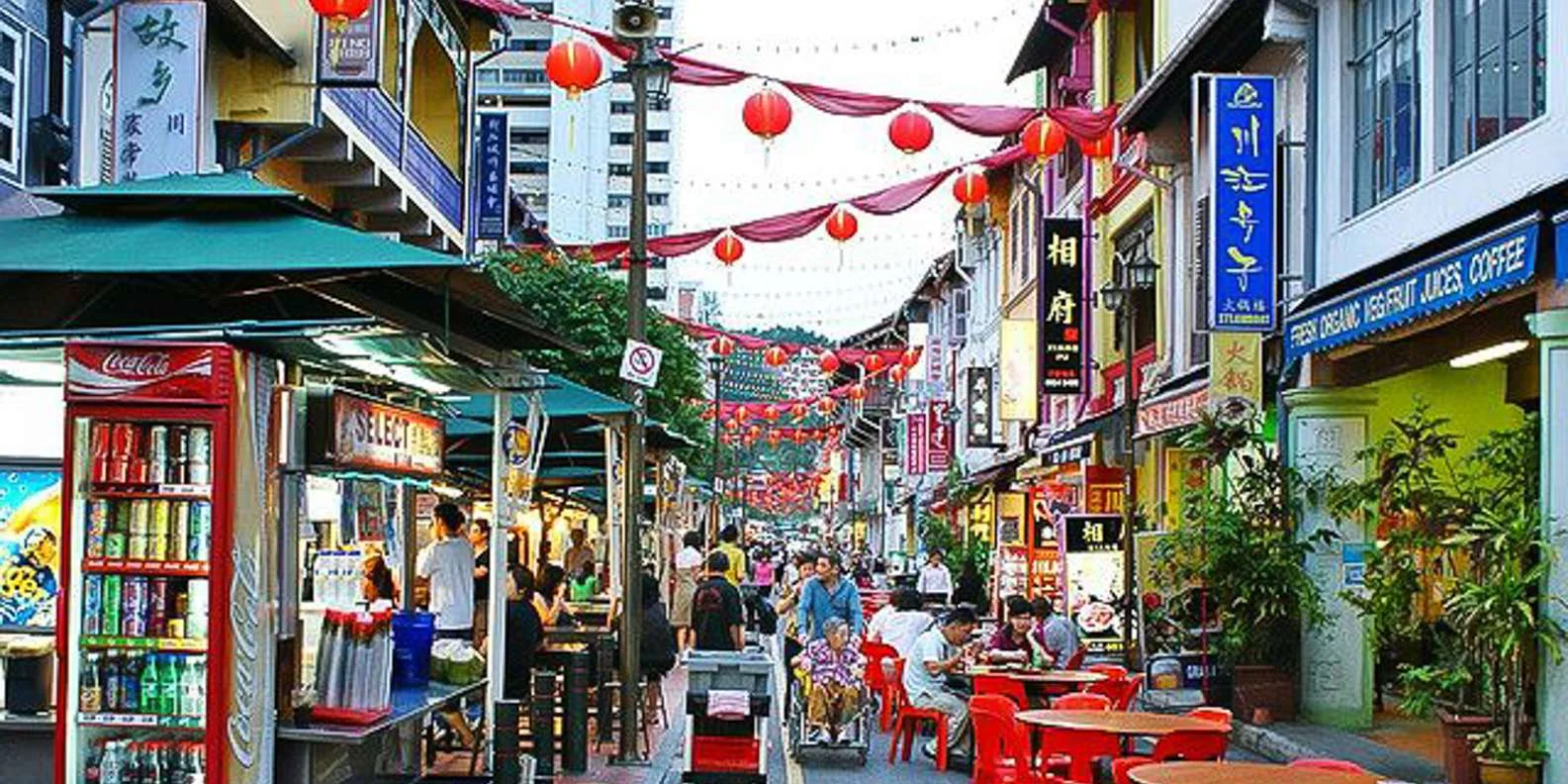
The flow of cultural life and daily rhythms around Chinatown Singapore.
Examining architectural anthropology more deeply, the rows of two-and-a-half-story shophouses in Chinatown stand as true marvels of living space design and applied aesthetic thought. These dwellings are products of architectural cross-pollination between East and West, known as the Peranakan and Southern Chinese architectural styles. House facades are typically adorned with vivid stucco reliefs, ranging from clusters of tropical fruits like durians and papayas to birds, flowing silk ribbons, and auspicious symbols such as stylized swastikas and longevity characters. Wooden louvered shutters painted in jade green, white, or turmeric yellow not only welcome refreshing sea breezes into the long, narrow interiors, but also establish a deeply romantic visual rhythm along the narrow lanes. Inside, spatial organization strictly obeys feng shui philosophy with a central airwell, where natural sunlight and rainwater from the heavens descend into the heart of the home, symbolizing the circulation of vital energy and wealth according to the principle “gathering water generates wealth.” Spiral wooden staircases ascending to attics, mother-of-pearl inlaid tea cabinets gleaming softly, and Qing dynasty blue-and-white porcelain vases displayed in antique parlors all narrate tales of a refined lifestyle that honored family traditions and deeply preserved ancestral roots across generations of migrants.
The spiritual and cultural depth of Chinatown in Singapore therefore resides not in isolated monumental structures, but manifests in the seamless harmony between architecture, decorative arts, and human spiritual life. From sacred temples veiled in mystical incense smoke down to every paving brick, every porcelain roof shard, and every brushstroke on horizontal plaques and couplets, everything crystallizes from the intellect, artistry, and soul of countless ancestral generations. This place has transcended the boundaries of an ordinary tourist destination to become a repository of sacred memory, a living museum of Eastern architectural art and life philosophy, where past and present walk together, shining brilliantly in the heart of a globalized metropolis.
Chinatown in Singapore is not merely an urban architectural heritage, but a living organism pulsing in rhythm with the passage of time, where past and present harmonize in a multi-hued cultural symphony. While night still drapes a thin veil of mist over ancient yin-yang tiled roofs, the serene tolling of bells from the Buddha Tooth Relic Temple begins to chime, awakening an entire realm steeped in Hokkien, Cantonese, and Hainanese identity. Dawn in Chinatown possesses a calm and dignified beauty, completely set apart from the hustle and bustle of a modern island nation. Along peaceful streets like Smith or Pagoda, elderly Chinese residents step unhurriedly into communal courtyards to practice Tai Chi, their fluid movements flowing like water returning to its source. Throughout the air, the fragrance of incense mingles with thin wisps of smoke rising from earth-god altars before house verandahs, creating a deeply nostalgic atmosphere. Along rows of two-story shophouses painted in vibrant pastel hues, shopkeepers busily open their storefronts, hanging red silk lanterns, arranging handicrafts, and preparing for a new day of livelihood. The sound of sliding shutters opening, the clinking of cast-iron teapots simmering over glowing charcoal stoves, and lively morning greetings exchanged in Teochew and Cantonese echo melodiously, vividly sketching the simple yet enduring daily life of the overseas Chinese community across centuries.
As the sun climbs high overhead, daily life in Chinatown hits its most vibrant, high-energy stride, engaging every sense of travelers arriving from afar. The air fills with a lively mix of hawker calls, woks sizzling over high flames, and cheerful chatter across traditional food centers such as Chinatown Complex Food Centre and Maxwell Food Centre. For the nose, it is an intoxicating sensory journey where rich aromas of cinnamon, star anise, and cardamom from slow-simmered Bak Kut Teh mingle with fragrant Hainanese chicken rice, savory wanton noodles, and the unmistakable tang of fermented shrimp paste at longtime stalls. Warm steam rises from bamboo baskets holding plump dumplings and flowing custard buns alongside crisp fried nian gao (sticky rice cake), while visual color unfolds in crimson auspicious couplets on doorways, glossy golden roast ducks hanging behind glass cases, and cool jade jewelry arranged inside family-run shops—each dish carrying memories of migration and culinary traditions passed down from earlier generations.
As sunset settles over Singapore’s skyline, Chinatown transforms once more beneath thousands of glowing lanterns. While surrounding financial towers darken into evening silhouettes, Chinatown lights up pedestrian streets with warm golden lantern glow and lively night-market energy. Chinatown Night Market hums with locals and curious visitors browsing stalls, while Chinese pop tunes blend with erhu and pipa melodies from street musicians. During major holidays such as Chinese New Year and the Mid-Autumn Festival, drumbeats and cymbals build excitement around acrobatic lion and dragon dances leaping across high poles, while modern urban light art contrasts softly with temple candlelight and sacred rituals.
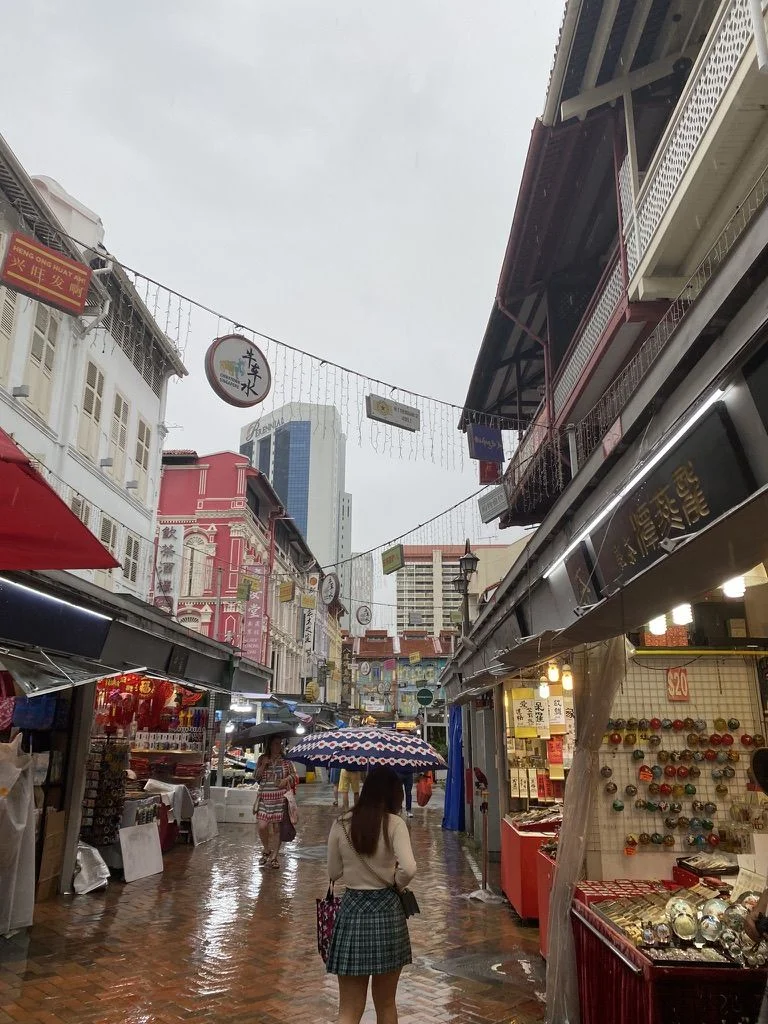
Traditional cultural experience spaces tied to Chinatown in Singapore.
To take in the wider picture of Chinatown, seeking out elevated viewpoints offers a rewarding moment of perspective. One standout vantage point is the rooftop garden of the Buddha Tooth Relic Temple, where tranquil orchid greenery overlooks historic tiled shophouse roofs right beside the high-rises of Shenton Way. At sunset, warm light captures the contrast between Tang-inspired temple architecture on one side and Singapore’s fast-moving modern skyline on the other. Another memorable view comes from upper-story traditional tea houses along Kreta Ayer or Telok Ayer: sipping aged Pu’er tea as wisps of steam rise while watching people move like colorful beads below captures the resilient spirit of a community that turned early marshland into a thriving cultural hub.
Set right in the heart of a modern global city, Singapore’s Chinatown endures as a living culinary archive where seasoned woks and fragrant herbs preserve stories of 19th- and early-20th-century Chinese migrants. Communities from Fujian, Teochew, Cantonese, Hainanese, and Hakka backgrounds brought cherished family recipes while weaving in Malay and Indian influences, turning once-scattered street stalls into bustling food centers cherished by food lovers and cultural observers alike.
A natural starting point on this flavor trail is herbal soups and slow-simmered broths rooted in traditional Chinese food-as-medicine principles. Teochew-style Bak Kut Teh (“pork bone tea”) is famous for a clear yet peppery broth infused with Sarawak white pepper and fragrant crushed garlic, slow-simmered for hours so pork ribs turn tender and warming in a tropical climate. Alongside it, dishes like Buddha Jumps Over the Wall and traditional herbal tonics at longtime shops along Sago Street or Smith Street slowly cook ingredients such as abalone, sea cucumber, shiitake mushrooms, and goji berries in clay pots over gentle heat, reflecting patient technique and balance between body and environment.
Deeper into traditional fare, authentic Cantonese dim sum and wanton noodles showcase skilled handcraft—from bamboo-pressed egg noodles with crisp elasticity and zero preservatives to delicate dumplings and silky skins. Juicy shrimp-and-pork wontons paired with broth simmered from dried flounder and aged tangerine peel balance natural sweetness with a clean finish, while honey-glazed roast char siu buns and warm soy-drizzled shrimp chee cheong fun (rice noodle rolls) highlight how creative flavors stay anchored in heritage.
Tea culture and festive food customs also run deep through Chinatown’s social fabric. Traditional tea houses tucked behind carved wooden doors offer a slower pace centered on Gongfu tea preparation—rinsing pots, appreciating aroma, and pouring smoothly so tea foam settles evenly. Aged Pu’er, roasted oolong, and Tieguanyin serve not only alongside dim sum, but also as gestures of hospitality and quiet reflection, while seasonal staples like ginger-steamed tangyuan (glutinous rice balls), longevity noodles, and thin-crusted lotus-seed mooncakes strengthen bonds across generations during Chinese New Year and the Mid-Autumn Festival.
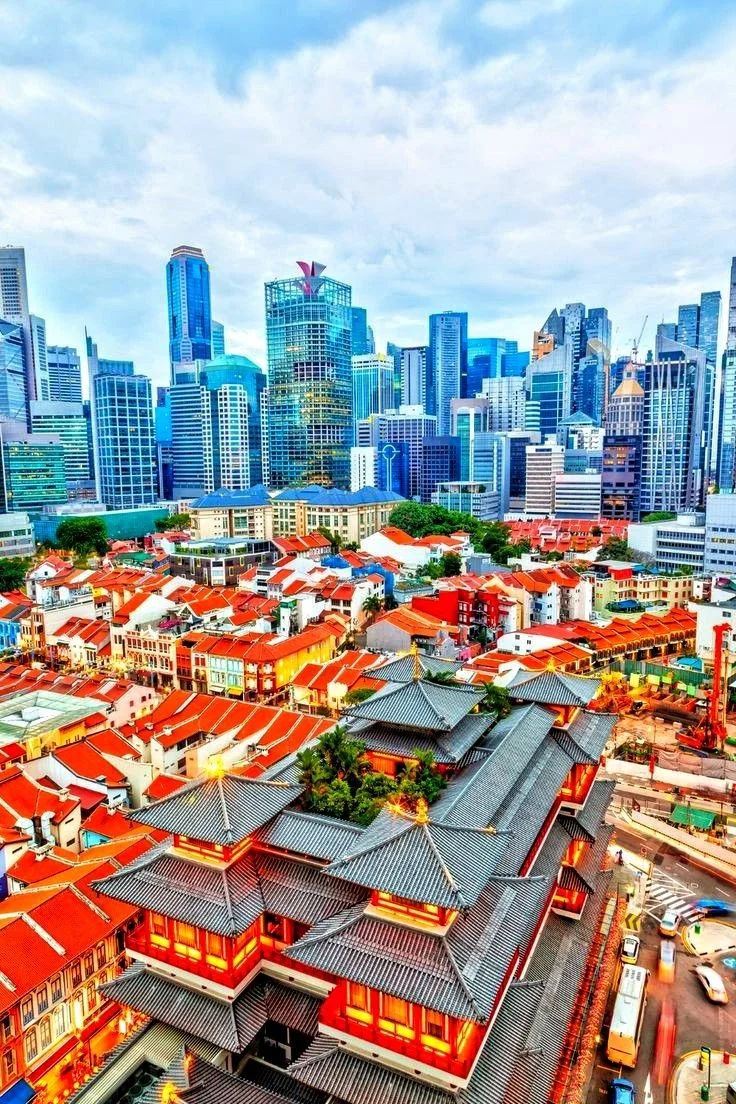
Sweeping view overlooking the heritage district of Chinatown in Singapore.
Food hubs such as Chinatown Complex Food Centre, Maxwell Food Centre, and eateries along Trengganu Street and Smith Street bring this variety together in everyday life. Around simple plastic tables, visitors, locals, and seasoned foodies share comforting plates like Hainanese chicken rice—fragrant rice cooked in rich chicken stock served beside silky poached chicken and zesty ginger-chili-garlic sauce—alongside Hainanese and Teochew favorites such as spicy frog porridge, crisp-skinned Peking duck, and high-flame wok stir-fries carrying the coveted “wok hei” aroma of the flame.
Tucked within modern Singapore, Chinatown continues to safeguard centuries of historical memory, heritage shophouses, and living traditions. Pairing curiosity with practical planning helps travelers move smoothly through a neighborhood where every lane, temple, and dish tells stories of migration, adaptation, and community pride.
From a seasonal and weather standpoint, Singapore has an equatorial tropical climate that stays warm and humid year-round with modest day-to-night temperature swings. For comfortable outdoor walking in Chinatown, February through October generally brings steadier weather than the Northeast Monsoon’s heavier, more frequent rain showers from November through January. Visiting around Chinese New Year fills the streets with red lanterns, lion dances, and bustling night markets—though it is also one of the busiest times of the year.
By time of day, starting around 8:00 AM to 10:00 AM offers milder air and soft morning light across heritage shophouses—great for photography and architecture—as vendors set up, temple incense rises, and locals enjoy hot tea and kaya toast. Later in the afternoon from 3:00 PM onward and into evening, lantern light and bustling crowds turn streets like Pagoda Street and Smith Street into a lively street food paradise full of energy and flavor.
Singapore’s public transport network is globally renowned for its punctuality, seamless connectivity, and ease of use, making Chinatown straightforward to reach for any traveler. The top-recommended option is the MRT system via Chinatown Station, served by both the North East Line and the Downtown Line. Stepping up from the station exits places you right in the heart of the heritage district without worrying about losing your way or getting stuck in traffic. Public buses stopping right along the edges of the neighborhood are also a great choice if you enjoy taking in street life through the window. Meanwhile, taxis and ride-hailing apps offer privacy and comfort during heavy rain, though they are less cost-effective and can face drop-off restrictions along narrow pedestrian lanes.
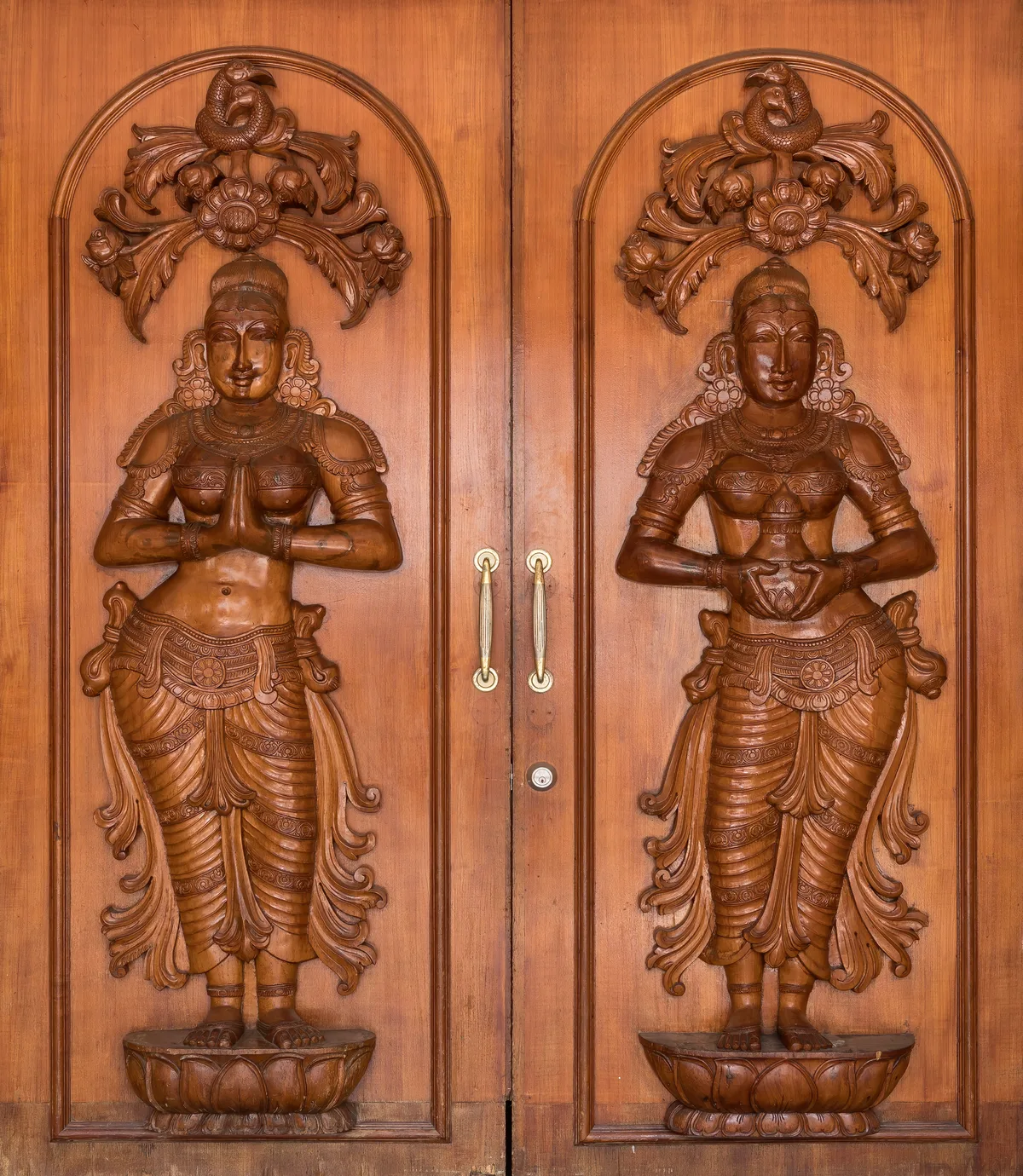
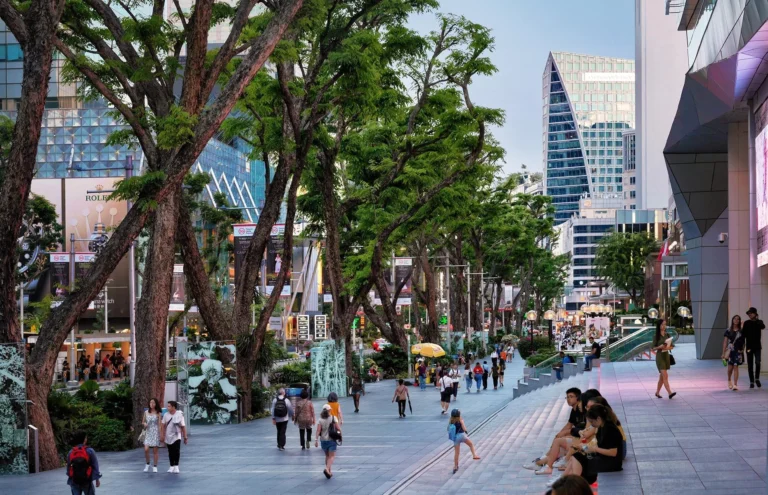
Real-world view of the destination and visitor welcome facilities at Chinatown in Singapore.
In terms of admission costs and reference pricing, wandering the historic streets, heritage walking routes, outdoor markets, and exterior architecture is generally free for the public. However, if you want to explore dedicated museums and heritage centers—such as the Chinatown Heritage Centre or special exhibition spaces inside major temples—typical adult admission generally ranges from around SGD 15 to SGD 20, often including detailed multilingual audio guides. At sacred places of worship such as the Buddha Tooth Relic Temple and Museum or Sri Mariamman Temple, entry to the main prayer halls is free, though visitors are always welcome to leave a voluntary donation in the offering box to support ongoing maintenance and preservation across generations.
Cultural etiquette and social norms play a central role in shaping a respectful visit when stepping into spaces rich in living faith and tradition. Singapore’s Chinatown is more than a commercial sightseeing hub; it is an active spiritual and community neighborhood where Chinese, Indian, and Malay traditions coexist closely. Modest dress is the first unwritten rule: visitors—especially women—should wear respectful, covered attire reaching past the knees and covering the shoulders when entering temples or sacred worship spaces. Removing shoes before stepping into main halls, keeping voices low without loud joking or laughter, and strictly obeying no-photo or no-filming signs in sensitive areas show genuine respect for local customs.
Beyond dress and demeanor, traditional East Asian etiquette and taboos are worth keeping in mind to avoid unintended misunderstandings in everyday interactions. In local Chinese custom, sticking chopsticks upright into a bowl of rice resembles funeral incense rituals and is considered bad luck; always rest chopsticks horizontally on a chopstick rest or across the bowl rim when not in use. When shopping or handing over or receiving money or gifts with older shopkeepers, using both hands is a simple gesture of courtesy. In addition, Singapore enforces strict urban laws and rules: littering, smoking outside designated zones, or carrying durian onto public transit can result in steep fines.
Practical tips from cultural researchers and seasoned travelers can help make the most of your time on the ground. For walking long stretches in tropical heat, choose breathable natural fabrics like cotton or linen, and wear sturdy sneakers or soft-soled sandals with good traction, as older lanes with stone or tile paving can become slippery when damp. Keep a compact umbrella or light rain poncho in your daypack, since equatorial showers can roll in without warning. Having a contactless payment card or an EZ-Link transit card makes everyday spending smooth, and many stalls across hawker centers also support national QR payments.
Exploring food at the Chinatown Complex Food Centre or Maxwell Food Centre also rewards a few local habits so you do not miss standout dishes. Look for stalls with steady, patient queues—often the most reliable sign of time-tested family recipes passed down over decades. Before sitting down, placing a small packet of tissues on a table to reserve (“chope”) a seat is a familiar local practice at hawker centers that reflects everyday community habits. Finally, stay open, curious, and respectful toward the stories shared by local guides or longtime neighborhood elders—those unexpected conversations often become the most lasting memories long after your journey ends.