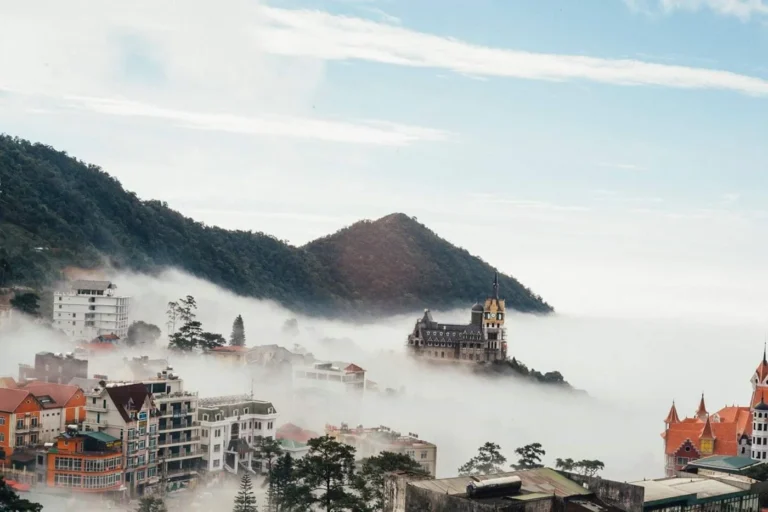
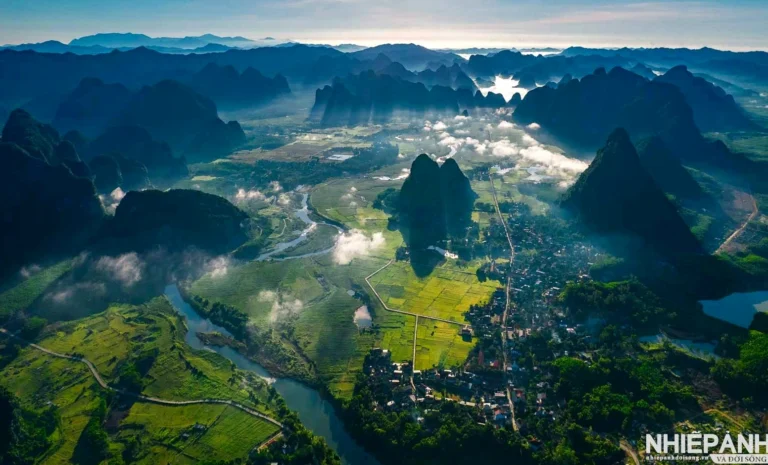
Nestled in the heart of a misty valley at the foot of the majestic Hoang Lien Son mountain range, the Ancient Church of Sa Pa—a landmark often familiarly identified yet occasionally confused in popular culture with the Tam Dao relic—occupies an exclusive coordinate deeply imbued with traditional Eastern feng shui blended with European colonial urban planning philosophy. Holding the most strategic position in Sa Pa town (Lao Cai province), the structure faces east, welcoming the pure energy of the dawn light shining across Fansipan peak—the roof of Indochina—while resting its back firmly against the imposing Ham Rong mountain range like a screen shielding against mountain winds. This “backed by mountains, facing water” terrain not only helps the structure withstand the harsh fluctuations of highland weather optimally, but also creates a sacred visual focal point where heaven, earth, and human hearts converge in a tranquil realm of mist and white clouds.
Turning back the clock to the final years of the 19th century, when the French began exploring and opening up the Northwest highlands in search of ideal resorts to escape the sweltering heat of the Tonkin Delta, the year 1895 marked the first milestone laying the foundation for European presence here. From initial field camps, by 1902, the Paris Foreign Missions Society (M.E.P.) officially established the Sa Pa parish, transforming this place into a missionary center and spiritual jurisdiction for ethnic minorities such as the H’Mong, Red Dao, Tay, and Giay. Under the Nguyen dynasty, traversing the historical ups and downs during the reigns of Emperor Khai Dinh and later Bao Dai, the resolve to construct a large-scale religious institution was realized. In April 1935, under the direction of talented French architects, construction officially commenced and was fully completed during the 1935–1936 period, standing tall as a living witness to a turbulent era of cultural exchange.
In terms of geology and architectural materials, Sa Pa Stone Church is a masterpiece of early 20th-century manual craftsmanship. The entire structure was built from tens of thousands of hand-hewn stones, tightly bound together by a mortar mixture of sand, lime, and sugarcane molasses—a traditional construction secret that both ensures durable adhesion against the test of time and imparts a solemn, moss-covered patina. Every rough stone grain, saturated with the mountain mist of the Northwest, combined with a foundation system geologically engineered to adapt to the sloped terrain, has shaped a sturdy structure resonating with timelessness.
Far from being purely a religious institution, through the lens of heritage researchers and cultural journalists, Sa Pa Stone Church is also honored as an immortal symbol of Vietnamese heritage tourism. The structure serves as a bridge linking past and present, preserving profound humanistic values from the pioneering era of early missionaries while acting as the sacred soul anchoring memories of the misty region. Amidst the dizzying current of modernization, this landmark still stands as a unique geological-cultural milestone, beckoning wandering souls to return and listen to the whispers of history echoing from a thousand years of white clouds.
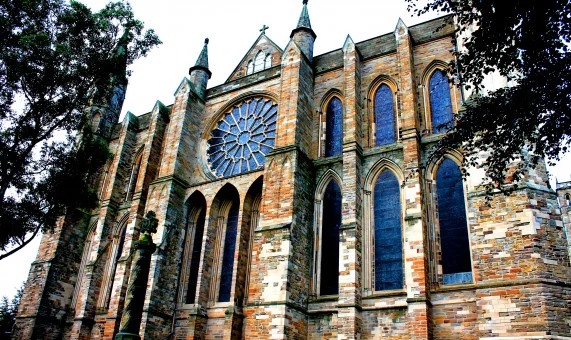
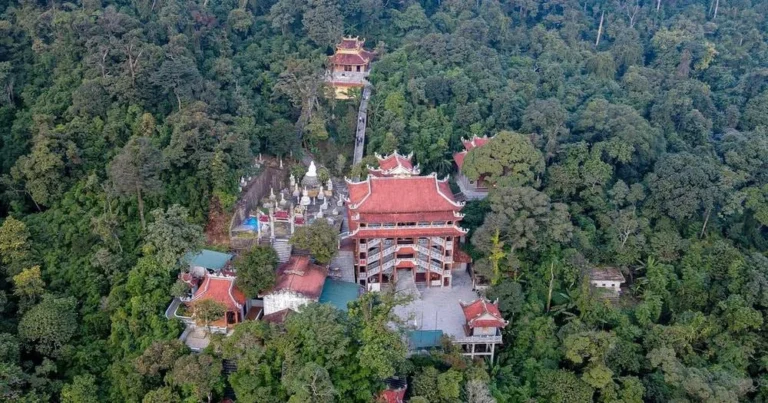
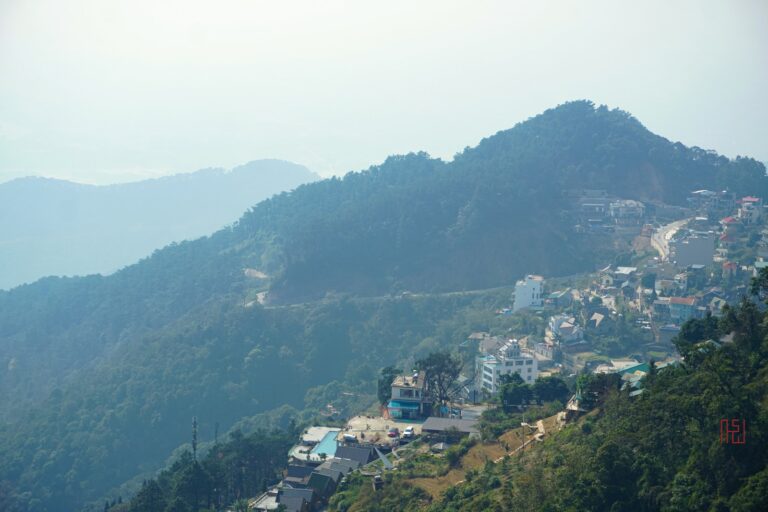
Nestled amidst the drifting white clouds of the Vinh Phuc highlands, Tam Dao Stone Church stands as a timeless symbol, embodying a nostalgic, majestic, and captivating beauty. Begun in 1937 and completed in the late 1940s, this structure is a clear testament to classical French architectural imprints in the heart of the great forest. Through the vicissitudes of history and the devastation of war, much of the interior structure has faded over the years, leaving behind moss-covered gray stone walls, soaring lancet arched windows, and rugged stone pillars rising powerfully. The church’s terrain is uniquely situated on a high mountain slope, backed against a solid cliff face and looking directly out over the vast valley, creating an architectural ensemble that is both grandiose and secluded, harboring the distinct romantic charm of the misty highlands.
From afar, the architectural beauty of Tam Dao Stone Church radiates from the harmonious blend of Western Gothic style and indigenous natural stone materials. Each block of rubble stone was meticulously chiseled and tightly bound with lime mortar, forming a fortified yet graceful wall system thanks to the curves of the archways. The most valuable artistic highlight of the structure is the bell tower rising above the cloud layer, where sunlight frequently filters through the wide arched openings, casting beams of light down onto the mossy courtyard below. The atmosphere here carries a fairytale quality, tranquil and redolent of a bygone historical era, making anyone who steps foot here feel as though they have wandered into a miniature Europe in the heart of Vietnam.
To capture the most priceless moments at this historical relic, travel enthusiasts and professional photographers cannot miss two classic shooting angles that have made Tam Dao famous. The first angle is right in the wide front courtyard, aiming the lens upward from a low perspective to capture the entire grand arched window frame alongside the imposing bell tower rising straight into the sky, creating a sense of immense scale and grandeur. The second angle lies along the corridors and stone window frames along the side of the church, where natural light creates stark contrasts of light and shadow, lending remarkable artistic depth to the photograph.
Regarding ideal lighting times, early morning from 6:00 AM to 7:30 AM is the most magical moment when morning mist still lingers around the stone columns, blending with gentle dawn rays filtering through the foliage to create an ethereal, misty, and deeply serene scene. Conversely, at sunset from 5:00 PM to 6:00 PM, as warm yellow lights begin to glow from the town center and the sky shifts toward orange and purple hues, Tam Dao Stone Church takes on a contemplative, profound, and poetic demeanor, perfect for frames evoking old-world nostalgia.
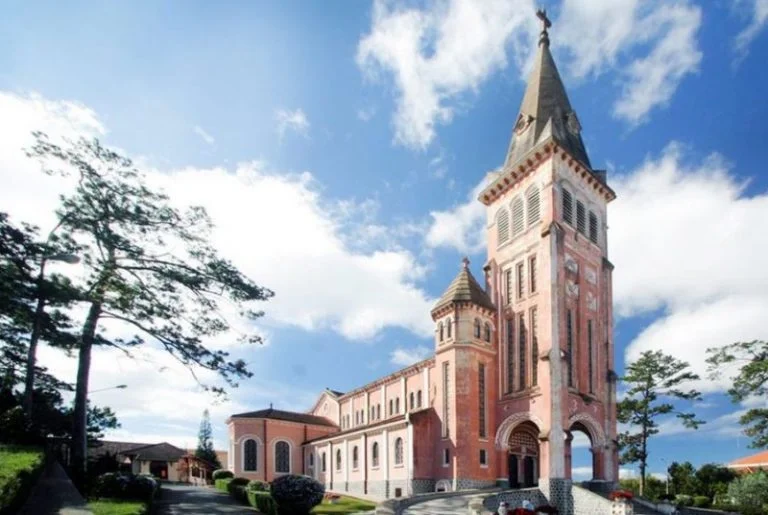
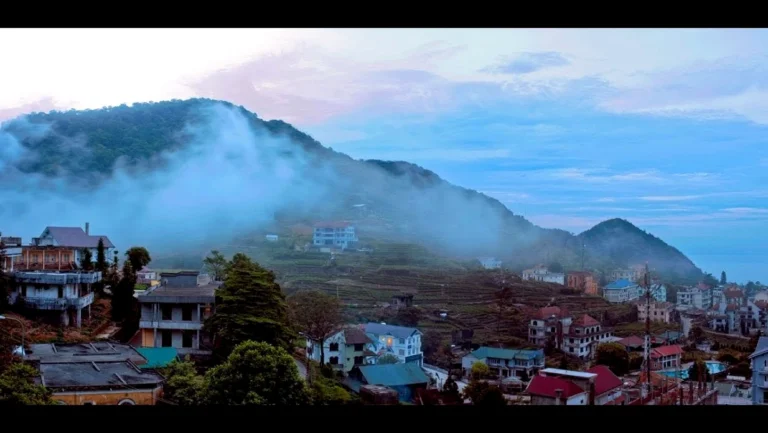
Stepping into the area surrounding the stone church in the misty town, visitors are immediately drawn into a deeply nostalgic space where time seems to stand still amidst thick fog and ancient moss-draped stone walls. The experiential journey begins by leisurely climbing each worn, uneven stone step and breathing in the crisp air carrying the characteristic chill of the highlands. A sense of awe washes over you as the silhouette of the ancient church looms tall in the hazy atmosphere, recalling a distant historical era with unique Western architectural imprints enduring across the years.
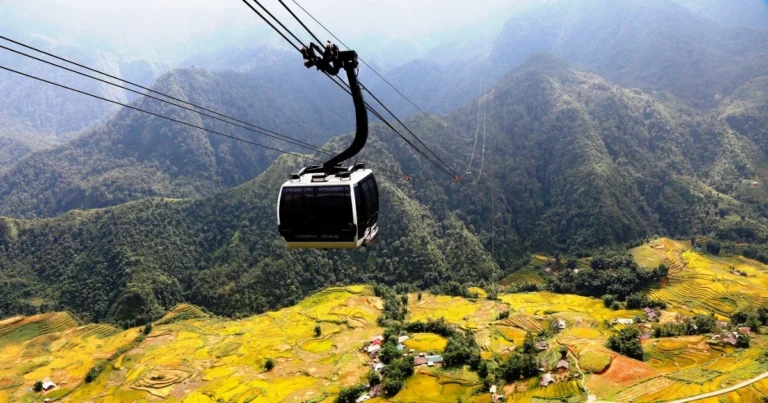
Beyond spiritual contemplation and historical discovery, the exploration expands into exciting hands-on activities around the destination. Visitors can challenge themselves along winding mountain trails hugging steep slopes, crossing deep valleys to take in the majestic natural panorama of the Northwest mountains and forests. On calm, clear days, gazing out from the church grounds, the sweeping landscape with rolling clouds embracing cascading terraced rice fields unfolds like an exquisite natural masterpiece, bringing an extraordinary sense of stillness and inner peace.
In particular, the vibrant indigenous cultural space here is brought to life through the daily rhythms of ethnic minority communities in colorful, bustling markets. Visitors can easily spot H’Mong and Red Dao women in vibrant brocade attire displaying intricate handmade crafts, or hear the lively sound of courtship panpipes echoing off the cliffs. The intersection between ancient religious architecture and the rustic, sincere cultural life of highland people creates an irresistible allure that leaves a lasting impression on everyone who visits.
The experiential journey would not be complete without savoring renowned specialties rich with the flavors of the mountains and forests. Sitting beside a crackling charcoal brazier amidst the biting cold, visitors gather together to enjoy fragrant grilled skewers of local pork, roasted eggs, sweet potatoes, and fresh, flavorful wild forest greens. Sipping a cup of hot tea or enjoying these piping-hot rustic dishes amidst drifting mist melts away all the fatigue of daily life, giving way to elevated emotions and a profound connection with this poetic highland region.
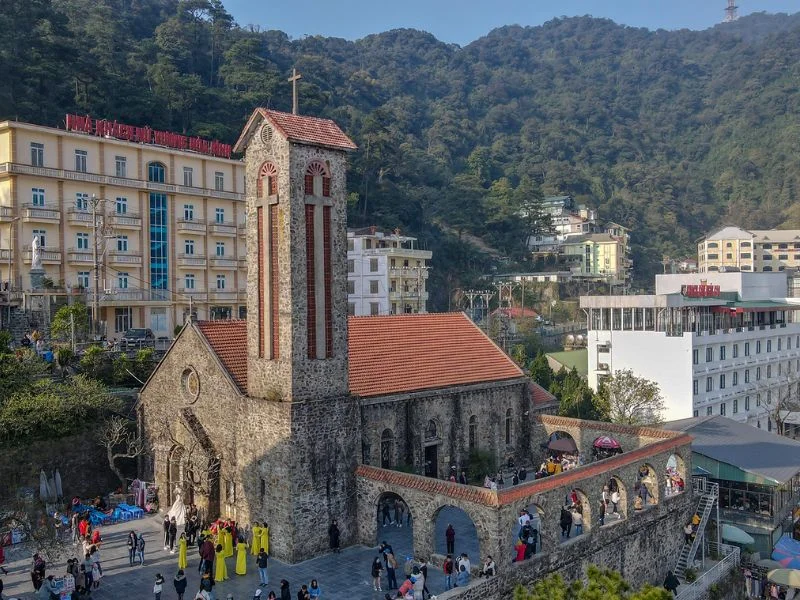
Although in-depth historical records have clearly corrected the common confusion between the two landmarks, the name “Tam Dao Stone Church” always evokes an attractive spiritual and architectural tourist destination in the misty town of Vinh Phuc. For a fulfilling exploration journey, equipping yourself with practical information regarding schedules, transportation, and cultural etiquette is essential for every traveler.
Regarding operating hours, the grounds and facade of Tam Dao Stone Church are always freely open to visitors for sightseeing and photography at any time of day. However, if you wish to enter the prayer space or attend religious services, be sure to plan your visit according to the local parish schedule and maintain appropriate quietness. Currently, the management board charges no entrance fee for visitors exploring this ancient architectural landmark.
The travel route from central Hanoi to Tam Dao is quite convenient, taking only about two to three hours by car. The most optimal transportation for a flexible itinerary is a motorbike or private car, heading via Thang Long Bridge or Nhat Tan Bridge, then continuing along National Highway 2 through Vinh Yen city to reach the foot of the mountain. Notably, the winding, steep mountain pass stretching roughly fifteen kilometers from the base up to the town requires steady driving skills, favoring manual transmission motorbikes or high-clearance cars to ensure maximum safety when navigating hairpin turns and descents.
When stepping into this iconic religious space, visitors must strictly observe dress code regulations. As this is a sacred site, you should wear polite, modest clothing, avoiding overly short or revealing outfits to show respect for the place of worship and local culture. Additionally, since the highland town terrain features many stone steps and steep pathways, travelers should prioritize sneakers or walking shoes with good grip rather than high heels to ensure safe and comfortable movement.
The ideal time of year to visit Tam Dao Stone Church is from April to October, when the weather is dry with little rain and cool air, making it easy to stroll and enjoy the scenery. Those who love cloud hunting and experiencing the signature highland chill can choose the final months of the year, though it is important to monitor weather forecasts closely as dense fog can limit visibility and make driving on the mountain pass challenging.
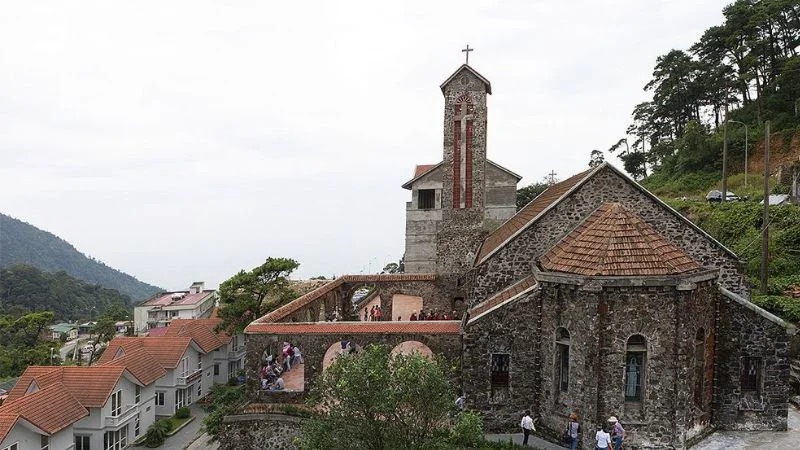
To enjoy a complete vacation and fully admire the beauty of Tam Dao Stone Church without worrying about arranging transportation, booking sightseeing tickets, or planning travel itineraries, visitors can choose VDS Travel’s premium all-inclusive Sa Pa tour packages. Every tour is optimally designed to schedule check-ins when the scenery is at its most vibrant, accompanied by a team of tour guides thoroughly knowledgeable about local culture alongside top-tier hotel and culinary service standards.