Nestled amid the majestic Northwest wilderness, “Dolphin Rock” (Mom Ca Heo) on the Moc Chau Plateau in Son La Province emerges as a singular geological wonder where untamed nature meets deep-rooted indigenous culture. From a geographical and coordinate standpoint, this landmark lies along the boundary between Chieng Di Sub-ward and Van Ho Commune, perched at an average elevation of about 1,050 meters above sea level. This prime vantage point not only blesses the area with a year-round mist-shrouded atmosphere, but also commands a sweeping panorama encompassing the entire lush green valley and the undulating tea hills winding like silk ribbons across the frontier.
In terms of tectonic geomorphology, “Dolphin Rock” is a distinctive protruding karst limestone formation sculpted over millions of years by natural erosion and weathering. Viewed through the lens of traditional feng shui, the terrain here embodies the extraordinary grandeur of the Northwest mountain ranges. The rocky outcrop rests its back firmly against the mighty primeval Moc Chau – Pha Luong range, receiving primordial vitality flowing down from the headwaters while facing the expansive openness of Ban Ang Valley and subterranean karst basins. Protruding out over a sheer, shallow abyss, this rock structure creates a dramatic landscape that carries both the weathered timelessness of nature and potent elemental energy, having long served as a sacred spatial landmark for local ethnic communities.
At first hearing, the name “Dolphin Rock” carries the modern flair of contemporary travel, yet it actually stems from keen human observation of the unusual silhouette of a limestone block carved by mountain winds and hoarfrost. Through the perspective of the press and cultural heritage authorities, this site is far more than a trendy check-in spot for young travelers; it is a geological heritage site holding high scientific value regarding the formation history of the Earth’s crust. The interplay between fascinating geological morphology and the cultural spaces of the Thai and Hmong peoples has enriched this site with deep cultural strata, elevating it well beyond an ordinary scenic viewpoint.
Through the vicissitudes of highland settlement history, Dolphin Rock has preserved its pristine, majestic beauty between earth and sky. It not only bears the imprints of centuries-old migrations and livelihoods of ethnic minority communities, but also stands as vivid testimony to the creative might of Northwest nature. Accurately mapping the coordinates, geological structure, and historical-cultural value of Dolphin Rock is the essential key for researchers, management agencies, and discerning travelers to approach, appreciate, and fully preserve an authentic icon in the heart of the legendary Moc Chau Plateau.
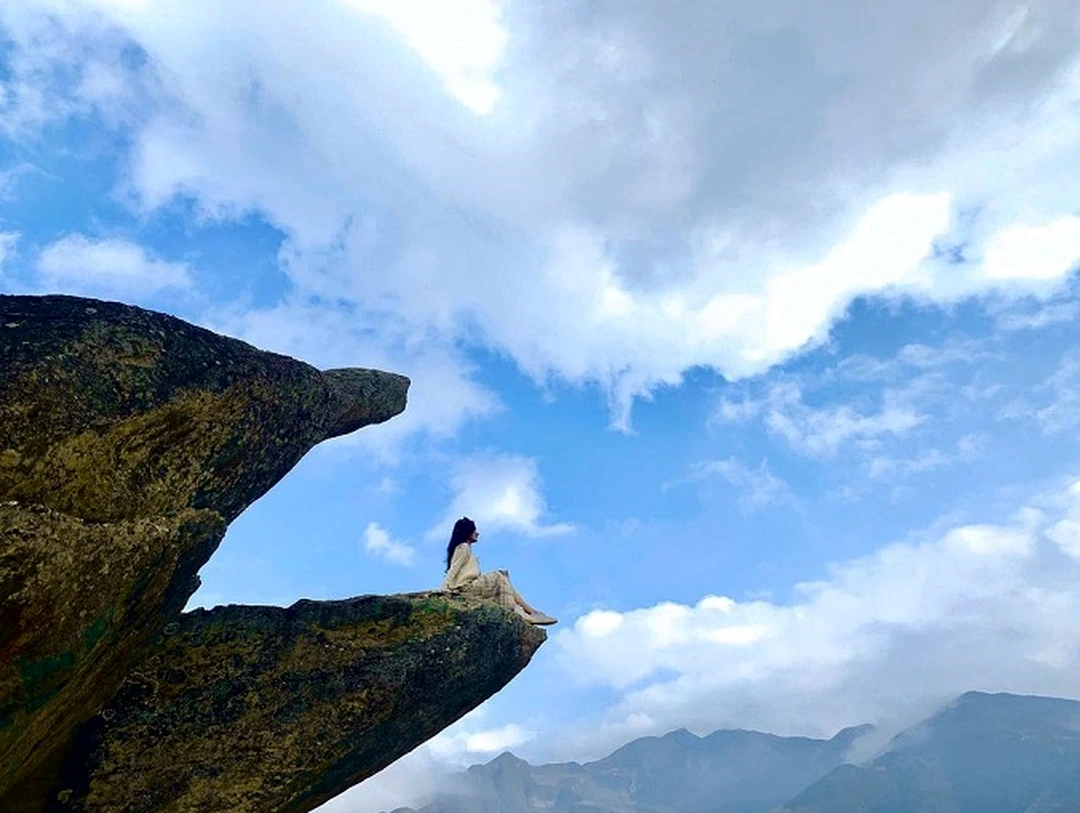
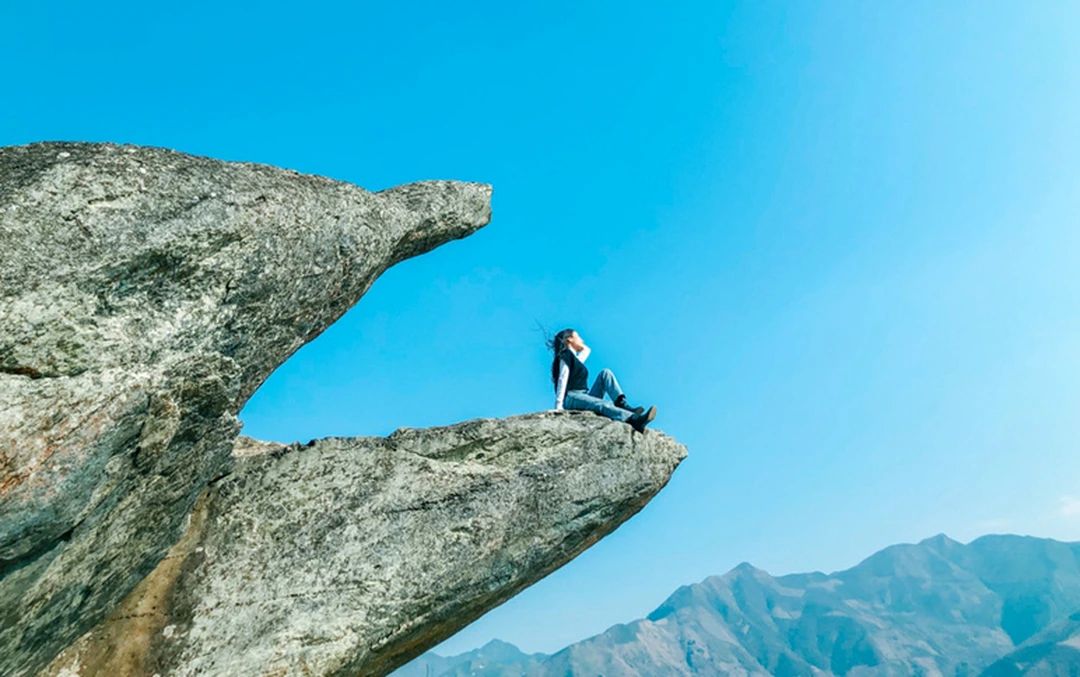
Set amid the soaring Northwest forests, Dolphin Rock rises like a flawless sculpture crafted by nature, where time and millions of years of weathering have chiseled an extraordinary geological formation. Seen from afar, this karst limestone outcrop thrusts boldly out into the vast expanse of the valley, boasting graceful yet commanding curves reminiscent of a dolphin leaping through waves across an ocean of mountain clouds. Every rugged vein of stone wears an ancient weathered gray, marked by layers of moss that lend it a raw, awe-inspiring, and enchanting beauty that no human sculptor could ever replicate.
Beyond its dramatic terrain, the surroundings of Dolphin Rock unfold into a picturesque landscape of mountains and mist that captivates every traveler who sets foot here. Behind it stands the solemn, imposing majesty of the deep-green primeval Moc Chau – Pha Luong range, while ahead stretches the open expanse of deep valleys and billowing ribbons of cloud drifting lazily over hillside villages. Through the lens of photographic art, it forms a seamless three-dimensional stage where light, sky, and topography harmonize effortlessly, producing cinematic frames that are at once monumental, poetic, and deeply evocative.
To capture the most prized shots at this landmark, professional photographers and leading travel publications frequently share two classic camera angles. The first sits right at the highest point of the outcrop overlooking Ban Ang Valley, allowing photographers to frame the entire sweep of hills and mountains; this spot is especially magical at sunrise, when the first rays of morning pierce the gossamer mist and bathe the rock face in a surreal, golden glow. The second angle is from the opposite hillside shooting back toward the formation, capturing the full, dramatic silhouette of Dolphin Rock poised precariously over a sea of pure white clouds.
The ideal lighting windows for capturing “million-view” photos here are between 5:00 AM and 6:00 AM for sunrise, or from 5:00 PM to 5:30 PM for sunset. During these hours, the sunlight softens, creating striking visual drama as bands of orange, crimson, and deep violet weave across the Northwest sky. This seamless union of natural architectural wonder and transitional light has turned Dolphin Rock into a true photography haven, as well as an unmissable cultural and scenic landmark on the Moc Chau Plateau travel map.

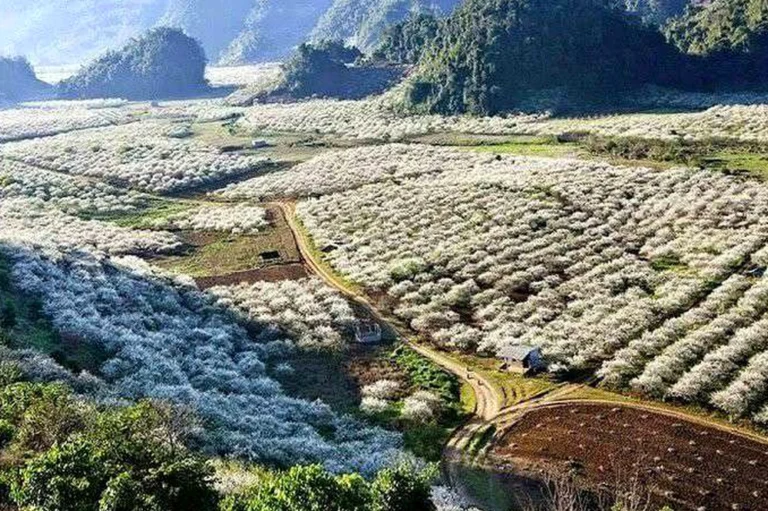
Arriving at Dolphin Rock, visitors are immediately drawn into a hands-on journey that is both challenging and deeply rewarding. The adventure begins along a trekking trail winding through primeval forest and gentle hillside slopes, where the fragrance of plum and bauhinia blossoms mingles with the misty morning air. Conquering each rugged limestone step while listening to the mountain wind whistle through the foliage brings an exhilarating rush to anyone passionate about untamed wilderness exploration. Once you clear the steep, narrow footpath and step onto the outcrop jutting into open space, fatigue melts away, replaced by sheer awe before the sweeping panorama of the Northwest sky and earth. From over a thousand meters up, gazing out into the distance reveals the entire Moc Chau Valley like an emerald silk ribbon laced with winding terraced fields, villages peeking through wisps of evening hearth smoke, and fluffy white clouds drifting right at eye level.
Beyond its breathtaking natural scenery, the area surrounding Dolphin Rock preserves vibrant and profound indigenous cultural values. At the foot of the outcrop, visitors have the opportunity to learn about the animistic spiritual traditions of the White Thai and Hmong peoples through oral stories passed down by village elders. The sacred stillness of the mountain forest, paired with the soaring melodies of the Hmong khene during festive seasons, creates a resonant cultural depth that leaves visitors feeling spiritually cleansed and unburdened from the hustle of city life. Standing in quiet contemplation as sunset descends over the rock, watching the fading light gild endless mountain ridges, stirs a powerful sense of human humility before grand nature while inspiring deep reverence for authentic heritage.
To round out the journey of discovery, travelers can also savor Moc Chau’s renowned highland culinary specialties, completing a truly multisensory experience. Dishes infused with the soul of the mountains include smoky air-dried buffalo meat cured over sang le wood fires, fragrant sticky rice roasted in bamboo tubes (com lam), crispy grilled stream fish dipped in spicy mac khen peppercorn sauce, and rich, cardamom-scented thang co prepared by skilled local hands. Gathering around a glowing hearth inside a warm stilt house, sipping aromatic leaf-fermented corn wine while listening to traditional melodies and courtship khene tunes, lets visitors feel the genuine warmth of highland hospitality. Together, these geological, spiritual, and culinary encounters make Dolphin Rock an unforgettable destination safeguarding the truest essence of Moc Chau – Son La.
Embracing the trend of sustainable travel and authentic exploration, “Dolphin Rock” on the Moc Chau Plateau has become a premier destination for nature lovers. To ensure a seamless trip, having practical details on opening hours, costs, and routes is essential for every visitor.
Regarding operating hours, this natural geomorphological attraction welcomes visitors from 5:30 AM to 6:00 PM every day of the week, including public holidays. The best times of day to visit are from 5:30 AM to 8:30 AM, when a sea of clouds still blankets the valley below, or in the late afternoon from 3:30 PM to 5:30 PM to watch the sun set behind the karst limestone peaks.
Currently, because it lies within a natural heritage area that remains uncommercialized in line with local conservation guidelines, Dolphin Rock charges NO ENTRANCE FEE (100% free admission). Visitors are free to explore, take photographs, and experience the local cultural landscape without paying any admission charges.
For the most convenient route from central Moc Chau Town, head along National Highway 6 toward the Van Ho junction, then turn onto the inter-commune road leading to Chieng Di Sub-ward. The total distance is approximately 12 to 15 km. Because the route includes dirt tracks mixed with gravel and steep inclines, the best vehicles for the trip are high-clearance cars or motorbikes ridden by confident drivers. Be sure to thoroughly check your brakes and tires before setting off.
When visiting this fragile geomorphological site, wear neat, flexible clothing and especially sturdy athletic shoes or hiking boots with strong traction to move safely across weathered limestone outcrops. Furthermore, since this space is closely tied to the animistic beliefs of the Thai and Hmong communities, dress respectfully and modestly, refrain from disturbing any local ritual offerings (if present), and strictly follow the principle of “leave nothing but footprints, take nothing but photographs” to preserve this heritage landscape intact for future generations.
To enjoy a worry-free getaway and experience the full splendor of Dolphin Rock without the hassle of arranging transportation, permits, or itineraries, travelers can choose VDS Travel’s premium all-inclusive Moc Chau tour packages. Each itinerary is carefully timed so you arrive at peak scenic hours, accompanied by seasoned guides deeply versed in local culture alongside top-tier hotel accommodations and authentic regional dining.