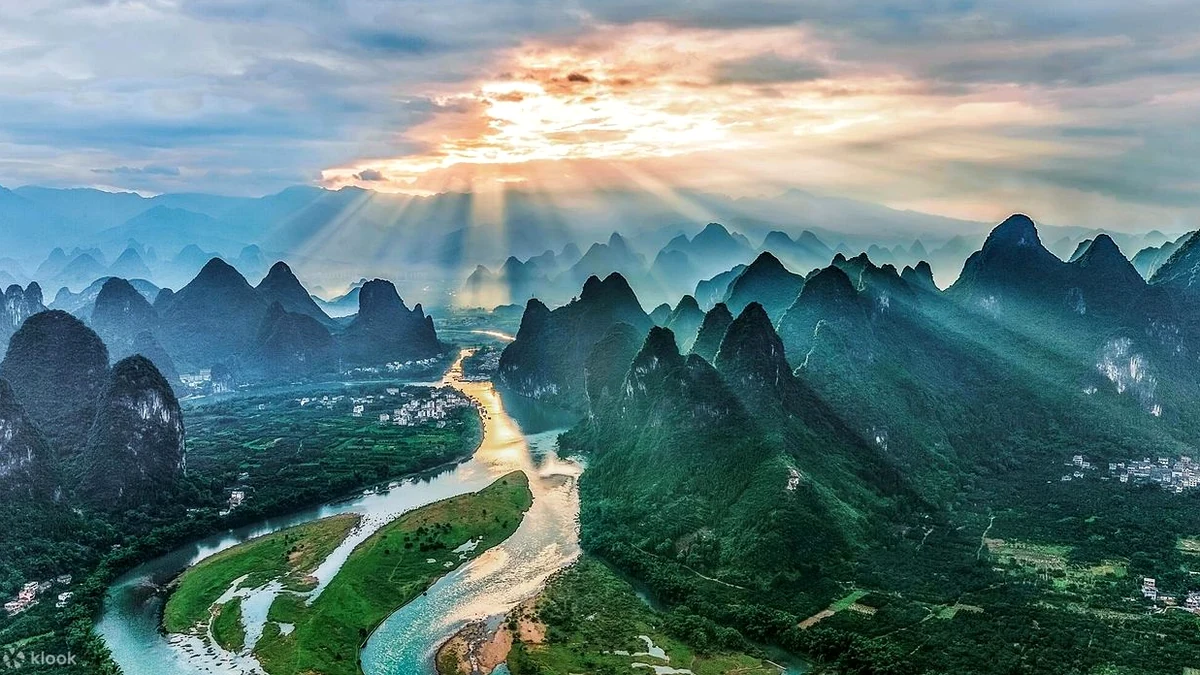
Along the jade-green ripples of the Li River, where thousands of majestic limestone peaks cast their reflections onto the sweeping silk of water in Guilin and Yangshuo, a folk cultural legend has quietly crystallized and been passed down for more than a millennium. Originating in the glorious era of the Tang dynasty (618–907 CE)—and reaching dazzling brilliance in the eighth century during prosperous reigns—the figure of Liu Sanjie became deeply woven into local consciousness. The geographic setting that gave rise to this epic legend stretches from ancient Pingluo and Yizhou across the entire Li River basin, where the spiritual energy of mountains and waters converges with deep cultural exchange between the Central Plains and the longstanding customs of southern ethnic groups.
According to unofficial historical accounts and layers of oral literature, the real-life prototype behind Liu Sanjie was named Liu Sanmei, an impoverished peasant girl from the Zhuang community (壯族)—one of the ethnic minority groups with the longest history of settlement in Lingnan. Far from aristocratic privilege, she grew up amid humble kitchen smoke, rolling fields, and simple bamboo rafts making a living with the rise and fall of floodwaters. The open natural environment and her community’s resilient spirit early on shaped a free soul, blessing her with a voice as clear as a chime stone, quick intelligence, and a sharp gift for extemporaneous poetry rare in the annals of Chinese folk culture.
In the eighth century, as feudal stratification sharpened and social tensions mounted in border prefectures and counties, Liu Sanmei’s mountain songs broke past the bounds of ordinary courtship antiphonal singing. Rising from the chest of a poor Zhuang girl, her singing became a steely spiritual weapon—making full use of clever wordplay, earthy metaphors, and sharp wit to expose local official corruption, shatter the arrogant rhetoric of tyrannical landlords, and shelter struggling rural folk. She turned riverside singing gatherings into forums of justice for working people. Her upright spirit and unmatched singing talent led folk across the region to revere her as the “Song Fairy” (歌仙)—the immortal guardian of song and fairness.
Through the shifting tides of the Song, Yuan, Ming, and Qing dynasties, the legend of the Song Fairy surnamed Liu never faded; instead, it grew richer through seasonal folk-song festivals, most notably the third-day-of-the-third-lunar-month singing festival of the Zhuang people. Liu Sanjie gradually transcended the bounds of a single historical individual to become an immortal spiritual symbol of Lingnan folk culture. That enduring vitality across millennia brought the Liu Sanjie legend onto China’s list of national intangible cultural heritage, affirming the lasting value of an art form rooted in everyday labor.
The turning point that carried this folk legend onto the world stage came in 1960, when Changchun Film Studio officially brought the story to the big screen in the classic feature film bearing her name. Sweeping shots filmed directly amid Guilin’s landscapes, paired with haunting mountain melodies, won over millions of viewers and became a pop-cultural phenomenon across Asia. Its historical roots in eighth-century Tang China, refracted through the lens of 1960 cinema, built a sturdy cultural foundation that inspired contemporary directors to later reincarnate the Song Fairy in a breathtaking landscape spectacle right on the waters of Yangshuo.
Tucked along a gentle bend of the Li River in Yangshuo County, the performance setting of this landscape masterpiece opens onto a picturesque shanshui painting steeped in Eastern feng shui philosophy. Geomorphologically, Guilin and Yangshuo are world-renowned for dramatic tropical karst terrain shaped and refined over hundreds of millions of years of geological change. This area is the scenic finale of the 83-kilometer waterway starting from upstream Guilin piers and flowing south past Huangbu Reflection—a grand vista once chosen as the enduring model depicted on the back of the 20-yuan banknote. Amid overlapping green peaks and emerald waters, the lay of the land gathers the auspicious energy of “sheltering the wind and gathering qi,” where the winding current slows the water’s pace to form a tranquil natural cove as smooth as a mirror reflecting millions of years of history.
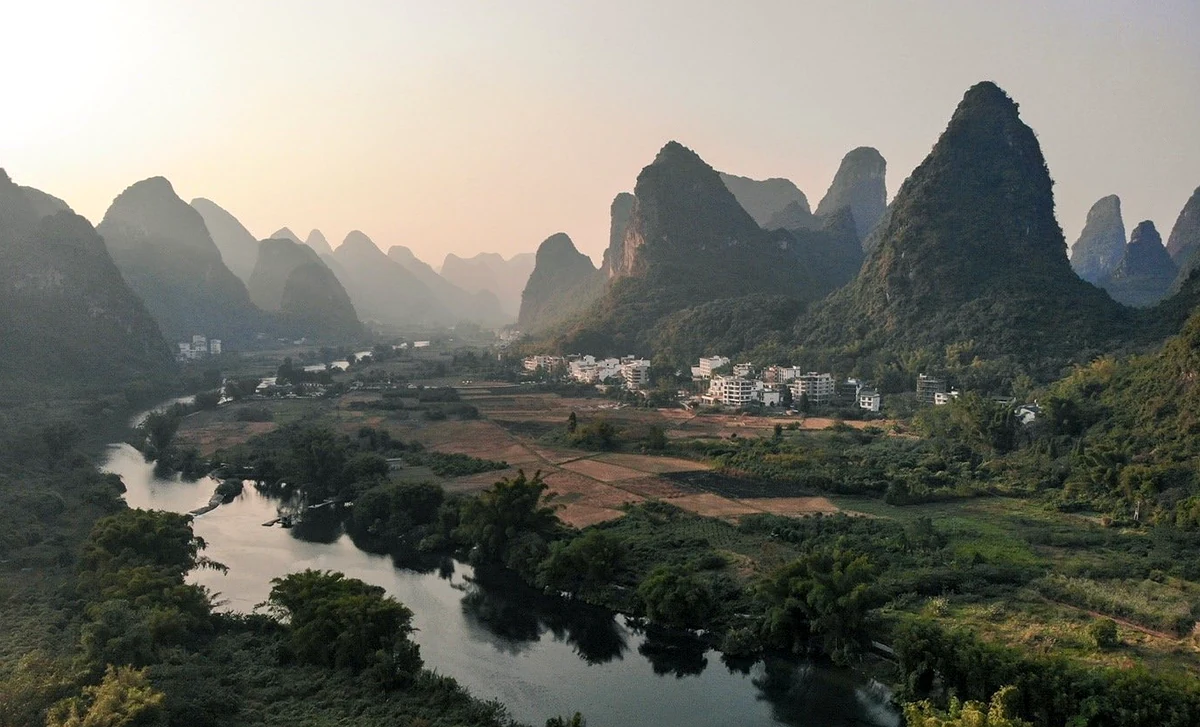
What makes the terrain planning of this show unprecedented is its complete rejection of artificial backdrop structures. Instead, the entire stage is laid out across a nearly two-kilometer natural stretch of the Li River, using twelve towering limestone peaks rising straight into the sky as a permanent backdrop. By day, these twelve monumental peaks—their slopes covered in ancient moss—stand like natural screens sheltering against brisk breezes; by night, they transform into a grand velvet curtain opening onto a realm of wonder. The contrast between the solemn stillness of thousand-year-old karst cliffs and the endless movement of silt-borne waters fulfills the ideal of “harmony between heaven and humanity,” turning the physical landscape into the core soul that anchors every dramatic movement.
To operate a massive outdoor performance space without harming the pristine ecosystem, infrastructure engineering was calculated with pinpoint precision. Undersea cables, hydraulic floating platforms, and power networks are all concealed deep beneath the Li River bed, completely out of sight and never obstructing fishermen’s boats passing by during the day. Large-scale lighting uses modern optical dispersion technology, with hundreds of high-output fixtures tucked behind dense bamboo groves, inside limestone fissures, or moored on submerged rafts. When night falls, laser beams and colored light sweep across the rough cliff faces, turning the twelve towering peaks into giant towers of light reflected in the water and creating a multi-dimensional visual effect like a waking dream.
The seating tiers, holding thousands of spectators, are also shaped to follow the gentle slope of the natural embankment, wrapped in native green bamboo to blend into the original ecology. The viewing space has no mechanical barriers, allowing river breezes, cool mist, and nighttime insects to mingle with a digital surround-sound system finely tuned to the canyon’s acoustics. Because the Li River’s flow shifts across rainy and dry seasons, every evening performance carries its own character: when waters recede to reveal simple gravel shoals, or when high water turns the scene into a shimmering expanse, it forms a living stage enduring alongside nature’s breath.
When the talented directing trio of Zhang Yimou, Wang Chaoge, and Fan Yue put pen to paper to begin creating the show in 2001, a revolution in performance spatial thinking officially began. Premiering in October 2003, the production gave birth to the world’s first “landscape live-action” concept, shattering conventional ideas of four-walled black boxes or painted backdrops in traditional theater. Rather than confining performers to a conventional stage, the creators boldly turned an entire picturesque expanse of mountains and waters in Yangshuo County into a sanctuary of art. It is more than an outdoor stage—it is a vast cultural spatial project where the line between human creation and nature dissolves, carrying audiences into a deeply liberating visual and spiritual experience.
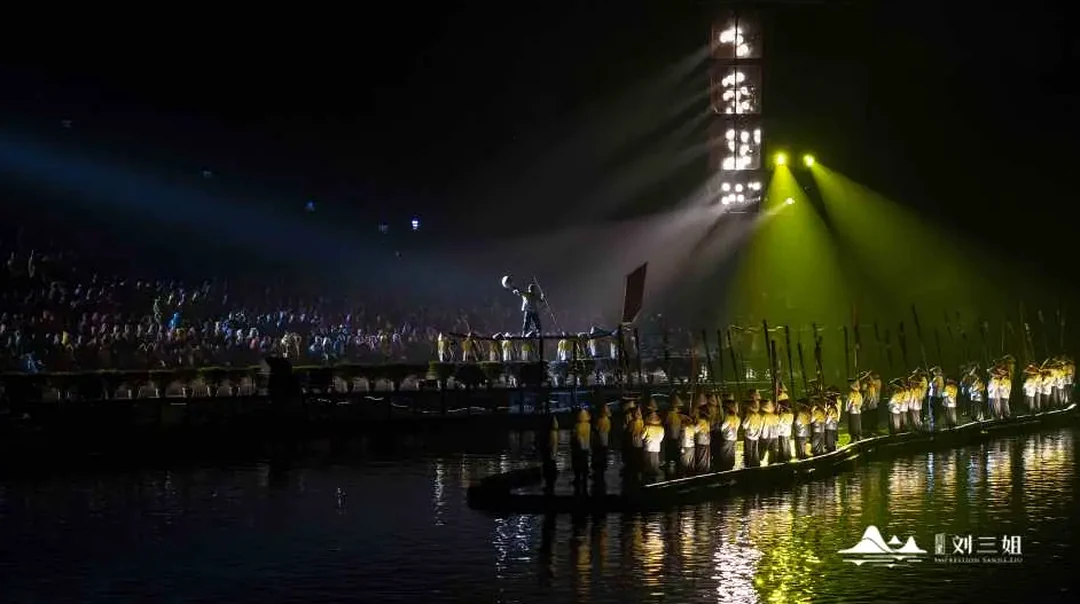
The actual scale of this stage is astonishing, stretching across more than two kilometers of gentle Li River water and taking twelve towering karst limestone peaks rising into the blue sky as its eternal screen. This open spatial structure shifts continuously with every breath of nature; clouds, mist, moon and stars, and mountain shadows stretching across emerald water all become living scenes within the show. Building a water stage required an unprecedented feat of engineering: performance platforms, underwater pull cables, and special-effects gear are neatly hidden beneath deep water, preserving the river’s daytime purity and waking in full splendor only after dark. Spatial choreography reaches its peak here by turning a broad expanse of water into a giant canvas where hundreds of bamboo rafts glide as light as feathers, weaving glowing trails amid moonlight and sheer rock walls.
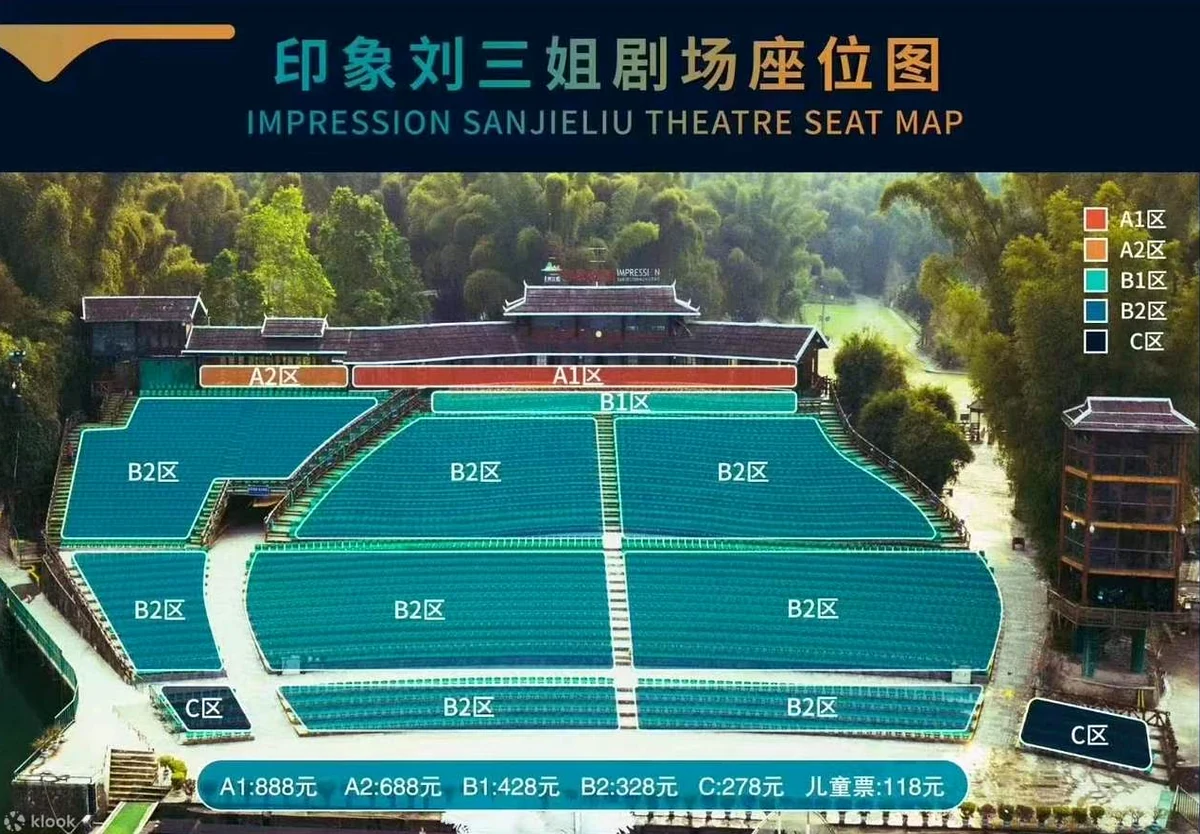
In complete harmony with its surroundings, the seating area follows the natural incline of the rocky hillside, embodying the Eastern philosophy of “harmony between heaven and humanity.” The structure uses humble local materials—aged bamboo poles, raw timber, cut stone, and handmade ceramic tiles—resting modestly beneath leafy shade trees so it never breaks the untouched horizon of Yangshuo Valley. Seating more than three thousand guests, the terraced stands are engineered with precise optical sightlines and stepped gradients, offering a wide 180-degree panorama across the river basin with no obstructions blocking the view.
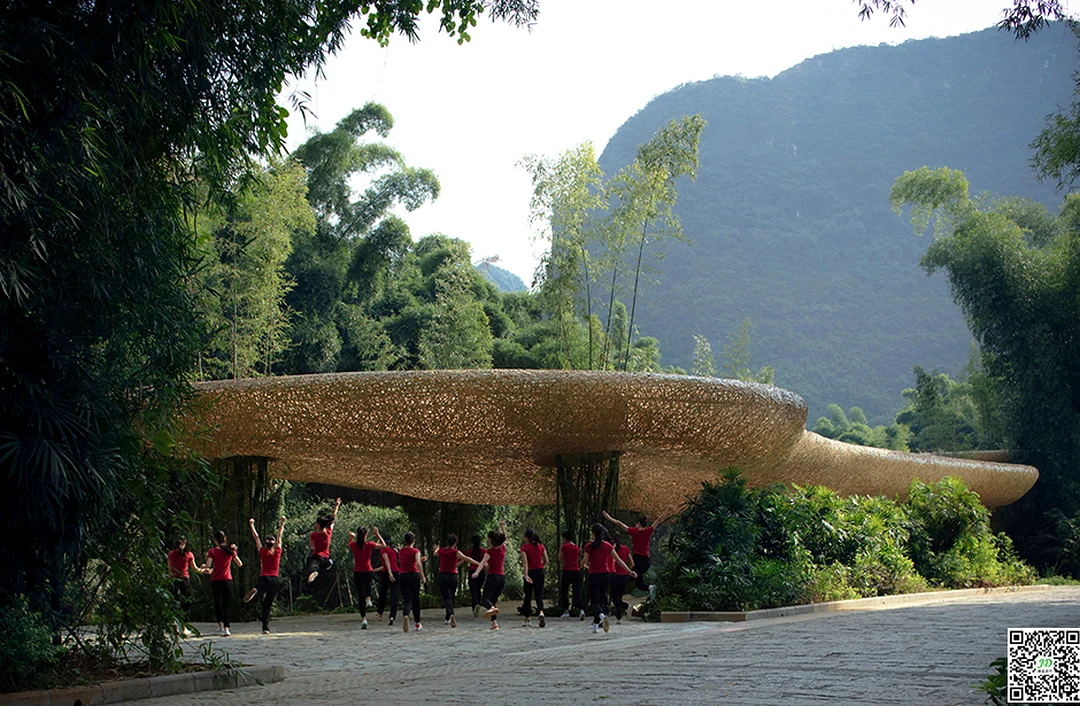
The viewing experience here is thoughtfully tiered to suit diverse preferences, from standard seats sloping gently to catch cool breezes off the water to cushioned VIP seats on breezy upper levels. Most distinctive are the Presidential viewing boxes perched in prime hillside spots, designed like traditional lookout pavilions with fine woodwork that offer an imperial vantage point taking in the full symphony of light and shadow. Spatial craft here also unites acoustics and geology: the natural limestone cliffs of the twelve peaks act like giant resonating speakers, keeping the call-and-response songs of the Zhuang, Yao, and Miao peoples rich and echoing, and turning every night into an unmatched work of sound-and-light architecture beneath Guilin’s skies.
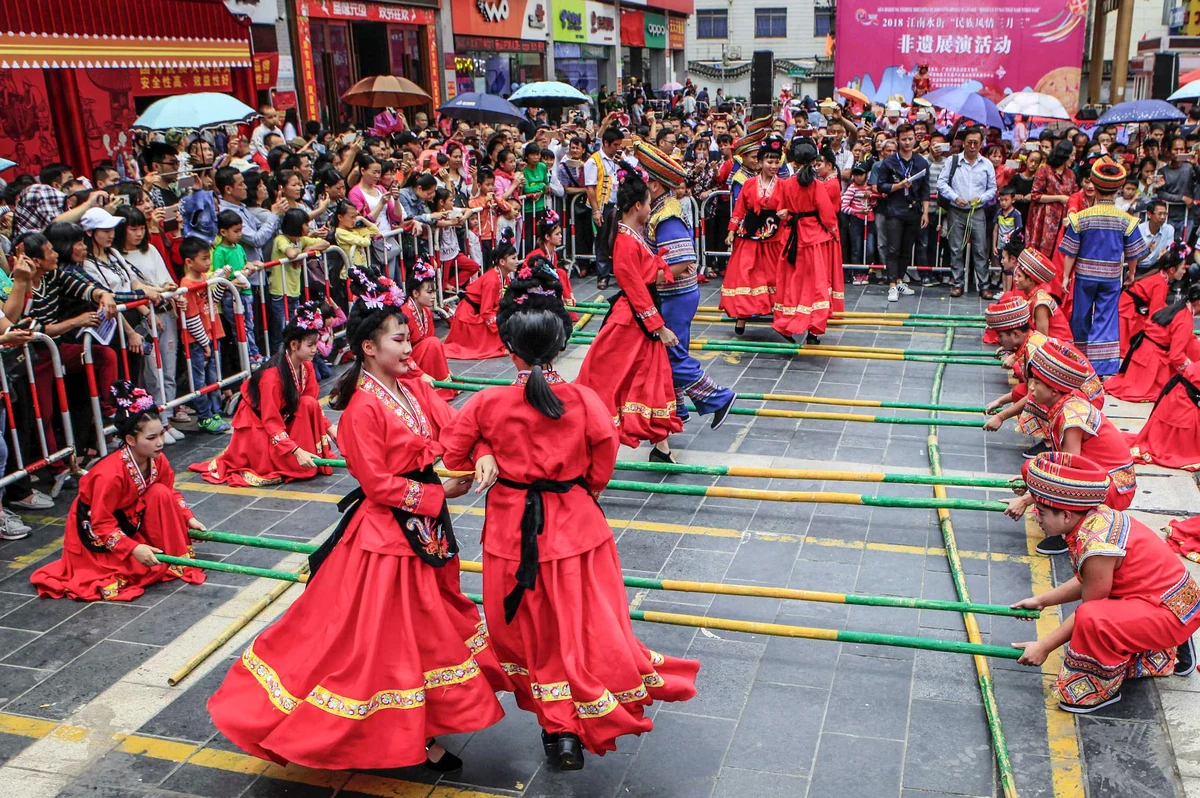
As twilight draws a deep indigo curtain over Yangshuo’s mountains and waters, the nearly two-kilometer stretch of the Li River suddenly becomes a grand open-air sanctuary of art. What gives the large-scale landscape musical Impression Liu Sanjie its immortal soul is not ostentatious mechanical tricks, but the utter authenticity of local people. More than six hundred performers stepping onto the water each night are mostly not conservatory-trained dancers; they are everyday farmers from the Zhuang, Yao, Miao, and Dong ethnic groups and seasoned fishermen from neighboring villages. By day, they farm terraced fields or cast nets in narrow channels; by night, they don vibrant brocade attire, stand atop slender bamboo rafts, and guide cormorants in skilled fishing to bring back to life a survival rhythm bound to the river for thousands of years.
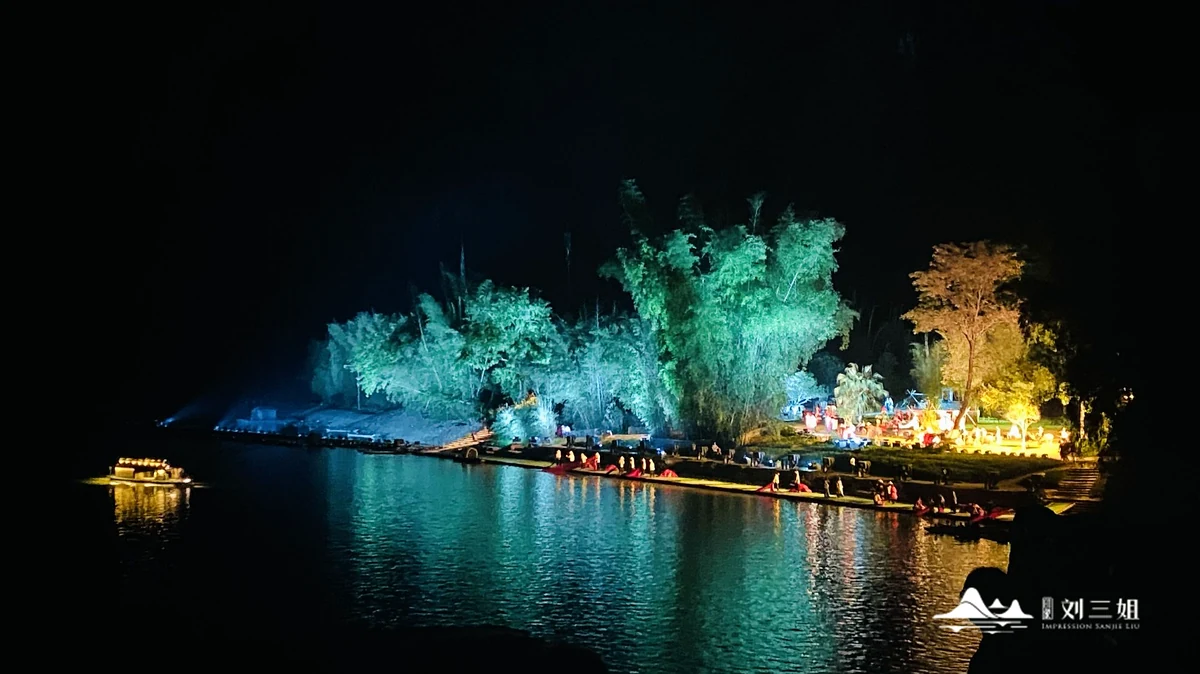
The show’s atmosphere is a peerless blend of cutting-edge visual technology and natural mystery. Director Zhang Yimou and his collaborators skillfully turn the twelve karst limestone peaks framing the Li River into a colossal natural backdrop. High-power surround sound is cleverly hidden in rock crevices and shoreline thickets, producing a primeval echo as if Liu Sanjie’s antiphonal singing were drifting back from ancestral times. Digital lighting is calibrated to every angle of refraction, weaving hundreds of high-tech light beams with clear moonlight and flickering oil lamps on small bamboo boats. Soft mist sprayed across still water catches the fiery red glow of hundred-meter silk ribbons waved rhythmically by local women, dissolving the boundary between real river scenery and a dreamlike fairyland.
Leaving the quiet enchantment of the river performance, Guilin’s nightlife carries travelers toward Yangshuo’s West Street, one of southern China’s liveliest hubs of international cultural exchange. Existing for more than fifteen centuries since the Sui dynasty, this old town still preserves its Ming- and Qing-era spatial layout of moss-covered yin-yang roof tiles, gray lime walls, and blue flagstone lanes polished by generations of travelers. Beneath the warm glow of red lanterns, evening life here takes on a singular charm as old-world Eastern character blends smoothly with the easygoing bohemian spirit of rustic bars, where acoustic guitar strumming mingles with bright bamboo flute notes.
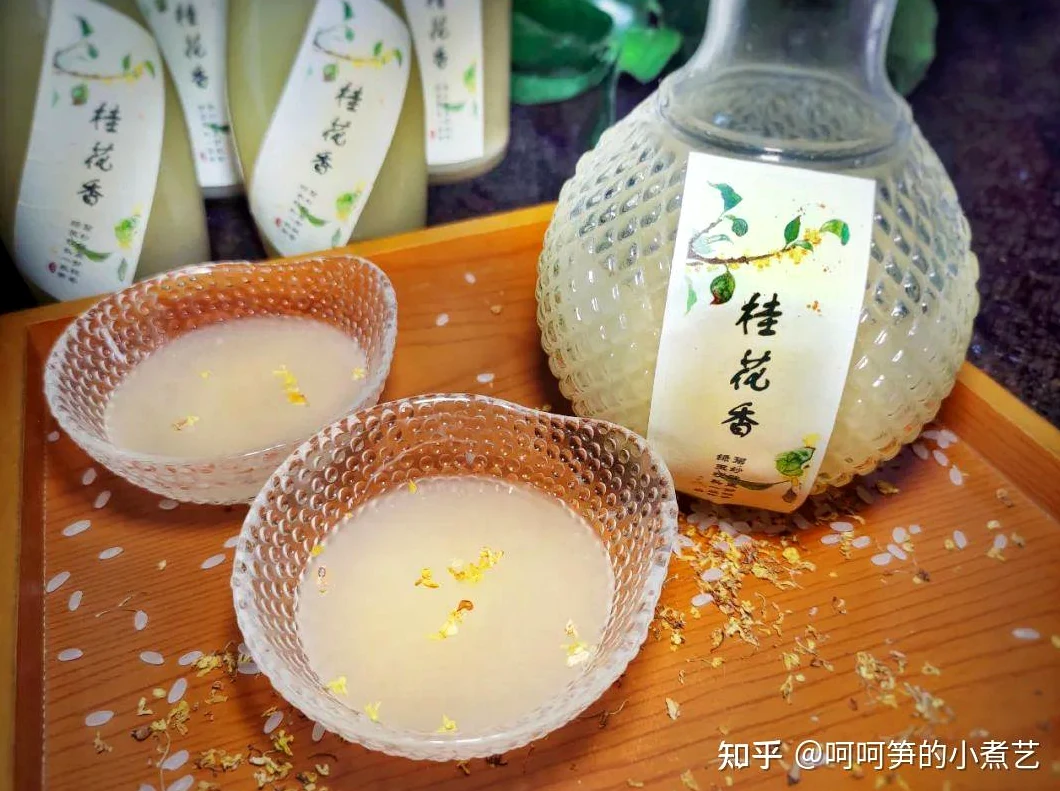
Exploring Yangshuo after dark would feel incomplete without tasting its signature local flavors right in the heart of the old street. At traditional taverns, the rich aroma of family-style Yangshuo beer fish—made from fresh fish just caught in the Li River and braised with local beer, ripe tomatoes, and fiery bird’s eye chilies—drifts through the cool air. Sipping a cup of sweet-scented osmanthus wine or enjoying a warm bowl of bitter-savory Yao oil tea while listening to lively chatter on worn stone steps, visitors feel a wonderful transition from the traditional depth of a landscape show to the resilient, free-spirited pulse of a vibrant riverside town.
When the echoes of mountain love songs fade and night settles quietly over the Li River, travelers stepping out of Impression Liu Sanjie often seek the warm pulse of everyday life along the culinary map of Yangshuo and Guilin. Here, food philosophy is not merely about nutrition, but an art of balancing yin and yang—harmonizing the warming spice of Lingnan’s highlands with the clean sweetness of abundant rivers to create heirloom flavors etched into local memory.
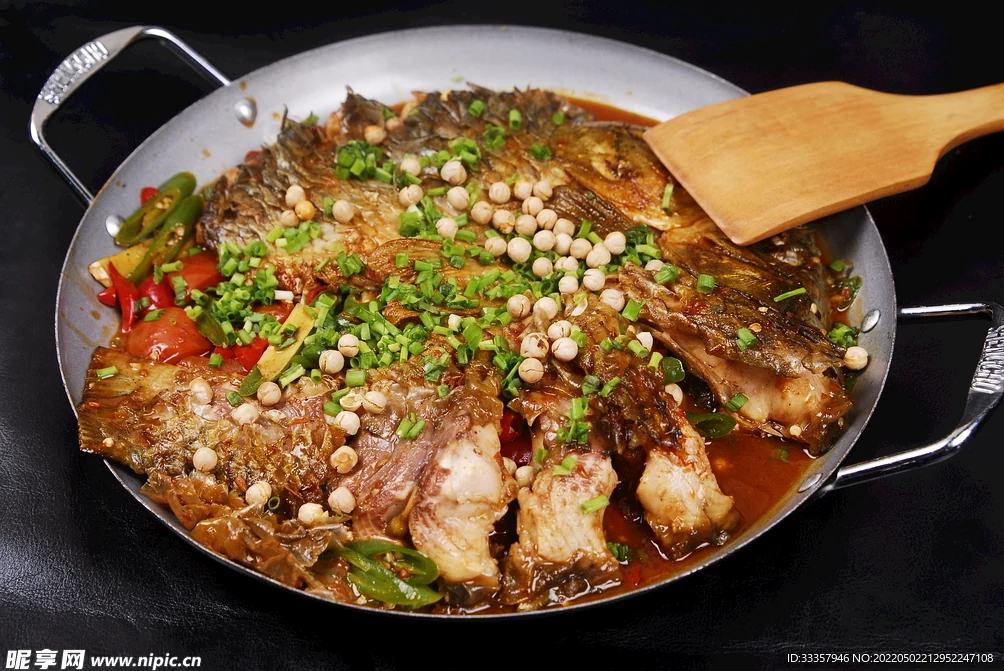
Speaking of Yangshuo delicacies, the centerpiece of riverside dining is always famous Yangshuo beer fish, a culinary creation born in simple eateries by the ancient West Pier landing. Its essence starts with fresh carp or grass carp caught straight from the clear Li River, where swift currents give the flesh a firm texture and natural sweetness. A skilled cook leaves the scales on and pan-sears the fish in a cast-iron pan flooded with camellia seed oil until the outer scales puff up golden and crisp like dragon scales. Once the fish holds its shape, local Li River beer rich with malt aroma is poured into the pan with ripe tomatoes, green bell peppers, aged ginger, garlic cloves, and especially a handful of perilla leaves and handcrafted soy sauce. Over a gentle simmer, the beer penetrates between the scales to remove any fishiness and tenderize the snow-white flesh while keeping a captivating balance of richness, warmth, and mild tang.
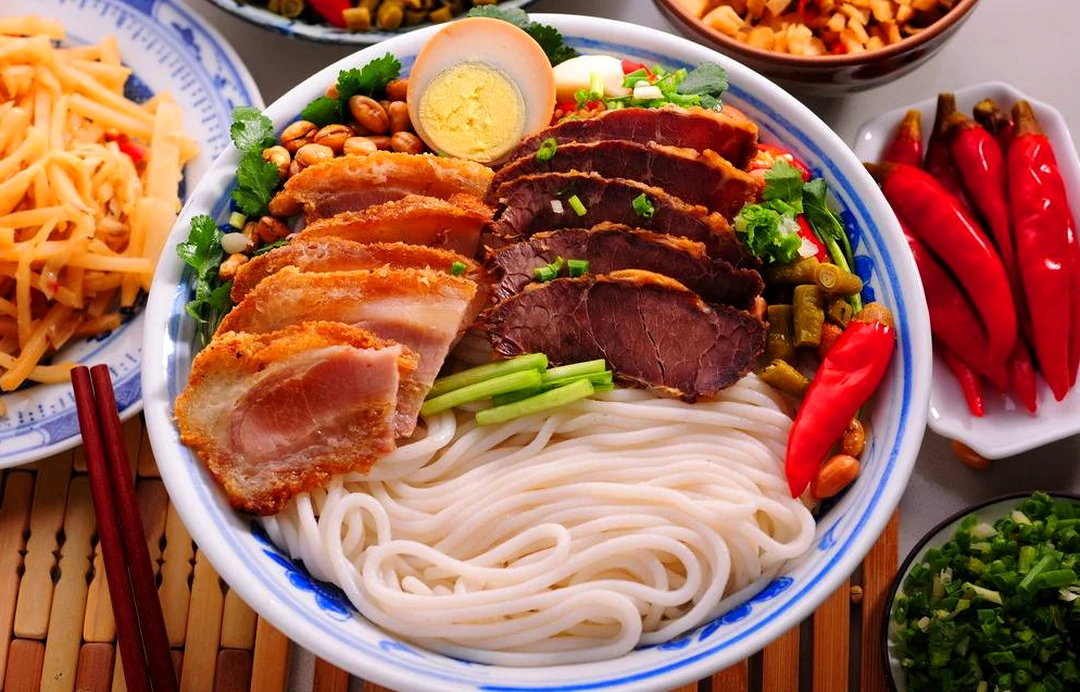
Moving past the bold flavors of the river, the soul of Guilin street food is distilled in every bowl of Guilin rice noodles, a tradition more than two thousand years old dating back to Qin Shi Huang’s construction of the Lingqu Canal linking the Yangtze and Pearl River basins. When northern expeditionary troops were unaccustomed to eating rice grains like southerners, military cooks ground rice into flour and pressed it through molds into snow-white, chewy strands akin to noodles from home. The golden key that elevates the bowl is the family braised sauce simmered day and night from pork marrow bones and over twenty Chinese herbs and spices, including cassia bark, black cardamom, star anise, clove, and amomum. Served dry-tossed, the unpretentious bowl is topped evenly with paper-thin crispy-skin char siu, savory seasoned beef, fragrant oil-roasted peanuts, pickled yardlong beans, and fiery Lipu chili-pickled bamboo shoots—and after enjoying the sauce-coated noodles, diners leisurely sip the hot, clean bone broth served alongside.
Alongside everyday street fare, Lipu taro braised with pork belly (kou rou) represents the pinnacle of banquet cuisine—a prized tribute dish once praised by the Qianlong Emperor during his southern tours in the Qing dynasty. The dish calls for meticulous preparation using top-grade pork belly; after parboiling, the skin is pricked with thousands of tiny holes, brushed with maltose, and deep-fried until the skin blisters into glossy golden-brown folds. The pork is then sliced into finger-thick squares and layered evenly with slices of famous Lipu taro from local red soil, prized for its purple veining and subtle aroma like areca blossoms. Everything is marinated generously in rich red fermented bean curd sauce, five-spice powder, osmanthus-fermented glutinous rice wine, and soybean paste, then steamed for hours until excess fat melts away and infuses the floury taro—yielding a velvety, melt-in-the-mouth texture with zero heaviness.
These celebrated dishes are more than food; they are an invisible cultural bridge that completes a traveler’s aesthetic journey after a feast for the eyes at the Liu Sanjie epic. In a gentle night breeze off the limestone peaks, sipping a warm cup of fragrant osmanthus wine and tasting local flavors is the moment one truly touches the thousand-year life current of the Li River’s banks.
The scenic mountains and waters of the Li River and Yangshuo old town take on enchanting shifts across the four seasons, yet the ideal time to experience Impression Liu Sanjie in full is from April to October. During these months, Lingnan’s climate is warm, river levels are generous, and clear water reflects the full silhouette of the twelve tranquil karst peaks. An open night sky paired with cool breezes drifting up the river creates the finest natural setting for both sight and sound. Visitors should avoid visiting in the biting winter months, when lower temperatures and thick river mist both obscure the high-output lighting and make sitting outdoors for over an hour feel chilly.
In terms of regular operations, the two-square-kilometer open-air water stage typically lights up every evening with two scheduled performances, the first starting at 19:45 and the next at 21:20. During peak travel seasons, organizers may flexibly add a third show to meet demand from visitors arriving from near and far. Because the terraced stands holding over three thousand seats are completely open to the sky without a roof, the venue keeps convenient high-grade rain ponchos ready to hand out to each guest in case of light rain. In fact, a fine drizzle mingled with Li River mist can sometimes create a poetic, old-world haze; performances are formally delayed only when localized heavy storms or upstream flash floods raise water levels enough to threaten show safety.
Seating is systematically tiered from standard to premium, including general stands on lower levels, VIP stands mid-tier, and honorary Presidential rows at the highest point. For a landscape show that uses an entire mountain-and-river valley as its backdrop like Zhang Yimou’s production, sitting higher and farther from the riverbank gives an even broader panoramic view, letting audiences take in the rhythmic interplay of hundreds of bamboo rafts, flickering torches, and a massive red silk ribbon gliding across the water. Before heading into the theater at No. 1 Tianyuan Road, travelers should remember to stroll over for signature Yangshuo beer fish cooked with fresh chilies and local tomatoes, or sample a bowl of family-style Guilin rice noodles rich with herbal bone broth to round out their local flavor experience.
Modern transport links to Yangshuo make reaching this spectacle remarkably convenient. Travelers departing from Vietnam can easily travel overland through Youyi (Friendship) International Border Gate into Pingxiang, continue to regional hub Nanning, and board high-speed trains speeding at over two hundred kilometers per hour to Guilin North or Guilin West station. From downtown Guilin, a scenic river cruise past ink-wash mountain views or an express bus takes only about an hour to reach peaceful Yangshuo town. To avoid low-cost service traps or forced shopping stops that eat into rest time, discerning travelers consistently favor pure cultural travel. For a seamless trip across transfers, upscale local stays, and prime seats to watch Liu Sanjie, choosing a professional all-inclusive tour package with no shopping stops is the optimal way to explore Lingnan with peace of mind and full enjoyment.