As the waves of the digital age reached the shores of the Land of the Rising Sun at the dawn of the twenty-first century, Tokyo faced an existential challenge in telecommunications infrastructure. During the Heisei era of Emperor Akihito, the rapid proliferation of steel-and-glass skyscrapers across central hubs like Shinjuku and Roppongi inadvertently erected a colossal man-made barrier—suffocating analog television signals and severely disrupting the terrestrial digital broadcasting network handled by Tokyo Tower since the mid-twentieth century. Confronted with this invisible gridlock in the lower atmosphere, a landmark national project was launched to re-establish the vital communications artery for the entire greater Kanto region.
The genesis of this monumental endeavor took shape in July 2003 with the official formation of the Capital Digital Tower Consortium—an unprecedented alliance bringing together the storied private railway conglomerate Tobu Railway, public broadcaster NHK, and Japan’s six leading commercial television networks. Following three years of rigorous technical evaluations, urban planners announced in March 2006 that the tower would rise in Sumida Ward—the eastern bank of the Sumida River that guards the historic soul of Edo-era *Shitamachi* (“Low City”) working-class culture. This choice went far beyond mathematical calculations of geography and unobstructed signal transmission; it carried a mission of civic revitalization, serving as a catalyst for urban renewal and economic rebirth across Tokyo’s quieter eastern districts.
The blueprints for this project of the century were entrusted to some of the most brilliant minds in contemporary Japanese architecture. A creative dialogue between Pritzker Prize-winning master architect Tadao Ando and the legendary design firm Nikken Sekkei gave birth to a timeless architectural icon. On July 14, 2008, the first foundation piles were driven deep into the soil of Sumida, launching an ambitious and triumphant construction journey. Rather than opposing nature or rejecting the past, Ando and Nikken Sekkei seamlessly blended cutting-edge structural engineering with traditional Japanese aesthetics—drawing inspiration from the sleek yet lethal concave curve of a *katana* blade (*sori*) and the subtle convex swelling seen in ancient temple roof pillars (*mukuri*).
The tower’s ascent unfolded like a living urban legend. By March 18, 2010, its resilient steel lattice officially reached its definitive height of 634 meters, surpassing Canton Tower in China to become the tallest free-standing broadcasting tower on the planet at that time. The figure 634 meters was no arbitrary engineering calculation, but an intentional cultural wordplay: in traditional Japanese syllabary, the digits 6 (*mu*), 3 (*sa*), and 4 (*shi*) combine to form “Musashi”—the historic province that once encompassed modern-day Tokyo, Saitama, and part of Kanagawa. Even when shaken violently by the Great East Japan Earthquake of 2011, its central *shinbashira* column system—adapted from thousand-year-old five-story Buddhist pagodas—kept the entire tower completely intact without a single structural crack.
Through the tireless dedication of hundreds of thousands of workers and top engineers, construction reached completion on a remarkably auspicious date: leap day, February 29, 2012. On May 22, 2012, Tokyo Skytree officially opened its doors to the world. Rising majestically yet gracefully into the Sumida sky, the tower not only marked a crowning technological achievement of the Heisei era, but also composed a grand anthem celebrating the rebirth of a historic neighborhood—closing the chapter on analog broadcasting to usher in an enduring digital future.
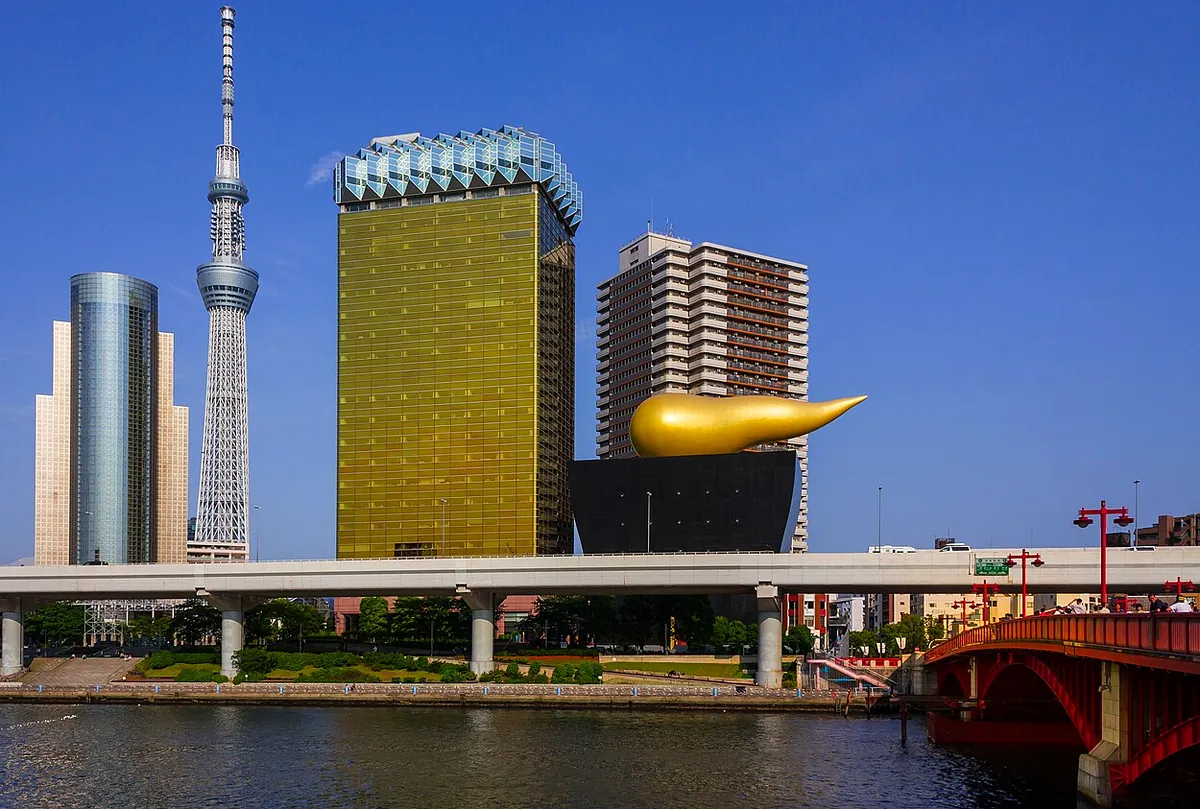
Located at 1-1-2 Oshiage in Sumida Ward, Tokyo Skytree occupies a site rich in symbolic geomancy and urban planning significance. Oshiage forms part of historic *Shitamachi*—the thriving “Low City” stretching along the lower reaches of the Sumida River, steeped in centuries of Edo-period merchant and artisan heritage. Through the lens of traditional East Asian geomancy, the tower stands like a colossal “jade tree” rooted firmly in prosperous alluvial soil, where the gentle winding flow of the Sumida River along its western flank gathers vital energy—harmonizing the natural Water element of the river with the soaring Metal element of the steel spire piercing the heavens. Surrounded by the flat expanse of the Kanto Plain, the tower welcomes unobstructed sunlight while commanding sweeping vistas stretching from snow-crowned Mount Fuji to the southwest to the shimmering waters of Tokyo Bay to the south.
The interplay between avant-garde engineering and native natural scenery produces a captivating visual harmony. Along the Sumida riverbanks, rows of venerable cherry trees bursting into blossom each spring form a soft ecological buffer balancing the sleek, soaring geometry of high-tech steel. Viewed from above, the surrounding neighborhood preserves its historic grid of narrow lanes, traditional craft workshops, and dark-tiled wooden townhouses. Rather than erasing history to build anew, Tokyo Skytree acts as a visual and spiritual axis linking nostalgic Edo heritage with hyper-modern Tokyo—reclaiming the cultural prominence of the river’s eastern bank after decades in the shadow of postwar western-ward development.
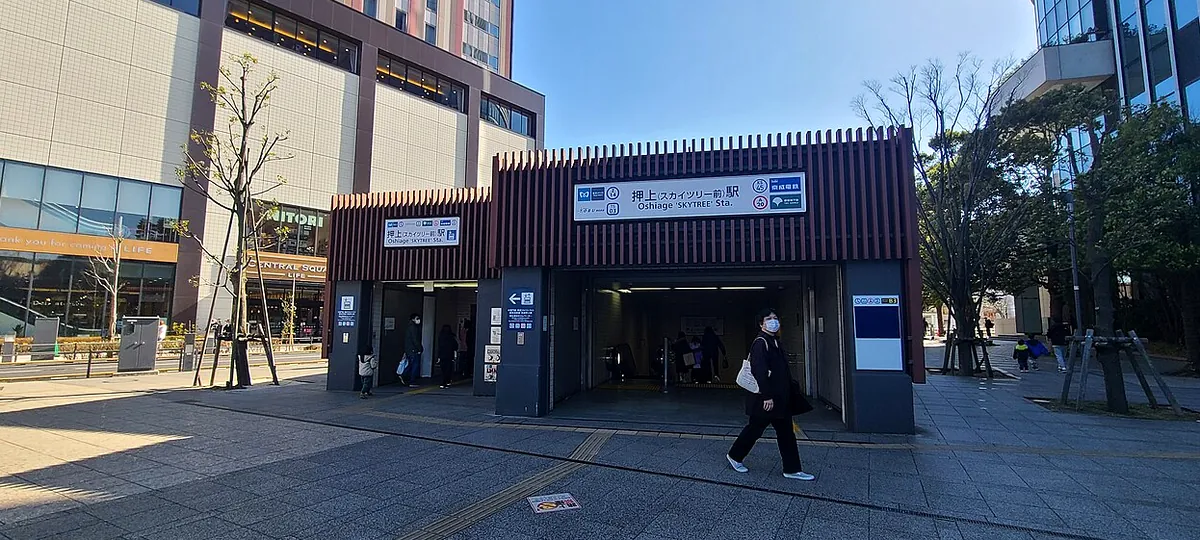
Tokyo Skytree’s prime setting is further reinforced by one of the world’s most seamlessly integrated subterranean and elevated transit hubs. Directly beneath the complex, visitor flows circulate smoothly through two major rail gateways: Tokyo Skytree Station on the Tobu Skytree Line and adjacent Oshiage Station. Deep underground at Oshiage, four arterial metropolitan rail lines converge: the Tokyo Metro Hanzomon Line linking straight to central political and financial districts, the Toei Asakusa Line running through historic commercial quarters, and the Keisei Oshiage and Tobu Skytree lines branching out across greater eastern Japan.
This multi-level transit web grants effortless access for travelers arriving from around the globe. Express trains on the Keisei Line connect directly from Narita International Airport to the foot of the tower in roughly 55 to 65 minutes, while journeys from Haneda International Airport take just 45 to 50 minutes via direct Asakusa Line through-services. At street level, dedicated Skytree Shuttle buses run frequently between the tower, Tokyo Station’s Yaesu Exit, and major sightseeing hubs. Running parallel to the Sumida River, the Shuto Expressway Route 6 Mukojima skirts the complex, completing a multi-tiered mobility network spanning waterways, roadways, elevated rail, and deep subways—preserving *Shitamachi*’s unhurried neighborhood charm while turning the tower into a dynamic metropolitan crossroads.
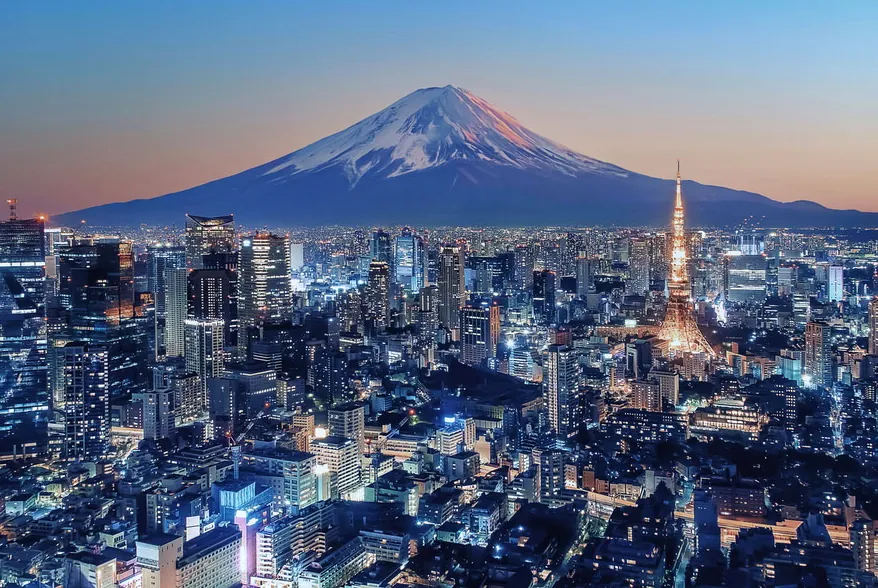
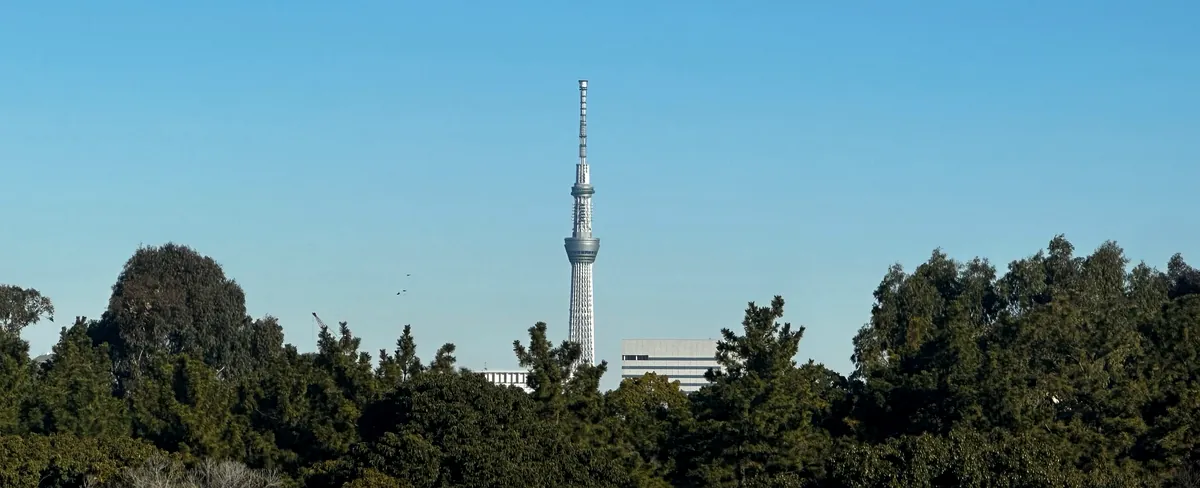
Rising boldly into the capital’s skyline to an exact height of 634 meters, Tokyo Skytree is far more than a colossal telecommunications mast—it embodies deep philosophical meaning and reverence for Japan’s storied past. The number 634 employs the classic Japanese phonetic wordplay known as *goroawase*, combining 6 (*mu*), 3 (*sa*), and 4 (*shi*) to evoke “Musashi”—the prosperous historic province covering present-day Tokyo, Saitama, and parts of Kanagawa. Encoding the name of a revered homeland directly into its structural elevation turns the tower into a tangible bridge uniting a thousand years of Kanto Plain memory with a forward-looking modern metropolis.
Drawing upon millennia-old architectural wisdom, this Neo-Futuristic landmark brilliantly reinterprets the *Shinbashira* (“central heart pillar”)—the time-tested engineering secret that enabled five-story wooden Buddhist pagodas (*Gojūnotō*) to withstand catastrophic earthquakes across centuries. At the tower’s core stands an independent, hollow reinforced-concrete shaft structurally separated from the intricate exterior steel lattice. During intense seismic tremors, the central core and outer steel frame oscillate out of phase with each other, functioning as a natural gravitational damper that absorbs and cancels up to 50% of seismic energy—setting an unprecedented benchmark in global skyscraper safety.
Visually, the tower harmonizes rigorous geometric precision with traditional aesthetic sensibilities rooted in swordsmithing and Zen temple architecture. Its cross-section transitions smoothly from a sturdy equilateral triangle at ground level—evoking a grounded tripod stance—into a true circle at its upper observation decks. Along its soaring shaft, observers can discern subtle curves inspired by the razor-sharp concave sweep (*sori*) of a legendary Katana sword paired with the gentle convex camber (*mukuri*) of ancient temple columns. Its entire steel exterior is coated in an exclusive hue dubbed “Skytree White”—a delicate blend of pure white infused with a whisper of *Aijiro*, the palest indigo tint prized by Edo-period dyers—giving the spire the ethereal appearance of an icy pillar melting into blue clouds.
Inside, elevators whisk visitors into breathtaking aerial panoramas where boundaries between humanity and sky dissolve at dizzying altitudes. The first stop is the Tembo Deck at 350 meters, spanning three expansive levels enclosed by five-meter-tall tempered glass windows running around the entire perimeter—framing uninterrupted 360-degree views of sprawling Tokyo stretching all the way to snow-capped Mount Fuji. Ascending even higher to 450 meters, visitors enter the Tembo Galleria—a gently sloping, glass-enclosed spiral skywalk wrapping around the tower’s core, creating the sensation of strolling through the stratosphere before reaching Sorakara Point, the highest publicly accessible vantage point.
The true scale of the project extends far beyond a record-breaking tower into a comprehensive mixed-use urban redevelopment known as Tokyo Skytree Town. Sprawling beneath the tower’s shadow are the massive Tokyo Solamachi retail complex, an aquarium, a planetarium, and integrated rail hubs—forming eastern Tokyo’s most vibrant commercial and cultural ecosystem. This landmark complex has not only revitalized the local economy of Sumida and Oshiage, but also demonstrated sustainable urban vision where frontier engineering walks hand in hand with centuries of living heritage.
As twilight drapes a deep indigo veil across the Kanto Plain, Tokyo Skytree enters its most enchanting hours of the day. The secret behind its luminous presence before full darkness falls is its signature Skytree White finish. Inspired by traditional *aijiro* indigo dyeing, this subtle blue-tinted white keeps the intricate steel truss airy against dusk skies while serving as an ideal canvas for sophisticated architectural illumination. As Tokyo transitions into night, the 634-meter spire does more than shine—it transforms into a living kinetic sculpture linking Edo’s storied past with a dazzling future.
At the heart of Skytree’s nightly light choreography is an alternating palette rooted in classical Japanese aesthetics, headlined by two signature themes: “Iki” (粋 — Chic Spirit) and “Miyabi” (雅 — Courtly Elegance). Reflecting the chivalrous, free-spirited essence of Edo townspeople, the *Iki* theme bathes the tower in cool pale-blue light illuminating its central *shinbashira* core, evoking the eternal waters of the Sumida River flowing past its base. Contrasting this crisp vitality is the regal purple glow of *Miyabi*, symbolizing the aristocratic grace inherited from Heian court culture. Thousands of state-of-the-art digital LED fixtures programmed to millisecond precision ripple across the steel frame like gold-threaded kimono silk fluttering in the night breeze. Seasonal variations—such as festive orange-gold “Nobori” banners symbolizing good fortune or spring cherry-blossom palettes—turn Tokyo’s skyline into a majestic open-air gallery of light art.
Visual wonder reaches even greater heights inside the Tembo Deck at 350 meters. Here, the SKYTREE ROUND THEATER utilizes a continuous panoramic ring of glass measuring 110 meters long and 2 meters high as a giant 360-degree wrap-around screen. Once darkness falls outside, high-definition projectors spring to life, layering surreal animated visuals directly onto the real-world sea of millions of city lights below. Surround-sound music merges seamlessly with kinetic graphics, creating an immersive spectacle blending digital artistry with the glittering expanse of Tokyo stretching toward Tokyo Bay and distant Mount Fuji.
Higher still at the 450-meter Tembo Galleria, nocturnal exploration deepens with interactive augmented reality (AR) technology. Walking up the sloping glass spiral wrapped around the spire, visitors feel suspended in the stratosphere where city and stars merge. Digital touchpoints let guests scan across the endless carpet of city lights to identify historic landmarks and compare antique Edo-period maps against modern Tokyo’s glittering web of expressways and rail lines. This seamless fusion of heritage, projection artistry, and panoramic views over the world’s largest metropolis cements Tokyo Skytree as an iconic centerpiece of Tokyo’s nightscape.
Directly beneath the soaring spire, the Tokyo Solamachi commercial complex unfolds as a vibrant culinary labyrinth housing more than three hundred curated restaurants and specialty food stalls. Far more than a convenient place to refuel after an aerial excursion, Solamachi is designed as a miniature gastronomic museum celebrating the rich culinary map of *Shitamachi*—the thriving “Low City” that served as the lively heart of merchants and artisans throughout the Edo period. Stepping inside Solamachi, savory aromas of sizzling grills, sweet rice wine, and aged vinegar immediately invite travelers on a storied culinary pilgrimage.
The ultimate emblem of rustic working-class street food is *Monjayaki*, widely hailed as the culinary soul of Tokyo’s *Shitamachi* districts. Originating during lean feudal eras when parents taught children to write characters by tracing liquid wheat batter onto hot griddles with bamboo sticks, “written-grill” (*monjayaki*) evolved into a beloved communal comfort dish. At Solamachi, Tsukishima Monja Moheji upholds that heritage with recipes passed down over generations. Across a sizzling *teppan* iron griddle, chefs deftly chop crisp cabbage, bright crimson *mentaiko* cod roe, and rich cheese into a circular dam before pouring savory bonito-and-kelp *dashi* broth into the center. As the mixture bubbles and thickens into a golden, caramelized crust against the hot steel, diners scrape up fragrant bites using miniature metal spatulas—savoring a delightful contrast of crispy edges and creamy, nostalgic texture.
Balancing rustic griddle fare is the refined elegance of *Edo-mae* sushi, the legendary culinary tradition born along Edo Bay. Long before modern refrigeration existed, Edo-period sushi masters perfected curing with salt, marinating in vinegar, and quick blanching to preserve bountiful seafood caught fresh from Tokyo Bay. In the hands of master chefs at the tower, sushi rice is seasoned with prized *akasu* red vinegar—brewed from sake lees aged for years to impart a warm amber tint and mellow, subtly sweet acidity. Slices of soy-marinated bluefin tuna marbling richly on the tongue, herring roe, and fresh squid brushed lightly with reduced *tsume* glaze achieve an exquisite harmony between deep ocean umami and plump Kanto rice.
Local flavors beneath the tower are elevated further by iconic culinary houses from across Japan. Notable among them is Kyoto’s historic tea purveyor Itohkyuemon, safeguarding centuries of Uji tea mastery. Here, ceremonial tea culture shines in exclusive matcha sweets and parfaits crafted specifically for Tokyo Skytree—pairing the clean, noble bitterness of first-harvest green tea with crisp *agar* jelly and slow-simmered *azuki* red beans. Meanwhile, lava-stone-grilled Japanese Black Wagyu beef with delicate marbling that melts at body temperature rounds out an unforgettable luxury dining lineup.
Before concluding your culinary stroll, few visitors can resist picking up iconic souvenirs—most notably exclusive leopard-print editions of Tokyo Banana adorned with silhouettes of the tower itself. Soft, fluffy sponge cake cradling smooth banana custard cream offers both a sweet keepsake of your journey and a delicious symbol of centuries-old craftsmanship meeting contemporary urban energy beneath an architectural wonder.
Conquering the heights of Tokyo Skytree calls for thoughtful itinerary and schedule planning, as this landmark consistently ranks among the most visited attractions in the Land of the Rising Sun. For a seamless visit, the single most important tip is securing advance tickets to both the Tembo Deck and Tembo Galleria observation levels. Rather than enduring one-to-two-hour standby queues at the fourth-floor ticket counters, savvy travelers reserve timed e-tickets online through the official portal ahead of time—securing priority entry into dedicated reception lobbies while preserving energy and peace of mind for enjoying the views high above the clouds.
The single finest window to take in panoramic views across the Kanto Plain is the magical sunset hour, typically arriving about an hour before sundown. Timing your ascent for this golden hour treats you to a dramatic three-act visual spectacle: beginning in crisp daylight when visibility stretches more than seventy kilometers to reveal snow-capped Mount Fuji; transitioning into fiery crimson and deep violet twilight tinting the tranquil Sumida River; and culminating in dazzling nightfall as millions of city lights awaken, turning Tokyo into a glittering galaxy fallen to earth.
Tokyo’s world-renowned rail network makes reaching the tower effortless from anywhere in the capital. Ride the Tobu Skytree Line directly to Tokyo Skytree Station, or take either the Tokyo Metro Hanzomon Line or Toei Asakusa Line straight to Oshiage Station right beneath the complex. From historic Asakusa Station—the cultural heart of traditional *Shitamachi*—it is only a few minutes by subway or a pleasant riverside walk across Azumabashi Bridge spanning the historic Sumida River. Multilingual signage guides you directly from ticket gates into Tokyo Solamachi completely sheltered from outdoor weather.
Beyond smooth transit logistics, choosing the right travel style shapes the true depth of your visit. Amid cut-rate group tours that slash sightseeing hours to force detours into suburban duty-free shopping complexes, discerning travelers prioritize itineraries that honor genuine cultural exploration. With record-breaking observation decks paired with over three hundred specialty shops at Solamachi—showcasing everything from Edo-era *wagashi* confectionery and Kutani porcelain to the acclaimed Sumida Aquarium—you deserve at least three to four unhurried hours to explore freely without rushing.
To experience the full majesty of Japan’s tallest tower without worrying about complex logistics or rushed schedules, joining a thoughtfully curated, shopping-free all-inclusive Japan tour package offers the ideal guarantee—inviting you to slow down and connect deeply with the authentic pulse of dazzling Tokyo.