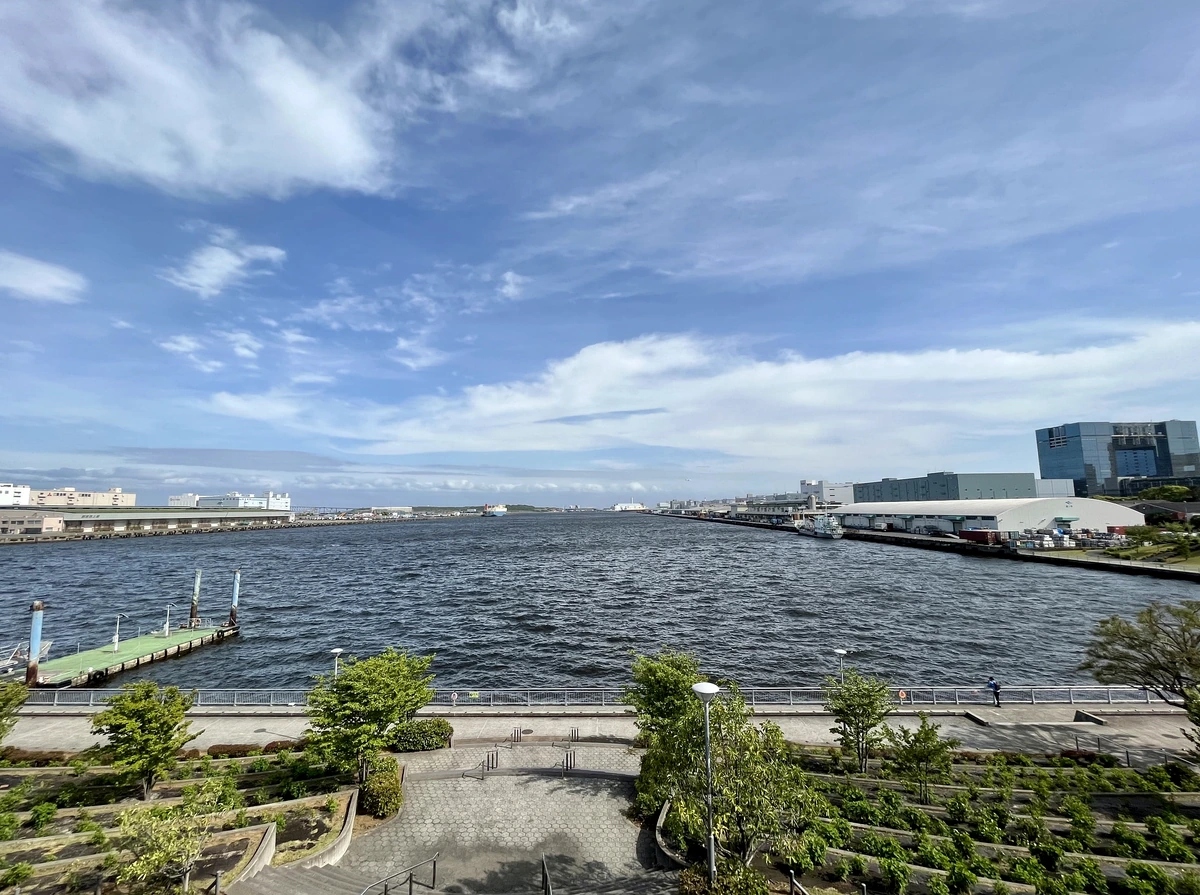
Resting proudly across the waters of Tokyo Bay, the artificial land of Odaiba today presents the look of a sleek, modern waterfront district. Yet few realize that this island’s historical origins trace back to one of the most dramatic political and military turning points in late Edo-period Japan (*Bakumatsu*). In 1853 (Kaei 6), the arrival of the “Black Ships” (*Kurofune*) led by U.S. Navy Commodore Matthew Perry in Uraga Bay broke more than two centuries of Tokugawa seclusion policy. Facing the prospect of Western cannon fire reaching toward Edo, the shogunate went on high alert and urgently sought coastal defenses for the Kanto shoreline.
Under intense pressure, Senior Councillor (*Roju*) Abe Masahiro made a pivotal decision by entrusting coastal defense duties to Okubo Tadahiro and Edo Bay defense commissioner Egawa Hidetatsu. A noted military reformer and artillery specialist of his era, Egawa Hidetatsu outlined an ambitious sea-defense plan: building a chain of eleven artificial artillery islands (*daiba*) of earth and stone stretching east to west off Shinagawa. Each battery was planned as a fortified pentagonal or quadrilateral platform equipped with heavy guns to form a layered defense line guarding the approach to Edo.
Although eleven batteries were originally planned, financial constraints, tight timelines, and the rapid decline of the shogunate meant only six were started, and ultimately only Battery No. 3 (*Daisan Daiba*) and Battery No. 6 (*Dairoku Daiba*) were completed to contemporary defense standards. The name “Odaiba” also emerged during this period, adding the honorific prefix *O-* to *Daiba* out of respect for batteries commissioned and funded by the Tokugawa shogunate. Those stone-revetted embankments reaching into the bay reflect both Japanese engineering skill and the internal tensions of a society standing on the threshold of major historical change.
Moving through the Meiji, Taisho, and early Showa eras, advances in modern military and naval technology gradually made stone-and-earth batteries obsolete for coastal warfare, and the *daiba* faded from strategic prominence amid industrial growth. In the late 1980s, however, the Tokyo Metropolitan Government launched a major redevelopment vision known as the Tokyo Waterfront Subcenter (*Tokyo Rinkai Fukutoshin*)—a long-term urban plan transforming waterfront space and historic batteries into a commercial, cultural, and leisure hub.
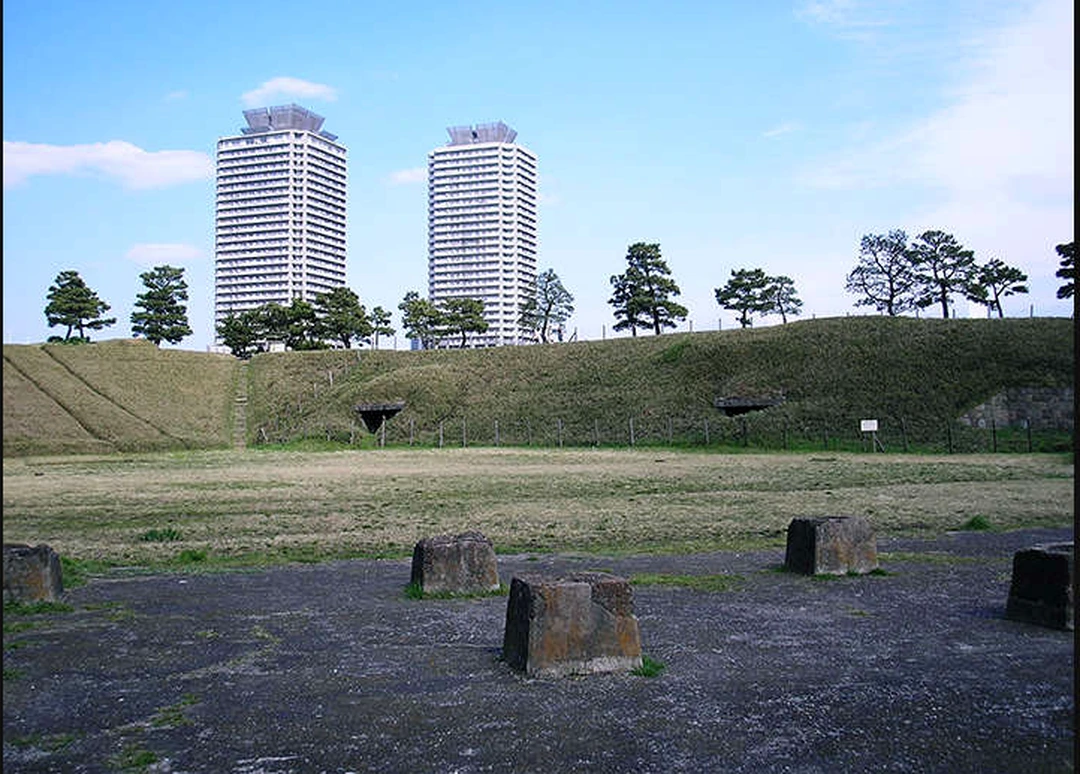
A key milestone arrived in 1996 (Heisei 8) when Odaiba Marine Park (*Odaiba Kaihin Koen*) opened to the public. Opening the park created a coastal recreation space for Tokyo residents while completing a striking shift in how the site was used: turning a former coastal defense site into a public park and waterfront destination. Today Battery No. 3 forms part of the heritage park beside a sandy cove, while Battery No. 6 remains preserved in a natural, restricted state. Moss-touched stones set beside modern architecture quietly recall Odaiba’s past as past and present meet.
From a traditional feng shui and coastal-geography standpoint, Odaiba Marine Park sits along the inner shores of Tokyo Bay. In classical feng shui terms, coastal terrain along the bay opens toward water while sheltered to the north by broader Kanto highlands and mountain ridges, with offshore batteries once conceived as protective barriers guarding the approach toward Edo. Whether viewed through historical defense strategy or traditional landscape ideas, the site sits at a prominent spot linking bay waters with urban Tokyo.
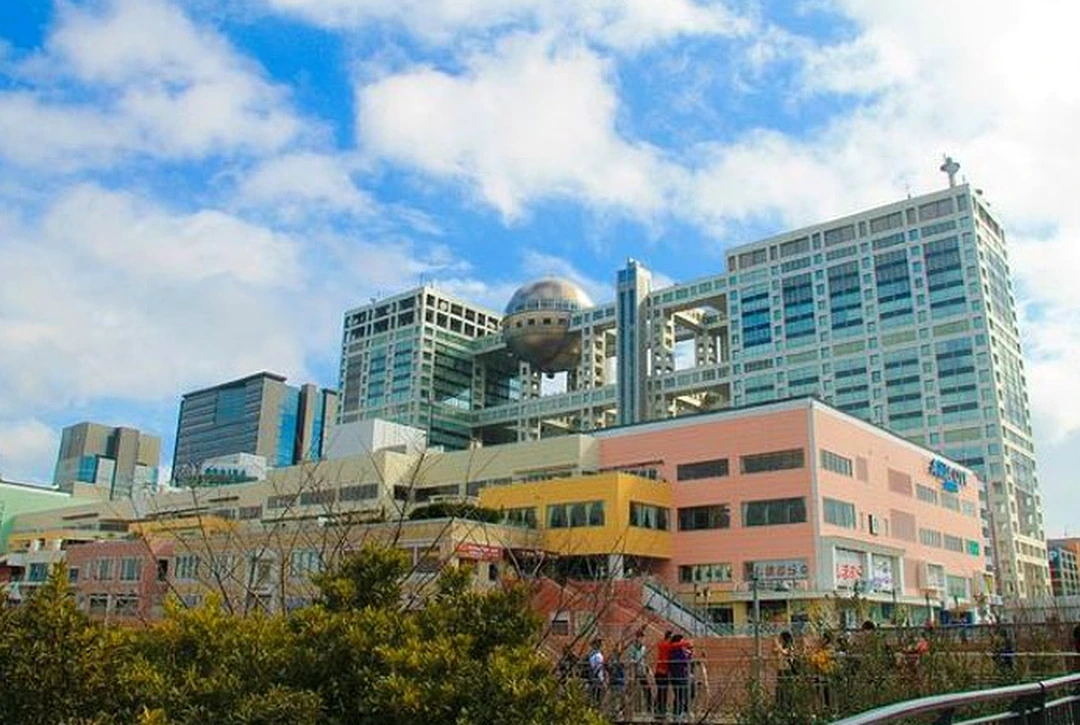
In the modern era, transforming a coastal defense site into a public waterfront park showcases Japanese coastal engineering. The park features an artificial sandy beach right within busy Tokyo. To build hundreds of meters of fine sand shoreline, coastal engineers brought in sand sourced and graded from regions such as the Izu Peninsula and Izu Oshima, shaping a sheltered cove curve that blends modern waterfront design with a gentle shoreline arc.
Behind calm-looking water in the park lies thoughtful coastal wave management. To reduce wave energy from bay chop and wakes generated by vessels along busy Tokyo Bay shipping lanes, engineers placed submerged breakwaters and groynes (*totsutei*). These structures help dissipate wave action, keep sand in place, and curb erosion, supporting a calm cove environment alongside park amenities and coastal marine life.
Architecturally and historically, Battery No. 3 (*Daisan Daiba*)—designated a National Historic Site of Japan—exemplifies mid-nineteenth-century earthen and stone fortification craft. Its stone embankments (*ishigaki*) combine coursed rectangular stonework (*nunozumi*) and fitted irregular stonework (*ranzumi*). Outer slopes use dry-stacked granite and volcanic andesite blocks without mortar, backed by compacted rammed earth and gravel—helping the structure absorb ground motion and withstand bay waves over time.
Inside Battery No. 3, earthworks and gun emplacements were laid out with clear lines of fire overlooking the bay approach. Remnants of command earthworks and fan-shaped gun platforms (*kazaue*) remain visible, along with semi-subterranean powder magazines topped with vaulted brick-and-stone roofs designed for blast protection and stable interior humidity to store gunpowder. Together, these features preserve tangible mid-nineteenth-century coastal defense engineering.
In modern times, spatial design around Odaiba pairs solid concrete retaining walls with ecological revetments along the shoreline. Alternating engineered edges with gentler coastal slopes helps protect reclaimed land from wave erosion while supporting nearshore habitats and softening the transition between urban waterfronts and bay water.
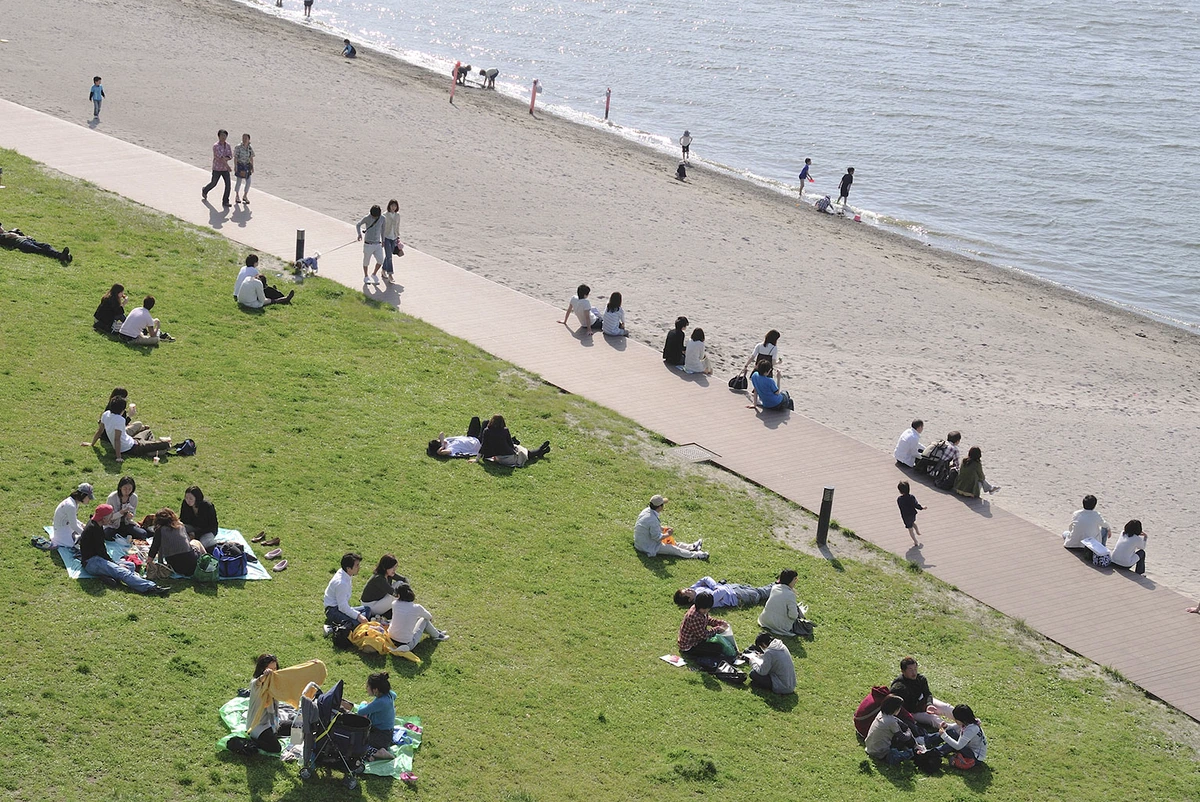
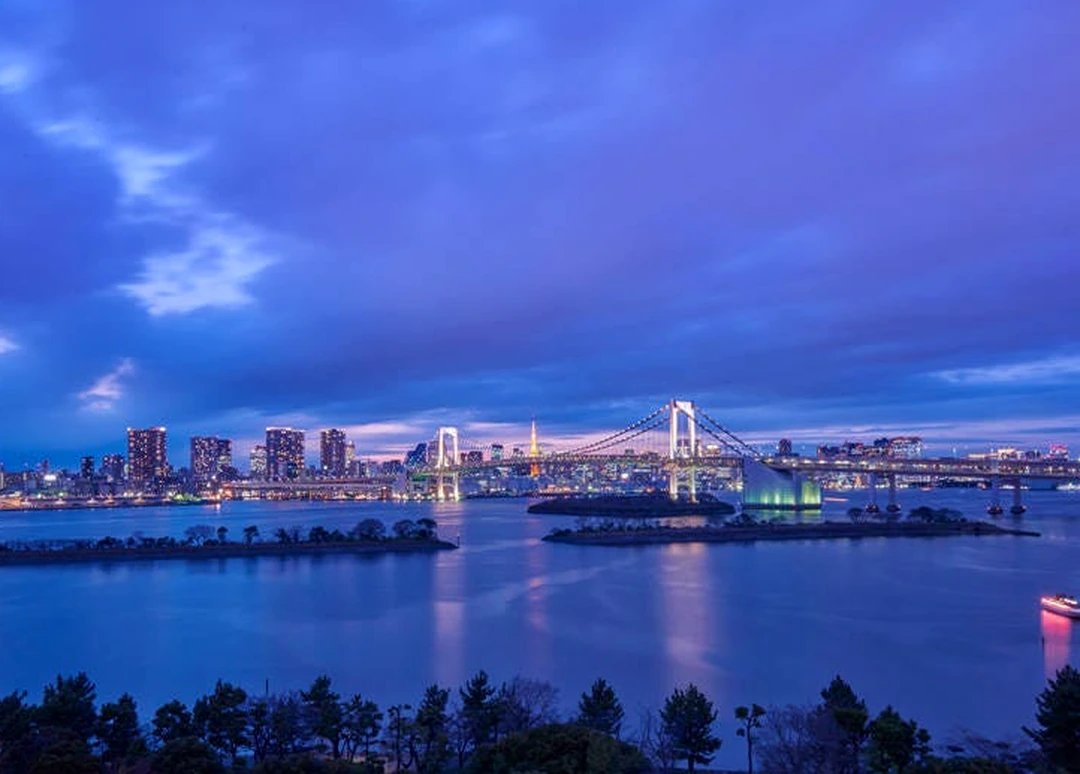
Spanning across the bay to link Odaiba with central Tokyo is the Rainbow Bridge, a notable suspension bridge with anchorage towers. Its tall white steel towers rise above Odaiba’s low waterfront profile, creating a visual contrast where modern bridge engineering frames the bay beside quiet Edo-era stone fortifications.
When dusk settles over Tokyo Bay, Odaiba Marine Park enters a lively evening phase popular for waterfront strolls and skyline views. Former nineteenth-century coastal defense grounds now sit beside modern illumination, shifting from a relaxed daytime park into a bright evening waterfront where water, bridge lights, and city energy meet along wooden boardwalks.
A centerpiece of the night view is the Rainbow Bridge spanning the bay. Computer-controlled LED lighting along cables and towers allows seasonal and holiday color shifts across Japan—soft pink tones in spring, cool blues in summer, warm autumn hues, and crisp white in winter—reflecting across Tokyo Bay water.
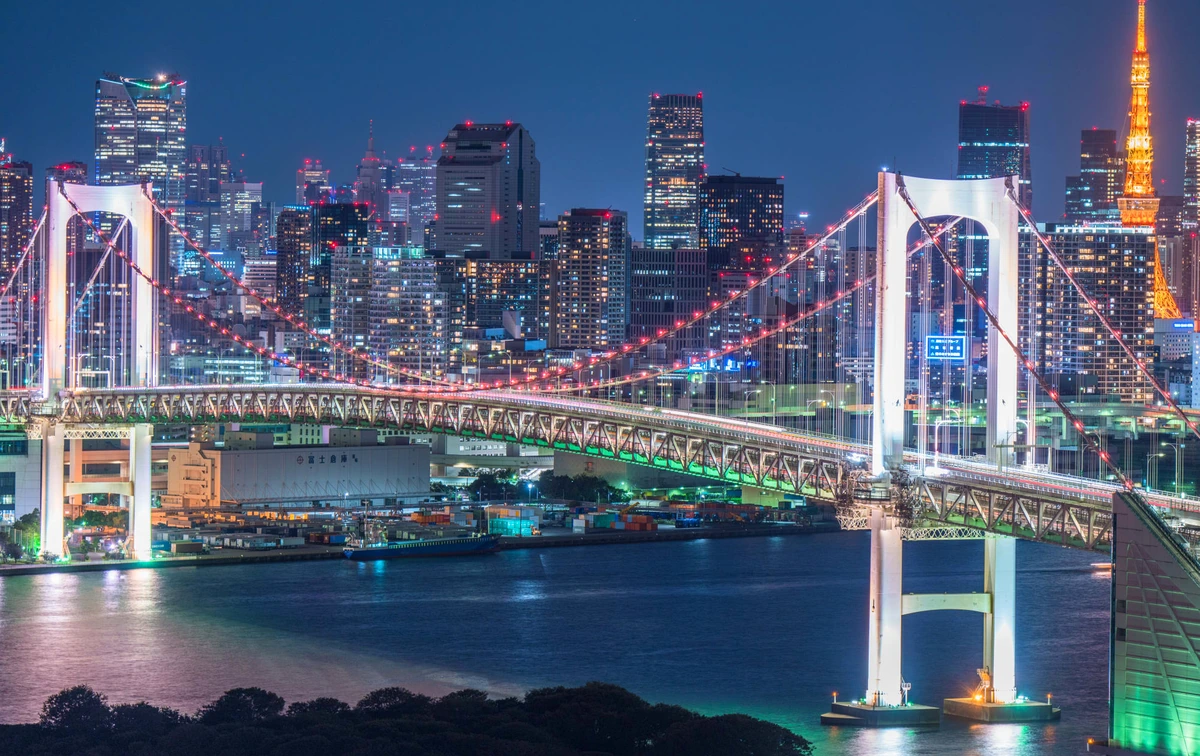
Across the waterfront, Tokyo’s skyline features distinctive buildings such as the Fuji Television headquarters designed by Pritzker Prize-winning architect Kenzo Tange, recognizable by its spherical *Hachitama* observation sphere held within a steel frame. At night, interior office glow and exterior lighting give the structure a futuristic silhouette often compared to sci-fi or anime imagery.
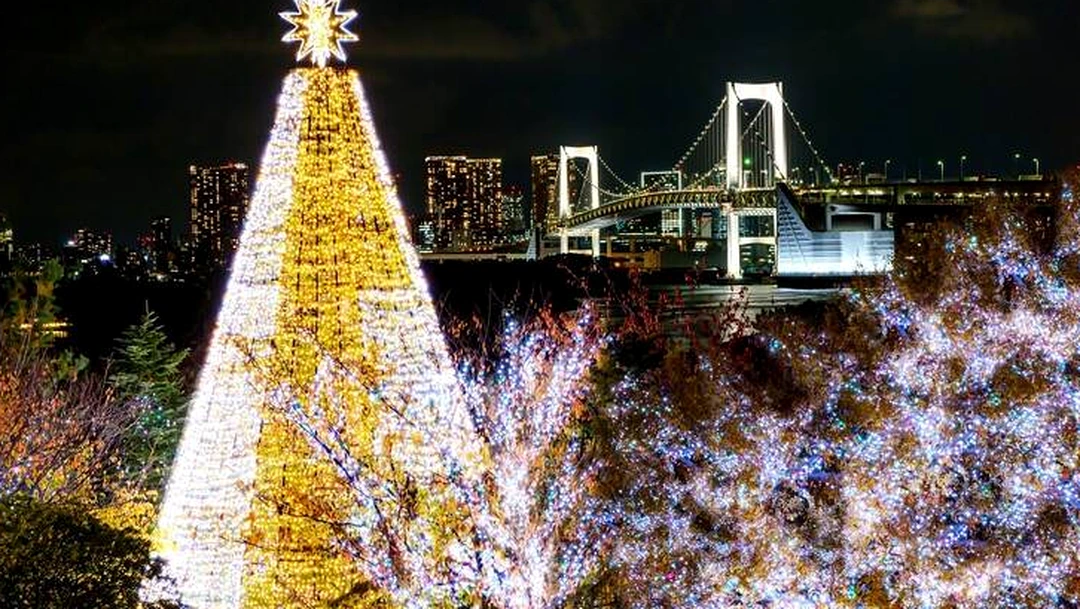
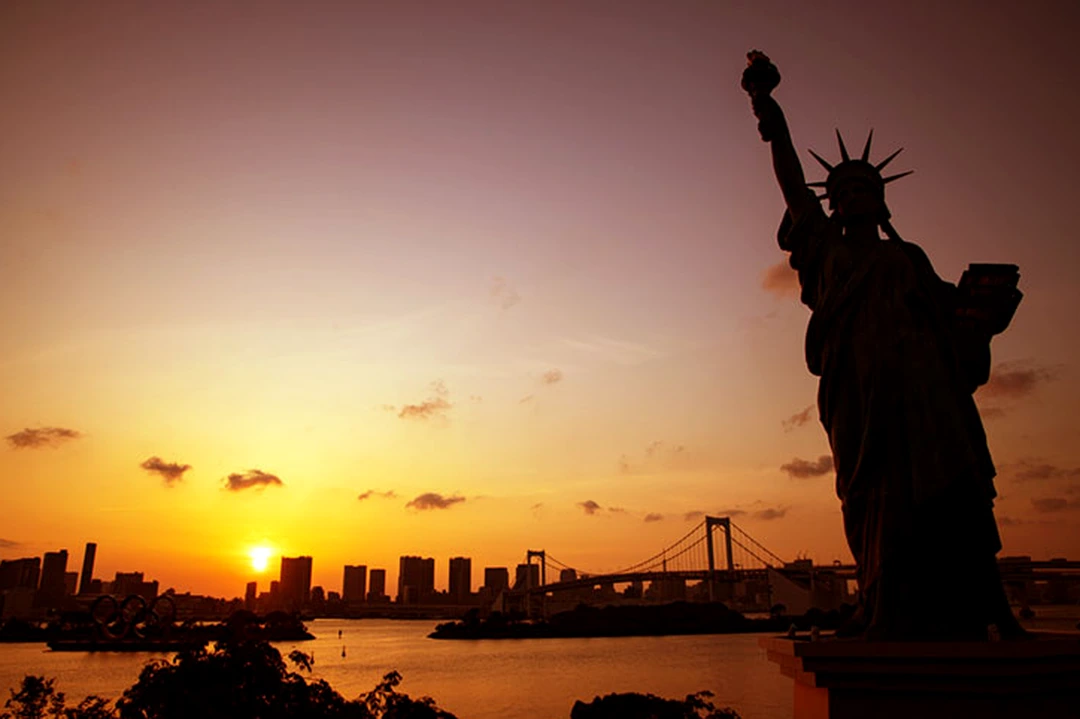
Odaiba evenings also feature seasonal light displays and waterfront activities. Events such as Odaiba Illumination YAKEI showcase illuminated trees and light installations along walkways, alongside projection mapping on commercial facades and views near the replica Statue of Liberty. Occasional seasonal fireworks and waterside dining—where guests enjoy meals while traditional *Yakatabune* boats drift past with lanterns—add to the evening scene.
Dining around Odaiba reflects both modern waterfront convenience and the culinary heritage of Tokyo Bay—historically known as *Edomae*. Drawing on bay and regional ingredients, Odaiba’s restaurants and cafés bring together traditional Japanese flavors and contemporary *Yōshoku* (Western-influenced Japanese) dishes in a relaxed coastal setting.
A classic *Edomae* specialty is *Anago* (sea eel), long prized in traditional dining and sushi counters. Tender simmered sea eel glazed with a savory-sweet sauce made from mirin, soy sauce, and eel trimmings melts easily on the palate, often served over rice or paired with *akazu* (aged red sake-lees vinegar) sushi rice for rich traditional flavor.
Another longtime bay classic is *Fukagawa Meshi* (Fukagawa clam rice). Rooted in Edo-era Tokyo Bay fishing communities, this hearty dish pairs fresh clams and scallions simmered in a savory miso broth over steamed rice—or cooked together with rice—offering a comforting taste tied to the bay’s maritime past.

Along breezy wooden boardwalks, casual terraces and *Yōshoku* cafés offer modern bites suited to waterfront dining. Sipping a craft beer such as Hitachino Nest—known for its owl emblem and balanced hop-and-malt notes—pairs easily with grilled Kuroge Wagyu beef burgers or fresh oysters in the open air.
As night settles over Odaiba Bay, waterfront dining gains extra atmosphere from Rainbow Bridge lights reflecting on the water, making an evening meal or drink a pleasant way to take in the contrast between historic roots and modern Tokyo.
Practical details help make a visit to Odaiba smooth. Odaiba Marine Park is open 24 hours with no admission fee for strolling the waterfront, while the historic Battery No. 3 (*Dai-San Daiba*) site is viewed from designated paths and shoreline areas to protect its remains. Surrounding shopping malls, entertainment complexes, and restaurants generally operate around 10:00 AM to 8:00 PM (with some dining spots open later), and observation decks in the area typically charge around ¥700 to ¥1,000 per admission.
Getting to Odaiba is easy via multiple transit options. The elevated automated Yurikamome line runs to Odaiba-kaihinkoen Station, about a 3-minute walk from the beach; sitting near the front of the train offers wide views across the bay and Rainbow Bridge. Visitors can also take the Rinkai Line to Tokyo Teleport Station or ride a Tokyo Water Bus (ferry) for a relaxed approach across the water.
A popular “3-hour golden window” starts about 90 minutes before sunset along the waterfront so you can catch late-afternoon light, walk past the replica Statue of Liberty and view Battery No. 3 across the cove, and stay into dusk as Rainbow Bridge and city lights illuminate the bay before dinner at a waterside spot.
Because Odaiba juts into the bay, coastal breezes can be brisk year-round, so packing a windproof jacket, scarf, and sunglasses is helpful. Night photographers may want a sturdy tripod and wide lens for skyline shots, and everyone should follow park rules by keeping litter out of the park and avoiding unauthorized fires. To plan a trip combining historic sights and modern Tokyo, you can also explore all-inclusive Japan tour packages.