Stretching along the eastern shore of vast Erhai Lake, present-day Haidong Town once formed a vital territory bound closely to the seat of power of the illustrious Dali Kingdom between 937 and 1253. Under the rule of the Duan royal clan and the indigenous Bai people, this lakeside region witnessed the flourishing of Esoteric Buddhism and bustling wharves linking trade routes along the Ancient Tea Horse Road. Framed by the poetic scenery celebrated for centuries as “Wind, Flower, Snow, and Moon,” this landscape preserves an unbroken cultural lineage in which every rhythm of local life intertwines intimately with the sacred waters of Erhai Lake and the towering silhouettes of the Cangshan Mountains.
 n n
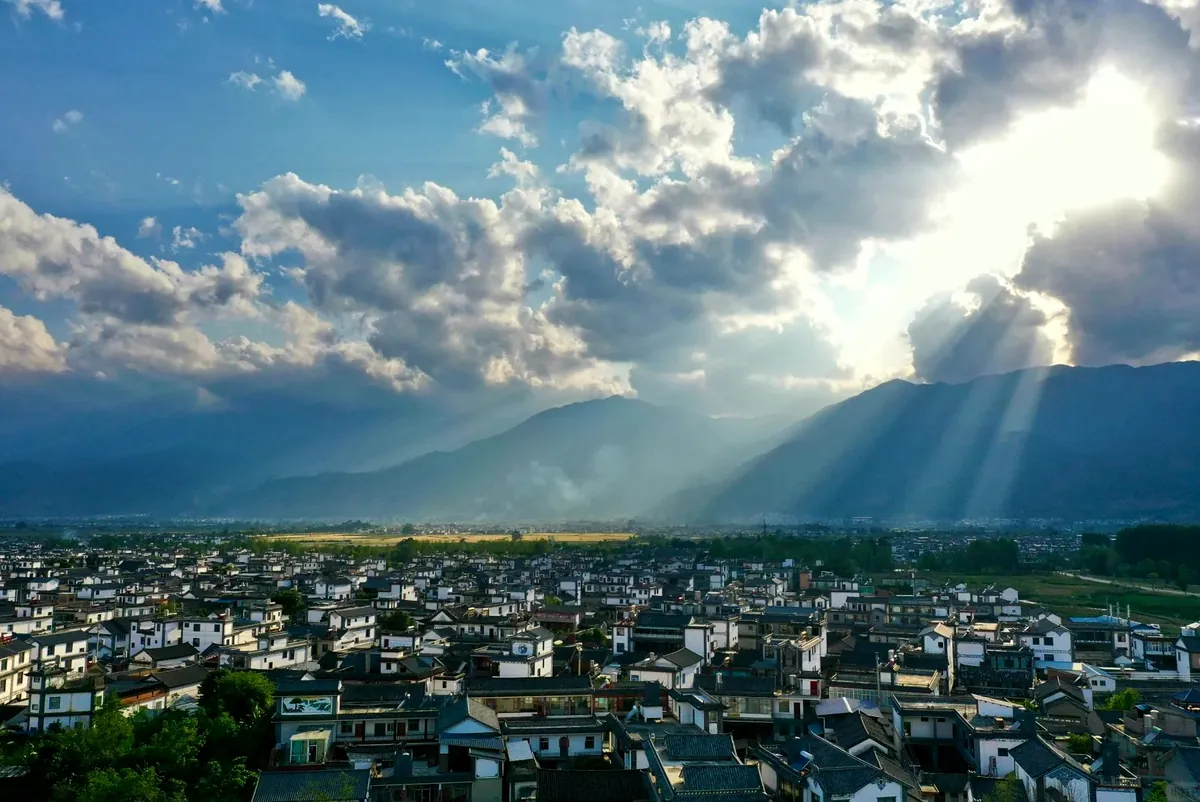
Viewed from above, the historic townscape unfolds in quiet dignity with traditional gray-tiled roofs clustered closely together, echoing classic Bai “three courtyards and one screen wall” architecture through finely upturned eaves. Behind these moss-dappled rooftops rises the natural rampart of the Cangshan Mountains, standing tall and majestic against a deep azure sky. Brilliant shafts of early morning sunlight pierce drifting layers of thin cloud, scattering golden ribbons across the town to create a sublime harmony between time-honored architecture and sweeping natural grandeur.
Even so, the celebrated resort destination known as “Santorini Overlooking Erhai Lake”—officially named Dali Ideal Land (Dali Lixiangbang)—is not an ancient archaeological relic handed down from feudal dynasties. Rather, it is a large-scale master-planned tourism and resort development that officially broke ground in 2015 in Haidong Town. The birth of this architectural complex is inextricably linked to a pivotal modern turning point vital to the survival of the entire Dali Basin: the intensive ecological conservation campaign for Erhai Lake carried out between 2017 and 2018.
At that time, an explosive surge in tourism had spurred thousands of unregulated guesthouses and homestays along the western and northern shores of the lake, generating severe wastewater pressure that directly threatened the sacred waters cherished by the Bai people. To rescue the lake’s fragile ecosystem, local authorities launched a sweeping inspection, closing and clearing numerous properties encroaching on the water protection zone. Out of that ecological crisis emerged a comprehensive spatial tourism strategy—replacing fragmented, piecemeal development with high-end, master-planned resort complexes along the eastern shore, anchored on steep limestone hills and equipped with fully closed-loop wastewater treatment infrastructure.
Designed to follow the natural terraced contours of Erhai Lake’s eastern hillside, Ideal Land channels Mediterranean coastal inspiration while bowing respectfully to the natural setting and historical depth of the ancient capital. Every stone slab, winding stepped pathway, and high-tech water-reclamation system stands as living proof of cultural continuity: the very shoreline that once sheltered Dali Kingdom royalty now shines as a new emblem of sustainable eco-tourism, inviting travelers to listen to millennial waves and watch sunset dye the Cangshan peaks crimson.
Leaning gracefully into the gentle limestone slopes of the Haidong Peninsula, Ideal Land commands a rare geomantic position in classical East Asian feng shui—backed solidly by rolling hills while opening onto sweeping views across vast Erhai Lake. From above, the hillside enclave unfolds like an exquisite landscape painting weaving emerald-blue lake waters with layered traditional Yunnan pitched-roof architecture. Beyond those tranquil roofs, the Cangshan Mountains soar skyward, framing the horizon beneath radiant sunbeams piercing drifting clouds in a surreal meeting of serene human craft and untamed natural majesty.
This classic “backed by mountains, facing water” topography not only signifies auspicious energy accumulation in feng shui, but also dictated the site’s ingenious terraced spatial design. Rather than blasting mountainsides or flattening hills, architects worked harmoniously with the natural slope, arranging buildings in staggered, stepped tiers. Each terrace occupies its own distinct elevation so rear rows never lose their sightlines, opening uninterrupted infinity views across more than 250 square kilometers of open water. Natural rock outcrops, exposed springs, and drought-tolerant flora native to the western Yunnan plateau were carefully preserved along winding stone pathways, cultivating a refreshingly cool microclimate year-round.
Across the regional geography of the basin, Ideal Land serves as a vital scenic link along the 120-kilometer Erhai Lake Loop tourist corridor. This celebrated ring road runs from the stately Ancient City of Dali on the western shore northward past the fertile fields of Xizhou, curves through the thousand-year-old fishing village of Shuanglang, and reaches the dramatic rocky headlands of the eastern coast. Positioned directly along Haidong Road, the resort connects travelers seamlessly with over a millennium of Nanzhao and Dali Kingdom heritage—fusing local historical memory with contemporary resort architecture.
Nature’s greatest gift to this hillside vantage point is front-row access to Dali’s legendary “Wind, Flower, Snow, and Moon” scenery. Facing directly west across the eastern shore, Ideal Land serves as an ideal observatory for admiring year-round snow blanketing the nineteen towering peaks of Cangshan above 4,000 meters. At dusk, fiery sunset hues paint tranquil Erhai Lake crimson, mirroring drifting clouds and illuminating crisp white walls in a visual spectacle few places in Yunnan can rival.
Perched on the eastern hillside of Haidong Town directly opposite the majestic Cangshan range across the glassy expanse of Erhai Lake, Ideal Land rises as a modern architectural triumph blending Western coastal aesthetics with western Yunnan terroir. What appeared at first glance to be a stark, steep limestone slope ill-suited for large-scale construction became the very inspiration for its dramatic stepped geometry. Following natural contour lines, the entire complex mirrors the tiered village planning of Thira in the Cyclades islands of the Aegean Sea: dozens of sturdy structures cascade down the cliffside, each upper tier rising gracefully above the one below like a waterfall of snow-white stone spilling toward the sapphire lake.
n nIdeal Land’s visual vocabulary stays faithful to Mediterranean minimalism, with luminous white dominating the palette. Exterior walls are finished in textured, hand-troweled plaster that reflects intense plateau sunlight at nearly 2,000 meters elevation while absorbing warm golden hues at sunset. Thick masonry walls open into semicircular arches, softly rounded porthole windows, and dramatic open-air staircases weaving upward like an endless labyrinth in the sky. Every corridor, balcony, and archway is proportioned as a natural picture frame enclosing snow-dusted Cangshan peaks and deep blue Erhai waters—stripping away ornate clutter to let light, shadow, and open space speak for themselves.
Bringing a luxury resort to life on rugged limestone cliffs required investment far exceeding conventional benchmarks, reaching billions of RMB across coordinated phases. The complex is thoughtfully organized into dedicated zones—cliffside boutique hotels, international fine-dining restaurants, open-air cafes, and infinity pools designed like seamless water mirrors merging lake and sky. Most noteworthy is its state-of-the-art subterranean environmental infrastructure meeting Yunnan Province’s strictest ecological standards. To safeguard the pristine water quality of Erhai Lake—the ancestral lifeblood of Bai culture—the entire property relies on a fully enclosed, multi-stage underground wastewater collection and purification network that treats all water thoroughly before release, turning a large-scale resort into a self-sustaining model of eco-conscious development.
Every architectural detail is curated to elevate photography, turning the entire hillside village into a multi-dimensional open-air studio. Smooth stone-paved slopes, sun-drenched white walls, and still reflecting pools mirroring Yunnan’s expansive skies have made the destination a visual sensation, generating over 200 million searches and posts on lifestyle platform Xiaohongshu. Combining disciplined investment with refined aesthetics, Ideal Land stands as a contemporary architectural icon amid ancient Nanzhao scenery—offering travelers both the breezy romance of southern Europe and the timeless serenity of Yunnan’s mountains and lakes.
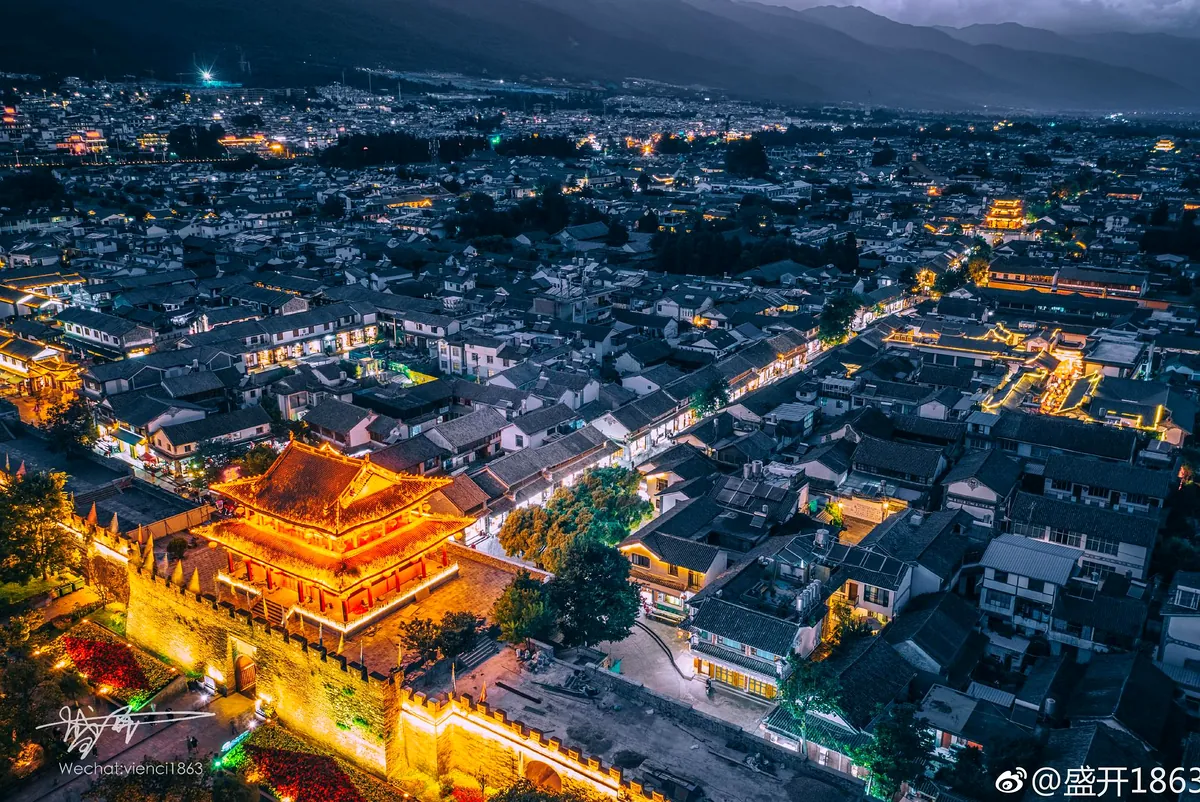
As sunset sinks behind the towering Cangshan range and deep indigo twilight settles over Erhai Lake, Ideal Land sheds its lively daytime bustle to reveal an entirely different persona. Terraced structures clinging to the limestone hillside enter an enchanting visual transformation where contemporary architectural lighting meets a millennium of Nanzhao natural stillness. Far more than a daytime photo spot bathed in highland sunshine, the village becomes a serene, majestic living stage where darkness never dims the landscape—instead sculpting every arch and curve through shadow and artistic illumination.
Once night falls completely, the Mediterranean-inspired complex along Erhai Lake glows under subtle indirect lighting that traces every curved dome and layered ivory wall cascading down the rocky slope. Warm 2700K golden light spills through arched windows across the still surfaces of infinity pools and shimmers across Erhai Lake like a miniature Milky Way fallen to earth. The captivating contrast between deep highland indigo skies and soft ambient light from viewing terraces turns the entire hillside into a monumental light sculpture anchored beside Dali’s waters.
Lighting design throughout the resort adheres strictly to international dark-sky conservation principles, minimizing light pollution to protect Erhai Lake’s native aquatic ecosystem. Architects concealed recessed LED strips neatly along winding stairways and basalt stone walkways, providing gentle wayfinding without harsh glare. Rather than staging flashy commercial laser shows, the resort lets the natural interplay of drifting clouds, moonlight, stars, and rippling water serve as its own “living performance.” Lake breezes whistling through stone crevices, rhythmic waves lapping against seawalls, and silvery moonlight filtering through thin mist compose an unforgettable natural theater that revives the classical poetry celebrating “Erhai Moon” centuries ago.
After dusk, life at Ideal Land shifts gracefully from sightseeing toward wellness, healing, and physical and mental renewal. On open sky terraces and secluded lake-facing loggias, specially curated sunset yoga and moonlit meditation sessions invite travelers to unwind completely in pure natural silence. Classical tea culture provides another unforgettable highlight, as local tea masters showcase Yunnan’s famed Pu-erh tea alongside the Bai people’s traditional Three-Course Tea ceremony—moving from bitter first infusion to sweet second cup and rich, lingering aftertaste to bring the mind into calm harmony with mist-veiled lake vistas.
Late evenings on the Erhai hillside unlock intimate, refined indulgence. Cave-style wine bars carved directly into natural rock serve vintages fermented from grapes grown at over a thousand meters in the Hengduan Mountains, accompanied by gentle guzheng zither melodies or soft chamber music. Guests can lean over glass balconies watching distant lanterns flicker on traditional wooden fishing boats while breathing crisp southwestern plateau air. This seamless union of luxury hospitality and holistic wellness elevates Ideal Land beyond a visual landmark into a premier sanctuary for travelers seeking peace and renewal.
Commanding sweeping hillside views over Erhai Lake, dining at Ideal Land stages a refined dialogue between local Yunnan flavors and contemporary culinary aesthetics. Beneath graceful whitewashed Mediterranean arches, dining terraces open onto panoramic vistas where snow-capped Cangshan peaks mirror themselves in deep blue waters. Local gastronomy distills the vibrant intersection of Bai culinary traditions with abundant natural ingredients harvested above 2,000 meters, creating a tasting journey at once rooted in rustic heritage and elevated to luxury standards.
Outdoor tables sit poised along curving cliffside railings where late afternoon sun gilds the lake and cool breezes rustle vibrant bougainvillea. Anchoring the spread is a steaming rustic earthenware soup pot surrounded by dozens of celadon dishes arranged with artistry: gossamer-thin slices of fresh lake fish, tender wild mountain mushrooms just foraged from high forests, and fragrant edible rose petals. Seated in the open air inhaling the delicate aroma of golden chicken broth awakens every sense in pure harmony with nature.
 n n
When speaking of classic Yunnan flavors, Crossing-the-Bridge Rice Noodles stands as a monumental heirloom culinary ritual. Broth is simmered patiently for over ten hours from mature hen, pork marrow bones, and prized Xuanwei ham, sealed beneath a shimmering layer of pure goose fat that acts as an invisible lid trapping rolling heat below. Diners add cold-cut meats, fresh fish slices, quail eggs, and aromatic herbs sequentially into the steaming earthenware bowl; within moments, every ingredient cooks to tender sweetness and melds with chewy hand-crafted rice noodles for an unforgettable symphony of flavor.
Alongside famous rice noodles, Cangshan Wild Mushroom Chicken Hotpot showcases the pure bounty of highland forests. When seasonal rains nourish old-growth woodlands, local foragers gather prized delicacies including matsutake, porcini (niuganjun), and chicken-of-the-woods mushrooms. Firm free-range mountain chicken slow-simmered in clay pots with fresh wild mushrooms releases deep natural umami without a trace of artificial seasoning—warming travelers from the inside out in Dali’s crisp plateau air.
Adding a delicate floral accent to the culinary map is Yunnan’s celebrated rose flower cake—a historic imperial tribute pastry capturing the essence of spring. Thick, fragrant crimson rose petals harvested at dawn before morning dew evaporates are cured using heirloom methods to preserve their vivid pigment and natural essential oils. Baked inside golden, flaky thousand-layer pastry, the tender floral filling offers a clean, gentle sweetness—sublime when paired with aged Pu-erh tea or Bai Three-Course Tea for a moment of pure serenity.
To uphold resort standards, all dining venues here operate under an integrated Smart Tourism Card system. This digital platform lets guests verify organic farm provenance, food-safety certifications, and real-time posted pricing with ease. Thoughtful technology enhances rather than diminishes local warmth, guaranteeing transparent quality and peace of mind throughout your culinary journey.
A visit to Ideal Land along Erhai Lake’s eastern shore reaches its fullest reward when timed to the seasonal rhythms of the Yunnan plateau. Sitting roughly 1,970 meters above sea level in a mild semi-arid subtropical monsoon climate, Dali is famed for its four poetic elements: Xiaguan wind, Shangguan flowers, Cangshan snow, and Erhai moon. The golden windows to admire Mediterranean-inspired white architecture framed by ancient mountain-and-lake scenery fall between March and May—when cherry blossoms and azaleas bloom under gentle spring skies—and from September through November, when crisp autumn skies and mirror-still lake waters reflect cloudless blue horizons with minimal rainfall and unobstructed views of snow-capped Cangshan peaks.
China’s modern transport network makes reaching Dali effortless for travelers from afar. From Kunming South Station, Fuxing high-speed bullet trains glide smoothly across more than 300 kilometers of mountain terrain to arrive at Dali Station in under two hours. By air, Dali Fengyi Airport lies just a 15-minute drive from the resort. Following winding East Erhai Avenue right along the water’s edge, Ideal Land rises like a monumental hillside sculpture. Public exterior walkways and scenic viewpoints welcome visitors freely throughout the day for strolling and photography, while dedicated security personnel guard private hotel wings to preserve tranquility for overnight guests.
To enjoy sunset gilding the whitewashed cliffside terraces from your own balcony, plan accommodations well ahead. Cliffside rooms overlooking Erhai Lake book out rapidly, so reserving at least thirty days in advance is strongly recommended—especially during public holidays and peak autumn months. Thoughtful personal preparation is equally important: while 2,000 meters rarely triggers severe altitude sickness, intense highland UV radiation calls for broad-spectrum sunscreen, sunglasses, and a wide-brimmed hat. Day-to-night temperature swings often exceed ten degrees Celsius, making a warm jacket essential once evening lake breezes pick up. Between walks, pause at cozy cafes to experience Bai Three-Course Tea (“first bitter, second sweet, third lingering aftertaste”) or herb-grilled local lake fish.
Regarding entry formalities, international travelers should obtain a standard tourist visa or join an authorized group visa list prior to departure. Most importantly, discerning travelers should steer clear of suspiciously cheap bargain tours that slash precious sightseeing hours to herd guests into high-pressure jade, Bai silver, or herbal medicine shopping traps. Today’s enlightened travelers favor pure, zero-shopping itineraries that leave unhurried time to sip coffee by the cliffside while watching Siberian seagulls wheel over sapphire waters.
The captivating blend of Santorini-inspired domed architecture and a thousand years of ancient Nanzhao cultural depth makes Ideal Land an irresistible destination. To transform your trip into an effortlessly smooth journey—from visa arrangements and premium private transfers to authentic resort stays—consider booking a thoughtfully curated all-inclusive Dali tour package designed with deep cultural care.
 n n