In the cultural consciousness of the indigenous Naxi community, the familiar name “Yun Shan Ping” is actually a folk phonetic variant of the official placename Yunshanping (云杉坪). Every Chinese character here carries profound layers of ecological knowledge: the character “Yun” (云) evokes the misty boundary of white clouds in Yunnan, the character “Sam” (杉) represents the boundless Lijiang spruce (Picea likiangensis), and the character “Ping” (坪) depicts a plateau valley as flat as a jade-green carpet hidden amidst the great mountains. In ancient traditions, the Naxi people called this place Wuwuluoke (吾鲁罗克) or Youwuge (游午阁), and also extolled it as the Valley of Brocade (锦绣谷). Located directly in front of the precipitous northeast cliff of the 5,596-meter Shanzidou peak—the perpetually snow-capped main ridge revered as the embodiment of the war god Sanduo, the supreme deity riding a white horse and wearing silver armor to protect the land—Yunshanping stands majestically like a natural sacrificial altar connecting the mortal world with the sacred Dongba realm.
Tracing back through the chronicles, from the Tang and Song dynasties (8th to 13th centuries), when the Nanzhao and Dali kingdoms successively enfeoffed Jade Dragon Snow Mountain as the majestic Northern Peak guarding the south, this silent plateau was established by the chieftains of the Moso tribes as a forbidden and inviolable sanctuary, strictly prohibiting hunting and logging. In 1253, after the Mongol cavalry under Kublai Khan pacified Dali and laid the foundation for the lineage of the Mu Tusi (Mu Prefecture), Yunshanping continued to hold its strategic position both as a source of precious spiritual timber and as the spiritual holy land of the indigenous royalty. In the Earth-Rabbit year (1639), the renowned geographer Xu Xiake set foot here during his expedition to the southwest and recorded in his masterpiece “The Travel Diaries of Xu Xiake” the image of a majestic jade-green plateau hidden amidst a vast sea of frosted trees.
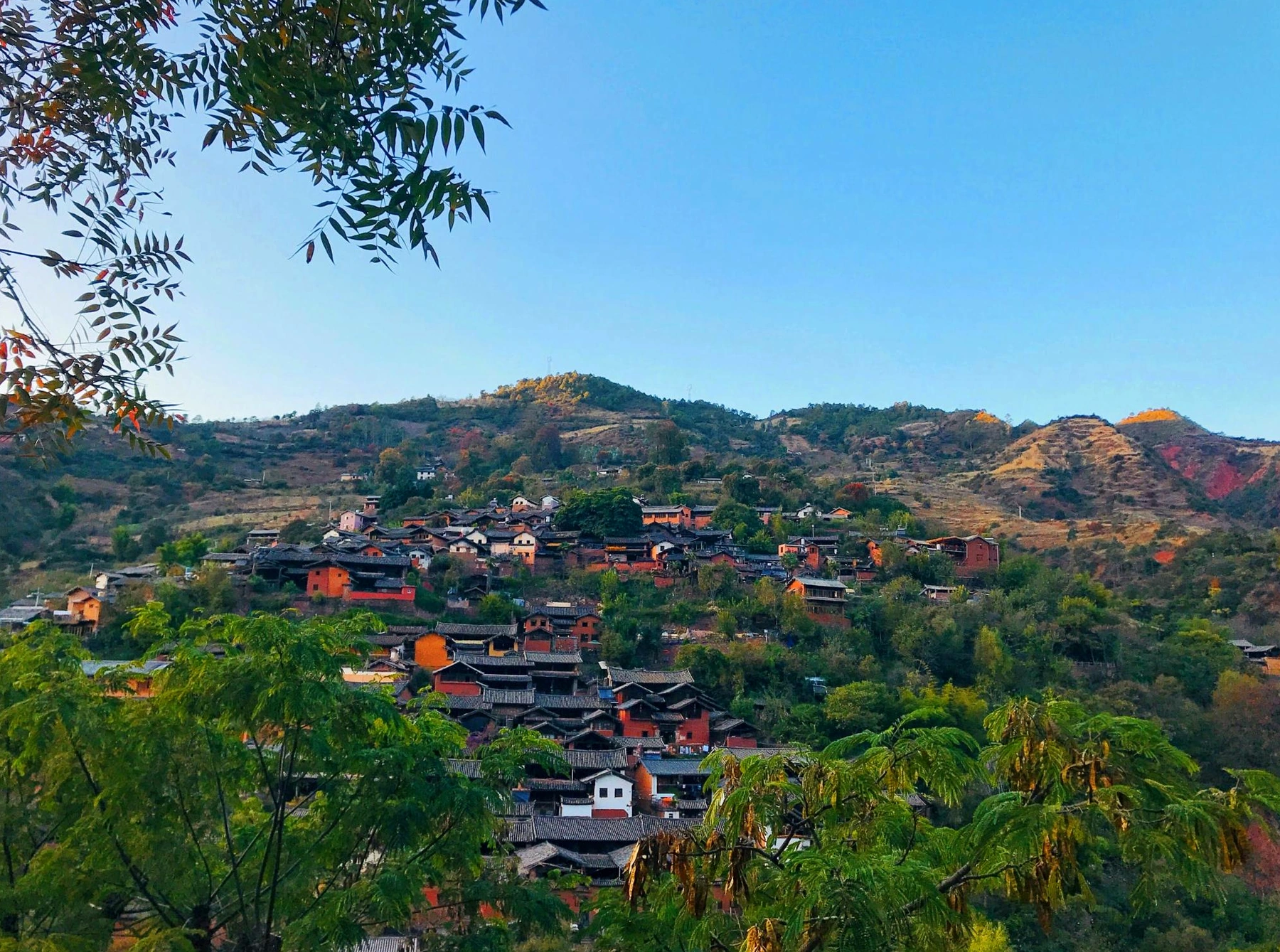
From the trails leading up to the alpine meadow, visitors’ eyes are often greeted by the breathtaking scenery of traditional Naxi villages nestled against the mountains. These ancient houses with their deep-black split-shingle roofs exude a quiet solemnity, contrasting strikingly with the warm orange-red plastered walls, creating a tiered architectural structure that winds gracefully along the green hillside. In the foreground, lush green foliage gently sways, partially obscuring the rustic living spaces, while the background opens up to majestic, rolling mountain ranges stretching across a crystal-blue sky, vividly portraying the indigenous generations’ close-knit community life intertwined with nature at the foot of the snow-capped range.
The tragic historical turning point enveloping Yunshanping began in the first year of Yongzheng (1723), when the Manchu imperial court implemented the “Tugui Liuliu” policy (replacing native chieftains with appointed officials), abolishing the hereditary privileges of the Mu family Tusi and imposing strict Confucian ideology onto local life. The intense conflict between this new feudal patriarchal framework and the tradition of free love inherited from the Naxi people’s millennia-old matriarchal remnants turned this meadow into a “Sacred Land of Lovers’ Suicides” (殉情之地). Rooted in the legend of the steadfast maiden Kaimai and the young man Youlebai, who held hands and leaped into the void to protest forced marriage, hundreds of young couples across generations have journeyed here to perform the tragic ritual of taking their own lives. Believing that their souls would shed worldly shackles and ride red deer together to the “Jade Dragon Third Country” (玉龙第三国)—an eternal realm free from oppression, illness, or separation—they transformed this tranquil land into an immortal, epic testament to the yearning for freedom.
Impressively present at elevations ranging from 3,200m to 3,240m above sea level, Yunshanping (known in Chinese characters as 云杉坪 – meaning Spruce Meadow) resembles a magical jade-green silk ribbon stretching out to rest against the eastern slope of the majestic Jade Dragon Snow Mountain within the territory of Lijiang, Yunnan province. Under the natural geo-feng shui perspective of indigenous Naxi elders, this plateau is likened to a precious pearl hidden within the heart of a giant dragon, fully inheriting the purest vital energy of the millennium-old snow mountain. The terrain here opens up a remarkably gentle and flat plot of land amidst rugged and treacherous mountains, creating an auspicious “mingtang” that gathers water and shelters from the wind, completely isolated from the fierce steepness of the surrounding rock faces and deep chasms.
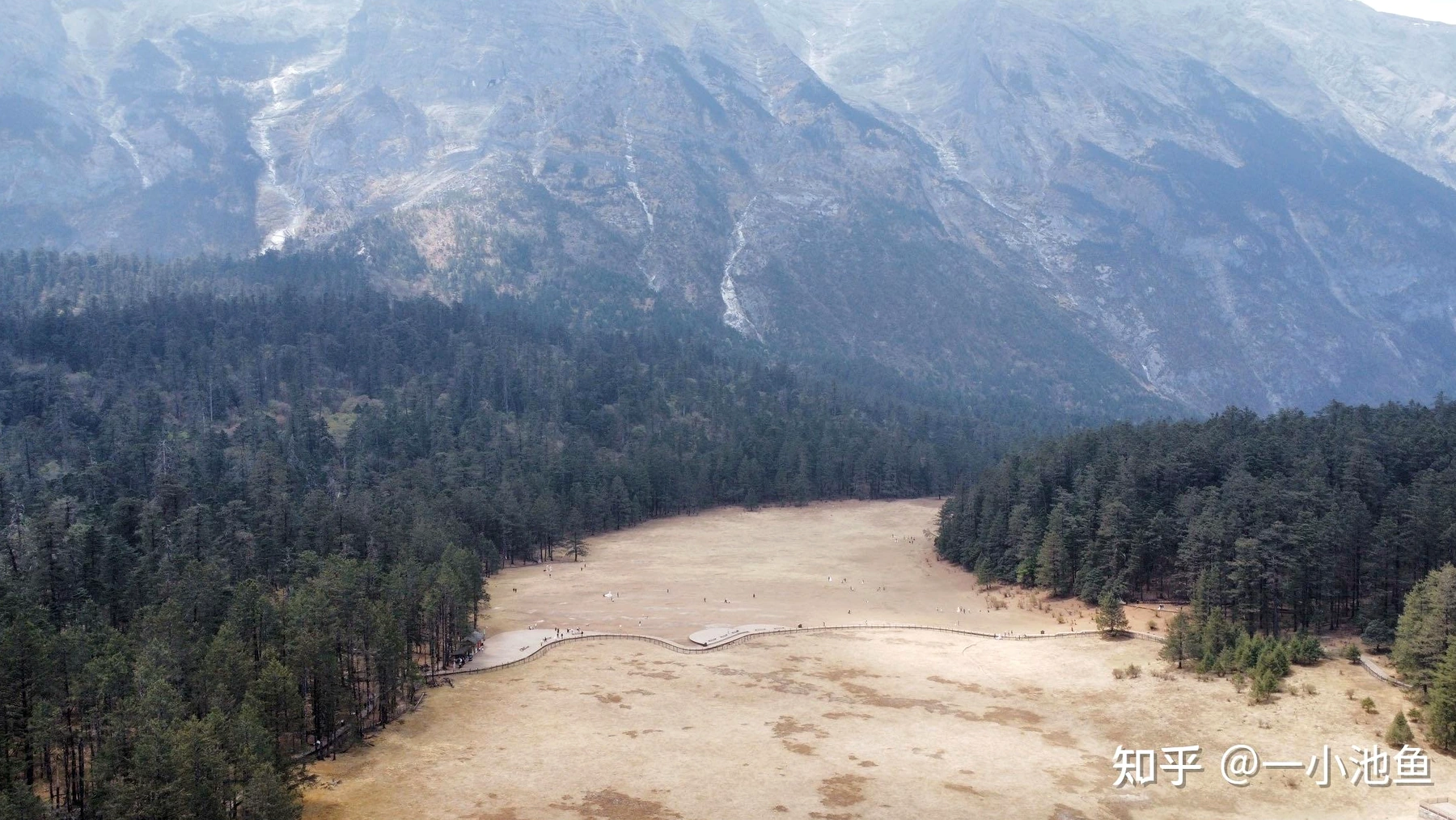
In terms of ecological terrain planning, the coordinates of Yunshanping occupy a prime location right at the bottleneck of a sensitive and fertile ecotone in Southwest China. This location is precisely sandwiched between the lower alpine temperate coniferous forest belt and the upper open subalpine grassland belt. Moving vertically upward by a few hundred meters, the vegetation structure naturally transitions to the wild rhododendron belt at an altitude of 3,800 meters, before reaching the permanent ice and snow boundary surrounding the proud Shanzidou peak at an absolute elevation of 5,596 meters. This unique basin geomorphological structure helps Yunshanping fully absorb the cool, fresh air and pure underground water seeping from Quaternary glacial moraines, nurturing a resilient vitality for the local vegetation through the ages.
At the core of this landscape’s soul is a vast, imposing primeval grass steppe, spanning about 1.5 kilometers long and 0.5 kilometers wide, snugly enclosed within the heart of a century-old Lijiang fir forest (scientific name: Picea likiangensis). The majestic ancient fir trees stand straight and tall, reaching heights of 30 to 40 meters. Having weathered 150 to over 300 years of wind and frost, they grow densely together to form a solid, dark natural rampart. This ancient fir forest not only acts as a natural shield blocking freezing gales sweeping down from the snowy peaks into the valley, but also defines a closed visual boundary, completely isolating the central steppe from worldly dust. Clinging tightly to the weathered bark of the ancient firs are graceful, draping strips of moss and lichen—a clear ecological testament to an absolute pristine atmosphere untouched by impurities.
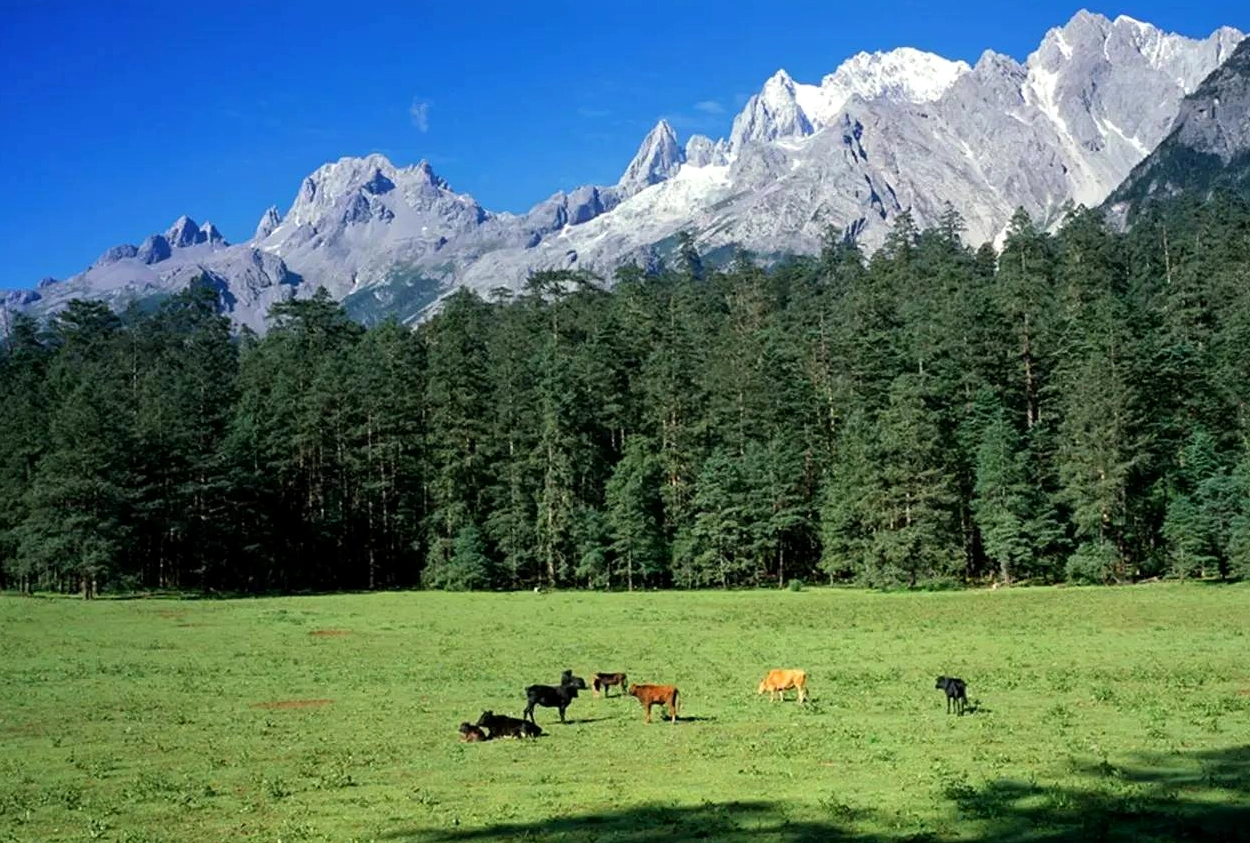
The most precious highlight that has inspired poetry and paintings of Spruce Meadow (Yunshanping) is the spectacular visual contrast meticulously woven by Mother Nature. Standing from the center of the plateau, travelers are treated to a magnificent multi-layered color feast: the vibrant green interwoven with golden-yellow or turquoise wild flowerbeds of the grassland at their feet; surrounded by a majestic, solemn dark green belt of ancient fir forests; and towering in the immediate background are the sheer, silvery-gray, snow-covered limestone cliffs of Mount Shanzidou pointing straight to the sky. The stark opposition between the softness and vitality of the vegetation and the rugged, unyielding coldness of the thousand-foot ice wall transforms this place into a grand visual sanctuary, where humans suddenly feel small before the ingenious arrangement of nature.
From the perspective of highland tourism infrastructure, the Spruce Meadow cableway holds the position of a pioneering project laying the foundation for opening up this sacred grassland at the foot of the millennium snow range. Construction began in 1994, marking the first passenger transport cable system in the Lijiang region, unlocking access to a high-mountain ecological space that was once isolated by rugged terrain. After more than a decade of durable operation serving travelers from all directions, facing the pressure of overcrowding from pilgrims and the need to minimize intervention in the ground cover layer, a comprehensive infrastructure upgrade project was carried out in 2007 and officially inaugurated with a new look on March 7, 2008. The project is the culmination of a top-tier engineering joint venture between the world-renowned ropeway machinery corporation Leitner Ropeways from Italy and the Beijing Huada Design Institute, bringing the mechanical transport system up to the strict safety standards of civil aviation in snowy terrain.
Mechanically speaking, the cable system belongs to the single-loop detachable gondola class (Monocable Detachable Gondola), equipped with comfortable 8-seater enclosed cabins that operate smoothly through vibration-damping rollers. The surveyed length of the route reaches a full 1,000 meters, creating a spectacular axial line connecting the elevation from the departure station at the 2,900-meter mark straight up to the arrival station at the 3,205-meter plateau above sea level, solving the vertical elevation difference of approximately 305 meters in the blink of an eye. With an operating speed ranging from 5 to 6 meters per second, the time gliding through the dense pine valley takes a mere 3 minutes and 40 seconds. This technological innovation has increased maximum transport capacity to 1,800 passengers per hour, completely eliminating the chronic congestion bottlenecks of the previous slow-speed fixed-grip cable system, while creating a seamless journey that minimizes mechanical noise impact on the wild habitat.
Leaving the precise mechanical space of the arrival station at an altitude of 3,205 meters, visitors are not dropped directly onto the fragile soft ground, but are instead guided smoothly into the ecological spatial structure via a closed wooden boardwalk network stretching up to 2,800 meters. This artificial trail network is designed as a flexible circulatory blood vessel skirting the edges of the grassland and penetrating deep into the feet of ancient pine forests, opening up multi-dimensional views toward the snow-capped rock faces of Jade Dragon Snow Mountain. All walkways are crafted from premium red pine wood that has undergone strict anti-rot heat treatment and drying processes, helping the material maintain durable resilience against the harsh erosion of daily temperature swings, frost, snow, and the unique humidity of Southwest China’s alpine region.
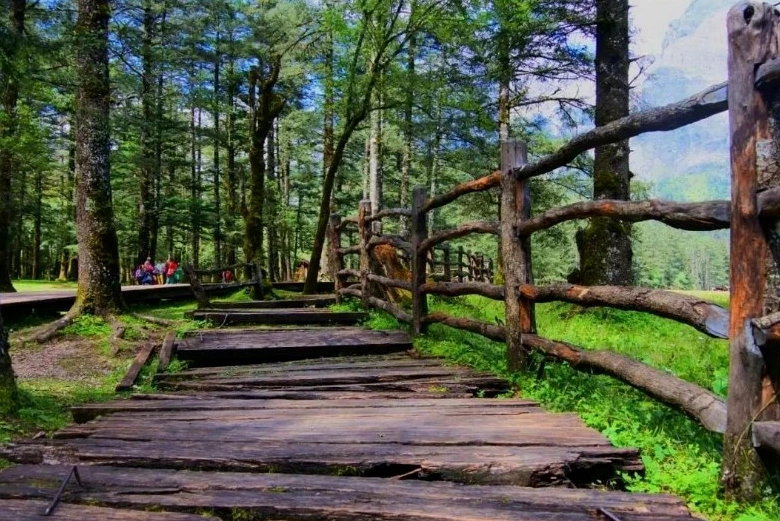
A shining beacon in the conservation architecture philosophy at Spruce Meadow is the solution of elevating the wooden bridge flooring exactly 40 centimeters above the natural ground. This precise clearance serves a crucial technical mission to completely eliminate mechanical soil compaction caused by the pressure of millions of travelers’ footsteps each year—a dangerous agent that often hardens the surface and stifles the soil’s oxygen exchange process. Beneath this suspended framework, the sensitive root networks of thousand-year-old fir communities still freely extend to absorb subterranean nutrients, while the ancient damp moss peat mat, which acts as a water reservoir regulating the microclimate, continues to thrive peacefully without suffering any harsh intrusions from human tracks or chains.
Hidden beneath the shadow of the primeval snow-capped mountains, Spruce Meadow (Yunshanping) is not merely a geological masterpiece but also the primordial soul for the most epic tragic movement in the live-action musical “Impression Lijiang” (印象丽江). Crafted under the talented hands of General Director Zhang Yimou along with his associates Wang Chaoge and Fan Yue, the outdoor live-action stage at Ganhaizi Meadow at an altitude of 3,100 meters – not far from the Spruce Meadow cable car station – has transformed the sheer limestone cliffs and eternal white snow of Jade Dragon Peak into a magnificent natural backdrop. On the winding 360-degree basin of baked red earth, five hundred humble farmers from the Naxi, Yi, and Bai ethnic groups of sixteen neighboring villages stepped onto the stage with their most pristine instincts. They are not acting, but rather reliving the age-old memories of their ancestors, where Spruce Meadow is praised as the gateway to the “Third Kingdom of Jade Dragon” – the paradise of immortal love, where past lovers sought refuge to shed the chains of arranged marriage customs, transforming into the wind, snow, and vast forests to be together forever.
That epic ode to love echoes through the rapid beats of bronze drums, the rough thudding hooves of the Ancient Tea-Horse Road, and the prayers reaching the heavens chanted by the Dongba – the wise men holding the world’s only living pictographic script. Under the pristine sunlight at an altitude of over three thousand meters, the stark contrast between the vermilion red of the stage floor, the deep indigo of the spruce forest, and the blinding white of the millennial glacier creates a breathtaking visual canvas. Every powerful stomp of feet and every mating call piercing through the valley requires no modern mechanical effects or electronic screens for assistance, because the natural resonance of the mountain wind and the snowy cliff walls serves as the most magical sound amplifier, carving deep into the traveler’s soul an indelible mark of faith and the ultimate yearning for freedom of the people of the southwestern borderlands.
In stark contrast to the vibrancy of daytime performances, the atmosphere of Spruce Meadow at dusk adheres to a standard of absolute tranquility. Nestled entirely within the strictly protected core zone of the Jade Dragon Snow Mountain Biosphere Reserve and National Park, the entire 3,200-meter meadow area firmly rejects commercial accommodation projects, hotels, or artificial nighttime lighting systems. As soon as the last cable car cabin leaves the station as the twilight fades behind the Lijiang spruce ridges, humanity entirely yields the territory to the primordial darkness. This rigorous planning decision aims to fully protect the natural biological rhythms of rare wild flora and fauna, from the snow grouse and musk deer to the paleolithic moss carpet, keeping the high-altitude atmosphere unpolluted by optical and noise pollution.
When the silent night blankets the primeval spruce forest, the entire rhythm of life and lighting art of the plateau smoothly shifts to the two thousand-year-old ancient towns below the mountain foot: Dayan and Shuhe. In the center of Lijiang Ancient Town, the nighttime glow does not come from glaring high-pressure streetlights, but is instead woven from tens of thousands of warm red lanterns hanging along the gray-moss-covered yin-yang tile roofs, casting shimmering reflections on the winding Yuhe River flowing around smooth pentagonal flagstones. In ancient stone squares such as the bustling Sifang Street, flickering campfires illuminate traditional DabaKe circle dances (or Diaoqiao dances), where Naxi people dressed in “star-cloaked, moon-carrying” attire tightly clasp the hands of travelers from afar, swaying to the rhythm of bamboo flutes and rustic songs. Blending with the wistful guitar tunes from the vintage pubs along the babbling canals, Lijiang’s nightlife unfolds a multi-layered cultural space, concluding the pilgrimage to the mountain region with a complete sublimation between pure nature and brilliant human heritage.
The journey to touch the cloud-capped plateau of Spruce Meadow at an altitude of 3,200 meters is not only an encounter with pristine nature, but also opens the door to the unique highland culinary world of the Naxi people and Tibetan residents. At the foot of the snow-capped Jade Dragon peak, shrouded in clouds year-round, the dropping temperatures and harsh climate have shaped a unique culinary philosophy: honoring traditional food preservation methods, emphasizing warmth to nourish vitality, and skillfully combining precious produce from the primeval grand forests.
Speaking of Lijiang’s culinary map, the top craving-inducing focal point is undoubtedly the famous dried ribs hotpot (腊排骨火锅 – Làpáigǔ Huǒguō). The local Naxi people select the finest cuts of free-range pork ribs, marinate them thoroughly in white rock salt and a hint of spicy, warming corn wine, and then hang them in the kitchen attic to dry under the freezing plateau winds for three to six continuous months. Once the ribs have firmed up, absorbing the essence of frost, snow, and time, they are chopped into square chunks and simmered over low heat in an earthenware pot. The clear dried ribs broth is rich with a natural sweet flavor, tightly intertwined with the pure aroma of premium mushrooms foraged on the snowy mountain slopes, such as tiger paw mushrooms (Sarcodon imbricatus) and morels. Savoring a spoonful of hot rib soup amidst the freezing weather of Spruce Meadow, diners clearly feel the rich yet non-greasy flavor, melting away all fatigue after the cable car ride through the forest.
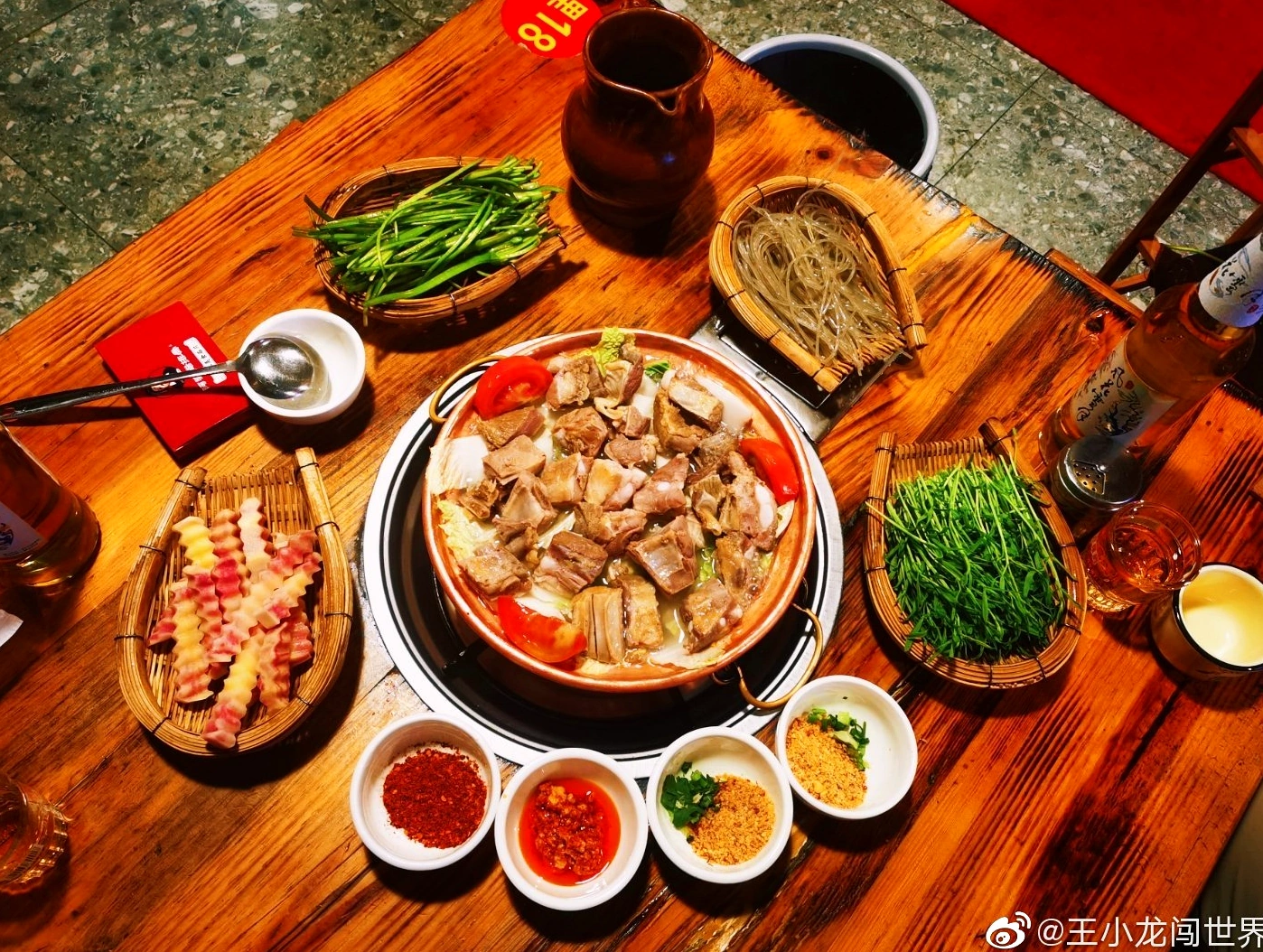
Another culinary marvel deeply imbued with Yunnan’s health-preserving imprint is the Earth Pot Steamed Chicken (气锅鸡 – Qìguōjī). The essence of the dish lies in the Jianshui purple pottery pot, which features a hollow interior structure with a shoot-shaped steam duct rising straight from the center. The chef arranges bite-sized pieces of native black chicken along with precious herbs like Angelica and wolfberries inside the pottery belly without adding a single drop of water. Placing the pot over a caldron of boiling water, the steam rises through the central tube, condensing into a pure broth over four hours of double-boiling. Each fiber of the tender black chicken absorbs the full essence of the herbs and mountain air, creating a shimmering bowl of skin-nourishing, blood-enriching soup that is exceptionally revitalizing for travelers who have just ascended to an altitude of over three thousand meters.
}
Alongside elaborately stewed dishes, the local culinary culture also preserves the weathered memories of the Ancient Tea-Horse Road through Naxi Baba bread (丽江粑粑). Once the lifeline ration for caravans trekking across treacherous mountain passes, this traditional flat wheat bread is meticulously kneaded and baked on an iron griddle until it puffs up. Its outer crust is golden and crispy, while the inside remains spongy, soft, and chewy. Baba bread offers two contrasting flavors: a savory version rich with lard, scallions, and coarse salt, and a sweet, fragrant version blending molasses, rock sugar, and crushed nutty walnuts. Accompanying this is one of Yunnan’s most refined delicacies – rose pastry (鲜花饼), where flaky pastry layers embrace a fragrant, chewy jam filling made from fresh Damask rose petals harvested at dawn while morning dew still clings to the branches.
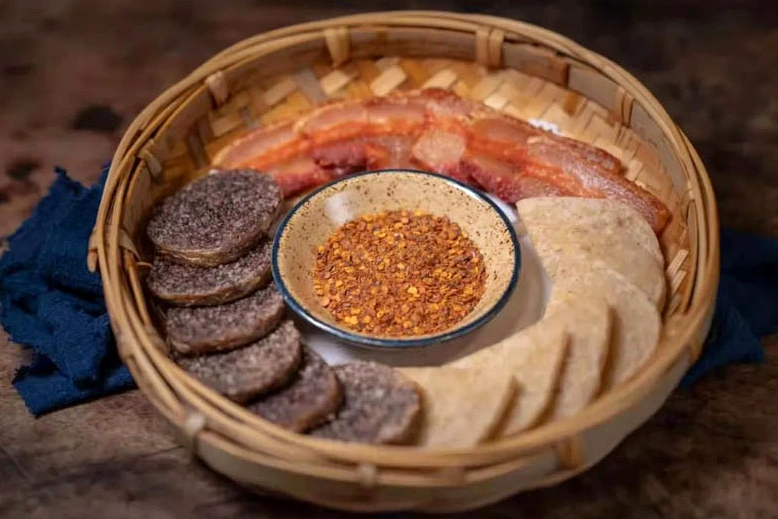
To complete your sensory journey across the sea of clouds in the alpine meadow, you cannot miss a smooth cup of Yak butter tea (酥油茶) and grilled Ruipian cheese. The butter tea is churned from fermented Pu’er black tea extract, fresh Yak butter, and mineral salt, releasing a rich aroma that acts as a natural remedy to warm the body and ward off altitude sickness. Holding a skewer of lightly charred Ruipian cheese drizzled with sweet, pure wild honey, and sipping creamy butter tea amidst the tranquil fir forest, travelers will truly appreciate the cultural depth of a land where humans live in absolute harmony with the majestic snow-capped mountains.

Nestled against the Jade Dragon Snow Mountain, the sacred Spruce Meadow (Yunshanping) boasts a distinctive geographical location with natural landscapes that shift continuously with each elevation zone. From Lijiang station or the ancient town area, a dedicated shuttle bus travels along a 30-kilometer winding mountain pass hugging the eastern slope of the mountain range to reach the Ganhaizi transit station at an altitude of 3,100 meters. At this ecological coordination center, specialized green shuttle buses continue for another 15 minutes through endless pine and cypress forests to reach the lower Spruce Meadow cableway station at an altitude of 2,900 meters. From here, the Leitner cabin system operates smoothly, taking just 3 minutes and 40 seconds to overcome a 300-meter elevation gain through the old-growth forest canopy, opening up a serene plateau at an altitude of 3,200 meters.
The ideal time to capture breathtaking photos and videos at Spruce Meadow is between 08:45 and 10:30 AM daily. This is when the eastern sunlight shines directly onto the glacial folds and sheer snow cliffs of Shanzidou peak, creating a brilliant, sharp contrast against the cloudless sapphire blue sky. After 13:00 PM, convective evaporation from deep valleys often gathers into thick clouds covering the snow-capped peaks. Unlike the Glacier Park station at a harsh altitude of 4,506 meters where the rate of acute mountain sickness (AMS) reaches up to 65%, the 3,200-meter altitude of Spruce Meadow has an abundant oxygen density, reaching 72% to 75% compared to the plains, reducing the fatigue rate to about 8% to 12%. You only need to carry a portable mini oxygen canister for prevention, maintain a steady breathing pace, and walk leisurely along the cedar boardwalk without worrying too much about your physical stamina.
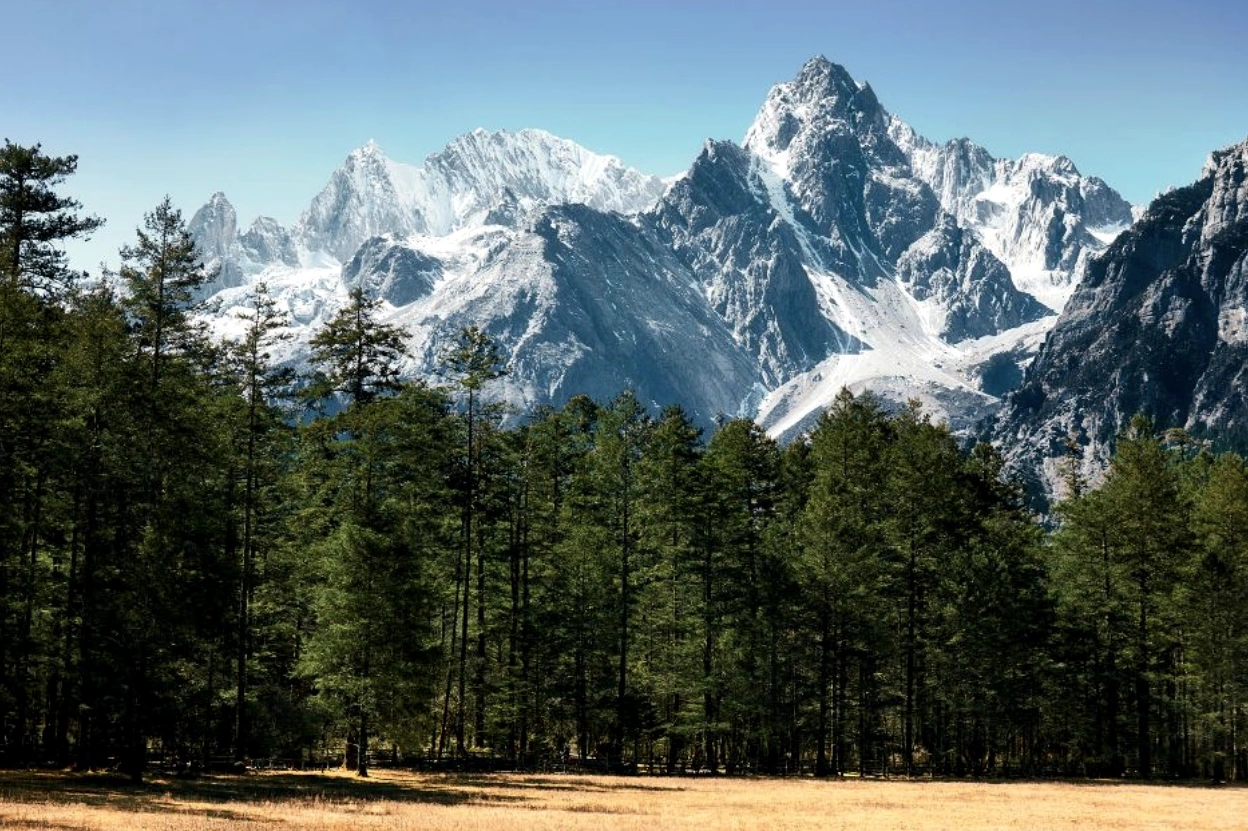
To perfectly adapt to the large temperature fluctuations between the warm highland morning sun and the cold winds blowing down from the glacier, the three-layer clothing rule is an essential tip from seasoned mountaineers. The innermost base layer should be made of quick-drying synthetic fibers, the middle layer should be a fleece or ultra-light down jacket for thermal insulation, and the outermost layer should be a windproof, waterproof Gore-Tex jacket. Besides keeping warm, visitors must also stay alert to commercial traps such as being coaxed into buying low-quality Lugu Lake Spirulina, adulterated Snow Flower silver, or overpriced Dongba herbs. The Yunnan provincial government currently applies an “unconditional 30-day refund” policy (30天无理由退货) through the “Only Yunnan Tourism” app (du lịch Vân Nam), allowing travelers to file complaints and return goods quickly at service counters or via QR codes widely displayed at airports and international borders.
After hours of strolling through the wind-swept meadow, gathering around a cozy round dining table featuring traditional Naxi flavors is the ultimate restorative therapy. At the center of the feast is a large, steaming copper pot filled with broth simmered from salted ribs or sweet matsutake mushrooms, surrounded by dozens of exquisite porcelain plates displaying appetizers, mildly sour moss salads, highland wild vegetables, and vibrantly colored side dishes, delivering a complete sensory experience for both the smell and taste buds of faraway travelers.
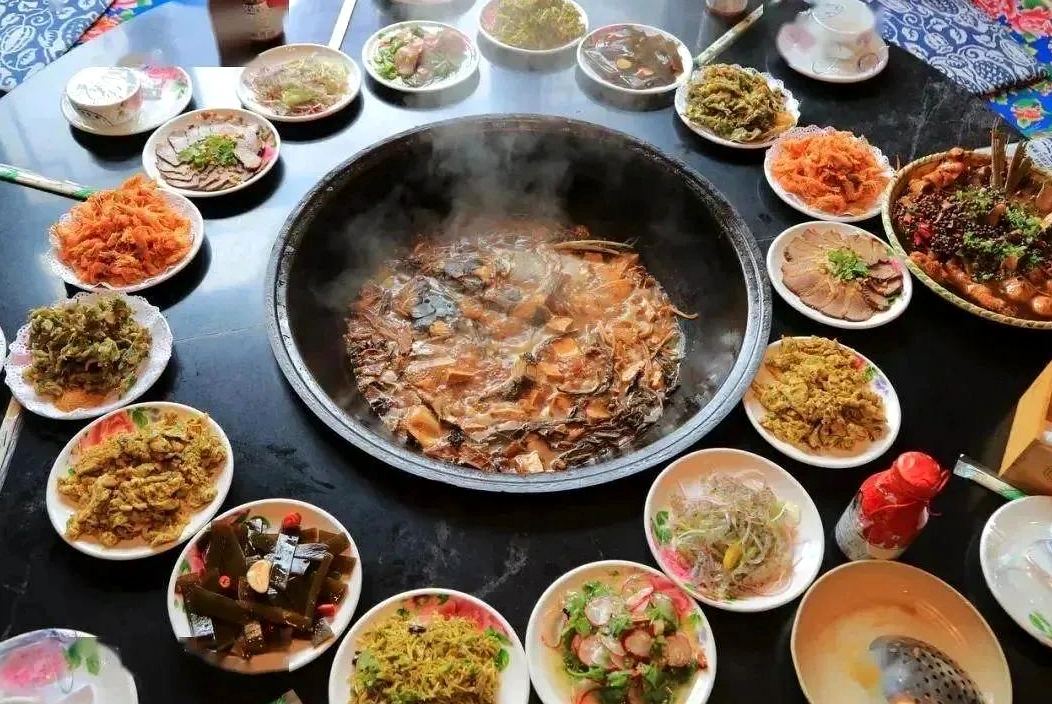
Mastering field instructions and consumer protection mechanisms will make your excursion to the sacred mountain relaxed and fulfilling in every single moment; if you want to fully enjoy standard services without worrying about cable car transfer procedures or shopping risks, you can choose to register for an all-inclusive tour program focused purely on experiences, professionally designed with optimized itineraries.