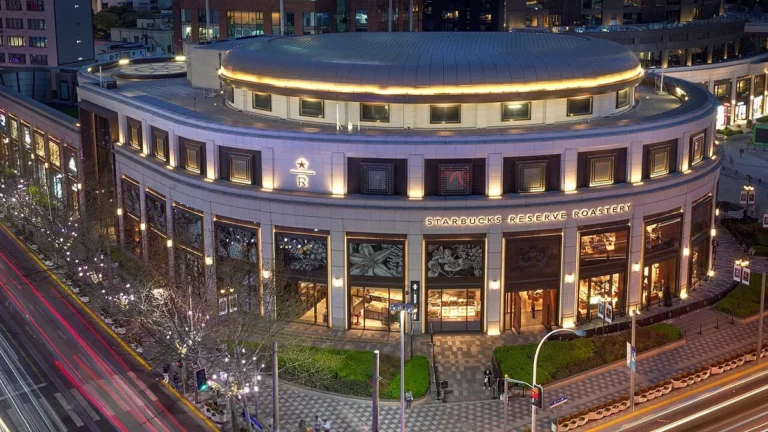
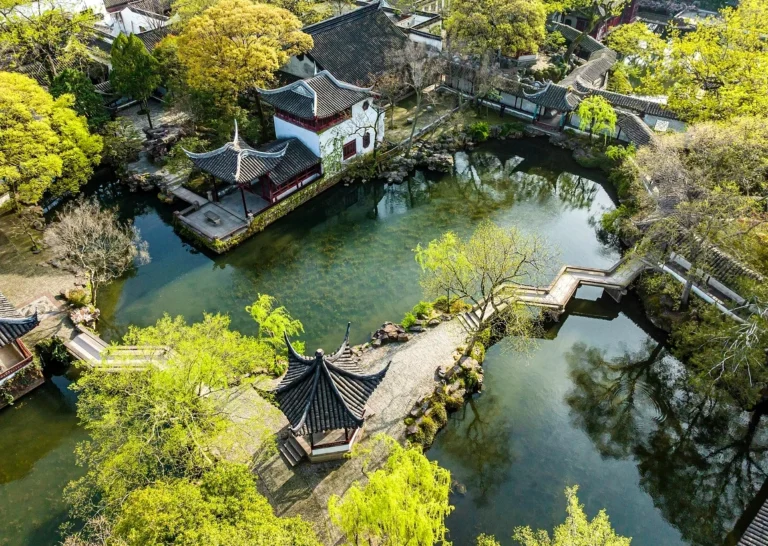
The historical journey of Nanjing Road began with a geopolitical event that permanently changed the destiny of China’s eastern coast. In 1842, during the twenty-second year of the Daoguang Emperor’s reign in the Qing Dynasty, following its defeat in the First Opium War, the Manchu imperial court was forced to sign the harsh Treaty of Nanjing, agreeing to open Shanghai as one of five primary treaty ports under the Canton System regulations. Just three years later, the British Land Regulations were officially established in 1845, laying the groundwork for a deeply colonial urbanization process. On what was then a pristine, marshy plot of alluvial land, the initial route was merely a rustic dirt path named Garden Lane (Huayuan Nong), established in 1848. By 1851, in the first year of the Xianfeng era, the Shanghai Race Club undertook improvements to this crude dirt road, extending it west from the Bund toward the racecourse and naming it Park Lane, though locals at the time commonly referred to it as Lin Chong Road. It was not until 1865, under the fourth year of the Tongzhi reign, that the Shanghai British Concession Municipal Council officially designated the entire route as Nanking Road, paving its surface with stone and establishing an underground drainage system conforming to modern Western urban engineering standards.
Entering the Republican era, the period from 1912 to 1937 witnessed the dazzling rise of East Nanjing Road into the premier retail capital of the Far East, closely tied to the legend of the “Big Four Department Stores” built by Cantonese merchant diaspora. It began with the Sincere Company building, erected in 1917 by the industrialist Ma Yingfu, a pioneer who adopted the philosophy of fixed-price retailing and first employed female staff to serve customers at the counters. Shortly after, in 1918, the Kwok brothers—Kwok Lok and Kwok Tsuen—inaugurated the Wing On Department Store, a magnificent masterpiece featuring the Yi Yun Pavilion wind-welcoming tower soaring into the harbor sky. The commercial race continued with the opening of the Sun Sun Department Store in 1926, which boasted the first central air conditioning system and a private radio station broadcasting live directly from its storefront display windows. Completing this prestigious quartet was The Sun Department Store building, inaugurated in 1936 (now the Shanghai No. 1 Department Store), which once shocked all of Asia by operating two state-of-the-art automatic escalators manufactured by the Otis Elevator Company.
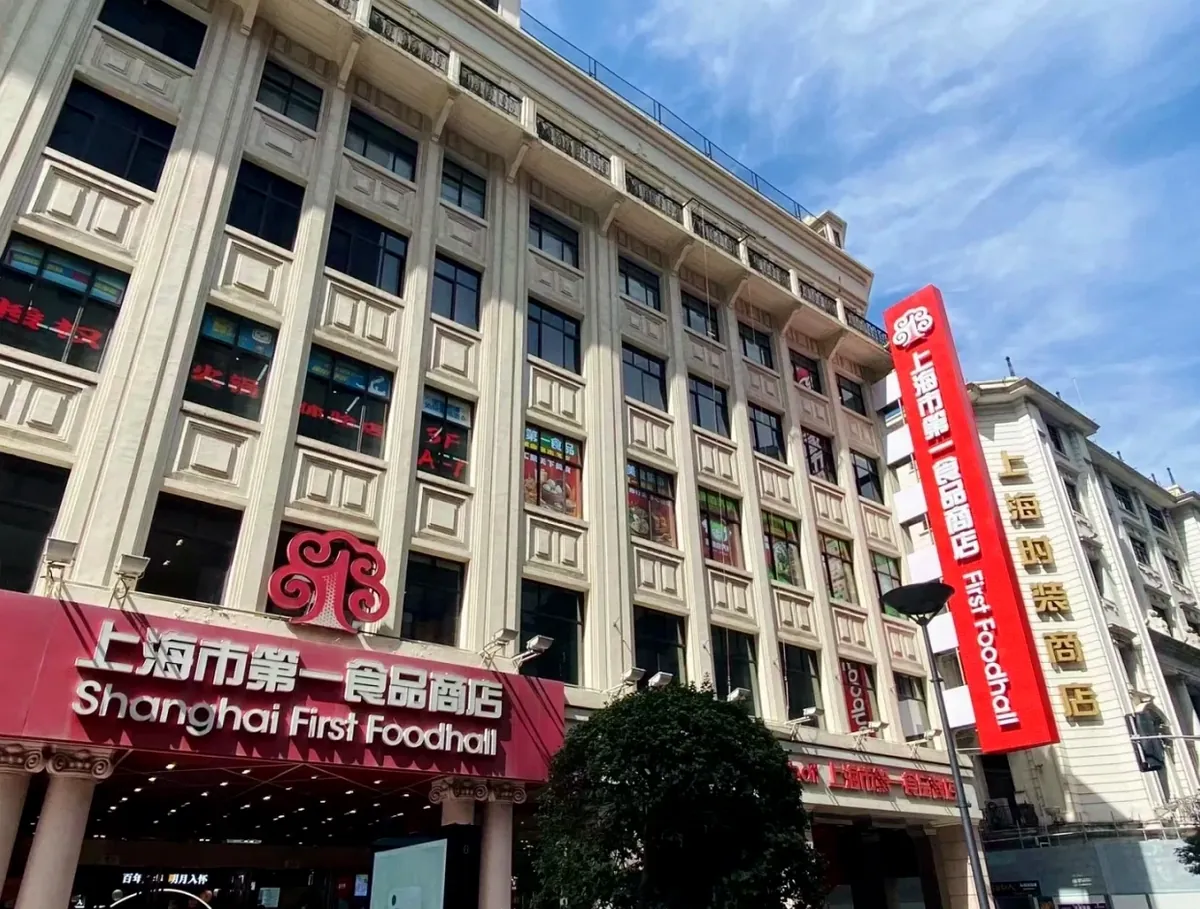
The prosperous current of Shanghai’s number one commercial street also endured many ups and downs through the turns of historical currents. On August 23, 1937, a stray bomb struck the intersection of Nanjing and Tibet roads amidst the smoke and fire of the War of Resistance Against Japanese Aggression, dealing a heavy blow to urban civic life. In 1949, when the People’s Liberation Army entered to take over Shanghai, the strict discipline and indomitable spirit of the garrison forces stationed here gave birth to the historical image of the “Model 8th Company on Nanjing Road,” before the entire private economic structure underwent a wave of public-private joint ownership in 1956. The modern appearance of the avenue turned a new page in history on September 20, 1999, when Mayor Xu Kuangdi and French architect Jean-Marie Charpentier officially converted the 1,033-meter stretch of street from Middle Tibet Road to Middle Henan Road into a model pedestrian precinct. Continuing this strategic planning, the “East Extension” project completed on September 12, 2020, prolonged the seamless pedestrian axis all the way to East Zhongshan No. 1 Road along the banks of the Huangpu River, establishing an impressive continuous length of 1,528 meters.
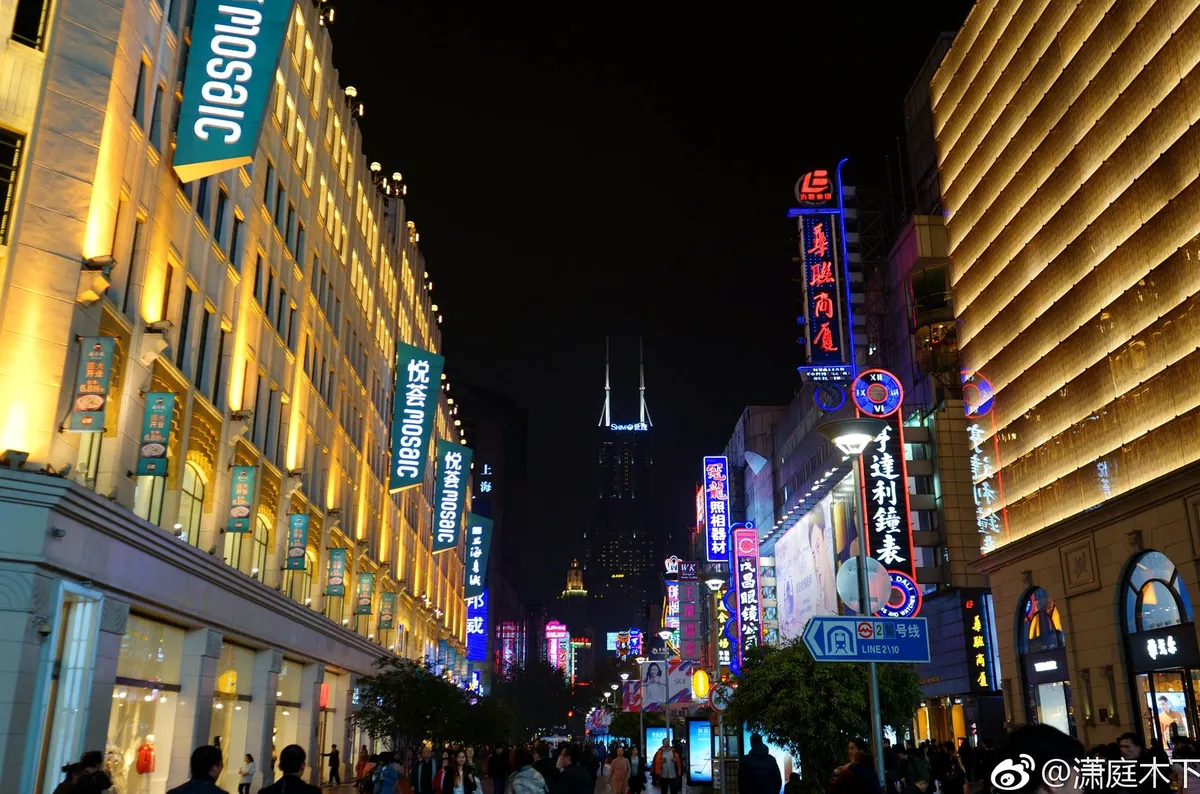
As night falls, the avenue assumes the dazzling look of a city that never sleeps, with crowds strolling amidst brilliantly illuminated classical buildings intertwined with vibrant colors emanating from modern neon signs. At the very center of the scene, a magnificent building with a majestic pointed spire reaches high, emitting a warm glow that illuminates the entire arch of the avenue’s space, while roadside trees and the smooth rolling rhythm of public buses blend harmoniously, sketching a visual sequence that is both deeply nostalgic and bursting with contemporary vitality.
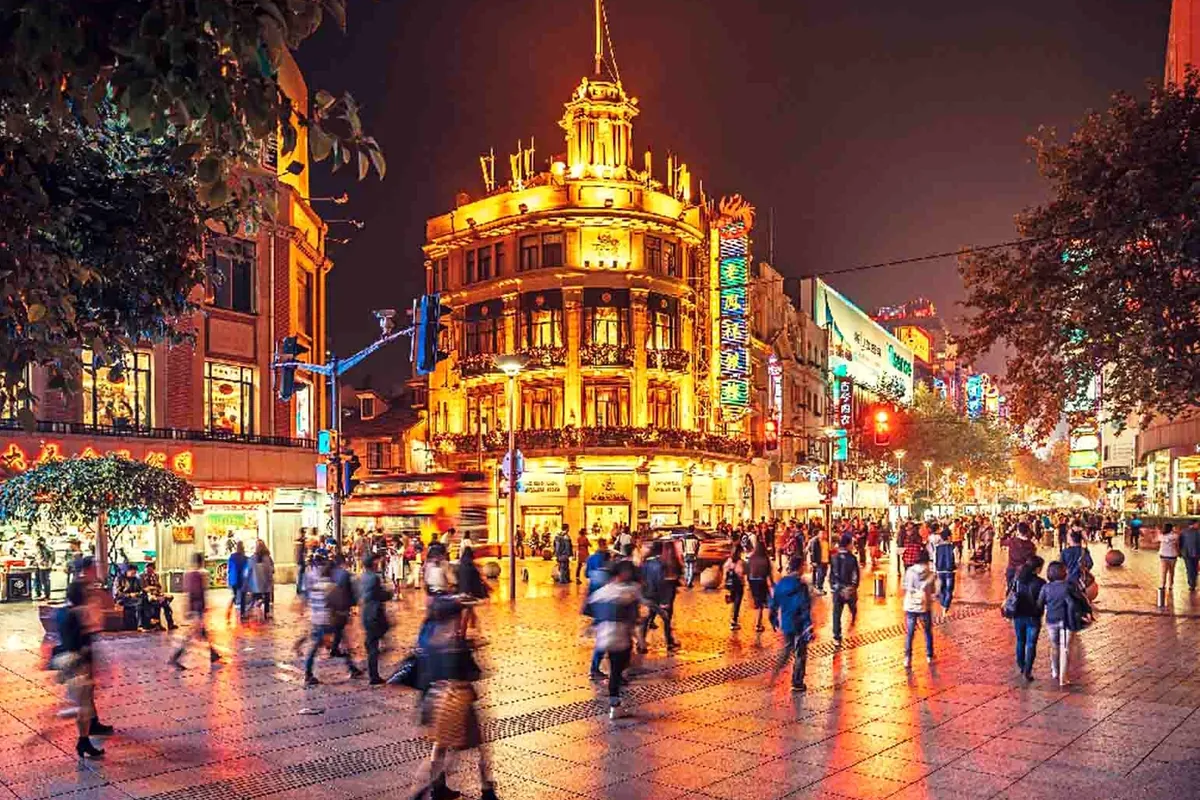
Having endured nearly two centuries of ups and downs alongside the changing eras, from a crude colonial road nestled against the harbor to a global commercial icon, Nanjing Road not only preserves deep memories of historical treaties and the footprints of illustrious tycoons, but also serves as a living witness in stone and brick to Shanghai’s extraordinary rise on the world map of civilization.
Located in the heart of Huangpu District, Nanjing Road stretches like a flawless backbone across Shanghai’s downtown planning map, extending along an East-West axis all the way from People’s Square in the west to the water’s edge of the western bank of the Huangpu River at The Bund. From a feng shui and architectural geography perspective, this road is not merely a traffic artery but plays the role of the “Centripetal Hub” of the entire fertile Yangtze River Delta plain. Standing at the central intersection, this earth vein acts as a historical hinge that demarcates and connects the old concession heritage zones, while wide-openly unfurling an expansive visual axis directly across the mother river toward the Lujiazui financial peninsula and the towering Shanghai Tower on the eastern shore. The terrain configuration of “backing the mountain and facing the water,” taking the central plaza as a fulcrum and directing its vital energy completely toward the great currents rushing out to sea, has generated endless commercial energy for the avenue’s space through centuries of transformation.
The natural flat terrain of the estuarine delta is elevated into a multi-tiered urban architectural landscape, where every stroll across the granite-paved boulevard is guided by the rhythmic shift of light and river breeze. From the spacious, tree-shaded expanse of People’s Square—once a modern-era horse racing track—the gentle slope leads toward the lower reaches, welcoming the sea-breathing winds blowing upstream from Hangzhou Bay through the channels of the Huangpu River. The direct adjacency to the Bund landscape strip creates a breathtaking contrasting picture: on one side stands a sequence of subdued, Western-influenced neoclassical buildings from the previous century, while on the other lies the shimmering water reflecting a surreal skyline featuring skyscrapers hundreds of meters tall. The landscape here does not disconnect from nature, but rather borrows the very curves of the natural flow to shape the visual rhythm for the entire pedestrian axis.
Hidden deep beneath the historical strata and the expansive paved surface is an underground transportation network operating like a massive circulatory system, transforming Nanjing Road into one of the mainland’s largest pedestrian convergence hubs. Most notably, People’s Square Station (人民广场站) is a premier downtown subterranean triangular interchange connecting three vital metro lines: Line 1 running along the North-South axis, Line 2 directly linking two international airports along the East-West axis, and Line 8 cutting through densely populated residential areas. During peak hours, the passenger throughput through this colossal underground station exceeds 650,000 visitors per day, creating an endless underground current that vitalizes the commercial district above. Following the route toward the river, East Nanjing Road Station (南京东路站) serves as the second vital transit link, combining Line 2 with Line 10—the exclusive urban rail line leading visitors straight to the serene atmosphere of Yu Garden, the Old Town of Shanghai, as well as the Hongqiao periphery.
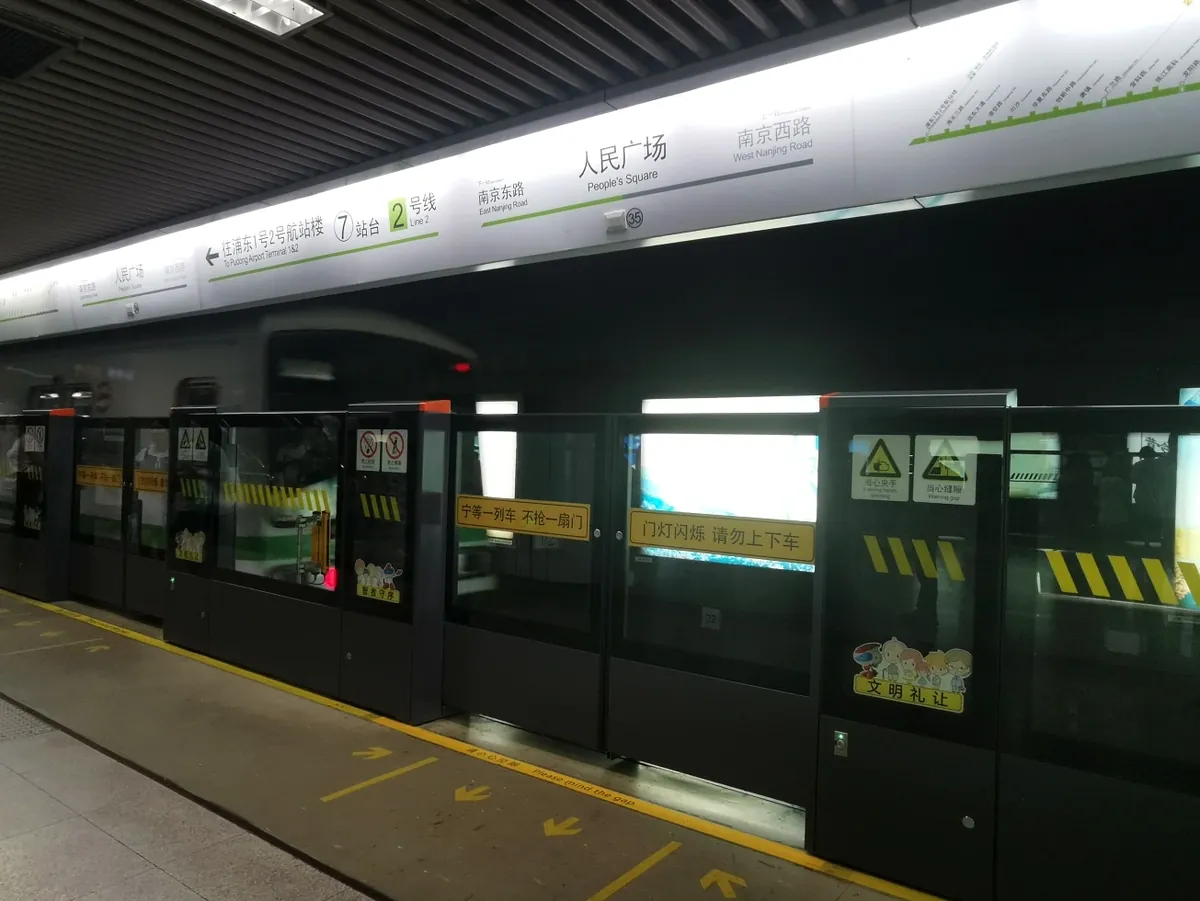
The planning strength of Nanjing Road’s spatial axis is multiplied thanks to a high-speed connectivity network linking Shanghai to regional and international economic webs. Just a 35-minute ride on Metro Line 2 from the center of the boulevard brings passengers to Shanghai Hongqiao High-Speed Railway Station, the departure point for the new-generation Fuxing bullet trains (CR400) gliding at 350 km/h. From here, the journey to the ancient capital of Suzhou takes only 23 minutes, to the earthly paradise of Hangzhou a mere 45 minutes, and connects directly to the capital city of Beijing within 4 hours and 18 minutes. Heading East along the same Line 2 axis, the journey toward Pudong International Airport (PVG) is empowered by the engineering miracle of the Shanghai Maglev train. Operating on magnetic levitation principles that completely eliminate mechanical friction, the train glides smoothly at a top speed touching 430 km/h, shortening the 30-kilometer distance from Longyang Road station to the airport terminal to just 7 minutes and 20 seconds. The seamless convergence of natural geographical terrain, a feng shui vision opening to the great waterway, and a high-tech transportation network has turned Nanjing Road into a unique spatial positioning pole on the global urban map.
From the perspective of urban planning and spatial anthropometry, the appearance of Nanjing Road today is the result of a continuous transformation process, with the landmark turning point being the East-Wade mega-project, extending the pedestrian axis all the way to the banks of the Huangpu River. After completion and expansion, the street length reached 1,528 meters with a roadway width ranging from 18 to 28 meters, providing a total pedestrian floor space of approximately 30,000 square meters. The spatial rhythm of the boulevard is shaped by the pioneering asymmetrical design concept of French architect Jean-Marie Charpentier, focusing on the central landscape axis named the Golden Belt (金带). This artistic corridor spans 4.2 meters in width and is entirely paved with precisely polished Indian red granite. The exquisite reflective surface of the stone strip acts as a giant optical mirror: capturing the brilliant sunlight filtering through the tree canopy by day, and blending with the light show of tens of thousands of luxurious neon lights by night. Along the Golden Belt, urban engineers have cleverly and harmoniously arranged 34 flower beds of various shapes, interspersed with stylized lighting poles, international standard guide kiosks, public benches, and a series of deeply sculptural contemporary art pieces.
The most precious public breathing space along the entire route belongs to Century Square (世纪广场), an open space expanding from 8,370 to 8,404 square meters impressively situated right at the center of the boulevard. Acting as the city’s outdoor cultural living room, the square features a dry musical fountain with a diameter of up to 14 meters. The underground nozzle system is precisely programmed to the rhythm of classic melodies, creating spectacular water music performances without disrupting pedestrians when deactivated. It also serves as a grandstand for street music festivals, visual culture exhibitions, and large-scale international exchange events, connecting the local lifestyle with global travelers.
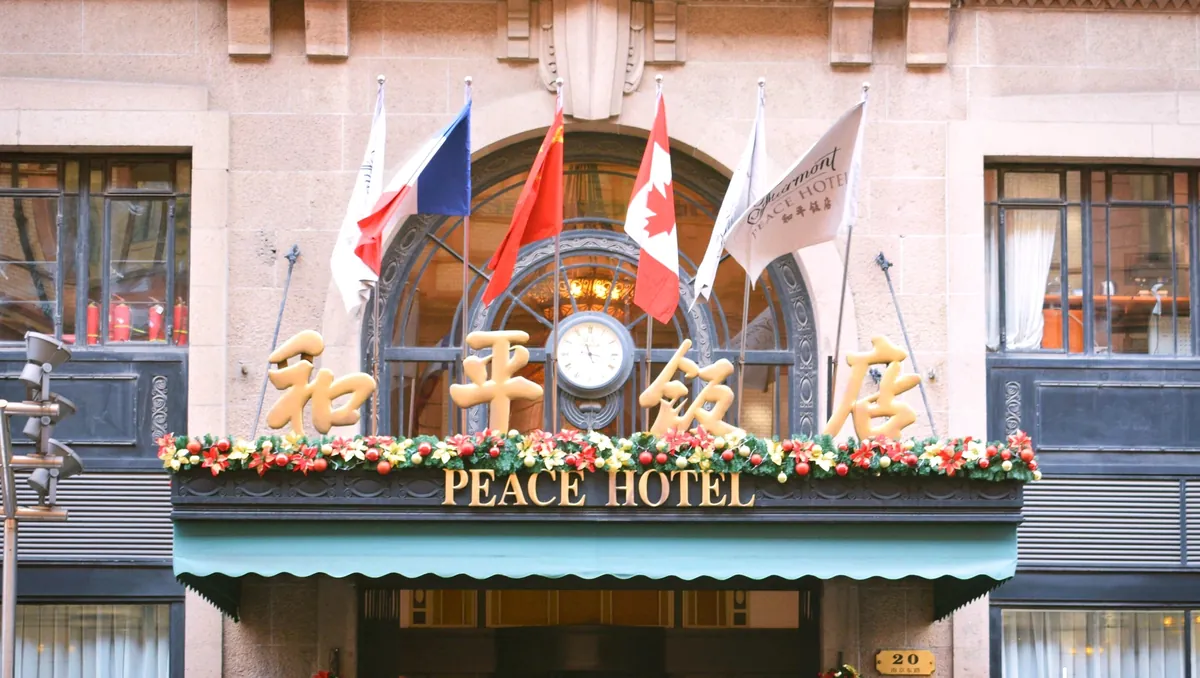
In terms of architectural styling language, the boulevard resembles an open-air architectural museum converging three classic schools spanning over a century of changes. Reigning in the most prestigious position of the Art Deco movement is the Fairmont Peace Hotel, formerly the Sassoon House (沙逊大厦), completed in 1929 by the renowned architectural firm Palmer & Turner. This grand edifice etches its mark onto the Shanghai skyline with a green oxidized bronze-clad pyramid roof block reaching 77 meters in height. The resolute geometric stepped lines of the exterior harmonize with the exquisitely paved Italian marble blocks inside the lobby, perfectly recreating the peak luxury of the Far East’s economic golden age in the early twentieth century.
Running parallel to the geometric discipline of Art Deco is the authoritative, majestic grandeur of Western Eclecticism, best exemplified by the Wing On Department Store. The structure showcases an elaborate combination of Doric and Corinthian columns following classical Greco-Roman standards, paired with the soft, curved arches of Baroque influences crowning the tower. The building’s facade is encased in rugged grey granite blocks, evoking the enduring strength of a fortress and reflecting the ambitious, everlasting vision of the bourgeois merchants who pioneered the modern department store era in China.
In the eastern section of the avenue, the past engages in a spectacular dialogue with the future through Contemporary Retail Futurism. New constructions and heritage restoration projects have thoroughly embraced the world’s most advanced material design languages. The Huawei Global Flagship Store, nestled peacefully inside the historic Hardoon Building, skillfully blends its heritage framework with high-tech interiors, while the Apple Store on East Nanjing Road stuns visitors with massive, curved monolithic structural glass panels that break architectural glass-tempering records, creating a seamless, crystal-clear retail space. Notably, at the bustling intersection with Middle Henan Road, a giant 3D Naked-Eye display utilizing stereoscopic technology without glasses transforms the building’s entire facade into a vivid illusion stage. By merging monumental heritage architecture with cutting-edge visual technology, this space blurs the line between reality and the futuristic world, cementing its status as a global urban center that never sleeps.
As the evening glow fades behind the western banks of the Huangpu River, Nanjing Road enters one of the most spectacular visual transitions in the Far East. Every evening between 6:45 PM and 7:15 PM, a synchronized lighting activation ritual is executed with second-by-second precision. The entire network of nostalgic curved neon signs, cutting-edge LED strips, and facade floodlights highlighting the Neoclassical and Art Deco reliefs of the heritage buildings bursts into life simultaneously. The colossal 19th-century architecture instantly transforms into a massive live-action runway, where warm amber tones intertwine with mystical shades of blue and purple, creating an overwhelming cyberpunk visual experience in the heart of this prosperous metropolis.
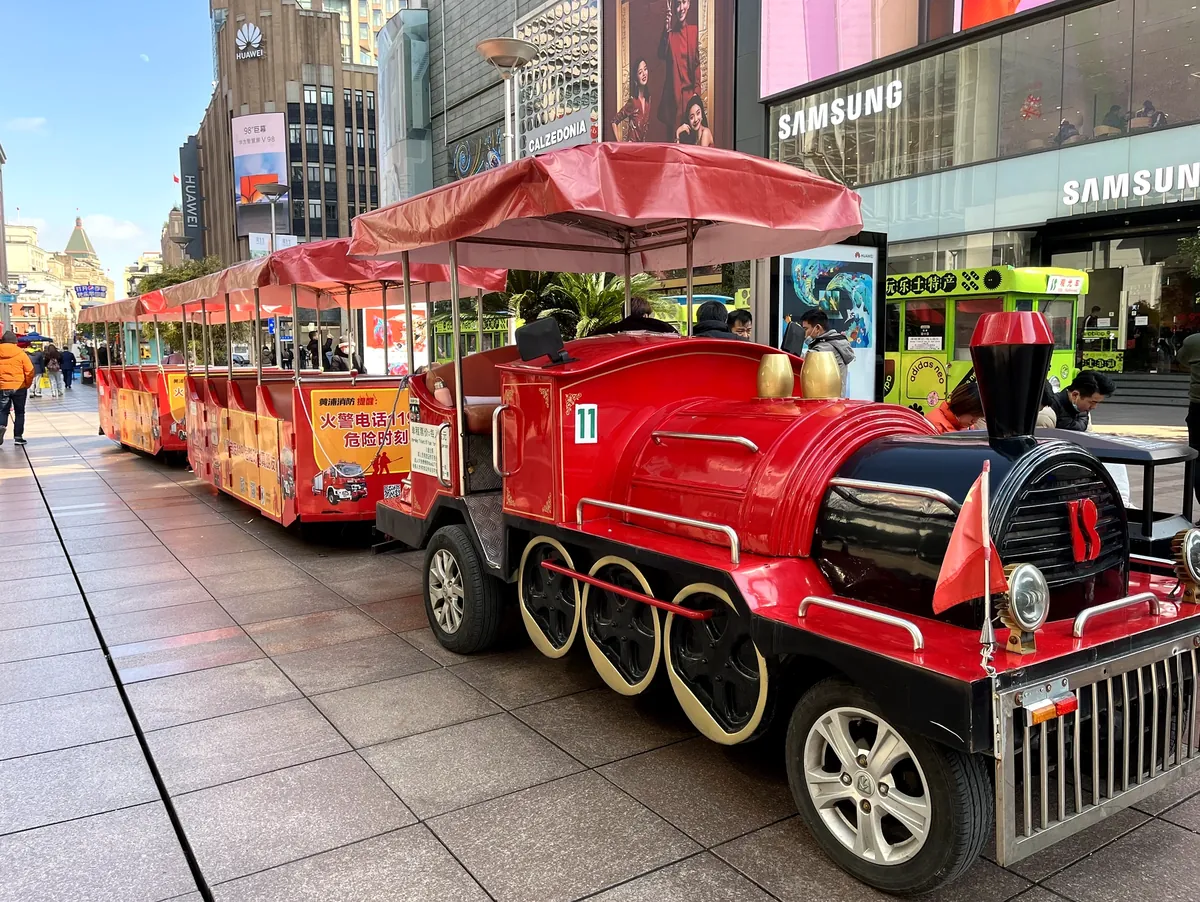
Amidst the surging crowds enjoying this visual feast, the nightlife along the pedestrian axis retains its nostalgic charm thanks to the presence of retro rubber-tired heritage trams. Painted in the signature dark red and emerald green of the Republic era, the vehicle glides smoothly along its route connecting Middle Tibet Road to Middle Henan Road. The crisp, echoing sound of its brass bell not only helps manage the flow of strolling visitors but also awakens glamorous memories of 1930s Shanghai, carrying wandering footsteps slowly between two shores of time: one side steeped in solemn historical echoes, and the other throbbing with vibrant contemporary life.
Going beyond mechanical nostalgia, the nighttime atmosphere here reaches the pinnacle of urban art by integrating digital twin infrastructure and augmented reality technology. With just a simple scan of their personal devices across the ancient brick walls or centuries-old archways, visitors are instantly immersed in a multi-layered augmented reality universe. Hurrying rickshaw pullers casting shadows onto the wet stone pavement, the elegant brocade qipaos of pre-war young women, and classic commercial advertisements suddenly spring to life right against the backdrop of the existing architecture. This sophisticated visual overlay dissolves the boundaries of time, offering a profound dialogue between tangible heritage and futuristic technology.
The brilliant dance of lights along Nanjing Road is gracefully regulated according to the strict urban energy-saving standards of Shanghai city. At precisely 10:00 PM every night, the entire facade floodlight system of the heritage buildings simultaneously switches off in a fraction of a second. This sudden stillness by no means dampens the city’s vitality; instead, it returns the pedestrian zone to a noble, tranquil grace under the soft golden glow of classical European-style streetlamps, shifting the rhythm of life into a more contemplative and serene dimension.
After ten o’clock at night, the commercial pulse gracefully shifts to a decentralized night-economy model, branching deep into the adjacent fishbone-like alleys. Along signature avenues such as Huanghe Road or Zhaoyang Road, the urban panorama truly bursts into life in a richer and more intimate form. Hidden behind the distinctive wooden doors of traditional Shikumen architecture is a chain of speakeasy underground bars serving cocktails infused with local herbs, art cafes lit up all night, and time-honored family kitchens with rising steam. Visitors can leisurely savor golden pan-fried shengjianbao dumplings with crispy bottoms, fragrant scallion oil noodles, or steaming hot wontons until dawn, fully experiencing the warmth, simplicity, and enduring spirit of a city that never sleeps.
Behind the light dance of vibrant neon signs and magnificent department stores, Nanjing Road also preserves a sacred cultural landmark for food connoisseurs: the Chinese Time-Honored Brand (中华老字号) culinary heritage map. The culinary space here is an exquisite harmony between imperial cooking techniques, the bountiful riverine flavors of the Yangtze River Delta, and Benbang cuisine with its philosophy of “nùng du xích tương” (heavy oil and thick sauce) – rich, reddish-brown sauce that is deeply savory yet delicately sweet on the finish. The proud, century-old prestige shops standing closely side-by-side along the pedestrian avenue are not merely pit stops to try unusual snacks, but living museums preserving the soul of Shanghai’s flavors through centuries of ups and downs.
Right at No. 636 East Nanjing Road, the Shen Dacheng (沈大成) brand, established in 1875 during the first year of the Guangxu Emperor’s reign, continues to attract long lines of people patiently waiting for fresh batches of traditional glutinous rice pastries. The master technique behind this brand’s fame lies in its Qingtuan (青团) – green glutinous rice balls dyed a vibrant, eye-pleasing green with young mugwort juice mixed into thoroughly pounded, chewy rice dough. Hidden beneath the countryside-scented skin is either a salty-savory and nutty salted egg yolk and pork floss filling (肉松蛋黄) or a traditional, ultra-smooth mashed red bean filling. Not far away, at No. 720 East Nanjing Road, Zhen Lao Da Fang (真老大房), tracing its roots back to 1851, emanates the irresistible aroma of pan-baked fresh pork mooncakes (鲜肉月饼). The multi-layered pastry shell, crafted using traditional flaky pastry techniques, is delightfully crispy and encases hand-minced fresh pork filling cooked to perfection on a large iron griddle, making every bite burst with rich, piping hot meat juices and authentic local flavor.
For connoisseurs of Jiangnan seafood delicacies, Wang Bao He (王宝和酒家), located at Nos. 603-605 East Nanjing Road, is an irreplaceable culinary sanctuary. Founded in 1744 during the 9th year of the Qianlong Emperor’s reign, this tavern is revered by locals as the “King of Crabs” – the pioneer of hairy crab culinary art. Here, plump Yangcheng Lake hairy crabs (阳澄湖大闸蟹) with green carapaces and white bellies are steamed whole to fully preserve the pristine sweetness of each muscle fiber, paired with warm ginger vinegar and enjoyed alongside cellar-aged, warmed Shaoxing rice wine, creating a perfect yin-yang balance to counteract the cooling nature of the seafood. Directly across the street at No. 414 East Nanjing Road, Shao Wan Sheng (邵万生), established in 1852 during the 2nd year of the Xianfeng Emperor’s reign, showcases the pinnacle of Jiangnan’s fermented wine-curing technique (Tǎosuì – 糟醉). Its drunken crab (Zui Xie) and live drunken snails deliver an intoxicating sensation with translucent, jelly-like tender meat infused with a potent alcoholic fragrance weaving through every bite, perfectly reflecting the refined drinking culture of old Shanghai’s literati.
The heritage culinary landscape along the avenue leaves a deep impression with classic dishes of the Shanghai Benbang school. Meticulous craftsmanship is evident in the plate of osmanthus braised pork belly (桂花红烧肉) featuring square amber-glossy pork belly blocks that are rich without being greasy, or the crispy sweet-and-sour squirrel-shaped mandarin fish (松鼠桂鱼) carved like a work of art. Refinement is also found in bowls of golden crab roe noodles (蟹粉面) overflowing with rich roe and paper-thin, soup-filled crab roe xiaolongbao that conquer even the most demanding palates. Meanwhile, everyday rustic charm is vividly present in crispy pork chops (炸猪排) dipped in mild Shanghai spicy sauce, bowls of fish noodle soup in a famously rich broth from Dexinguan (德兴馆), or elegant fresh buttercream pastries from the Ruby bakery (红宝石), carrying the nostalgic European flavor of 1980s Shanghai.
The rhythm of Nanjing Road transforms spectacularly with each hour of the day, offering completely contrasting emotional experiences for visitors. In the early morning from 07:00 to 08:30, when shops remain quiet behind a thin mist, the avenue is unusually serene, providing an expansive space to admire the intricate vintage Art Deco carvings and watch seniors gracefully practicing Tai Chi by the plane trees. Conversely, from 18:45 to 21:30 is the most brilliant golden hour, when the entire neon lighting system illuminates to turn the street into a vibrant spectrum ribbon, ideal for leisurely strolls and night food experiences. Regarding transportation infrastructure, visitors can conveniently access the pedestrian street via two key metro stations: People’s Square station (connecting Line 1, Line 2, and Line 8) at the western end, or East Nanjing Road station (connecting Line 2 and Line 10) at the eastern end, leading straight to the Bund. To give your feet a rest, riding the vintage Dangdang iron-wheeled trams for 10 yuan per trip (about 35,000 VND) is a relaxing way to travel, especially suitable for groups with elderly members and young children.
Embracing the rapid digital transformation of the modern metropolis, the entire commercial chain along the avenue has standardized cashless payments, allowing international travelers to easily link Visa or Mastercard directly to Alipay or WeChat Pay electronic wallets to scan codes for fast transactions ranging from luxury boutiques to street food carts. A standout highlight in the local tourism policy is the instant departure tax refund model called “Buy & Refund Instantly” (离境退税). Typically at the renowned New World Daimaru Department Store, with any shopping receipt totaling 500 yuan or more, foreign visitors simply need to present their original passport to receive an actual refund of 9% to 11% right at the customer service desk inside the building, completely eliminating the burden of tedious tax filing queues at Pudong International Airport before departure.
Nevertheless, amidst the bustling and prosperous flow, travelers still need to equip themselves with sharp intuition to avoid sophisticated scams targeting foreigners. The most common and dangerous is the "Tea House Scam" (茶托), where individuals disguised as intellectual students approach with fluent English, ask for help taking a photo, and then invite you to tea houses tucked away in dark alleys for cultural discussions; upon leaving, victims are forced to pay absurd drink bills ranging from 2,000 to 8,000 RMB (equivalent to 7 to 28 million VND). In addition, tourists should firmly ignore "Fake Luxury Touts" who lurk and whisper offers for counterfeit watches and bags at intersections, as curiosity leading them into isolated old apartment complexes poses significant risks to personal safety and property.
Another vital warning is to stay vigilant against cheap or 0-dong tours that cut the exploration time of Nanjing Road down to a hurried 30 minutes in order to herd visitors into synthetic jade centers, silk mattress shops, or fake Tong Ren Tang traditional medicine stores in the outskirts with coercive buying tactics. Instead, the top priority standard should always be "Pure Play" (纯玩 – No Shopping) tour contracts, ensuring a full 3 to 4 hours of free strolling and hotel accommodation arranged within walking distance of the night street. Especially if visiting during the National Day Golden Week when the flow of pilgrims exceeds 1.2 to 1.6 million visitors per day, strictly following the Armed Police’s diversion with the "Human Wall Blocking Vehicles" (武警人墙) model at intersections will help keep the journey safe. To fully enjoy this prosperous rhythm in a scientific itinerary, seamlessly connecting from the monetary metropolis to ancient heritage regions, travelers can check out the Shanghai – Wuzhen – Hangzhou – Beijing 7D6N tour to gather the most exquisite cultural experiences.