Towering majestically at the natural crossroads where Luquan Yi and Miao Autonomous County meets Dongchuan District in northern Kunming, Jiaozi Snow Mountain stands like an enduring symbol 151 kilometers away from the historic urban center. In the ancient geographical memory of Yunnan province, the mountain was named “Jiaozi” (轿子山) by our forebears based entirely on its unique natural topography: a peak shrouded in floating snow year-round, rising proudly among rolling green ranges like a magnificent palanquin arranged by the serene hand of creation in a fairyland. This elegant name not only vividly sketches typical karst geomorphology and plateau sediments, but also gives rise to a series of enduring folk legends, where every steep rock layer and frozen vegetation carpet is deeply imbued with the breath of indigenous culture across sedimentation over the ages.
Since the dawn of southern tribes, Jiaozi Snow Mountain has held an ultimate, revered status in the consciousness of early Yi and Miao communities. For the indigenous Yi people, this majestic mountain range is the dwelling place of the supreme mountain god, a protective entity wielding supernatural power and symbolizing the source of nourishment for Jinsha River tributary basins. Longstanding oral legends record the mountain’s image as a sacred palanquin escorting ancestral souls back to the cosmic roots after leaving the mortal world. In ancient Yi epic poems and rituals of gratitude toward heaven and earth, Jiaozi Peak stands at the core of the nature-worshiping belief system, where humans learn awe before the fury of frost and snow and gratitude toward the bountiful alluvial underground streams that irrigate the Dianzhong plains.
Passing through historical dynasties from the Nanzhao and Dali periods to the flourishing eras of the Yuan, Ming, and Qing dynasties, the space surrounding Jiaozi Snow Mountain has served as a silent witness to fierce geopolitical vicissitudes along the Southwestern borderlands. This place was once the strategic control territory of indigenous tribal chieftains, witnessing the rise and fall of ancient Cuan culture alongside relentless migrations striving to adapt to the imperial court’s “enforcement of imperial control over indigenous lands” policy. The perilous mountain trails winding through Jiaozi’s rock slopes once bore the footsteps of tea-horse caravans, expeditionary armies, and generations of residents blending cultures. Every encounter and ethnic clash across both banks of the Jinsha River over millennia has settled, transforming into a rich historical stratum that turns the snow mountain range into a border wall both majestic and saturated with national sentiment.
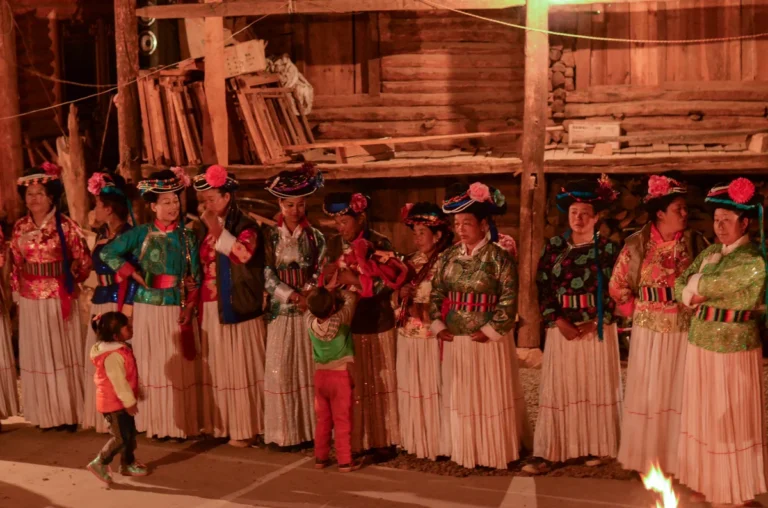
That cultural lifeline became even more vibrant and vivid through a system of millennial folk rituals still preserved intact around the mountain’s base. Annual mountain worship rites and blazing sacred fires during the Huobashe Festival (the traditional Torch Festival of the Yi people) invariably turn toward the snow peak as a durable spiritual bond connecting humans with the eternal realm. Every traditional dance and chanting verse in ancient Yi language beneath sunset shadows falling across Jiaozi’s cliffs evokes the depth of a magnificent plateau civilization. Today, the historical imprint and contemplative beauty of this legendary land remain fully present, settling through every heritage layer like an ancient ballad from the sky and earth of Dianzhong.
Examining the Dianzhong regional geomorphological map, Jiaozi Snow Mountain towers like a massive pillar supporting the sky, reigning at the most spectacular convergence point of the Gongwang Range within the renowned Hengduan mountain system. From a tectonic geology perspective, this mountainous mass is the typical crystallization of horst-uplift movement, forming steep folded fault cliffs through millions of years of Earth’s crustal vicissitudes. Its entire topographic structure obeys a distinct sloping rule: the northeast rises towering into the sky with sheer vertical cliffs resembling blows from a divine axe, while the southwest descends via gentle stepped terraces. This natural stepped zoning created a perfect windbreak screen, sealing northern cold air from plunging into the Kunming basin while accumulating gentle vital energy for the entire central Yunnan plateau region.
Reigning atop the highest elevation of this horst is Jiaojizi Peak floating amidst thousands of clouds, possessing elevations ranging from 4,223 meters to 4,247 meters, and peaking ultimately at 4,344 meters above sea level. That breathtaking elevation proudly establishes the mountain’s status as the “Highest Peak in Central Dian” – the tallest mountain across all of central Yunnan. Geormantically, Jiaozi Mountain holds the supreme origin of vital energy, serving simultaneously as the head-dragon dragon vein protecting the northern rear of the spring capital and acting as a pivotal ecological water reservoir nourishing abundant discharge for the middle and upper Yangtze River basins. Primeval forest ecosystems strictly preserved within the borders of the Jiaozi Snow Mountain National Nature Reserve have woven a robust biological shield, fully purifying the atmosphere and regulating microclimate across a vast surrounding territory.
Traces of time and natural harshness also leave deep marks across the network of Quaternary glacial relics preserved almost intact upon the mountain. U-shaped trough valleys gouged deeply amidst sandstone, scattered colossal erratic boulders, and hanging glacial lake systems suspended across limestone cliffs have turned this place into a magnificent outdoor geological museum. Among them, “heavenly pools” (tianchi) – crystal-clear jade-like water bodies interspersed among mossy ancient meadows – reflect endless azure skies, creating a surreal intersection between the ruggedness of granite and the serenity of calm water surfaces. Cushion vegetation layers comprising high-mountain peat bogs act as giant water-absorbing sponges, circulating life across every streamlet tier.
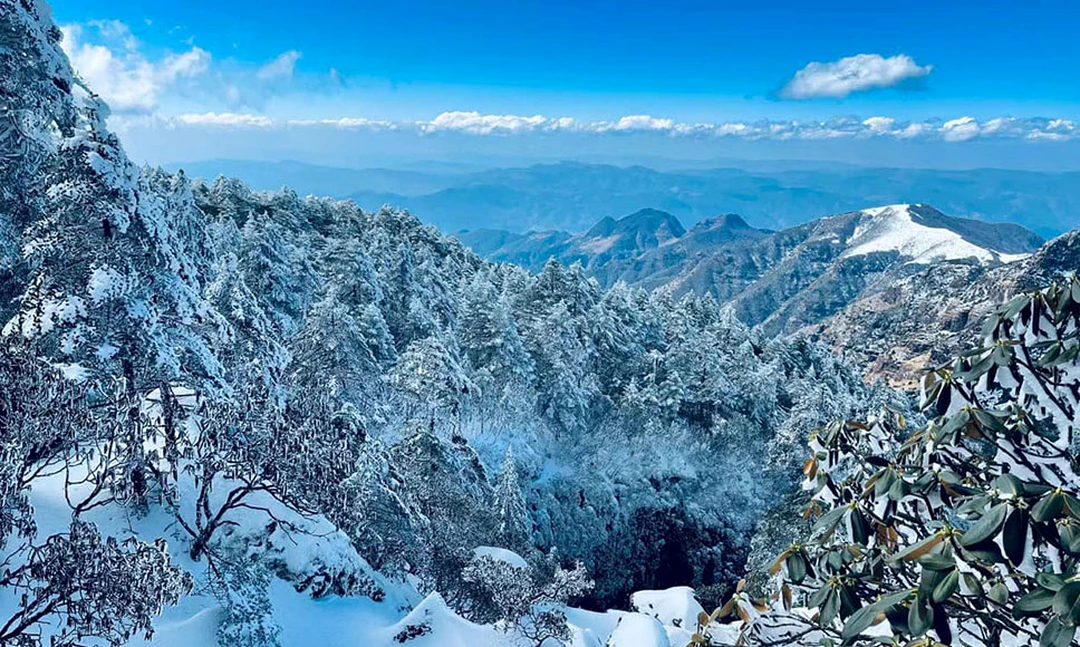
Natural landscapes at Jiaozi Mountain are likewise renowned for a four-season symphony of shifting transformations, turning each elevation tier into a living, magnificent natural spectacle. On clear days, rolling seas of clouds surge from deep canyon bottoms, turning the snow mountain into a lonely island floating amidst the void. As weather warms, alpine azalea forests awaken, spreading into a multicolored floral carpet from the base up to the frost boundary, sharply contrasting with the cold grey of rock walls. Conversely, when winter lowers its cold curtain, countless waterfalls pouring from towering rock arches suddenly transform into giant ice drapes suspending time, crafting magical carved jade walls that captivate distant travelers. The spectacular variation of glacial geomorphology and such sublime scenery portray a magnificent high peak where pristine natural beauty fully displays its pull for those passionate about high-mountain exploration.
Spatial planning at Jiaozi Snow Mountain reflects architectural thinking harmonized accurately with the sensitive zonal ecosystem of the Yunnan-Guizhou Plateau. Rather than violently interfering with limestone geology and ancient tundra vegetation, the entire infrastructure system serving visitor mobility is deployed under a strict altitude stratification model. The backbone of the complex starts from the Sifangjing Visitor Reception and Assembly Center, acting as a large-scale logistical outpost coordinating specialized transit vehicles to cross thick fog belts and proceed to the Xiapingzi transfer station, the official gateway opening into the eternal ice and snow realm.
The most prominent engineering highlight throughout the scenic area’s investment scale is the Dahiqing tourist cable car line, a precision machinery work engineered to overcome the hazards of sheer vertical cliffs. The cable line boasts a horizontal span estimated at roughly 657 meters, linking the lower station at an elevation of 3,587 meters with the towering upper station at 3,796.5 meters. With a vertical elevation difference reaching 209.5 meters surmounted in mere minutes of smooth gliding amidst cloud layers, the cableway not only resolves alpine transportation puzzles but minimizes erosion pressure from human footprints upon stone slopes and native dwarf azalea carpets.
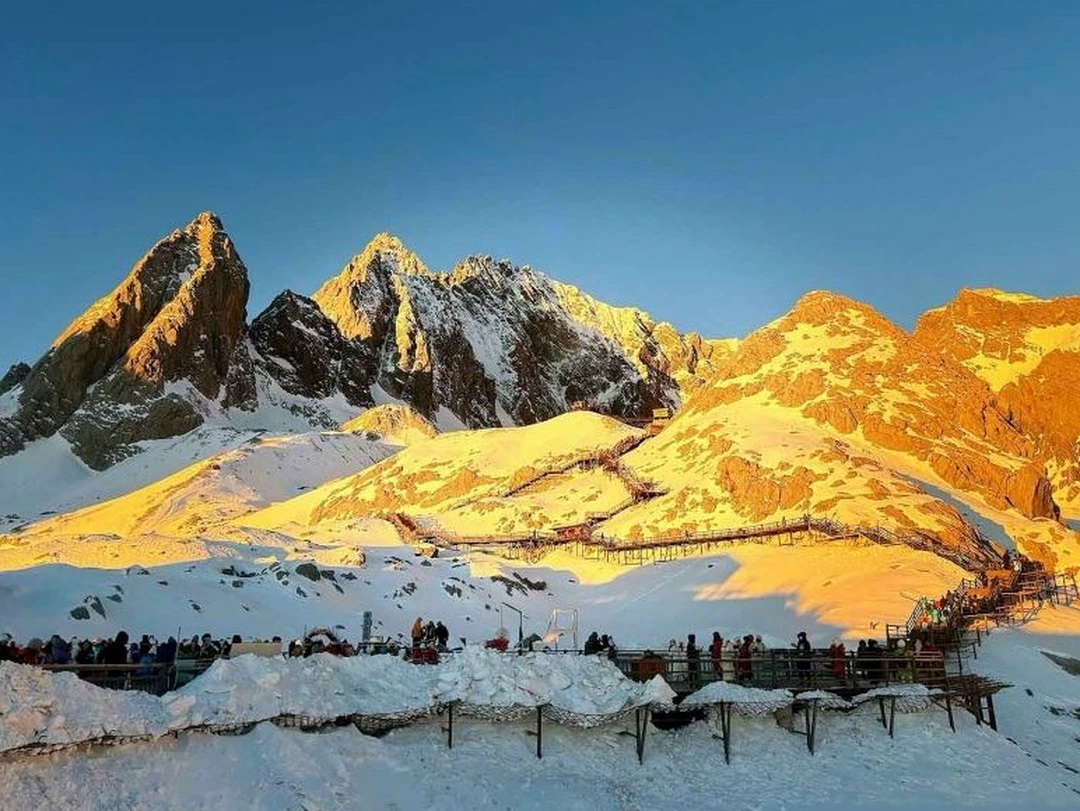
Continuing from the upper cable car station to harsher altitudes is a network of non-slip ecological wooden boardwalks solidly constructed using mortise-and-tenon joining and load-bearing pile anchoring techniques on boulders. Instead of leveling land, pedestrian boardwalks are elevated a standard technical clearance above the terrain surface, allowing underground glacial stream flows alongside moss, lichen, and rare medicinal herb carpets underneath to continue growing naturally without habitat fragmentation. These walkways wind rhythmically along basin topography and ridge lines, sequentially connecting famous scenic spots from Dahiqing, traversing the mystical boggy lake Jingguai Road, skirting Yueliangyan’s perilous cliffs before reaching the ultimate Jiaozi Peak summit at extreme altitude.
Thanks to this enclosed, synchronized transportation infrastructure network, exploring one of the tropical-adjacent snow mountains in the world has escaped pure adventurous mountaineering trials, broadening safe access doors for diverse traveler demographics. Here, the completion of a modern tourism ecosystem lets visitors enjoy required conveniences while leisurely admiring preserved natural wonders amidst Kunming’s undulating frost.
Distinct entirely from artificial laser shows or dazzling neon lights down in the bustling urban valley of Dianchi Lake, lighting artistry and nightlife rhythms at Jiaozi Snow Mountain are created by nature’s hand alongside the pure serenity of the plateau. As evening sun rays gradually hide behind ancient tree lines above 4,000 meters elevation, spaces enter a magical transitional moment called snow mountain twilight. Floating cloud bands rolling like ocean waves from deep valleys are dyed a burnt orange, gradually shifting into deep violet and mysterious teal, gilding the eternal frost. This curtain opens an avenue into a magnificent celestial spectacle where vast spaces shed modern civilization’s dust.
Thanks to its location over 150 km away from downtown Kunming and absolute towering elevation, Jiaozi Peak remains enveloped within a thin, dry atmosphere virtually devoid of artificial light pollution. When night fully reigns, the mountain turns into a giant natural observatory where the sky resembles a jet-black velvet carpet studded with millions of twinkling stars. The Milky Way stretches across space with astonishing sharpness, curving right above the proud palanquin-shaped peak. For photographers and travelers passionate about astronomy, awaiting shooting stars slicing across night skies or setting up camera exposures of star trails beside frozen white cliffs yields a surreal visual experience, as if touching the infinite boundary of the vast universe.
Countering the contemplative, cold majesty of high peaks, nightlife rhythms at foothill waystations and plateau resort hotels overflow with enchanting human warmth. Warm yellow lanterns glow along wooden walkways, contrasting deeply with thick, powdery white snow blanketing sloping tile roofs. Here, lighting artistry is expressed through flickering embers from collective campfire pits – a signature community living culture among high-altitude indigenous groups. Amid freezing cold, travelers and locals gather around warm fires, listening to resonant rhythms of traditional instruments, sipping hot, fragrant butter tea or savoring mutton grilled with highland herbal spices. Late nights are ideal for gazing at the sparkling Milky Way across clear night skies, blending with cozy festival atmospheres leaving serene aftertastes amidst freezing snow.
Jiaozi Snow Mountain’s light harmony completes a full cycle when the first dawn rays shatter silent nights. The “Sunrise over the Sea of Clouds” (Ri chu yun hai) phenomenon ranks as the most spectacular display, as crimson sun disks rise from distant horizons, casting sharp light rays through morning mist, turning churning cloud seas into a shimmering golden pan and clothing snow peaks in radiant golden cloaks. Standing amidst heaven and earth during that radiant moment, every traveler feels the enduring heartbeat of wild nature, an ethereal beauty quieting souls and imprinting deeply upon travel memories.
The journey to conquer Jiaozi Snow Mountain Peak is not merely an encounter with endless ice and snow, but an empathetic voyage into borderland lifestyles through unique culinary flavors. Stationed at the intersection between Luquan Yi-Miao Autonomous County and the ancient Dongchuan ore valley, the belt surrounding this snow mountain possesses a culinary cultural subregion blending expansive Dianzhong flavors with rustic, rich notes of Northeast Dian. Across cold high ridges shrouded in year-round mist, native dishes surpass mere survival, rising to heat-retention arts containing indigenous mountain-dwelling philosophies across generations.
Mentioning Luquan delicacies nestled beneath Jiaozi Mountain, southwestern gourmands reserve respected positions for Saba native pigs and renowned Saba smoked pork. Hams rubbed with highland sea salt are hung in village smokehouses for years, fully absorbing dry snow winds and pine wood incense smoke. When sliced thin, meat fibers glow ruby-red like jade with transparent fat marbling, carrying rich salty tastes and condensed pine aromas. Furthermore, hearty Yi culinary cultures flourish in Da Da fire-seared meat blocks. Large native pork or beef chunks are chopped square, boiled tender in original herbal broth to retain natural meat sweetness, then dipped in tongue-numbing grilled chili salt mixed with fragrant Sichuan peppercorns, forging enthusiastic culinary celebrations among wild forests.
For travelers shedding thick snow jackets after climbing slopes, nothing refreshes more than gathering around steaming goat hotpot, known as yang tang wo. Jiaozi mountain goats graze on tender grass and drink snow dew atop sheer limestone cliffs, rendering their meat firm, sweet, and entirely devoid of gamey odors. Bones, meat, and organs are simmered for hours with cardamom, aged ginger, and dried chili, producing milky-white broth rich and deeply sweet. Dropping into boiling goat soup are pure white Dongchuan handmade hanging noodles. Benefiting from mineral spring waters of the Jinsha River and natural wind-drying across high racks over Dongchuan canyons, these noodles possess odd chewiness, retaining smooth textures and superior wheat flavors even after prolonged boiling in hot soup.
Jiaozi’s alpine food map remains incomplete without rustic underground gifts: highland potatoes, affectionately called yang yu by locals. Nourished by red mineral-rich soils above 3,000 meters elevation, these potatoes feature golden yellow flesh, floury textures, and rare sweetness. Along mountain trails, charcoal stalls roasting Luan honey potatoes alongside potato chips tossed with chili powder and wild pepper oil captivate wanderers with irresistible aromas.
Concluding cold-weather culinary stops, a small bowl of Kunming crossing-the-bridge rice noodles brimming with fresh minced pork, bean sprouts, and warm spicy-sour broth, paired with thick brown-sugar ginger tea instantly dispels chills and awakens all senses. Immersing in stilt-house hearths and savoring traditional cuisine serves as the master key helping travelers touch primitive cultural souls of Yunnan’s snow mountain.
The approach to central Yunnan’s snow mountain wonder begins in urban Kunming, where travelers exit the northern city gates via Puji road axes. From this intersection, the dedicated Jiaozi Snow Mountain highway spans over 150 km, winding through Luquan County’s spectacular geological layers and shortening travel times to roughly three hours. Paved asphalt roads lead visitors from Kunming basin elevations near 2,000 meters along mountain slopes up to rolling limestone plateaus and deep valleys. The scenic area opens to visitors from 7:30 AM and halts downward cable car operations around 5:30 PM daily. Departing from the city at dawn is the wisest plan to avoid local traffic jams and catch radiant cloud-free moments at high peaks.
The highest point of the scenic complex exceeds 4,223 meters above sea level, where oxygen density drops and temperatures plunge sharply per meter of elevation. Altitude sickness and mountain sickness challenge stamina and endurance for anyone stepping into icy highlands for the first time. Therefore, standard protective gear cannot be prepared casually: professional windproof and snow-resistant down jackets, handheld mini oxygen cylinders supporting breathing during climbs, trekking poles, and shoe-mounted crampons. During freezing winter months or damp early springs, wooden walkway surfaces form transparent ice sheets, making crampons indispensable tools for secure footing in thin air.
The wild, perilous nature of the Wumeng range requires visitors to strictly observe safety rules. Exploration routes at high elevations are planned via wooden plank roads (mu zhan dao) winding along cliffs. Visitors are strictly prohibited from leaving designated paths to enter dense primeval forests or approach unbarricaded cliff edges. Additionally, alpine microclimates shift unpredictably. Before trips, continuously updating weather forecasts is vital; when blizzards strike unexpectedly, roads freeze or gales howl, management will immediately suspend cable car systems and block traffic to prevent risks.
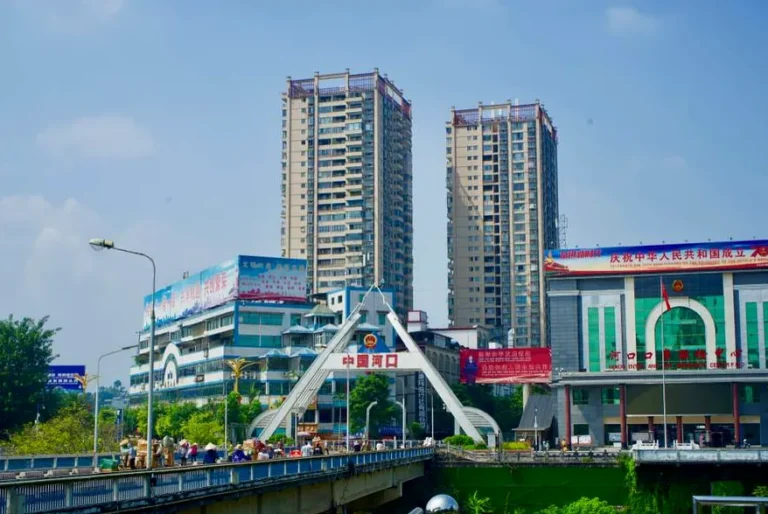
For international tourists, entry procedures into Yunnan require careful preparation from valid travel visas, passports with over six months validity to customs declarations at Lao Cai – Hekou land borders or Changshui International Airport. Self-coordinating long-distance transit, adjusting bus schedules, and handling physiological changes above 4,000 meters often frustrate inexperienced travelers. Registering for a Kunming – Jiaozi Snow Mountain 4D3N Tour serves as a comprehensive solution optimizing itineraries while ensuring absolute peace of mind backed by guide teams knowledgeable about terrain, medical care, and emergency rescue gear.
Invaluable tips when conquering snow peaks involve promptly energizing bodies via warm foods. Fragrant Luquan honey-roasted potatoes at transfer stations, pocket dark chocolates, or thermoses filled with brown-sugar ginger tea quickly activate blood circulation, banishing numbness from fingertips. Finally, entering the sacred sanctuary revered as La Wu Mountain by local Yi people, maintaining silence, avoiding littering in white snow valleys, and respecting indigenous beliefs represent the most civilized attitudes concluding rewarding journeys amidst Jiaozi’s endless white clouds.